Feeds:
Posts
Comments

Archive for the ‘Paparazzi Ethnography’ Category

Paparazzi Ethnography Blog
Summer 2010 – Winter 2017

All images and text © Dr. Arthur Mason, Associate Professor, NTNU; Visiting Senior Fellow, LSE; Research Affiliate, U St Andrews.

Support for Paparazzi Ethnography includes US National Science Foundation Exploratory and Standard grants, as well as J. William Fulbright awards through the Fulbright US-Norway program, Fulbright US-Russia program; and Fulbright US-Canada program. Additional recognition includes Wenner-Gren Foundation; Ciriacy-Wantrup Fellowship; and European Research Marie Skłodowska-Curie Fellowship. Use of text and images is accompanied by acknowledgment: Re-printed with permission of Arthur Mason, Paparazzi Ethnography 2010-2017

Paparazzi Ethnography: An Anthropology of Surfaces and Curated Interactions is a specialized methodological and visual project conducted between 2010 and 2017 that examines the fleeting, performative dynamics of elite energy politics. The project documents how expert knowledge is staged and performed in high-stakes environments where power is enacted through visibility, access, and performance. Its core tenets are the study of fleeting moments, the anthropology of surfaces, and the capture of Anthropocene visuality (emblematic data).

Read Full Post »

Stavanger

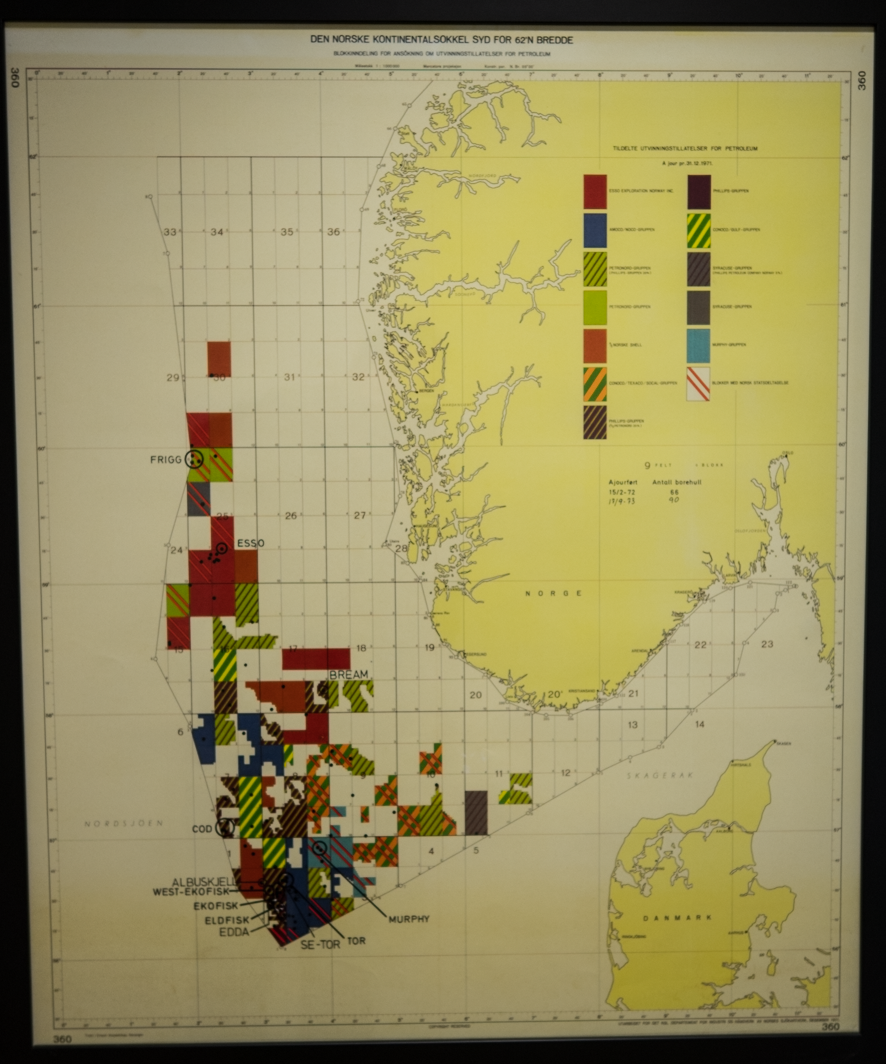
Oil Directorate meeting.


Read Full Post »

State Department

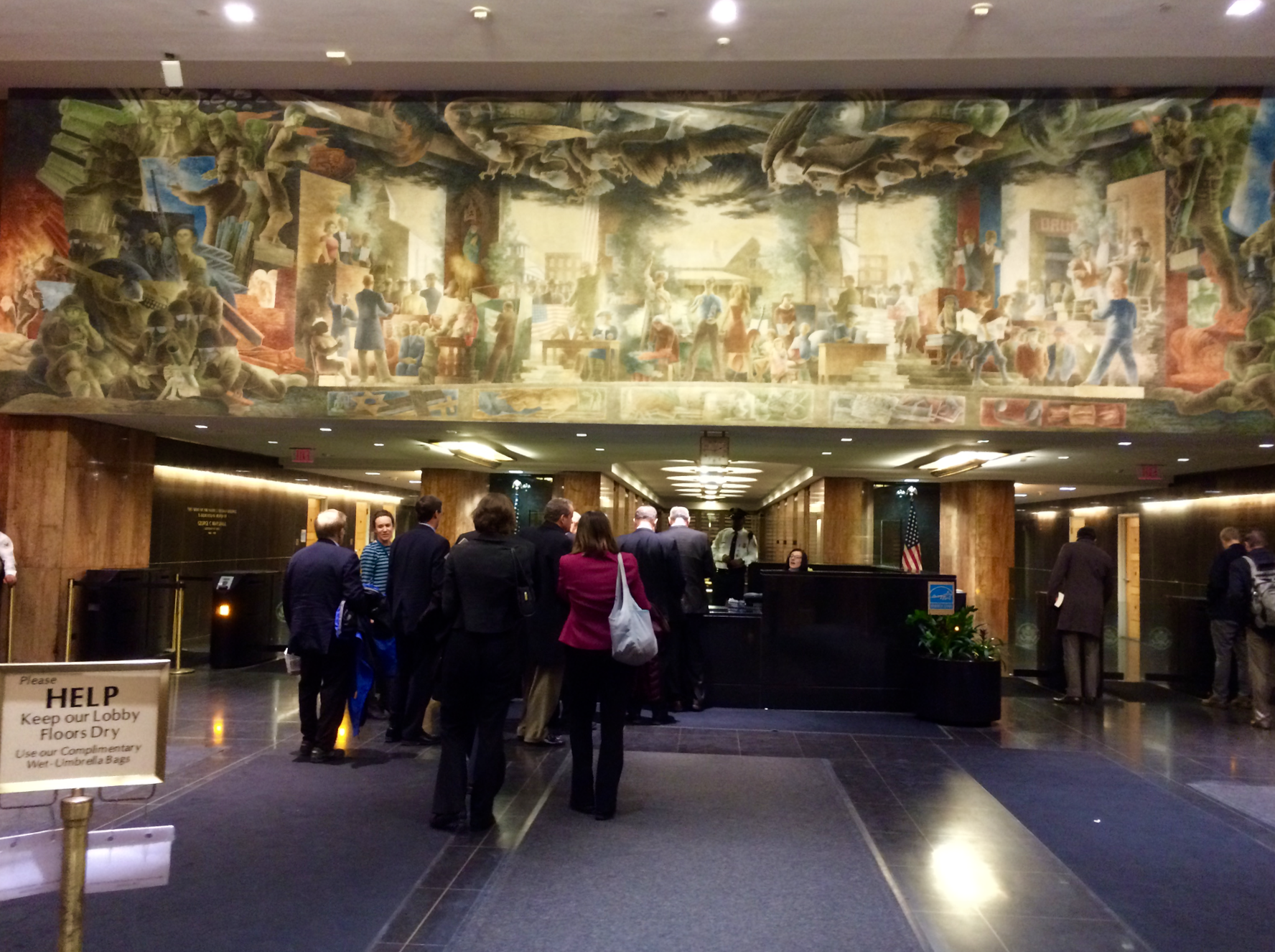
U.S. State Department, Washington, DC, to hear about key priorities of US chairmanship, Arctic Council, 2015-2017.

TagMurkowski

About an hour prior, the entrance of Alaska’s Congressional members, Representative Don Young, and Senators Lisa Murkowski and Dan Sullivan, introduced a notable stir.

Returning to the state department — identification badges and wall murals.

State Department 3

Read Full Post »

Duke U – Futures & Ruins


Getting ready to head over to

FUTURES AND RUINS:
workshop on crisis and possibility, March 23-24, 2014

Duke U, Durham, NC.


Read Full Post »

Energy Image

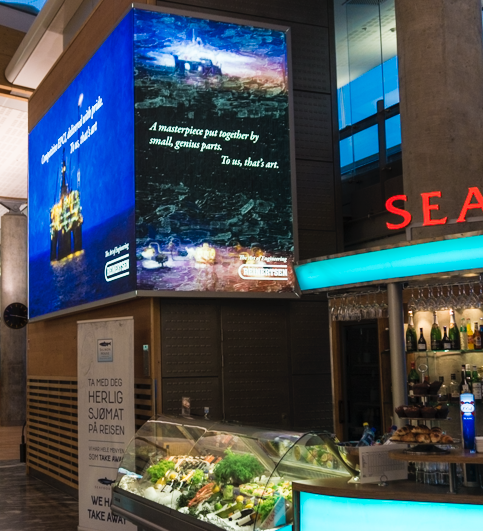
1/8: Passing through the Oslo airport, looking at an advertisement for Reinertsen consulting firm hanging inside the domestic terminal. Resting two meters above the floor, rising another 3 meters in height and nearly 4 meters in length, the image looms over passers-by and is recognizable at a distance of 20 meters.
Oslo3
The advertisement provides a contrasting experience to other large-scale commercial images inside the terminal, most of which are visible at eye-level and similar in size to a movie theater poster, as in the banner advertisement directly under the Reinersten image.


Oslo1
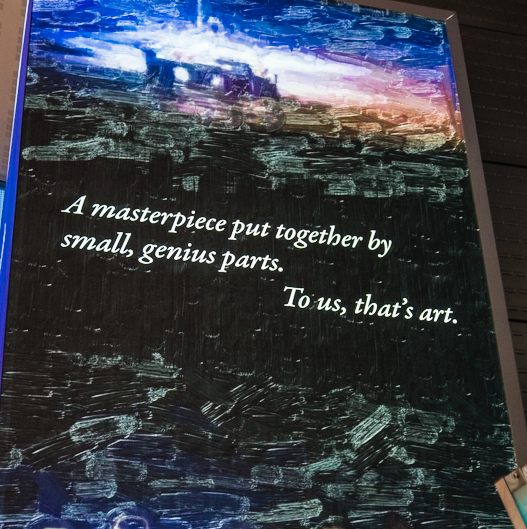
In addition to unusual size, the Reinersten image caught my attention for depicting an offshore oil rig. The photographic realism has been altered through computer design, giving the impression of an artist’s familiarity with color and brush stroke.


Oslo2
Above is a close-up perspective. It is what I saw when walking up close to one side of the image. At this distance, I experienced perceptual stimulation through what appears to be the uneven strokes of the paint brush.  I experienced a sense of touch, or what the art world calls “haptic,” derived from the Greek word meaning “able to lay hold of”.

I perceived the image in a haptic way despite not actually being able to feel it. That is, I could interpret the image as a real material, a material with expression, functionality, and credibility. The distance between me and the studied object intensified a sense of the artistic encounter — whereby physical depth creates implications for the perception of how a surface changes with distance.


I since checked the internet and found that the Reinersten offshore oil rig image is based on a photograph circulating on industry websites, where its meaning is associated with risk in subarctic waters.
website
Below, I placed bottom-to-top the photographic image from an industry website and its computer graphically altered version hanging in the Oslo airport. The placement of these two images in close proximity demonstrates a noticeable transition. The photographic image on the bottom documents a mechanical record through realism. By contrast, the “painted” image on the top emphasizes an artist’s relationship with color and brush stroke.
Top-Bottom


Read Full Post »

receiptreceipt2

Read Full Post »

Amsterdam

postcardsoasserbyBy having stepped down to directly confront the invitation:InvitationStreet

Read Full Post »

Older Posts »