

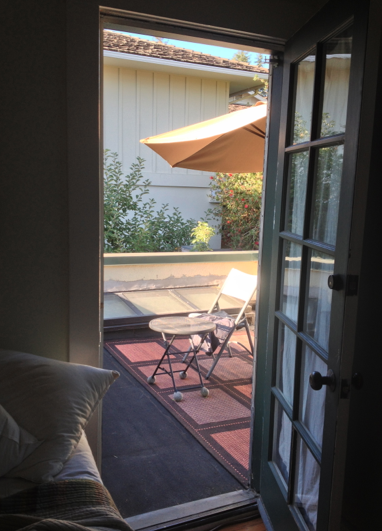
images of abstraction…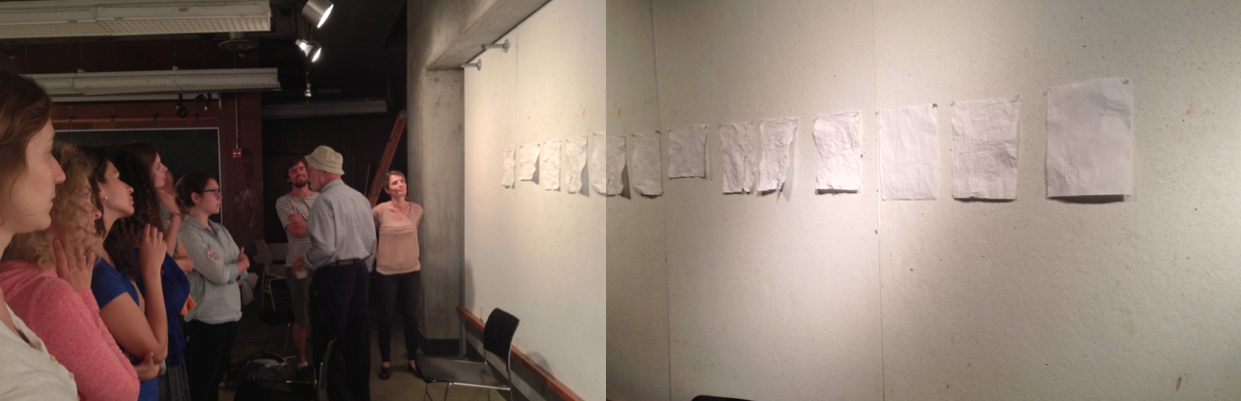
 …over discussions of uncertainty.


Archive for the ‘Paparazzi Ethnography’ Category
Enroute to Berkeley
Posted in Paparazzi Ethnography, tagged Berkeley on August 27, 2013| Leave a Comment »
Tромс
Posted in Paparazzi Ethnography, tagged Tromsø on August 21, 2013| Leave a Comment »

enouter Troms
Posted in Paparazzi Ethnography, tagged Tromsø on August 19, 2013| Leave a Comment »
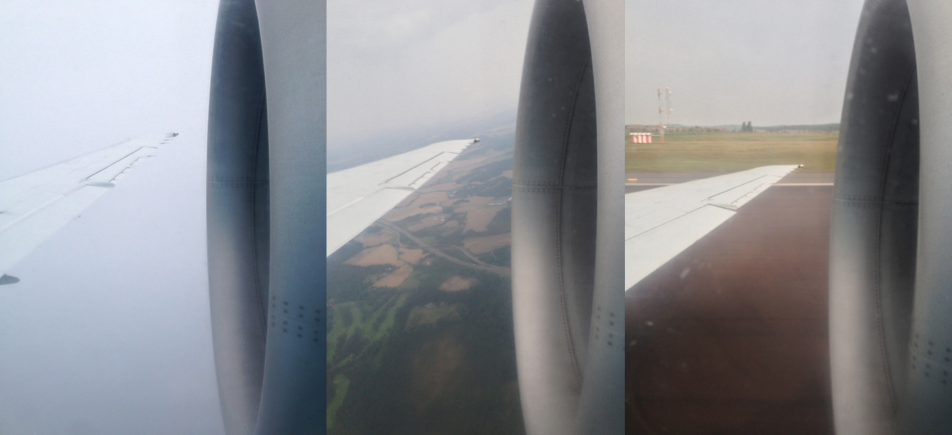
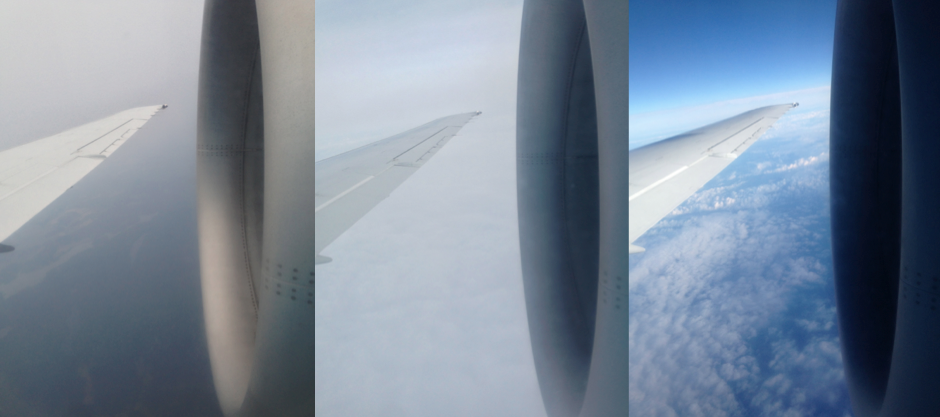

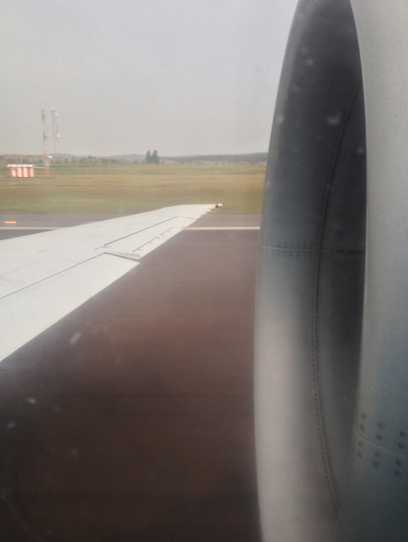


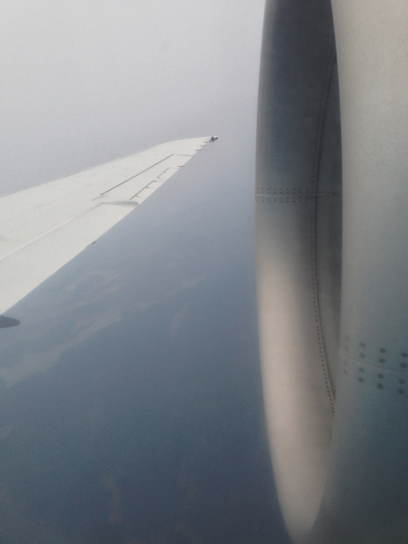
Dining
Posted in Paparazzi Ethnography, tagged Helsinki on August 18, 2013| Leave a Comment »


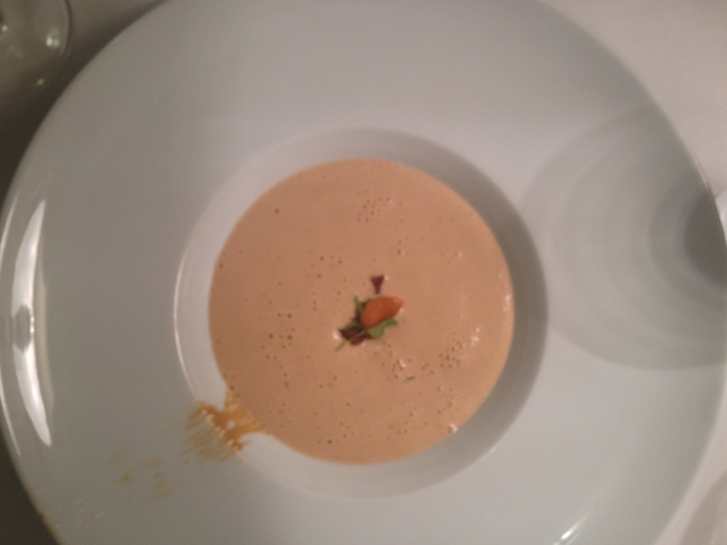


Enroute to Kilpisjärvi — Escapes
Posted in Paparazzi Ethnography, tagged Kilpisjärvi, Rovaniemi on July 31, 2013| Leave a Comment »


6-14 August
Co-organized by Prof. Sergei Medvedev, University Higher School of Economics, Moscow & Head of Education programme, Tapani Kaakkuriniemi, Aleksanteri Institute, U Helsinki
The Politics of Nature:
States, Borders, and Limits of Modernity
The Seventh International Summer School in Lapland
Kilpisjärvi, Finland, 6-14 August

Escapes from Modernity website.
Röyksopp-Poor Leno 😉 !!
Student Presentations…
8/12, final day, Presentations: Well. Here we are, the moment we have all been waiting for. The final morning with presentations by the various student participants divided into groups (ta-dah!):
 First up on our list we have the project, Scandinavia and Japan, brought to us by Vika (Victoria) Shtykova, Nikita Vasilenko, Oleg Sergeev, Sonia Solomonova, “The nature of a certain place”.
 Nikita and Oleg narrate conceptions of Scandinavia and Japan as emerging toward the Modernity form–an originary state of nature continuing to draw on mythology of the ancients founded upon the natural world.
Unlike the Viking explorers, Japanese isolation from the continent, creates a self-enclosed self-sufficient system, yet, both spaces raise the principle of the natural world to the level of the state.
Up next on our list comes forward the group, Education Escape, with Seva Ioffe, Marina Fadeva, Dasha (Daria). Marina begins with an imaginary tale of a monster threatening school children and requesting as an answer from the audience as to how to respond, which they then present as a metaphor of education, the institutional construction of self-identity with so-called choices, following with “a play in two acts”.
The first emphasizing the intolerance of acceptance of difference, and second, the transfer of information versus the subjection of personhood to the construction of knowledge, using farce as harmless critique, while still getting the point across.

Okay, here comes another group talking about, Climate Change, Alla Hanninen, Igor Efremov, Saana Porthén, mentioning of course, possible litany impacts associated with anthropogenic land- and atmosphere-scapes.
Traditional land use and infrastructure changes, health standards, affecting the local population – essentially, that climate change carries the “sign” (in the Saussurean sense) of change and could not be registered without it.

Now, stepping up to the plate is, Beyond Borders, with Nastya Vologodskaya, Natasha Iakovleva, Nastya Lukovenko, and Tatiana.
Lines that define modern space: economy + emotions; The realm of Nature – animal world; The use of borders for the sake of changing social norms; Space as luxury. The concept of [European] “North” as one integrated “unit” versus southern borders.
The team members carried out interviews with 20 persons nearby the biological station, who reacted to the idea of borders, expressing themselves as without borders but as kinds of citizens of the North. Norwegians come to shop in Finland, weekend. Who says the Northern folks are not very talkative, in fact, quite sociable. There is a sense of fluidity among travelers. Density of population influences the perception of space.
 The North as main character (over other conceptions of space); no such notion as citizen of the South [just the undeveloped South, ed.]; Lapland is not an economic union – population belongs to Land and to Nature; Borders not visible (fences, frontiers); We are seeking to break Modernity by means of Modernity (imposed social order not natural for animals). The role of electronic communication in creating an imaginary space.
 Up now, Corporations, performative language in one act play with Masha (Maria) Nabat, Roosa Rytkönen, Dima Terechenko, Ivan Chernyavski (with props – Tapani as Judge, Arthur as environmental activist, Natasha, Edward, & Azamat as village dwellers).
Dima (lawyer) and Masha (Governor) versus Roosa (lawyer) and Ivan (biologist). Both sides make their case based on traditional tropes of development versus environmental sustainability and land use. A number of witnesses arise, creating a comico-dramatic affect.
Finally, Our Escape, poetic discourse, beautifully done with Edward Epstein, Azamat Ulbashev, Paulina Vrublevskaya, Nastya (Anastasia) Falcon, Gritten Naams. Escape from flows, “expression of feelings makes you sensible…individual doesn’t need more than their hands, minds, a greatest escape… listen to your heart, trust yourself, follow your imagination…” “now we can see, escape is a journey to human nature … it never ends, but every time it brings us closer to ourselves….” – limiting talk, watching movies, different examples of escapes, different possibility of escape. “Do you agree with this kind of escape”, but other kind of escapes come to mind.
Oeuvre [“movie”]:
What more is there to say?
Sergei provided a few final words on the eve of the end of the 7th summer year in the Escapes of Modernity. Eloquent as ever, to paraphrase: A distinct group, determination to discuss, acceptance is a powerful filter, making a decision to come to the North, and of course today’s presentations.
The Meaning of art is to be drawn to a challenge, to decode real art over a lifetime [echoes of V. Shklovsky, ed.].
We had a brief moment to identify a few individuals personally, for their special contribution… for their Inquisitive Spirit (Dima), Escapist Mood (Gritten), The Performer (Azamat), Philosophy and Life (Oleg), Sense of Wonder (Roosa), Engine of the Community (Seva), and Sauna Fairy (Masha).
Sauna swim
ходит- бродит баню топит…


Paparazzi.Ethnography@berkeley.edu
Editor’s Corner: notes from the peanut gallery
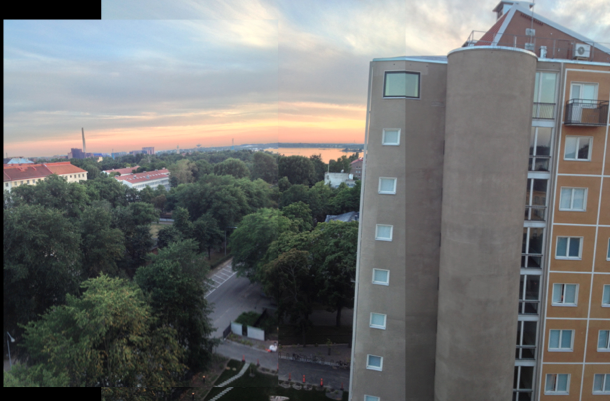
If asked to offer my own opinion, “my two-cents, for what it’s worth”–as they say, well, quite frankly, it would include a sentence on the absolutely amazing hikes over the past days. Below are two perspectives looking both ways from different sides of the lake:

Look this way…

Look that way….
8/12, mid-morning session: Okay. Well, we have since re-coffee’d up, and now sitting in to listen to Tapani‘s discussion on energy and ecological thought in Finland.
Well, Finland, as it turns out, is a major producer of paper, pulp, and metals, 7th largest paper/pulp producer, raising the energy per capita to quite high levels.
Norms and Forms: Moving toward discussion of the EU framework: Environmental Impact Assessment Procedures. National legislation(s). Nature Conservation Act, 1995 in Finland, has a variety of descriptive themes that outline the “natural” state, including, but not limited to… “conservation of natural habitats”; “landscape conservation”; protection of animal species”; and with each designation, there are specific directives, such as “Procedure concerning notifications on the flying squirrel…”


All of this to say, that the regulatory framework is so increasingly complex in relationship to construction, that an entire expertise of mediation is required to navigate the various economic, political, regulatory development required to achieve progress. Development is a highly delicate act these days.
 8/12, day seven, morning session: We just finished breakfast, typically coffee, some form of warm cereal with jam, two types of both sliced cheese and meats are available, sometimes cut slices of orange.
Sergei M. is now up, speaking to us this morning about Deep Ecology: Reclaiming Time and Space. Club of Rome’s Limits to Growth, the crucial moment of Western reflexivity, and the dichotomy of environmentalism and ecology.
In the case of the former, consumption and capitalism continue as a central theme, but under considerations of sustainability, while in the case of the latter, the subject of humanism is decentered, and durations outside so-called civilized time become the focus of attention (10,000 years of humanism, 1,000,000 of shark-ism).
 Ecotopias, the rise of risk society (U. Beck) and popularization of one-dimensional man (H. Marcuse) leading to traditional conceptions of the West and the Rest in new forms, a strategy by EuroAmericans to raise the threshold of what constitutes the maturity of modernity in the eyes of “develop-man” (development). Dystopias in the form of eco-fascism.
Social construction of nature, positioning nature as an artefact that can be codified, recreated, mimicked, parked (walled-off) as a zone of indistinction, set apart and inscribed through scientific practice and technical instruments.
 Barry Commoner, The Closing Circle,…: (1) Systemic connection, on ecosphere for all living organisms and what affects one, affects all; (2) Everything must go somewhere, there is no “waste” in the eco-system, a closed system where transferrals into or out of the system are self enclosed (first law of thermodynamics); (3) Nature knows best, as a reminder that human technology is likely to be detrimental to the system; (4) No such thing as free lunch, and exploiting nature will convert resources from useful to useless (second law of thermodynamics).

 Arne Naess: Deep Ecology: (1) well-being of life (prioritizing bios over zoë, biological life over political life) (2) richness and diversity are values (multiculturalism); (3) rights of man do not include reducing richness and diversity — except, ahem, for so-called “vital needs” (dry cleaning for Wall Street bankers, whale hunting for Inuit North); (4) appreciating life quality over increasingly higher standards of living.


…flourishing.
Fair enough: discussions in West, however hypocritical they may be, do take place, and critical consciousness does have a space in academia, politics, the economy.
The biological age, bringing life into the world continues to remain a form of goodness, versus a restriction on population. The “population bomb” and fascism associated with discussions surrounding relentless expansion and or limitations of growth of populations.
Environmental Spatiality: Borders, Landscapes, Maps (modernity as constriction of space); Space of places vs. Space of Flows (postmodern dissolution).
Human experience and meaning are still local — Heiddegerian theme of habitus where human action comes into focus: The walking path…
Small-scale government, direct democracy and citizen participation, small-scale production, self-sufficiency and austerity. Saying “no” to development, an affluent (or political) choice.
Environmental Temporality– forms of time: clock time (chronological sequencing, human discipline); timeless time (instantaneity, random discontinuity, the global casino); glacial time (Lash and Urry) of ecology (nuclear waste timelines)
Ecology as a way of reclaiming time and space — Re-essentializing human experience.
Movie night!

Как я провёл этим летом
How I Ended this Summer
I sat in on the movie this evening, having missed a few other nights’ showings.
The Plot:
 In the Arctic, a meteorologist and young assistant take sensitive radiation and weather readings, collecting data at specific times of day transmitted to meteorologists at another station via regular radio calls, engaged in tedious work but taken quite seriously by the senior meteorologist who follows a strict routine, while his young assistant slacks off around the ramshackle arctic station.
A radio call sends word that the meteorologist’s wife and young son are involved in a horrible accident, the young slacker avoids relaying the news, until life between the two men reaches a boiling point.

We enjoyed the movie. Sergei provided commentary at the beginning. Afterward, he led us in a general discussion on the meanings of the film, which we all appreciated.
Hmmm.
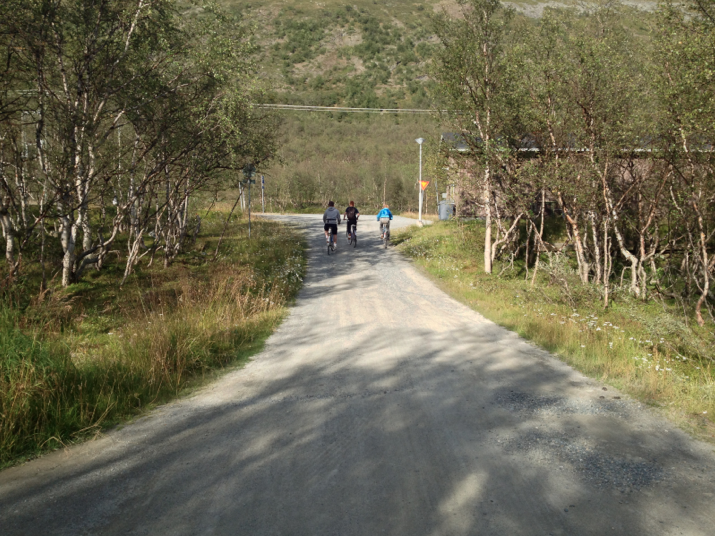
Earlier, a few of us on foot and others on bicycles traveled the distance to the KMarket, at the center of town, some 45 minute walk from the biological station. We picked up a few items for the film.
Popcorn, a New World cuisine was my choice for the evening.
Masha kept me entertained the entire walk home, with her specific observations on the American way of life, gathered while she lived in New York attending graduate school. One the way, we managed to catch site of reindeer which often wander around the area.

Yesterday, I neglected to write about our absolutely fantastic hike, beginning on the Swedish side of the lake arriving there by local ferry, and then walking to the Norwegian border, where Tapani provided us with a lecture regarding 1000 years of political history in the Nordic north.
From there, having had lunch, we trekked upward and around the lake, to the base of the fjell which we had previously hiked several days prior. In all, it was about a four hour hike, perhaps more, through some of the most beautiful country I have seen ever.
Well, in fact, I should note as an aside, that today in front of everyone, I was able to provide a short digression on some of my own research–benefiting, of course, by the tracks laid down from earlier presentations by Tapani and Sergei, both of whom deftly introduced topics on, well, the themes are there to read below.

Presenting the graph:


 8/9 day three, afternoon session: Surprise visit by Antero Järvinen— offering a lecture titled, Cautionary notes on long term trends in northern nature — established scientist working here at Kilpisjärvi Biological Station, U Helsinki, for over 30 years. Fabulous images demonstrating skepticism of anthropogenic change to climate.
Views from
Kilpisjärvi Biological Station:
The Kilpisjärvi Biological Station, Scientific Research Station belonging to U Helsinki, est. 1964 provides long series observations of High North flora and fauna. Here is the view looking out.


8/9 day three, mid-morning session:
Coffee!
Here at the biological station, thankfully, while without the milk foam, there is plenty of coffee available (yay!).
Tapani Kaakkuriniemi continues on the topic of Nationalism: representations (scientific and popular) aimed toward securing (reasserting) an independent stance. Finland’s national independence day in December versus Sweden’s national day in June, which, because of differences of weather, intensifies a particular understanding of the self, nation-hood, belonging. Here, Tapani recalls the work of Johann Gottfried von Herder (1744–1803), German philosopher of the initial cultural form, Will Kymlicka (Canadian political philosopher) on multiculturalism, and other popular practioners of the modern form, Jürgen Habermas, Jean-Marc Ferry, measuring egalitarian justice of the multicultural alongside considerations of political stability.
 8/9 day three, morning session: Tapani begins this morning with a few reminders about tomorrow’s boat trip and hike, also a few announcements about further possible day trips to Norwegian border, and finally, now we begin with Tapani’s lecture on the nation-state:
State sovereignty— three elements of an organized political entity occupying a 1) definite territory, 2) population, 3) government.
Manifestations include the symbolic form of the flag, marked borders. Member status in United Nations continues with South Sudan, Montenegro, Switzerland, Serbia joining after the turn of the 21st century.
Basic assumption is that sovereignty stands outside the law, no higher authority than the sovereign, and thus, and equivalence of status among states (Peace of Westphalia, 1648 — emergence of absolutist states as final actors wherein the sovereign no longer signifies the King’s two bodies).
 Westphalian order…bound up with the persistence of non-capitalist property relations that lingered perhaps, lumbering toward the sovereign modern state. So, there are a variety of different sub-national and supra-national entities emerging which give rise to question the status of the Westphalian defined modern state. And this includes the concept of American tribes, status of Native-ness through government-to-government (often non-territorial) relations.


8/8 day two, mid-morning session: Prof. Sergei Medvedev continues with a description of the world from 1450-1750, the march toward ecological risk society. Circa 1450, China was advanced, Islamic civilization in decline, Europe a backwater — then…
1) European ecological individuality wherein risk becomes more controlled (fewer natural disasters, regulated marriage, controlled fertility, colder winter linked to fewer diseases, advantageous position at the World Seas, good ports and waterways); 2) Food regimes (Rice versus Wheat), wherein rice requires a certain centralized authoritarian structure while wheat favors small “holders”; 3) High priority for order and peace in China versus European subject as agent of change; 4) Philosophy leadership in learning and morality versus wealth (using a knife to cut open a body, the anatomical theater).
 European control over nature through the rise of the Modern State (violence, territory, nature); Judeo-Christian Tradition; Scientific Revolution (abstract and geometrized universe governed by fundamental principle of gravitation, Ferdinand Braudel); Early Capitalism and colonialism eventually transforming the world into an economic global system.
Medvedev’s “The Modern Trap” — Making the world friendlier, lighter, safer place, Pursuit of happiness and comfort, Avoiding risk and fighting death. Enslaving nature and man. Human freedom cannot be achieved without emancipating Nature. As opposed (or in relationship with) “more modernity” of geoengineering, where modernity is an unfinished product.
Here, I have to establish some lines of clarification. Prof. Medvedev’s argument is with what he problematizes as practices of intensification with the goals of perfection, creating similar attributes to U. Beck‘s Risk Society, entering a period in which the (over) production of bads poses threats to traditional structures of a wealth generating society.
 8/8 day two, morning session: Sergei Medvedev begins this morning with a discussion of Maurits Cornelis Escher (1898-1972), analyzing prints for their philosophical perspective on the imagination of social and philosophical dimension (structural power[s] within the context of modernity, its institutions, language, and social form).
 Moving from Escher across various authors on the Modern condition, Max Weber, Franz Kafka, Jürgen Habermas, Michel Foucault and practices of surveillance. Oh, here we go, one of the students, Seyva, points out that institutions produce individuality, much like Foucault had pointed out in his many descriptions of genealogies of the present.
Emergence of Modernity, is there a time period? Early 20th century? Constitutions and rights of man? Reformation? Perhaps there are multiple modernities.
Holland as an example of modern space, as a highly constructed ordered “nature of space” (versus space of nature). Organized geometrical plots (power of geometric universal — a lego universe). The power of the cadastral map and with all the daily pursuits.
The cue: Soviet disciplining institution, knowing the rules of the cue (you don’t ask “who’s last in line?”), Vladimir Saroken, Russian postmodernist writer of The Line. Agitation after the first 30 minutes, and then transcendental by the time you arrive at the moment of consumption (“no joy”), for deficit commodities (toilet paper — wrapped in white like revolutionary sailors).
 Nostalgia for the cue. Standing next to each other, communal experience, comunalnii kvartira (communal apartment). Airline ticket lines. Western European/American etiquette versus Russian practice. The focus on property (bodies, time) — things that do not belong to the self (standing in line as an indication of non-ownership of time). The cue, whether we like them or not, serve a variety of different purposes (reading, time wasted, prayer, imposing and productive). The permanent reproduction of the communal body.
Modernity as a practice of filling all the blank spaces (Z. Bauman).
I want to mention, in passing, our hike yesterday evening to the summit of a nearby fjell. The walk itself was some 2 hours up the hill and 90 minutes back to the base. 


8/7 day one: 7th summer school at Kilpisjärvi, we are starting up this morning at 10AM, now listening to Sergei Medvedev, Higher School of Economics professor, European history and programme co-organizer, describing his initial experiences in the north as a formative desire to set up a school where students could meet and discuss the modern condition. Prof. Medvedev has a long career in various Western European and American academic institutions, and is quite involved in the Russian public sphere, publishing commentaries for the Russian Forbes magazine, radio and television in Moscow.

Escaping the routine practices of the urban center, bringing students to a remote place near the Arctic circle, as much about education as it is isolation, northernness, remoteness, enhancing humanness. Lectures in the morning with interaction, lunch at noon, discussion of projects by students, a selection process to narrow down proposals and then movement toward creating finalized projects. An escape from networks for some time.
 Tapani Kaakkuriniemi (far left with S. Medvedev), Head of Education at Aleksanteri Institute, reminiscing on early life in the North. Temporalities of the North based on different attitudes than the march of progress associated with urban life. Sharing the experience associated with the land, climate, weather, the natural elements. Hiking during summers.
We have some preliminary discussions, including our sauna period, hiking areas, weather conditions, cycling, and the dangers of cycling in the north given the narrow roads and having to share the space with truck drivers, payment of accommodations and bus transportation (payable to Tapani). Tricky terrain in the area, so notifications of travel should be taken seriously.
First session: Art of Travel.
 Sergei M. — Travel as daily routine and ordinary, versus previous times, when travel was limited to merchants, traders, sea farers, taking travel for specific reasons, escaping debt, discovery, but not sentimentalism as it is today, as a journey of self discovery, as a reflective subject, that apart from reading can be accessed through traveling. Tourism, a standardized form, though its early development began as the “‘grand tour” for self development, necessary visits to Nice, the destination of young, wealthy, Englishmen. Tour emerges as part of cycling and sportsmanship and both, combined with the appropriation of space. Tour de France, cycling and covering the nation, “liquid modernity” (Z. Bauman), the idea of spread, expansion, exploration and appropriation of space, encircling space.
 Mass society–what was individual exploration, travel becomes mass tourism, the big resorts, sanatorium, standardizing bodily recreation and leisure, depositories of the human body, belonging to the state (as in Soviet Russia), requires states of rest, at resorts (Crimea), through jet travel (Boeing 747), economies of scale makes transAtlantic crossings a mass option, the secretary, the itineraries, discipline and practices, no longer imagining travel without the guidebook (lonely planet), confining to itinerary on the one hand, and enlightenment on the other. Stop using your own vision, but channeled through the guide book and losing the sense of personal discovery and exploration.
Textual and experiential. Do you first look at the image or at the textual description.
Tourist or Journeyman. The consumerist practice in addition to the guidebook includes the camera (and now Iphone, Ipad). People traveling for the purpose of taking photographs, standardizations and reproductions, proving their own reality (W. Wenders). Tourism as standard procedure overburdened through accessible practices, mediated through repetition (repeat visits, matrix of comfort). On the other hand, travel remains an encountering the other.


Simon Infanger, Switzerland to KilpisJärvi by bicycle, project 5000. Traveling without a guidebook, and taking photographs, backpacking as a counterweight to tourism. Works in marketing, sports life, bicycling 13000 km/year. Project 5000: Cycling from Switzerland to Nordkap and back to Tromsø (5000km) within 28 days (+4 days off). Collecting money for Viva con Agua for drinking water in development countries. “Probably the most ambitious cycling tour ever from Switzerland to Nordkap”.
 Project 5000: Press feedback (newspaper, television); Daily updates on tour (blog, social media); Presentations after the tour. A present form of travel mediated by technological advancements in clothing (weather gear enabling cycling during heavy rain); delivery of packages through coordination of internet and FedEx; bicycling equipment has radically changed to provide increasingly different and intensive performance.
Travel packaging delivery at destinations provided for specific weather conditions, differences between Germany and Finland, requirements differ. All of these requirements, traveling parcel to parcel, “a huge organization before you start, but when it works, it is super comfortable” [simplification by huge energy demands and organization, a striving for simplification] — streamlining the intensification of time-space compression, combined with “huge media feedback.”
 “I have an Ipad and post photos and messages every day”. The length of the project, its speed, new, excitement, because it is only 28 days, versus something like 3 months which would become boring. “When I arrive back in Switzerland I will do presentations on the project to raise money and provide inspiration for others to try something new.”
 As part of preparation, a Youtube video of training was posted as well.
Inspiration: idea, that you can realize the idea, that you can focus, priorities, “if you can think about it you can do it…I fell in love with the North, and it took me three years to come back, the major goal, sometimes you have to do bad things to reach the goal, 50 hours a week sitting on a bicycle seat”. Doing things are needed to reach the goal, and not doing what everyone tells you to reach the goal, and the professionals responded, “You’re not a pro and this is very ambitious” — good to have concerns but good to be self confident and do the way you can do things.
25,000 followers on the blog, and comes up with an idea in Germany, providing an image of the roller coaster with his bike, to share on social media.
People living with the project through social media. The representation of endurance “arriving through muscle force and not car”.

 After Lunch: A short introduction to the Kilpisjärvi Biological Station , Scientific Research Station belonging to University of Helsinki established in 1964 by Prof. O. Kalela (who came to examine fluctuations in small fauna). The only part of Finland extending into the Scandinavian mountain ridge (Scandes). And plenty of flowers, mountain, high latitude flora. Between continental and oceanic climates, quite difficult to forecast. Mean annual temp. -2.3 c (+10.9c July/-13.6c January). Shortest growing season in Europe: 100 days (in southern Finland 180 days). The research station provides long series of observations on: fluctuations of small rodent densities over a 60 year period; population dynamics of passerines since 1957; changes in flora. Research activities include effects of global warming (ITEX project).
Eight permanent employees: director, station manager, department secretary, laboratory mechanic, cook; 2 cleaning persons and janitor. Three part-timers: 2 cooks and research assistant. No permanent research positions.
 Sergei Medvedev: Introducing the program. Escapes from Modernity philosophy. All together 16-17 schools with hundreds of students (7th programme in Finland). Gathering people in remote places to discuss critical ideas, including in addition to Kilpisjärvi, Estonia, Tartu University sports station, gathering each February, Bavaria, in the Alps (media and information technologies), Catalonia (aspects of architecture and the modern city).
 Escaping from the big city, from modern society and hassles of daily life with the object of criticism being modernity. Modernity: something to which we all belong and yet seek to escape. The discliplinary institutions that restrain us and at the same time produce us. Reformation, Enlightenment, Industrialization/nationalism, 20th century (wars, mass, globalization). Key tenets of modernity (time) our measurment (no such thing as time in nature) — modern time, premodern cyclical time. In Lapland, time of the eternal now.
We saw a Norwegian movie yesterday on the way here, in the bus, entitled “North”, which presents the concept of time in the form of the low-hanging sun, the symbol of enduring time (not being afraid of death, reuniting with nature). Environmentalism as non-modern form of economic imagination.


Two-minute round of introductions of students:
Well, here, I am going to jot down the first names of students in attendance as each briefly describes their project idea. Afterward, there will be break out groups to decide which topic should be further explored. I have abbreviated the project ideas into key words:
Roosa, cult. anth., U Helsinki: maps, borders, naming.
Paulina, soc., Moscow: constituting North community.
Marina, hist., Moscow: legislation as source of identity.
Nastia, cult. anal., HSE: image of North in media.
Anastasia, media, HSE: information and social networks.
Natasha, law, HSE: recycling practices.
Vayna, law, HSE: legislation environmental protection.
Igor, demog., HSE: life expectancy indigenous.
Alla, lit., U Helsinki: climate change.
Sonia, lit., U Helsinki: Saami identity.
Mitya, polysci., HSE: cultural integration.
 Azamat, econ., HSE: recycling.
Edward, hist., HSE: crosscultural studies.
Tatiana, polysci., HSE: cultural heritage.
Sofie, for. affairs, HSE: interactive game.
Gritten, polysci., U Helsinki: new routines.
Nastia, econ., HSE: climate change.
Dimitri, econ., MGIMO: oil & gas companies.
Dasha, hist., HSE: animal rights.
Oleg, philos., HSE: mythology.
Masha, IRpolitics, NYU: economic equality.
Victoria,[], HSE: ecological politics.
Seyva, econ., HSE: education.


Regroup at 5:45
Six group titles:
New approaches to education as escapes from modernity
Beyond the borders
International corporations
Mythological influence in modern Scandinavia and Japan
Urban escapes
Climate change

epilogues…


methods in Töölöö
Posted in Paparazzi Ethnography, tagged Espoo, Helsinki, Töölöö on July 26, 2013| Leave a Comment »
8/1: Over lunch with Dana M. and Anna F., Aleksanteri third floor, I mentioned my recent field trip with Tapani K. to St. Petersburg, Russia, where, instead of heading to Gazprom for an Energy Intensive Seminar, our schedule changed and we walked through a Q and A at the Baltika Beer factory, owned by Danish beer giant, Carlsberg Group.
We all tittled over this choice of venue change, but the reality of the trip raised a series of research questions surrounding method.
I mentioned that our Gazprom visit was likely suspended because of proprietary concerns about sharing information, but during our visit to Baltika we acted like curious academics nonetheless, pestering the tour guide incessantly with questions about production chain.
Actually, I realized that Baltika representatives were indeed quite open to responding to all of our questions, without hesitation. Unlike the energy industry, the brewery guide offered the possibility that studying beer production in Russia could be a fruitful way to have access to (enough) data on global production processes.
In Houston, for example, visiting the oil service company, Schlumberger (see post below), the tour guide suggested the company had total control over production of metals required to assemble parts, and governing over standards ensured reliability of performance. In St. Petersburg, I asked whether Baltika governs over agricultural producers to standardize qualities and quantities of grains. We were told the beer company relies on local growers but could rely on grains shipped from Argentina or Brazil– no solid contracts.
The openness of the entire discussion suggested there are “unmarked” categories of discourse about industry in Russia, where researchers could have access to data than in “marked” industries, such as energy, where gaining access feeds into a kind of desire of — on the one hand of Russian industry’s need to sequester facts, and on the other, of western researchers’ focus on gathering those particularly unavailable facts.




Over lunch, we began discussing the possibility of carrying out interviews among practioners working in Russia, to determine which industries are more open to sharing information as research– energy more closed while with beer– well who knows, perhaps more open. Questions about transparency and access could provide a sense of what types of information could be available for qualitative researchers working with interview and ethnographic materials.
I thought at that moment, of how open the Norwegians are when talking about energy industry.
Two additional points of relevance:
First, researchers having written about access to Russian energy industry have in their personal possession some sense of how transparency is constructed. Also, how would a comparison of industry transparency between Norway and Russia appear. That is, in addition to selecting industry based on open exchange within Russia– also select an industry that as of yet has not developed the appropriate consciousness of having to sequester knowledge. Finally, how could a comparison of Norwegian/Russian practices over transparency take place.
In short, three types of comparison: (1) between “marked” (energy) and “unmarked” (beer) industry; (2) across Russian and Norway’s energy industry practioners looking at forms of sequestration and transparency; (3) among researchers of Russian energy industry, to determine what they — objectively, can point to as validation, in their claim to have deep access.

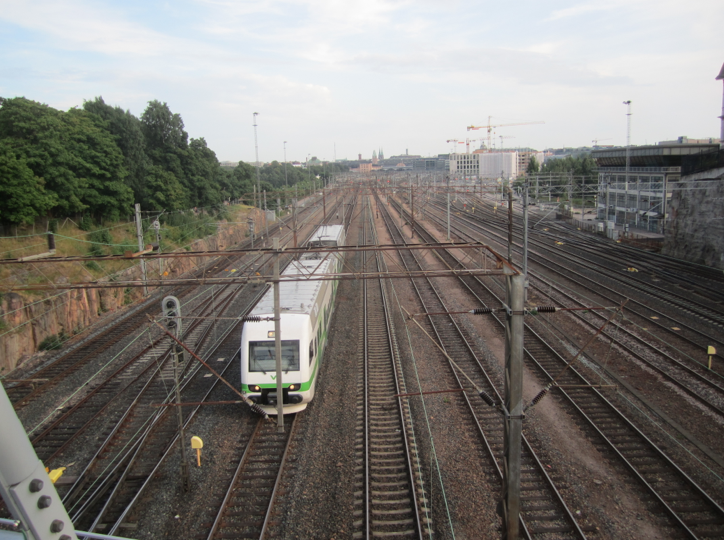




enroute Oslo
Posted in Paparazzi Ethnography, tagged Holmenkollen, Oslo on July 3, 2013| Leave a Comment »
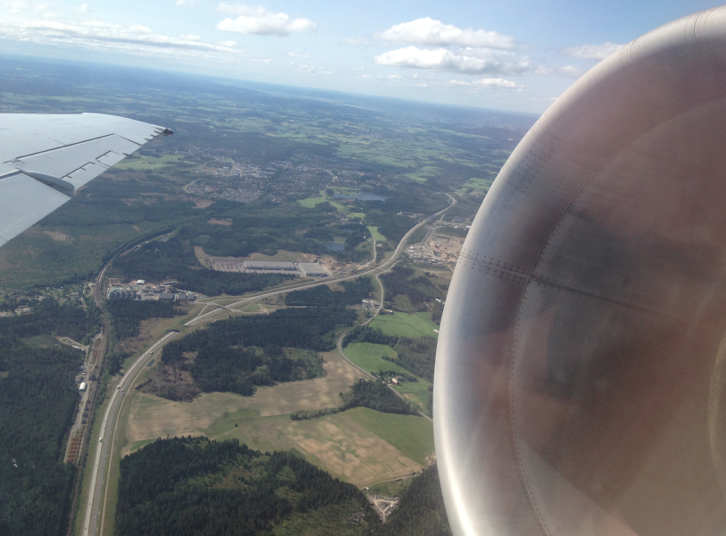
 7/3: Tristan Mermin flew into Oslo from the Bay Area and we spent the week traveling the town and the surrounds, discussing our respective work, its limitations and possibilities.
It was an opportunity to speak endlessly.
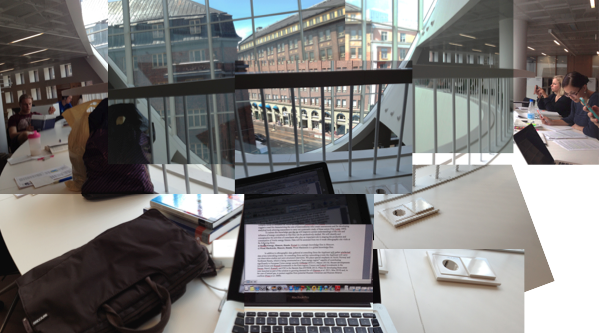
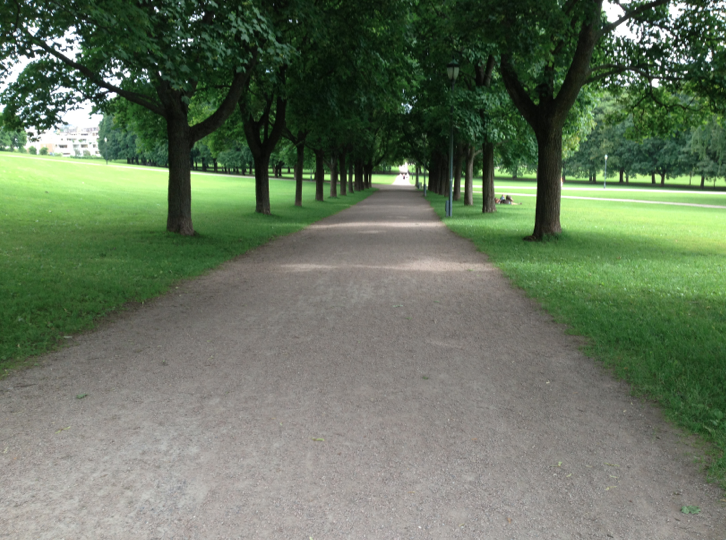
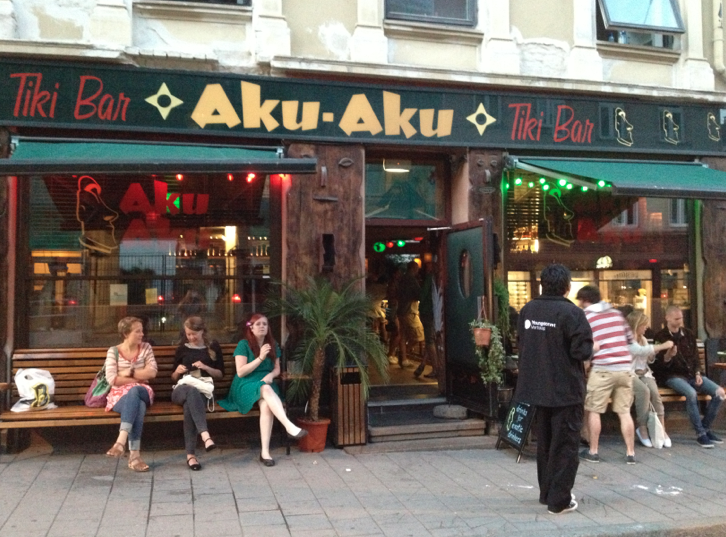
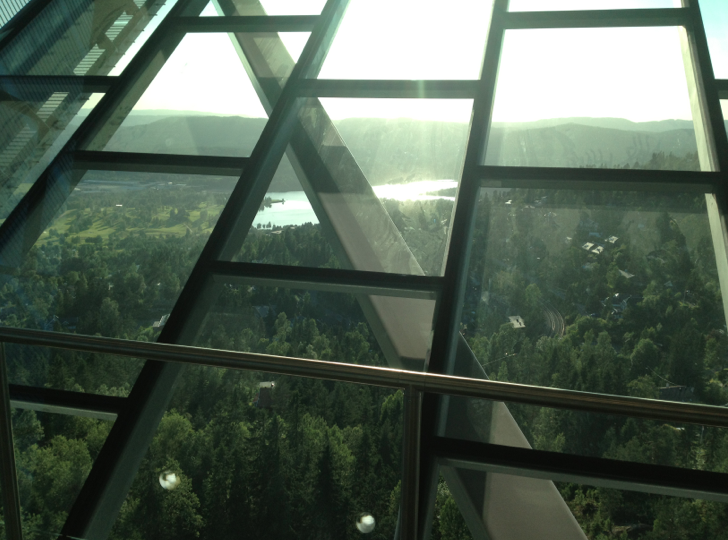
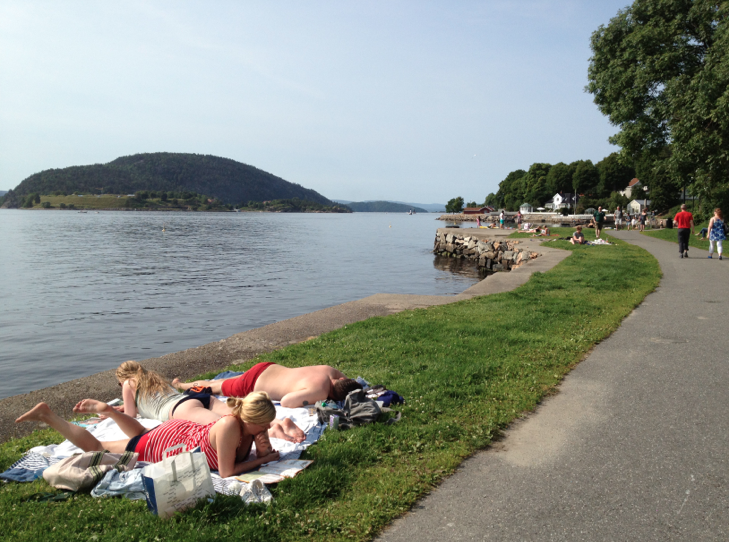
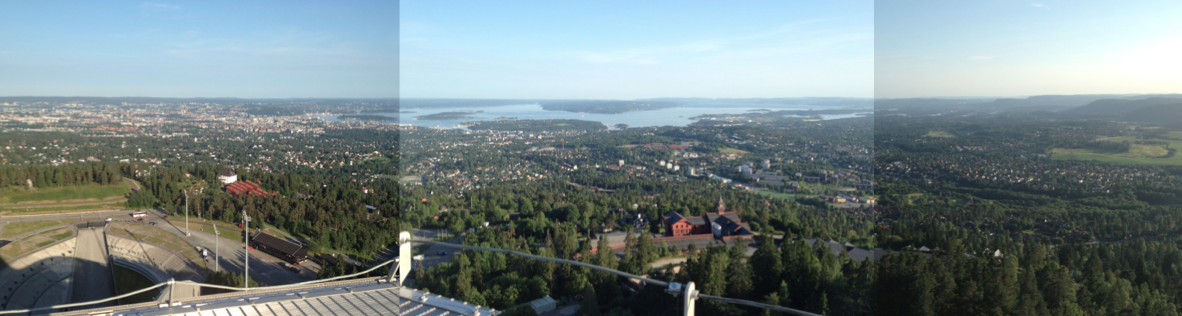
We did more. We played tennis near our flat in Majorstuen, checked out the view from the top of Holmenkollen‘s championship ski jump, went swimming at Drøbak (40 minute drive from town), rented a car to catch a party in Farsund (nearly ten-hour drive to southern-est Norway), strolled the weekend flea market two steps from our front door, attended an Oslo party for Norway’s Miss Universe, toured the Viking and Kon-Tiki Museums and Royal Palace — and of course, hit restaurants and bars – dinners at Kafe Oslo Litteraturhuset, Hotel Havana, Olivia Hegdehaugsvei, drinks at Aku-Aku Tiki bar, Andy’s sportspub and pianobar, Bjoerungs, snacking in Marmaris Pizza & Grill Grunerløkka, Åpent Bakeri in Majorstua, Kaffebrenneriet, a bowl of cherries from Vestkanttorget after our tennis match, and Mabou nightclub where I always wanted to visit.  In one discussion, I was reminded of my drafted manuscript titled Eureka Moment as Knowledge-Event Product, from which I read several paragraphs to Tristan, because of our interest in the role of commerce in the delivery of inspiration. We laughed aloud.
I had suggested a new type of advisory service titled the Eureka knowledge-event or EKE. Eureka knowledge-events (EKE) are delivered personally to clients in the form of an idea to create entrepreneurial thought for seizing opportunity. Responses to EKE are expressions of sudden awareness (wow, I’ve got it!).

 The EKE, I suggested, connects forms of expectation associated with commercialized labor to experiences associated with a personal calling or vocation.
Upon its reading I pulled the manuscript for revision.
Within several days and during our stay, I received a manuscript request from Journal of Business Anthropology, to which I suggested the planned revised article.
 I also had a chance to describe my recent attendance at the St. Petersburg International Economic Forum (SPIEF), the Davos of Russia. Describing how I capture the back-stage scene, Tristan pointed out the gravitational-pull creating activities that typify the event, including the concentric circle security patterns that define the heightened sense of excitement during attendance.
Attending keynote speeches, Russian President Vladimir Putin and German Chancellor Angela Merkel, requires high security identification badges, without which, I noticed several slipping through the turnstile by walking alongside another attendee with the appropriate ID, a tactic for getting a closer look at the power holders.
 We delved into recent activities of Tristan as owner of the brand Batiste Rum, an ultra-delicious, ultra-premium rum that he discovered during his travels throughout the Caribbean.
His stories of exploring the region, tasting, negotiating with different rum producers is fascinating, and I plan to invite myself to accompany him on a St. Barts Island adventure.
 Tristan reminded me also of the need for exercise and how all anxieties as toxins could be flushed through the system from just some running around, an life-balance reminder.
Did I mention how accomplished a tennis player Tristan has become, actually knocking me flat on my back with one of his first serves after I failed to dodge the ball. After the game, all things appeared to us even more cheery and clear.

 We spent considerable time talking of excellence and the importance of interrogating the epistemological core of one’s object to identify in full the points around which what governs survival emerges.
I could not help acting particularly intense, and referred to means-ends causality in the form of a quote by King Louis IX of France, cited in Norbert Elias‘ Court Society, “beware of hope, a bad guide,” which I carry with me at all times, as reminder of that science is politics by other means.

 We went into depth on topics relating of charisma and reflexivity, of humility and of vanity projects and whether second acts can provide an authentic experience and of a shift from wealth creation to commodity flows, and of the importance of protecting cash flow over securing the stability of wealth coming under continued threat.


 We referred to Oslo itself, as a town that reflects, in fact, a city-wide country club, with its public tennis courts and swimming pools, its Royal Palace, museums and gardens, with its street cars that directly take you past the city’s best restaurants and clubs, and the streets themselves, with domiciles that represent, in miniature, sections of various European cities.
It was perhaps Belvedere writ large and public –but with all the actual prices of participation reaching so far into the stratosphere so as to impose limits of entry for only those who can afford the city’s often outrageous cost of living.

 We discussed the ecology of ignorance surrounding ethical practices perceived by others and whether or not it makes any difference to provide feedback upon projects in which others simply do not feel the same. I was reminded of my early work in Alaska on elites and land claims and how the work continues to stir debate long after I have moved on to more pressing questions about energy development and that what presses upon folks as the ethical may long after be forgotten by others whose actions represent casual markings within an arc of trajectory.


 We discussed the lady in the forest.
We mentioned the power of denying helplessness by foregoing desire and rebuilding a life entirely without purpose within the overall structure of capitalism in which the peripheries are purposefully denied agency beyond their capacity to fuel the future through resources and labor.


 Tristan pointed out the importance of “enjoyment” or “profit as you go” principle, to always recuperate the present within the strategic objective.
And here, I thought of Diogenes and the power of anecdote in corporeality of expertise, alongside all the stories in the news these days of workers in Europe living their entire lives through delayed gratification — only to wake up and realize that all their savings have vanished at the hands of bankers who shored up their own assets by putting the accumulated labor of others on the roulette table.
The story reminded me of Henry Miller‘s mantra about the importance of pinning your last dollar to a calendar, to prove and provide a final date when destitution arrives, thereby, living fully and completely up until the last moment. 
 We pointed to the notion of pattern recognition, especially in the context of iconography, for example, that on display at the Kon-Tiki museum, an image hangs on the wall of a photograph of a seated Kon-Tikier, wearing straw hat and strumming an acoustic guitar during their wild ride in the Ocean — suggesting some kind of leisure amidst the wild, and that this very same image, or a cropped version, holds a prominent place in the Aku-Aku Bar in Oslo, suggesting that to replicate (this) iconic form regards a marker of authenticity.
We spent time deliberating on the typology of markers that constrain and define any social field of trajectory.

 In connection, we discussed narrative structures and the importance placed on markers of distinction, the wholesale distraction that accompanies the blinding light associated with awards, research grants, peer-reviewed publications and the like, and the inability to reduce the complexity of the game, particularly in academia, to a logic of practice that could result in efficiencies by any other means than personal labor.
That was my argument, at any rate, even though what-that we had tested ideas about repackaging and kicking down the food chain research articles or the wholesale management of a career by the amount of money required during a budgeted year.
 We mentioned the professionalization of professionals and of expertise, essentially — the bifurcation of intellectuals into those on the one hand that would come to represent a “standing reserve” and provide added value through quantitative values (numbers of publications) and, on the other hand, experts oriented toward research outcomes that would be qualitatively measured based upon the concept of an idea.

We departed as friends.
Blue Velvet

View Sheds

Steak

Slow Club

Locations
Akureyri Albany Amsterdam Anchorage Apatity Arkhangelsk Arlington Averoy Belvedere Bergen Berkeley Berlin Bjørnsletta Bodega Bay Bodø Bristol Hotel Brussels Burlington Calgary Cambridge Chicago Château de La Verdière Cleveland Cold Spring Harbor Copenhagen Corinthian Island Deer Lake Dragvoll Durham Espoo Fashion Street Frankfurt Gardermoen Half Moon Bay Happy-Valley-Goose Bay Helsinki Holmenkollen Houston Høvik Inare Inverness Jinan Kabelvåg Kilpisjärvi King's Cross Kirishi Kirkenes Kjøpmannsgata 7 Kristiansund Labrador City Lake Como Lofoten London Los Angeles Lysaker Marseille Milan Mill Valley Montreal Moscow Muir Woods Murmansk Neryungri New Orleans New York Nidelva Nuuk Ny-Ålesund Oakland Oslo Oxford Paparazzi Ethnography Paris Phoenix Point Reyes Seashore Prince George Queen's Gardens Ramberg Reykjavik Rice University Rovaniemi Salle Sandhornøy San Francisco Santa Cruz Sausalito Skolkovo Sochi St. Anthony's College St. John's Stavanger Stockholm St Petersburg Subsea Factory Suisun Svalbard Svolvær Sørvågen Tempe Tennessee Valley Teriberka Tiburon Tokyo City Toronto Toyama Tromsø Trondheim Töölöö Umeå Uppsala Vermont Villa Frognæs Villa Otium Washington DC White Chapel Yakutsk ZurichVinessa Gingold

StudioPolar

-

CEO man1

CEO man2

-

-

Topical
Londontown

-

-

-

-

-

-

-

-

-

-
-

-

-

-

-

-

-

-

-

-

-

-

-

-

-

-

-

-

Evenings in Houston

-

-

-

-

-

-

-

-

-

-

-

-

-

-

-

-

-

-

Sangria

Evenings in Houston

- PanArcticon Energy Lounge and Data Café


 Paparazzi Ethnography