Feeds:
Posts
Comments

Archive for the ‘Paparazzi Ethnography’ Category

Tromsø

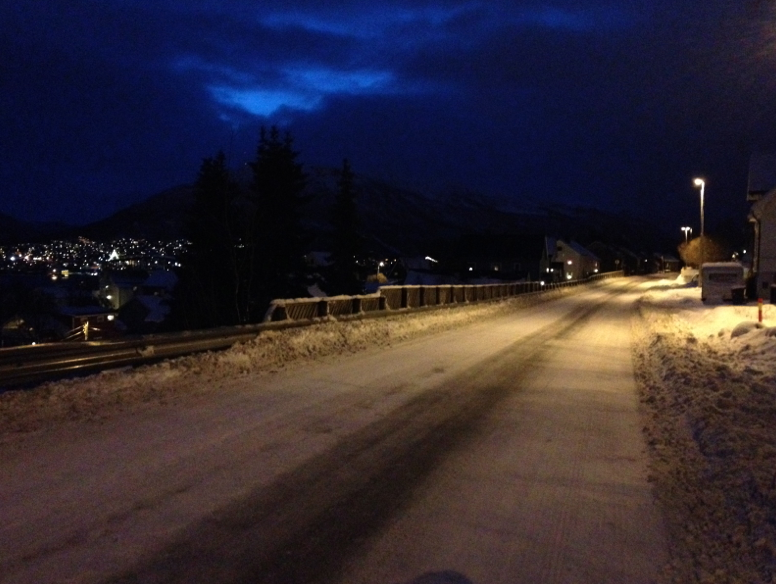
1/5: 51 minutes to walk to work today. The weather was better than yesterday, when I trudged through snow flurries. The route begins in a wooded area, then through a cemetery, following into a neighborhood of scatter-plotted homes and then along a quiet thoroughfare.

No sunlight since I arrived last week.

Nor will there be until the end of January.

walk

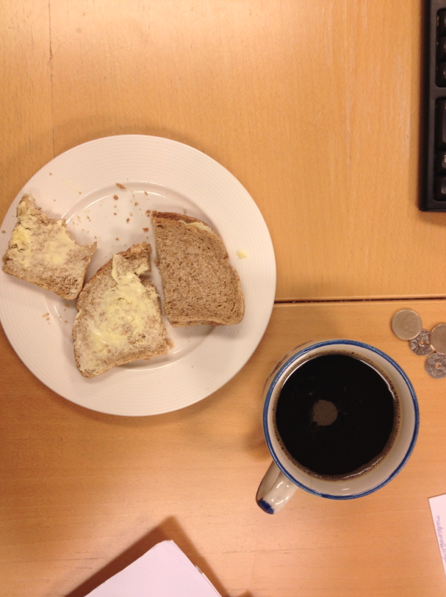
Here, the routine is reading, writing, walking, and slices of bread with butter or cheese.

For more details, see US-Norway Fulbright Blog, Tromsø Journal where I put down the minutia of a life in a northern town.

Speaking of consumption differences, I completed a revised article on energy and profligacy for publication soon in Environmental Research Letters.


image

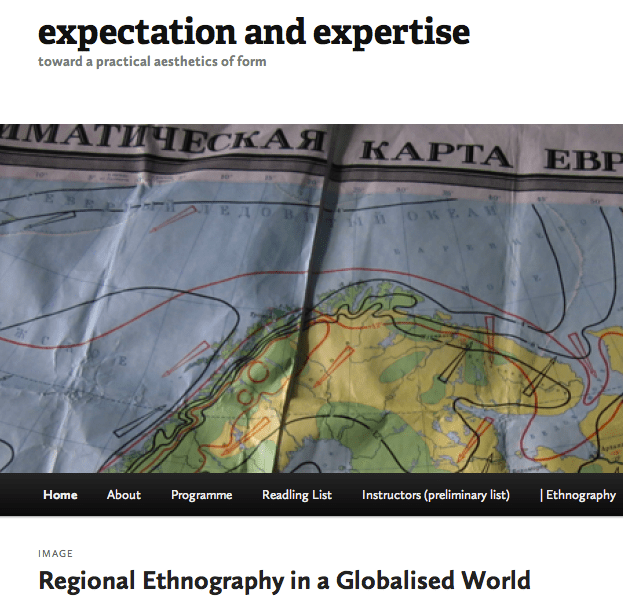
Two issues: First, the practicum that I am organizing on Expertise and Expectation, and, Second, my European Research Council proposal, due shortly.

I created a website for the course, which I will use to deliver detailed treatments on research.

The image below is a link to the practicum site.

course
food

Read Full Post »

neckline

meal
In Bergen, I found the ox tail stew delicious.

necklineDesiccated mass.

image

I have been writing on the body of the expert, when I realized that vampires are relevant to the discussion — the desiccated bodily figure that both experts and the living dead occupy. In the case of the former, bodies rely on a certain distance of feeling, as if they are themselves drained of blood.

For a time, I collected notes on a condition associated with professionals that I had labeled Academica Nervosa. What was evident in the literature are references to the fatigue or desiccated mass of the intellectual.

neckline
In Lolita, Vladimir Nabokov speaks of European Professor, Humbert Humbert as “laid up with a severe attack of inter cotal neuralgia” (p. 311) or “a dreadful breakdown [which sends him] to a sanatorium for more than a year (p. 32).

Anton Chekhov, within The Duel, speaks of “our neurotic age [in which] we are slaves of our nerves” (p. 119, 111) causing “spiritual suffering” (p. 33). Fyodor Dostoevsky notes of “fits of epilepsy” referred to in House of the Dead (p. 9, 109-110) where convulsions represent a freedom of will, as also in The Idiot.

1

There are published accounts of “Mystery Rash” among school girls in a New York Times magazine cover article, some years ago, titled “Hysteria Associated with 9/11”. The anxiety attacks described by actor Ian Holm, whose only memory of childhood, he states, “I was born in a mental asylum… my childhood was bizarre and enclosed”.2
In Bram Stoker‘s Dracula, the blood of healthy humans is selected carefully, for “old or young, who toil much in the world of thought, our nerves are not so calm and our blood not so bright…” (p. 121). Further, the intellectual, is “no lunatic in a mad fit, but a sane man fighting for his soul…” (p. 247).

Of the 19th century fit,  Charlotte Brontë states of Jane Eyre,

“I suppose I had a species of fit: unconsciousness closed the scene” (p. 19).
3
Evelyn Waugh, in  Brideshead Revisited, comments “…in that city there is neurosis in the air which the inhabitants mistake for energy” (p. 219), and, “…I’ve been tormented with visions of voluptuous half-castes…”
4
A fading tennis player’s ability to welcome sport is used in reference to Pete Sampras: “[Whereas Andre welcomes the challenge,] Pete looks at it and says ‘Man, do I really want to do this?'” (New York Times 6/23/02 sports page 4).
driving

The concept of serendipity, what Max Weber describes in Science as a Vocation, “certainly, chance does not rule alone, but it rules [in academia] to an unusually high degree. I know of hardly any career on earth where chance plays such a role” (p. 132).
driving

All signatures are conditions of desiccated mass associated with the highly educated. Again, in Brideshead Revisited, “she told me later that she had made a kind of note of me in her mind, as, scanning the shelf for a particular book, one will sometimes have one’s attention caught by another, take it down, glance at the title page and, saying ‘I must read that, too, when I’ve the time,’ replace it and continue the search” (p. 171).

driving

“It needed this voice from the past to recall me; the indiscriminate chatter of praise all that crowded day had worked on me like a succession of advertisement hoardings on a long road, kilometre after kilometre between the poplars, commanding one to stay at some new hotel, so that when at the end of the drive, stiff and dusty, one arrives at the destination, it seems inevitable to turn into the yard under the name that had first bored, then angered one, and finally become an inseparable part of one’s fatigue” (Brideshead Revisited p. 256).

Read Full Post »

Stavanger

sites
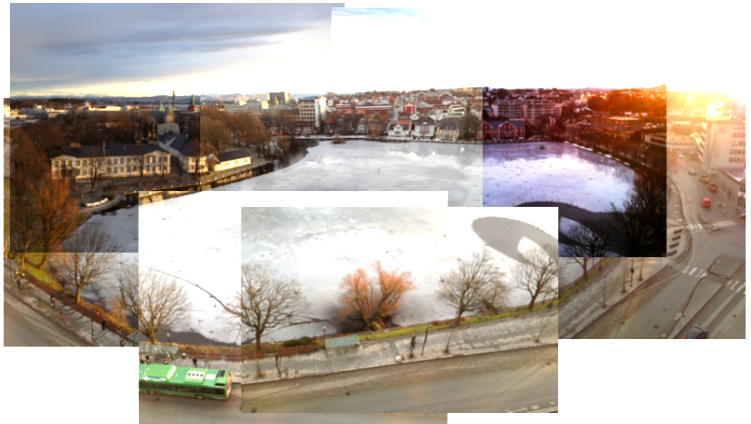
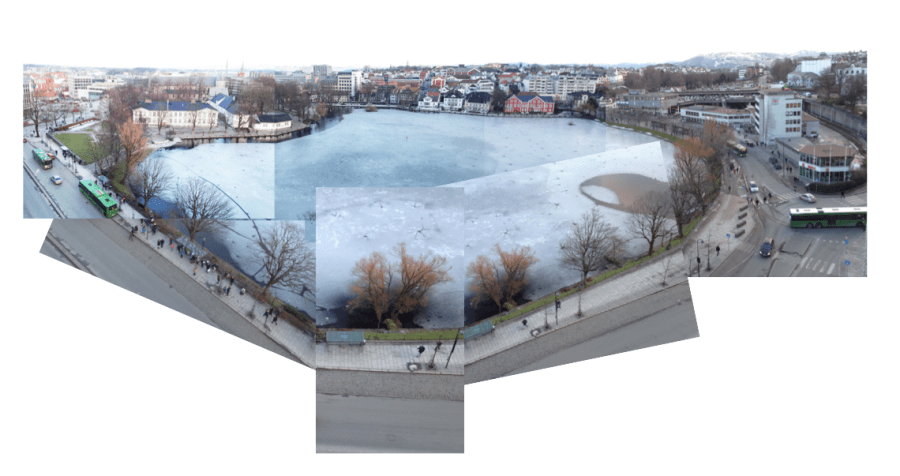
12/20: Viewshed from the Rica Hotel, downtown Stavanger.
viewshed

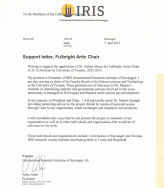
I met with Anna Aabo, President of IRIS, International Research Institute of Stavanger. We met at the Oslo Energy Forum in Holmenkollen, last year. She was kind enough to provide me with a letter of recommendation for my Fulbright award.
support letter

Anna has just put the final touches on a Consortium with the University of Tromsø, that deals with technical and social issues relating to oil and gas development in the Arctic. In response, I let her know that I will be leading a PhD seminar at U Tromsø on the topic of expertise in the hydrocarbon industry.

Here is the course website: Expectation and Expertise

I walked through my projects, describing a proposal for submission to the European Research Council; the need to develop relations with industry and even spend time at IRIS for field study; and, to develop protocols on knowledge exchanges.

IRIS

Anna was on board with everything, or I should say, supportive, though the devil is in the details.

Did I mention she has great sense of humor?

Upon arrival we headed straight for the coffee bar, a necessity in Norway as in the States. While there, she pointed out that the cafeteria had produced a Christmas porridge for the holiday festivities. I responded that porridge is but just one form of punishment in the United States. We both laughed. When leaving the canteen, walking back toward the lobby en route to her office, I saw a light shining in a particular angle, for which I had to stop right then and take a few photographs.

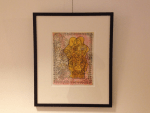
spot light art object
In the images directly above – a spot-light shines directly toward a piece of framed art work. The thoughtful positioning of light to enhance visual appreciation of professional art always captures my attention.

Two other images were close by.

art wind more artAnother piece of art hanging directly beside the previous artwork, located near the lobby; and an oversized publication that depicts artists crafting new designs on wind turbines.

Such appearances, incidental, lend authority to IRIS as an institute of highly abstract forms of knowledge production and appreciation. The assertion of abstraction takes on an immediacy of recognition within the public space of the internal work environment, made visible through artifacts that have transhistorical (non-personal) value.


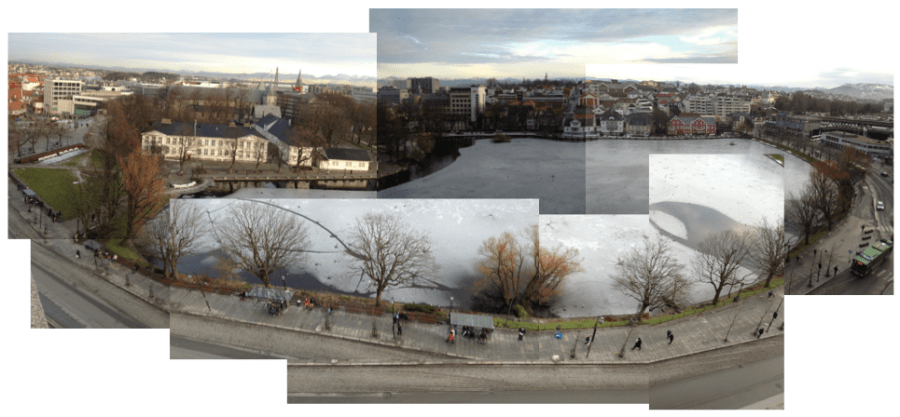
12/18: Waking up, checking the weather of my viewshed.
viewshed
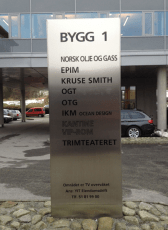
Today, I met with a few folks from the Norwegian Oil and Gas Association, an industry concern supported by oil companies. The firm has about 40 employees and is located in Sundnas, a town 20 minutes drive from downtown Stavanger. It is the location of Norway’s oil company head offices.

My contacts were Maiken Ims, Senior Advisor, Industry Policy, and Alfred Nordgard, Special Advisor, International Relations — both of whom I met last month in Houston at the TransAtlantic meeting organized by Norwegian Consular General, Jostein Mykletun.
front
Maiken and Alfred invited me to lunch in the building where they work. A number of oil and gas supplier companies are located nearby as well as in the building itself. Everyone, everyday, heads down to a cafeteria where they have access to plenty of yummy food. The canteen is open between 11AM and 1PM. I always order what my informant is eating. I like to taste what my informants are tasting.

lunch
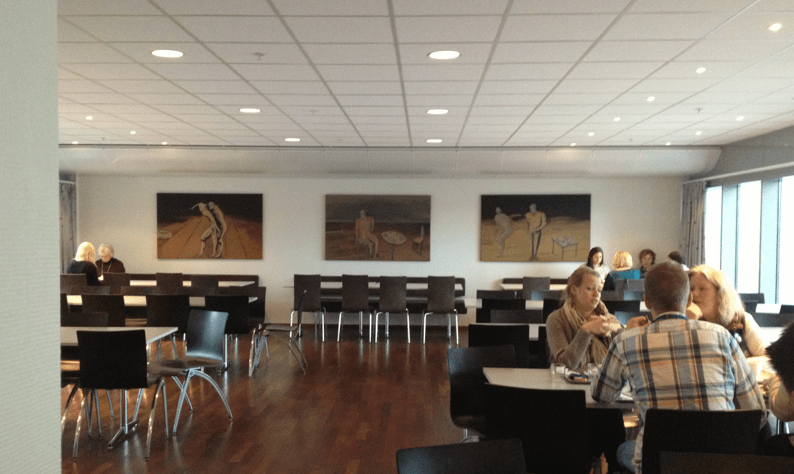
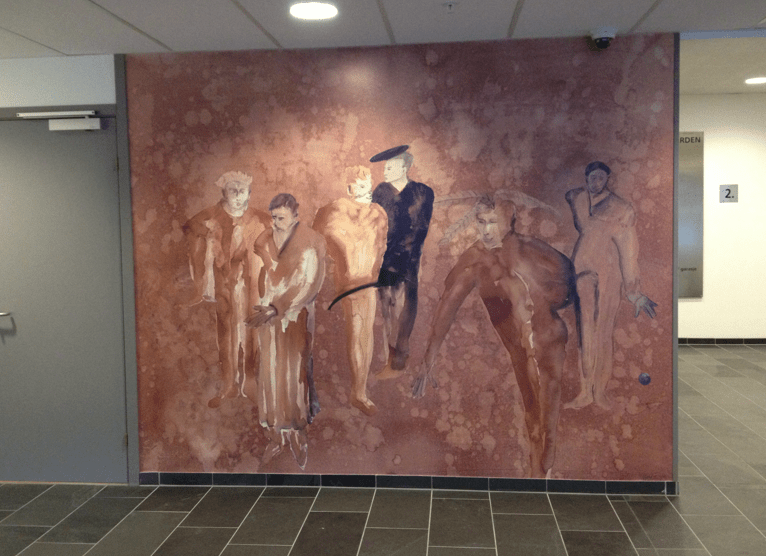
One point that captured my attention was the artwork hanging on the walls of the lobbies and in the dining areas.

The earthly tones in the paintings mimic the stratigraphic layers where oil and gas are recovered. The images have also a paleolithic-style painting feel of say, the French Lascaux caves. Even then, given their primitive, primordial sense, they still manage to provide a kind of salon motif, and pose a unique contrast to the oil and gas work environment.

An Orchid in the below image, in the middle of a Norwegian winter. There were several lying about in the building.

salon

salon

cafeteria
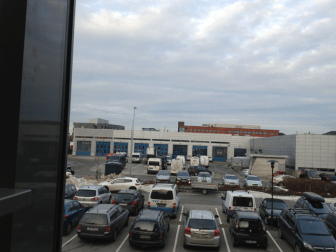
We sat having lunch facing the parking lot. Maiken mentioned this point herself, stating further that in Oslo — restaurant windows face into courtyards.

In Stavanger, however, windows face toward industry, whether of cars and buildings, and that was perfectly suitable for Maiken — and for those, I guessed, who were also having lunch looking out at the parking lot from the cafeteria window.
parking

I asked Maiken whether she could think of any companies working in Norway that the organization does not represent. She could not think of one. Here is a list of the companies the firm represents: Norwegian Oil Companies

Apparently, Alfred had worked previously at Shell under Johan Nic Vold, who is now Managing Director of Oslo Energy Forum, and a mentor of StudioPolar who has given wise advice in thinking about how to carry out this project in Norway. Alfred, Maiken, and I, knew a lot of the same folks more generally, and spent time exchanging networking notes.

Alfred discussed at some length the Russian High North developments, demonstrating that he knew quite a bit about regulation and tax issues. I was curious about the networks they belonged to and peppered both with questions about what boards they sit on. Alfred sits on the Research Council of Norway board, the main government funded academic research institution.
reading
In the end, I was happy to have made their acquaintance. Everyone in Norway that I speak with appears well connected through various different jobs they hold in industry and government. They have been working for some 10 to 15 years in the field.

As it often happens, I was not always quite sure what I wanted out of the meeting, other than a chance to connect, to swap stories about who we know and what we think is going on across the Arctic frontier.

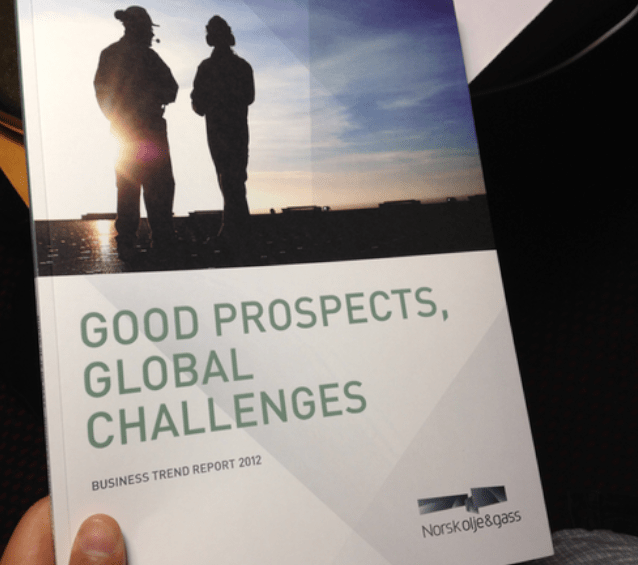
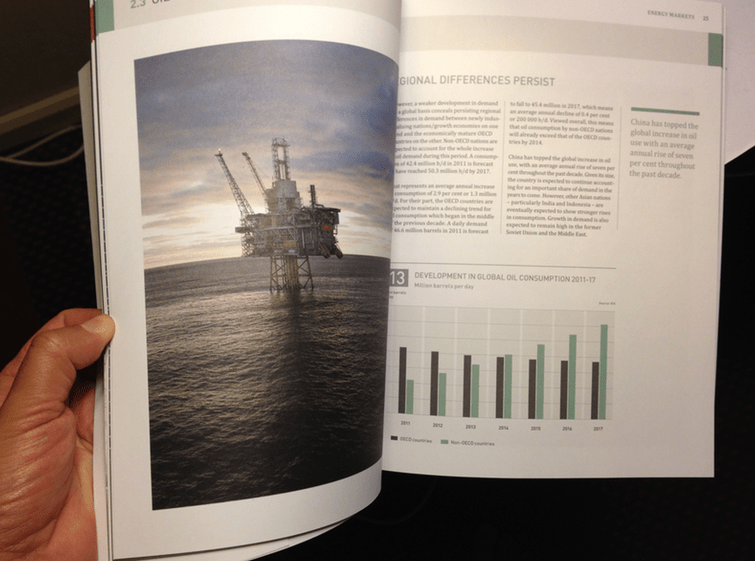
On my way out, Maiken gave me a swell book, the firm’s business trends report. I was handling it thinking, “wow, this really has the feel of a coffee table book”. And I told her so, to which she replied that it sometimes feels good to have something to hold in your hand. I asked how many copies did the company publish, in actual print, because it is also available on the internet, so I thought perhaps they only published a few. She replied that the company had printed “a lot”.
book

book
We will come back to Maiken and Alfred, and in fact, Alfred will be in Tromsø soon, for the Arctic Frontiers Conference, so that will give us another chance to connect.


12/17: Lounging in a hotel room, waiting for inspiration to begin writing.
sitting

Viewshed from my window.
view
Sitting around, waiting for what to happen, I was reminded of the Hollywood motion picture Inception, where director Christopher Nolan concerns himself with the nature of the very idea. The film poses the question: How does an idea occur to someone’s mind, and — an idea that must be correct, if one is to accomplish anything worthwhile?
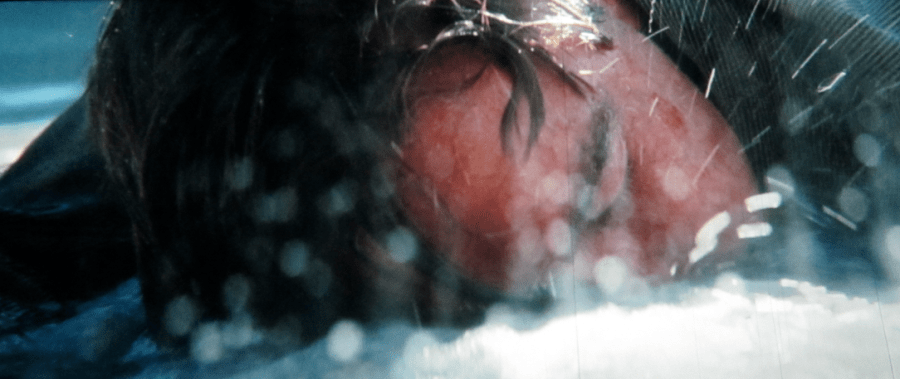
faceThe argument is straight forward: Ideal beings struck so suddenly by a strong idea that it crushes them, then and there, perhaps forever. They become passionate believers, but never strong enough to master the idea, and so their whole lives afterward are spent, citing a passage from Fydor Dostoevsky, in some “last writhings, as it were, under the stone that has fallen on them and already half crushed them”.

Sociologist Max Weber at the turn of the 20th century, suggested that a correct idea is prepared only “on the soil of very hard work”, which explains all the running around in Nolan’s film. For Weber, the idea is a product of inspiration but which can only occur when the idea pleases. Weber cites scientists, such as Rudolf von Ihering who he describes, as the idea coming to him, “when smoking a cigar on the sofa,” and Hermann von Helmholtz of whom he states: “when taking a walk on a slowly ascending street,” etc. Here, inspiration is beyond deliberative reach. It resists our direct will, but can, like a muse appear to us when it feels we are ready.
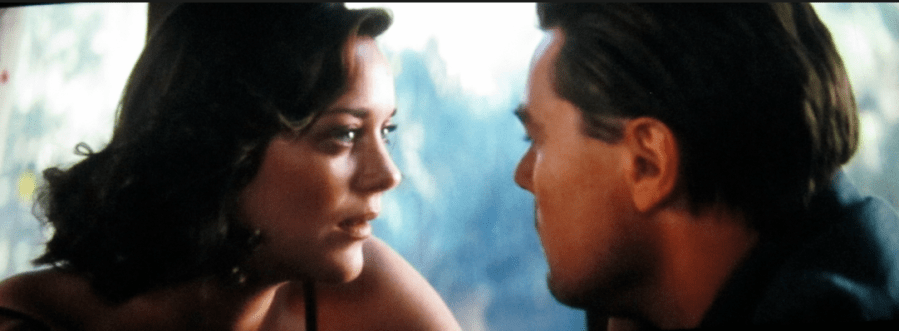
herMovie director David Lynch, according to a New Yorker article some time ago, describes things differently. He suggests that ideas are floating in the cosmos already, and in fact, what we require is nothing less than a factory built in advance, awaiting to capture ideas upon their descent. It is similar to, say, the way a snow flake will, upon entering Stavanger, either lose itself by melting away, or, given the correct apparatus, be translated into material form and, in such cases, show us its deliberative design. For the director Lynch, then, it is not the correct idea that we require, but the correct form of capture.

These two approaches presuppose a dualism between content and form. For the Weberians, the concern is matter or its content (what is the idea), whereas, for Lynchens, it is manner or the form (how is the idea presented).
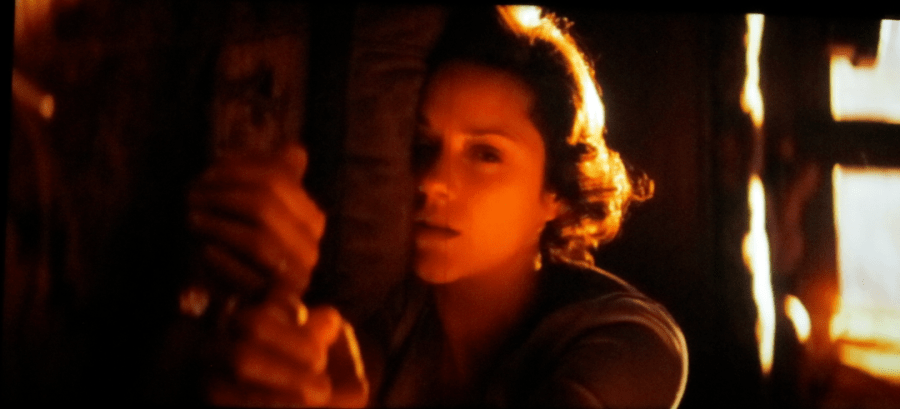
waitingMikhail Bakhtin makes a big deal of the person born of the idea too. In Fydor Dostoevsky’s novels, Bakhtin argues, there are no mere ideas, but in fact, voice-ideas, idea-images, idea-forces and so on. It is precisely a fidelity to the authoritative image of a human being in pursuit of resolution of ideological quests that represents the ideal human being, or something like that.

I am reminded here of statements by Stepan Trofimovich taken from Dostoevsky’s novel The Demons:

“Oh my friends, you cannot imagine what sorrow and anger seize one’s whole soul when a great idea, which one has long and piously revered, is picked up by some bunglers and dragged into the street, to more fools like themselves, and one suddenly meets it in the flea market, unrecognizable, dirty, askew, absurdly presented, without proportion, without harmony, a toy for stupid children!”


12/16: Peering out at my viewshed.
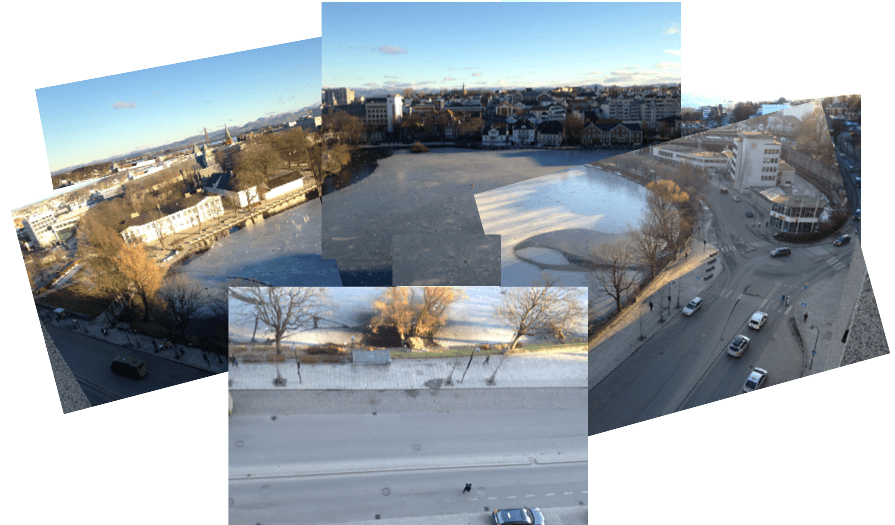
viewshed
Writing in a hotel room, I feel like Dashiel Hammett and some of the characters of his own works. The comfort, the warmth, the impersonal nature of the surroundings that by definition are restored every day, like a freshly minted newspaper, bringing everything back to an originary point of perfection, in a manner that is transhistorical, leaving behind the personal belongings that carry incommensurable values — I manage to write quite a bit and under pressure in the hotel room.

room

The writer’s grotto.

Read Full Post »
Petrorama

MuseumpetroramaI visited the Petroleum Museum in Stavanger. Impressive indeed. The museum is well designed and offers quite a few distinct installations providing easy to grasp information.

In this way, the viewer gets a quick understanding of an incredibly complicated set of operations. The ticket salesman started me on my tour, and even gave me a discount (25Kr less) because I had arrived toward the end of the day.


drill bit
projection


As I entered, I came face-to-face with the “largest drill bit in the world”. I wrapped my arms around it, and gave it a good TSA-style pat-down.

From there I passed a set of panels describing Norway as one of the world’s oil nations, and read up on the loads of money in billions of Kr that flow into the Norwegian government coffers from oil exports.

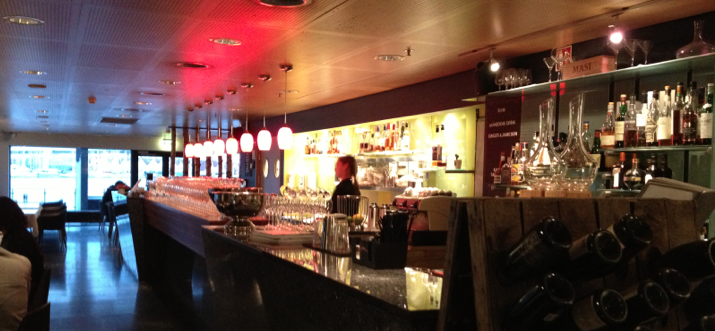
bar
sunday brunch


On my way, I passed by a fancy bar and restaurant inside the museum. The Sunday Brunch menu looks yummy as did the premium wines and hard liquor, not a standard in American museums.

The first installation is the History of the Earth room, which answers the question of “Why does Norway have oil?”


There are a number of, what appear at first glance as slot machines. That is, there are well-lit up kiosks that provide a natural history lesson covering billions of years of geographical history. Also, there is a movie projected on an earth-like orb that hangs from the ceiling. It depicts the movement of tectonic plates and the continents over billions of years in about 8 minutes.
slot machines?
This floating earth above my head was mesmerizing, especially when it shows a meteor screaming down on to the Gulf of Mexico, exploding and sending ash into the atmosphere. I stayed to watch the movie a few more times, even though I knew the museum would soon close. I took snap shot after snap shot.
ancient world
earth's movements

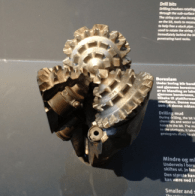
A collection of various types of drill bits was interesting, especially since there was a window above the bits, where I could see the bar/restaurant, which made me a little hungry. The bits were adorable, almost like I was in a jewelry store and looking at some fabulous gems that were placed on artistic mounts.
bit

bit

bit

bit
bit


From there, one finds a number of dioramas that depict a series of models on a scale of “1:750” showing the innovative methods of drilling and production at increasing depths. I like dioramas. It reminds me of when I was in the third grade. Back then, we were asked by the teacher to bring in a “shoe box” to create some kind of story through paper cut-outs and glue.


diorama
I remember quite vividly the story I depicted. It was the Battle of Hastings, in England, because my father said we had a relative who fought in the battle. The diorama depiction, however, was not as practical as I would have hoped, with my colleagues suggesting that I had put “raisins” in the shoe box. They were supposed to be “people” charging down a hill to battle.
diorama

diorama
There is a fabulous collection of models of vessels and installations that my photography did not do justice to.

Soon after the models, the viewer is invited to Take a Journey Offshore — passing through a room that resembles a helicopter cabin to create the illusion of a journey to an offshore platform.
model
Technology in Depth, is one of the best depictions I have seen about explaining the complexities of oil and gas development. At first, I was not too excited about it. It is movie that recounts the pioneering technology for a very deep water installation that provides natural gas for export to the United Kingdom.

Outside the mini-theater, a little poster mimics the kind of posters one sees at a regular movie theater.
movie
Also, there is a timer to indicate when the next movie showing will occur. Walking into the last few moments, I was not impressed with what was playing. An actor from England had just arrived home to realize that he had not paid his bills and that his electricity was being shut off.

But I waited for the next showing of the film.
movie
And I did this, because while I was in the theater, I overheard someone who just finished watching the entire movie state, “amazing, that is an amazing installation”. So, with that recommendation, I wanted to see what the hubbub was all about.

The movie was fantastic.

Basically, the actor leaves his home in the UK, flies to Norway to see where his stove pipe natural gas (for “making a cup of tea”) is coming from. He ends up, in his first location on an off-shore rig off the North Sea coast of Norway.

There, the movie depicts with animation, the laying down of pipelines along the sea floor to bring the natural gas to shore for processing and then, the export by pipe, the longest underwater pipe in the world, to the UK.
movie
From there, the actor heads over to various locations where different operations are taking place, including a housing site for all the steel pipe. The massive interconnections of everything in the video made me really think about what small aspect of the industry that I cover, and how it is that so many of the people that I work with have nothing in common with the daily practices that put this vast infrastructure into place.

Two other movies are available, one that depicts divers working in underwater to realize the Norwegian Oil Adventure.

Again, I was almost quick to run through the movie, but it was fascinating, a combination of real live video and animation, demonstrating the installation of deep sea pipelines.
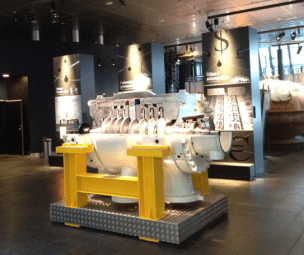
gas compressor
Finally, Petrorama provides a wide view of Norway’s oil history, and is a mural that surrounds a cinema for the movie Petropolis.

This is a 3D film about oil and gas with cartoon creatures talking to the audience. By this time, even though it was in Norwegian language (the other films were in English), I decided to step in and take a seat.

I was not disappointed.
museum
A photo of the museum above, depicted as stratigraphic layers of sedimentary basin.

Read Full Post »

oslo epilogue

lunch

breakfast bartender dinner

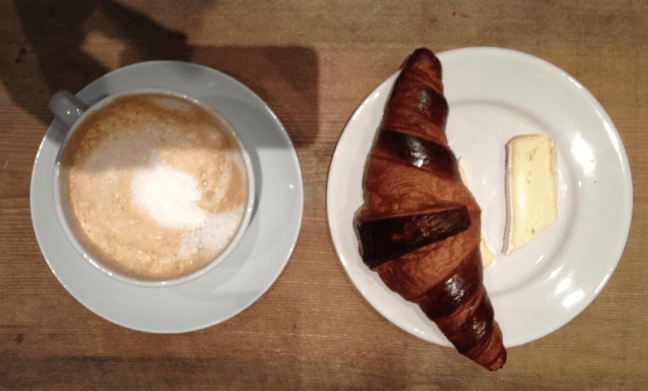
morning meal

food

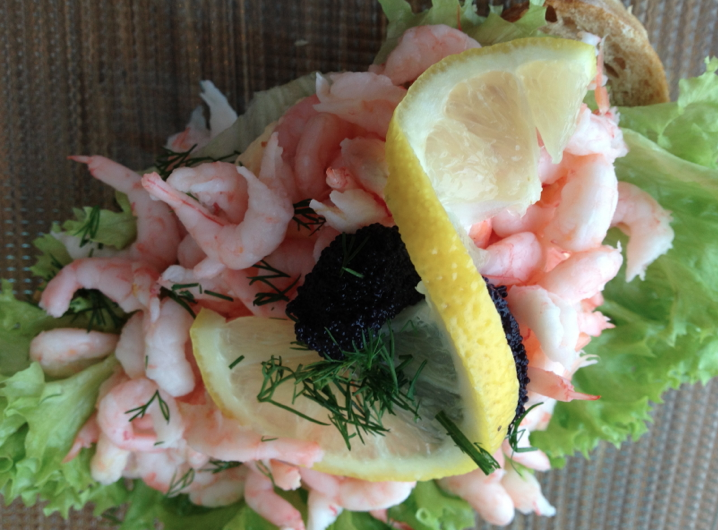
Yummy


En route to Stavanger, but one more thought:
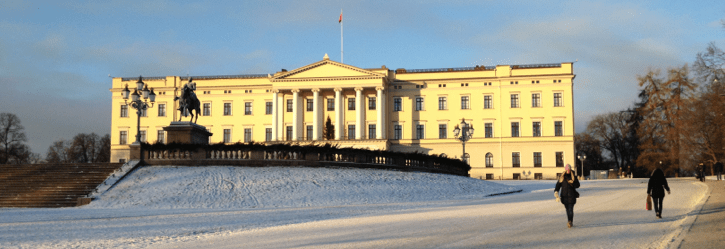
kings palace
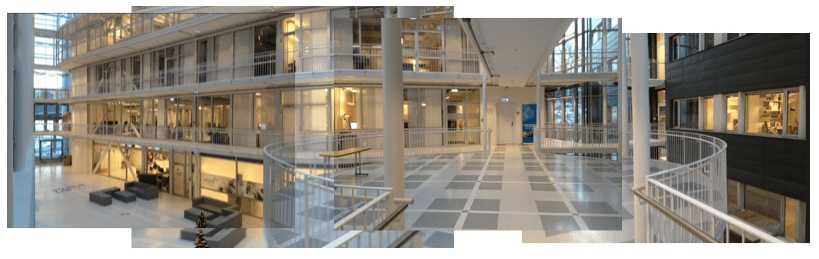
At CICERO the day before, during an interview about what I might bring to the Ny-Ålesund Symposium, I was prompted suddenly, to provide specific details about what kinds of regulation industry requested on Arctic natural gas development, using an example from the Alaskan context several years ago.
cicero
The question struck me acutely. In-depth details associated with anyone particular statement, while in my head, are rarely requested.

At this moment, I switched into a kind of second-order routine of work, consisting of details that were still known to me, and to an extent routinized, but definitely not associated with my typical set of statements.
cicero
Nevertheless, once I began talking “in detail” — I became more excited, and began to deliver data in a similar manner to a scene from, say, Fydor Dostoevsky‘s The Idiot, when, during the engagement party at the Yepanchins‘, for example, Prince Myshkin speaks about his feelings on life and religion, expressing his infinite joy.

outside

Read Full Post »

This evening, 12/14: The octogenearian, Siberian specialist, Eskimologist, Caucasian scholar, and not infrequent Moscovite celebrity, Dr. Serguei Arutiunov, during a stroll through Moscow some years ago, pointed out to me the importance of geographic positioning in the European city.

As a result of Westerly winds moving across Europe, the aristocratic- and upper-classes, in London, Paris, Berlin, Vienna, and as far east as Moscow, located themselves on the West End of cities, for access to the freshest and healthiest air — while the East Ends became homes of the working-classes, factories, one might say, the remainders of life passed over by the wealthy.

In this way, one can imagine the historically specific development of social and economic divisions unique to each city, based on geographic positioning — the specific languages e.g., cockney in London, forbidden liaisons between East End boys and West End girls, romanticized in movies and pop songs, and yet, a specific trend that has resulted in some rather general conclusions.

factory factoryThe geographic positioning of etiquette and form, admittedly, is a small data point, perhaps, in the development of the modern city.

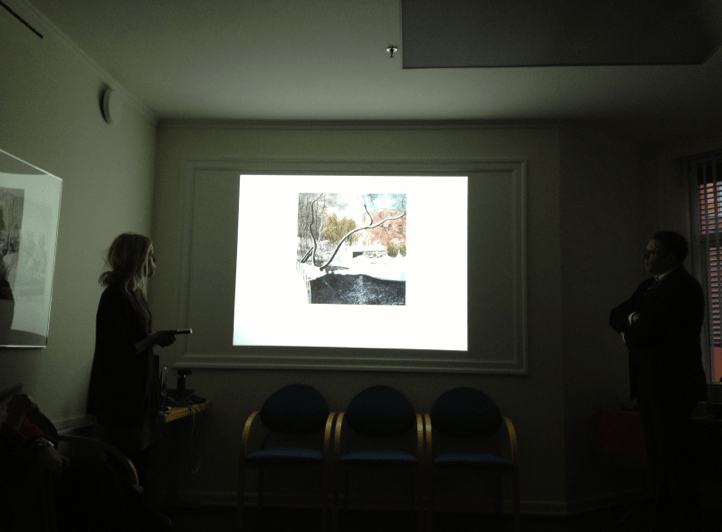
Nevertheless, it was given renewed breath this evening, when curator and art historian, Ingrid Wisløff Aars, provided guidance on eighteen artistic prints by Ole Ek’s (1913-2004) titled “Akerselva fra Maridalen to Vaterland”, now on exhibit in the Fulbright office, Oslo. In the course of her introduction to these prints, which traces images reflected along Oslo’s Akerselva River, Ingrid pointed out that the West End of Oslo, was the location of the wealthy and the East End, was the home of factories and working classes.

Thus, in these two images above, the first, a projection of a print, and the second, the actual print — we see Akerselva River. We see also, the factory position on the East End of the River.

imageOne participant to the evening mentioned that the prints do not include visible persons.

And yet, in this particular image, we can see Ole Ek, the person, quite clearly. He is, literally, standing on the West side of the river, looking East toward the Factory. And where else should he position himself? After all, he is an artist, and thus, distanced from the material of labor and the enterprise.

And by definition, then, where are we located — as observers to the image?

imageWe too, are located on the West End. As in the very image above — it is an image, to borrow from the Pet Shop Boys, of West End girls, located as they should be, on the privileged, observational, conversational, side of the river.

An innovation of Ek, apparently, that the very persons, it turns out, he left absent from the prints, are actually, very much present, as observers looking over to the East. The persons of the image, are audience participants — And because the factory is a house of labor, on the East End, we can expect that the audience, located inside, observing the image, on the West End, is located in another type of house: A Salon. A Factory on one side for laborers (East End), and a Salon on the other side for observers (West End). Voilà:

salonOf course,  I could go on, but you get the message. Of other things that caught my attention this evening, in addition, of course, to the wonderful company of everyone involved (including the gløgg):

type curator print

 Curatorial practice: Script written with a type writer, then cut with scissors by hand and finally hand-pasted (no doubt using water soluble glue) to the matte.


pingpong12/14: I started my Julegløgg at Litteraturhuset yesterday, with Kåre Haage, chatting about this and that for several hours over a pig head cheese sandwich rolled up in potato wrap, like a Norwegian shawarma. Oof, did I roll him over the coals with all the speechifying I engaged in.

But Kåre is a mentor for certain, former ambassador/consular general for Norway to Russia, he took me on as I began this project looking at Norwegian-Russian border energy development, and has since provided commentary on all matter of issues.
pong
Well, later that same afternoon, I had the opportunity to buzz over to CICERO, a strategic knowledge institute associated with University of Oslo, to have a chat with collaborator Ilan Kelman, who hails from Toronto, about whom I write in an earlier blog this past summer, when we met to discuss upcoming projects on energy development in the Barents.

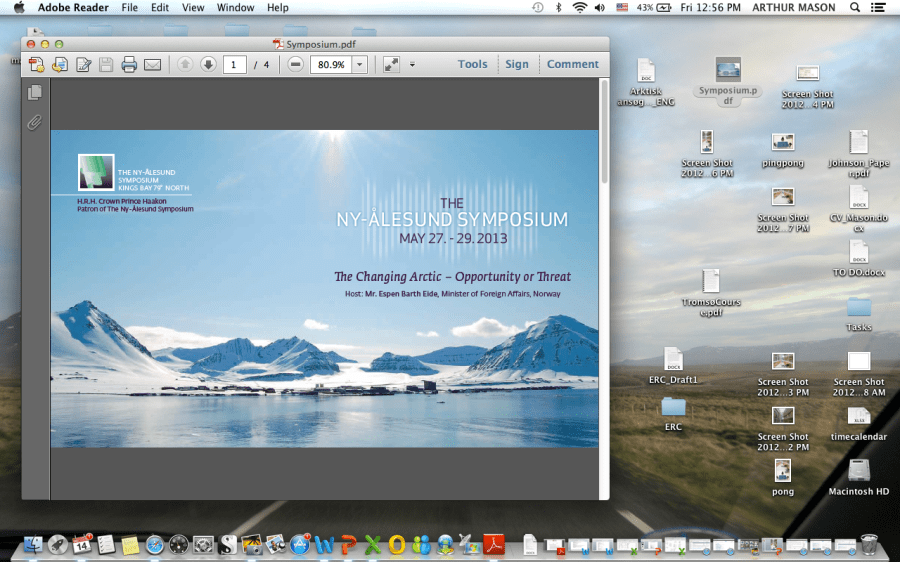
And in fact, as coincidence would have it, I came back this morning to CICERO to meet with a few other folks, namely Erik Tollefsen and Pål Prestrud, to discuss my attendance at the 2013 Ny-Ålesund Symposium in May, where on the agenda, alongside attendance with heavy hitters in oil and gas industry, NGOs, government and all that good et ceteras, is a discussion about the future of Arctic oil and gas development, right up my alley.
symposium
Pål and Erik were swell. I came, blowing into town, unwrapping my intellectual wares, like a true American pitchman, they listened politely, pushed back, asked for details, crossed swords, politely, over coffee, with me burning their ears out, jumping hot foot from one topic to another, making sure comprehension remains at a minimum 85% with the remaining 15% incomprehensible as a defense to marking out my own legitimacy as an academic. We were happy.

It looks to be a good venue this year, and with proposed Helge Lund in the room, CEO of Statoil, I would get another opportunity to mingle up close and personal with folks I met in 2011 at the Oslo Energy Forum at Holmenkollen, what a spectacular roundtable that was.

I am now headed over to the Fulbright office for the julegøgg proper, homemade pepperkaker, Christmas spirit and art exhibit. Through a partnership with “Kunst på Arbeidsplassen” (Art in the workplace), Rena Levin has announced a new exhibit adorning the Fulbright office walls, Ole Ek’s (1913-2004) “Akerselva fra Maridalen to Vaterland”. KPA director and art historian, Ingrid Wisløff Aars will be on hand to  guide us through the 18 prints by Ek, which describe the scenic  and historical walk along Akerselva from Maridalsvannet down to Vaterland (near the Opera), where Akerselva flows into the sea.

 pong-y

Read Full Post »

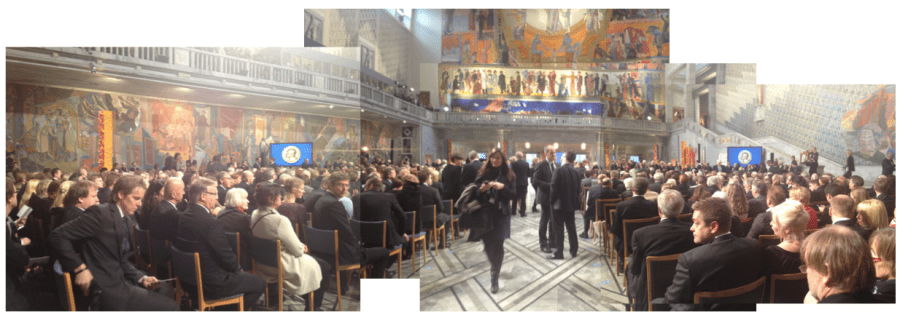
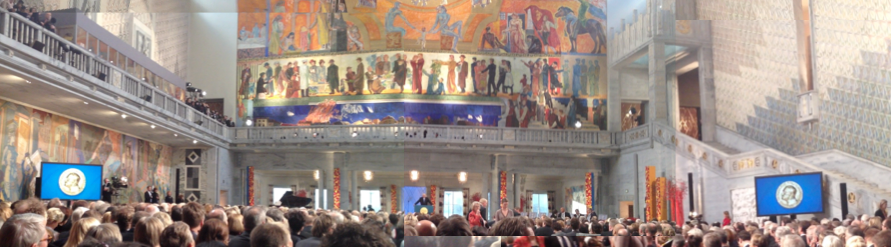
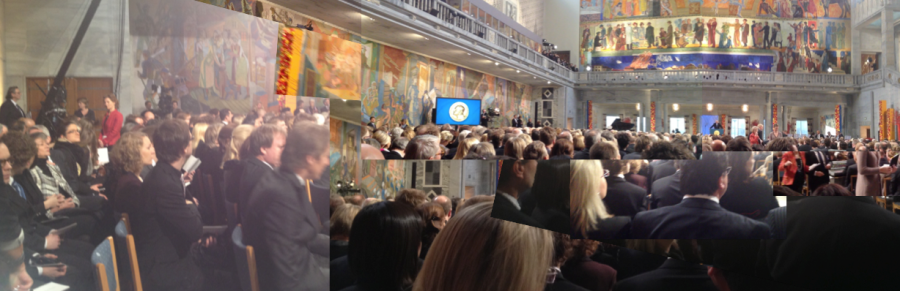
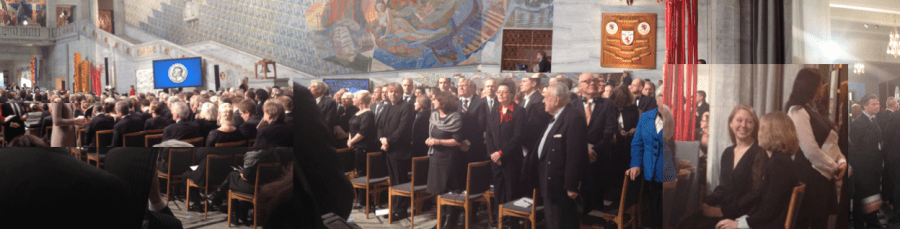
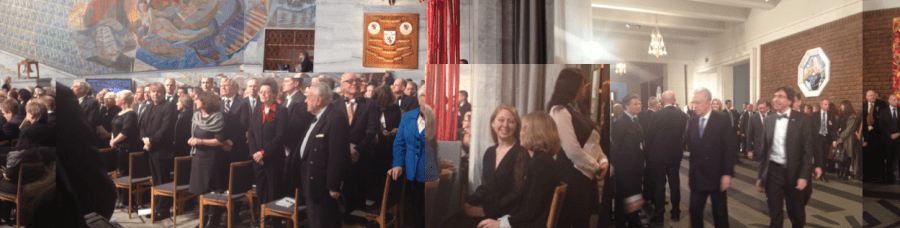
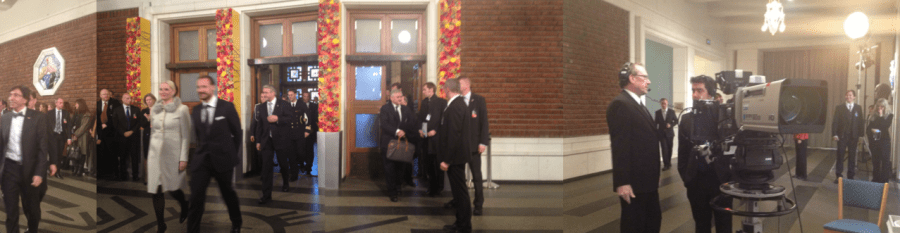
nobel
widenobel

Where Does One Begin?


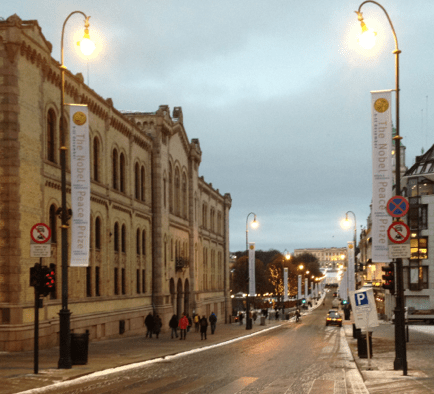
the town

The Town


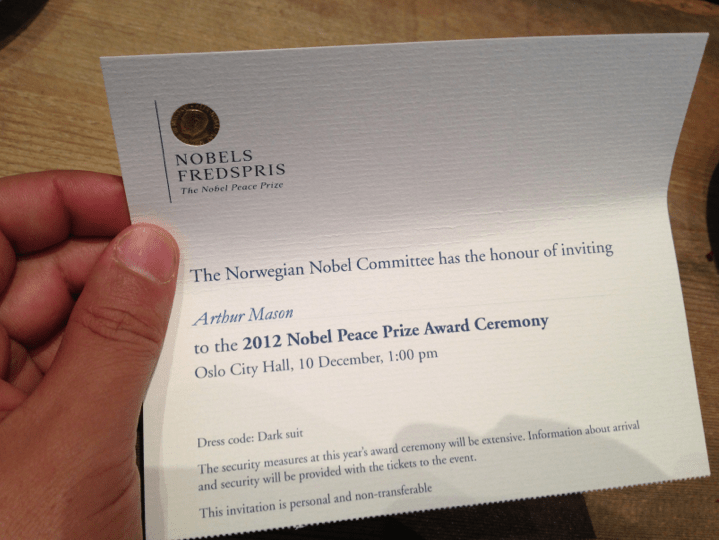
the invitation

The Invitation


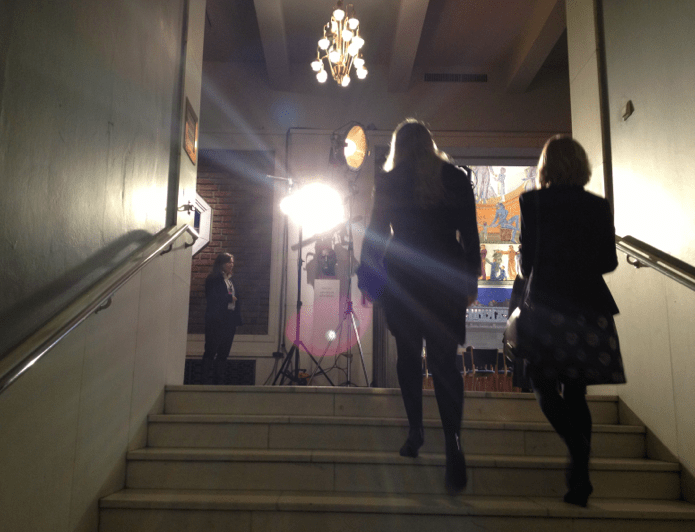
the lights

The Entrance


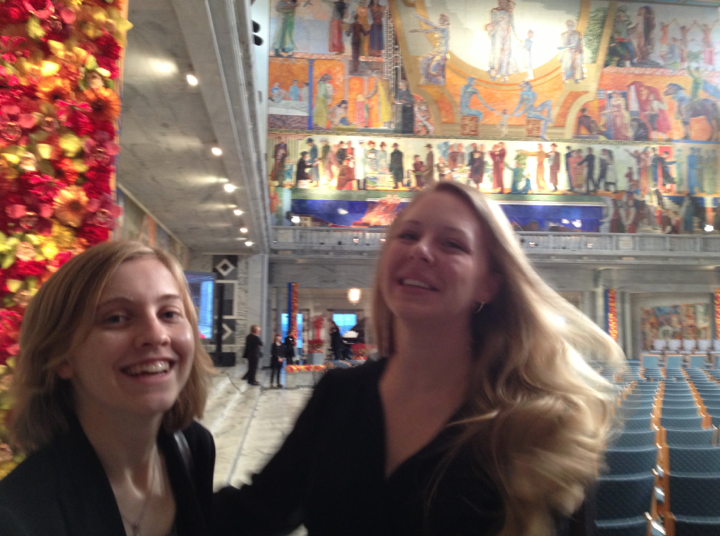
the fulbrighters

The Fulbrighters


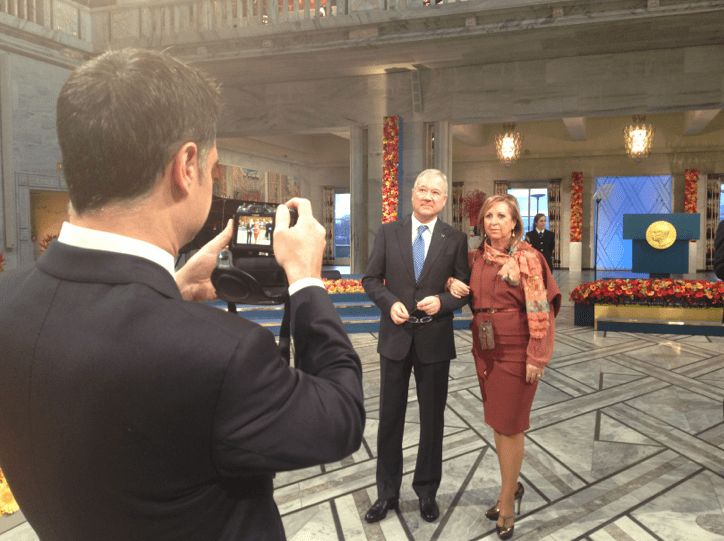
the photo op

The Photo Op


the patient mob

The Oslo Mob


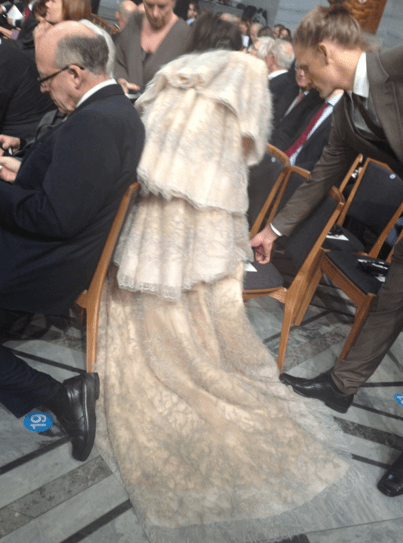
the fairy princess

The Fairy Princess


the bohemian

The Bohemian


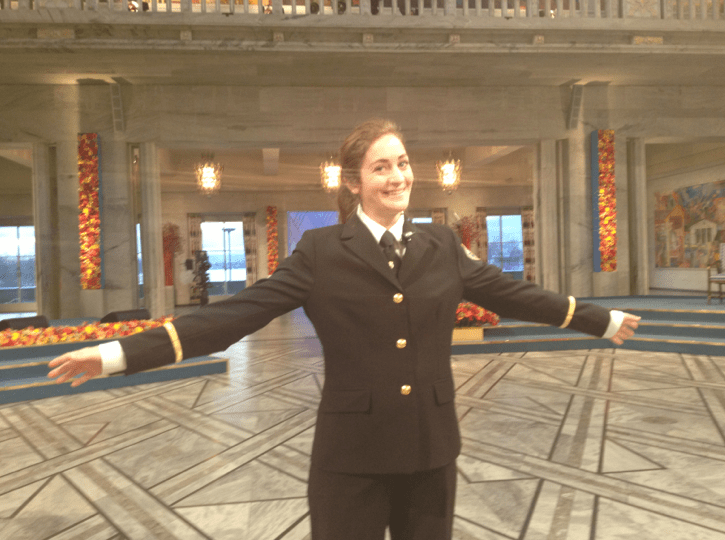
the security guard

The Security Guard


the previous recipient and Nora

Nora


the forgotten i phone

The Forgotten I-Phone


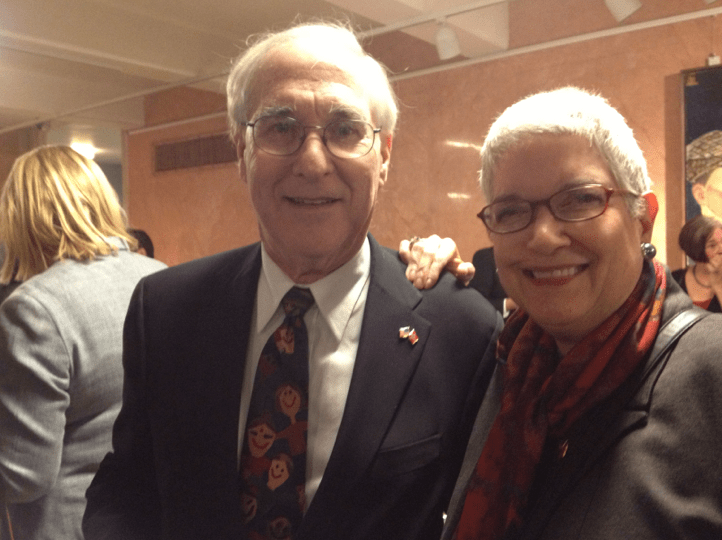
the ambassador('s wife)

The Ambassador(‘s wife)


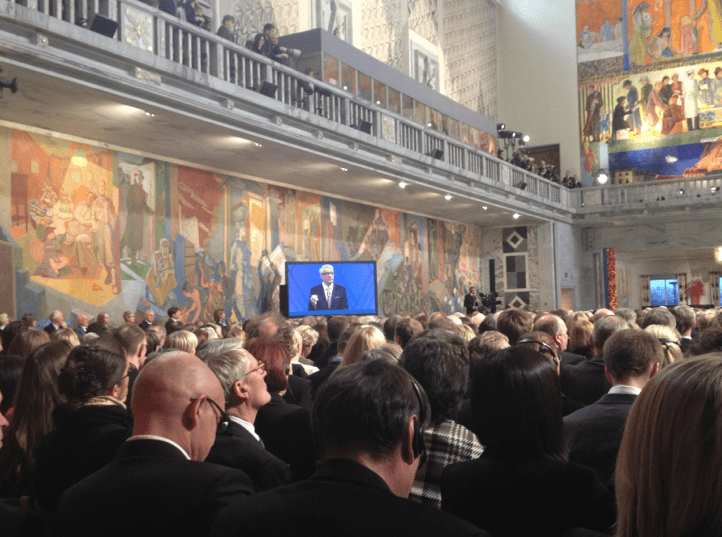
the speech

The Speech


the winners

The Exit


left

center

right

far right
wide

Read Full Post »

« Newer Posts - Older Posts »