Feeds:
Posts
Comments

Archive for the ‘Paparazzi Ethnography’ Category

4/26: Energy Event #34


Read Full Post »

4/15 Epilogue: I recall sitting at Frida’s Cafe on 78th Street and Columbus, yesterday, Manhattan’s upper west side, working on my third margarita, chatting, reaching over Suzana Sawyer, Leigh Johnson, and Octavia Shadowz to get at the guacamole and chips. Then, I awoke in Berkeley, as if I have never left this big leafy town.

My ears are ringing. My throat is sore, probably from yelling in the bar. We covered every topic, anthropology rivals, who is working on what. Things I can think of and more. It was the end of a furious several days. We walked through all the book chapters, giving each author 3 minutes to have their say, turning to a designated critic to provide 10 minutes of rigorous discussion, then opening it up for group discussion. 16 papers in all.

Everyone, we said, would receive a memorandum of comments with the aim of having a second version of chapters ready by end of summer deadline. September 1.

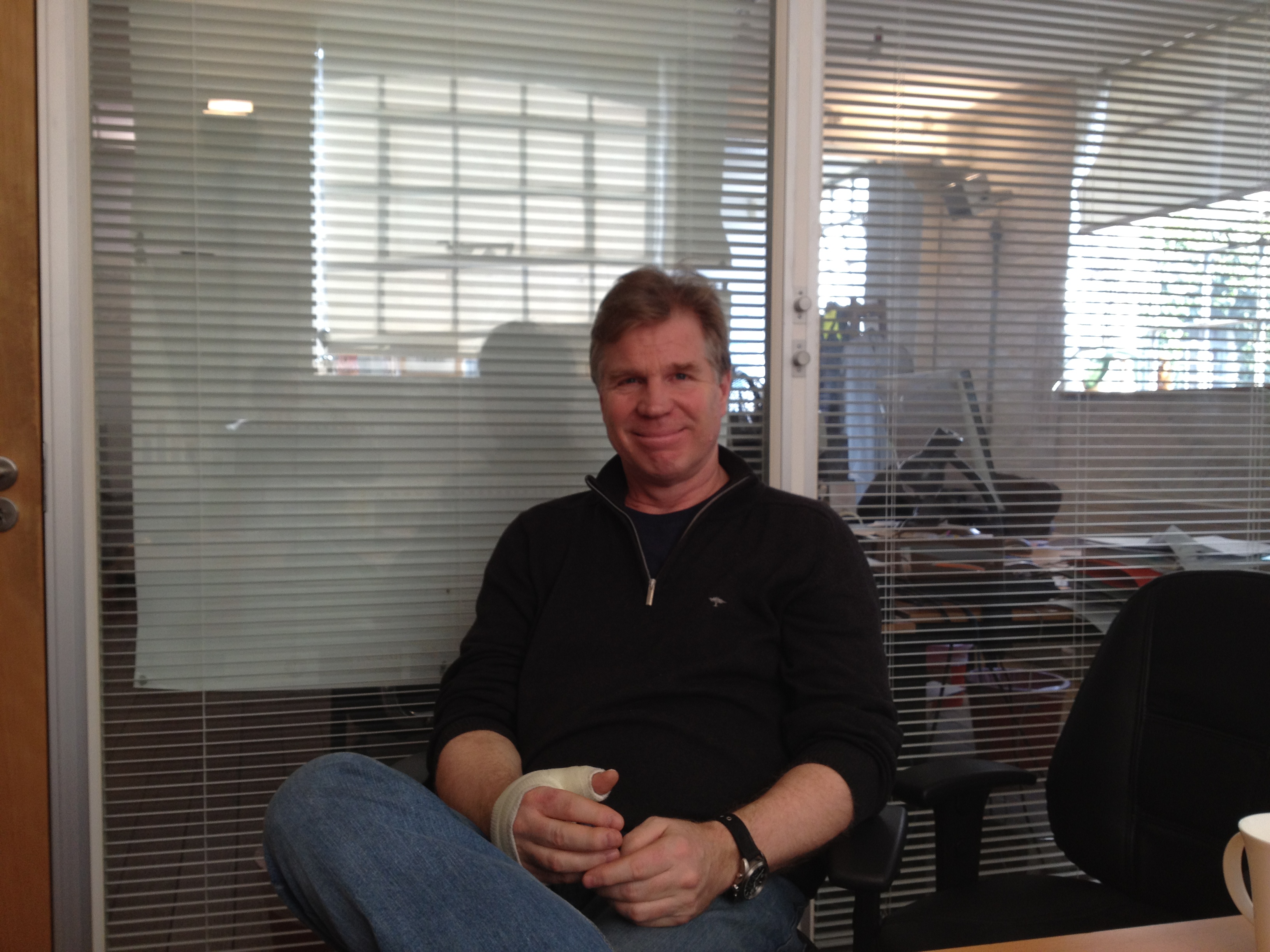
One of my favorite photographs. On the first day, Hannah Appel, Michael Watts, and I planned to meet at Joe’s coffee, on the corner of 120th street to strategize before getting underway. So fun to see those two folks after such a long time. I came in, immediately recognized Hannah, and before we could hug, I had to take a photograph.

I love this shot.

I had not seen Hannah in 8 months. Can you imagine? The last time we were hanging out was in August in Berkeley, writing to NSF program officers about a new project we had in mind to examine off-shore drilling in Ghana.

I am an absolute nutter for keeping notes, and I have started collecting images of folks who keep notes, where they keep them, with what special pens they write, et cetera. For this reason, I had to distract Peter Hitchcock to get a view of his note taking procedures.

Peter–provided me with fabulous comments on my chapter, gentle genius that he is. There were so many facets we went over:

Transparency and secrecy. Nature of oil archive, assemblage, boundary lines between corporations, states, et cetera. A critical ethnography of infrastructure. The question of expertise, science, security and securitization. Multi levels of time, and temporality.

NEW-YORKERS EAT WELL.

We left with a feeling that we were bringing together something important, and that we probably need to turn up the temperature on each of our chapters. Maybe go through one more version.


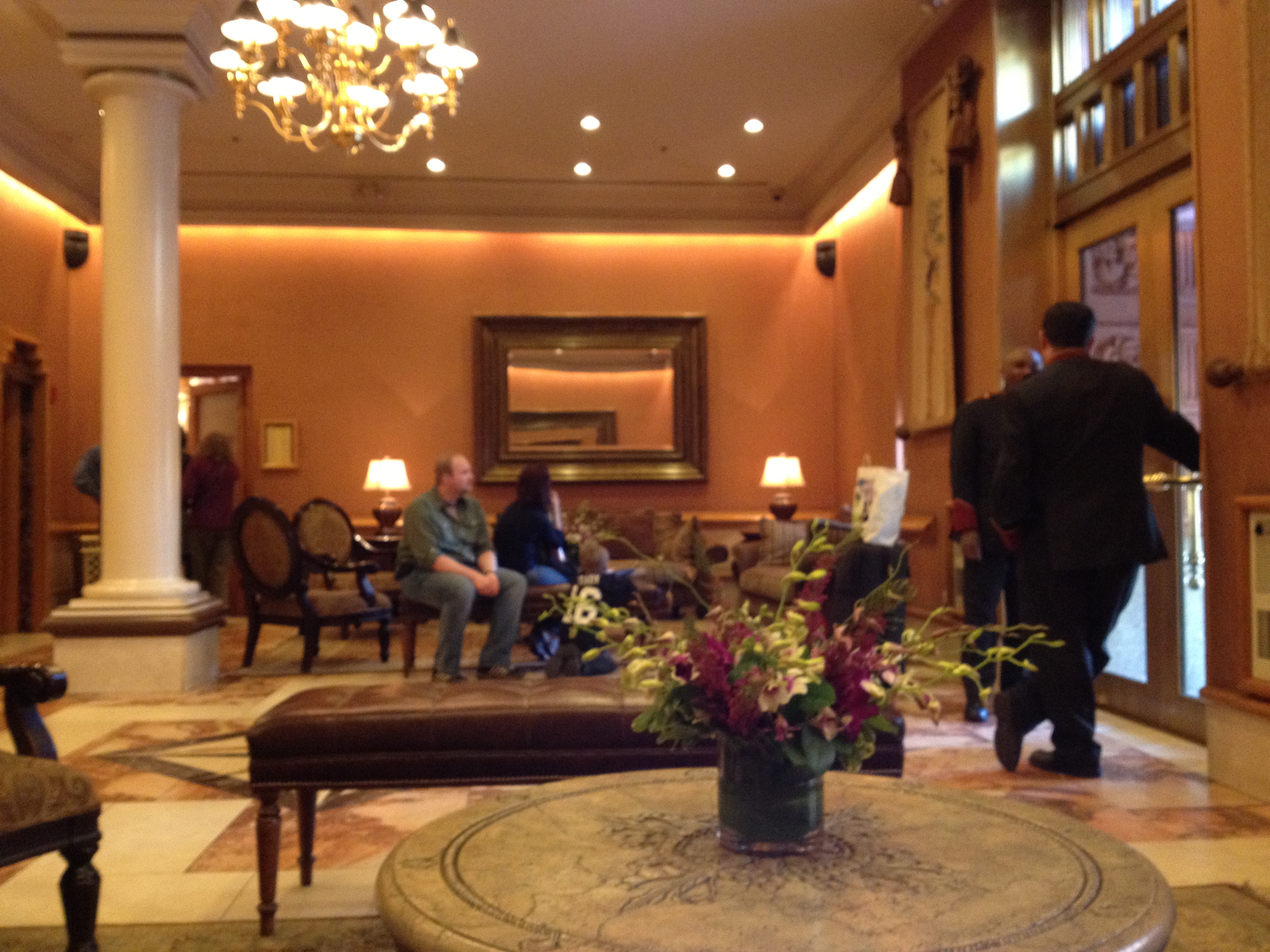
4/14: Gosh, I meant to blog yesterday, but we did not have internet access. Writing a few notes and need to transfer them and will do that soon enough, but right now I am in the lobby of our hotel, The Lucerne, sitting with Saulesh Yessenova, waiting for Octavia Shadowz to hop a cab to Columbia U. for the second day.

Everyone had a good time yesterday. Of course, we talked, talked, and talked, which is what academics do, but it was good to see old friends as well, like Mani Limbert.


Yesterday


Actually, I have a confession to make. In fact, I know some of the attendees for quite some years. Let us start with Suzana Sawyer. Well, she and I attended a weekend retreat as part of another workshop that took place “decades ago” as she put it when we greet each other yesterday with a hug and a laugh over that period. On that previous ocassion, David Zanton, who has since retired, invited us to work on our proposals at a retreat in Sonoma County. It was when I was completing my comprehensive exams as a PhD student at UC Berkeley, and when Suzana was just hired as Assistant Professor at UC Davis, Department of Anthropology.

But-then there is some history with Mani Limbert. Some years after I completed fieldwork and was writing my dissertation at UC Berkeley, Mani came to town on a postdoc fellowship, having just completed her PhD at Michigan Department of Anthropology.

Boy. Those were some grad student evenings. That is all I can remember. But we had fun.


What can I say about Saulesh Yessenova. Good Grief. Well, for starters, Saulesh works as Assistant Professor at University of Calgary. And I happen to have spent a year at U Calgary, as a US-Canada Fulbright Fellow!

I have since gone to Calgary a few times, and Saulesh has proven to be an immaculate host, taking me out for a steak dinner and whatever kinds of side dishes they have in that town, the Houston of the North as they all refer to it up there.

4/13: New York City. 7AM, just starting the day, heading over to Columbia University soon, to chat with Michael Watts and Hannah Appel about the workshop which begins at 9AM. I plan to blog away today, catching the fleeting conversations and photos of folks.


4/6: Okay. At this moment, I am pretty much holed up in a Norwegian hotel room going over these book chapters. I do not think I am going to be doing much more in the next couple days, other than revise a chapter for another edited volume, attempt to write an article revision for a journal, and re-write a grant for the Norwegian Research Council. But all of this tomorrow, hopefully.

3/7: A workshop organized by Hannah Appel, for a co-edited volume by Michael Watts and myself, fifteen contributors, all gathering at Columbia U, to chew the fat.

We put up materials for contributors on a designated website, restricted at this point, but with screen shots of the participants and titles of the chapters below.

I had the opportunity to share a coffee with Mona Damluji, who studies in the architecture department and is contributing to the volume. We met at Babette, a coffee house in the Berkeley museum. We talked about the discipline of anthropology.

Actually, Michael Watts and I have been working on this project for exactly one year (Yay!) so it is a good feeling to see that things are coming together…

Apparently, David Hughes, another contributor, received his PhD from UC Berkeley at around the same time that I was coming into the program. We talked briefly about his tenure there and some of his advisors.

Matt Huber is someone that I came to meet recently. He is very knowledgeable about energy development in the United States, and knows much of the separate histories of the fuel arenas, in addition to specializing on oil.

Mona is excited about reading the papers for the upcoming workshop.


I plan to post all the news of the event here on StudioPolar‘s paparazzi ethnographic site.

Here are the participants in Oil Talk. Yay!

Read Full Post »


4/12: Just leaving to the airport, for New York to attend the Oil-Talk Workshop. In the lobby of Nobis Hotel, after having spent several days in Stockholm talking with Nadezhda F. We wandered throughout the city, chatting.

I must have mentioned to Nadia of my interest in the aesthetics of sentiment. Those turns of phrases, glances, hand gestures, by which business becomes something more than abstract exchange, or when information becomes more than knowledge, that is, when the mundane rises to the ideal, laboring in such ways that personal quests arise.

Did I say that Nadezda has familiarity with oil and gas development in the Arctic? In particular, the Barents Sea area? A native speaker of Russian, following the news reports appearing in trade journals– we became acquainted while participating at the Arctic Frontiers Conference in Tromsø earlier this January.

Much of our conversation around Stockholm remained on the tourist level, until we stopped by a hostel for coffee, while enroute to the Grand Hotel for dinner.

It was then, taking a break, and this was on the last day of my visit to Stockholm —  having met together earlier, the evening before for dinner and drinks, and earlier the evening before that for wine at Nobis Hotel–that we talked a bit about the question of routine and friendship.

I was interested in such things. Moving around, like we both do, one wonders about routine, who one meets on a weekly basis, talks with about professional, eureka moment issues and the personal. Nadezda is completing a Master’s Thesis at Uppsala University, covering Norwegian-Russian border demarcation issues, and in personal touch on the topic with key persons, e.g., Arild M., Deputy Director at Fridtjof Nansen Institute, Oslo, and having worked recently as researcher, at SEI (Stockholm Environment Institute).

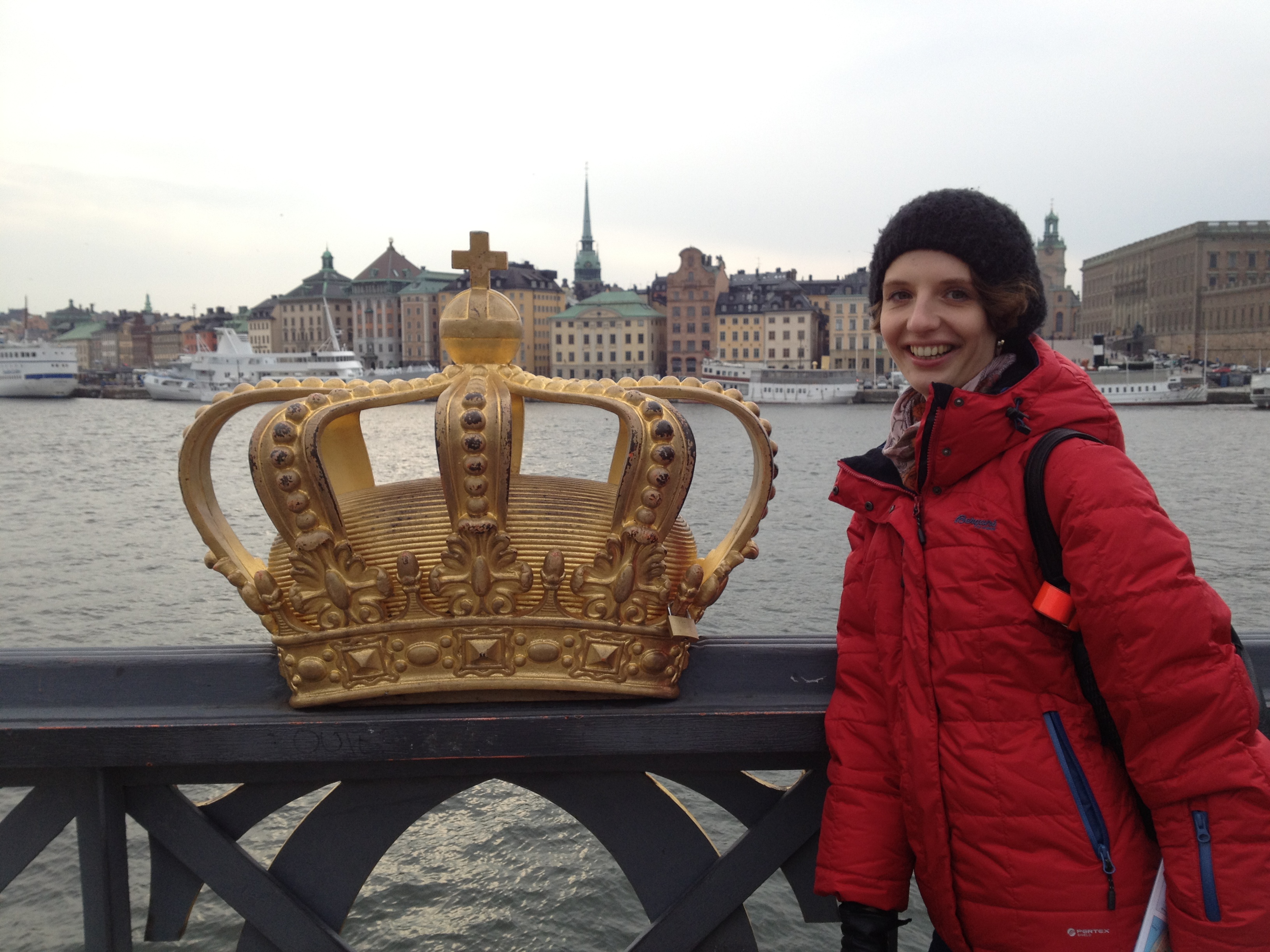
There is a bridge that separates the hostel, where we stopped for coffee, from the Grand Hotel. We rested and took a few photos. In the first photo, Nadezda peers at a lock that someone unknown to us has placed on the crown base. In the second photo, I have cropped the first image, to show the lock in relief. Actually, just below the crown there are several locks and silly me, I did not get a photograph of those locks.

I first became aware of the lock-on-a-bridge phenomena in Moscow, on a bridge, where there were gobs of locks, apparently, placed there by blue birds who wish to remain together forever. The image captured our attention. As you might imagine, it is unusual to see this practice on a Swedish bridge with a crown.

Photography of Beatles in a Hotel.

AK, DC, parts of Canada.

Visual perception. So how does a blind man lead.

Access and behavior in a certain way.

My role mediated by my discipline.

Environments of legitimation and distance to the object.

Politics of older economy of power which relates to the body. Personal contact of lobbist, you believe you can influence people.

Knowles became the senator through the speech of experts.

–Are these Haikus? No. Just notes that I was taking while talking with Nadia at dinner, stopping every few minutes or so, interrupting the flow of our conversation in order to make a note on my writing pad. I have little idea what these notes mean now. It is all on the account of my manuscript that I am writing. I take notes, and then set them aside for a convenient time to reflect upon their meaning. Like right now!

I became excited talking about my book. I explained to Nadia all the little details that refer to fleeting phenomena. Did I mention that Nadezda and I had a chance to chat during the ARCTOS sponsored PhD seminar in Svolvaer this past January? We talked about our respective projects, which are quite similar actually, both working on the Barents Sea area.

I should mention here, by the way, that I had been traveling for some time before arriving into Stockholm, and Nadezda guessed that I was pretty tuckered, especially by the way I clung to the couches inside Nobis Hotel. I had to laugh over her concern for me while walking around town, but you never know.
Here is an image of Nadia’s hand as she escalates the stairs for a better view of Stockholm. I followed in curiosity to where the steps lead.

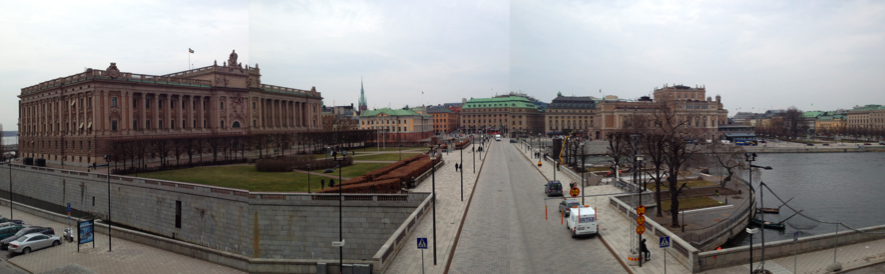
This photo below is of the parliament on the left and a view from the king’s house. The view stretches from left to right:

Perhaps I have little to talk about other than work, and for this reason perhaps, it was good to have the ear of a fellow researcher working in a similar area.

One of the things that struck me as we were talking, is that my Barents Sea project, where I examine natural gas development or conversations on development — the study involves various categories of actors, including experts, journalists, consultants who have conversations with each other, on this very same topic. These conversations take place in various cities across Russia, in Moscow, St. Petersburg, and Murmansk, but also in Western Europe, in places like London, Oslo, Tromsø, Paris, Berlin, and even in the United States, but primarily Houston, and Washington, D.C.

That is to say, the nature and degree of interdependences holding together a wide spectrum of various people and groups — interdependencies that always require the owners, government, pipeline builders, and so forth, is peripatetic, as issues travel across city to city and announcements take place in various places. An entire following journeys about, journalists, consultants, industry experts traveling from Moscow to London and back again. In this way the arteries connecting the social lives of Western expertise, Russian rule making are not constricted. A process of distancing is taking place, but the constant movement of the proposal prevents the distances from becoming petrified creating an awareness of the networks and entanglements in and through which everyone must act and think.


4/9: The second time this year that I have had to leave Oslo before 5 AM in the morning.

Reading the entire evening, drifting off around 3AM and hearing the buzzer go off at 4AM.


4/8: Tour of the Norwegian Parliament, the Storting, and met with H. R., MP, to discuss the topic of High North Strategy. We chat briefly on the Ministry of Foreign Affairs’ resolution on High North Initiatives and project cooperation with Russia.


There is a funding program, for example, through the Norwegian Research Council to develop strategic competence in Norway through building networks with international research communities.


Throughout the dialogue, Russia emerges as important to Norway as neighbour and global actor, requiring study of new knowledges, foreign policy of special relevance to High North/Arctic with interests of China: security, energy, climate research, sea routes in the Arctic.

Key actors and institutions in Russia, et cetera and so on.

Back at the hotel reworking a Norwegian Research Council grant, sending it off to Sidsel S., U Tromsø, Dept. Anthropology for her review. And reworking a book chapter for an edited volume, Cultures of Energy.

After a nap, coffee latte, I came up with a the idea for how to restructure the piece.

I have been carrying this piece nearly 5 years, so I am glad it finally has a home.


4/7: “Hitting bottom isn’t a weekend retreat” (Durden 1999).

Catching-up with Fight Club‘s Tyler Durden and Marla Singer for a few hours in between shifting work loads.


4/6: Oslo.


4/5: On meaning and the Hotel Room.


Read Full Post »

Wednesdays at ERG…

Wednesdays at the Energy and Resources Group (ERG), UC Berkeley, start early. At 8AM, we attend Climate Lab, taking place in the Neville G.W. Cook Room, and organized by PhD Candidate, Stacy Jackson. These weekly meetings provide opportunities for in-house discussions about climate change.

The talks are casual and range from the technical to the anthropological. As an anthropologist at ERG, you can find yourself at the nexus of always conducting research and ethnography simultaneously.

The technical here refers to economic projections and computer modeling that seek to establish the evidence so that we can collectively begin to emancipate the earth from laboring under the conditions of capital.

Everyone is concerned with greenhouse gas emissions, lowering the carbon footprint, behavioral change, moving toward lower carbon lifestyles. There is no question that the earth is warming, it is just a matter of whether the evidence can bring about certain political, technical and social ends.


On one such a Wednesday, I presented Empathy for the Graph, to discuss how time horizons that ERGies work with, become available through complicated non-representational images (graphs, charts, equations). These images remain a valid depiction of events, but are often ungraspable to most persons outside the confines of Neville G.W. Cook Room itself. Though in fact, there is some evidence, that various groups across the United States are becoming increasingly comfortable with non-representational images, and intensifying, in fact, a sense of unease among those for whom such images still remain standards of their inability to comprehend.


Well to continue. After Climate Lab, which takes place from 8AM to 9AM, everyone goes back to what they were doing. There is typically another talk at noon. A few folks from the Goldman School of Public Policy announce a seminar lecture, so we head over there, as we did recently, to hear from Jan-Erik Petersen, seen here, talking from the position of the European Environmental Agency about science and policy making for the environment in Europe.

But whatever the talk, we all typically return again at 1:30PM back into the same room where Emeritus Gene Rochlin presides over the PhD Seminar. Gene is a nuclear physicist with a political science background and leader in Science and Technology Studies.

By the way, ERG’s Dick Norgaard has a new edited volume, The Oxford Handbook of Climate Change and Society (2011) which he co-edited with John Dryzek and David Schlosberg. It is fabulous and expensive, still in hardback, but your library probably has a copy.

Dick presented recently in the lunch time seminar, and then, as if by chance, I was able to see an encore performance of that talk, much improved, in London at King’s College.
Certainly, I have presented at the lunch time talk as well, also in preparation for different venues. As such, the Neville Room is a laboratory for the constitution and staging of performative knowledge elsewhere.


Finally, at 4:10 PM (because Berkeley time is 10 minutes after the hour), we head over to the Colloquium.

This is a mix of PhD Candidates, Visiting Researchers, UC Berkeley faculty, presenting anything they happen to be working on these days.

“Wednesdays at ERG…”

Read Full Post »

→ London

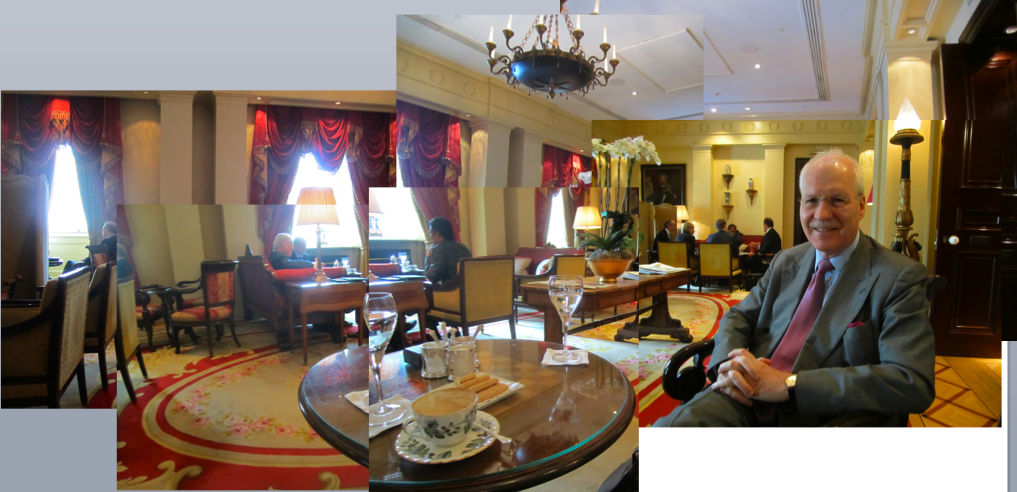
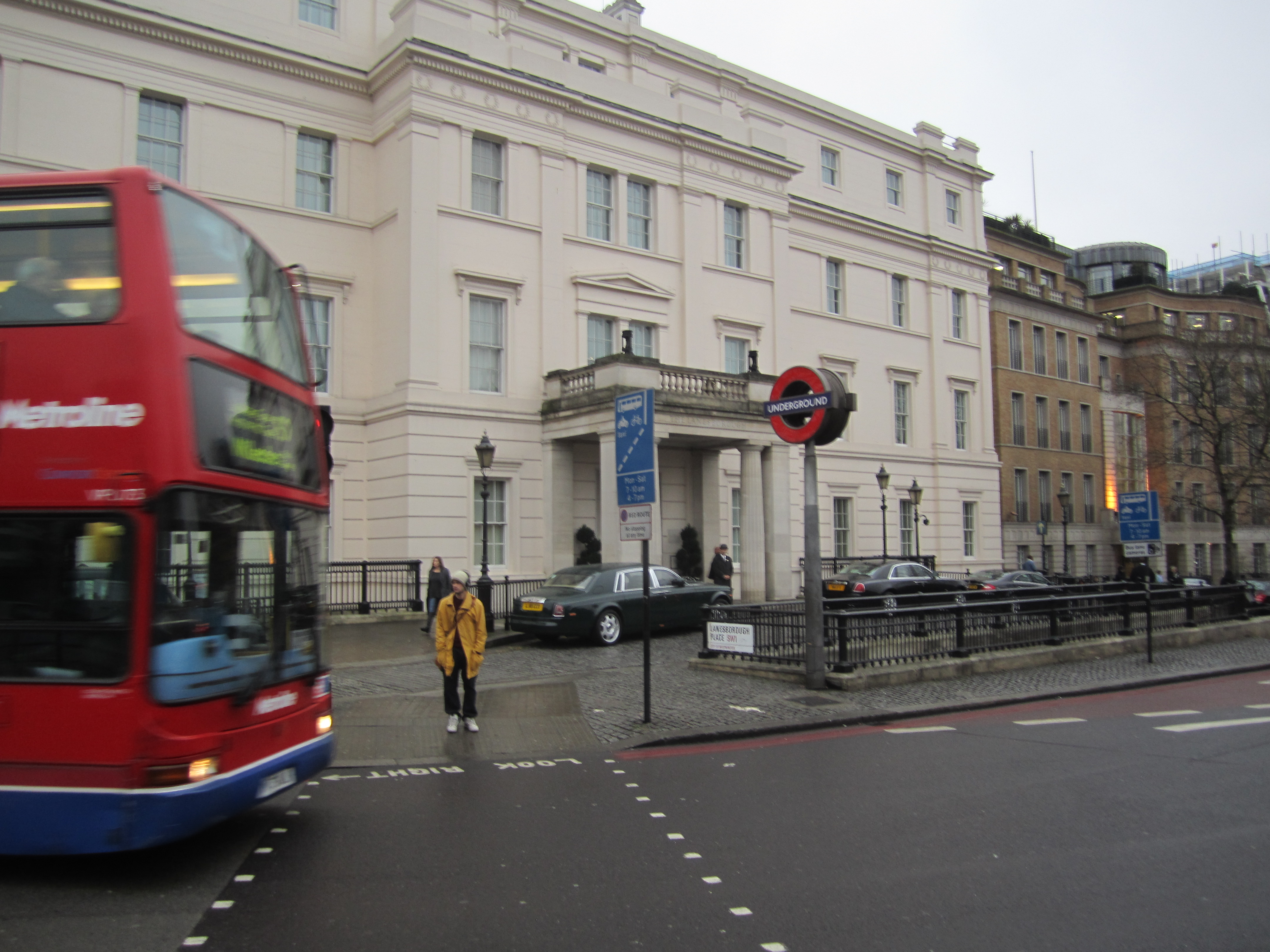
London Epilogue: It was in the manner of visualizing the forest through the trees that I came face-to-face, this evening, with economist from Ukraine, Svetlana L. I snapped a beautiful photograph of Svetlana inside the bar at the Lanesborough where we met for sparkling water. Of that image, we can only make public at this time fragments of the surroundings, in respect to her wishes, or rather, to her demurring over whether she wants to make an official appearance on the P-E blog.

It remains to be seen whether we will be able publish the image in full, but we will be content with the remains of what we have, in the absence of the full photo, around its perimeter, a maternal painting over the fire place, a fuddy duddy having spent his own life his own way …. and a blazing red lampshade …


Responding to Svetlana’s request of an accounting of my procedure, how I do what I do, in detail, I walked through one particular project, the recent Fulbright US-Norwegian Application, more details on that later…. What eventually came out, so to speak, one might say in the final moments of our discussion, and upon departure, as the bill was paid, and when I took up my overcoat — was whether my project was something more than simply a project, for example: is there any greatness in what I actively set my sights out to do?

But what is greatness other than stamina and tenacity and to allow reviewers (if there are such persons) to have the last word.


4/4: I will talk about the images below. I have great notes, and had a great couple meetings with energy consultants in London. I will need to change their names and the names of their organizations, and even, I will need to homogenize the information, so that if the images are recognized, what I speak about does not have direct details. Nothing too sensitive here. But I always say that, and then someone will call me, who I blog on and be discouraged. So I have to take a different approach. But I will come back to these images shortly. I am going to dinner on my last evening in London.
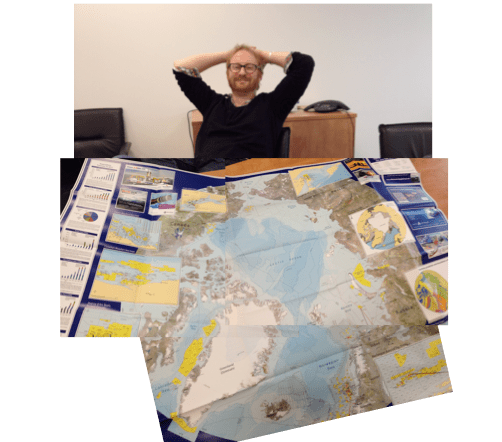
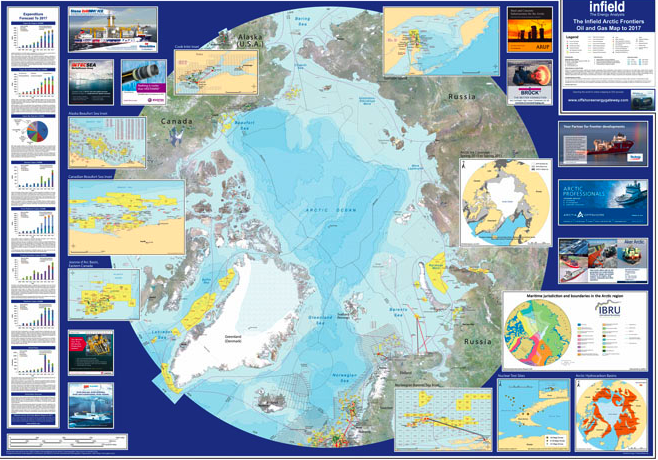
[post-script: written on 4/24]: Returning to these images, I effectively merge two consultants into one person who I will call Patterson Michael, who runs a shop in London near the Metropolitan University of London. We met at the Energy Institute’s workshop on surfing the internet for energy industry issues but also in Moscow at the Oil and Gas Petroleum Congress. When I mentioned that I worked in the Arctic, Patterson immediately noted that his group, Firmware Consultants, had recently created an Arctic map depicting current developments. I invited myself over to his office the next day to pick up a free copy of the map and have a little tete-a-tete over how he does what he does.

Actually, we had a great conversation and I learned quite a bit about how one product, a map, is produced and circulated. Before I go into the discussion of the map, I should first mention a few things about Firmware Consultants (name changed). It is a smaller firm with about 50 persons. They focus on “project flow” in particular, tracking off-shore installations to decommission. But they also do a wider range of things regarding intelligence gathering and activities depends upon the nature of the retainer they have with their client, as well as the personal relationship with the client.
In fact, I got the sense that all relationships between consultants and clients are personal, and that often times, a client, working in industry may just have a hunch or and idea about something that consultants at Firmware can hunt down and develop an answer around. And in this, I was quite reminded of the lobbyists I use to work with on Capitol Hill in the Office of the Alaska Governor. When we had a particular issue that required political intel, we (Office staff for Governor) would call one of our lobbyists to discuss the issue and then they would typically go out and get an answer.

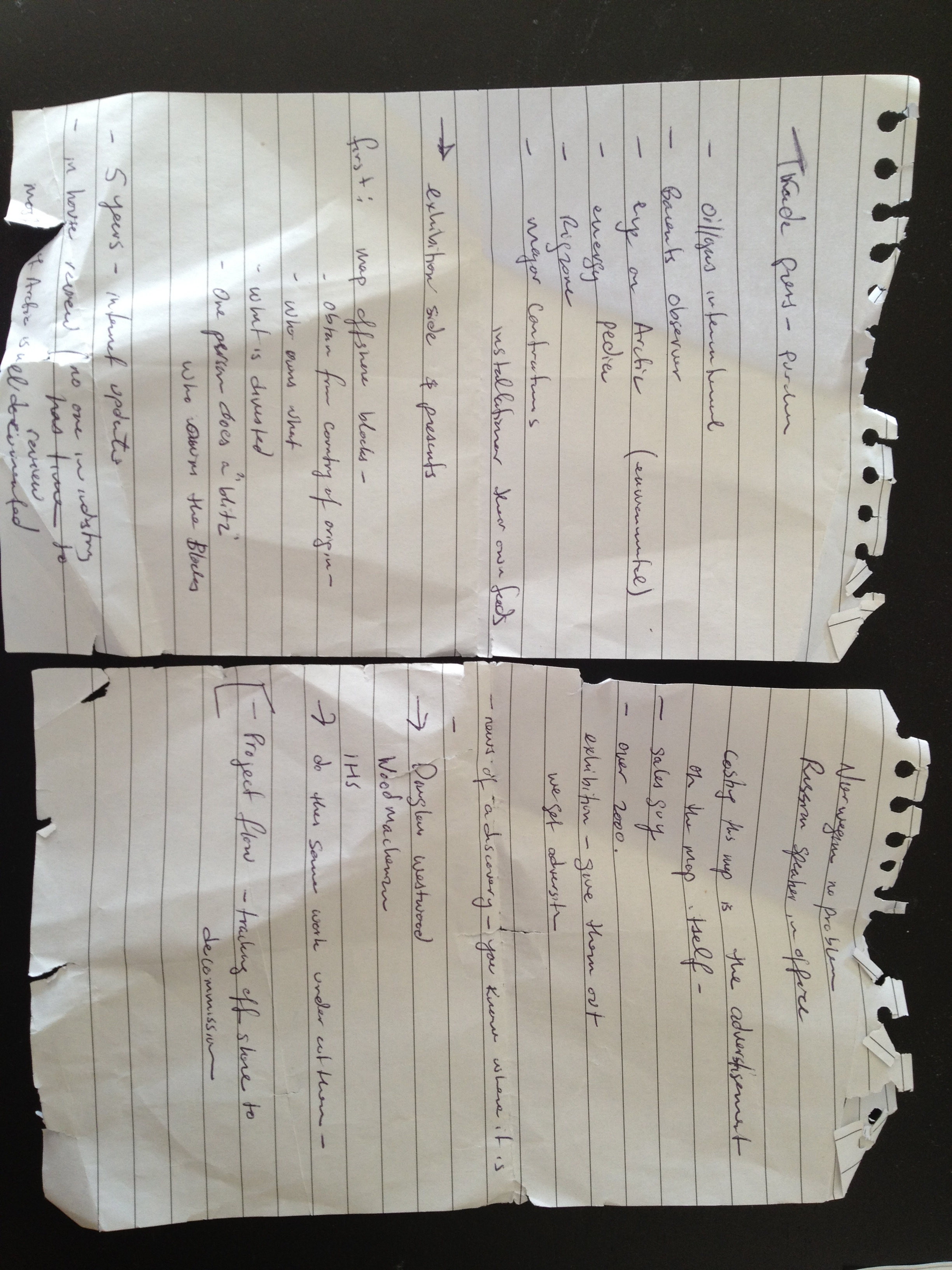
Patterson suggests that his main competitors are the big firms, such as Douglas Westwood, Woodmackenzie and IHS. Smaller firms specialize, and offer boutique products, like the Arctic Map I discuss below. Patterson daily gets information from a variety of sources, mentioning as a priority the trade press, including Oil and Gas International, Barents Observer, EnergyPedia, Rigzone, Eye on Arctic (environmental).


But he also attends to major contractors’ websites, for information on installation in their own fields.

Well now to the map. First of all, there is the costing of the map itself which has to be born by some group at the outset, and this is typically accomplished by way of placing advertisement space on the map itself, which is purchased by industry.
As it was explained to me…
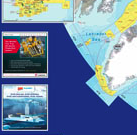

Companies like to know that they are appearing in an office, hanging on someone’s wall.

But there is the need to advertise that these advertisements are available, and for this, Patterson has a sales person in the office. They also give copies of the completed map at exhibitions. The first publication run was about 2000 but the maps are also available on-line and on DVD. One of the reasons why this particular map is important is that when there is “news of a discovery”, as an industry participant, you want to know where it is located, and you can turn to this map that hangs on your wall.


Now, constructing the map is somewhat different. There is a need to map the offshore blocks, which requires obtaining from country of origin information about who owns what and what is divested. Gathering this kind of intel requires one person doing a “blitz” on all blocks to find out who owns them. For most parts of the Arctic, this can be carried out in English (“Norwegian, no problem”), but Patterson does have a Russian speaker in the Office to handle Russia.

I wanted to know how long this map would be “useful” — to which he replied 5 years. And in fact, the internet site-map is updated all the time.

Finally, I wanted to know whether the information found on such a map is sent out for review, like in Academia before a publication. To this, Patterson mentioned that they conduct an in-house review, largely because no one in industry has the time to review such a project, and also, because most of the Arctic is well documented.

Epilogue: These are two persons I merged, but in fact, they were very different individuals. One firm, for example, wanted to separate the more meta narrative analysis from the data collection side, and in fact, has begun to farm out the data collection side to a firm in India, who they are training to do just what the London office has done for eons. It was in this latter conversation, that I received a less pragmatic view of the industry aims and purpose with intelligence, and in fact, got a sense that what I was doing, whatever that is, makes a great deal of sense in terms of touching on the various locations across the social field, examining how knowledge is cobbled together. More to come.

Here are my notes by the way, one last glance at how I collect data, before throwing them away. I have another blog post in here somewhere that documents how I do not keep things in a notebook, and here is just one more example…

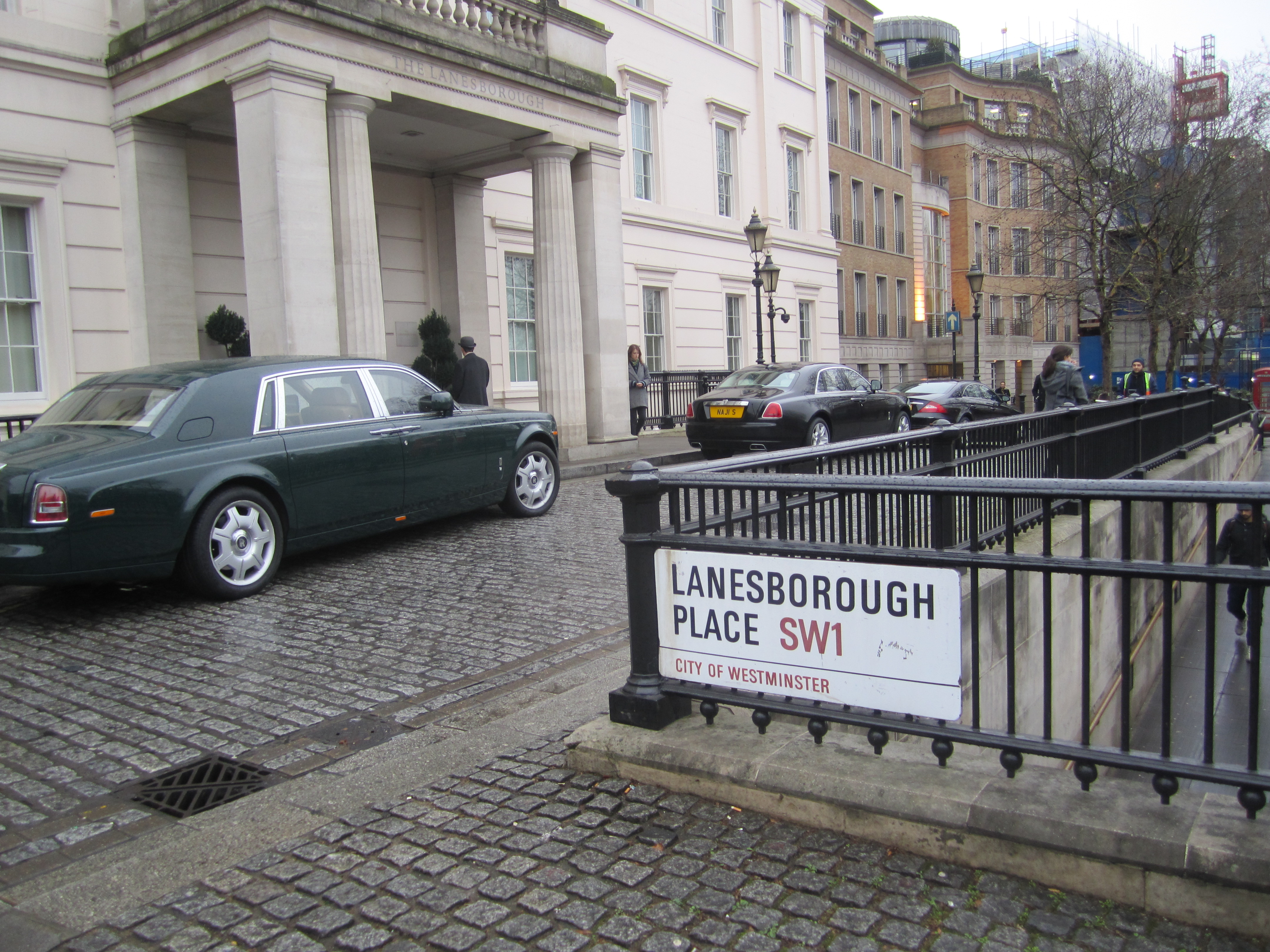
4/03: Meeting with Francis Gugen at the Lanesborough:
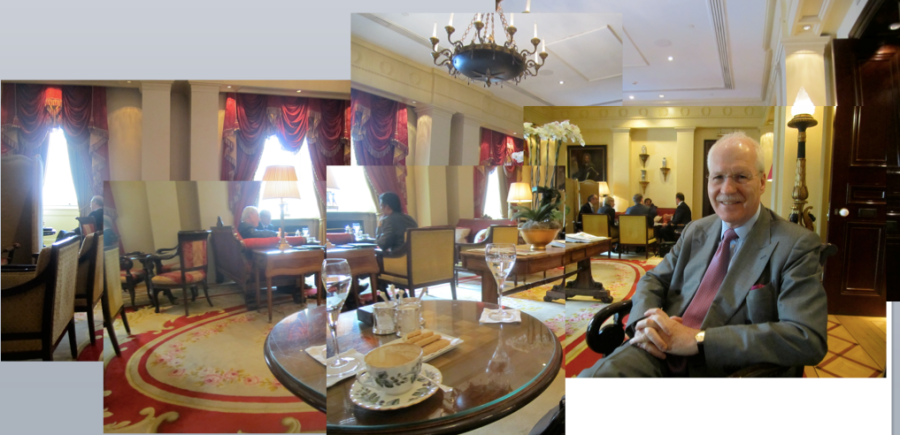
Lucky to have a meeting this morning with Francis Gugen, former CEO of Amerada Hess UK. We had met in January, also at the Lanesborough, and he was good enough to spend time going over my project.

Here, I refer to Francis by his real name, because he is a mentor on my project and also, the issues we discuss are well within the framework of an open discussion.

We spent one hour going over how I would set up the initial stage of the project if I get continued funding from NSF, deciding on a 2 day get together in London, where my partners hammer out deliverables on the first day, and on second day, we invite mentors, like Francis, to see if we are on track. Only until we have a clear sense of moving forward, do we then meet again in London, with a wider range of groups, to present the project for feedback. A two day format, and then some time later a 3 day format.
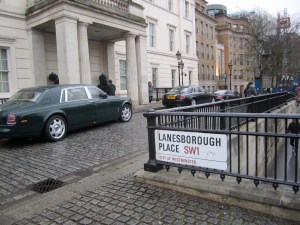
Within this discussion Francis and I covered a lot of information, referring for example, to the condition of information rich versus knowledge poor environments — for which we are now moving into concerning energy debates.

What this means, and I have cited this previously in the context of comments by Jonathan Stern, that the Blogosphere is quite capable at framing terms of debate in energy decision making.

By placing everything on the internet, and co-creating in large groups, assessing risk is taking on dimensions that are quite different from when I originally theorized the rise of intermediary groups.

Here Francis was adept in touching on a variety of points, all of which began to make me rethink the level of partners that I will engage with. Questions: In what ways and at what levels do I put the problem of energy out into the community to get feedback to assess how to come up with good solutions on risk assessment. There is the question of What one has to continue to do as decision making the old way, and does that make for better decisions or anarchy.
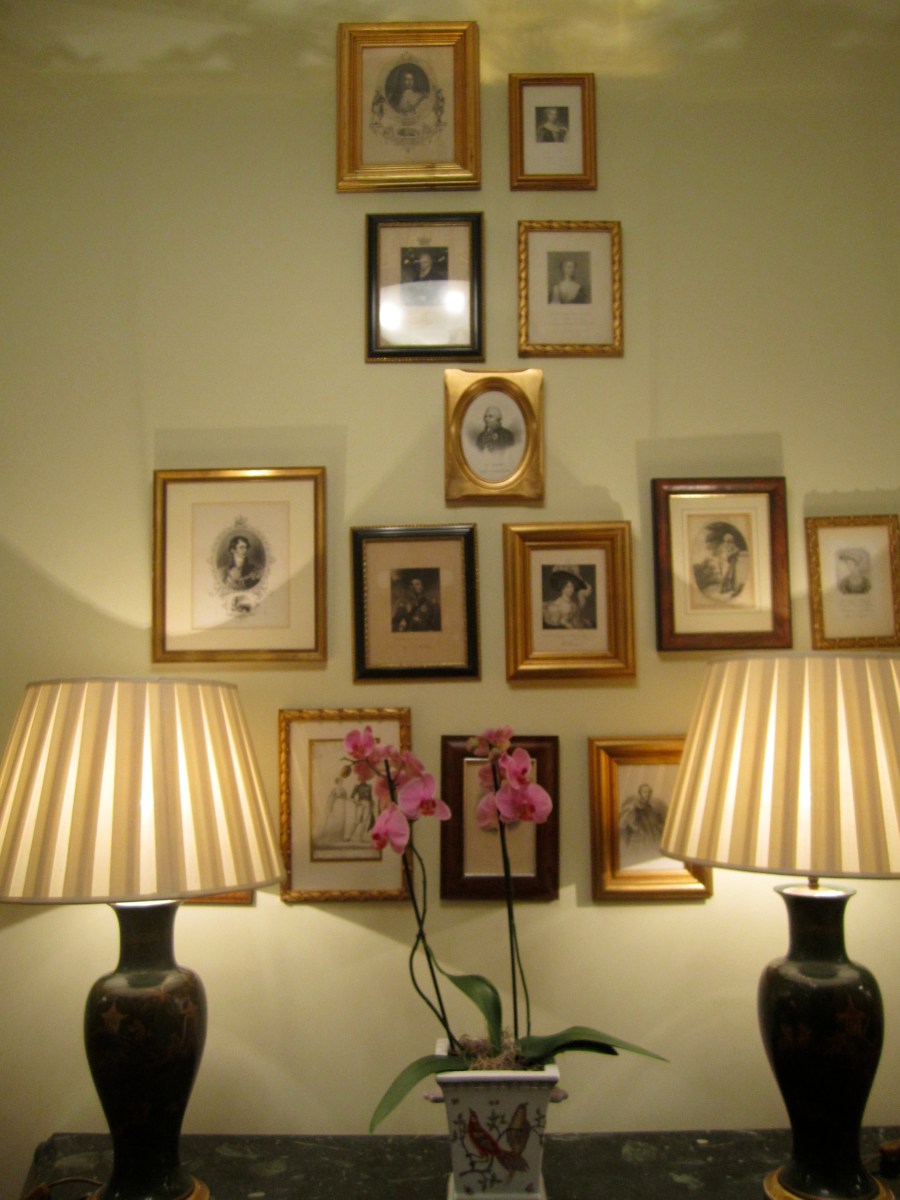
Here, we are talking all the time of Post Shale Gale and Post Macondo decision making. How has the architecture for the old model (which I created) changed in this new model. The Blogosphere—uninformed and informed actors that are part of the policy and industry, including the Facilitator and the Spoiler.

How do I theorize that portion of the blogosphere that has decided to be involved. To say yes. Or no. Francis here refers to Four circles of influence.

The Policy, the Industry, the Intermediaries and the Spoilers. And all of this conversation is in the context of my creating some kind of graphic so that I can educate my partners or collaborators within a glance, about how the project aims to move forward. Francis continues: Engagement with the new and ever growing circle is haphazard.
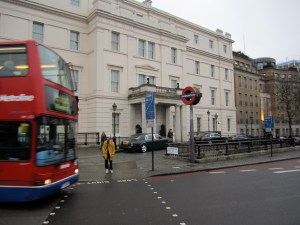
Where do you go from there. Does it remain haphazard, are there any rules. Ignore it at your peril. How might one engage – does any body do the engagement well, how does that go, how important is it to have it go well for important policy making. Does it change how you go about interacting with it. Why are not companies using their own staff to create new models of outreach.

Blogosphere, Middle East, the awe of Obama fund raising money. No content, decisions based on awe.


3/31Yesterday. I had the opportunity to stop by King’s College and listen to a talk by ERG’s very own Richard Norgaard. It was fun. His comments about climate change assessment, the interest of economic discourse and the future of the planet were met with great interest by the audience.
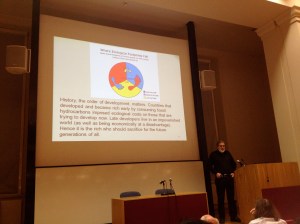
Dick spoke for about 45 minutes, and then we continued speaking for another hour, fielding questions ranging from the will of politicians to economics as a religion.

Dick uses the word “we” which is a no-no in anthropology, and some one in the audience tagged him on this usage, suggesting perhaps it was too empire-like. But having Dick wax poetically about future generations, including his children in the story, in his way, melted even the most cynical of academics, at least for the duration of the Q and A.

I enjoyed myself. The talk was a version that I had heard during ERG PhD seminar, but much improved, more clearly dealing with the difficult and competing interests of scientists, who struggle over definitions of the very practice itself. I left Dick to deal with his throng of admirers and as I walked across Waterloo Bridge, could not help feeling that London is a town of admiration. Every place I looked on the way back to the hotel, there were piles of folks spilling out of pubs, drinking in the streets, riding bikes in packs completely shutting down traffic.

Earlier in the day, I had a chance to catch up with Energy Consultant Bill Samuels (name change). You will notice here now, that I have had to begin the practice of changing the names of my informants. I have lost so many informants on the basis of simply posting a blog on their activities, carrying out the paparazzi ethnographic activity, that I am altering my method slightly, just so slightly, before I run out of participants in my observation of the not-so-famous. A real tragedy in some instances, actually, but that is another story.

3/30: Oof. I have so much work. I have to write my lecture for Cambridge, which is tomorrow, so I have to do that today. There is the workshop in NYC in 12 days for which I have to read 19 book chapters and create two commentaries. A revision article before then has to be written, and then a Norwegian Research Council grant due April 18.

London was spectacular yesterday. Everyone was out lying about as if at the beach. I began the day at the Energy Institute, where I am a committee member for the Institute’s Information for Energy Group (IFEG) which had its committee meeting today. The last meeting was in January, which is when I was elected to the committee. In attendance was Daniel Craven (name changed) who is part of a global consultancy, and with whom I later went for coffee to discuss the potential of spending time with them as a fellow looking at global gas development.

In January, when I was visiting the Energy Centre at Skolkovo School of Management, near Moscow, Russia, I was impressed with Tatiana Mitrova‘s explanation of gas modeling, and her conviction that analysts, such as Oxford Energy Institute’s Jonathan Stern were embracing the model form for understanding the future of global gas. In fact, it was at this time as well, that I had access to Deutsche Bank’s 2010 primer on oil and gas, which corresponded to some extent to the conversation with Mitrova.

At any rate, over coffee, Daniel and I discussed where his consultancy was headed in terms of competition with other consultancies and in terms of its recent acquisition of other knowledge firms, to create synergies of strategic knowledge on global gas development. I later sent him my cv for further review.
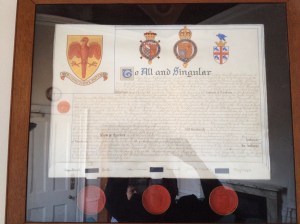
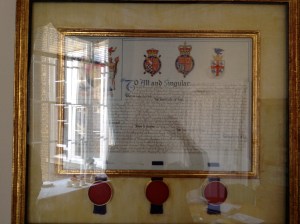
I then had a chance to sit down with Gareth Parkes for a long overdue conversation about the history and structure of the Energy Institute (EI). In fact, the EI was founded in 1926, and merged in 2003 with the Institute of Petroleum, which was founded in 1913.

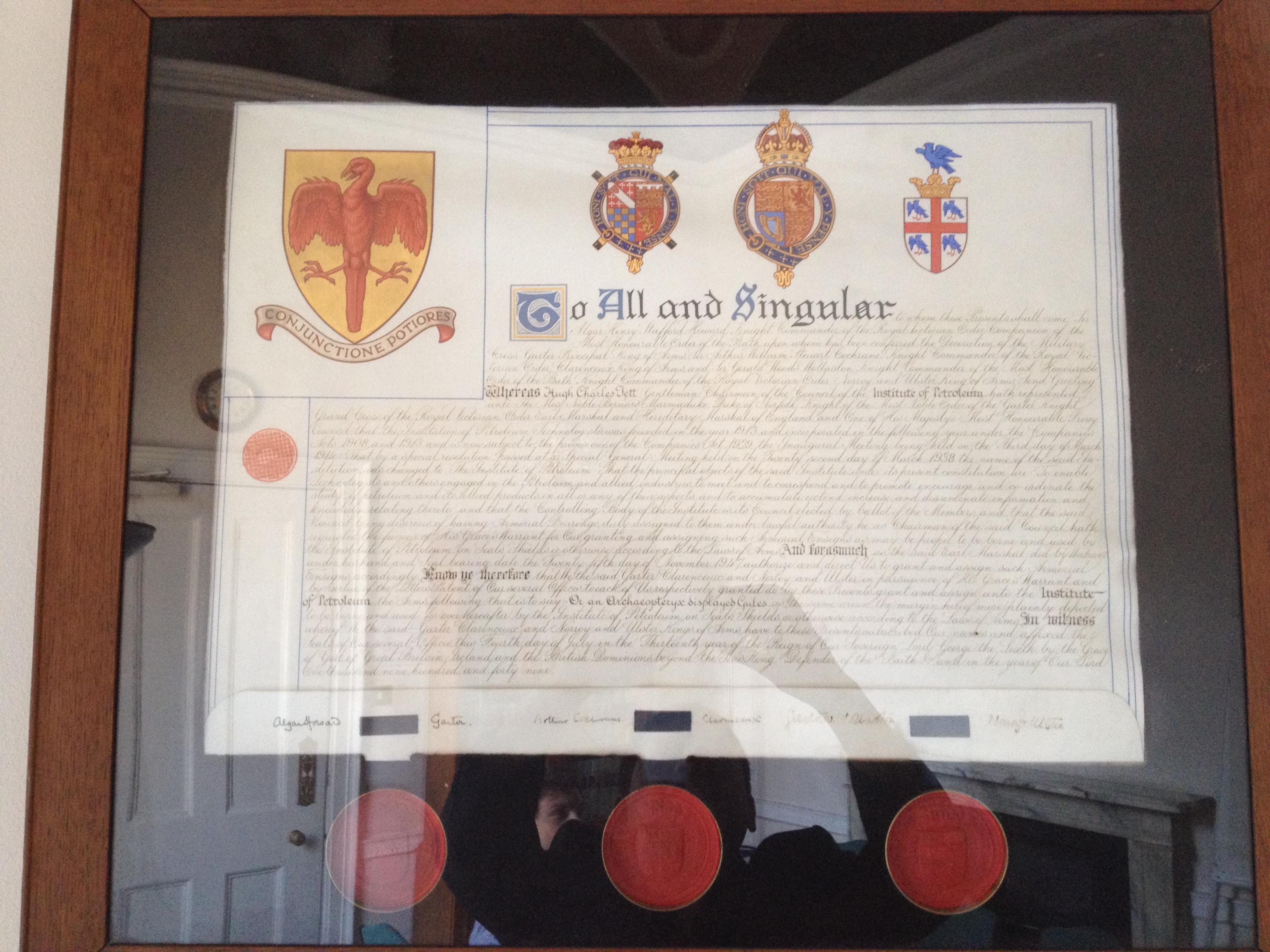
Both institutes have a long history in accumulating information about energy development and whose beginnings are enshrined with pre-modern ritual, as seen in these photos on the left, which capture the originary constitution of the institutes.

Gareth and I had a good laugh over these certificates. Upon closer examination, we found the word ARCHAEOPTERYX, which quite frankly, I had never seen before. Apparently, the word refers to an extinct primitive toothed bird of the Jurassic period having a long feathered tail and hollow bones. Today, the EI has 15,000 individual members, and 300 company members, mainly oil and gas related issues (50%) from the Institute of Petroleum days, along side everything else.

We went over oodles of other things, which I will write up elsewhere.

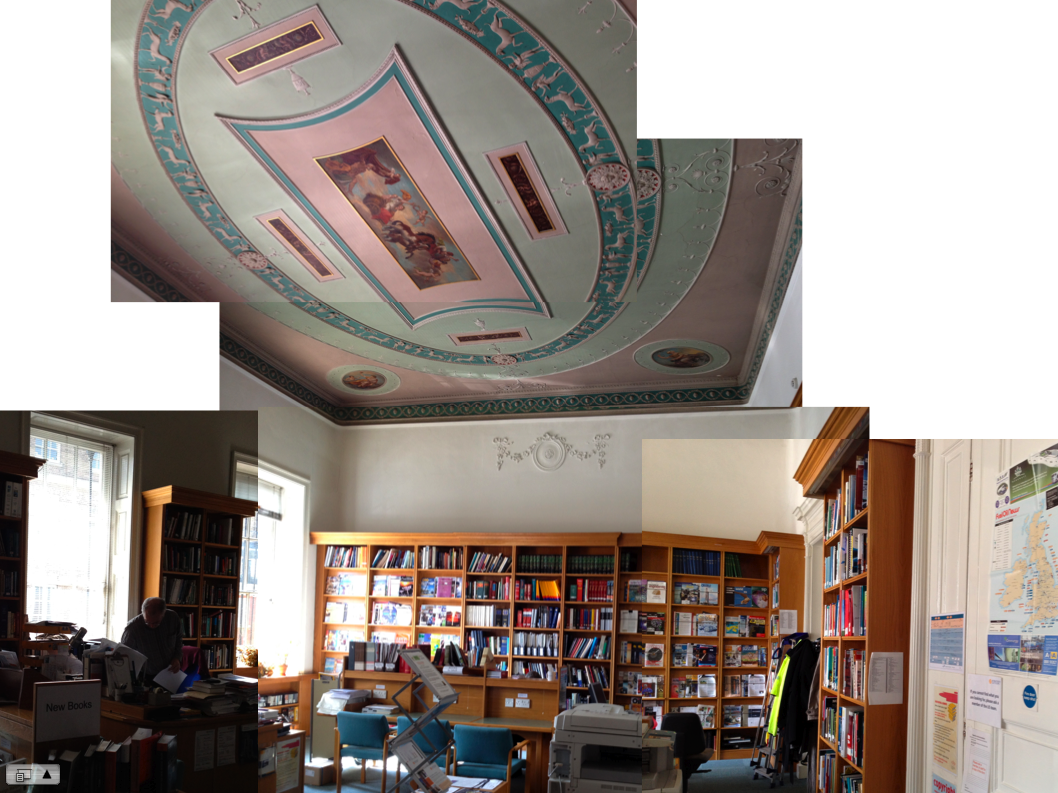
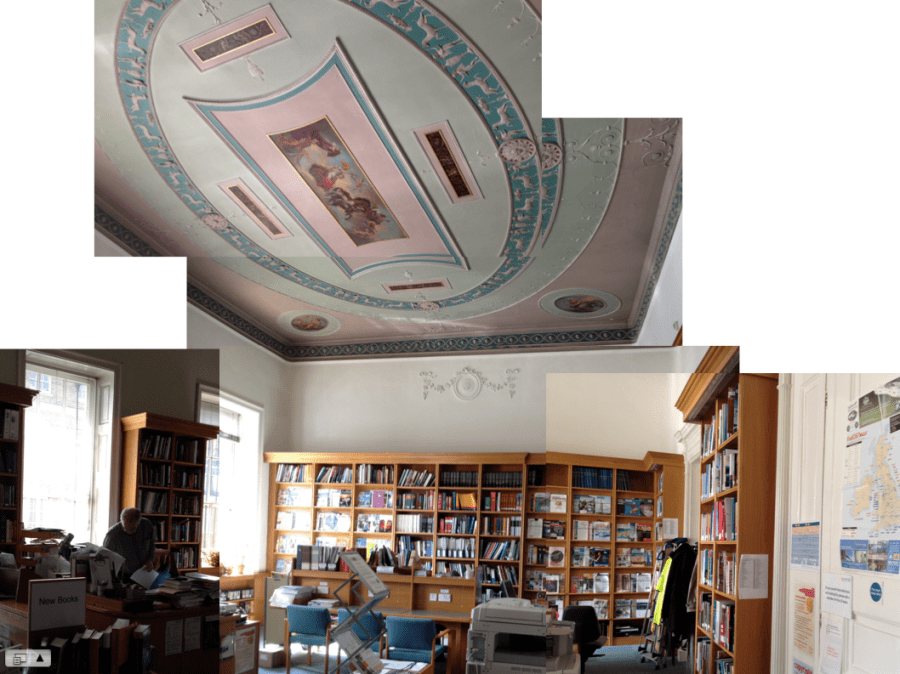
From there, I took a tour of the EI Library under the instruction of Catherine Cosgrove, who has been working as the EI librarian and previously the Institute of Petroleum librarian for 22 years. Certain details I already do not recall, and will have to collect when I return next Tuesday for an informational lunch, but the the library has been at this site since 1958, and the building, since 1777. Ornate ceilings cover all the rooms as seen here in this image of the main library.
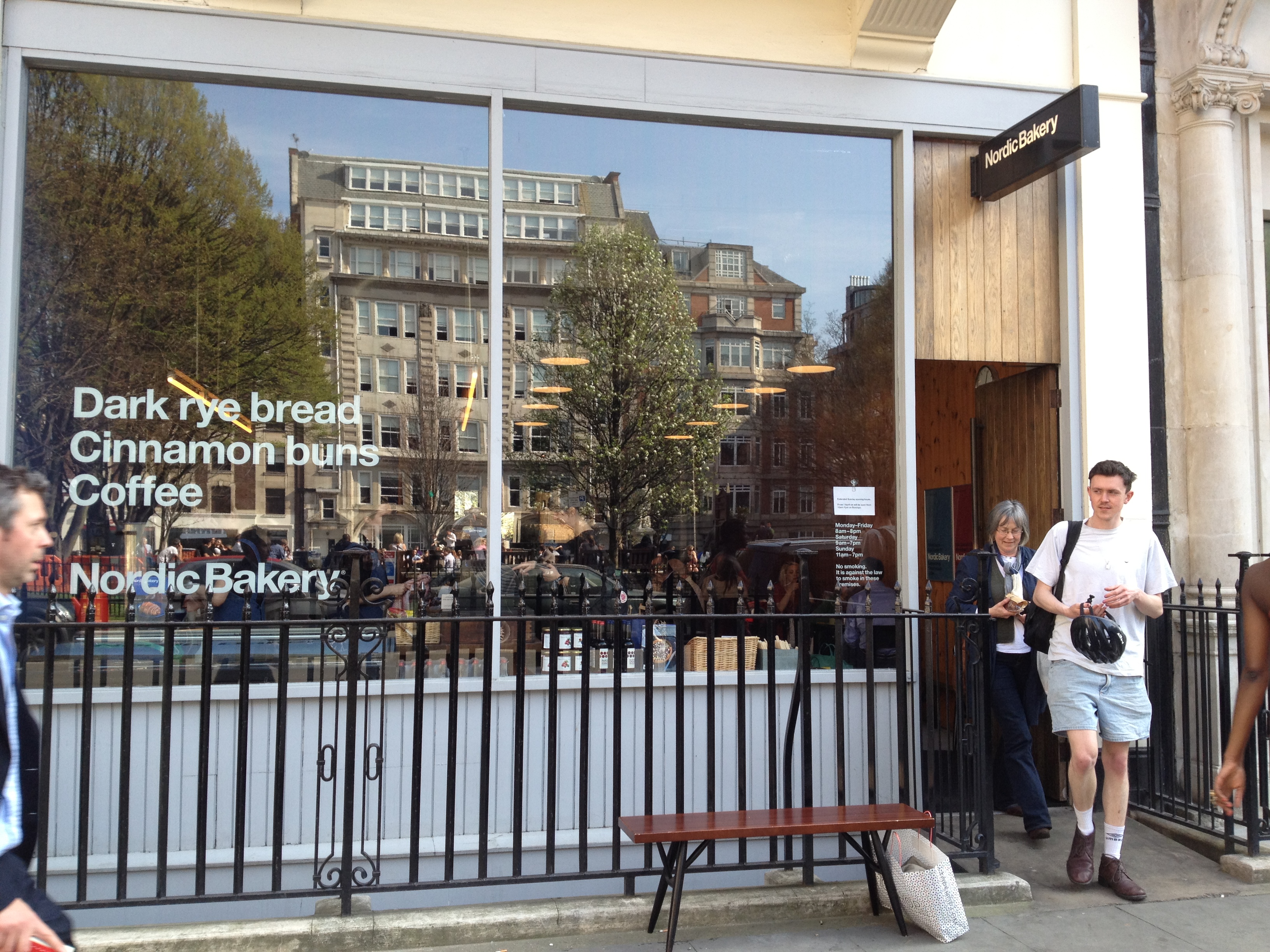
After the tour, I headed down to Golden Square to meet with photographer Nick Cobbing. We had met in January at the Frontiers conference in Tromsø, Norway. Nick is covering the Arctic and I mentioned that possibly we could consider a collaboration on an NSF project if it gets funded. He suggested we meet at Nordic cafe.

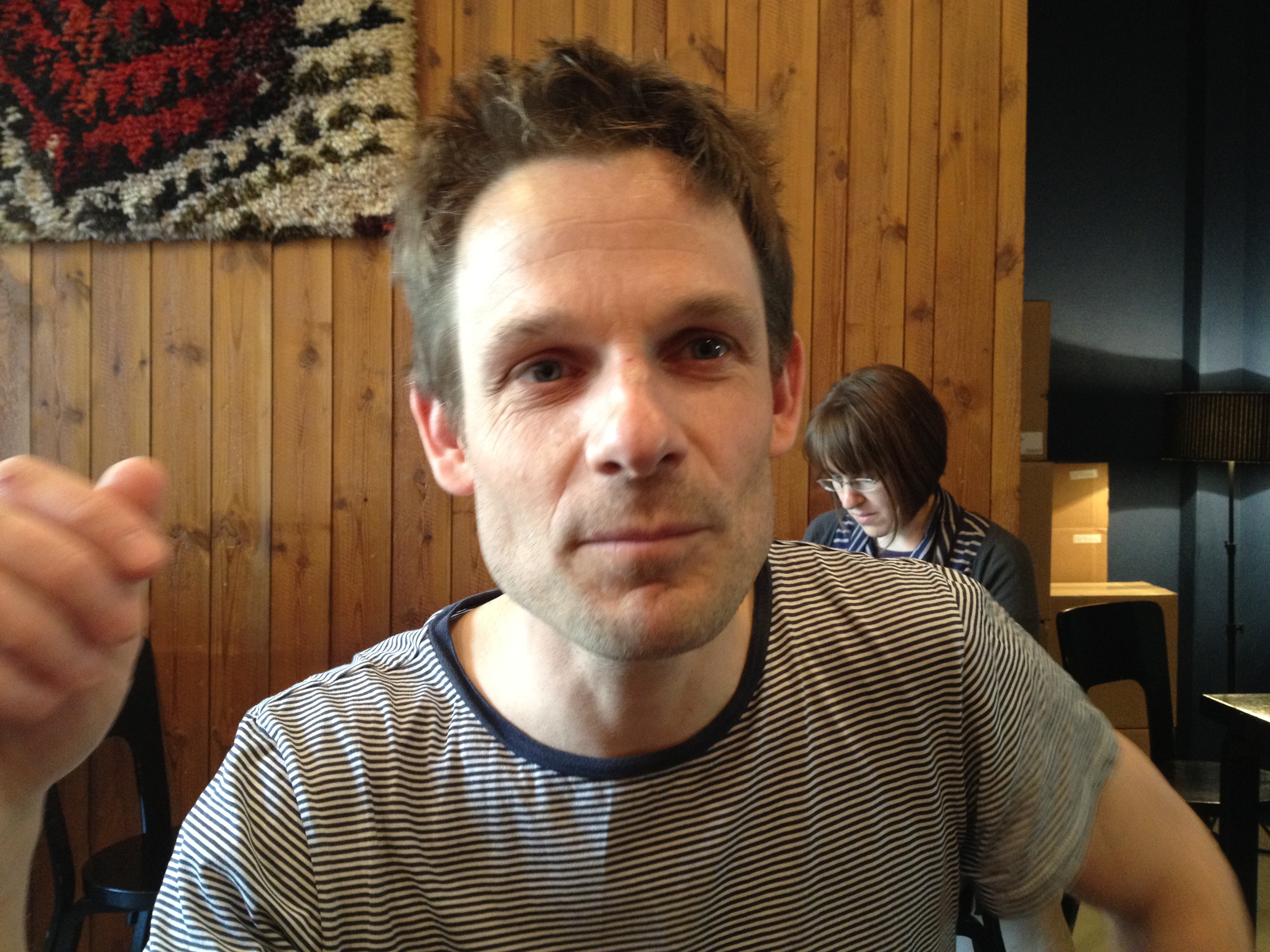
Great place, great food, great company. We spent some quality time chatting, me explaining what it is that I actually do, in part, preparation for some photographs I asked him to take of me. Nick is headed up to Stockholm in a few days, so that will give us a chance to meet again over drinks at the hotel Nobis, when I get there.





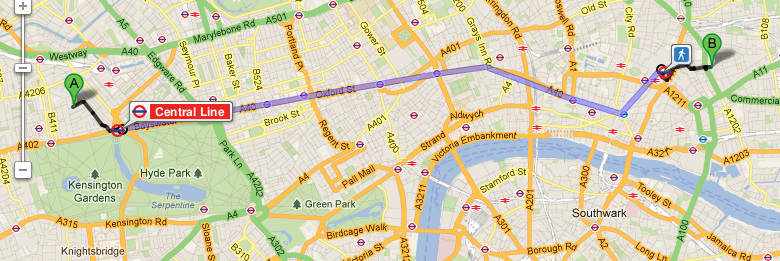
3/29: Just a small note. I want to keep in the habit of writing daily but there are so Many writing projects I have to keep in the same habit of, it is like walking a kennel of dogs. But I arrived in London yesterday, taking the tube to City of Westminster with Dick Norgaard and his daughter Addie Norgaard, chatting the whole way, bending his hear.
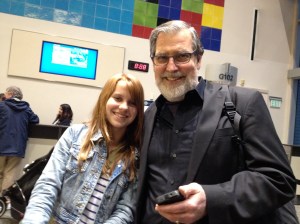
Dick is giving a key note address at King’s College on Friday at 5:30 PM and that sounds exciting so I plan to attend. He is also working in China these days, mentioning two global change departments at Beijing Normal University and Tsinghua U. This was surprising to me because when I was in China last week, we did not get a chance to cover the variously new developments in global and climate change study, and my curiosity was peaked.

I left them both at Euston Station and took the circle line to Paddington, where I made my way over to Cleveland Square and the Cleveland Hotel. London is so beautiful in the spring, I just could not believe it. I have never been here when the weather is so fabulous, everyone was out in the street and I was reminded of NYC, so much buzz going on. Made some calls to meet a few folks, headed over for fish and chips, caught a scandal in the news sheets that captured my attention. There is a rage over shifty PM’s-for-hire, but what the journalist mentions is a citation that is relevant for my own work on energy politics, concerning the right to access. He states, in politics “dinner is not just a meal: it is a forum, an institution and political device” — and then goes on to cite Cita Stelzer‘s book Dinner with Churchill, which illustrates the extent to which such meals were at the heart of Winston Churchill‘s statecraft.
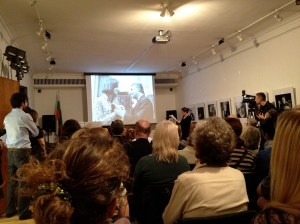
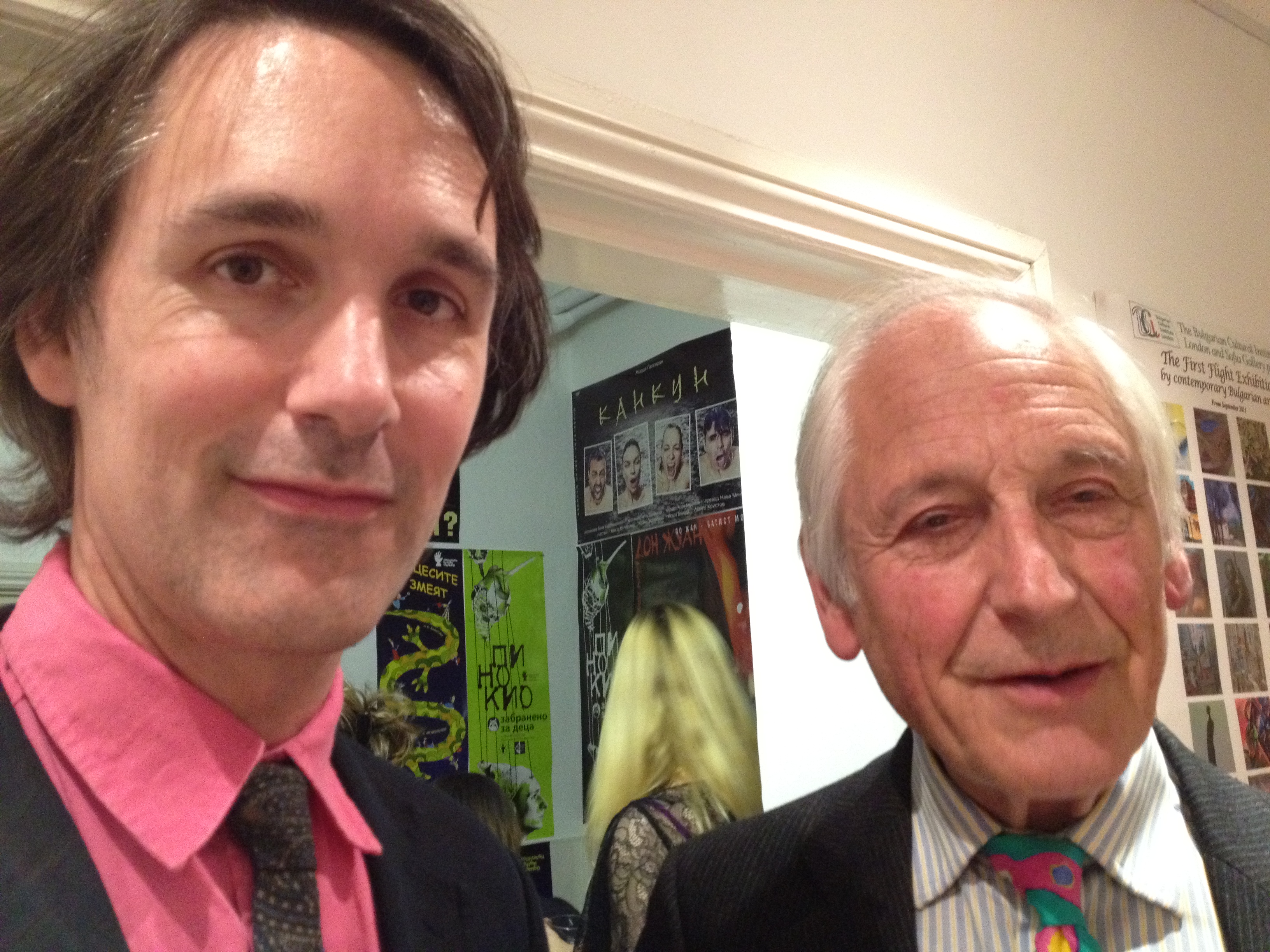
Kensington Gardens and by definition, Queen’s Gate were just around the corner so I walked through the park, tons of Londoners basking on the grass, over to the Bulgarian Embassy to see what was going on. Sure enough, they had a cultural gathering in remembrance of Bulgarian movie producer, director, author, and cultural critic, Petar Ouvaliev aka Pierre Rouve. The evening was surprising to me, in the sense that this was a Bulgarian cultural event, but clearly of the London community kind, as P.R. had established his name in the Western Europe and London glamour (producing movies in the 1960s with Peter Sellars and Sophia Loren).

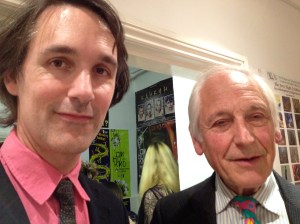
3/27: Okay. I am going already. I am still in bed, reading the newspaper and calling folks over skype. And in general, doing nothing, emailing with Sandra Dovali at ERG who just informed me that ERG’s Richard Norgaard will be on the same plane to London. That means I have to take a shower and shave before leaving. Less time to lounge. 

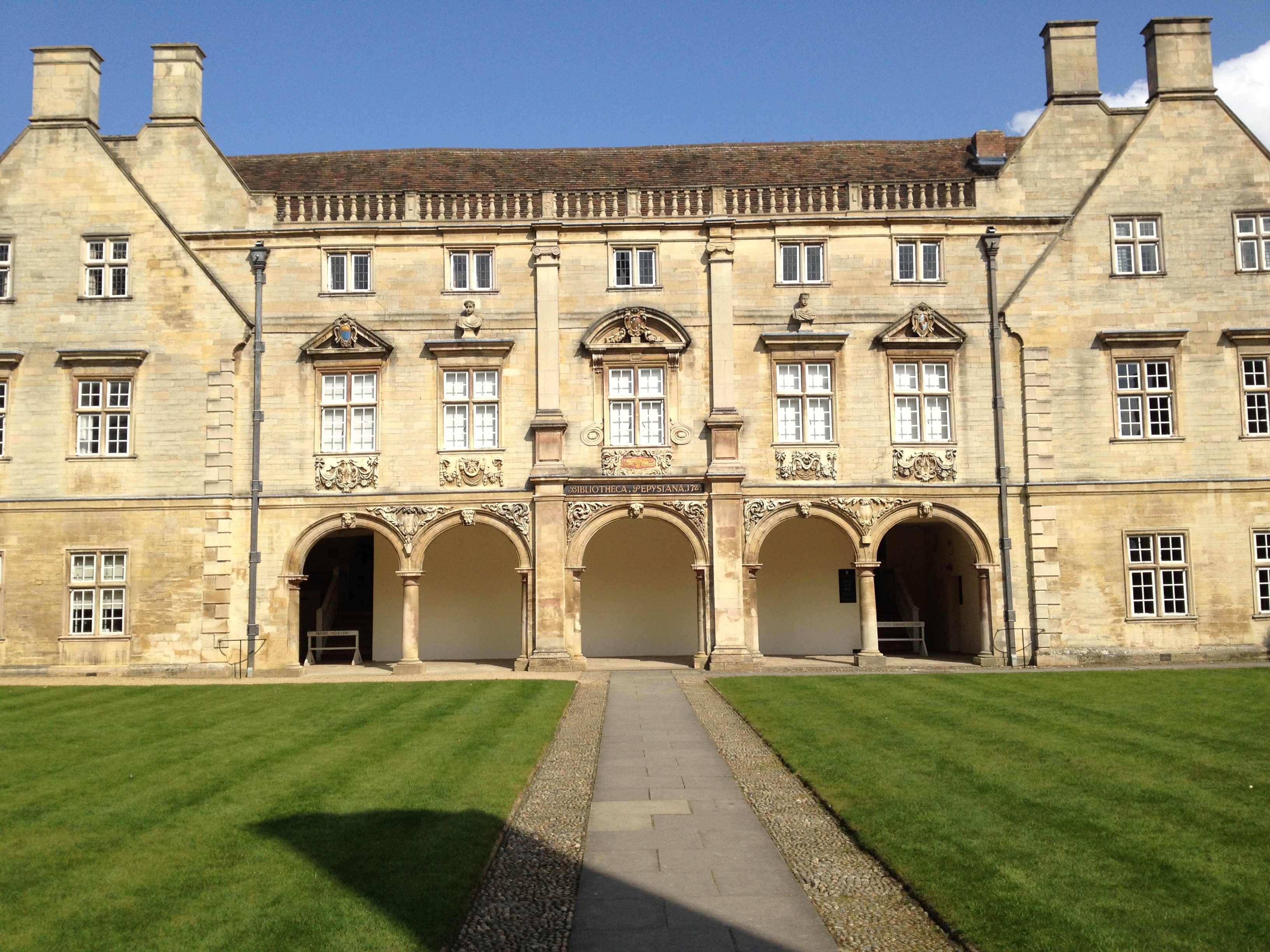
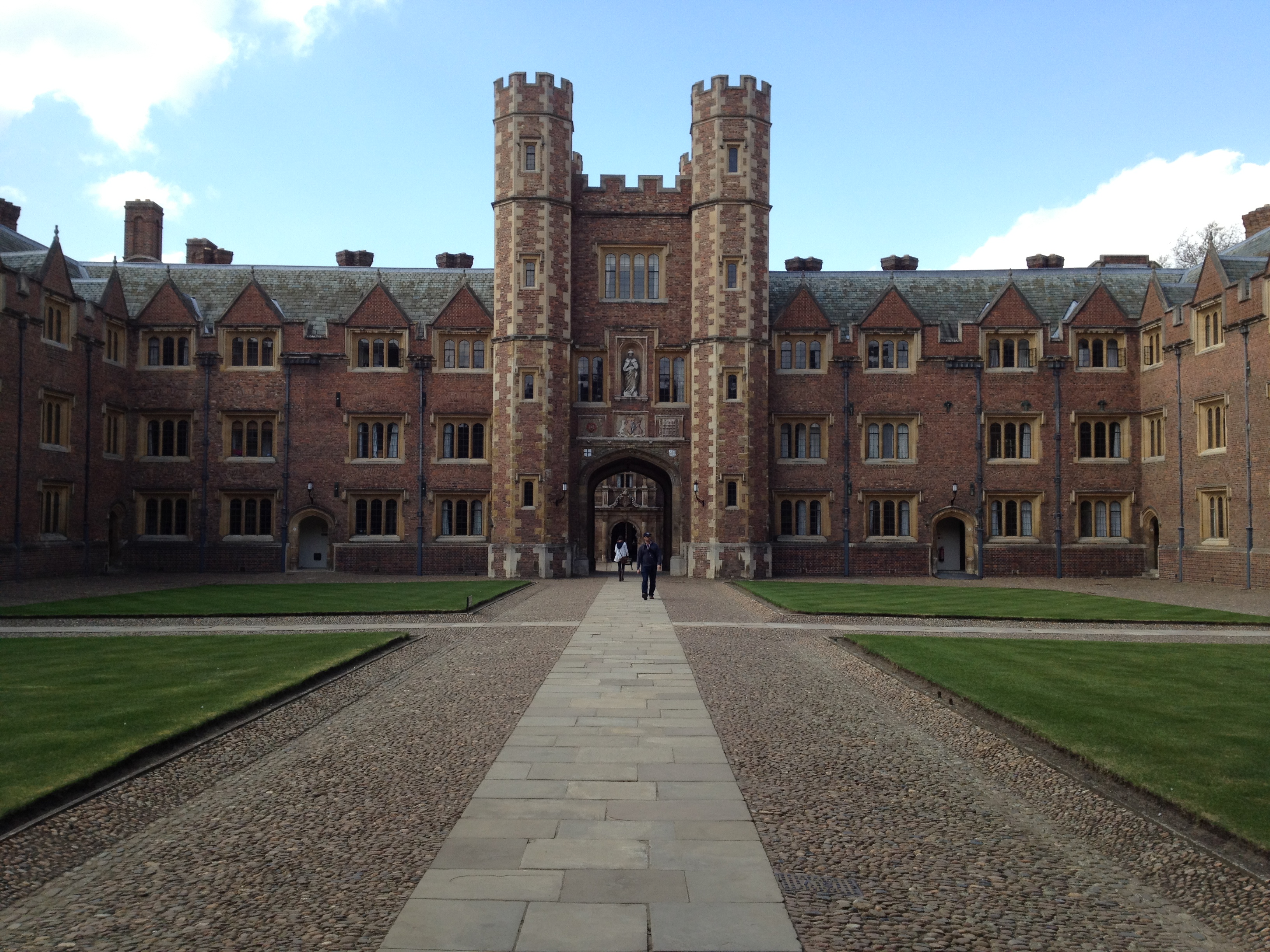
3/25: I placed a few days on either side of the conference on Cambridge. 

Itinerary:
Depart SFO — Tues. 27 March 7:35 PM
Arrive Heathrow — Wed. 2:50 PM

Wed.

Thurs. — IFEG committee meeting 10AM; Greville Williams 11:45; Gareth Parks 1PM; Nick Cobbing 3PM

Fri. — Richard Krijgsman 11AM at 11-29 fashion; Dick Norgaard 5:30 King’s College

Sat-Mon (Cambridge)

Tues. — Francis Gugen, Lanesborough, 11AM.

Wed.

Depart Heathrow — Thurs. 5 April 10:20 AM
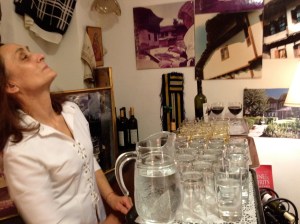
Read Full Post »

→ Cambridge

Annual BASEES 2012 Conference, March 31 – April 2, 2012
Ideologies of Professionalism in Russian Welfare State

4/2: Just leaving Cambridge and surprised at what fun was had. The conference was populated by European academics with whom I infrequently meet as well as colleagues from nearby London.

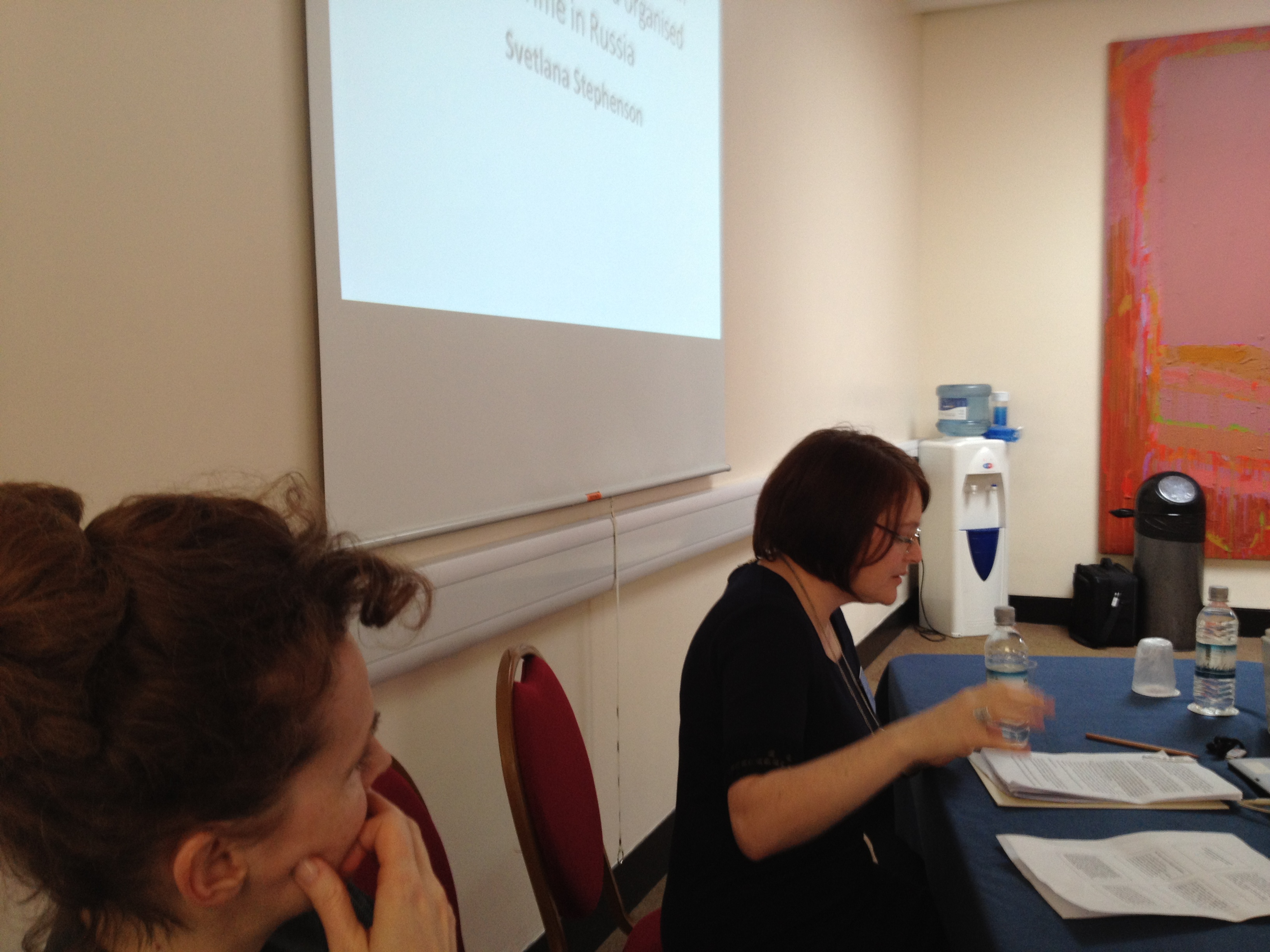
I connected with Svetlana Stephenson (London Metropolitan U). We were on the same panel with her talking about delinquency in Russia and re-education programs, where violent gang members are disciplined with cooking classes and soviet style discourses that that appeal to cultural higher ideologies, how to behave in public places and the like. I could not help likening the irony of treatment to cultural heritage practices in the United States, without which the economic function for such products, would appear equally unusual in neoliberal conditions.

There was an absolutely wonderful talk given by Susanna Rabow-Edling (Uppsala U, Sweden) titled Women and Empire in the Russian Colonization of America, in which she explores what it was like to be a European woman in Alaska during the 19th century, the role of domesticity, how they felt obliged to take part in the civilizing mission, and how they experienced America, how civilization and family was linked.

Susanna focused on the wives of three Alaska governors of Russian America, whose views were circumscribed by limited access to society beyond their official domain. As the foremost female representatives of empire, they had special obligations to represent the empire but also to spread the feminine notion. They were not appointed, did not contribute to anything by way of operation of the Russian-American company, but nevertheless held the highest possible (female gendered) position in the colony. So, in a sense, they were positioned to legitimize the civilizing project. For all three women she examines (whose names escape me) the way they enter a cult of womanhood, young and newly wed when they set out. Thus, for their journey into a new world and into married life, both destinations were unknown to them.

According to Susanna, Mrs. Von Wrangel was aware of this role and tried to fulfill it to the best of her ability. In fact, both Von Wrangles represented the Russian empire without being Russian. They were Baltic Germans, the most privileged minorities in the empire known for their loyalty to the Czar, though this did not stop them from making a criticism of Russia.

Another of the wives, Anna (get full reference) was much less prepared to deal with the world, landscape, climate, Indians, everything. The wilderness and Indians scared her. She also found the Russians less civilized, did not appreciate the sacredness of marriage, and was struck by the immorality of frontier life. “Can nothing be done to turn them from [their] unrighteousness”. In her failed attempt to change things, she invested her effort to be perfect wife and mother, and developed a position of herself as the cult of womanhood. Margarita Etolian set high standards for herself as mother, wife, Christian. She reproached herself for homesickness and took the blame for grief over her son’s death. Her stay in Sitka was entirely affected by the death of her son and she fell into deep depression

Anyway, you get the message. It was fabulous. I approached Susanna later, talking about my own work on Kodiak Island, interested in the distance between the Creole population and these types of Russian emissaries. We exchanged ideas, a few book titles, and promised to stay in touch.

On Saturday, there was a promising panel on Europe-Russian energy relations that I absolutely had to get up for by 9AM. And this was despite me and three other conference mates, including Svetlana and Tina Schivatcheva (U Cambridge) going out the evening before and whiling away the hours in the pub, talking about everything from advertising to energy. But nevertheless, at the energy panel was Chair, Jonathan Oldfield (U Glasgow), Jack Sharples (U Glasgow), talking about EU-Russian Energy Relations: The Russian Perspective; Andrew Judge (U Strathclyde), speaking on Securitizing EU gas supplies: threats and responses; Tomas Maltby (University of Manchester), referring to EU energy security policy: New member states; and Domenico Ferrara (U Warwick), on Understanding EU-Russia energy relations through a discursive approach.

Well. It was interesting. Two things struck me. First, since summer 2010, most observers of Russian energy have been repeating the same story (shale gas in US and recession creating dilemmas in Russian export and possibly threat of spot markets in Europe, threatening security of export, while security of supply is put on hold). Second, I asked the question of what these researchers were identifying as the new element or the edge upon which is new in discussions of Shtokman gas field in the Barents Sea. Not much of a response really, but in fact, there was an interesting statement of the focus on supply-demand interactions, that is, the project has shifted from a national priority to an economic proposal.

And this is important, because you see this in Alaska, a shift form exuberant ignorance to mature knowing, a movement from a belief in these projects based on a lack of data for how they can move forward, and then a sobering up based on the realization that these projects in the Arctic require so much effort and cash.


What else… I attended a great panel on Russian media, consumption and social change, chaired by Kaarle Nordenstreng (U Tampere, Finland) with papers by Olga Gurova (Helsinki Collegium for Advanced Studies, U Helsinki) delivering Shopping for fashion in post-socialist Russia, Jukka Pietiläinen (Aleksanteri-Institute, U Helsinki) speaking on Magazine Cosmopolitan and changing values of Russians, Saara Ratilainen (U Tampere, Finland) on What to wear?: Class, gender and consumption in post-Soviet glossy media.


This was a great panel, beginning with a review of Michel Foucault‘s (1972 – 119-120) discussion of the function of statements as applied to constituting glamour and literary culture. Glamour—fashion and elite lifestyles and glossy magazines. Glossy consumer magazines, miscellaneous collection of text and materials, that do not provide a stable point of reference for genre. Popular media discourse, commerce and on literary field and publication in particular. Discourse of glossy literature, commercial and discourse – for example, citing On the Borders of Literature (2007) Boris Dubin (?), surrounding what organizes the Russian literary field and its shift from vertical distribution system to horizontal system and horizontal networks.

Optimistic discourse. Adornian pessimistic views at work when dealing with the commercial field. Literature has changed to entertainment industry. Fashion books because celebrities recommend them, they attach themselves to the consumer and bought at department stores along side other consumer books.

It has to be changed all the time, as a bag, clothing. Fashion book attached to a list of other consumer items, handbag, lipstick, replaceable. Side product of entertainment industry. Literary discourse. Consumption on the one hand and culture on the other. Books sold and read under the influence of market forces (consumption) versus books to subject others under elite position (psychological cultivation). Different hierarchies of culture. What kind of elite culture is a persons of consumption supposed to stand for, facts that stand some one outside the cultural elite.

Glossy – lack of cultural content. Glossificiation, corrupts the cultural value – a term used used to address a situation of market economy and produce reports. Sell the ideas by glossification. Glossy magazine industry is so huge and came so fast. Pessimistic discourse, a symbol of widening gap between rich and poor, and superficial aspect of capitalism. Gender and age difference in the relationship to gossip. Referring to things in print as “not only” a glossy magazine because “this gives useful information”. In the West, already overcome the attachment to things and are highly consumers versus Russians. Conspicuous consumption.

Well, all this was quite good, because the idea of the glossy is in consultant reports, and one might argue that the glossification of expert knowledge plays an important role in reducing the complexity of facts into forms of simplicity that serve as the basis of gloss.

Note to self, Katja Koikkalainen, U Helsinki, Aleksanteri Instititute, examines Russian journalists.

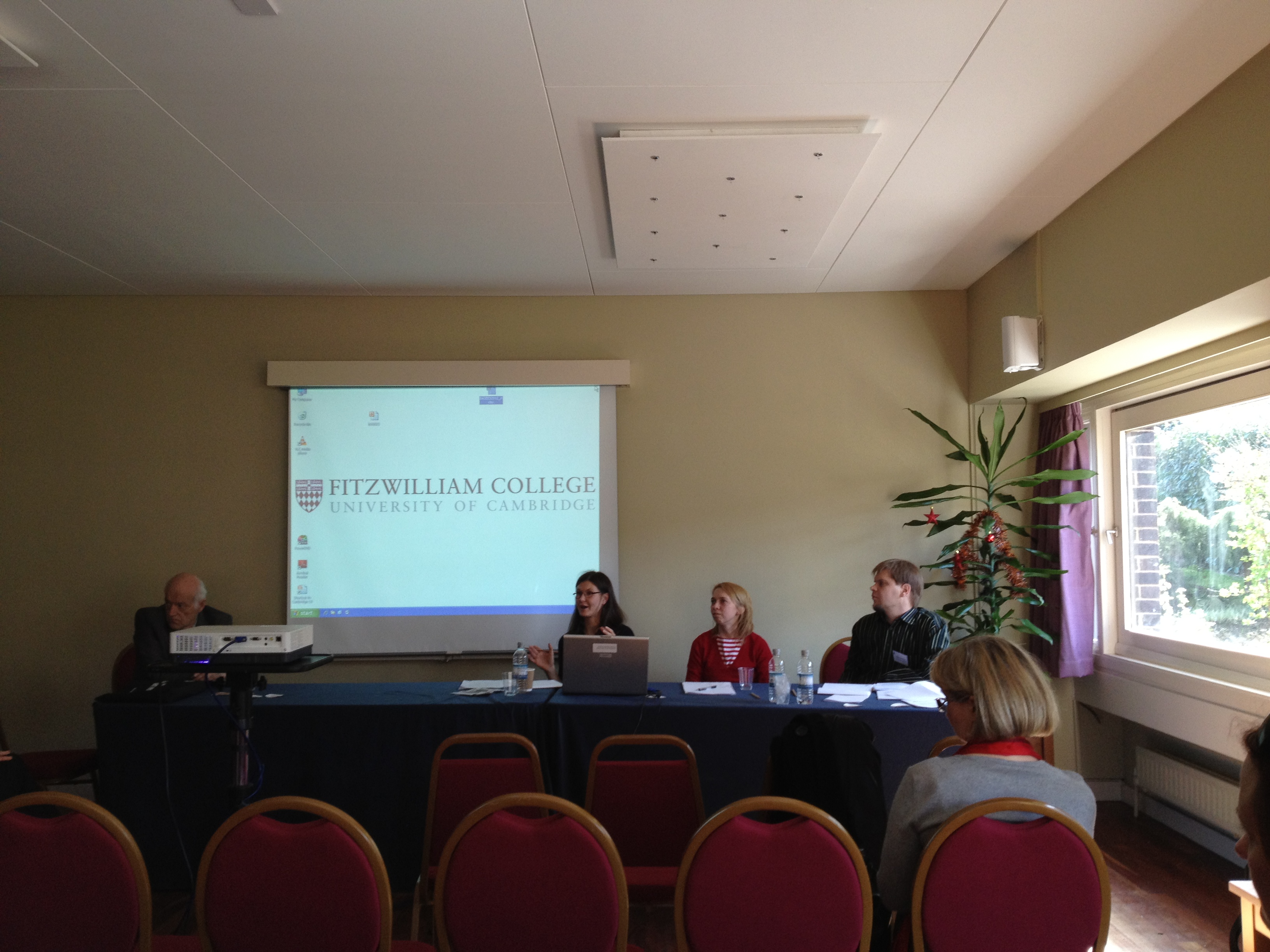
4PM: Wow, I just completed my talk. Glad that is over. Quite frankly, I was surprised at how much sense I made, and this was primarily because of the two speakers before me, when after listening to what they were saying on the role of the state and subject, I found my footing concerning experts in the West and in Russia. Phew. I love when that happens. Global Russians, that is definitely a topic that people are interested in and I was peppered with questions over it.

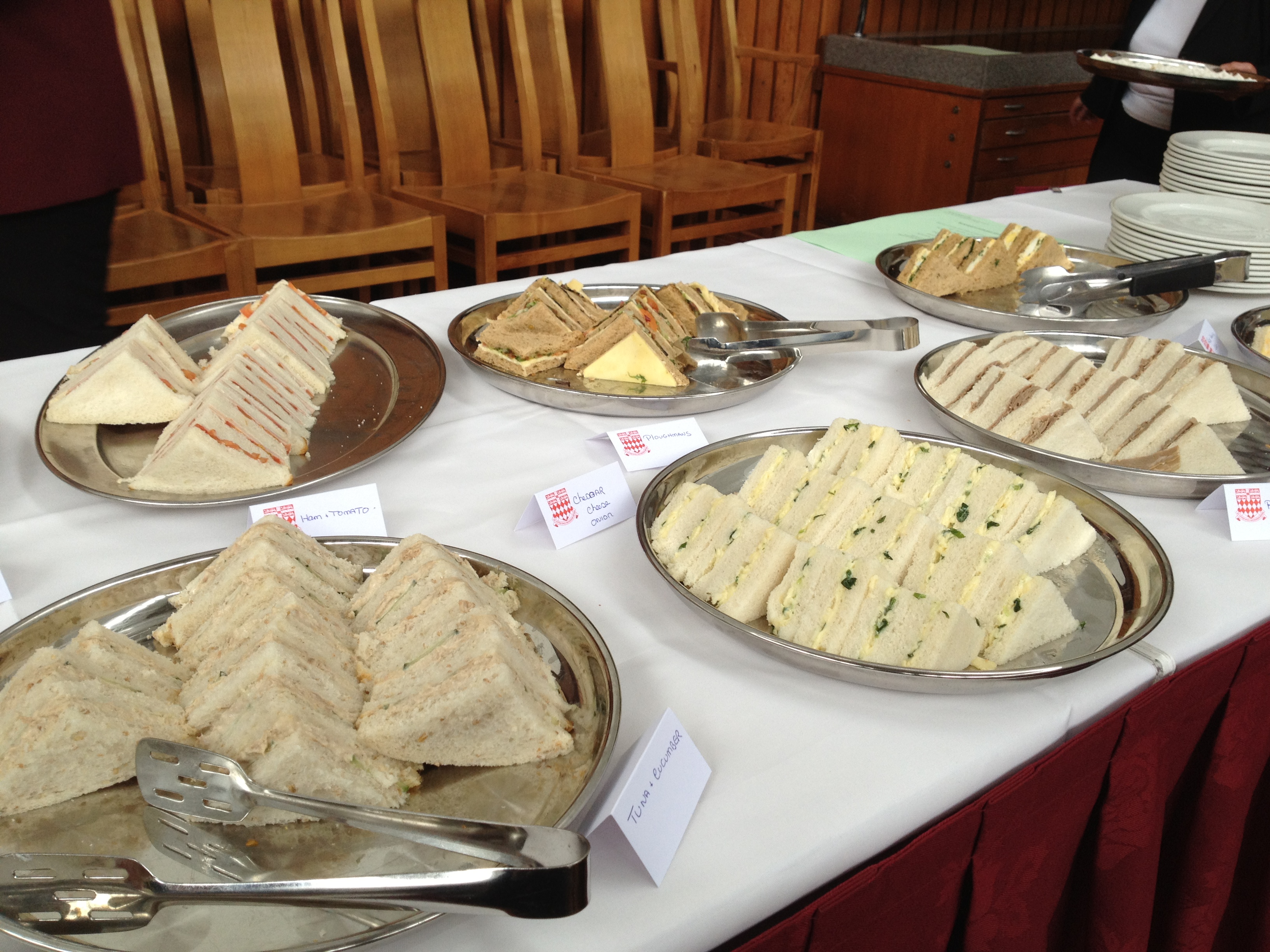
Noon: I just arrived at the Fitzwilliam college in Cambridge, and had a meal of tasty cucumber sandwiches meeting my fellow colleagues, all of whom I do not know and in fact, it may be that the organizer of my panel has not shown up. I do not see him on the panel at any rate. So we have a speaker now, Ivan Krastev, who is being introduced just this minute as a public intellectual. A long list of titles and awards are being rambled off, Wildrow Wilson fellow, University of Freiberg Suisse, fellow, contributing frequently to Le Monde, Wall Street Journal and so on and so forth. Applause. His first words suggests that he is not a straight “academic”  — okay, now advice on what to speak about. First, things that we feel comfortable about, second, things we know nothing about but have a curiosity for. And the second is the theme of his talk he plans to explore. His talk is the result of a “travel”, to a series of conferences in which experts are talking about why things have worked since 1989 in Eastern Europe. First, he is surprised how little populous backlash takes place during reforms, and second, an absence of anti-European rhetoric in a post-democratic capitalism and not backlash against Europe for intervention into Eastern Europe.

To what extent can you make sense of the austerity state? He begins with a comparison to the 1930s, initial distrust was replaced by a trust that the government could deliver. In the 1970s, a loss of trust, but a regained trust in market. Today, you have a loss of trust in market and loss of trust in government.

Constitutionalization of economic policies suggests there is no politics in Europe that can change the economic situation. Whereas in authoritarian capitalism in China and Russia, there is no political alternative. Whereas earlier, the idea was to make Greece out of Bulgaria (the model that Eastern Europe was striving for) – today, the idea is to make a Bulgaria out of Greece.

Having a debate about the future of the European Union. How universal is Europe? To what extent is it assumed that Europe worked in Eastern Europe, how could it then work in Greece and Spain?

Mentions Political Economy of Patience. Radical change was based on negative consensus of the past, of the socialist period, a critical perspective on the welfare state, that people wanted to get rid of. This is not the case today, in southern Europe for example. Second, was absence of a legitimate discourse for attacking reforms. Not the case in Southern Europe. Strongest argument, was part of the communist legacy, the ability to create collective action to handle reform. Today, in southern Europe, not the case. And for these contextual reasons, you will never make Bulgaria out of Greece

Today, Europe faces a high risk situation in creating constitutional economic policy, that is less rigid. The debt state unable to envision anything about the future. We are living in a never ending present. The future has disappeared. This was a great talk by the way, fabulous, but what is really interesting, is that there is no discussion of climate change. how wacky is that? There is no future in politics, and there is only the future in climate change.

3/6: Looking for time when I can put together a paper on my Skolkovo experience. Prospecting here, starting to think out loud, in a casual way, how to approach expertise and government sponsored innovation in Russia.

Read Full Post »

Enroute China

March 18-28: Colloquium Lecture, Shandong University, Department of Anthropology, Jinan, China.


In Moscow, I received an email from Zongze Hu, Chair, Department of Anthropology, Shandong University, inviting me to China to take up a post as Associate Professor.

Previous to Zongze’s email, I did not expected to visit China, let alone take up a faculty position there. I suggested to Zongze that we should also discuss a Plan B, such as a Research Appointment, where I could blow in and out of Jinan at will, examining energy policy on construction of long distance natural gas pipelines.

I arrived. Zongze made me a generous offer that I could not accept, and so we moved to Plan B. I am now in the process of negotiating a Visiting Associate Professor position, as a Research Appointment for short-term teaching (2-6 weeks) and long term research on energy issues.
China made a strong impression on me. I felt as if I had not flown to a different country, but in fact, boarded a time machine for a visit to the future. It took for absolutely ever to get there — 14 hours– unheard of by my body clock. And when I arrived, I could only marvel at the way they built everything new.

Upon arrival, the translator, Shing-Lui (Madison in her English name), picked me up at the airport, and chatted me all the way into Jinan. Without Madison, my trip would have been worse for wear. In this image above, she is seen sitting across from me in what I now refer to as my favorite coffee shop in China.

I had arrived and lunched with Zongze at the University Hotel, where I was staying. After taking a long hot shower, around 4PM, I decided to wander through the city, to see what was there to my liking. That first evening was an adjustment. I could see everything, but I could not recognize much.  In short, I was lost. But I kept wandering.

The next day, Madison gave me a tour of the City, through its heart, and we spent quite a bit of time at Boutu Spring Park and Five Dragon Pools, which are a series of springs along a canal that is nearly in the same part of the town of Boutu. We crossed Quancheng Square, with its mighty sculpture in honor of the springs and then passed through Furong Street (seen directly below), where we stopped for a wonderful bowl of noodle soup, shown in the first image above.
Quail eggs on the street next door to a monster of a business building.

But that is Jinan.

I plan to go again, perhaps next year, to teach a course, and begin a research project, of more I will write soon.


Read Full Post »

« Newer Posts - Older Posts »