
Vanguard Skolkovo (Сколково) Practice

2/11: Moscow, with its smell of burnt heating oil as you pass into the subway entrance, long escalator rides where no one smiles and the left side is open for runners, provocatively dressed women in restaurants, chatty cabbies — and the heat spilling out from buildings — walls of heat, fueled by enormous reserves of Russian oil and gas. It is this fabulous heat of a Moscow winter that gives life to the phrase, told to me by a DNV executive, “oil is the answer to every question”.
On Friday, my last full day in Moscow, I visited with members of the Energy Centre in Skolkovo (SEneC) located on the outskirts. This is the gift that I had waited for over, a final meeting on a final day, representing a conflation of tenacity, great ideas, brilliant networking, but really, a life lived entirely on a cascade of serendipity. I was just lucky.
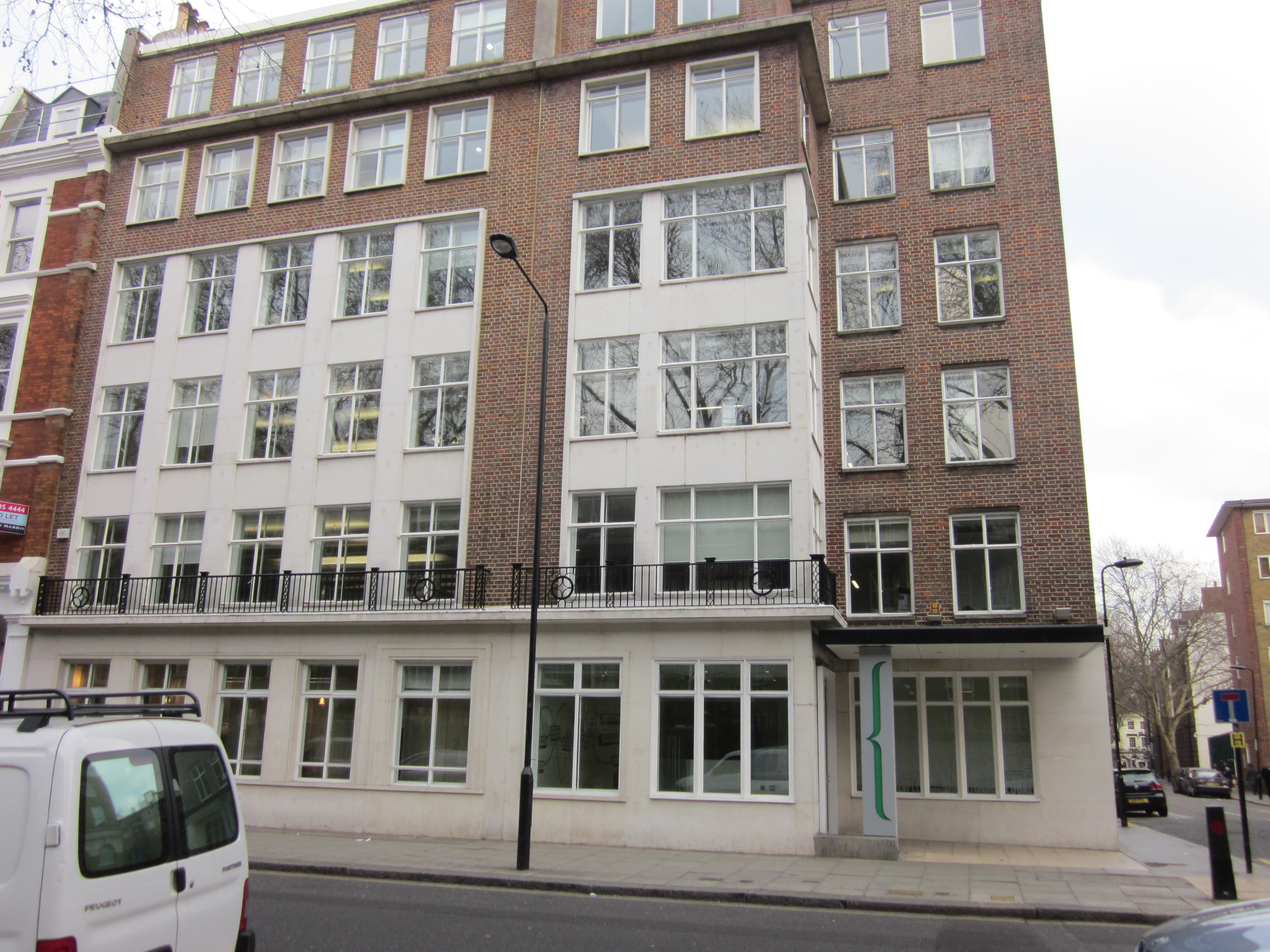
Here are a few photos of Skolkovo from the outside.


Let me begin with my dream meeting. First, the core of the meeting was a lunch conversation with Russian oil and gas guru, T. M., Head of Global Energy for SEneC (Vicon L., Director could not make the meeting, busy with a Lukoil event). Dr. T. had looked over my NSF proposal in advance and expressed interest in meeting me.

To be brief, I was taken aback at how well organized and connected Dr. T was, and the Skolkovo Energy Centre, on issues of natural gas.
My surprise came from how she was moving together with recognizable names in industry and government toward identifying synergies for ways to acknowledge the forward movement of the gas industry — considering models in use on all continents (Rice U., Woodmac, EIA), counting down LNG terminals, looking at where global gas might be headed, including folks like, well, let us just say, big names, including those at Rice (Dr. T had spent time at Rice U., I did not know that). They are serious about getting (Arctic) gas out of Russia and to markets beyond Europe.
But the model topic touched me slightly. Weeks earlier, I had read a shale gas report by Rice University, utilizing what they call their Rice World Gas Trade Model or RWGTM. Quite frankly, I could not make heads or tails of the model-thing, sounding from its description like a room-sized gadget modeled after the 1950s imaginary TV world of Mad Men (requiring inputs).
 I asked Dr. T how WoodMac’s Global Economic Model compares to the one used at Rice U., to which she mentioned that each model has its own inputs and outputs, but that the industry as a whole had become too complicated to provide analysis without modeling, and that, in fact, even so-and-so (big name in gas industry here) was becoming convinced of the usefulness of models. I nodded my head in astonishment, both over my own ignorance of what a model is (I mentioned this, asking if she were referring to a room-sized gadget to which you can feed porcelain dishes and dinner scraps) and of my new understanding that Everyone seemed to be headed toward a belief in the model as an answer for comprehending complexity.

To my credit, I felt Dr. T got a kick out of my project, generally humored (in a good way I think) by my gadfly approach, suggesting that she could participate in a variety of activities outlined in the research, but of course could not commit to anything that references her own research, since her work at the involves confidentiality agreements. She mentioned that I should attend the World Gas Forum in Kuala Lampur this June (and I have since registered).
When I met her just, I could not help but exclaim immediately, before anything else, that I am her biggest YouTube video fan. That is right, there are Youtube videos of gas experts giving interviews at various gas meetings stretching from London to Moscow.
I mentioned the possibility of building a cross-Atlantic program on extractive industries in the North, and that U. Tromsø and Arctic Centre at Rovaniemi are excited and wanting to pursue a European Research Council Synergies grant for this purpose for 2013 time frame submission. Dr. T. expressed interest in this, and that Skolkovo Energy Centre could look for an opportunity to participate (yay!).

We ate lunch. I ordered a chicken caesar salad, which was delicious. Dr. T. and Calvin M. (who I introduce here momentarily) ordered salad as well. We were eating healthy. But also, it was the quickest thing on the menu. My time was running out.
Finally, I mentioned the Skolkovo Foundation proposal for creating centers, $6 to $12 million applications (which is a separate arrangement altogether from the Skolkovo Energy Centre/Management School). Here, I hesitated to outline anything specific stating that I would speak with my partners at Berkeley about what added values we might be able to provide given the Energy Centre’s already extensive networks and well developed approach for thinking about global gas.
On this last point, Dr. T. was explicit that Skolkovo Energy Centre would require something more than what I had initially planned, for example, perhaps something along the lines of the intersection of power and gas, or shale gas development or maybe even China. In fact, I was very much interested in what she knew about China and who she was speaking with, invited as I am to visit China in March.

Just prior to lunch, I was given a fabulous tour of the Skolkovo School by Carina S., International Relations Manager, and then greeted and brought to lunch by Calvin M., Strategic Projects Director. The Management School, as explained to me by Carina, is oriented toward catalyzing emerging economies. In fact, specific modules were created for this purpose, each with a special museum of cultural artifacts unique to the emerging economic region. There are at the Management School five or six modules, some identified by country (Russia, Brazil, India, Singapore) and another based on a continent (Africa).

Carina directed me to the Russian module, as the other facilities were just then being set up (the School opened 2 years ago), and only the Russian section had museum pieces in place. There were so many details that I lost my way, and simply could not wrap my head around the entire story, chastising myself as I did for not placing a recorder to Carina’s mouth piece so I could capture everything, for example, the name of the Russian gazillionaire had provided a lot of the folk art on display.

And indeed, there were some beautiful items on display….


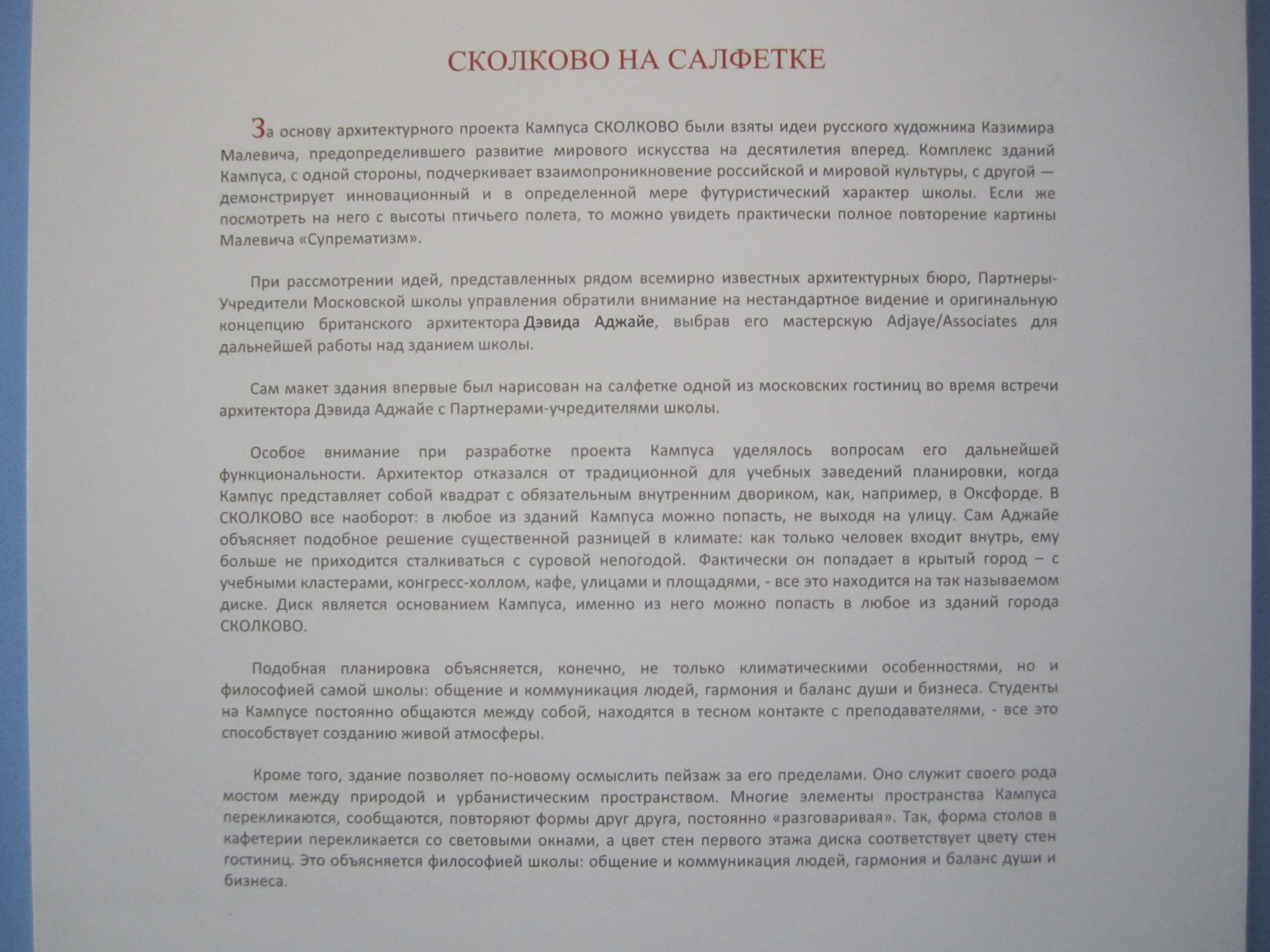
Finally, the design stage of the building itself is from an idea scribbled on a napkin by early 20th century artist, Kazimir Malevich, as seen through the eyes of Tanzanian born Architect, David Adjaye. One image on display shows the napkin rendering (which is also on the internet) followed nearby with a description of the event in Russian language. Ogla was such a gracious tour guide. Every time there was a description printed solely in Russian, she would wonder aloud where the English translation was, because the School is an international program.
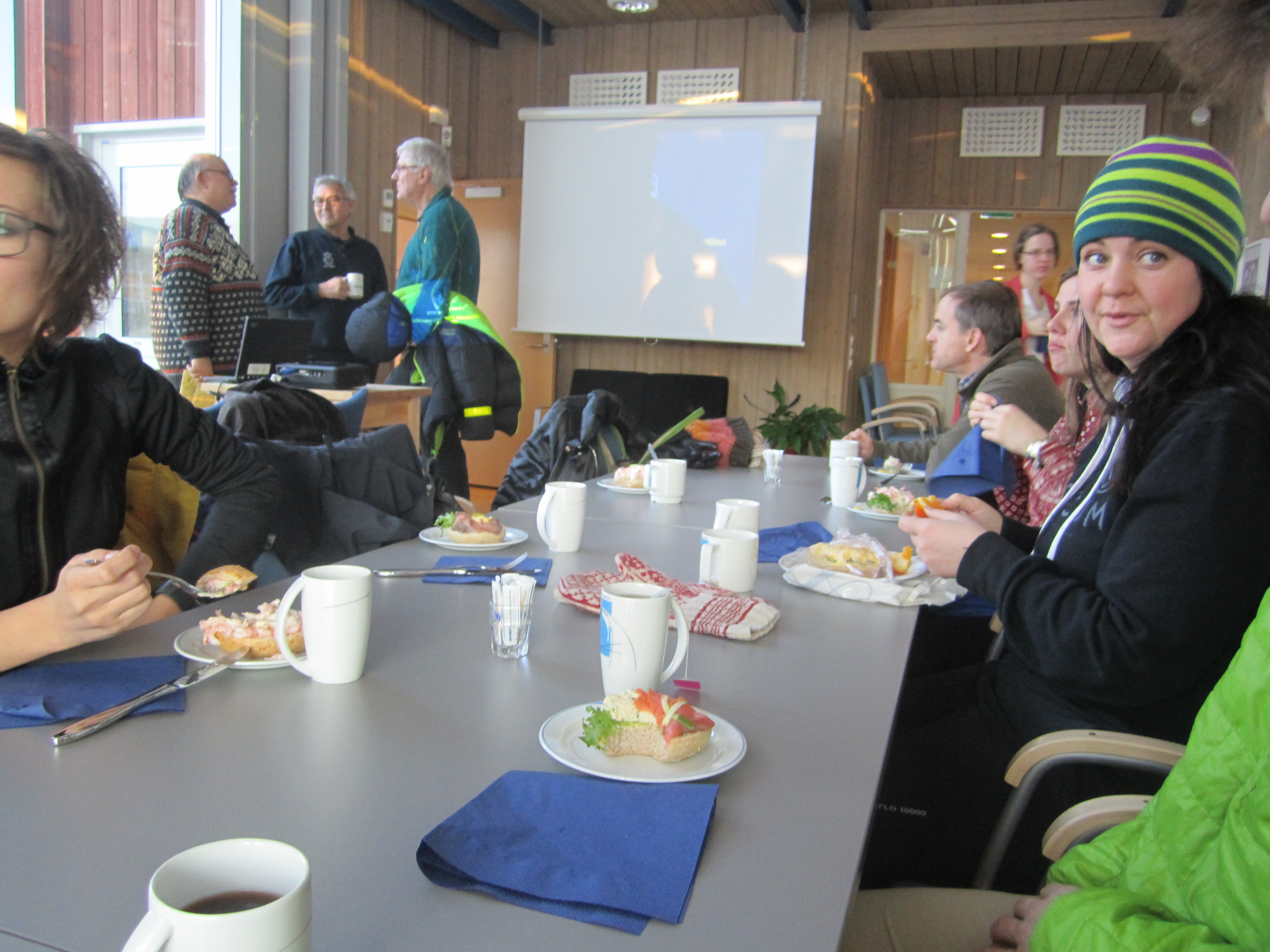
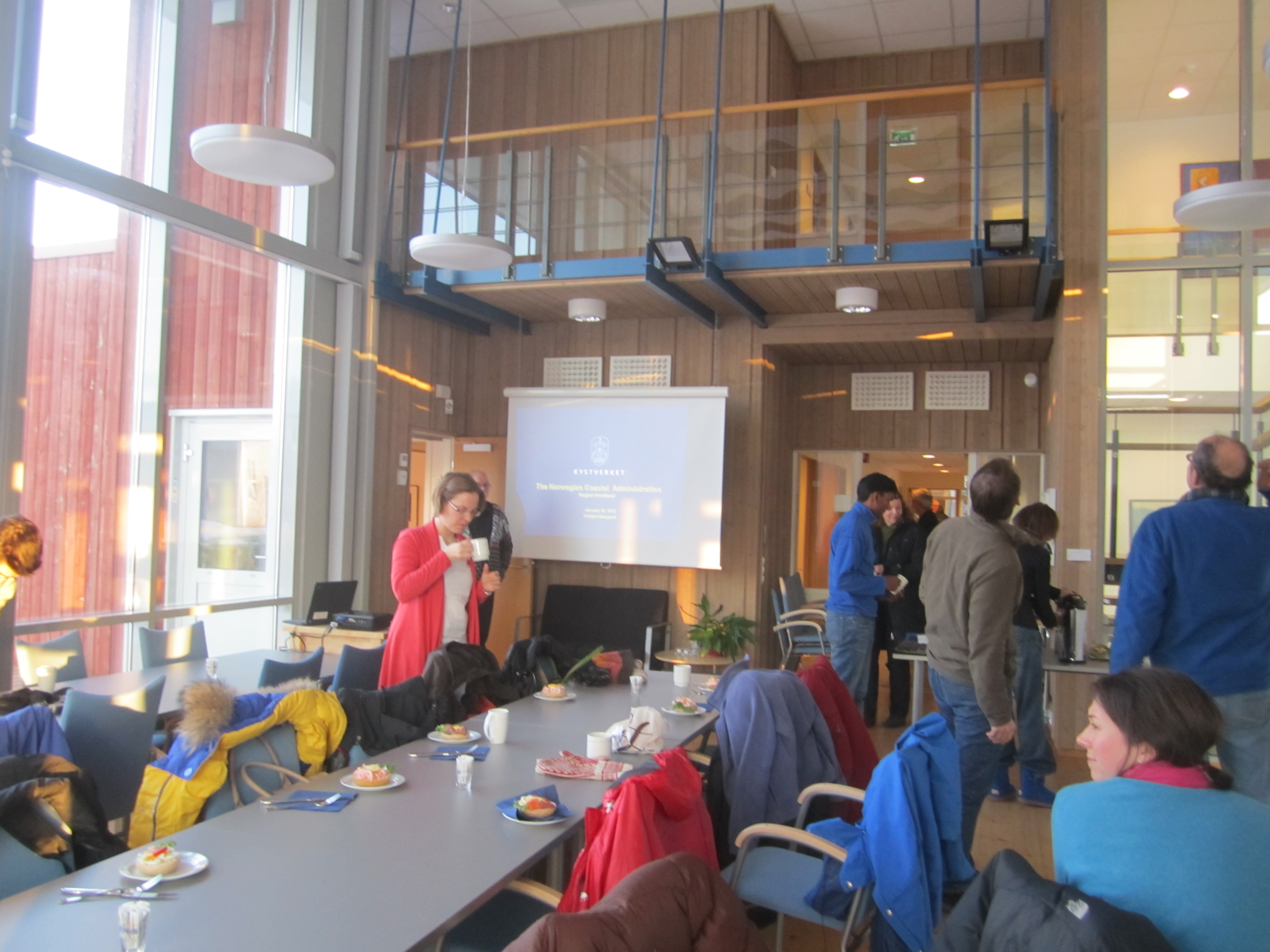
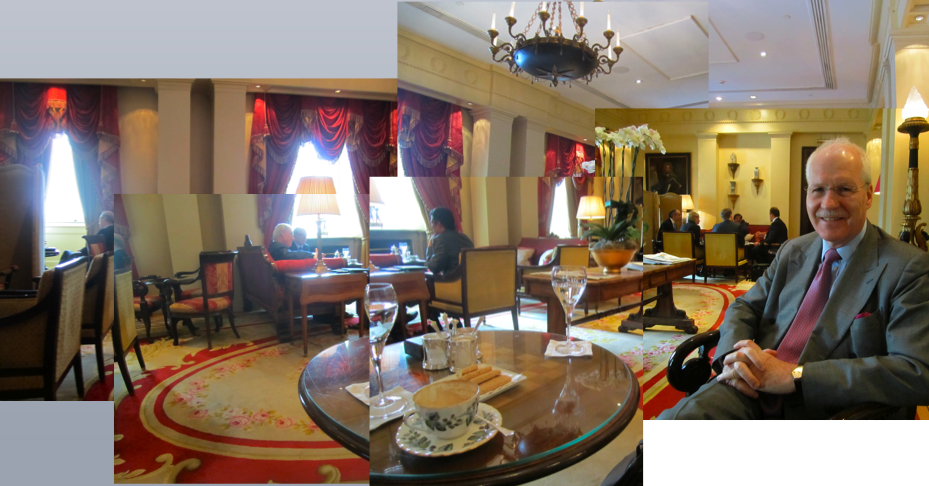
Here below is an image of the wonderful cafe where I had lunch in with Dr. T. and Calvin. I hope I was not too embarrassing. I sort of gushed when I met Dr. T., as if I was going to ask for her autograph right there and then. I think she even was a little taken aback– perhaps even blushing at my adoration, though her coloration, if it did change, was only momentary. Silly me. Oh well. But that is how we are at StudioPolar, capturing the lifestyles of the not-so-famous, so why not admit it. I am a big fan of these industry stars. And I wore a suit and tie.


Latte machine, necessary.
I should point out here, that while I was determined to visit the building of Skolkovo, in reality, my actual visit there was pretty much a life-product of serendipity. Truly, and it all came about because of Germane Tanner, the outreach person for the vice president of Skolkovo Foundation (NOT Skolkovo School of Management, two different things).
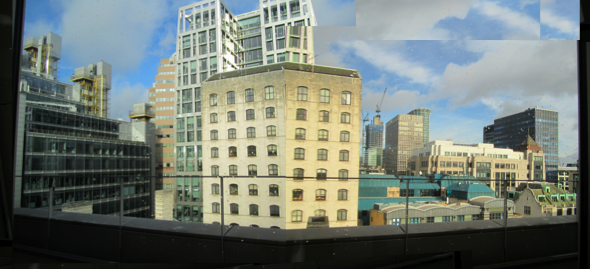
Here, I should back up a little bit and clarify a few things — a few basics that I did not know in advance when I walked in to meet the Skolkovo folks for the first time in downtown Moscow, on the 24th floor of a high rise. Here is, by the way, a good glimpse of the view shed from the Skolkovo Foundation:

First of all, Skolkovo Foundation was created by Vladimir Putin to lure Global Russians back to Moscow. That is putting things in a rather simplistic style, but that is okay for now. And I mention something of this below, where I first bumped into the idea at the St. Petersburg Economic Forum in 2010.
Skolkovo Foundation is styled after Silicon Valley, in that it is an innovation city idea, but with seed money from government. It is partnered with MIT. Germane is a type of representative for the Foundation, or to me, he is.

There is a Skolkovo Management School that was created also, by a similarly influential group of financiers (credit suisse, BP, etc.). The School will ultimately be placed under the Foundation. Calvin is the strategic outreach person for the school.
The Skolkovo enterprise (Foundation and Management School) is not strictly Russian per se. Calvin, for example, is from the Netherlands and educated in Switzerland (speaks no Russian). They are modeling themselves as an international institution, creating the type of networking that stimulates innovation as we know it to exist in the USA.
Both the Foundation and Management School have fabulous connections to the global oil and gas industry and I would like to create an exchange with members of their research/decision making core. But as I found out, Moscow is an extremely small town when it comes to energy, a veritable rumor mill where everyone knows everything. But this is already way ahead of the story.
But let me start at the beginning…
At first, I had spent quite a bit of time reading over global gas guru, Director of Oxford Energy Studies, Natural Gas, Jonathan Stern‘s materials, the pre-1990 books on transfers of expertise from Western Europe to Russia. Here, there is never mention of the body going “on to Soviet soil”. And so, I wanted to know: what is the constitution of post-1990s consultant expertise on gas development in Russia? To this, I could hear J. Stern’s voice of skepticism in our email exchanges that consultants like Cambridge Energy (or Wood Mackenzie) open offices in Moscow only to create prestige among clients in Western Europe and the Americas. And this comment was good information, thanking him, and even hunting down his suggestion, dwelling in the underworld of empiricism.
Nevertheless, as I began to look into the issue, it became transparent that quite a few Western European educated Russians were already in Moscow serving as — well, Westernized experts, for banks such as Credit Suisse, Citigroup and Deutsche. And again, we hunted down this very possibility, exploring the weight of Global Russians and their return to Moscow…. From this perspective, Skolkovo, whatever it was, seemed like the motherload of westernized experts streaming into Russia, working on Energy Development, a central location to which I could understand the constitution of Arctic Gas development.
The story did create an aura over Skolkovo that I could not easily dismiss. When, as luck would have it, I made contact with Skolkovo Brass through ERG professor Duncan Callaway, I was not just a little let down, when my meeting with Skolkovo members took place in downtown Moscow and not at The Building…

The meeting left a lasting impression on me. Germane greeted me, giving me a creatively designed business card that was different from the Skolkovo card, with its signature Sk over green background.
The meeting went as planned. My plan was that I had no plan. Oliver Chubisovkiy, Strategy and R&D Director, Energy Efficiency Cluster (EEC), explained details concerning the goal of moving technical energy projects to consumer realization in detail. Rummy Bilav, Executive Director of EEC listened silently, with his head bent over working on his I-Pad, and Svetlana Tartseva, Project Manager, Nuclear Technology Cluster sat between Oliver and Germane, providing some details after the extensive presentation by Oliver.
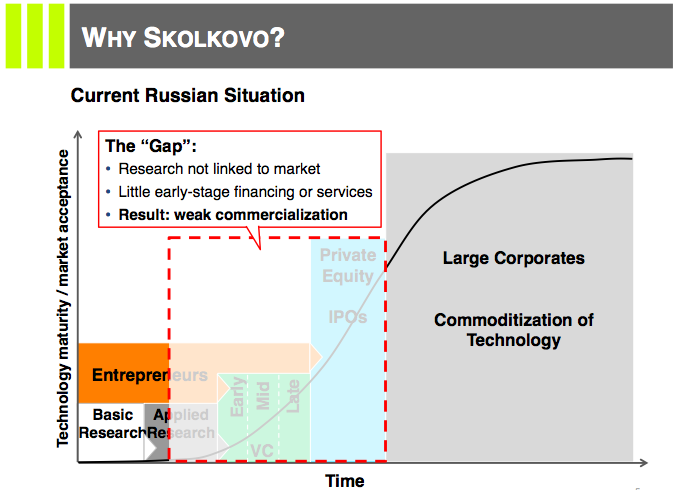
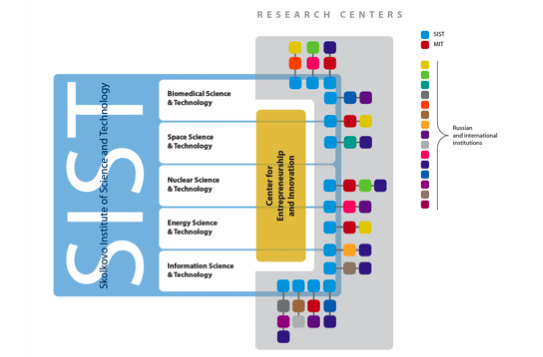 I had received PPT presentations by Germane some days earlier, which described how the Sk Foundation was acting as a kind of catalyst for the in between stages of invention and consumerization, a sort of crossing the Valley of Death service, similar to that provided by the Dept. of Energy in the US. That much made sense to me. Getting funds and services so that innovative products can make it big — I listened to Oliver for ages, and then, decided to engage Rummy, since he seemed to be the head man on the website. But Rummy merely stated Oliver was the contact point, and my head veered back in the direction of Oliver. Rummy did not stay much longer beyond the presentation of Oliver, stating he had another meeting. In fact, another key gentleman entered the room at some point, sat down, looked at my business card, thought for a while, then left, leaving my card on the table.
Well, with the meeting was nearly over, after 30 minutes, traveling thousands of miles, all that I could say what I had achieved was a nice photo-op of Sk Foundation’s Moscow view shed. We got up shook hands. And then something funny happened. Germane said he had a few additional questions for me, and so the others left the room.
 But here, we sat down, the two of us, and just started talking about everything, over each other, across each other, really learning about the other person, what each does, where each is located, the functioning of Skolkovo, the functioning of Energy and Resources Group at Berkeley, the functioning of Dan Kammen, Michael Watts, Myself, on issues of our book project, to the global gas center, to the Renewable and Appropriate Energy Laboratory (RAEL). We even drew maps, cognitive maps right there, to try and explain where we were coming from. I had so many questions about Skolkovo, and I just poured them out, interrupting him, apologizing for interrupting him.
About one-hour later, as we were leaving two senior men took a look at me, including the fellow who left without my business card, and seemed somehow pleased that I was able to connect, and even said so. And connect I did. One of the first things I realized is How Small Moscow Really Is!
 Gosh, Germane was working with everyone, or at least everyone I knew, and he finally put forth an explanation about the difference between the Sk Foundation and the Sk Management School that I could grasp. In fact, there is an entire Science and Technology Studies (STS) program, Germane explained to me, starting forth from Oleg Kharkhordin, Russia’s preeminent political philosopher and Rector of the St. Petersburg European University, to study networking on Sk.
Germane knew Konstantin Sonin, macro-economic genius, New Economic School, who I met with later that evening as well as Vladimir Debrentsov, British Petroleum Russia’s Head of Economics, who I would meet the following day. In fact, Vladimir D. was funding a lot of the Sk initiatives. My head was swirling. Germane also pointed out that Sk could find partners in Russia for a proposal submission that we (berkeley) have in mind, when we get it together, and would even make available a meeting at the Sk Management School, which is how I found myself at my goal of arriving at the Building on my last friday in Moscow.
 It was a good meeting. I left, taking note of the various bean bags that littered the office in strategic places, more like plant boxes than furniture, as everyone was physically attached at the cubicles during my visit. From there I went back by hired driver, freezing as it was in Moscow, and wearing just a suit and overcoat, could not make it back to the hotel without a decent ride. In the comfort of my heated palace (I love hotels), I rested in the bathtub for eons, until the time I need to get my nerve back and hit the trail to meet with K. Sonin.
I met K. Sonin at a popular coffee shop chain in Moscow, called Shokoladnitsa Cafe, in this case, situated literally as you leave the Akademicheskaya metro. Sometimes, as happens in Moscow, my I-Phone would pick up a stray internet access, and I could find out where I was on google maps. For the poorest reasons I can think of, I left the US without having unlocked my I-Phone, and simply never got around to doing so abroad, partly perhaps, because there is so much free internet on the streets of Europe and Moscow, that I didn’t want to risk the incredible roaming rates charged by AT&T. I say this now, because once inside Shokoladnitsa, I was not quite sure that I was in the right place, so I GIS mapped myself to make sure. In fact, I was in the right place, and Konstantin was late.
K. Sonin is the consummate Russian public intellectual. He publishes in the newspapers, his ideas about the economic situation of things, society, enjoy a high level a recognition both in Russia and abroad, serving most recently as Visiting Professor in Kellog School of Management, North Western University. Konstantin Sonin has a Wikipedia entry that demonstrates his expertise quite well. I first became aware of K. Sonin, from a brief conversation I had with CERA/IHS energy consultant Sergei Vakulenko, who gave a brilliant presentation on Russian energy development at an executive roundtable I attended in Houston. Afterward, I pigeon holed S. Vakulenko, who instructed me to contact Konstantin.
 One of the questions I had for him — in addition to running through a list of persons I wanted to find out if he knew of, which he did, confirming in spoken terms that Moscow is indeed a small place and in part, because there is a small group of Russians that Western Europeans and Americans are always picking over to legitimate for their own purposes — was his thoughts about Skolkovo. Now here, I should pause to mention that I typically have a little presentation that I provide in advance, that ranges in time between 5 to 9 minutes, depending on audience, where I walk through how I stumbled into Skolkovo, its relationship to energy, my focus on Arctic natural gas development, my current proposal in review at the National Science Foundation, just to set the stage.

Wondering aloud, I asked whether, given the New Economic School and innovations in other sectors, Skolkovo could be considered a redundancy, in addition to a process already formed by other institutions, such as the New Economic School, to which K. Sonin demurred. It was not so much whether one institution was more than others, or whether there should be the focus of government love should be directed to existing new institutions, but simply, how does an institution function to be creative.
 I should also preface here, that many folks were waiting. That’s right, many folks were waiting to see the outcome of the general election in Russia, this March. This is going to be a big deal, whether Vladimir Putin wins more than 51 percent on the first election, or if he does not, and “who will pay” for getting dad angry by not giving him the support in the first round. Yes, V. Putin came up quite a bit, and sometimes he did not come up at all, but simply by an exchange of glances and then the statement, “we’ll see after the election”. Everything was “after the election”.
Well, the next morning was another Big Day. I had a meeting with Vladimir Debrentsоv, Head of Economics and Communications and External Affairs, British Petroleum Russia.
BP view shed of Moscow

BP view shed of Moscow (Kremlin side)

I met Vladimir via Mark Finley, Senior Economist for BP USA. How I met Mark is a mystery. Did I know him from the days when I was Associate Director in the Office of the Alaska Governor? I do not know. Likely I met him at the Association of International Economics Conference, perhaps in Vancouver, and maybe a few times afterward, at a CERA conference. But around 2010, I asked whether I could speak with him about Russian gas development, and he transferred me over to V. Debrenstov. Vladimir D. is another person of renown in Moscow. He is not only Head of Economics for BP, but also the company’s outreach coordinator for Russia, meaning that he funds all kinds of research and activities. These include Skolkovo, but also the Oil and Gas Forum at IMEMO.
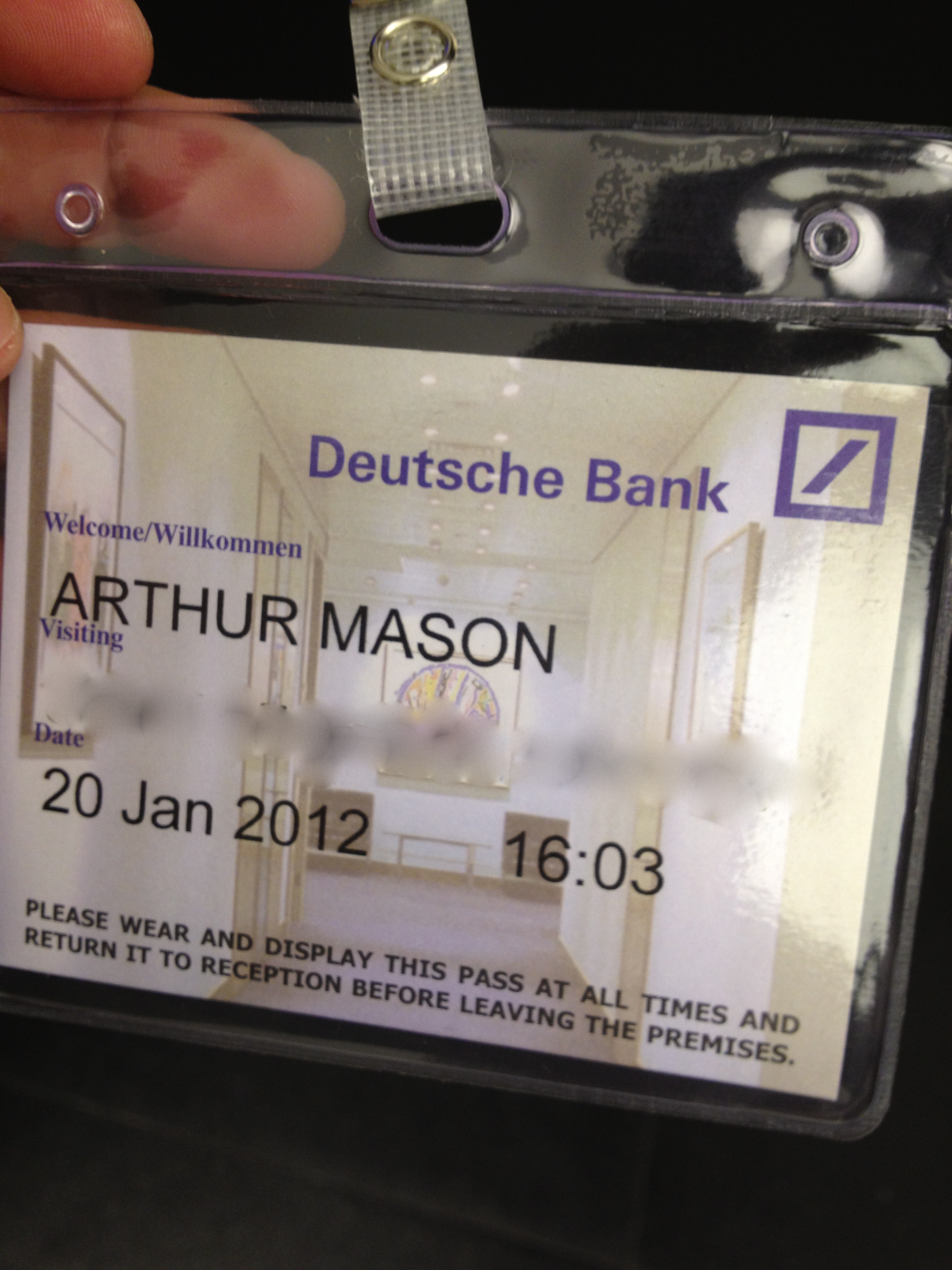
In short, with a back ground in academia and serving for years at the World Bank as head economist, V. Debrentsov is a quality entity around Moscow. Lyubov Kotlyarova, Team Assistant, scheduled the meeting, and was totally gracious speaking flawless English, upon my arrival. We had to go through quite a bit of security, me showing my passport, obtaining a visitor’s pass and going through fire safety training on the 9th floor.
Lyubov instructed me in detail about which button to press once inside the coat room, which locks from without, and without fail, I found myself locked in the coat room, until after a few seconds, I remembered her instruction. She smiled, probably knowing that I could barely keep all of this information in my head, what with the safety instructions, and security buttons, visitor passes — no wonder she came down to meet me.
Lyubov ushered me into a small conference room, located in the central space of a sky scraper floor. The room was surrounded by several floor-to-ceiling glass sealed meeting rooms. I could see folks munching on lunch and chatting about serious topics, but I could not hear what they were saying. An true image of productivity and sociality. No sound to go with that image. Luckily, Lyubov brought me coffee, a latte (yay!).

Vladimir entered and was gracious to a fault. I began presenting my knowledge, carting out my computer to present images of the energy future and discussing the role of energy consultants, suggesting that perhaps there was a model to be had here in Russia. Vladimir D. was Mr. Know-it-all. He knew things and people. He rattled off the names of all folks handling Russian energy from Cambridge Energy, Matt Sagers, Thane Gustafson, Vitaly Yermakov and others, Jonathan Stern and Tatiana Mitrova, all the folks that I write about from the perspective of journalism and also, from the perspective of corporeality.
Vladimir mentioned them in passing, but also to point something else out that was on his mind. In my discussion of the energy future, my statement concerning the reduction of simplicity, V. added that I was on to something and he brought out a few bullet pointed pamphlets recently produced by BP which he pointed to where there was explicit use of images for reducing the complexity of future scenarios for policy makers, and he pointed these out specifically. And this was, in fact, a critique in a certain sense, that policy makers are not capable of the decisions necessary for carbon reductions, and that while some experts (J. Stern) may work from backcasting, BP was providing extrapolary knowledge.
Lyubov brought to me a copy of business cards that he collected at the latest EU-Russian Gas Consultancy forum, which he mentioned, was in its second year for the purpose of “shaping the future of perception” in Russia and Europe, which would provide reports to the Russian Energy Dialogue. He mentioned that I need to meet with Tatiana Mitrova and Grigori Vygon and members of PIRA and that I should attend the EU Russia energy dialogue (Brussels and Moscow), become familiar with the Russian Gas Association, in particular, Valeri Yasov, and that the Eurogas Association/Consultancy, persons like Simon Blakey, has influence over decision makers and that the Carnegie Euro-Atlantic Security initiative is important or that Konstantin Simonov, Director of Energy Security, would be a good resource.
I asked whether financial concerns appear in these meetings to which he replied, only Deutsche bank (not Morgan Stanley). He suggested I attend London’s unconventional gas meting at regent park and in Amsterdam, the Flame conference, where he will be speaking. I asked whether he speaks a lot at conferences and he said that he often does. As we left, I asked to look at the view sheds to take a few photos, to which V. obliged, stating that he takes photos himself on occasion depending on the drama of the weather.
That evening, I went by metro to see Dean Gaddy.

I first became aware of Dean through a conversation with Pennwell, Platts Editor in Houston, TX, Paul Westervelt, while attending CERA Week in 2010. Paul had give to me Dean’s email as his “contact” in Moscow, so I immediately assumed that Dean was a journalist. When I mentioned that presumption, Dean corrected me immediately, stating that while he was editor of Platts for a few years, he was a an oil man who had worked in Azerbaijan for Devon before moving with his ex-Russian wife and daughter to Moscow, then picked up by TNK-BP, so that his daughter could attend an American school. Eventually, his family moved to Houston, where Paul picked up a job back in Russia after his divorce.
Dean now works for Halliburton as an operator in Urengoi, a closed town in the north supported by oil extraction. We became instant friends, and shared stories of our backgrounds over multiple tequila shots and pints of beer. Dean offered a romantic contrast to everyone I met from London to Oslo, to Tromsø, to Moscow. All my informants and colleagues or more specifically, my conversations with them, were focused on career moves and philosophical ideas. I do not think, as polite as we are to each other on each occasion, that it occurs to invite each other for a shot of tequila, as Dean did after 3 minutes of discussion with me.
Dean was well familiar with all kinds of oil and gas industry basics, and discussed in detail the Russian system of oil and gas development from the perspective of ownership and definition of reserves, citing SEC (Security Exchange Commission) and SPE (Society of Petrochemical Engineers) approaches for determining reserve reporting. In fact, he was in town to attend the TNK-BP conference on Yamal investment, which was taking place the very next day. He had sent me the invite, but by the time I got around to calling it in, the conference was totally booked.
In the following days, the meeting got quite a bit of press coverage. I include this account here (in highlights), because it is written by Jacob Gronholt-Pedersen, one of the main Moscow journalist informants on my research.
As the night poured on, Dean’s girlfriend in Moscow, Юлия, arrived, and the three of us giggled through the last hour before the restaurant owner pushed us out into the street so that he could go to bed (or rather, pushed me out in the street, since we were in the Grand Victorian Hotel, where Dean was staying). Юлия Филюхина (a different Юлия), from Samara, to the east of Moscow, and who had joined us for some part of the evening, offered to go with to the metro, but a taxi was a warmer ride.

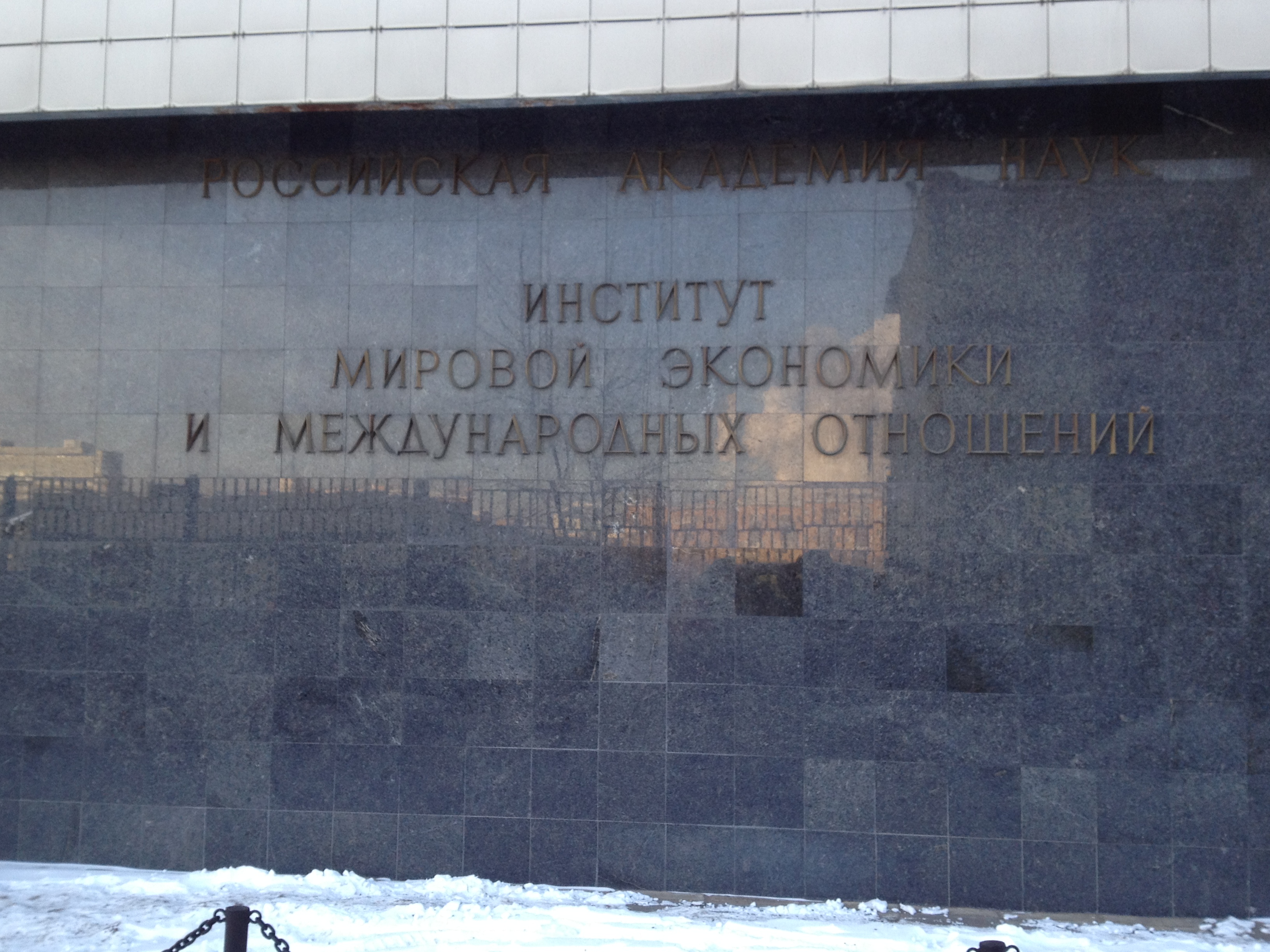
The next morning, bright and early, I met with WWF Moscow, Oil and Gas agent, Mikhail B., who I met in Tromsø the week previously. Luckily, it was a meet and greet, with two glasses of fresh squeezed orange juice, I retreated back to my room until later in the afternoon, when I went to the Institute of World Economics and International Relations (IMEMO) to meet Nina P.


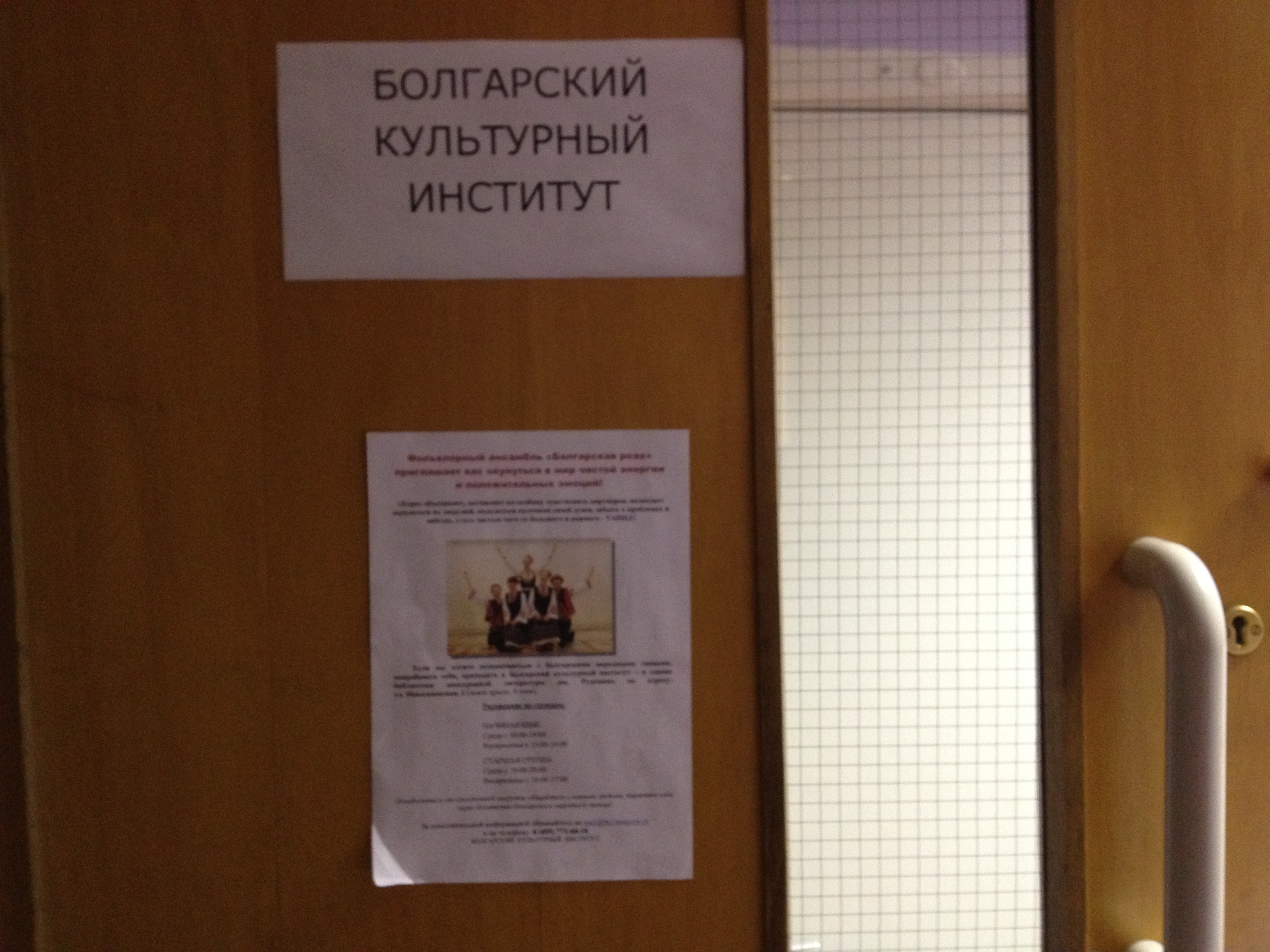
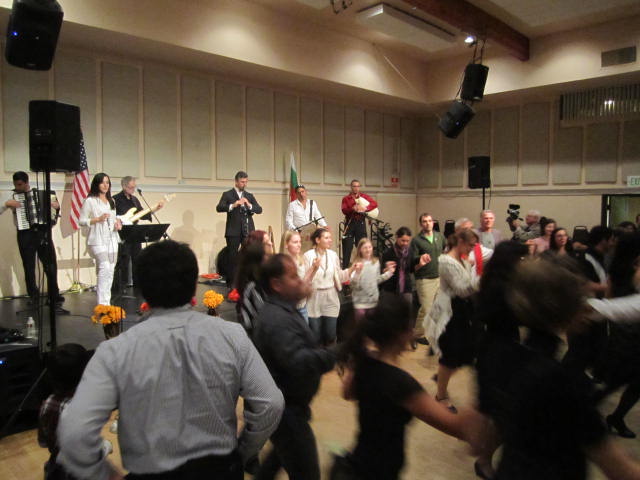
Before I talk about my visit with Tanya, I want to relate also, that later that evening, after my meetings, and still feeling somewhat dissipated from the previous late evening, I was faced with the dilemma of staying at home, or hunting down in Moscow, the Bulgarian Cultural Institute where I knew scheduled that evening were beginner and intermediate Bulgarian dancing. I love Bulgarian Dancing, attending most Friday nights in Berkeley under the direction of choreographer Tanya Kostova. As part of my travel plans, when I discovered on over internet a Bulgarian dance troupe in Moscow, I intended to see for myself what it was all about. In fact, while passing through London, I visited and danced with the Tanec Bulgarian Dance Group under the choreographic direction of Martin Spasov, genius.
Turns out that I did myself a favor and treaded out looking for the Moscow group.

Located on the fourth floor of a Russian culture house, the dance classes were directed capably by Svetlana Shalev-Fursenko who, according to the internet site is “actor-ballet of the National Folklore Ensemble Philip Kutev“. What a great evening.

And here I want to discuss my meeting with Bloomberg energy journalist, the next morning, Anna C.

2/6: Hotel and confirmed appointments

- Novotel Moscow Centre, Novoslobodskaya Str 23, Tel. 7-495-780-4000.


- Monday, February 6, 10AM meet with Skolkovo representatives: O. A.; F. A.; V. B. Contact person Zhanna Turubarova Tel: +7 495 967 0148 ext. 2252 Cell: +7 916 288 3788 — WTC,9th entrance, 24th floor, Krasnopresnenskaya Embankment 12, Moscow.
- Monday, 6PM, Konstantin S., Shokoladnitsa Cafe at Akademicheskaya metro.
- Tuesday, 10AM, BP’s Vladimir D., 17th floor in Lotte business center, Novinsky blvd., 8. Lyubov K., Team Assistant (7-495-363-6262).


- Tuesday 8PM, Dean Gaddy — Moscow Grand Victoria, Shchipok, 16, +7-499-236-1220 (1-й Щипковский переулок, 32/16).
- Wednesday, 10AM, Mikhail B. WWF Oil/Gas, Novotel Lobby.
- Wednesday, 6pm: Bulgarian Dancing yay! болгарские танцы в Москве! Среда с 18:00-19:00 ВСЕРОССИЙСКАЯ ГОСУДАРСТВЕННАЯ БИБЛИОТЕКА ИНОСТРАННОЙ ЛИТЕРАТУРЫ ИМ. М.И. РУДОМИНО(ГБИЛ), Москва, Николоямская ул., д.1 этаж 4 6PM —


- Thursday, 10AM, Anna C. CoffeeMania (Bolshaya Nikitskaya, 13)
- Thursday, 2pm, Nina P., IMEMO.
- Friday, 1PM, Skolkovo School of Management.
- Friday, 3PM, Irina.
- Irina N., Reuters (sent email Sunday).
- Anna S., Bloomberg (sent email Sunday)
- Sherry Palmer, IMEMO (sent email Sunday).
- Aaron Frenkel. (Sent email Sunday) to Nadia Klepova, Director PR & Marketing, Loyd’s Investments Corp.
- Andrei Kazanzev, (sent email Sunday).
- Ian Pryde, (sent email Sunday).
2/2: En route to Moscow. Leaving Tromsø tomorrow, heading to Oslo to meet DNV representative, Brad Libby, for a discussion about decision making in European oil and gas development. DNV stands for Det Norske Veritas, a strategic knowledge firm on energy, run by Henrik Madsen, with whom I met last year at the Oslo Energy Forum at Holmenkollen.
Bradd and I crossed paths at the Arctic Frontiers conference here in Tromsø when, after leaning into a conversation with me and DNV heavy, Torild Nissen-Lie, while riding on the bus as part of the activities during the forum. I noticed Bradd’s head peal back at the mention that DNV has 9000 employees with offices globally, and immediately suggested he join our conversation, to which he turned around and explained he was from the US living on the outskirts of Oslo.
Our conversation went from the Bus to the bar of the Radisson, where Torild and I shared several Blue Ladies, before heading over to the main dinner across the street at the Rica Hotel. Here’s Bradd, Torild and Emma Wilson, who I gave a co-keynote presentation with at the Arctic Frontiers Forum.
From where the conversation came about, I am not certain, but you could have knocked me over with a feather when Bradd mentioned that he was part of a 10 person team looking at Arctic/European Energy Frontier Development from the perspective of identifying the actual decision makers who sway movements on opinion of projects.
Good grief! I told him, that’s my project. So we exchange cards. I sent him my NSF proposal, with Bradd suggesting we meet at Gardemoen tomorrow for a tete-a-tete, so to speak.
1/15: Here is my preliminary list heading in to Moscow
- Enroute through Oslo, Feb. 4 – 5, will meet Kaare Hauge, former Consulate to Russia and current mentor on my NSF research.
- Monday, February 6, meet with Skolkovo representatives: O. A.; F. A.; V. B.; Z. T. — introduced by A. S..
- British Petroleum’s Senior Economist, Vladimir D.. 10AM on Tuesday.
- Irina N., Energy Reporter at Reuters, who I met at the 2010 St. Petersburg Economic Forum.
- Anna S., Energy Reporter at Bloomberg who I have not yet met, but with whom I have been exchanging emails since CERA week 2010.
- Nina P., Senior Researcher at IMEMO and partner on NSF and Barents 2020 proposals.
- Aaron Frenkel, Russian magnate.
- Andrei Kazanzev, Senior Researcher at MGIMO and research partner.
- Ian Pryde, who operates a reporting service.
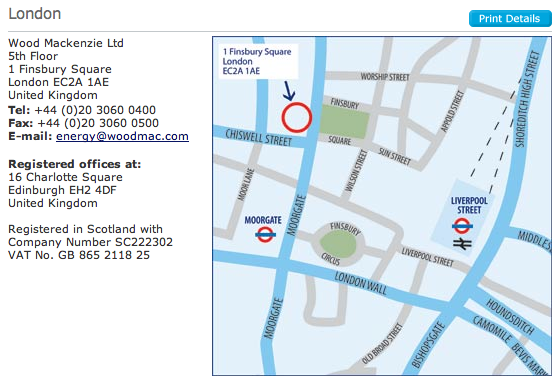
- I want to visit the WoodMac office:

Itinerary:

12/19: Went for my Russian visa from Andrey Zakharenko. I know the office well. Replete with doorman and Spam Spade stairwell. Andrey knows the Russian scene in the Bay Area. When I mentioned Skolkovo, he immediately suggested a few Stanford area conferences, participants who come through his office for visas.


Andrey pointed me in the direction of the Global Technology Forum, an MIT Enterprise Forum, and a host of other innovative theme parks surrounding direct interconnections between US higher education and Skolkovo.
12/10: Internet photos of Skolkovo:

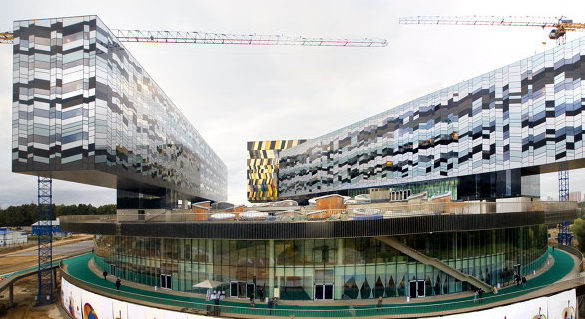
Newly created Skolkovo entrepreneurial park is a site for the negotiation process between the Russian state and a new generation of Russians educated abroad. As part of this project, to be presented at the annual BASEES 2012 conference, on the panel Ideologies of Professionalism in contemporary Russian Welfare State, I plan to explore Skolkovo as a site for enrolling Global Russians into the intentions of the Russian State.
I became aware of Skolkovo at the 2010 St. Petersburg Economic Forum, where an intense debate ensued between government officials claiming to support entrepreneurial parks such as Skolkovo, to stimulate innovation along the lines of Silicon Valley, and a younger generation of Global Russians, complaining that the government should do more for them. Officials responded that Global Russians should act more aggressively like American entrepreneurs — providing the example that the US government did not create Silicon Valley. What is the Skolkovo? What kind of government sponsored entrepreneurial park can create the kind of incentives for Global Russians to return to Russia for capacity building in innovation?

Later, a colleague forwarded me an email, requesting information about Skolkovo. In the email, the addresser writes, “…a non-profit organization tasked with assisting development of Russian innovation-based economy. Skolkovo Foundation was created in 2010 by the special Federal law passed by Russian Duma. It is headed personally by the President of Russia, who chairs its Supervisory Board. The Foundation supervises and funds creation of a science and technology center – Skolkovo City, Skolkovo Institute of Science and Technology – a graduate research university, and provides support to innovative projects in energy efficiency, IT, biomedicine, nuclear and space technologies through grant programs”.




























 Paparazzi Ethnography