Forum Title: Emerging Leadership for a New Era
Epilogue
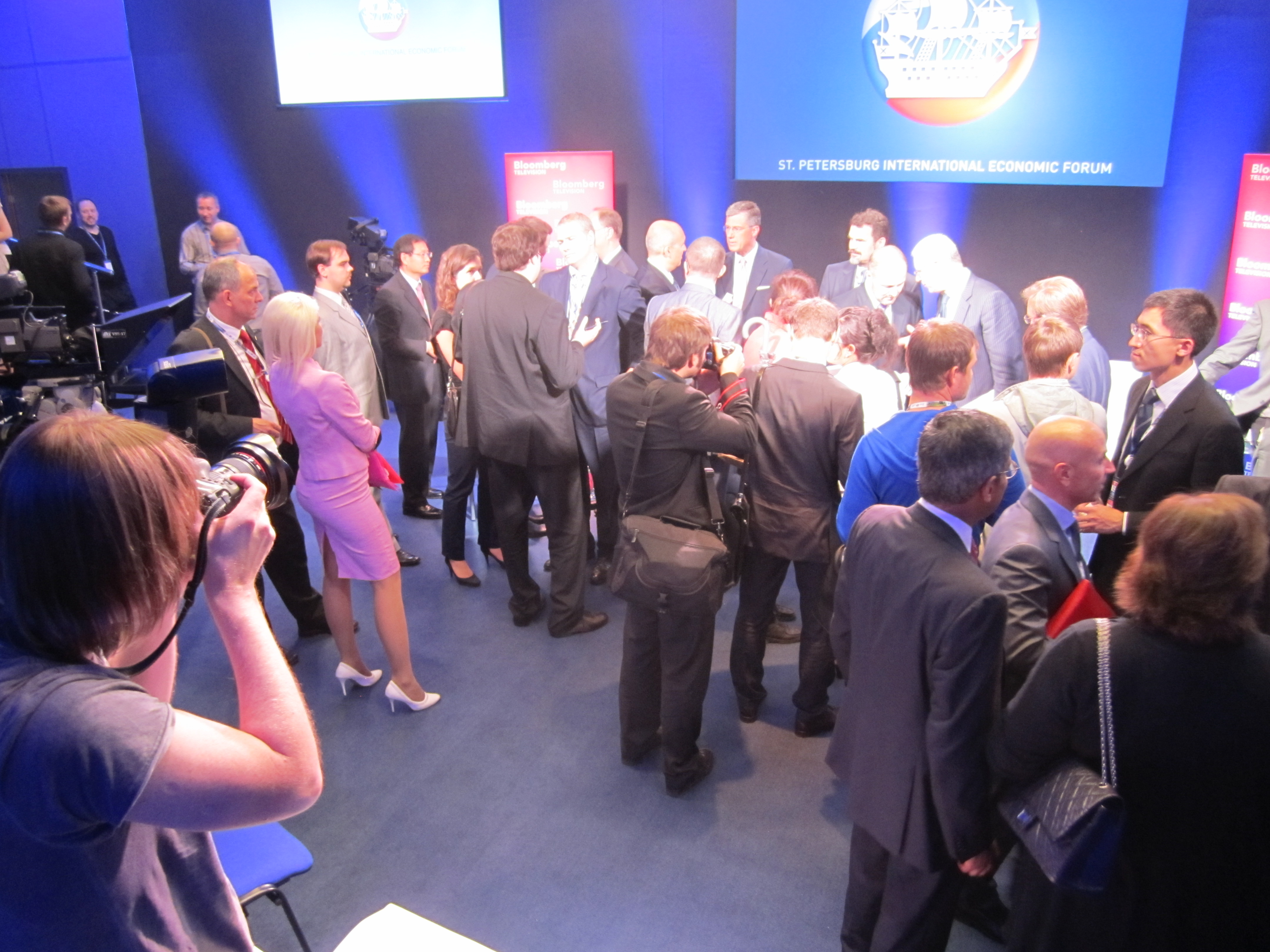
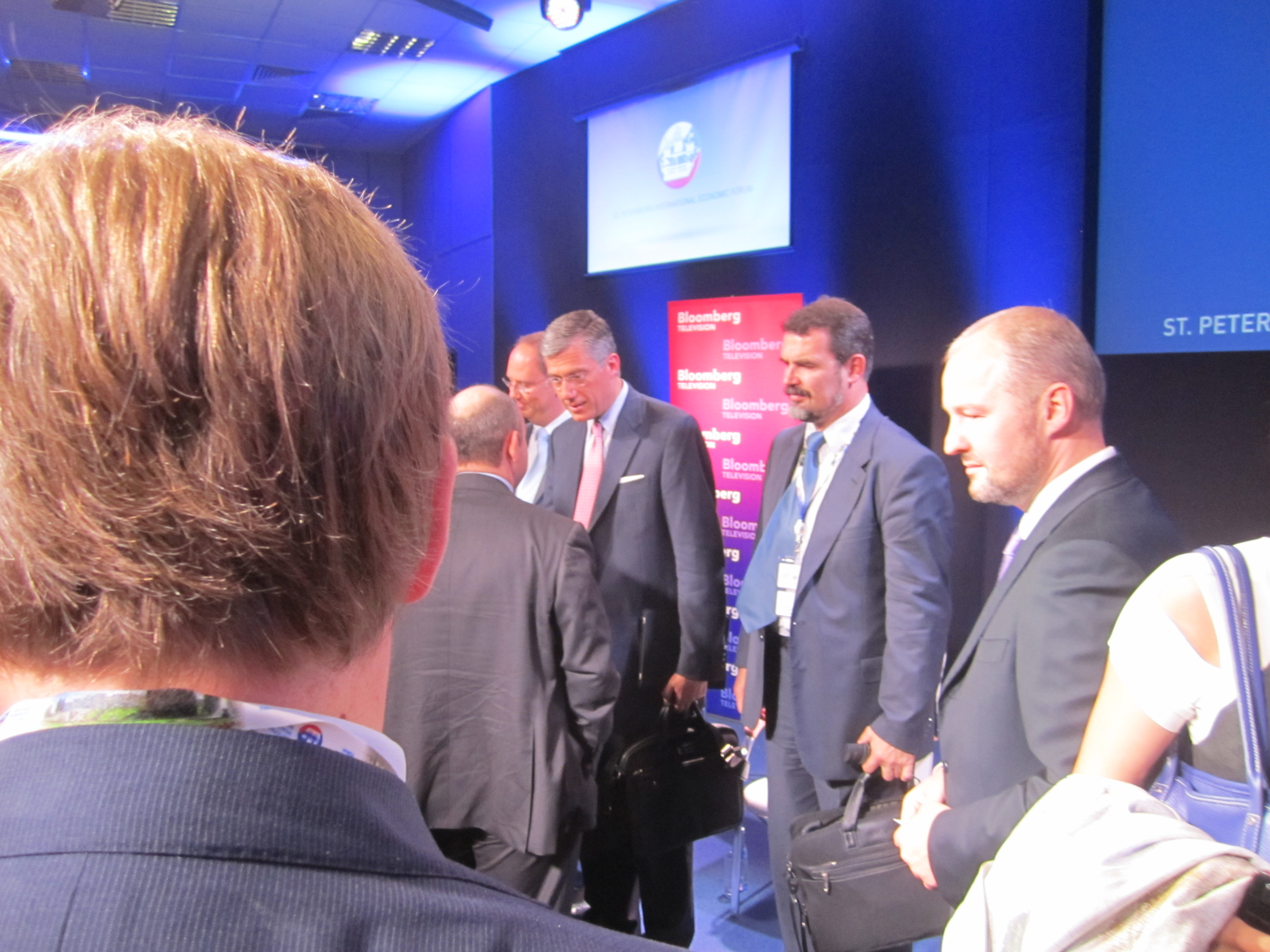
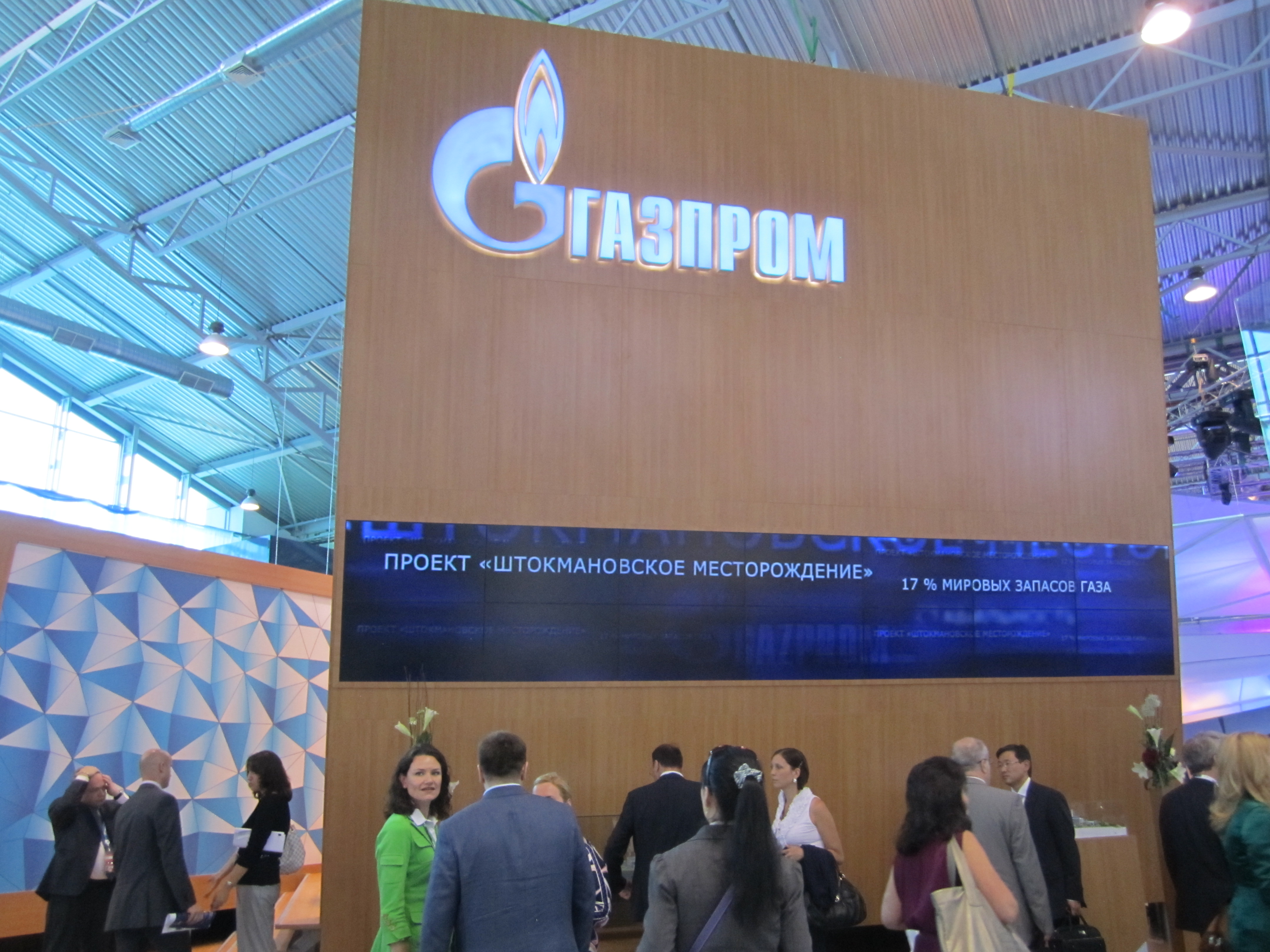
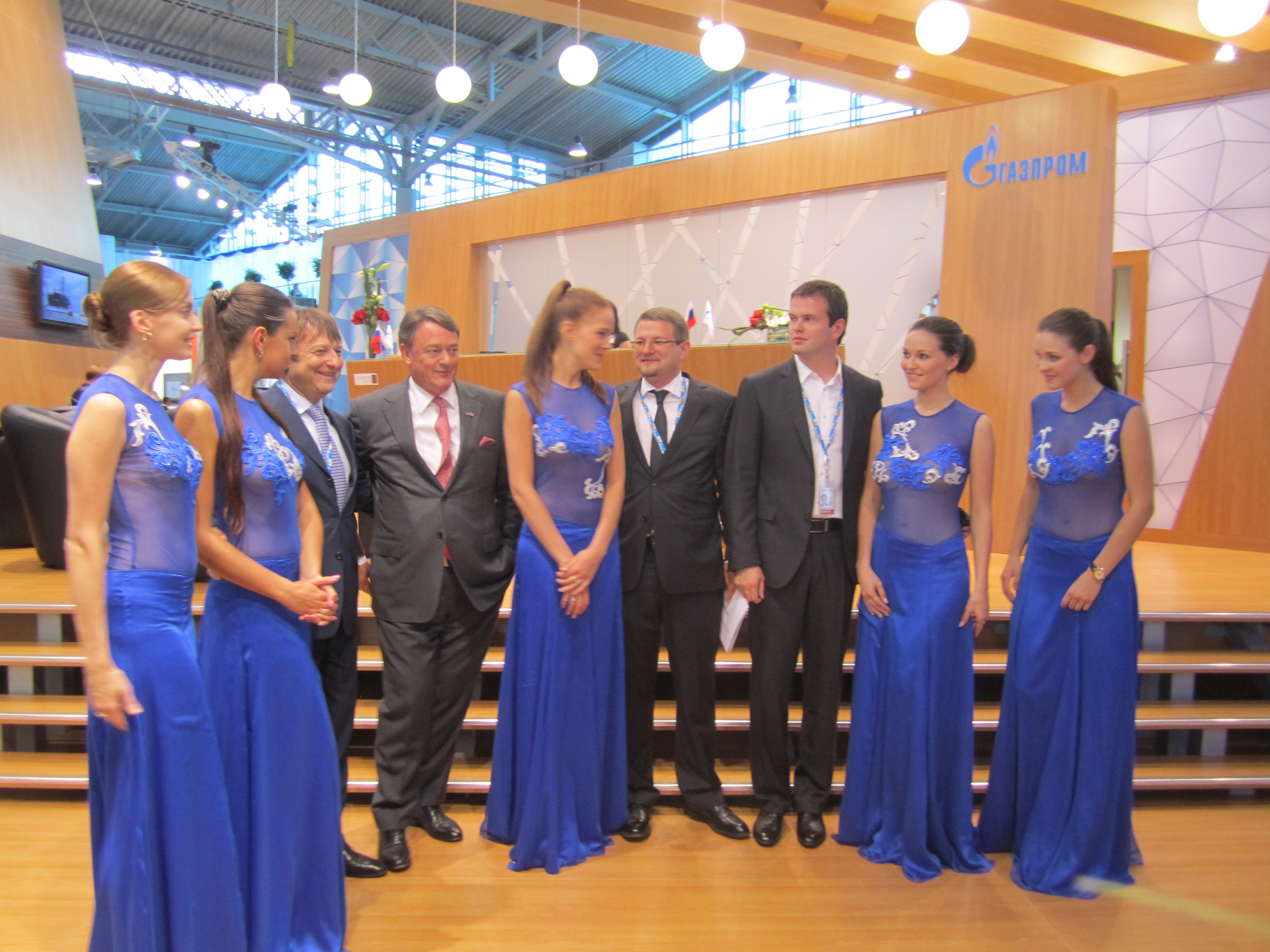
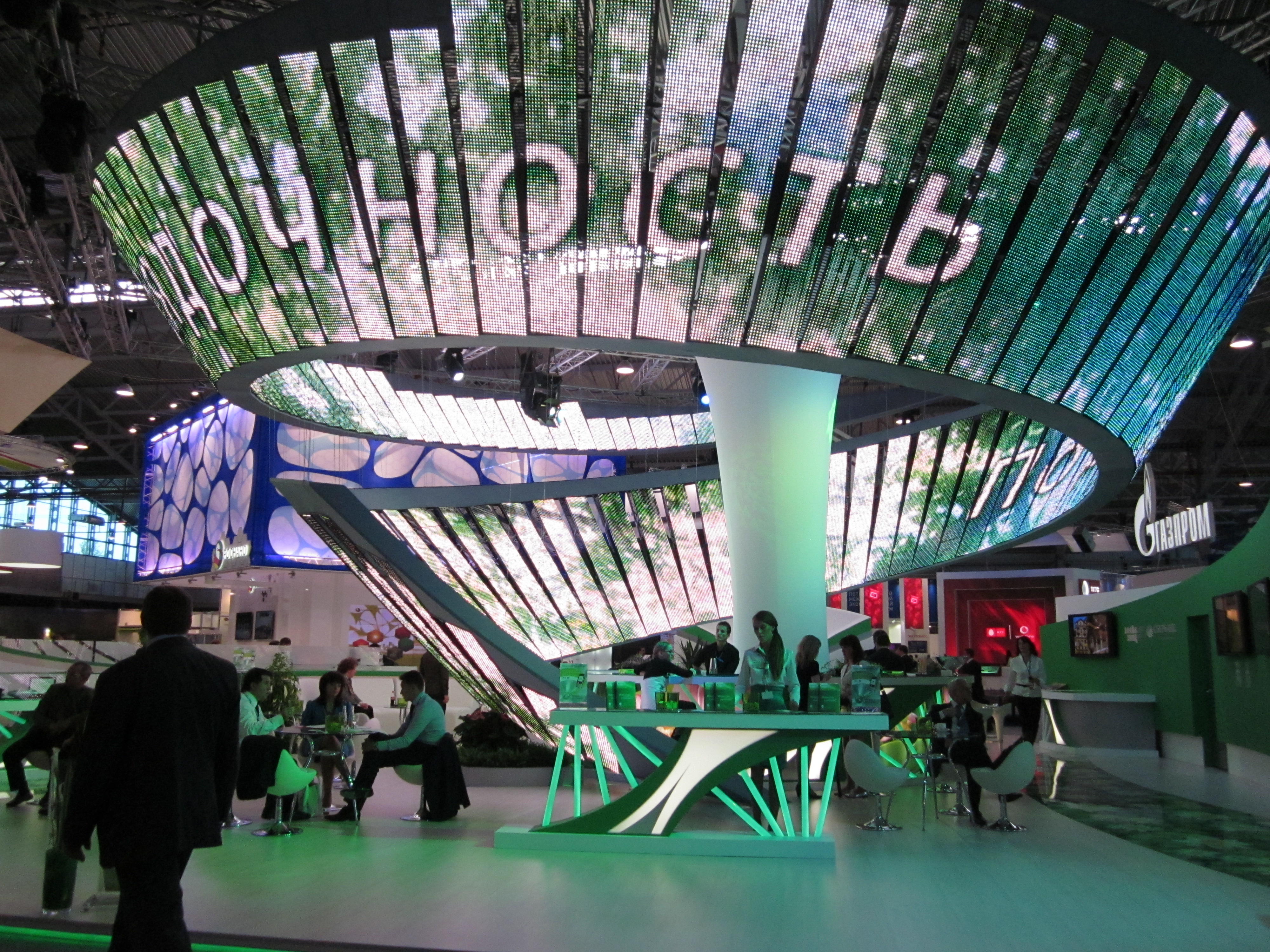
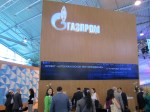 This is one of my favorite images. The Gazprom wall, with Shtokman appearing in cyrillic on the screen. The vanity project. The Shtokman project, a proposal to develop the super giant field of natural gas in the Barents Sea, remains in the back of everyone’s head here at the Forum. Any whisper about strategic partnerships, dropping comments about the need for domestic financial markets to stabilize foreign investment, the requirements for a stable and transparent regulatory framework, the need to demonstrate Russia’s prowess on Wall Street through IPOs, the requirement to create a health insurance, that would provide a well spring of domestic capital to invest in whatever. All of these issues swim around the vanity project that is the Shtokman.
It is just like this image. All these folks are wandering around under the banner of Shtokman and Gazprom, speechifying on all these different topics, and all falling under the rubric of a fossil fueled future. Let’s go again next year! Yay!
6/18: The Plenary
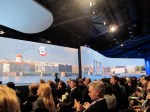
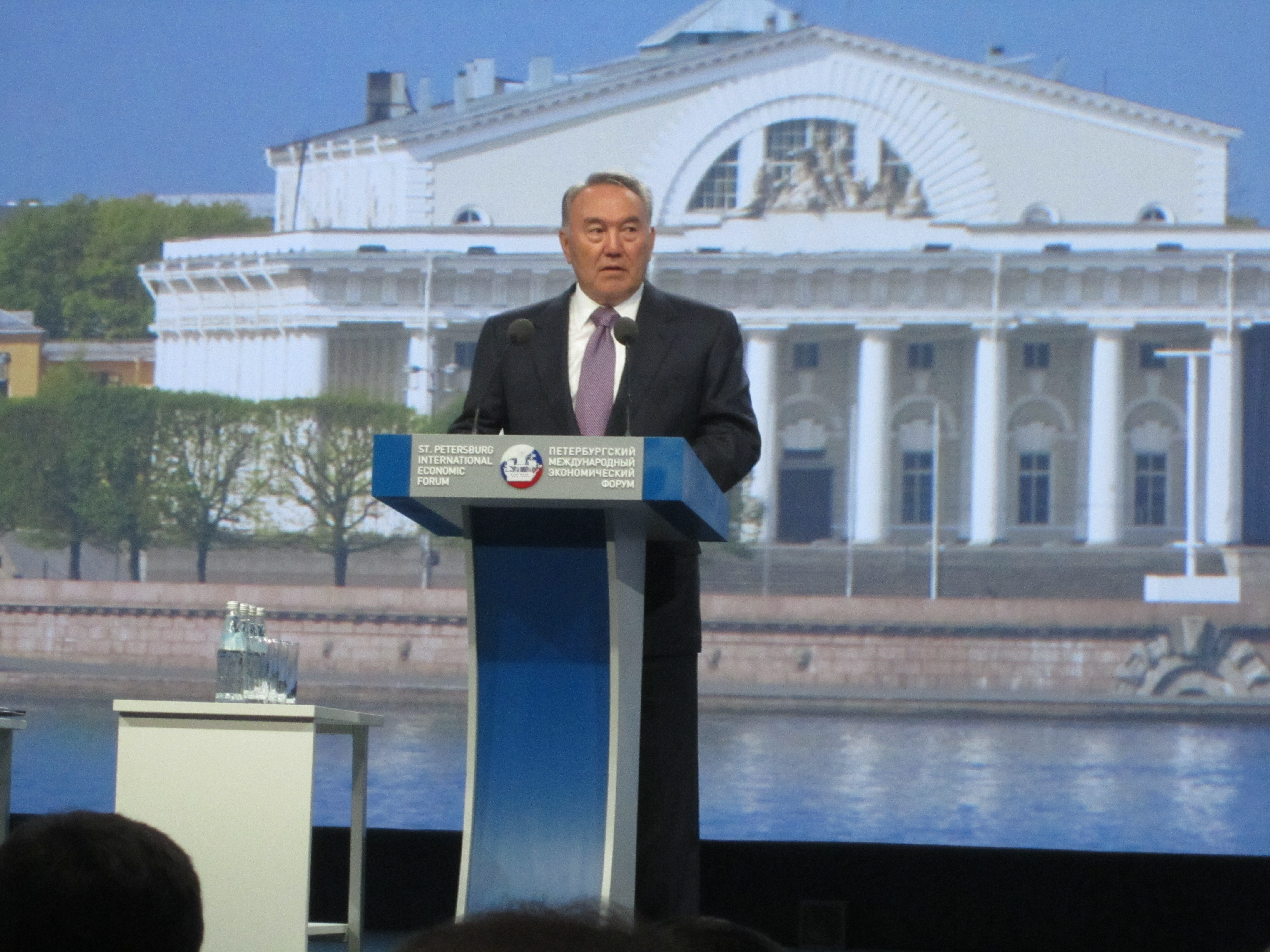
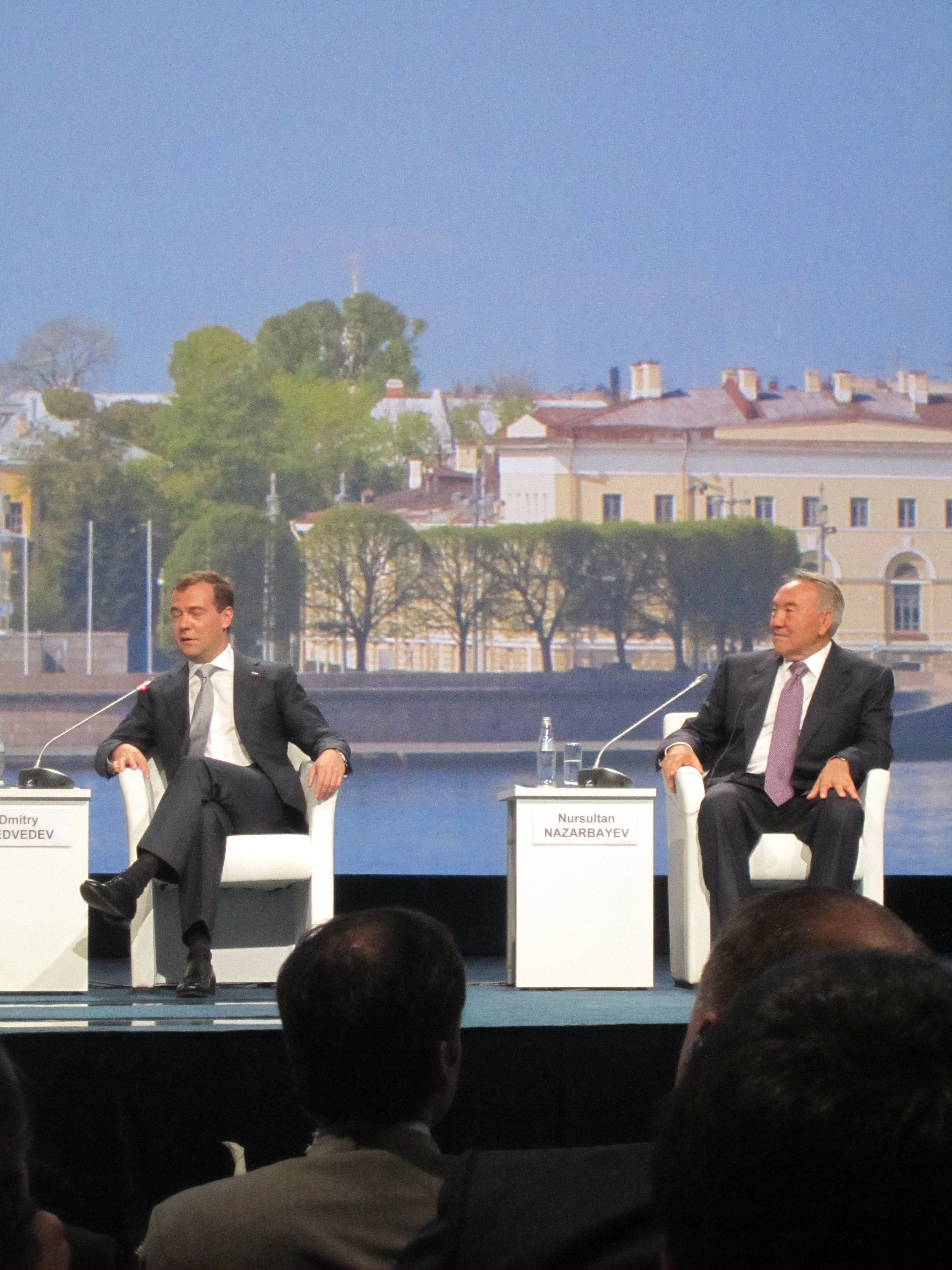
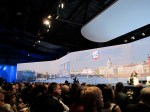 Filing-sitting-and-then-listening in the main hall, to Jose Luis Zapatero, PM of Spain, Taja Halonen, President of Finland, Nursultan Nazarbayev, President of Kazakhstan and Dmitry Medvedev, President of Russia. In that order. PM Zapatero droned on and on, about the need for what, I do not even remember. He was concerned about the economies in southern Europe but hopeful that everything would work out. Halonen talked about the good behavior of “Nordic sisters” and bad behavior of “southern [European] brothers”. Apparently, Greece’s debt crisis is getting on everyone’s nerves, at least in Western Europe.
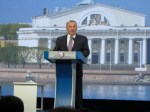
President Nazarbayev
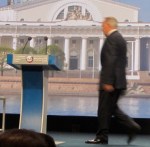
Strolling to the podium
Actually Nazarbayev was quite interesting indeed. Provocative. Cheap money is the wrecking ball of economies, “additional printing of yesterday’s currencies, is not going to be able to stop shocks.”
Considerable government debt. Revival of the global economy does not justify sustainable economy. High unemployment. Emerging markets, are showing possible signs of over heating.
960 million to one billion people are threatened with famine – global food crisis, global economicization has led to 2% of global population holding all the power. Speculative capital continues to be inflated. “All of this testifies,” he said, “for the need to take dramatic measures to reform financial sectors and get down to real business.” Wow. Slap, slap, slap.
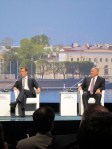
Buddies: Presidents Medvedev & Nazarbayev
I have to hand it to Nazarbayev for coming up with academic plans in the middle of a Forum. Transition to new and fair, monetary exchange and a clear understanding about the criteria – which he “formulated more than 2 years ago in [his] article” – and then went on to outline his points: supremacy of law and a global agreement on currency, a criteria of democracy and clear procedures for printing money (“we have no idea what’s going on there”).
The “old western paradigm that led to crises has discredited itself, a new paradigm is emerging”. We need to change the international financial architecture, accelerate the modernization of economy, provide quality services, and consider human capital as the main form of growth and create innovative approaches for students and parks for technologies.
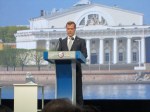
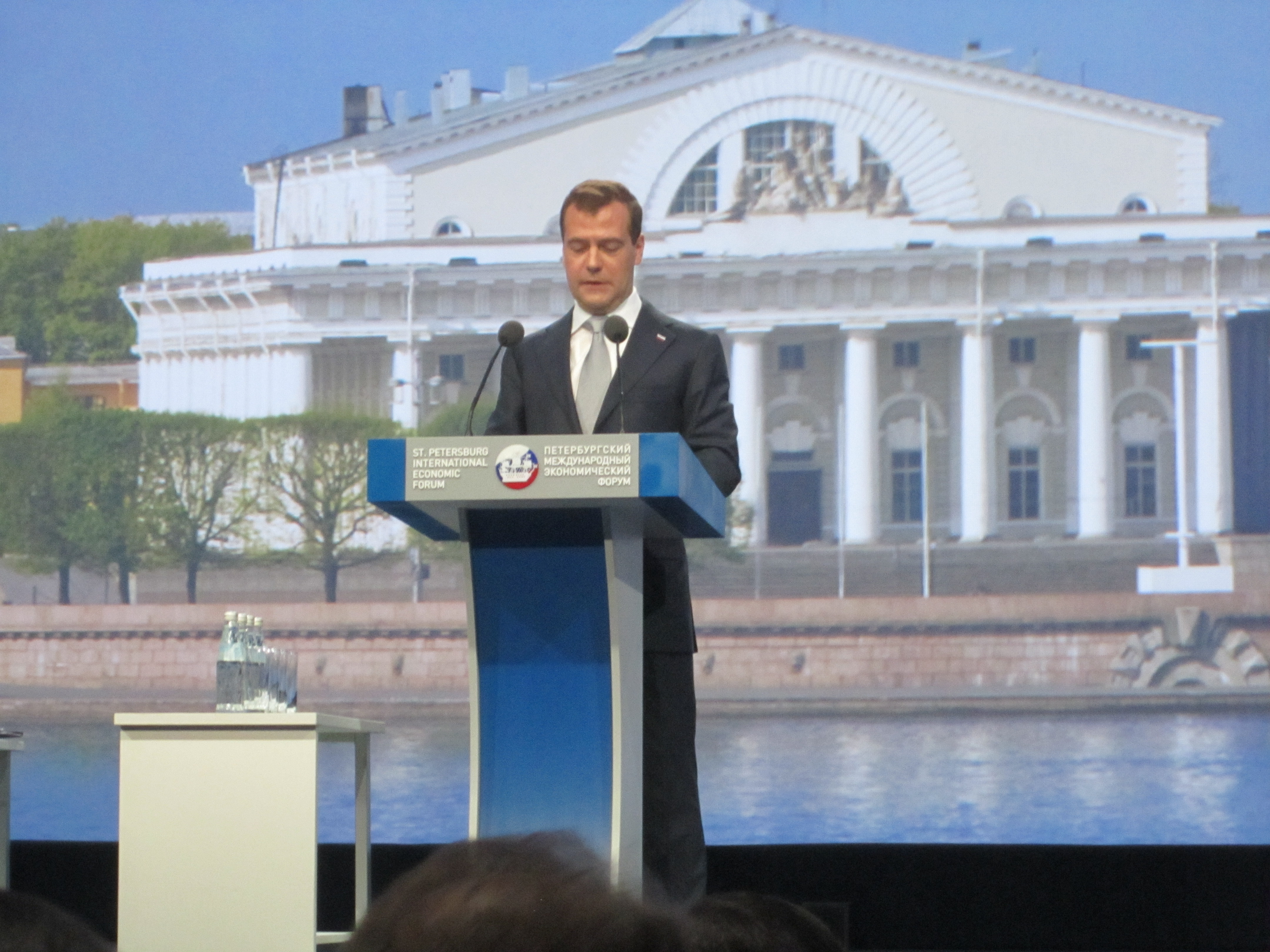
President Medvedev

The Man in the Man
But, in the end, the day went to President Medvedev, who used the analogy of St. Petersburg weather to describe the European economies, going up and down, in a rather unpredictable manner.
The question was put to him, whether he would run for president, and of course, the entire audience got a chuckle out of that. His response was to point out that the Forum was not entirely the best place to announce such decisions, but that he planned to make his future direction known quite soon.
Earlier, I was able to attend the Renewables forum — a jammed hall, but not one member of the Ministry of Energy. I’ll write about that later.
Earlier that same day: It’s raining buckets this morning.
 There’s a lot of discussion about the image problem of Russia and that many outside investors inaccurately accuse Russia of doing things wrongly. But because of this, in order to attract long term investments, there will need to be a domestic financial market, which at present does not exist.
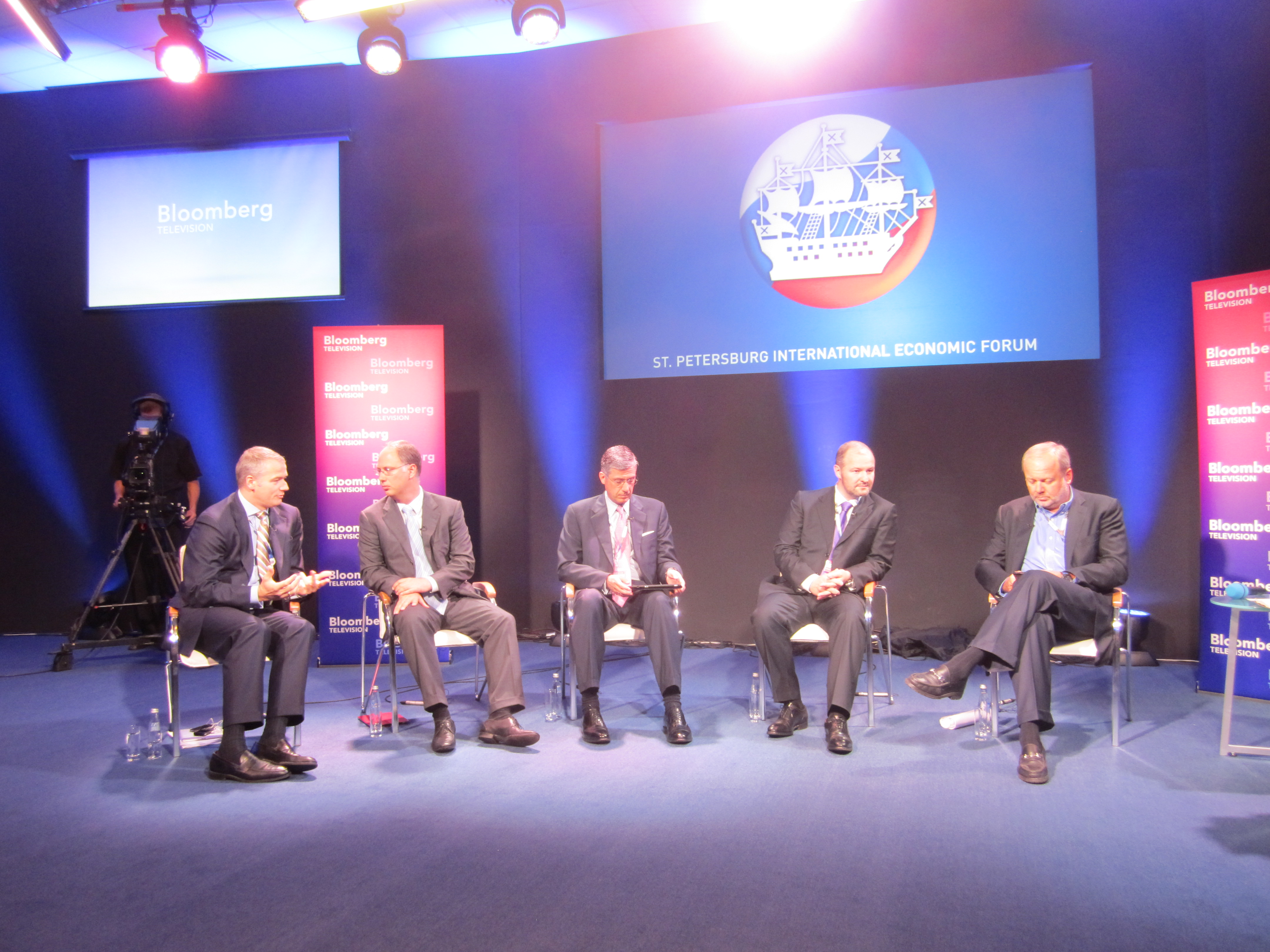
That is what front row participants, Shiv Vikram Khemka, Vice Chairman, SUN Group, and Vyacheslav Pivovarov, Managing Partner, Altera Capital, think at any rate, the latter, stating further that government’s role in free market economy should be fairly limited.
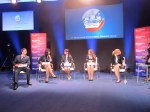
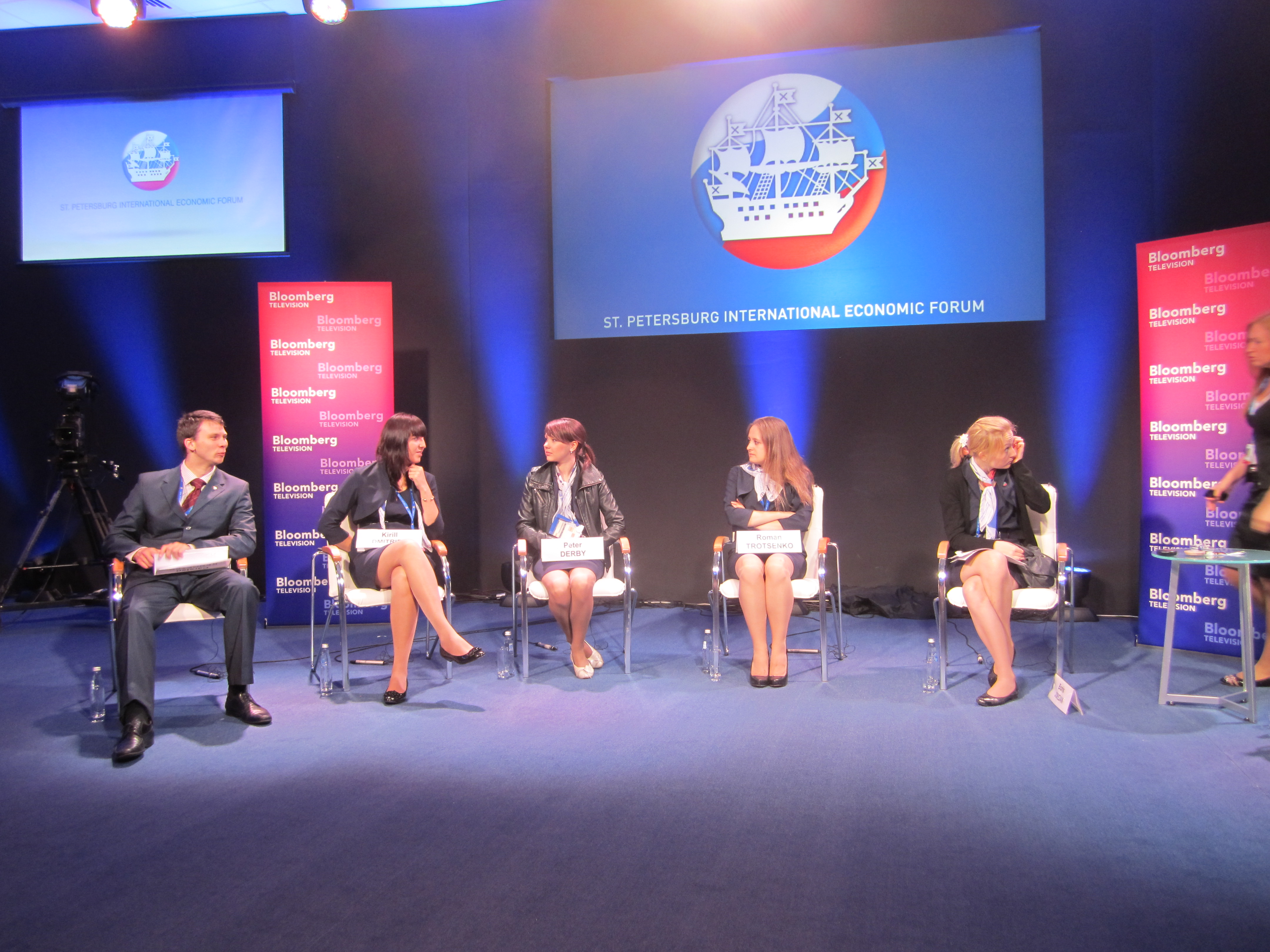
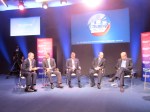 Then, the cameras begin and Ryan welcomes everyone. Ryan Chilcote, Bloomberg, Journalist. The themes sound like business restructuring, access to capital finance, modernization. First question is “how easy is it to raise capital when there’s capital flight.”
So, here we are starting up a panel on international expansion through funding and it looks pretty serious. Oops, Ryan made a few mistakes and we start over again. Panelists: Peter Derby, Managing Partner, The Concinnity Group suggests calculating risk adjusted to return on investments. Long term financing in the domestic market is important. Fiscal, political, legal environments need stability.


 Dmitriev, Kirill— General Director, Russian Direct Investment Fund, says that Russia has an “image issue” it has to address, which the state is taking on. Roman Trotsenko, President, United Shipbuilding Corporation JSC says that Russia is like swiss cheese. It’s there but with holes.
It is quite easy to raise capital for those with natural resources, but for companies working in open markets, raising capital is difficult, only a few examples of success, Yandex, after its successful IPO. But in general, it is impossible to explain to investors, what are the long term plans, and why companies can keep their competitiveness.
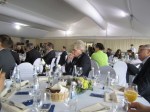
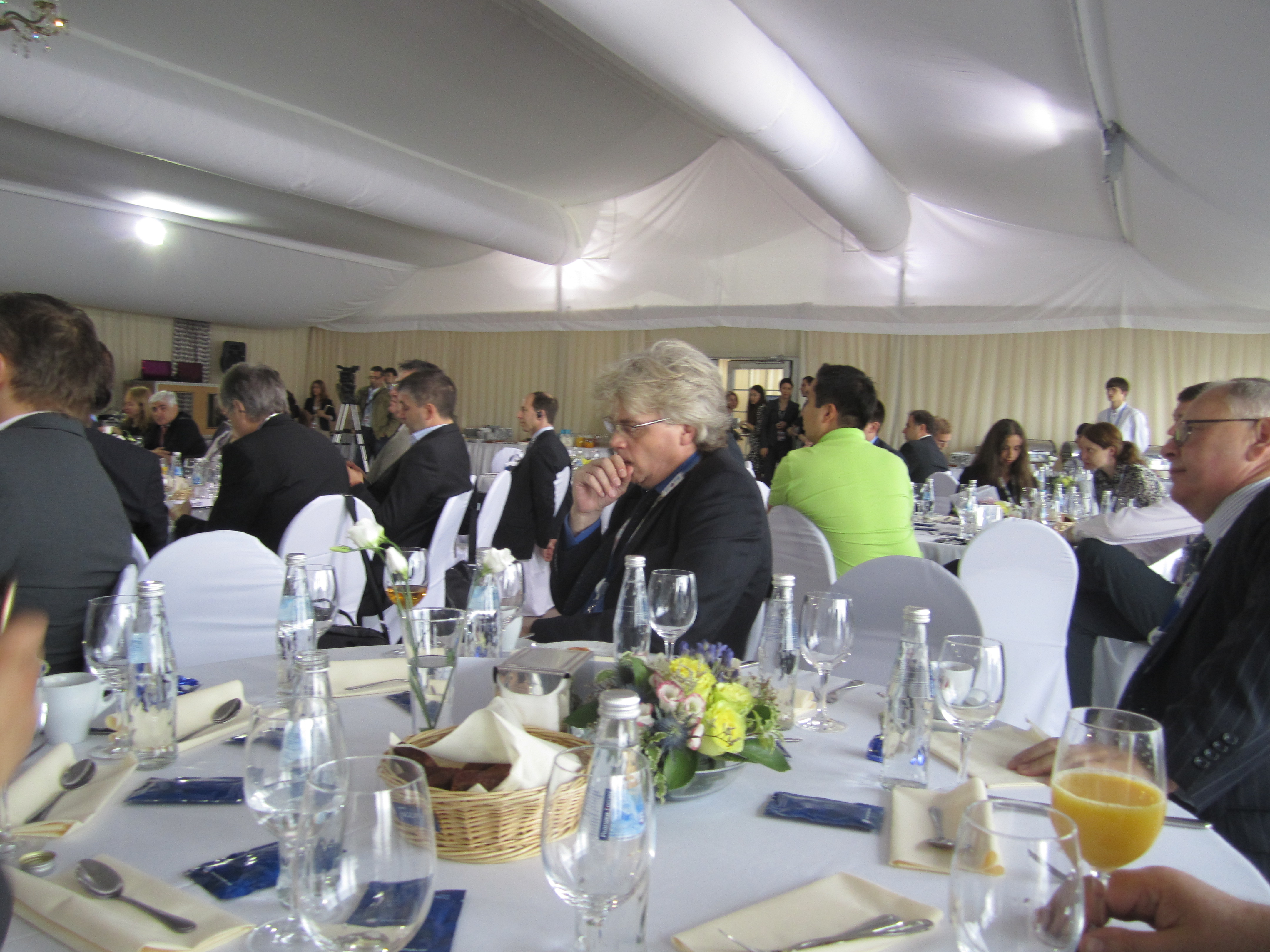
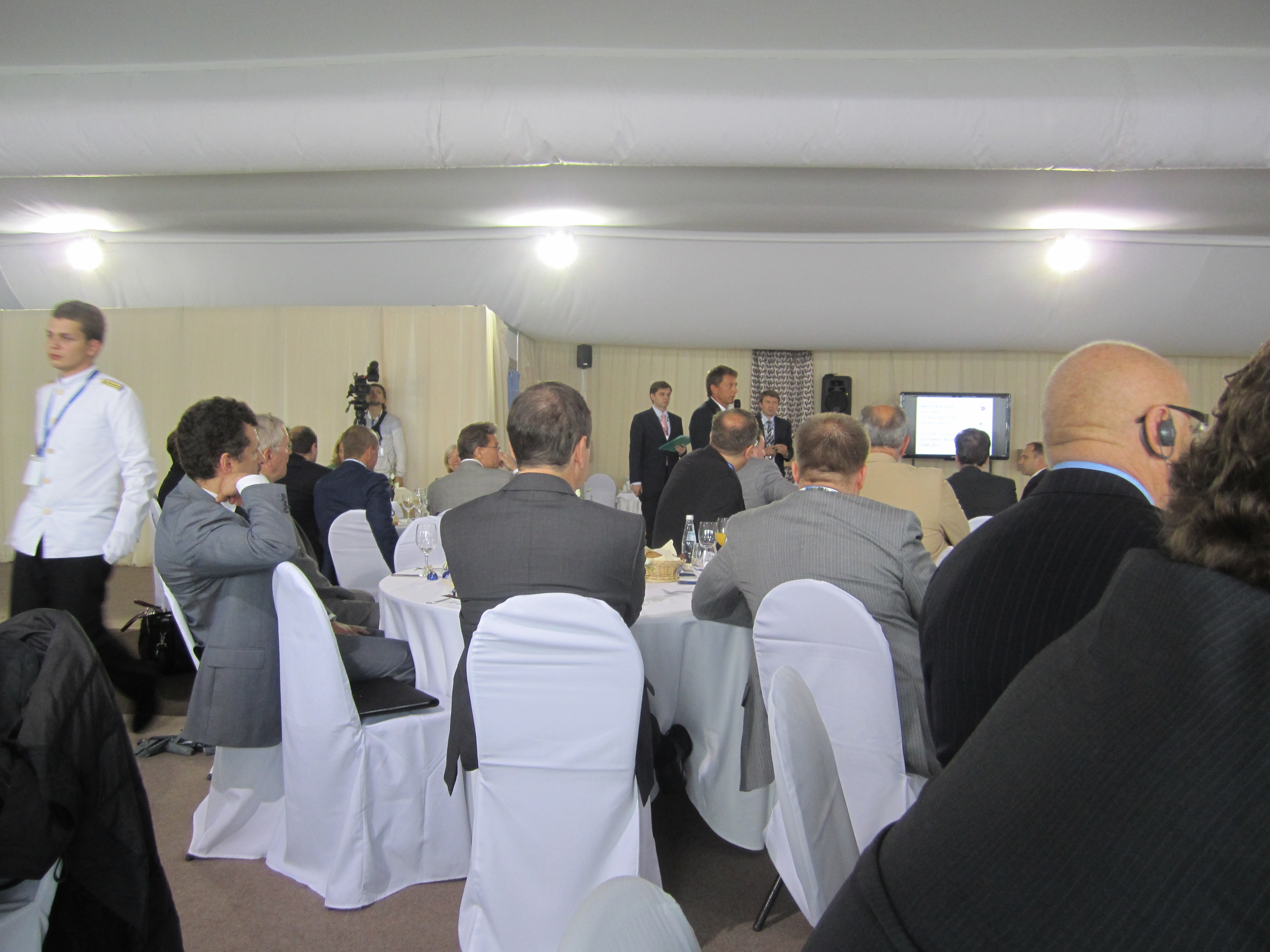
 Okay, I am still full from breakfast. I slipped into an industry breakfast on Russian Software. There is always quite a bit of discussion about improving education and providing more regulatory clarity on taxes, across the board. Product development and marketing. Yandex, Yandex.

Weeks ago, at a lecture, I suggested that American/Western European educated Russians returning to Moscow present a vanguard working with knowledge in different ways than the older Nomenklatura class, for whom political connections remain important. A few Russian executives asked on possibilities for members of this group to become influential, in shaping politics and economy in Russia. Nomenklatura could potentially articulate members of this group into its own faction, reproducing Rear Guard (Nomenklatura) and Vanguard (Global Russian) factions for years to come. At the time, it seemed like a reasonable answer. But probably wrong.
The status of Western educated Russians remains fragmented, with the exception of those receiving an MBA or a PhD in Western Europe/America. As long as you took a post graduate degree in the West, then you continue to be part of the social and political forces within Russia. And this is because, you still retain much of the cultural knowledge required to pose, in ideologically internal ways, the appropriate kinds of questions about what constitutes Modernity in Russia today.
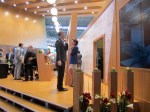 I have been told, that foreign investment, technology, and Western education, while incredibly important to Russia and Russians, remains modular, an outside element, plugged in for certain functional purposes but not part of the self-enclosed ideological reflection that develops questions surrounding, for example, what is Russia today?
6/17: This morning begins with an opening plenary with key note speeches by Dmitry Medvedev, President of the Russia and Hu Jintao, President of China. Attending the plenary is limited to Package-One participants. I am Package-Two, so I have filed into a screening room.

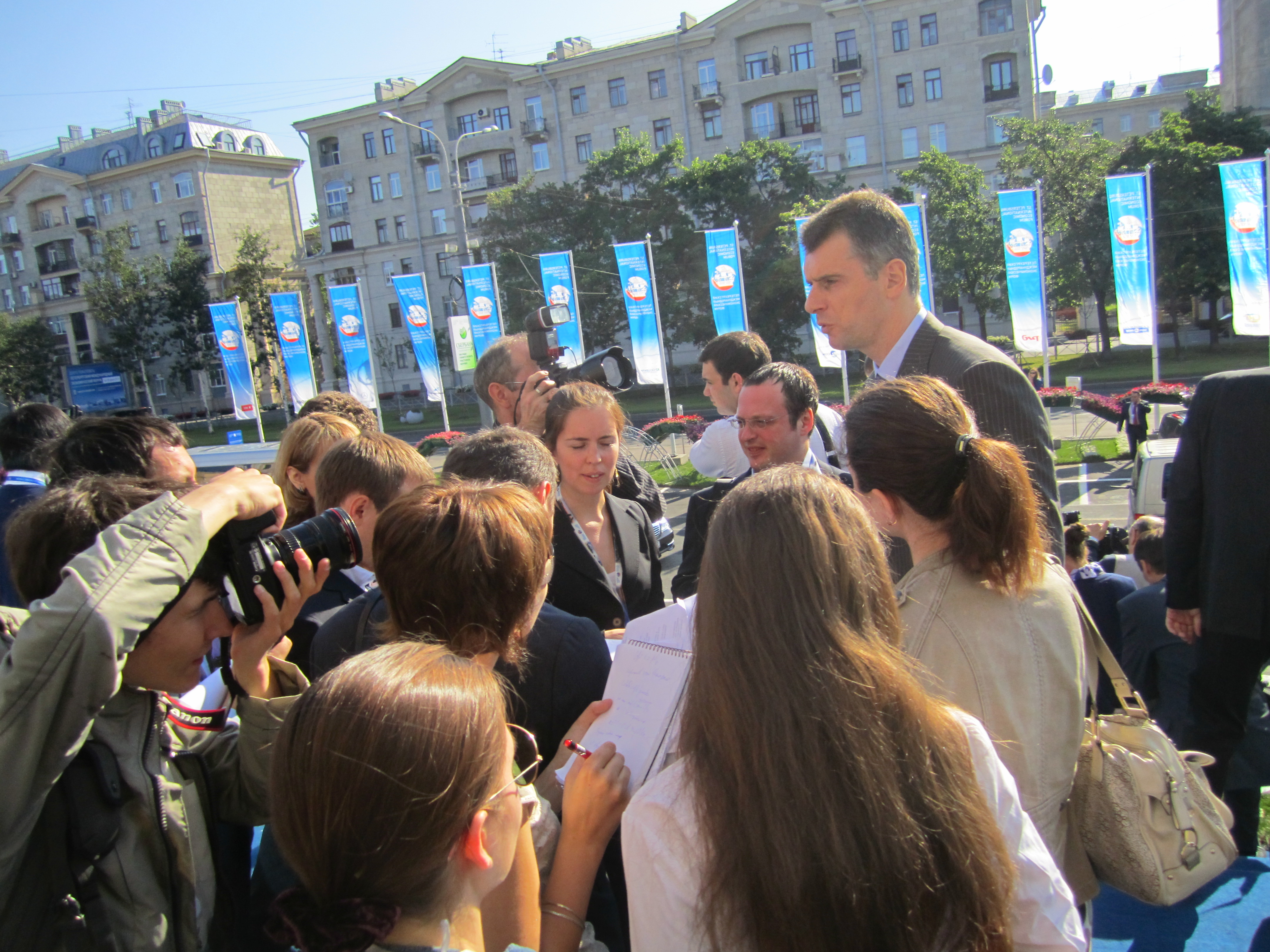
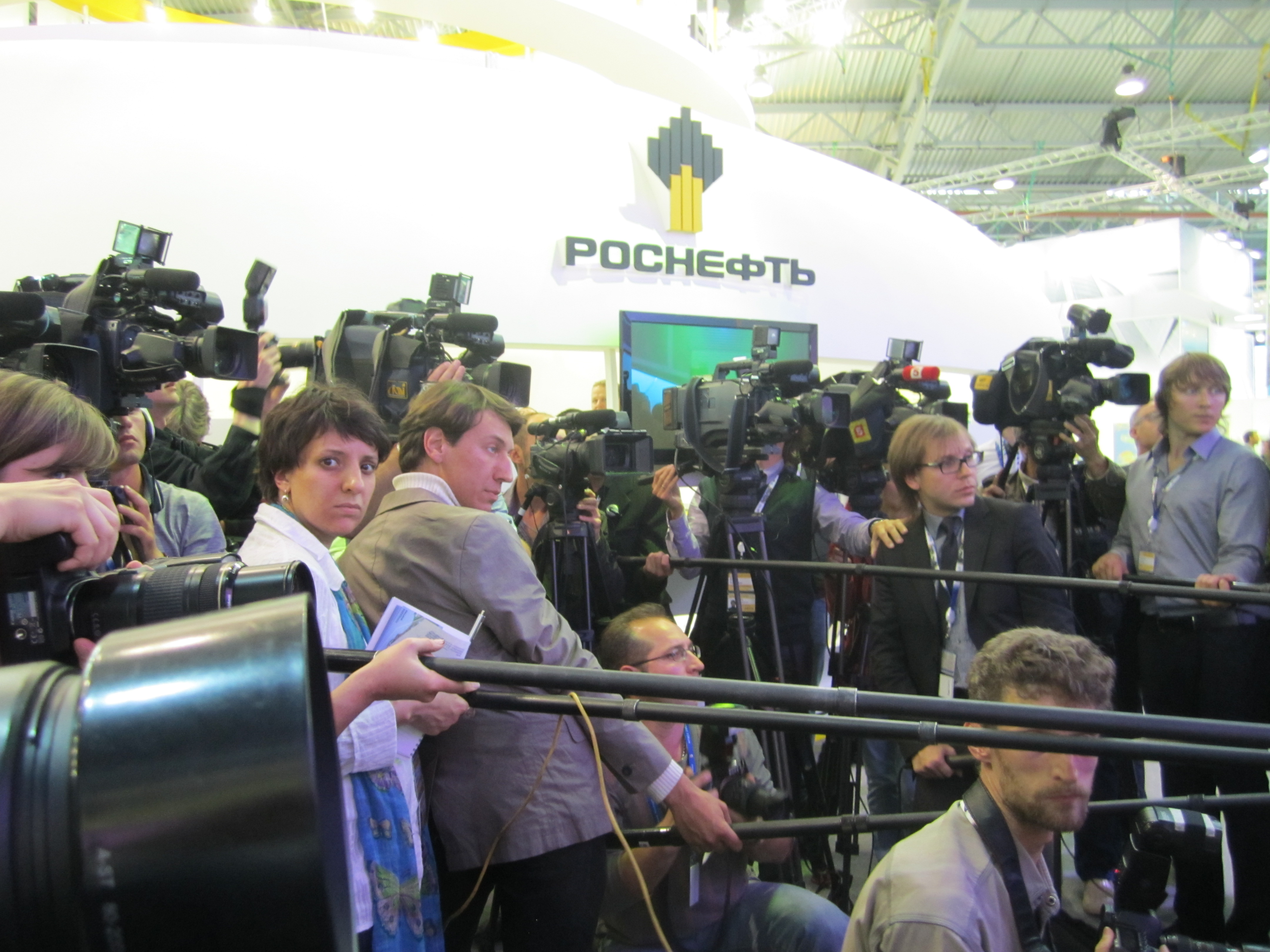
The journalists descend

upon the Stars arriving

At the Entrance to the Economic Forum
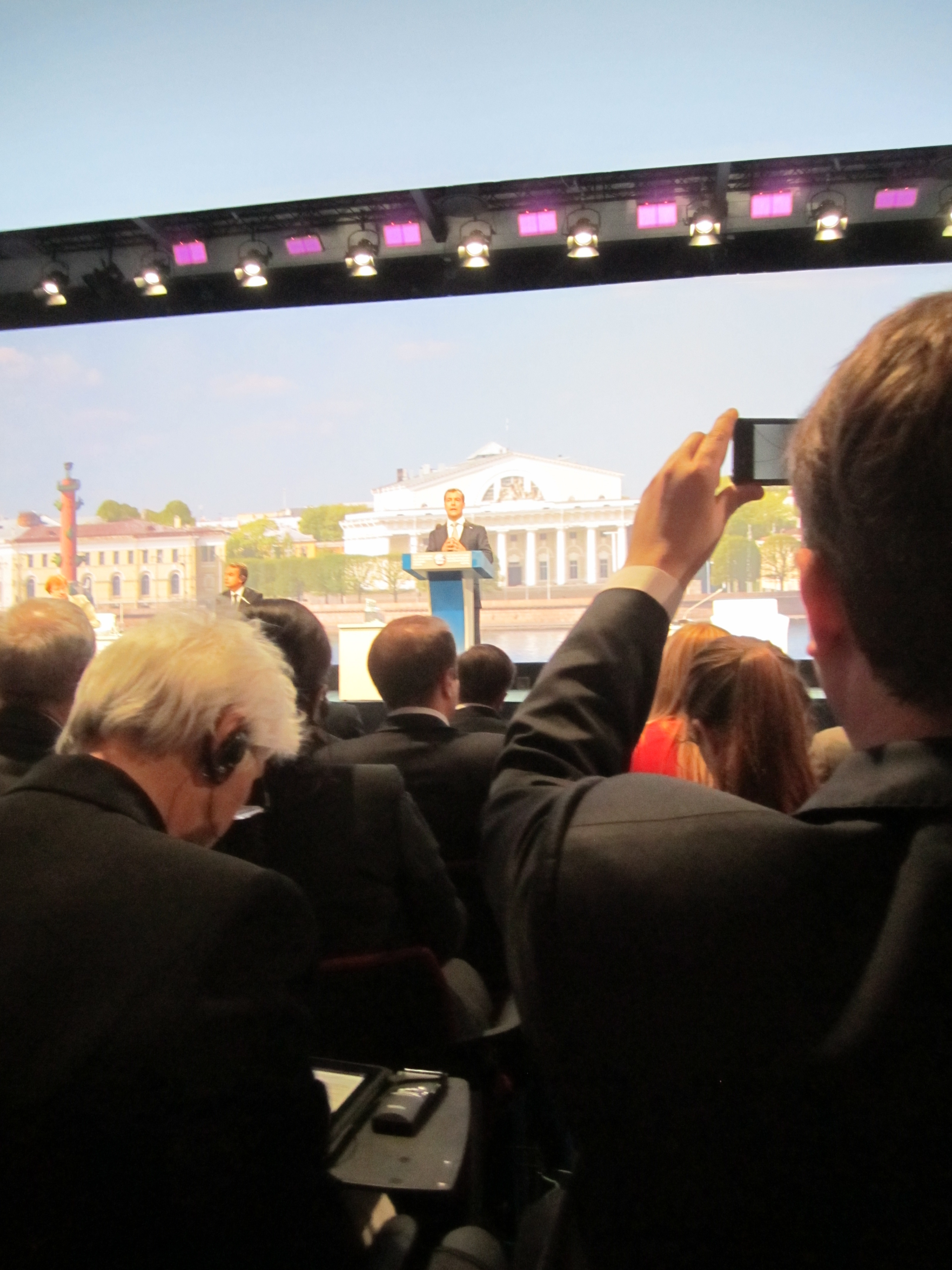
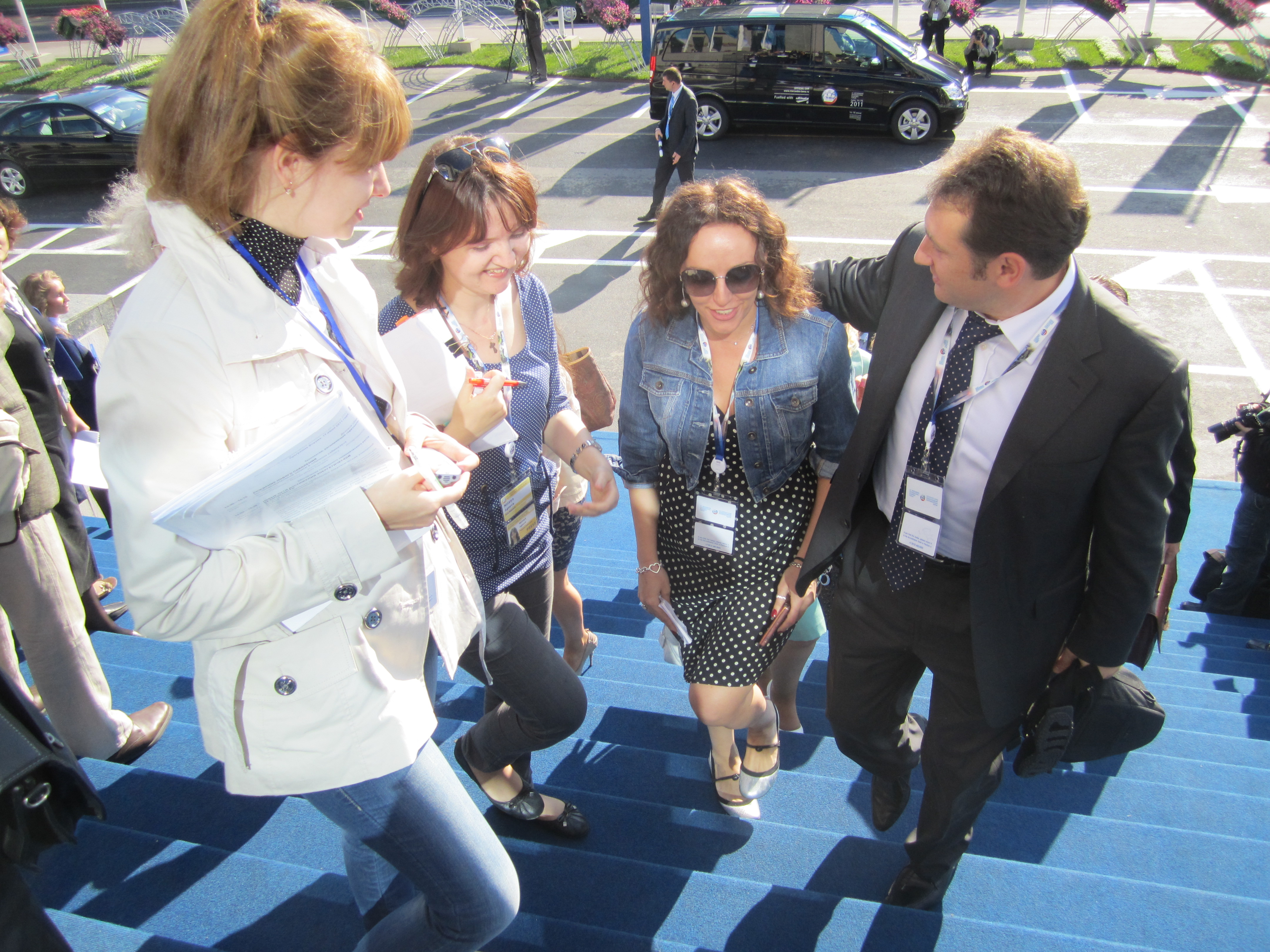
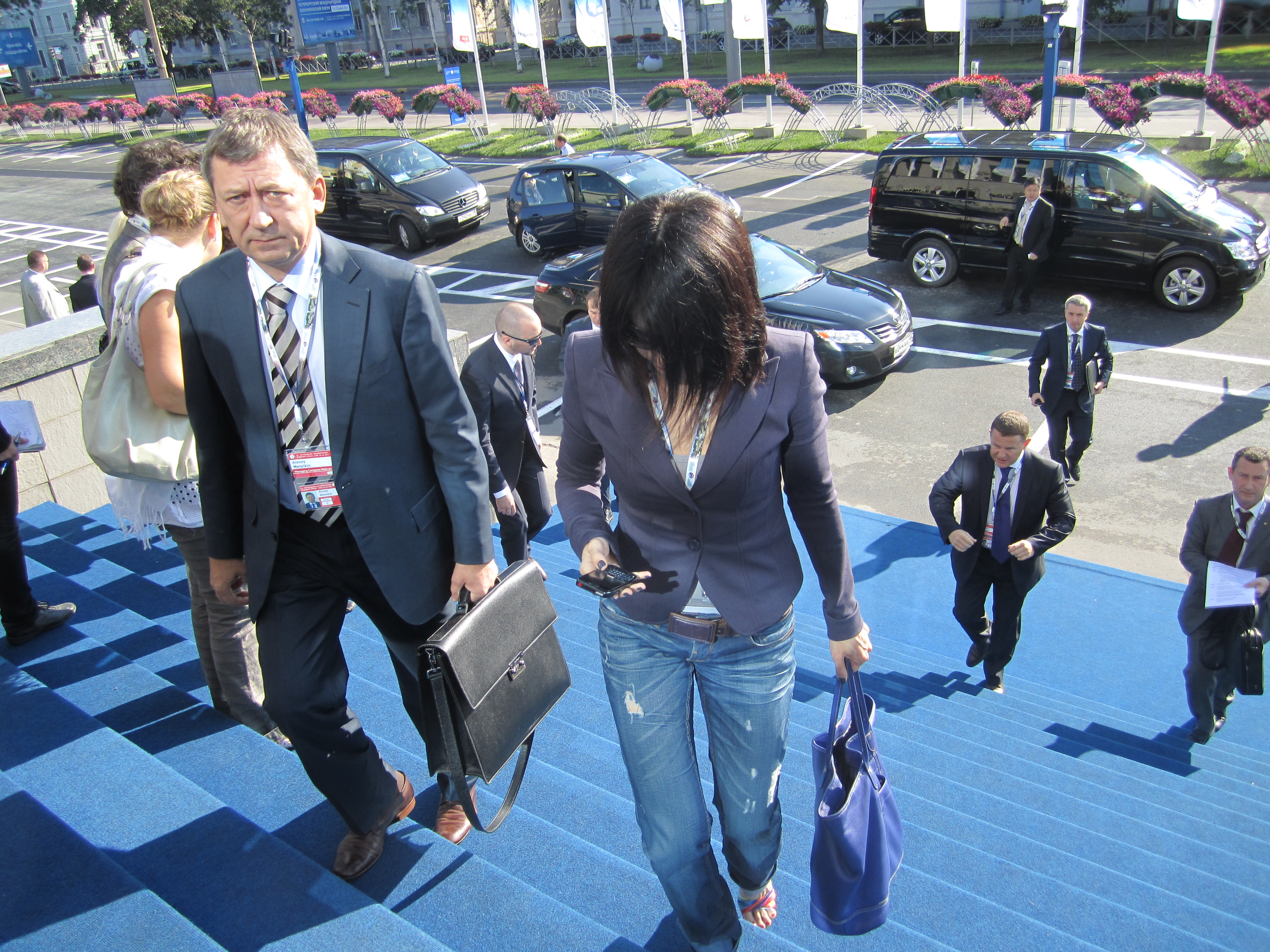
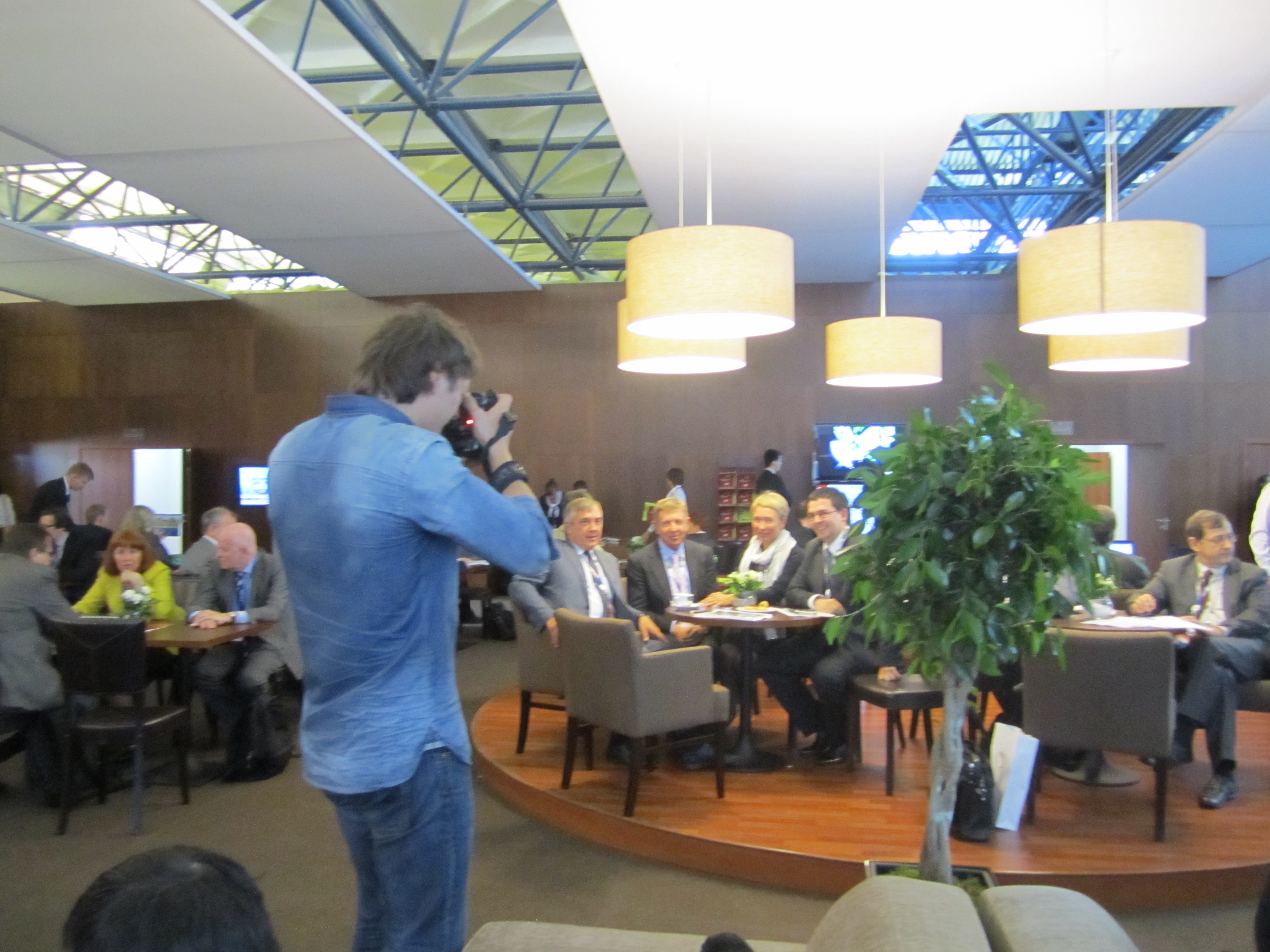
There is a buzz and prestige about which meeting rooms you can have access to here at the Forum. This morning, I came early to join the paparazzi outside the front entrance. As you can see from these photos, the entrance to the Forum itself, is site of buzz.

photo ops
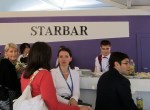
Star Bar
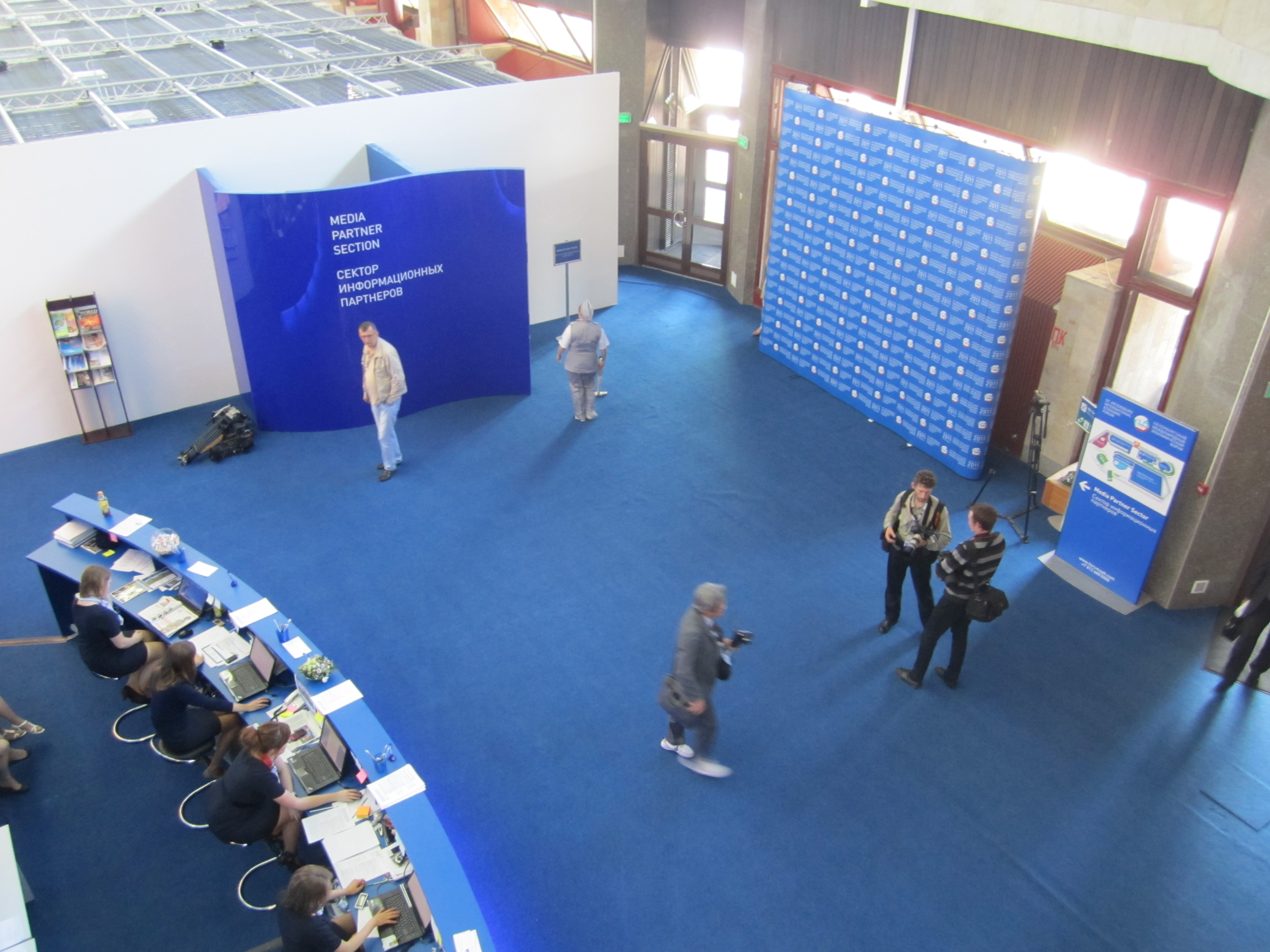
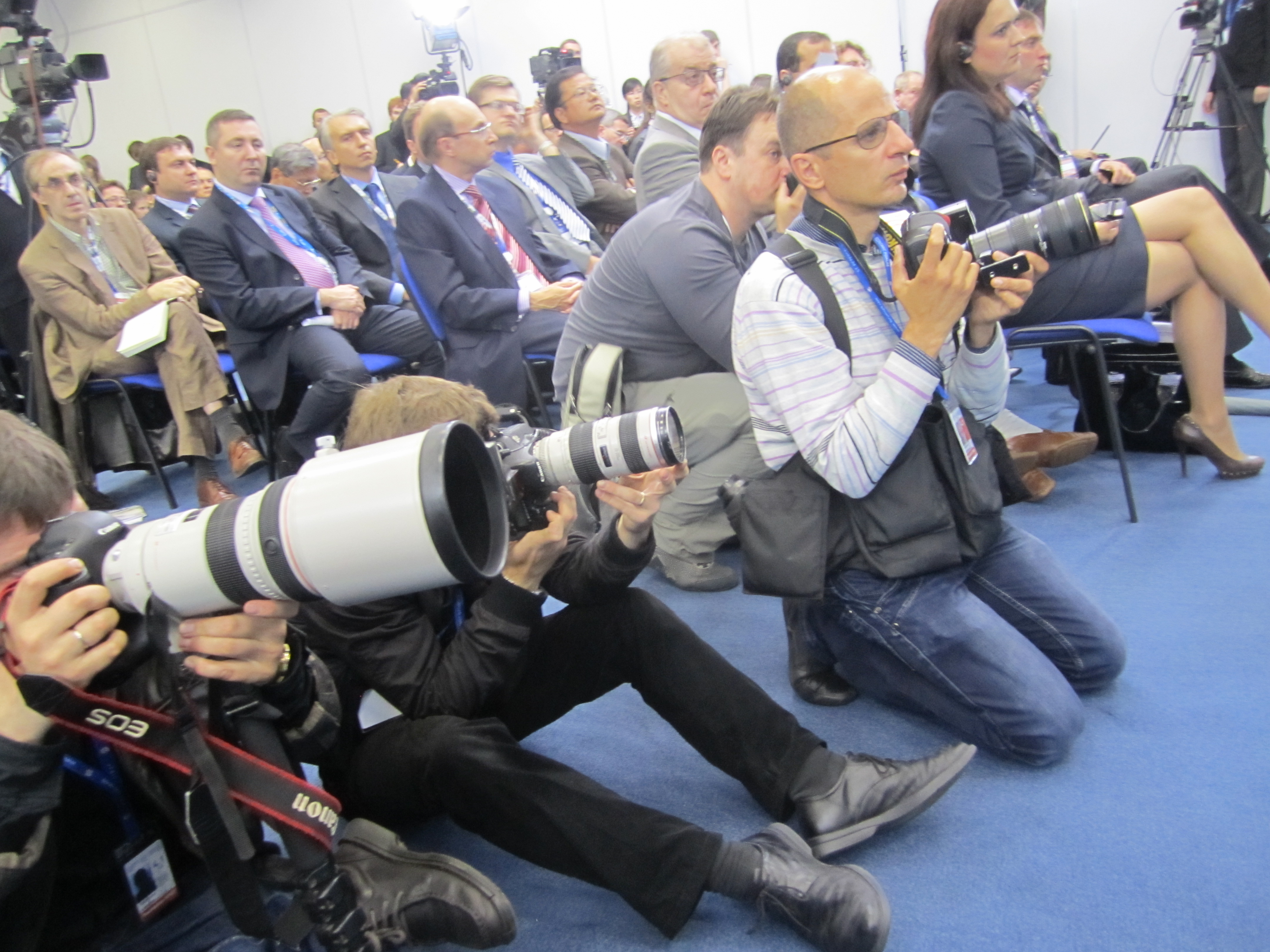
Part of the excitement is the actual activity happening — right here on the entrance steps. There are photographers, chauffeurs, journalists, Forum representatives, Forum maintenance people, door men, an anthropologist (that’s me!), and of course, the main stars walking into the forum.
Okay, the Plenary is starting. Oops, I must say, I have some darn good luck: I just plopped down here, and seated next to me is Andy Calitz, Vice President of Shell Oil. Everyone has been asking me whether Shell will step in and team up with Rosneft on Arctic energy development, now that the deal between BP and Rosneft fell through. How should I know? Andy asked me what the word on the street was.
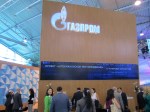
Shtokman in cyrillic
Chatting by phone
I told him there were three issues. First, everything is secret, no one will say boo. Second, everyone thinks that Bob Dudley of BP will go back into the fray and get a deal with Rosneft. Third, that Shell would step in and pick up the deal with Rosneft.
To this Andy replied, “I can’t say anything. Only two things: First, I was one of three persons who put the deal together on Sakhalin [project in eastern Russia] and second, I’m now in Moscow [his business card says The Netherlands]” — What do these two points mean? Well, here is an industry heavy that had a past in Russian energy, and he has just been pulled into Moscow, meaning, yes, there is something going on between Shell and Rosneft.
Medvedev speaks: Economy. Reduce corruption, increase investment, put restrictions on government.

Mayor of Moscow has entered the building
Hu Jintao, President of China — offers hearty congratulations to Medvedev. Its… a Multi-polar world. We need to press ahead with global governance and financial reform. Oppose protectionism. Transform economic development. Embrace science and innovation strategies.
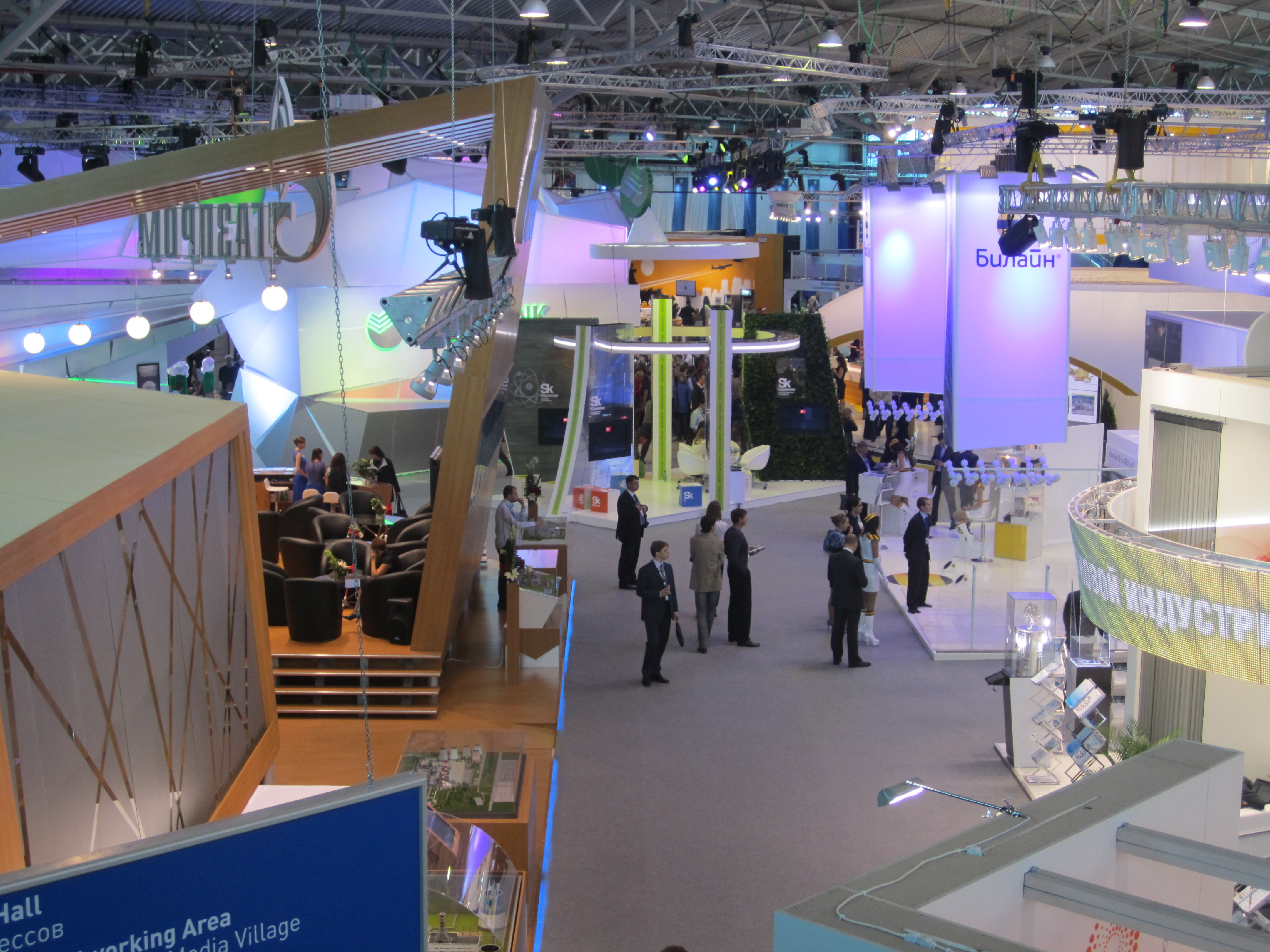
I headed back into Pavilion 7 and caught a few shots of the Gazprom exhibit, with the words Shtokman in English and Russian scrolling across the scene.
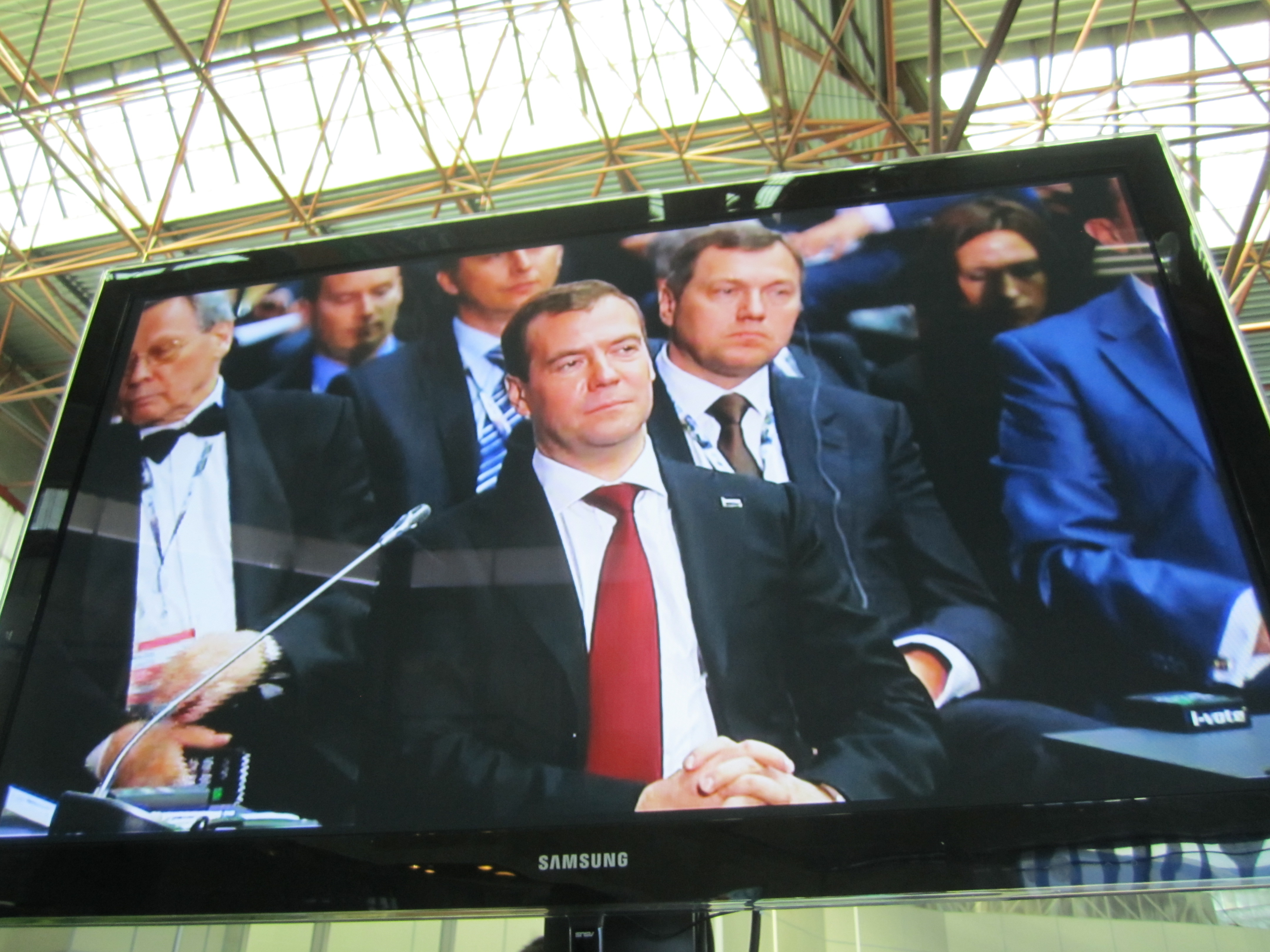
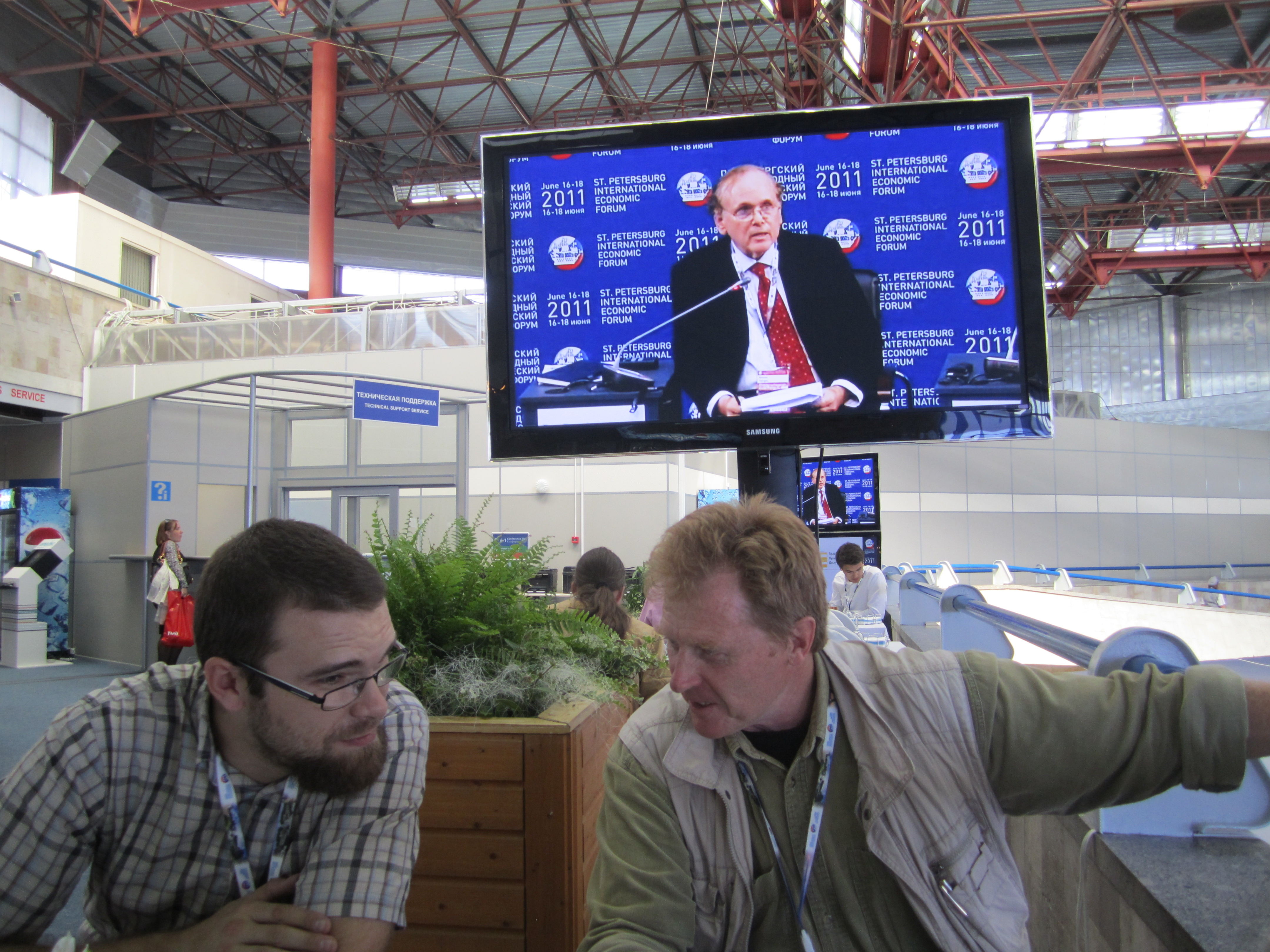
- Golden Age of Gas: I finally found a screen that was showing the New Paths to Energy Security forum. Attendance was totally restricted, headed by Cambridge Energy’s Daniel Yergin, with Prez Medvedev, and a CEO-pile up that included Bob Dudley of BP, Helge Lund of Statoil, Peter Voser of Shell, and a long list of others.
Mayor of Moscow has left the building
Daniel Yergin comments on the cyber vulnerability of the energy system and that there is uncertainty in global market and that this makes investment outlook uncertain, and the problems of nuclear are making things much worse. There seems to be considerable discussion over nuclear, and how natural gas is going to have to pick up the slack, now that nuclear is no longer en vogue in Germany. Sergei Kirienko, Director General, State Atomic Energy “Rosatom” – responding to pessimism over atomic energy, is looking toward completing projects and states nuclear will be responsible for contributing to carbon reductions.
Bernhard Reutersberg, E.ON AG, says there’s demand for Russian gas. The “German situation” – a political decision was made to shut down nuclear and this will change the energy security situation, shutting down 17 nuclear power plants but the energy has to come from somewhere. There will be imports, but this is “really a golden age for natural gas in Germany”. There will be a need for back up capacities, and markets, if we have a time frame of 10 years to do all this, will we build up new gas generation combined with renewable.

President Medvedev
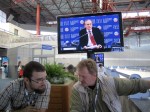
Dan Yergin
A lot of talk about increasing investment in pipelines across Europe and Russia. Creating a more stable investment climate in Russia, a central theme in the speech of Medvedev, but also in the CEO comments.
Neil Duffin, President, ExxonMobil Development, stresses the long term relationships of 20 years on these projects, and the requirement over the long term with government to make profit happen. Vladimir Bogdanov, General Director, Surgutneftegaz, stressing innovation and investment, stating a tremendous amount of capital is required. Protections in Russia over investment are at an all time high.
Indeed, Peter Voser, CEO, Royal Dutch Shell, investment is required all along the chain, and bringing in the latest technologies and contributing to the Russian economy, with partners and incentives, and wondering where the Russian state is headed over the next few years. Igor Sechin, I should mention, Deputy Minister of the Russian Federation, started the talks and suggested that the main method for developing their government calculations, would be the concept of strategic partnerships, and that contracts are being signed.
Well, now here we get to the rub:

BP CEO Bob Dudley
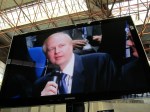
Responding to failed BP-Rosneft deal
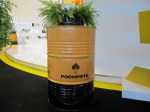
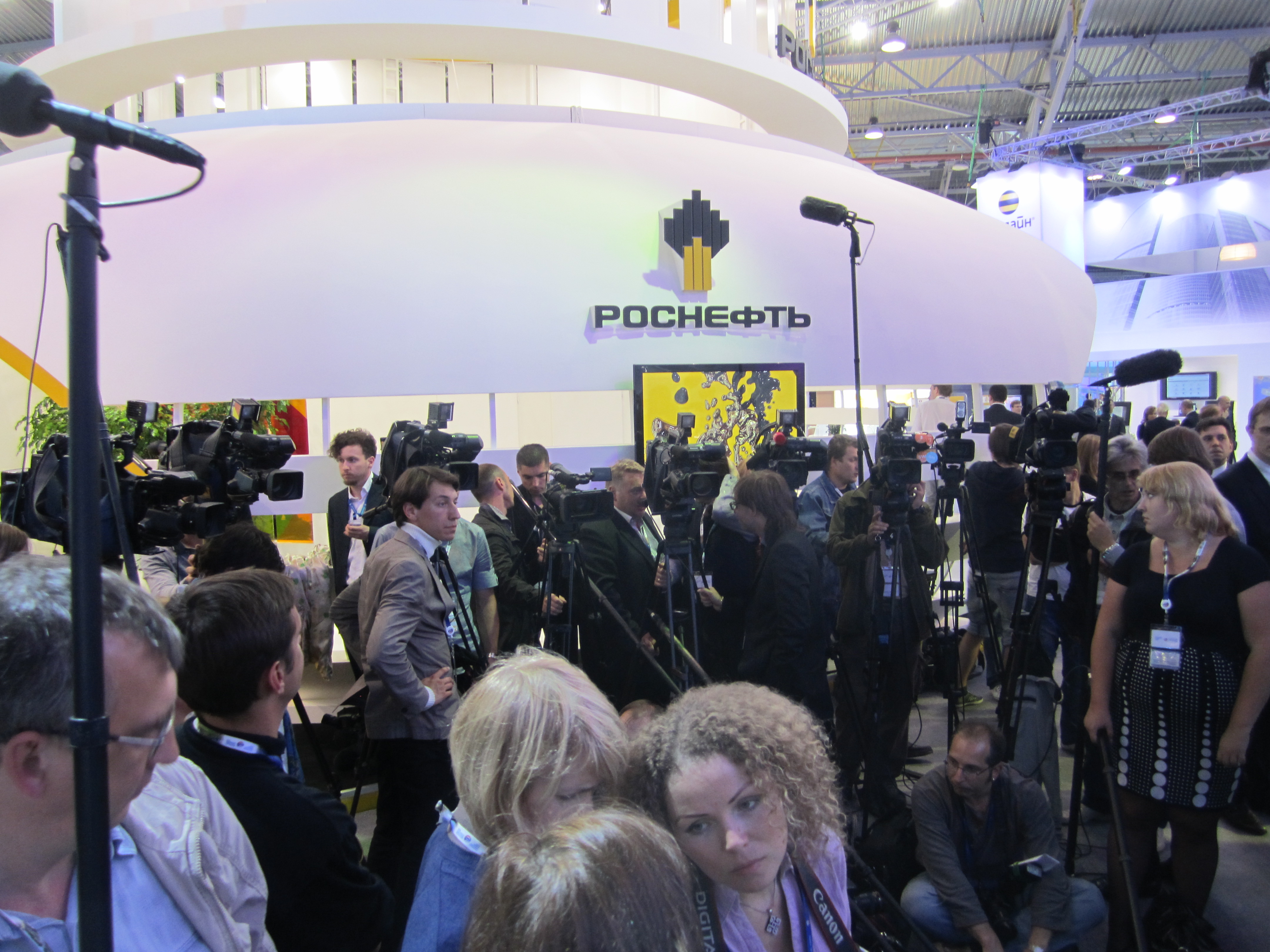
Rosneft Oil Company awaits its strategic partner
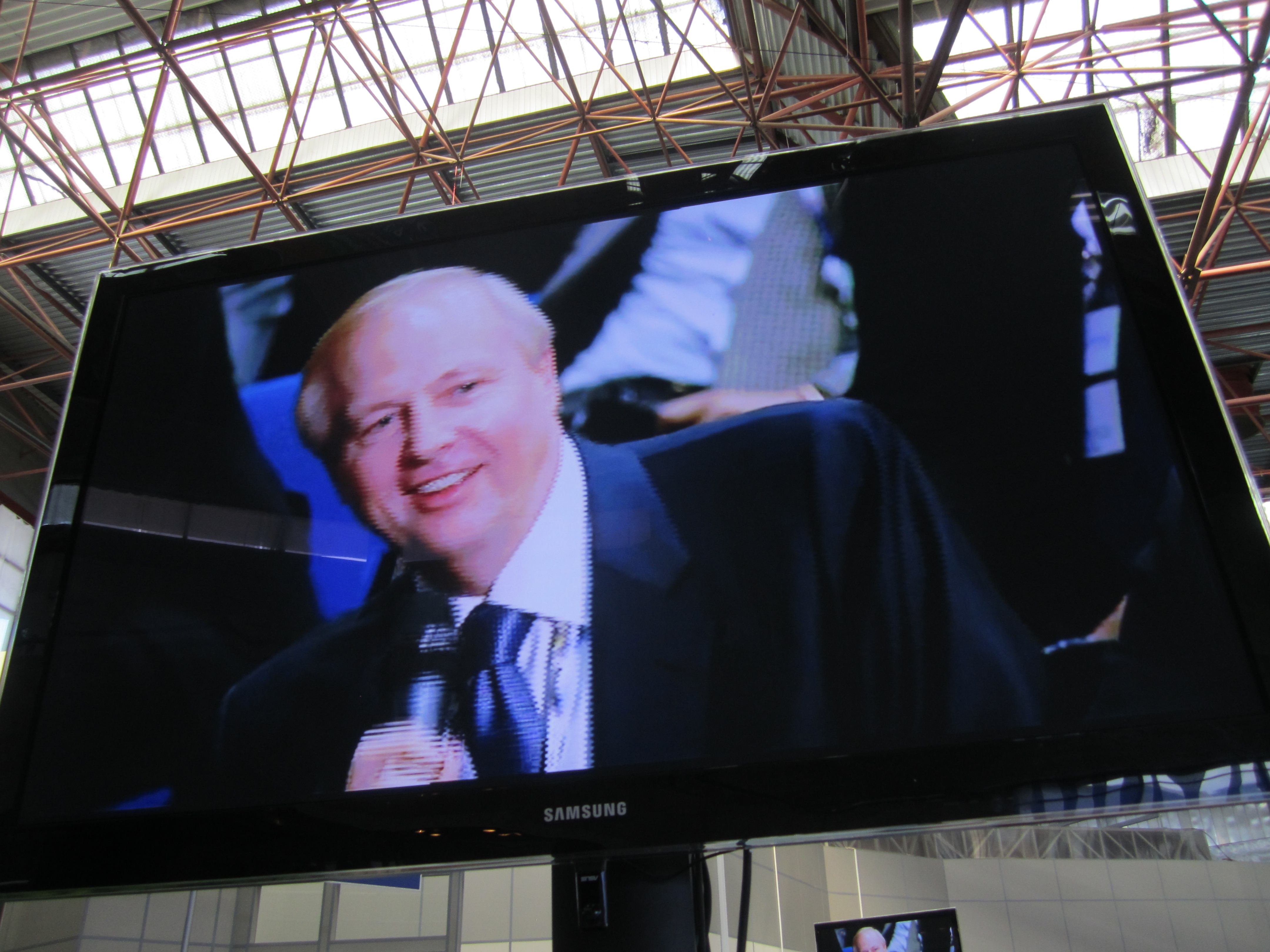
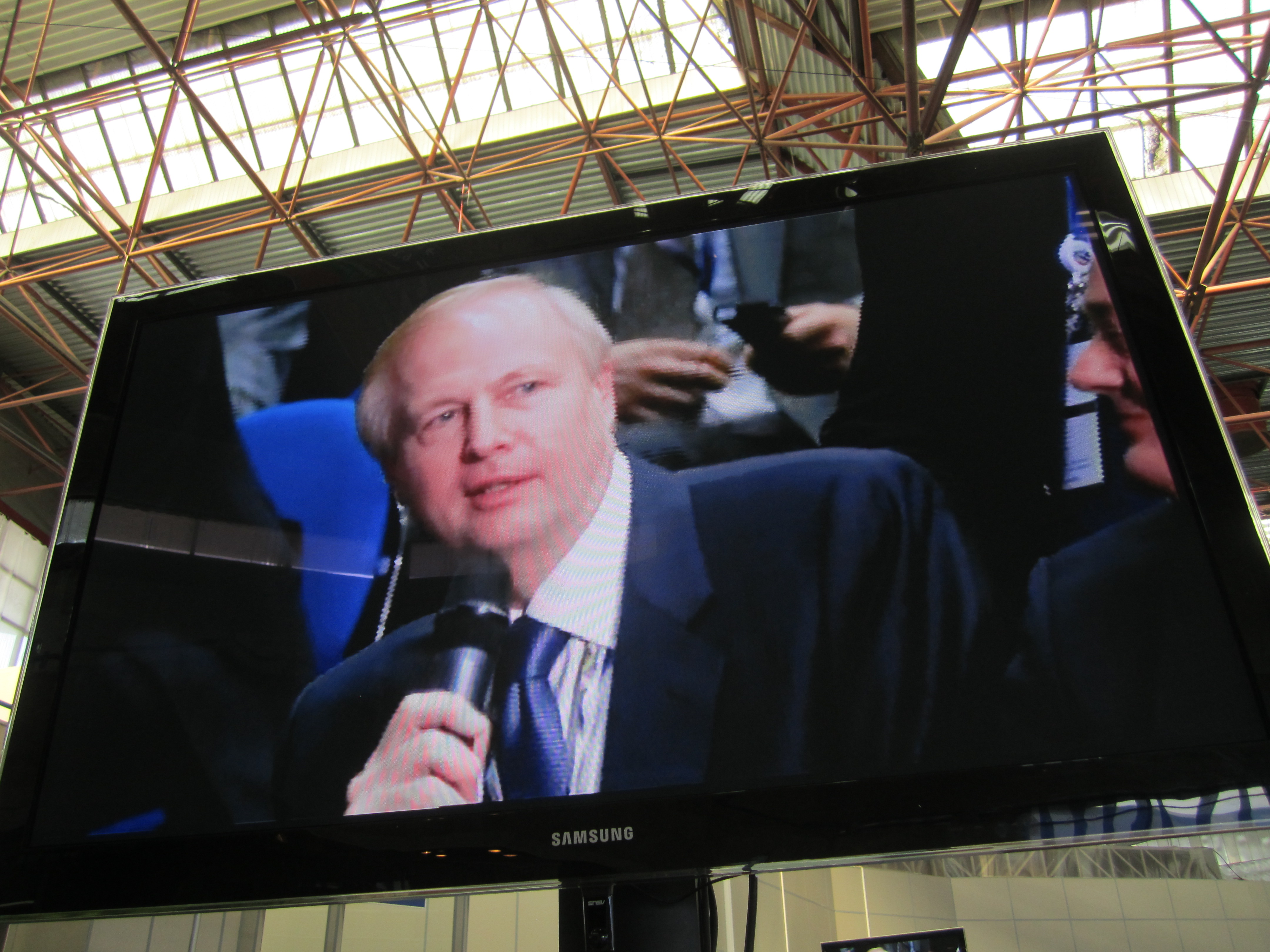
Bob Dudley of BP is asked, “Why did the deal with Rosneft fail? [if we’re so interested in strategic partnerships].” Dudley’s response is smooth, a smooth operator. He states, “BP proposed a novel concept of cooperation, to pursue and develop the Arctic in strategic partnership [with Rosneft] and was not successful in reaching a set of commercial conditions [satisfactory] to all companies involved” …”But the concept was good for everyone involved…we remain solidly committed to Russian projects, we remain committed to partnerships…no new news on the subject, but BP remains committed to Russia.”
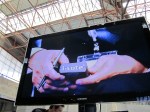
Taking the vote
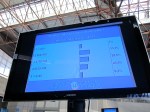
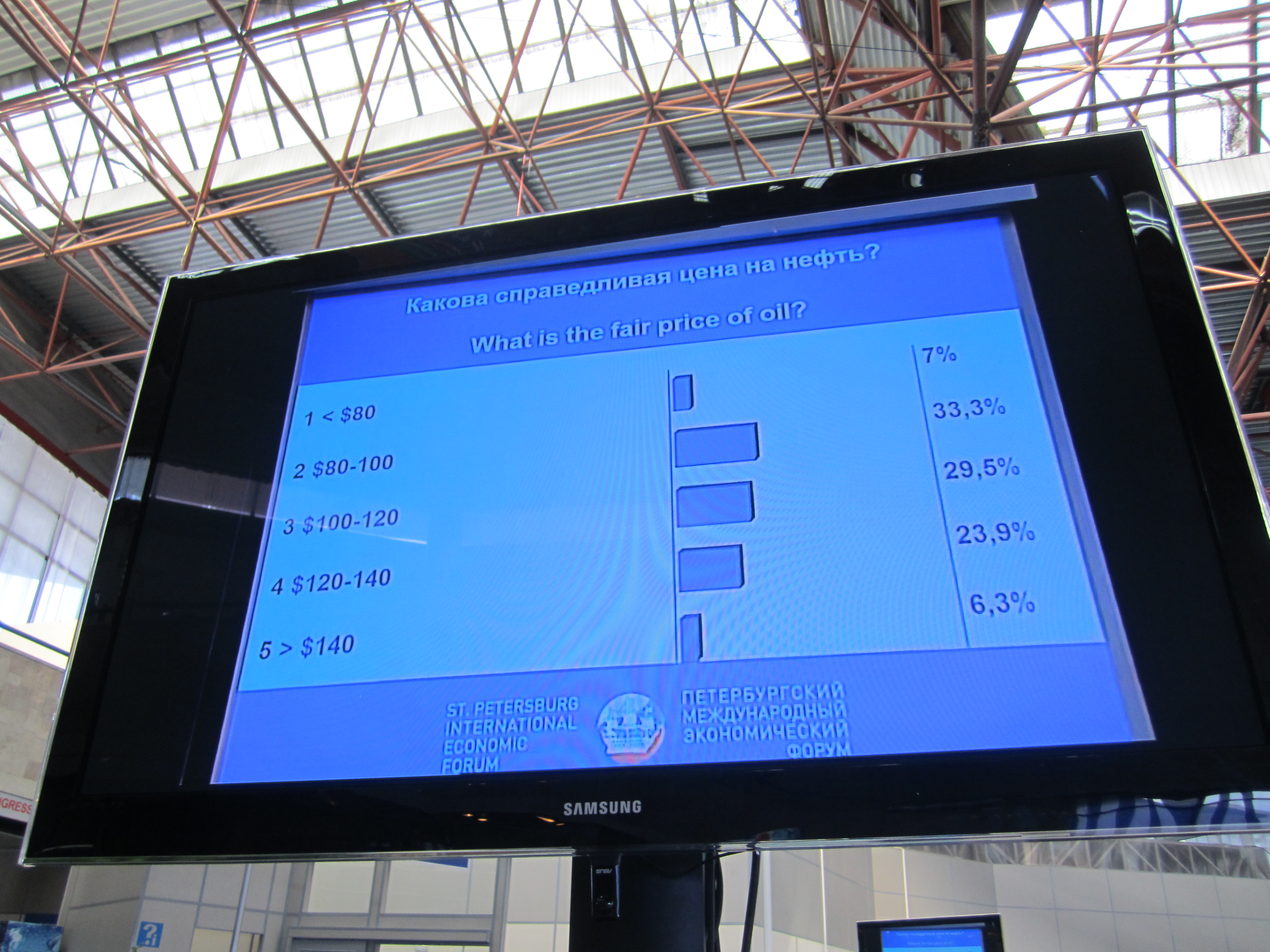
The survey says
Now let’s have the Russian interpretation of what is going on:
Eduard Khudainatov, President of Rosneft Oil Company, sounds a little irked, actually. “Unfortunately BP did not close out the deal, not because of barriers of Russian government. Rosneft is pursuing the Arctic effort — pursuing negotiations — continues its search [to have in place a] strategic partner by the end of the year.”

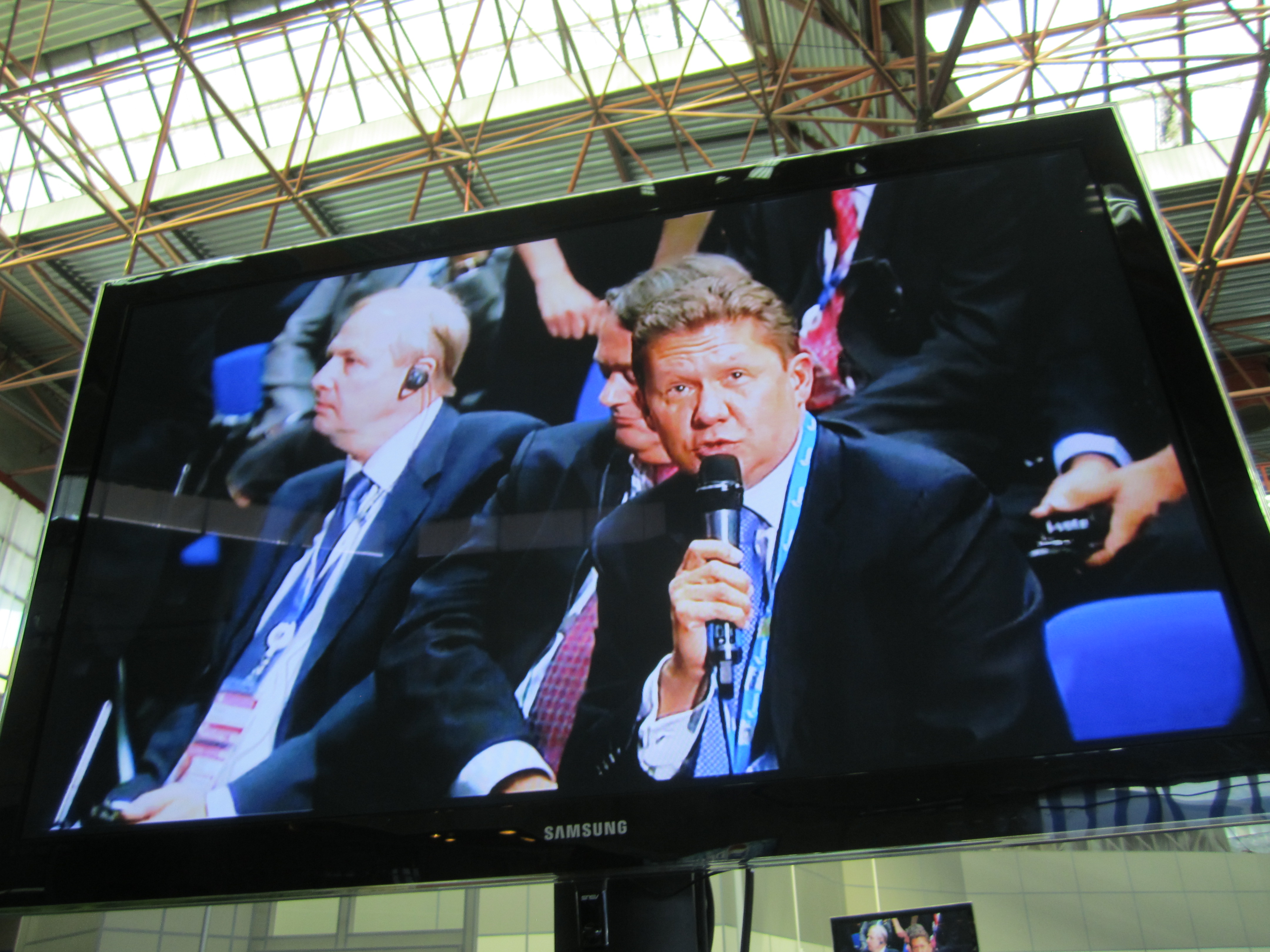
Gazprom’s Alexei Miller
Here, President Dmitry Medvedev, turned on his microphone, and added “This is cat and mouse, [and the question is] do you like the cat? Or probably you don’t like the cat very much! That is, you don’t like the investment climate very much … in Russia, we understand [Bob’s comments] as new nuances, and understatements, by our foreign colleagues, we get a sense of what they don’t like, these innuendos should be explored [in more detail to flatten] out regulation”.
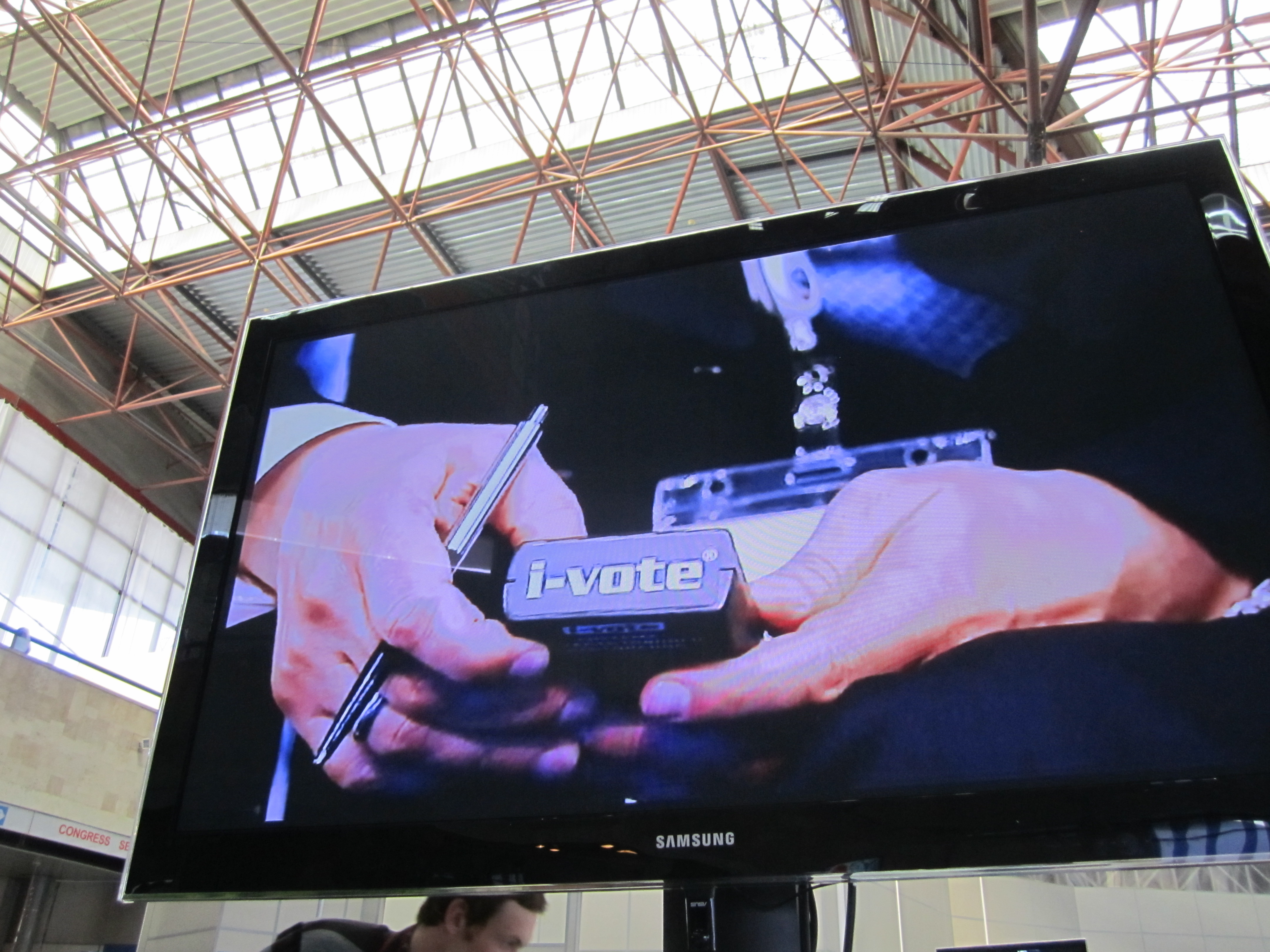
Okay, here is the fun and games. All the CEOs take a vote on what oil prices will be next year: [check out the survey says image above].
Alexei Miller, Deputy Chairman of the Board of Directors, Gazprom, says he’s the best at predicting future oil prices, but that we are all out of time, and the meeting is over. He has the last word.

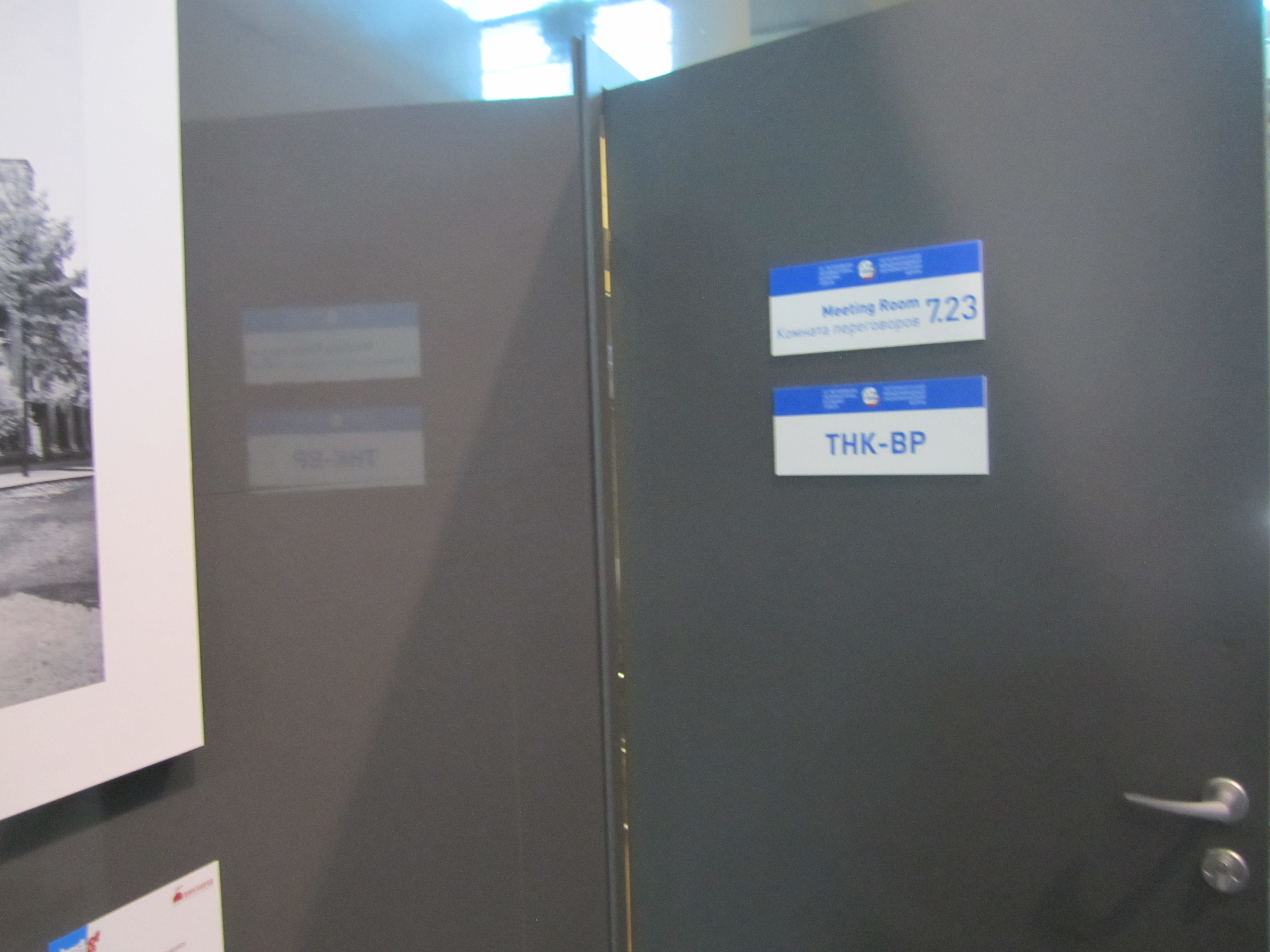
Outside “the room”
Outside “the room”
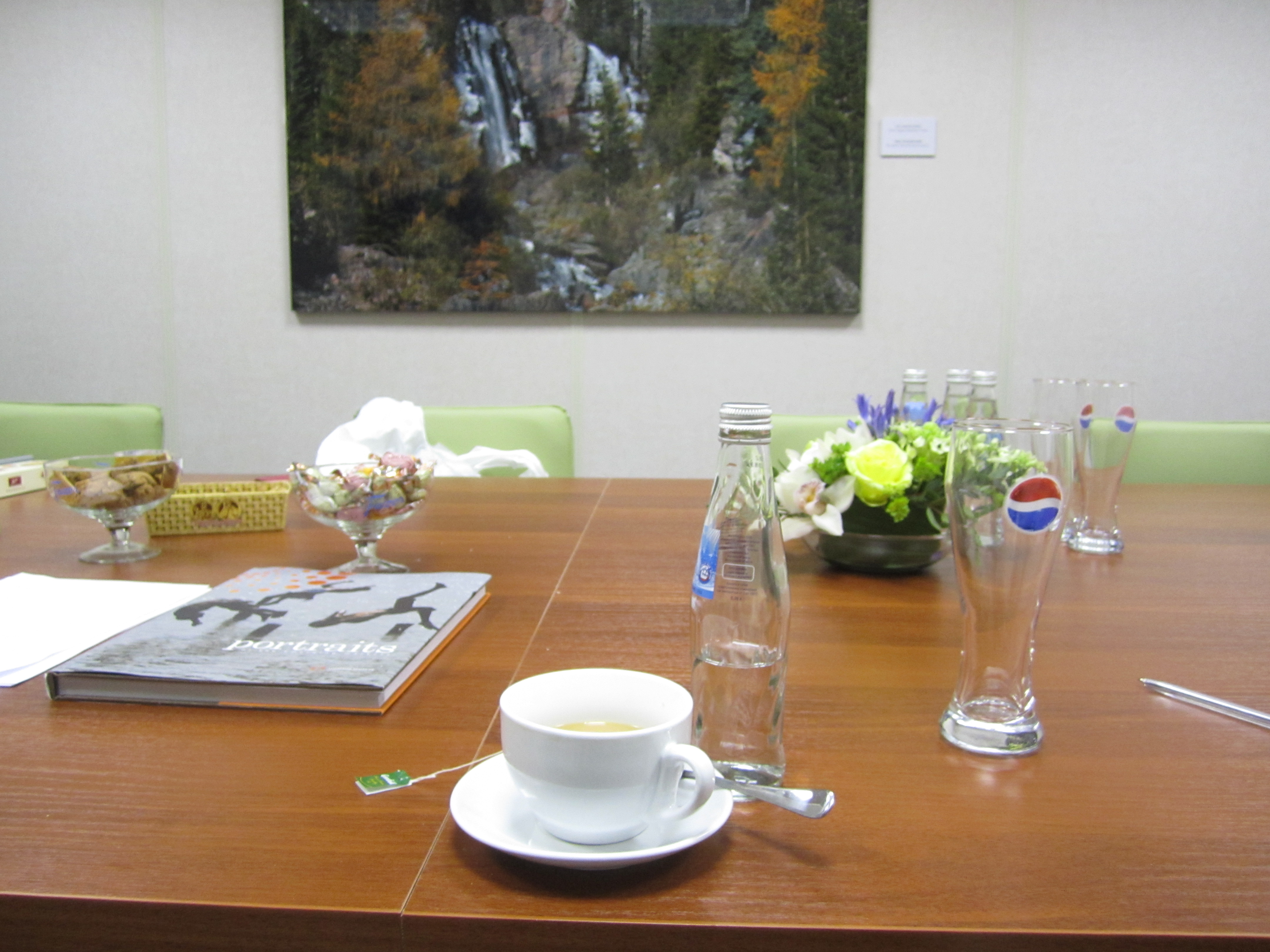
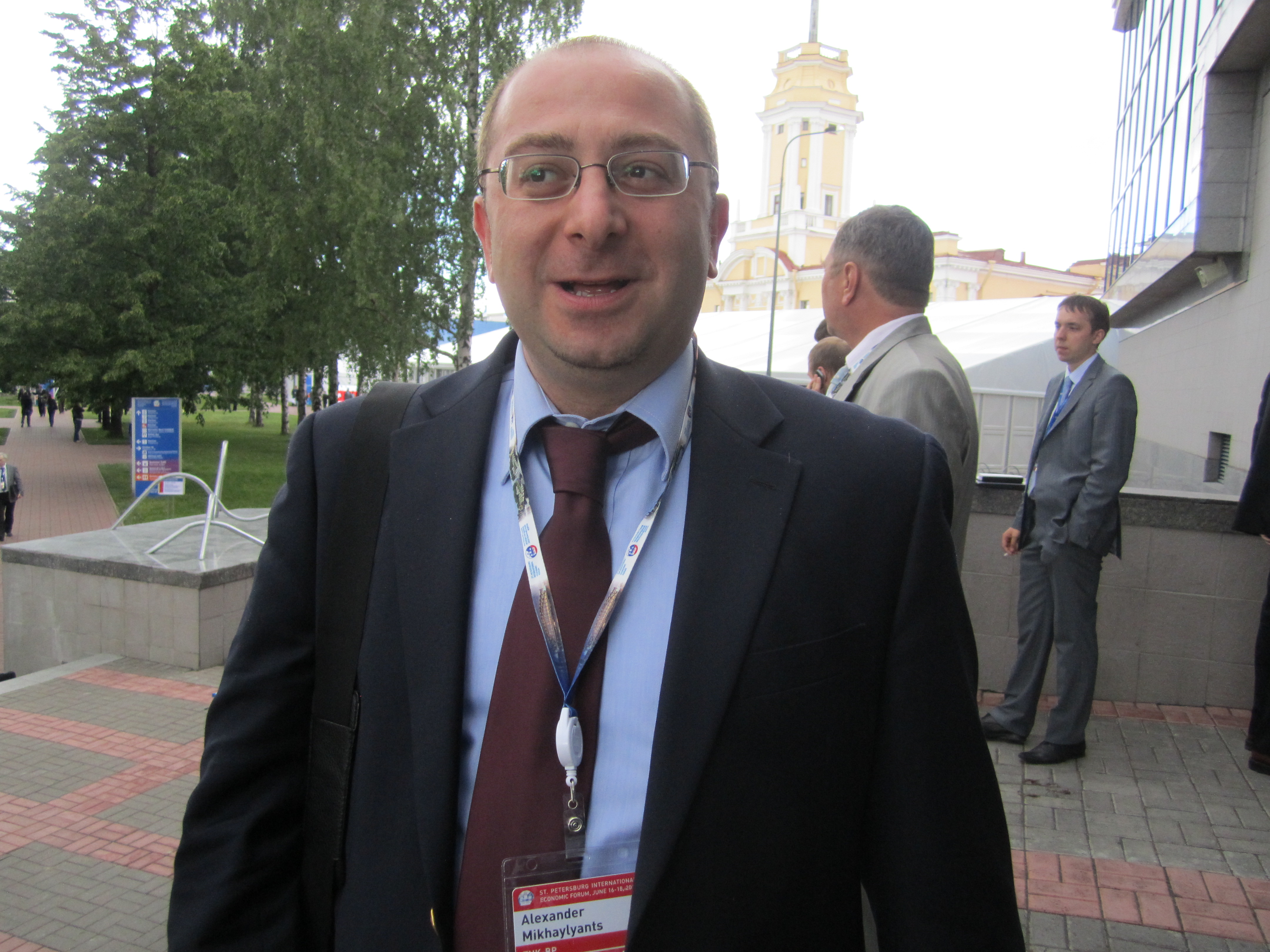
So. To round the day, I had a meeting with Alex Mikhailiants, from TNK-BP, who I mentioned yesterday. The exchange took place in his meeting room. The Forum, in Pavilion 7, has all these company meeting rooms. It does not sound like much, but if you are an American anthropologist, doing research on Russian oil companies, well, being invited into a meeting room is sort of a big deal. It’s just a room of course. But the symbolism of it all.
We exchanged a few interesting details about the Forum that I just reported on above, like for example, that the CEOs who spoke, were the only one’s allowed to speak, and that all of this is highly orchestrated in advance. I did not know that. And that in fact, while some execs wanted to have say, they were told “no” several days ago.
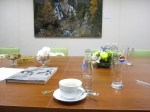
Inside the room with my tea
So, if you go back and read what I wrote — Medvedev was the only actor who could choose what and when to say. Also, Exxon won’t go after the Rosneft deal. And I sort of knew that. Exxon is over the board and not really a team player. That was my experience in Alaska at any rate, and Alex more or less stated the same applies across the board.
Anyway. Alex was totally cool, and we’ll be following up with him soon, as he’s invited me back to Moscow for a recon later this year. And there’s a conference on Arctic gas development in Moscow, so I want to be ready for that.
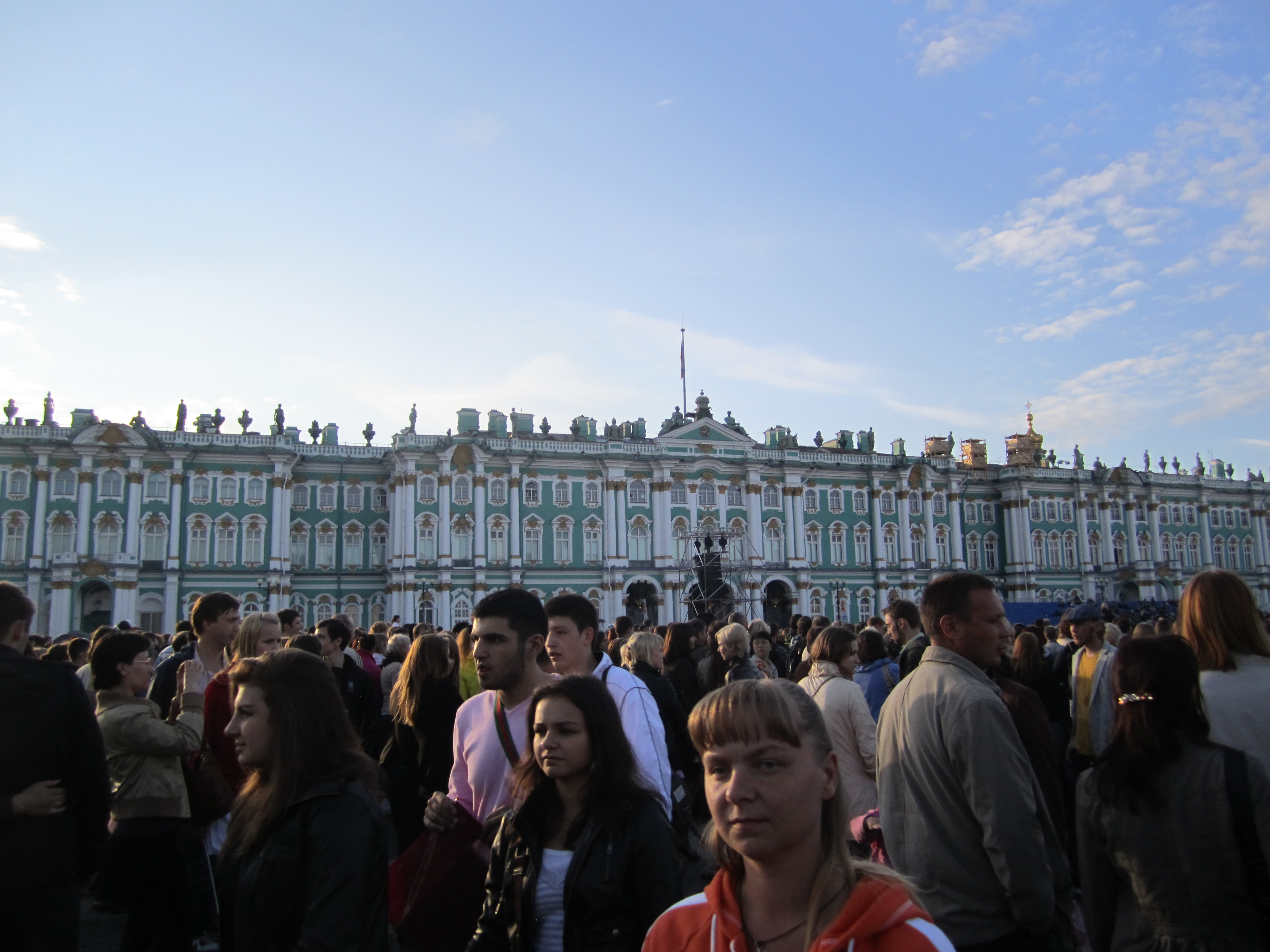
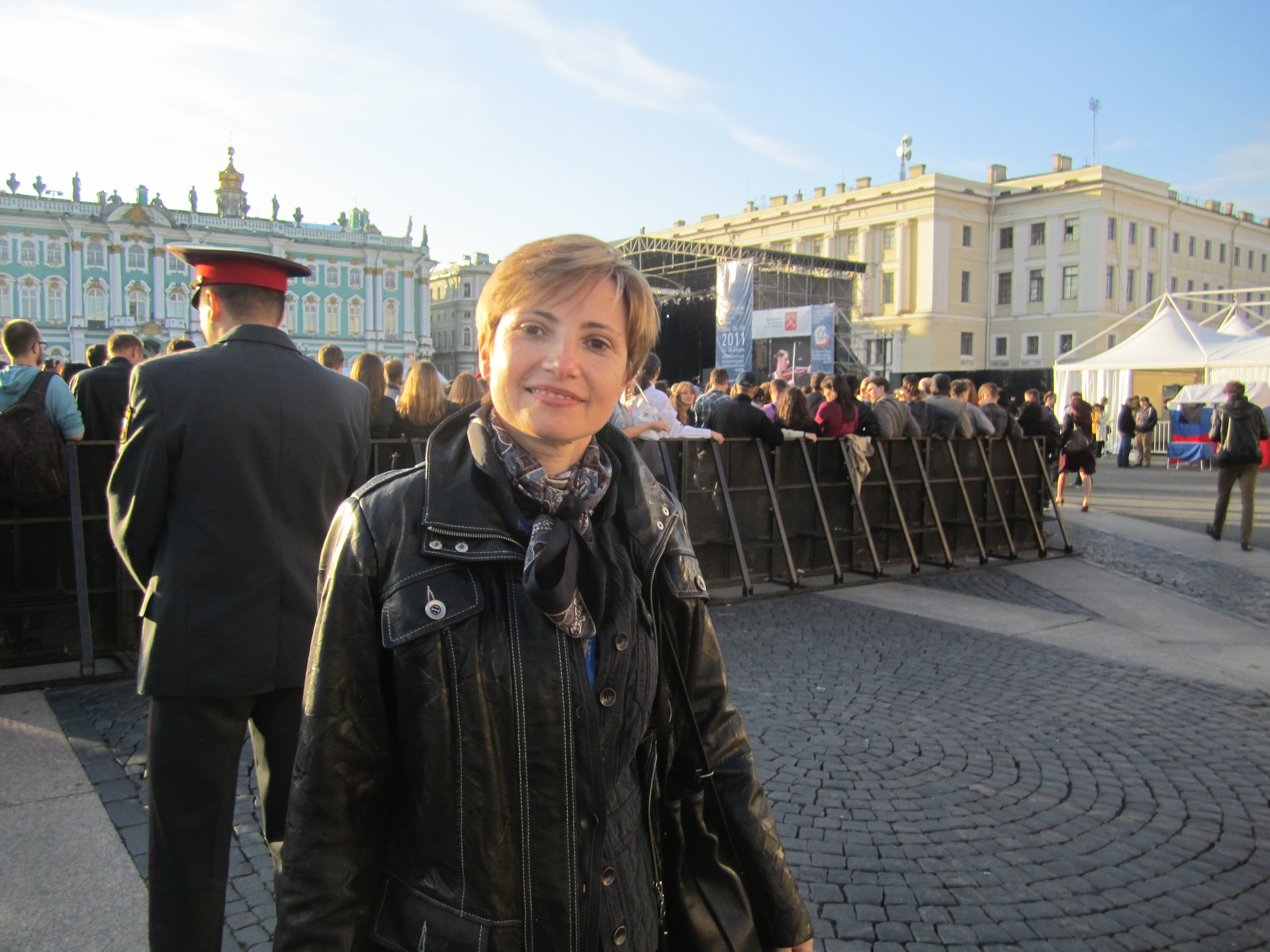
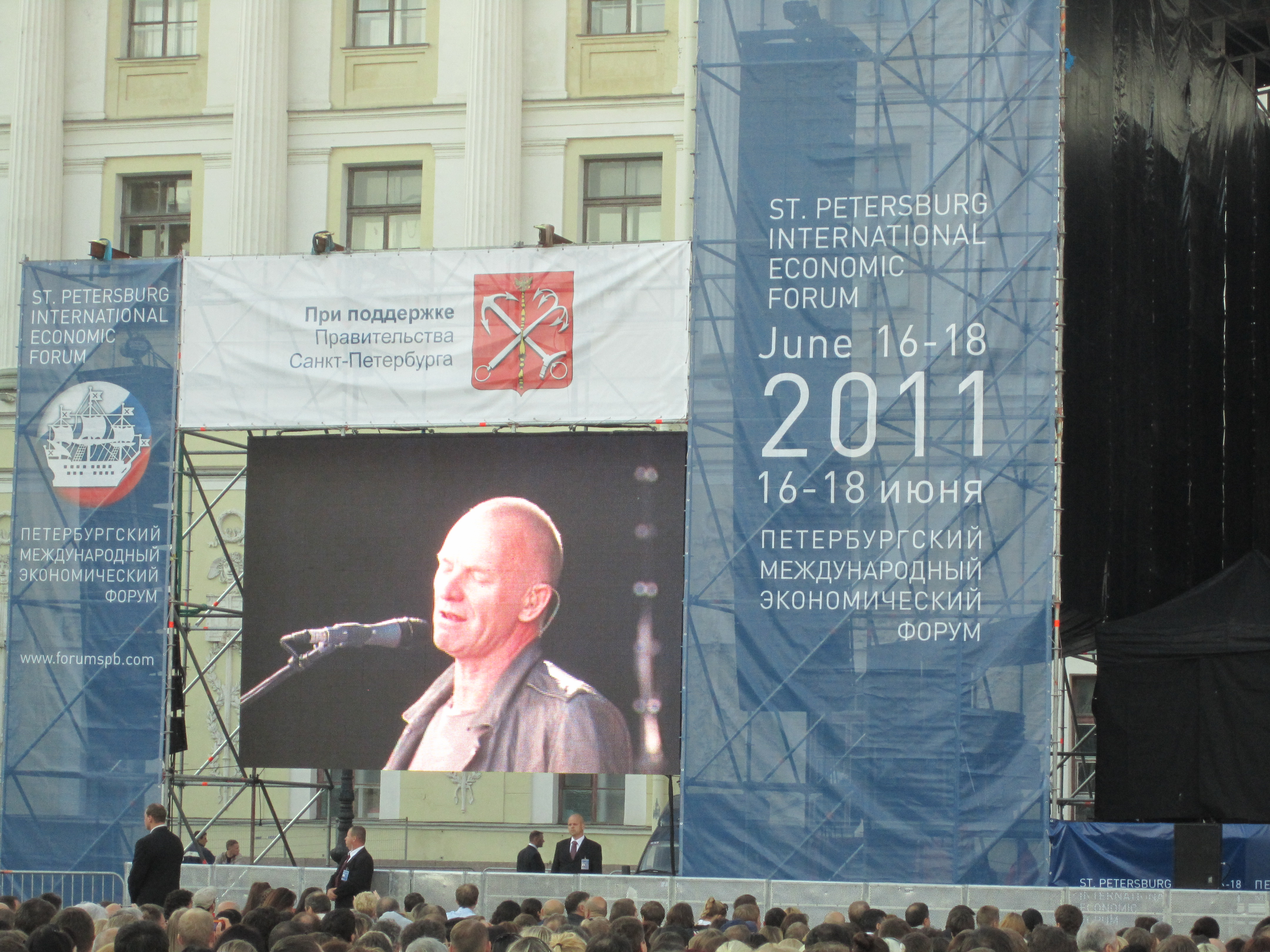
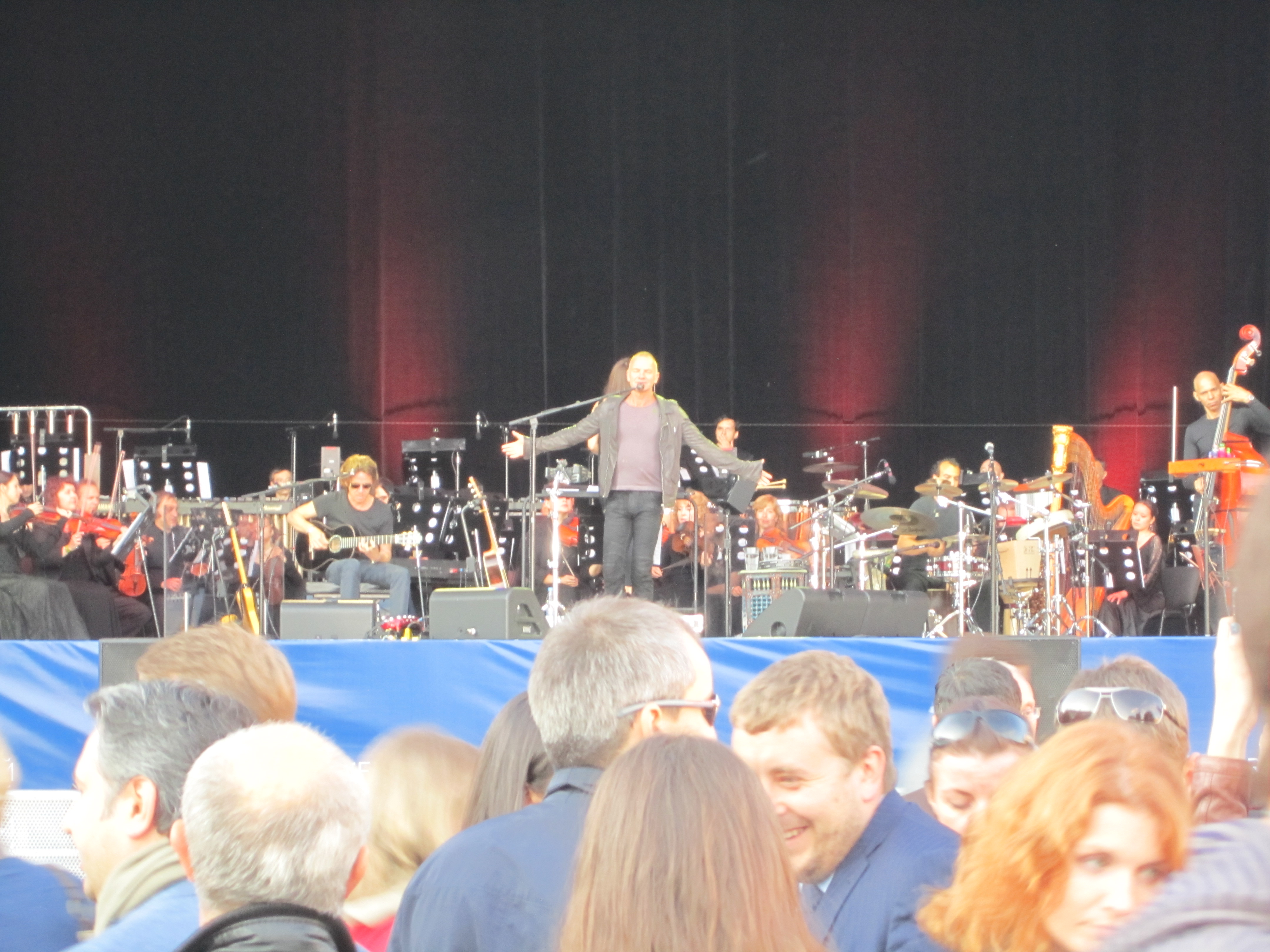
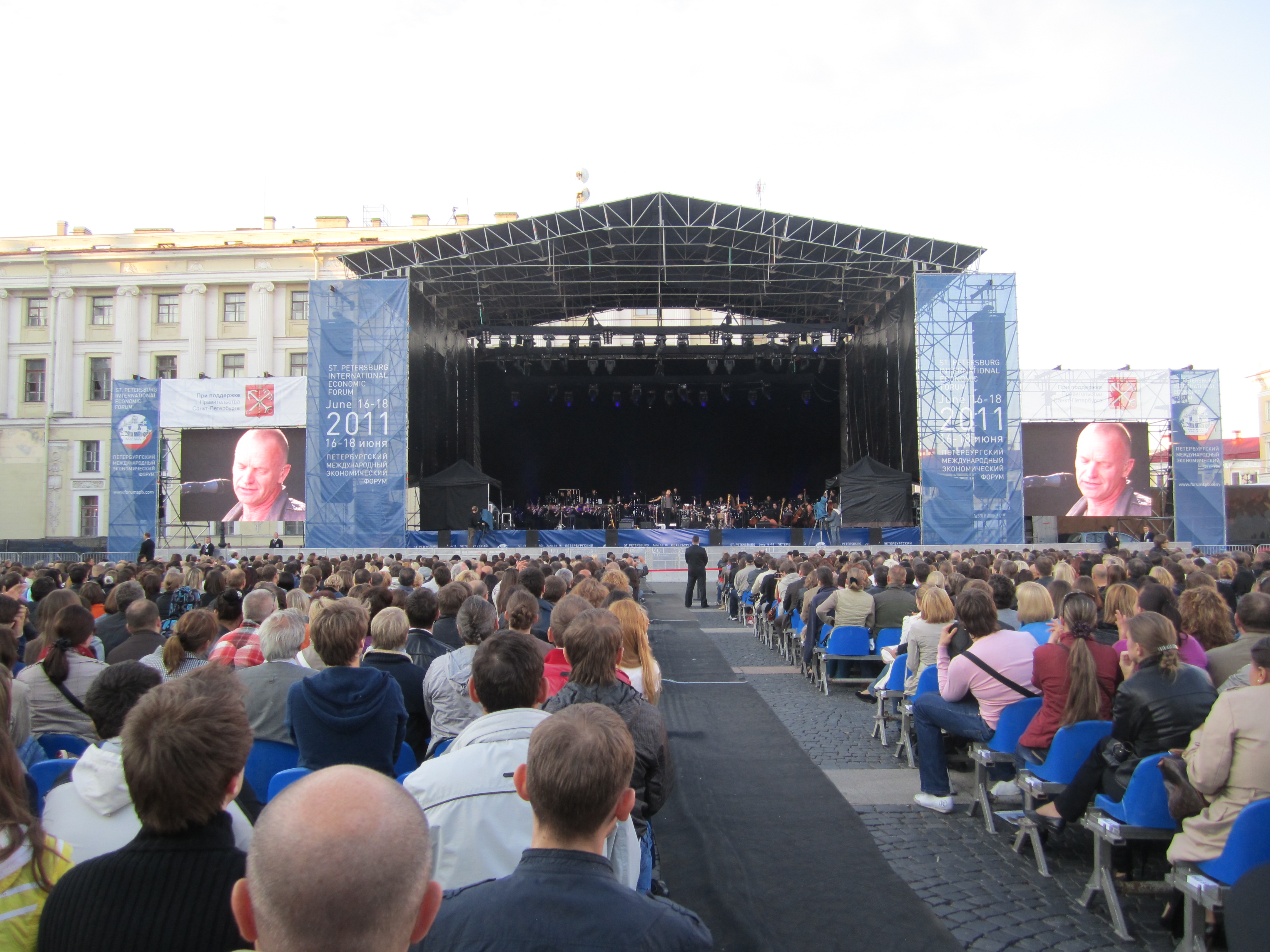
6/16: Later that evening – We decided to go to the Sting concert after all. I was not quite sure what to expect. But in fact, I was surprised by the whole event, taking place in front of the Hermitage, in St. Petersburg, Russia, and the star quality of Sting the musician himself.

wading through past the crowd
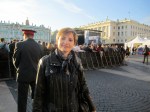
Reuters News Agency’s Irina Narodnitskaya
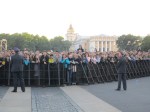
On the other side of the Barricade
The entire city was invited. And they showed up. But delegates of the Economic Forum had special privileges to pass into a space located near the stage.
There were tents with food and wine, et cetera. And you needed to have your badge or else no entry. Reuters News Agency’s Television Operations Supervisor from Moscow, Irina Narodnitskaya and I waded through the mass crowd, which was difficult. Finally, we passed through the barricade, into the special zone. I could not help taking a photo of the barricade and the mass of folks.
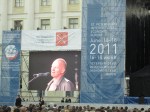
Sting
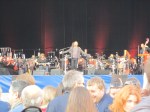
on stage
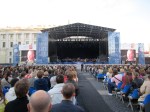
in front of the Forum crowd
Impressive indeed. I did not realize how well Sting performs. His voice is the same as if he was just a kid. And he’s in great shape.
St. Petersburg loved him. I was quite impressed with the Economic Forum. At first, I didn’t want to go, since I sort of knew Sting’s music, it was difficult for me to see the point of it all. But then, standing there, in the midnight sun, in front of the Hermitage, in St. Petersburg, listening to Sting, as part of the Cultural Program for the International Economic Forum, everything seemed to make sense to me. And I realized that this really was some great ethnography, and a spectacular evening in Russia.
The St. Petersburg International Economic Forum brought in a top star, as a guest for their guests, and the city as well. And I have to hand it to them, after a day of amazing meetings, this was just that kind of event that could put everything over the top.
6/16: Noon – Great internet reception inside the Forum, and I am going to attempt to report live as we’re going through.
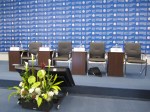
ready, set
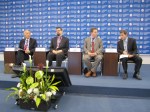
go
The big early event, which is just about to take place, is the Oil and Gas medium-term report produced by the International Energy Agency (IEA).
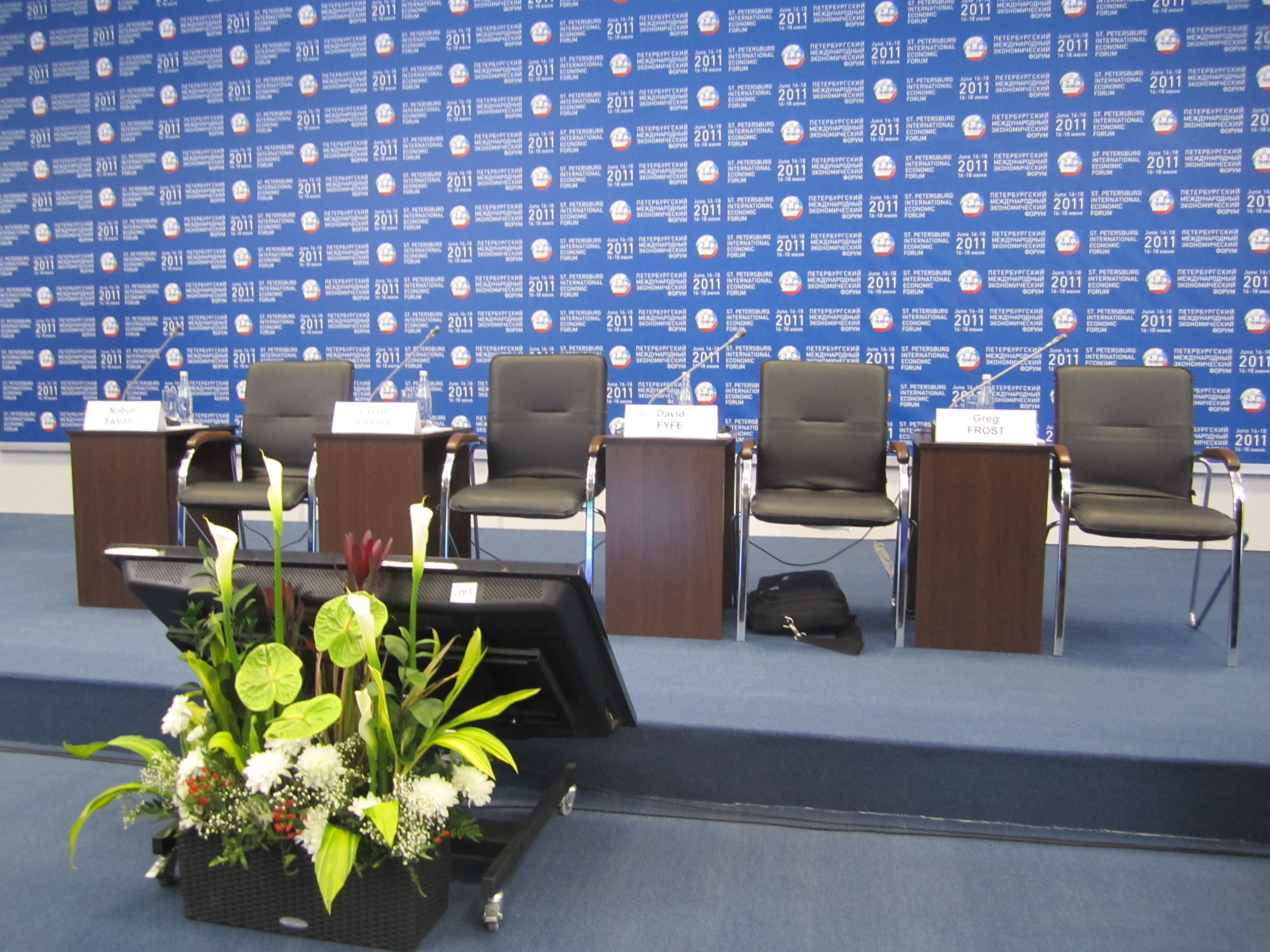
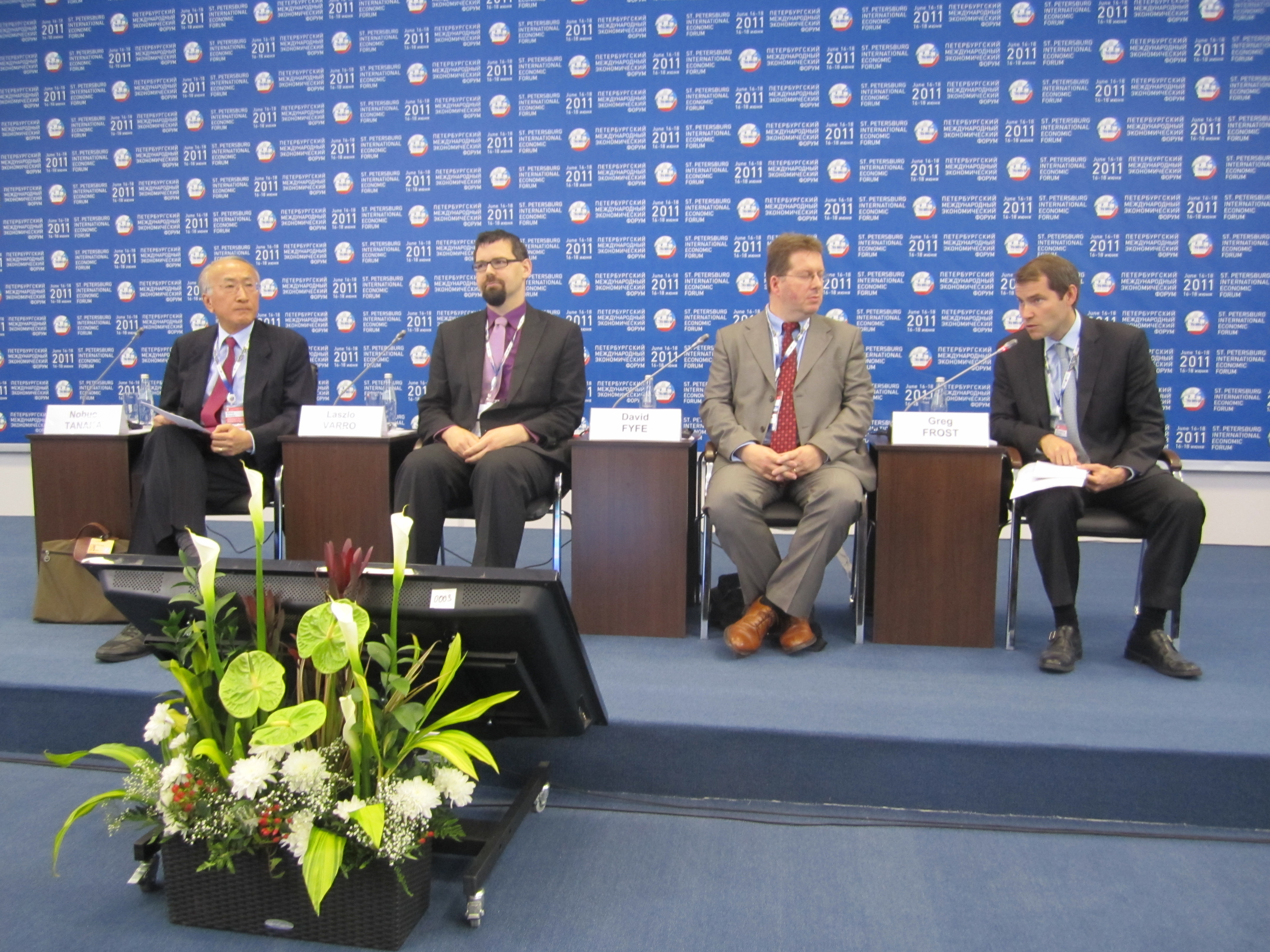
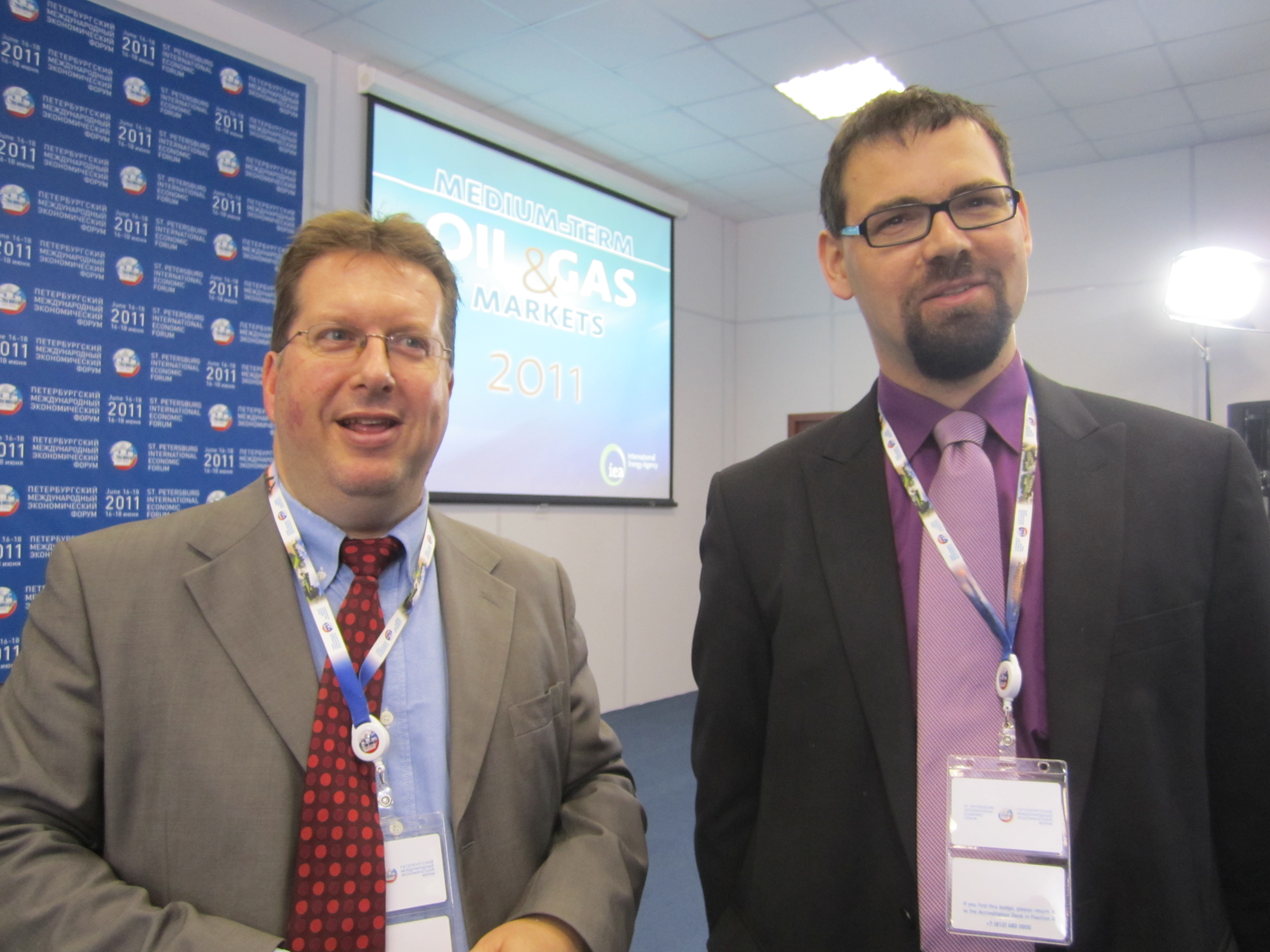
I just met with the panelists, all stationed in Paris, British David Fyfe, Head of Oil Industry and Markets Division, American Greg Frost, Head of the Press Unit, and Hungarian Laszlo Varro, Head of Division Gas, Coal and Power Markets.
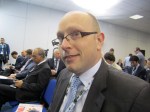
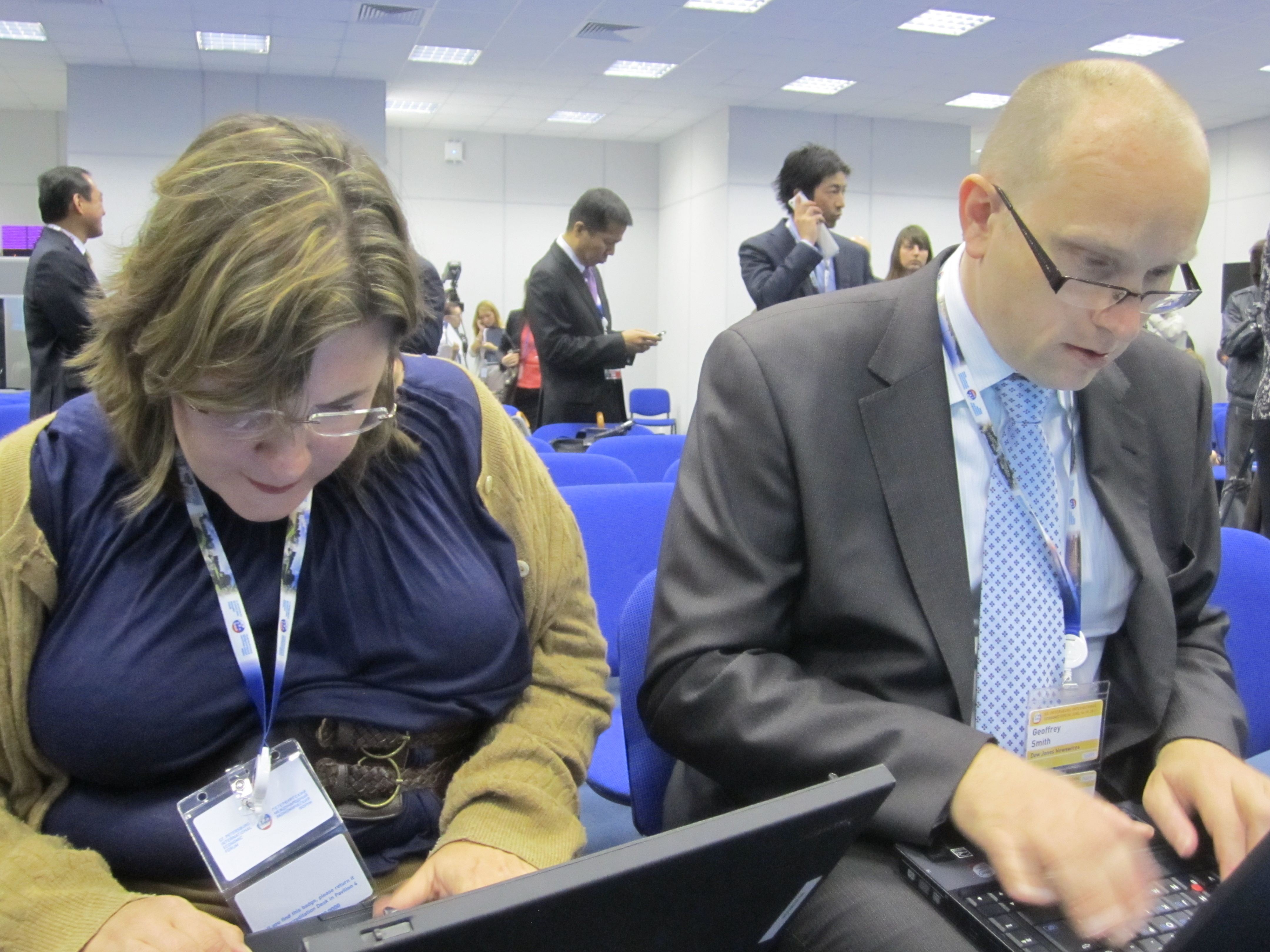
Geoff Smith, Dow Jones Journalist
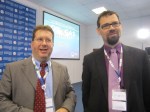
IEA’s David Fyfe and Laszlo Varro
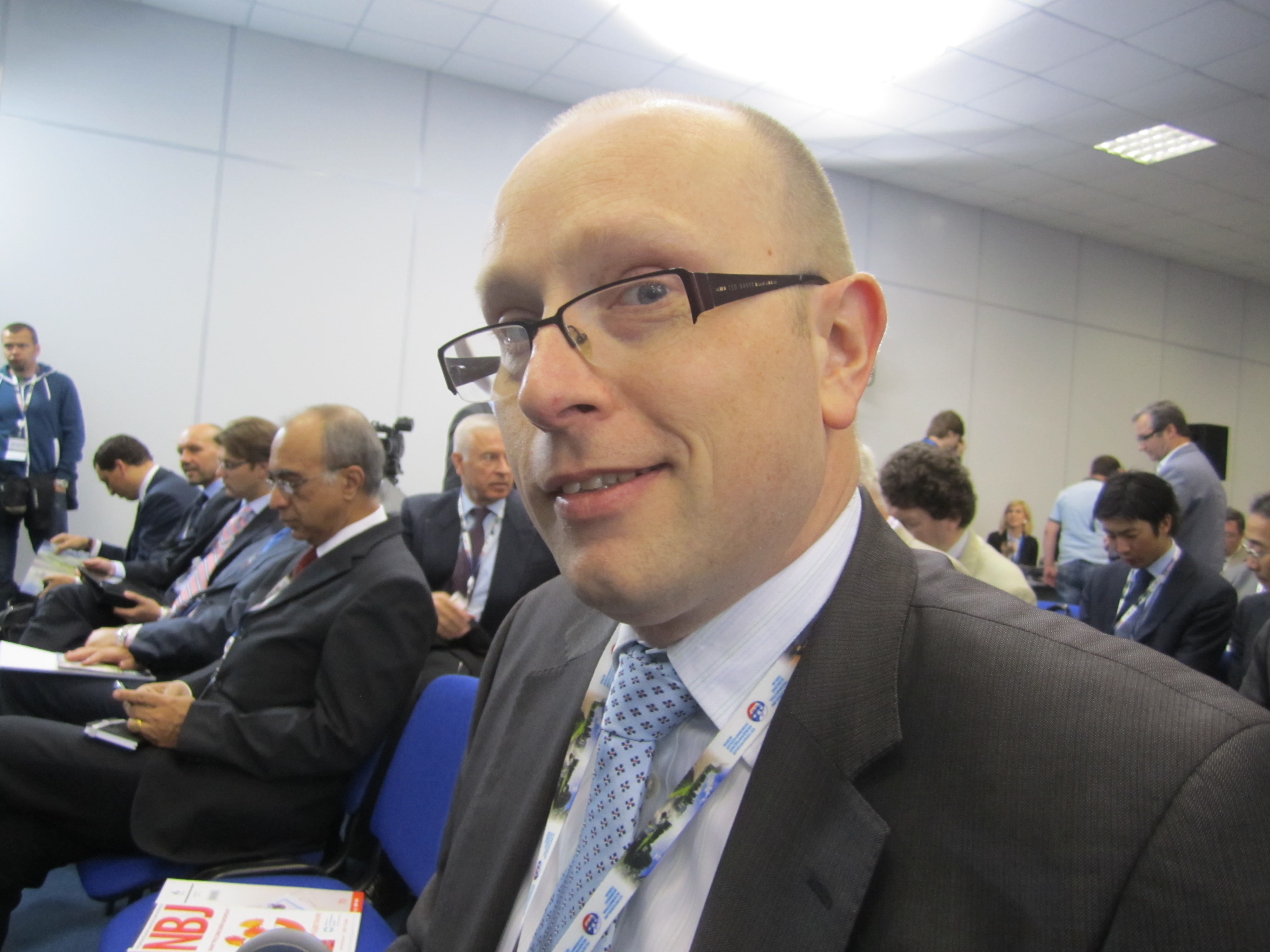
I’m sitting at this moment in the front row next to Geoffery Smith, Dow Jones journalist in London, Macro Economics, former Moscow Bureau Chief, sent wherever there’s a hole in the line, covering typically Eurozone situations, but sent here to fill in loose ends.
Geoff was covering Moscow from 2002-2007 and just gave me a great reference to another journalist working on oil and gas issues. When I asked Geoff what he looks for, he states that the main report on the IEA has been written up in the office, and that he looks for added value comments. Jeff mentioned to me that when he was covering energy issues — the Shtokman project was always rolling into the future at a 5 year expectation.
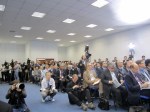
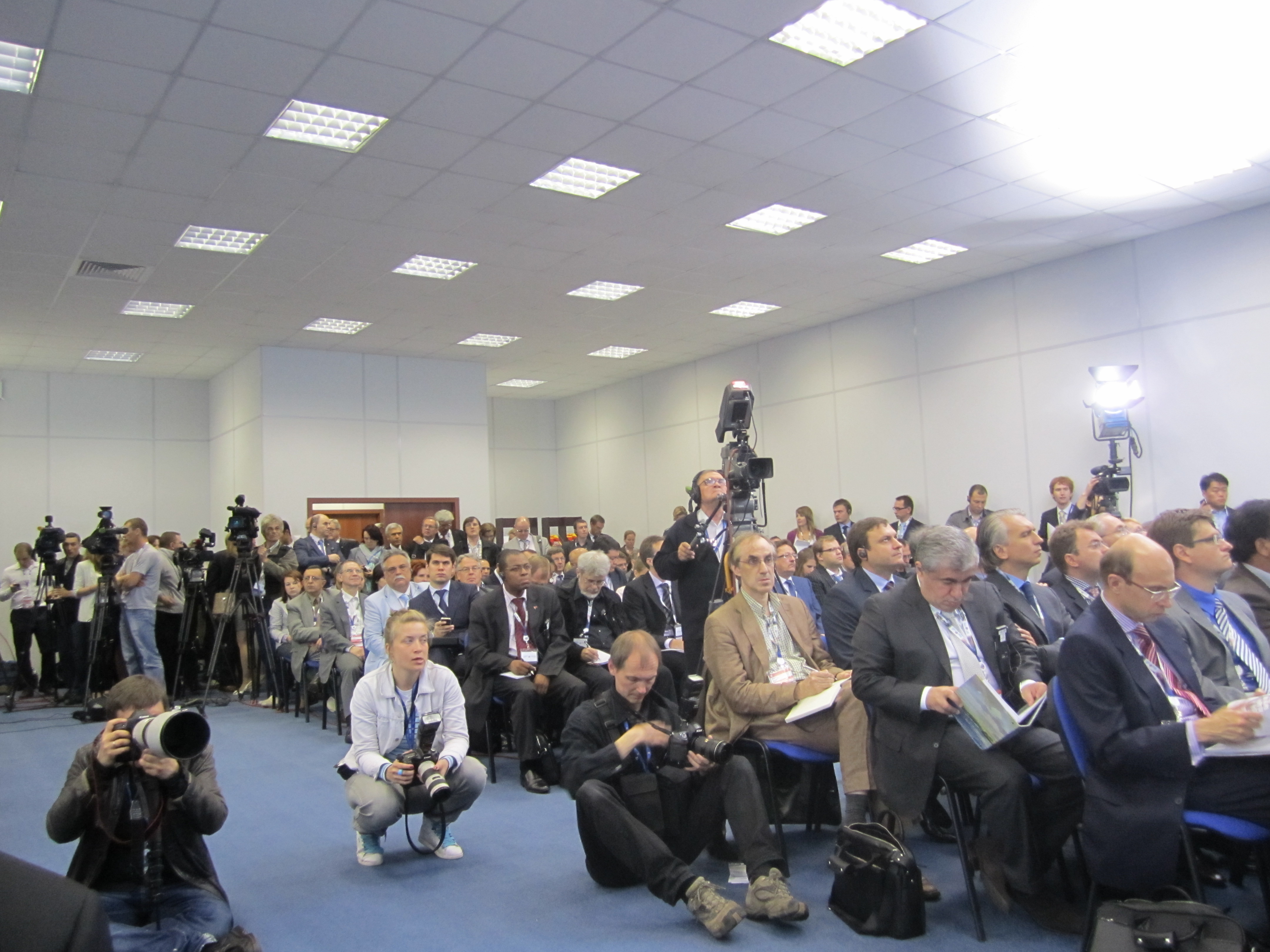
room at large
Speaking now is Nobuo Tanaka, Executive Director of IEA reading from a pre-written statement about the main points of their mid-term report. I asked Laszlo how they found themselves here in the first session, and he stated that while Russia is not a member of IEA, the country remains terribly important, especially in the area of communications on energy issues. Laszlo will be in Washington, D.C., next week presenting the report.
Nobuo is now talking about China, India and Middle East, and how demand is growing, referring to these countries as non-OECD and comparing to OECD markets, where demand is sluggish. “Continuous economic recovery will increase demand growth in the non-OECD markets” — “current significant risk of oil prices on current economic recovery” —
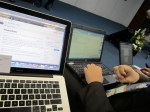
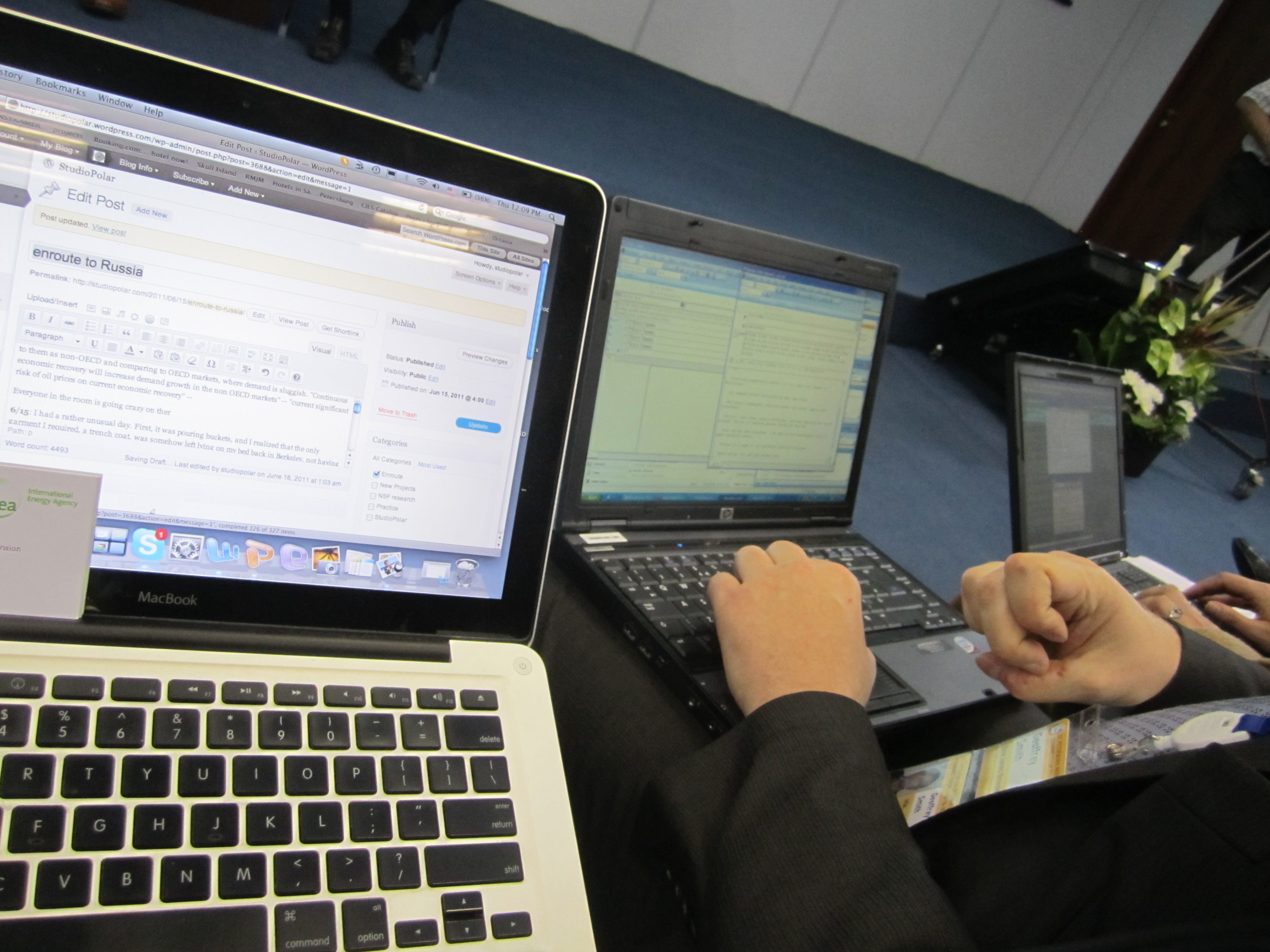
typing
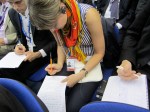
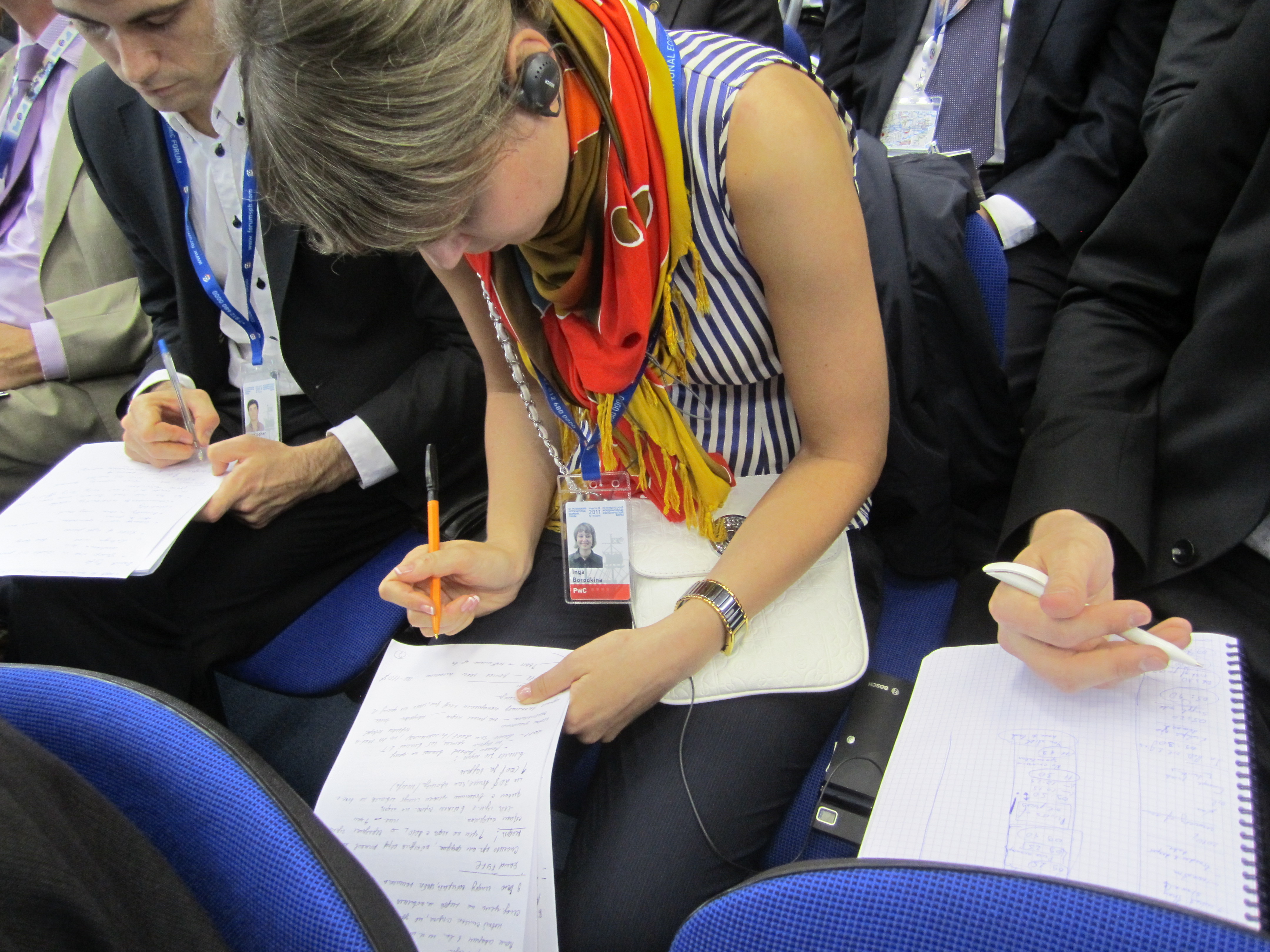
writing
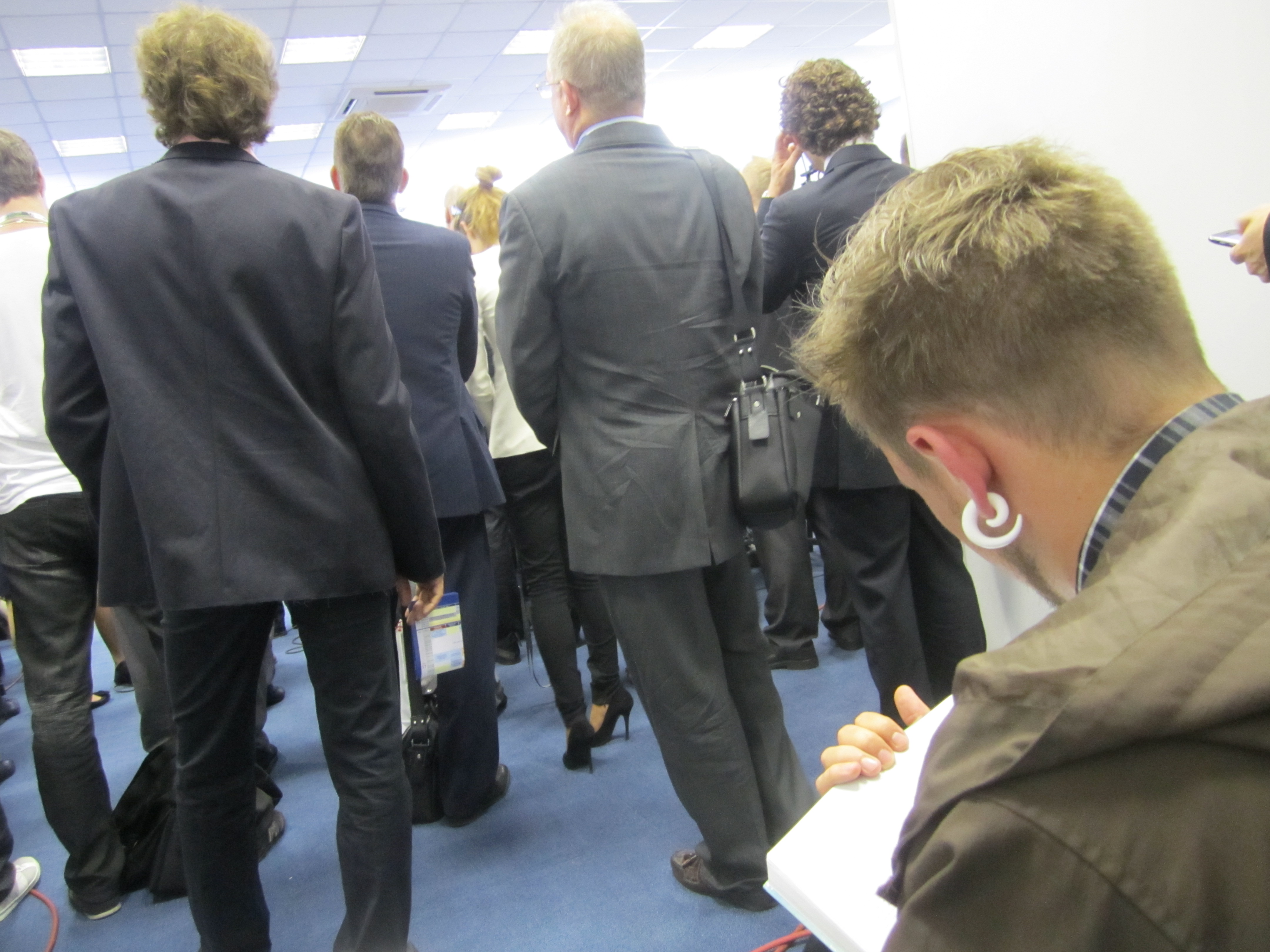
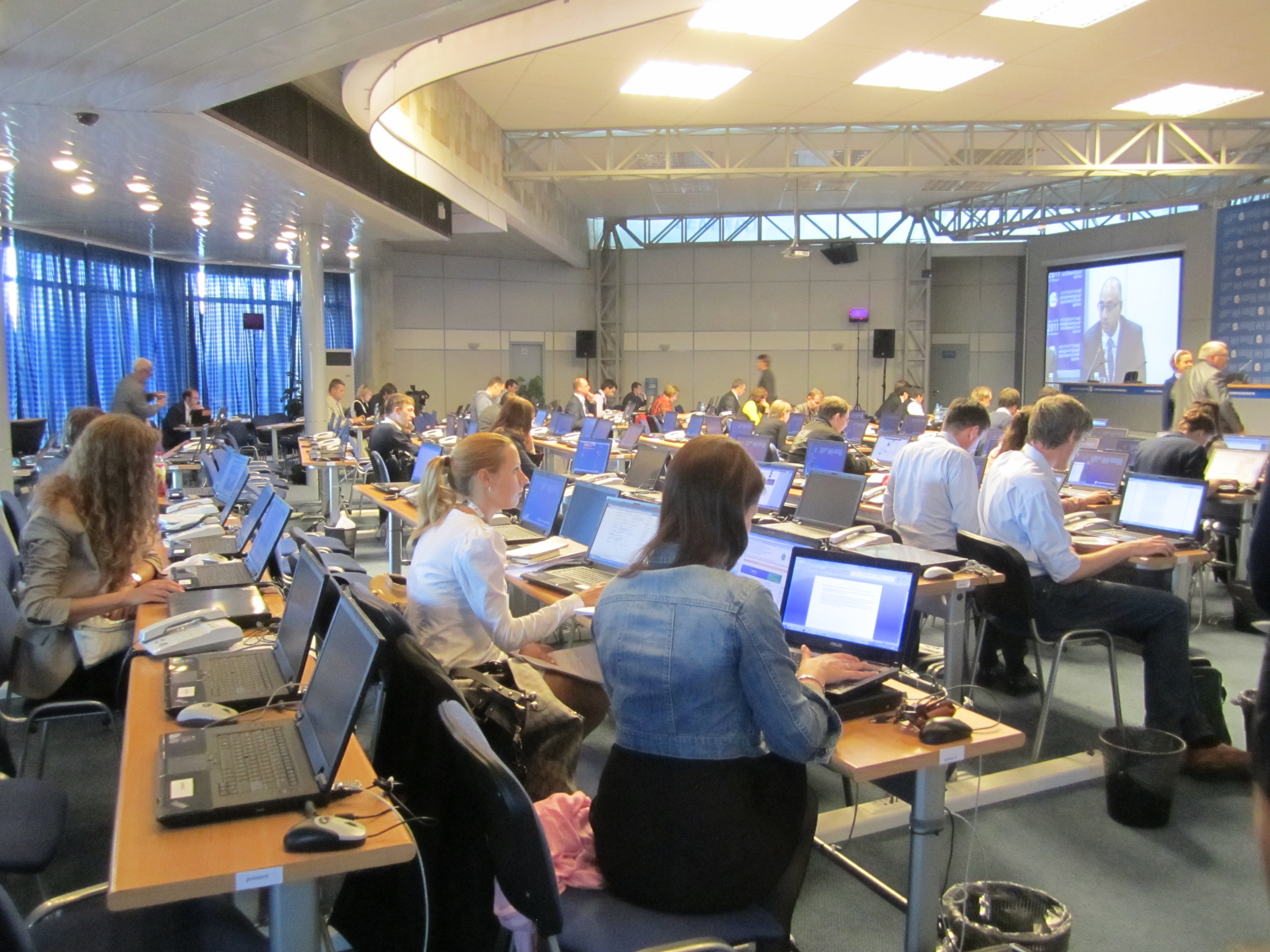
Everyone in the room is going crazy on their computers, writing up their notes, sending them out immediately, and the cameras are flashing everywhere. But people are still writing by hand! Okay, now David is speaking about Oil and Laszlo will be talking about gas. He comments about the drivers of oil prices, and that fundamentals don’t matter, and that exchange rates are driving things (conventional wisdom)- but in fact, empirical research suggests that causality flows from oil prices to exchange rates.
Talking about 65% of demand comes from transportation, oil remains the transportation fuel of choice, going through 2016. David doesn’t use any notes, just talking off the cuff, and delivering capacity numbers rattling off the top of his head — Natural gas liquids, becoming an increasingly important part of the mix [interesting! for the Shtokman project].
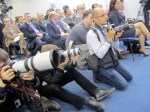
cameras
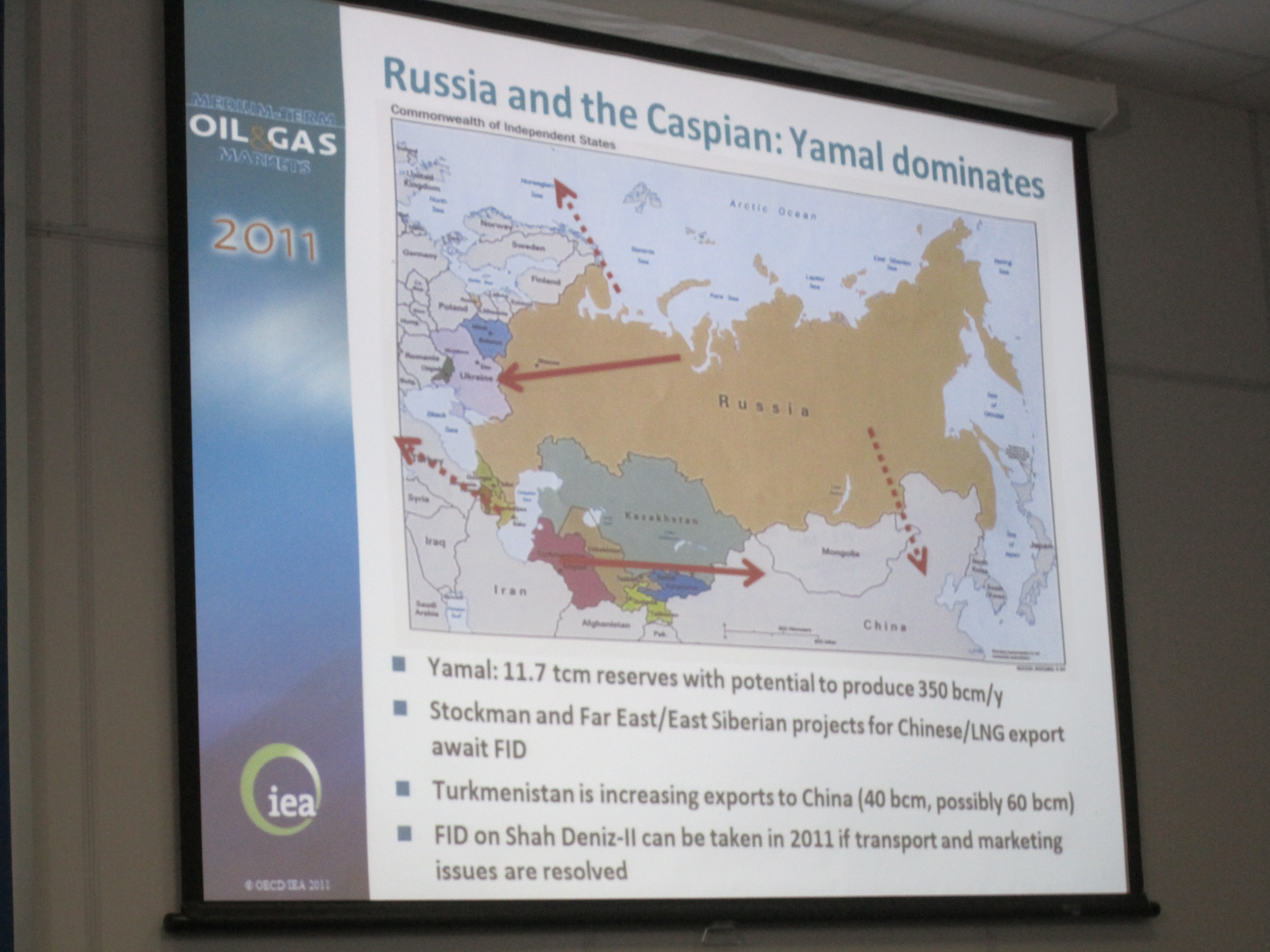
Okay, Laszlo is now speaking about Natural Gas: Gas production is exactly the level as it was before the financial crisis, 2008 [we’re back on track!] — production increases in all areas. In North America, the “gas shale revolution” continues. Most prices are on an upward trend with the exception of North America, and that US and Canada remain “disconnected” from other markets.
Wow, Laszlo just mentioned that China is on the upswing of natural gas consumption in ways it never was before. More gas required. The total production of coal mining in China is greater than the total present global LNG capacity, suggesting that any change to coal in China will have deep ramifications for increased production and transportation of LNG (Liquefied Natural Gas– cryogenically frozen for shipment by sea).
What is the gas demand implications of lower nuclear power in Japan and Germany? Answer: more gas. “Demand is growing in all sectors, but electricity dominates”. No news there. Two most important supply sources are Middle East and Former Soviet Union. Laszlo points out that Germany is “not an island” and surrounded by France and Central Europe, which have reiterated their commitment to nuclear.
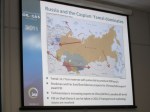
Natural gas production
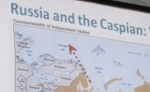
Shtokman Liquefied Natural Gas expectation shown in dotted line
Laszlo doesn’t think that shale gas will be upended by environmental concerns, stressing that shale gas can happen without too much ado. However, the gas industry must take care, given that the ramp up in production has created stresses that the industry should be talking more seriously. Laszlo states that “Shtokman LNG, is a very, very difficult project, not operational in the next 5 years” — Jeff and I look at each other and laugh.
The IEA Oil and Gas Market Outlook report is available for sale on the website, but there are some copies of main ideas at the back. Question Time: “Preference for questions are given to journalists” Jeff asks the first question. Melissa Akin from Reuters asks the second question: Both questions have to do with whether Saudi Arabia will release more oil to lower the price of gas.
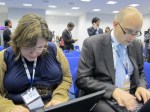
Melissa and Geoff writing for a deadline
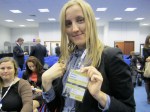
Elena Zotova flashes her yellow press badge
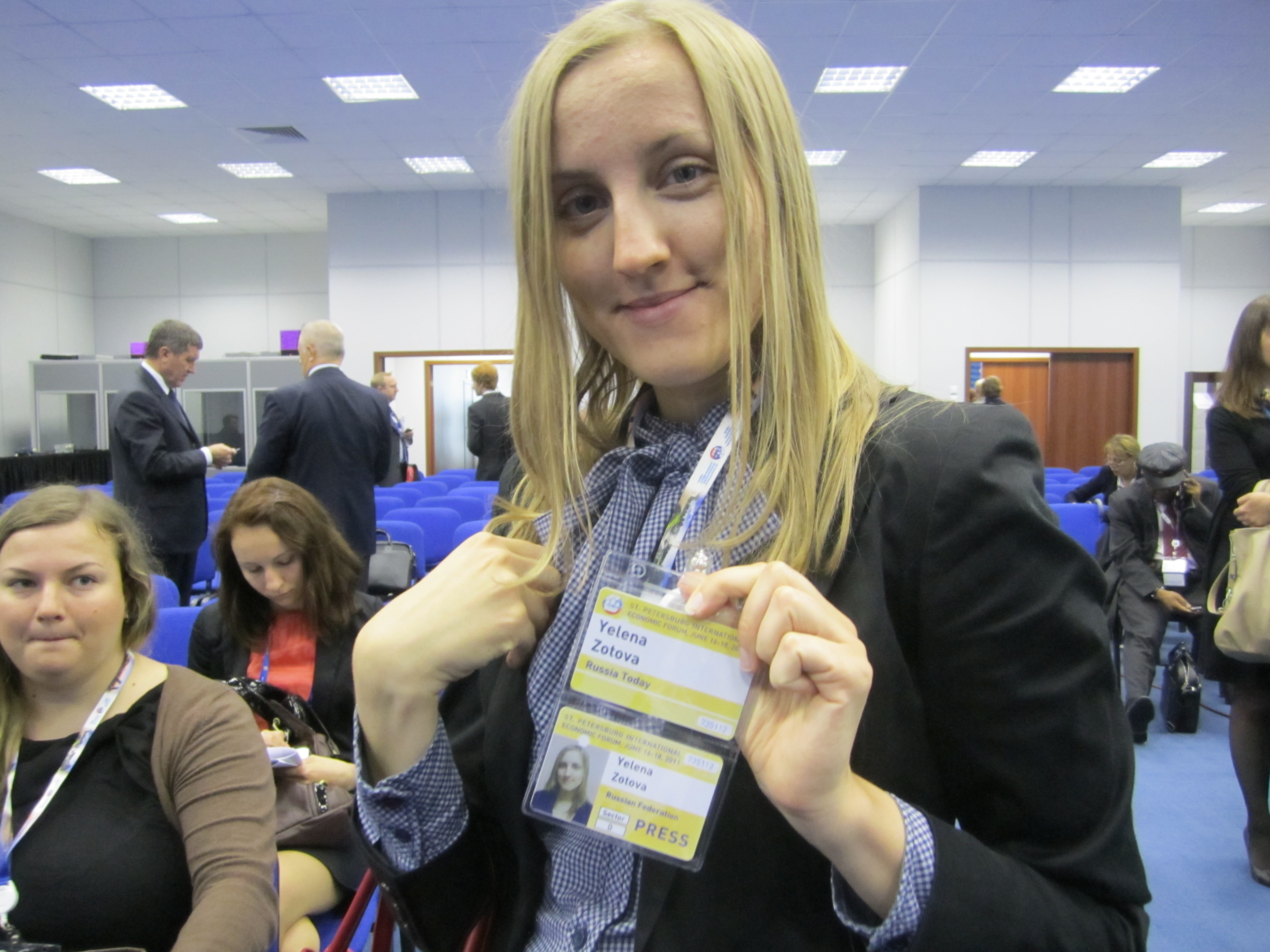
Melissa originates from Nebraska and has been working in Moscow on oil and gas issues, as Senior Energy Correspondent for three years. I had a chance to debrief also with Elena Zotova from ANO TV Novosti, in Moscow. Elena is another journalist covering energy issues and has been keenly interested in finding out more about the Rosneft – BP development, which fell apart recently, and has opened space for Shell to intervene. But, she mentioned, so much of the information is secretive, nevertheless, there should be opportunities to get the info here at the Forum!

Terry Macalister
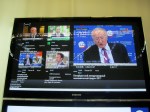
Instant Nobuo
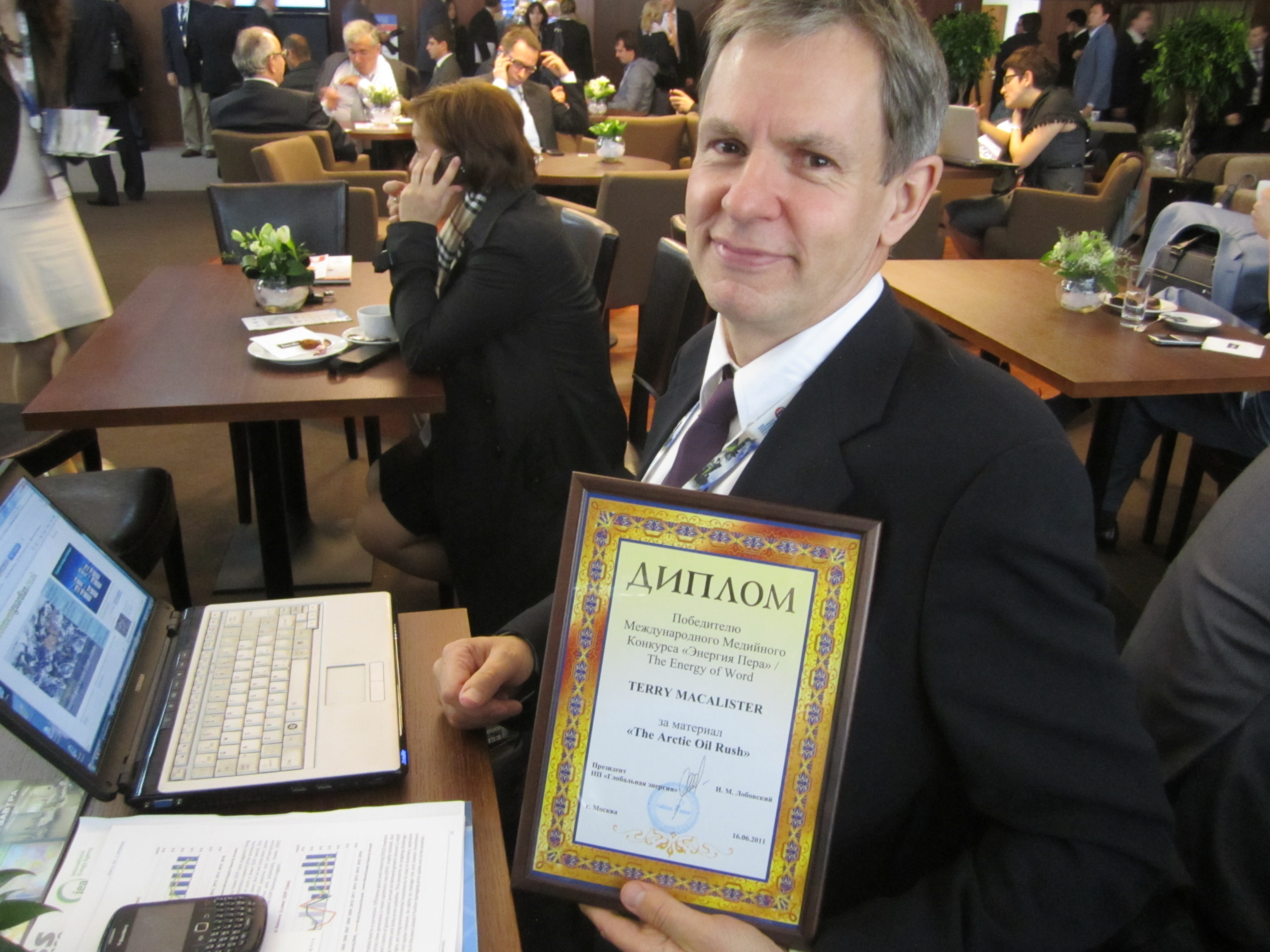
Phew! After it was all over, we all flooded out into the main room, which has dark wood paneling looking like a law office. Geoff, Laszlo and I chat briefly, and then I head for a seat to gather my thoughts, next to yet another journalist! Terry Macalister, who works for the Guardian newspaper in England, which is still free to read on the internet, and who has just been given his award for his research on Arctic oil development. Imagine that! We had a few things to say, considering we both work on the Arctic.

apple can’t drop
Well, Okay. I will just walk into the US-Russian negotiation room and see what’s going on there– It is a discussion on what has happened over the past 2 years since we all pressed the “Reset Button”. The American Ambassador to Russia, John Beyrle, is suggesting that economics is the baseline for the reset button. Investment rates between the two countries, US and Russia, are incredibly low. A key priority for the Obama administration is WTO membership for Russia – working through the final talks over the next several days, getting close to the finish line. It will result in huge reductions in service sector tariffs, help reduce costs, operate more efficiently, reductions could increase GDP by 14 percent.
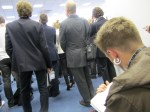
reading a novel while the ambassador speaks
Also, the US is concluding a Bilateral Investment Treaty (BIT) – to protect cross border investment and protect investors. In three weeks, US and Russia expect to sign a visa deal that would provide a three-year travel visa for business and tourism without invitations. Hm. okay, well, the room is absolutely jammed, and I am sitting in the back hooked up to the wall for electricity sitting next to someone who seems to be totally ignoring the goings on and reading a novel.
Andrew Summers, President of American Chamber of Commerce in Russia, representing 700 companies, is bullish over the future of American companies working in Russia.
I need to go outside for some air. Oh My Lord! Its Alexander Mikhailiants, my Hero! (and former speech writer for Robert Dudley) – Holy smokes! I’m so happy to see the man. Alex is the reason for how I found myself at the Forum!
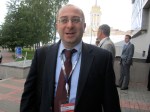
Alexander Mikhailiants – executive at TNK-BP

Pavilion 7 – from same spot on the balcony as last year
As I have written in this very blog (scroll down), Alex and I originally met in Houston at the Cambridge Energy Week conference, in 2010, and he suggested if Arctic was my interest, then I have to come here to the Forum!
Alex has held various titles at TNK-BP, including Advisor to the CEO, International Affairs (when he was assisting R. Dudley). Wow. What a great coincidence. We’ve just planned to meet tomorrow at 5PM for drinks and more discussion — in the TNK-BP meeting room in Pavilion 7 — the super polished pavilion with Gazprom installation and everything else.
Phew! Never leave fun to have fun.

Brad Cook, Bloomberg Journalist
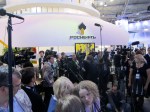
Brouhaha Brewing over Cberbank
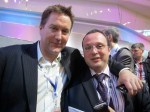
Brad hugs fellow journalist Alexander Kolyander, Wall Street Journal
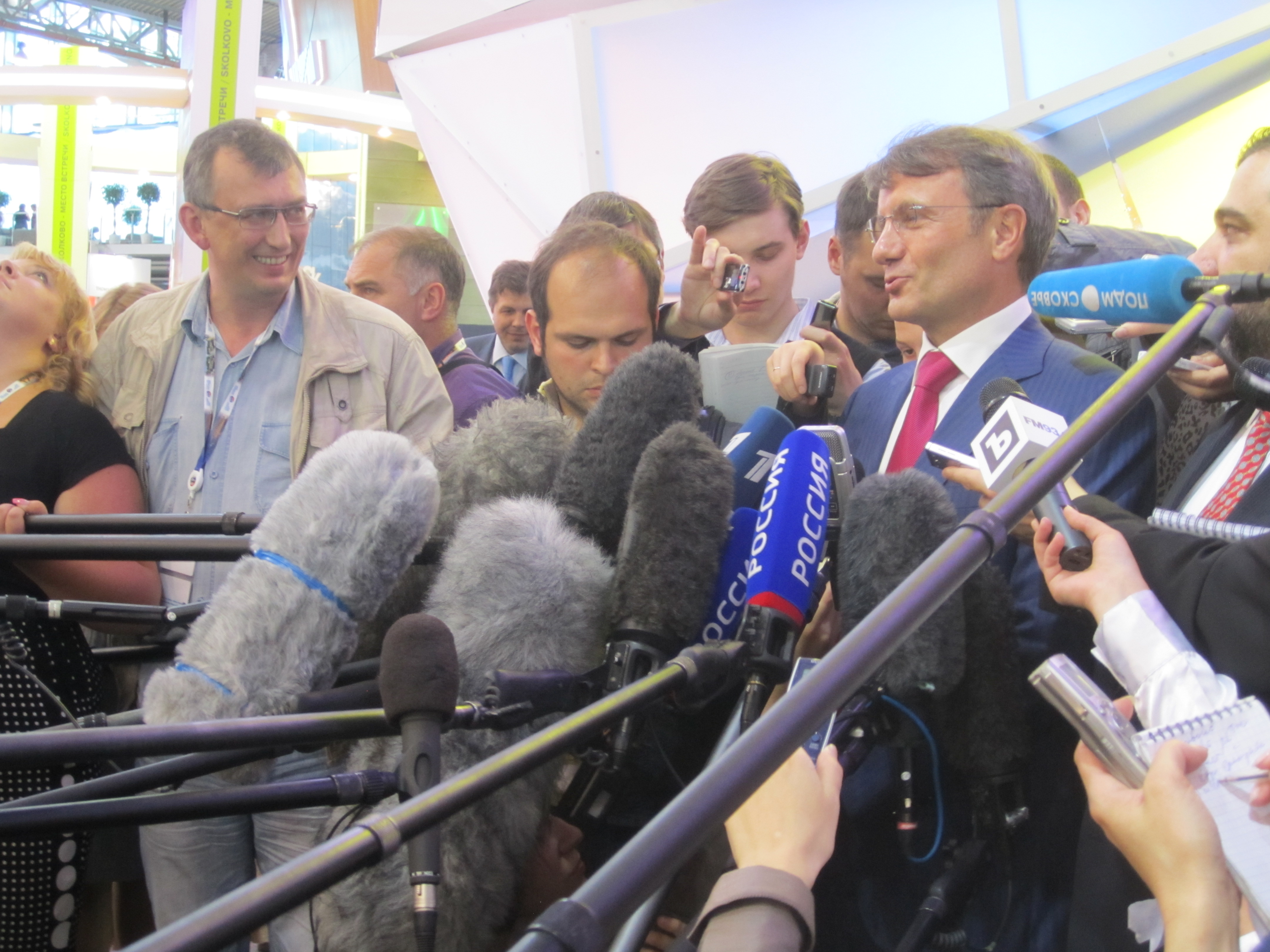
Well, I’m stumbling across Pavilion 7, and there really is some kind of brouhaha going on, with a bunch of journalists crammed into one corner, near the Sberbank exhibit.
What is that!? Brad Cook, big wig at Bloomberg News has just informed me that Chief Executive Officer German Gref of Russia’s largest bank, Cberbank, is about to make an important announcement. Brad, is actually from Portland, been here for years, started up the Bloomberg office several years ago, when there were only four persons and now they are up to 20 staff.
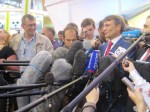
Cberbank CEO German Gref
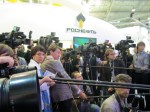
The Booms directed toward the CEO
He got a real kick out of my project, or at least the way I described it, stating there are not enough anthropologists these days covering exactly what I am studying.
In fact, he gave me the name of another Bloomberg journalist, Anna Shiryaevskaya, with whom I should meet to discuss arctic energy issues, and I just sent her an email, because in fact, we were corresponding last year, so it will be fantastic to meet up with her here.
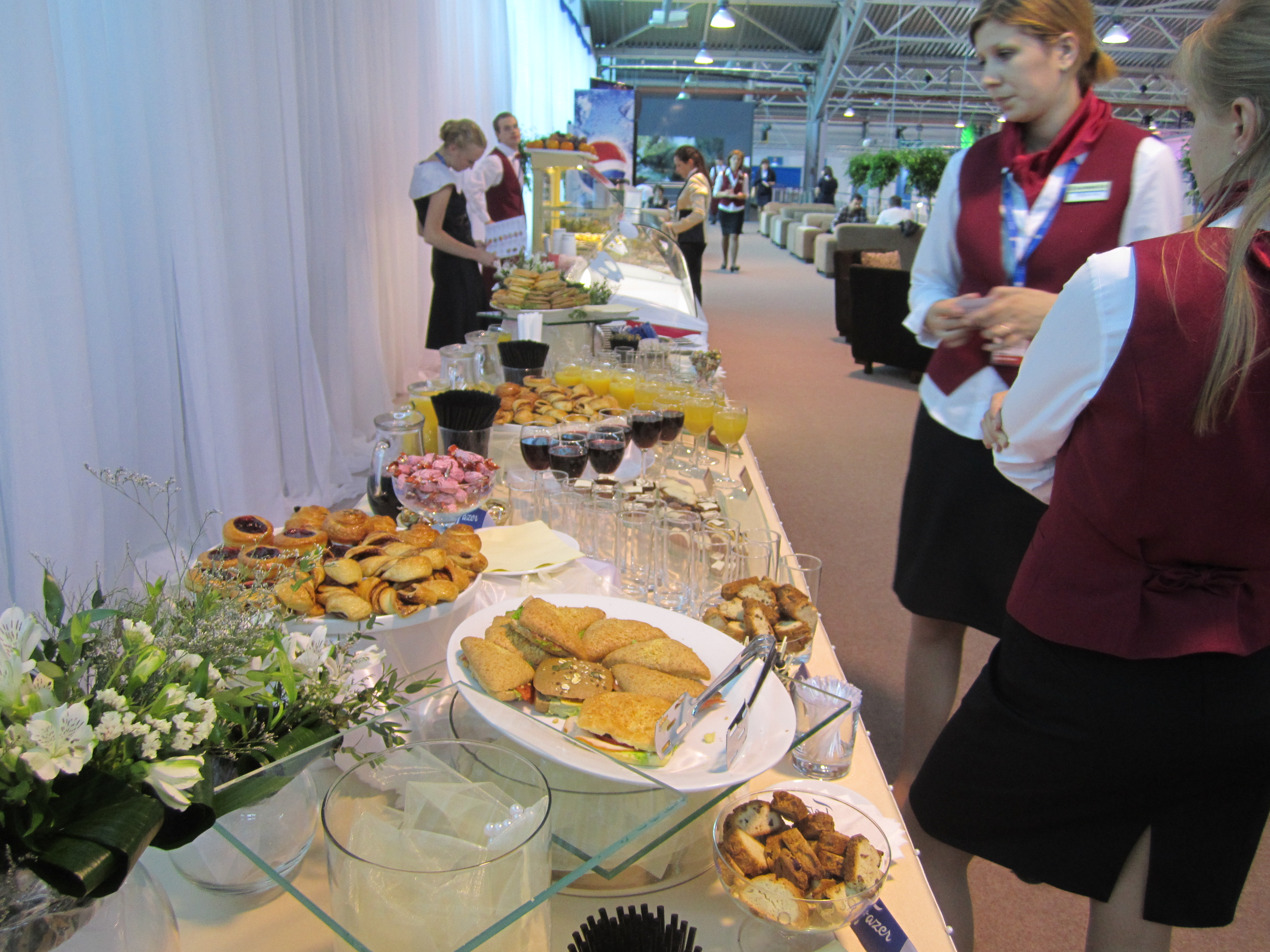
Well, it certainly is a journalist pile-up, especially as German showed up. I have found myself trapped in the thick of things, and have just now barely escaped. The fact is I’m hungry. My new favorite spot is the balcony, which is where I use to hang out last year and all the good food is located.
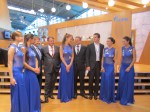
Passing the Gazprom Exhibit
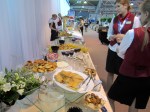
Getting a snack

Exchanging business cards
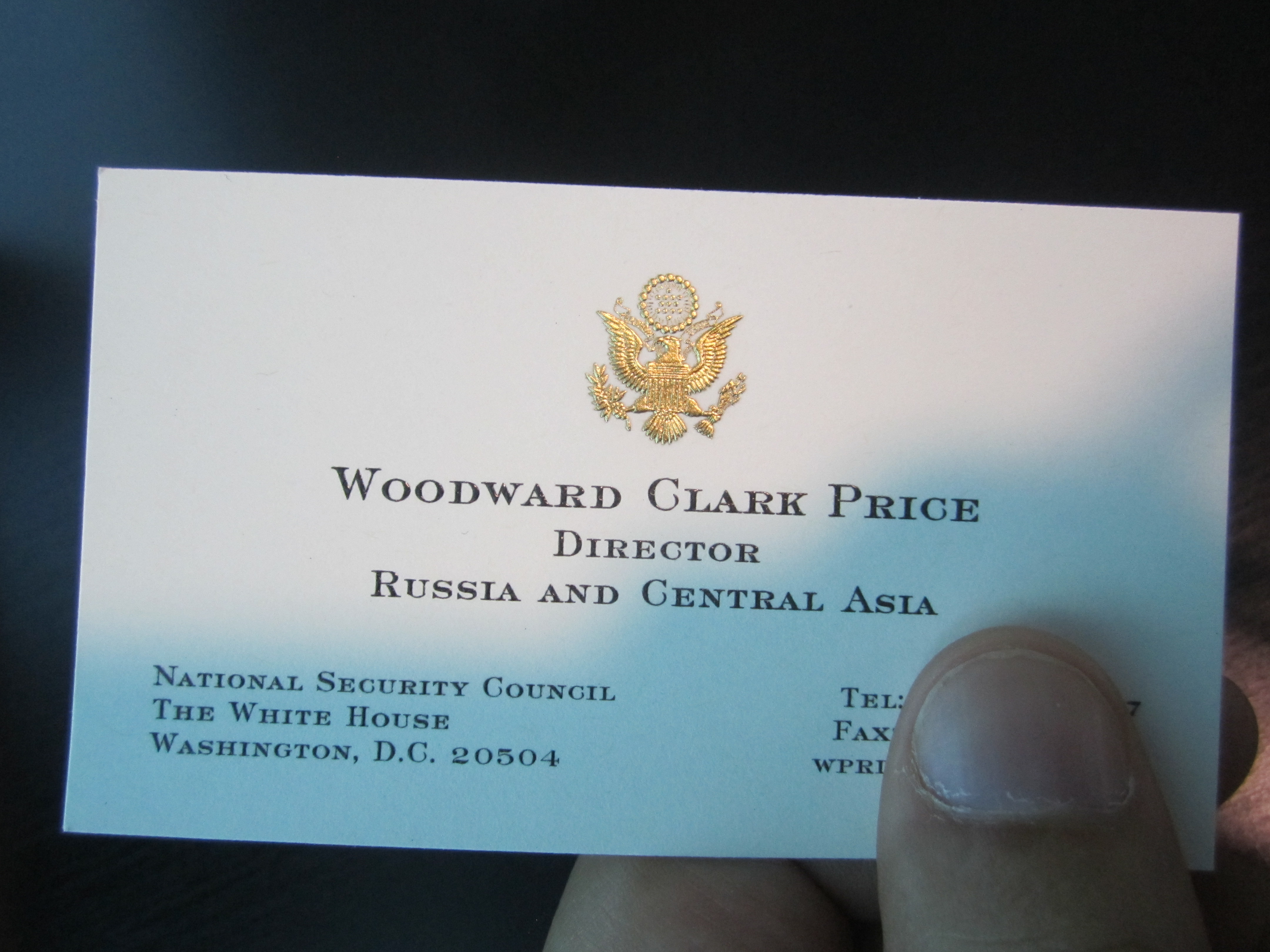
There seems to be a lot happening around Gazprom. But I’m going to keep focused on the food. Lucky for me, because I have just bumped into Woodward Clark Price. That is right — Director of Russia and Central Asia for the the National Security Council, The White House. Our White House in the US of A. Can you imagine? I nearly took a photo of him, but it did not seem like the right thing to do, and since I wanted to leave a good impression, I just introduced myself. We exchanged business cards.
I thought his card looked totally cool, and I told him so. He thanked me for the compliment. Can you imagine, having “The White House” printed on your business card, next the word “Director” and the phrase “National Security Council”. Wow. That must be some kind of job.
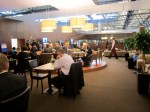
Pavilion 4
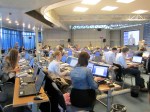
Pavilion 6 – the Press Hall

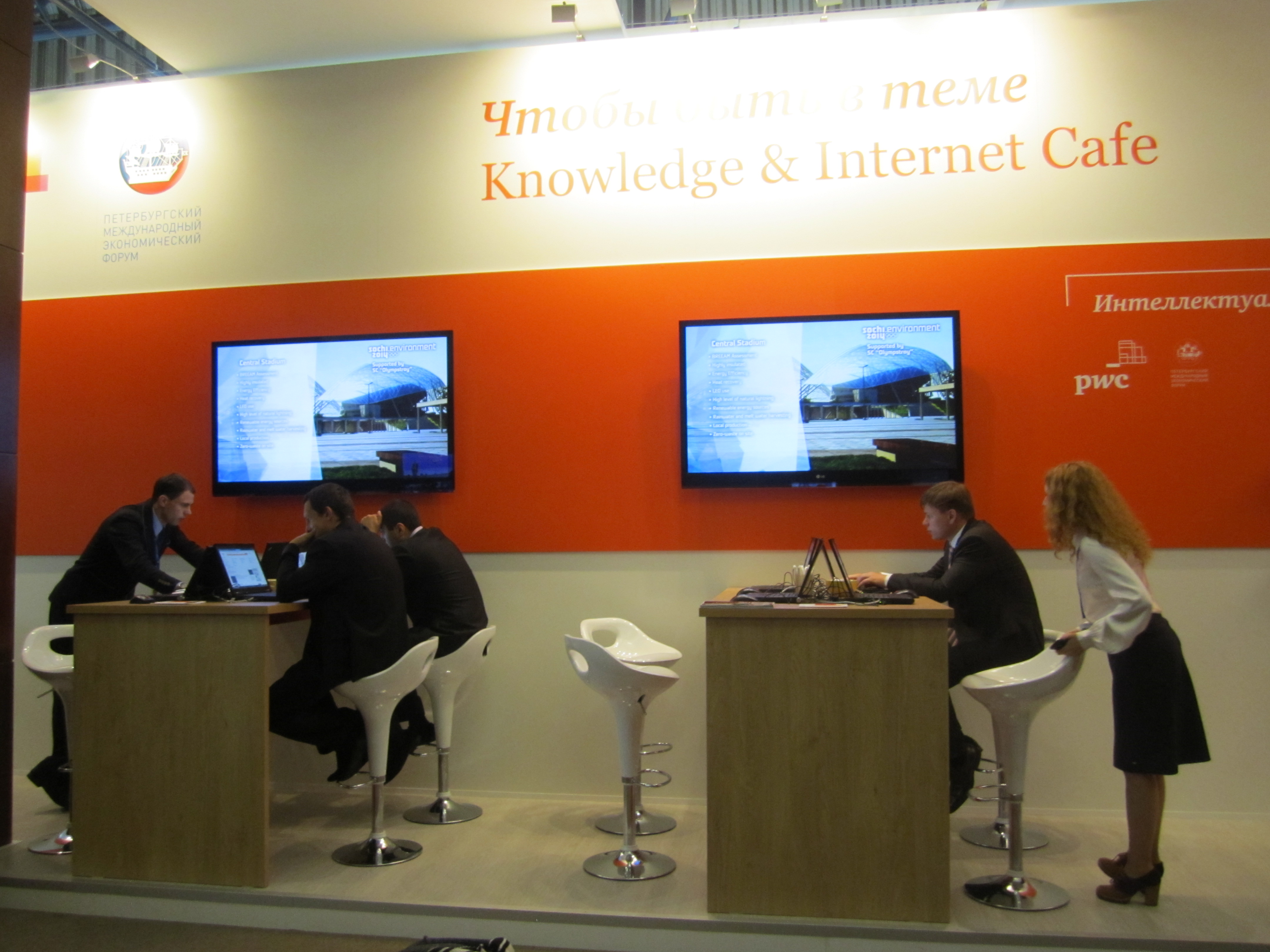
Pavilion 8 — Internet Knowledge Cafe
I will end the day with a few parting shots. These are taken around the Pavilions. In retrospect, it is a good idea to visit an event like this a few times, you see different things, meet new folks.
6/15: I had a rather unusual day. First, it was pouring buckets, and I realized that the only garment I required, a trench coat, was somehow left lying on my bed back in Berkeley, not having made it into my luggage. After getting soaked, I ducked into an underground market, and purchased an umbrella, only to find that when I came out from the shelter, that the rain had stopped, and I would be stuck carrying around this “zontik” (as they say in Russian), the rest of the day.
In many ways, the confusion was a precursor for what would occur next. Let me begin with some background:
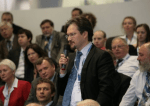
Oleg Kharkhordin, Rector at European University in St. Petersburg, speaking last year at the Forum
About a year or so ago, when I began this project, maybe longer than that, I contacted — in reference to conducting research in Russia — a brilliant sociologist by the name of Oleg Kharkhordin. Oleg, if I may be so informal, received his PhD from UC Berkeley and wrote a masterful book about the individual and the collective in Soviet society.
The introduction was really quite impressive, especially his delicate treatment of secondary analyses of the work of Michel Foucault, at the hands of Paul Rabinow, the latter an anthropologist at Berkeley, and a member on Oleg’s PhD committee. I remember reading a draft chapter of his dissertation, while in my first year as a graduate student at Berkeley.
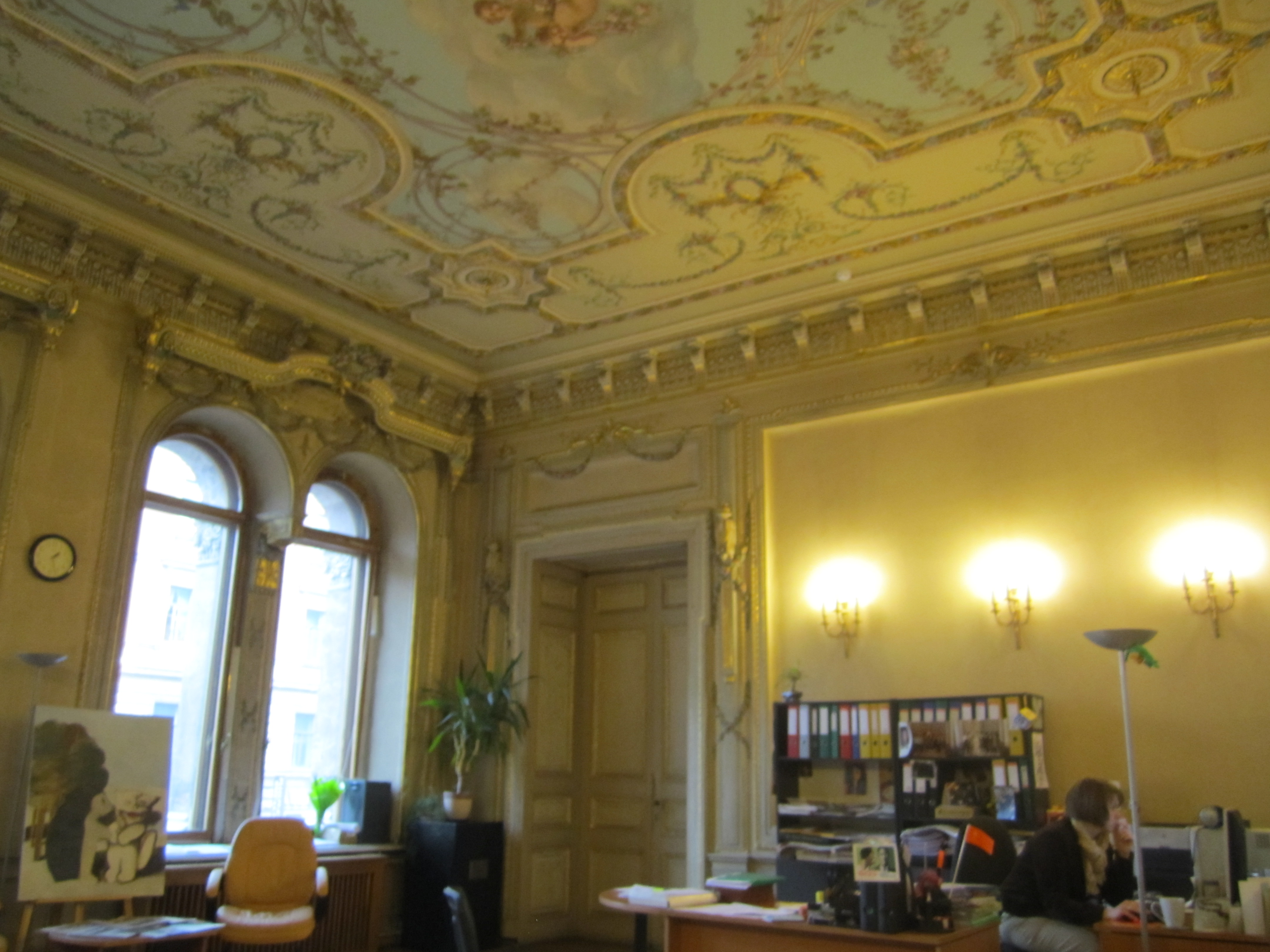
Oleg went on to become the Rector at the European University in St. Petersburg, Russia, one of the finest universities around. And — if judged by how many Economic Forum attendees in striped suits were moving through his office, while I sat in the waiting room — he appears to be quite important .
When I initially contacted him, after I received my grant from the National Science Foundation (NSF) to extend my research from Alaska into Russia and Norway, Oleg demurred, in large part, because he had just taken on the new role of Rector. He was also in initial conversations with other universities, so the timing wasn’t great to entertain collaborations with new universities (I was at Arizona at the time) and especially on my research — which was potentially controversial, because it tread on issues having to do with matters of the nation-state.
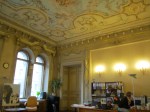
Waiting room for the Rector
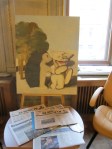
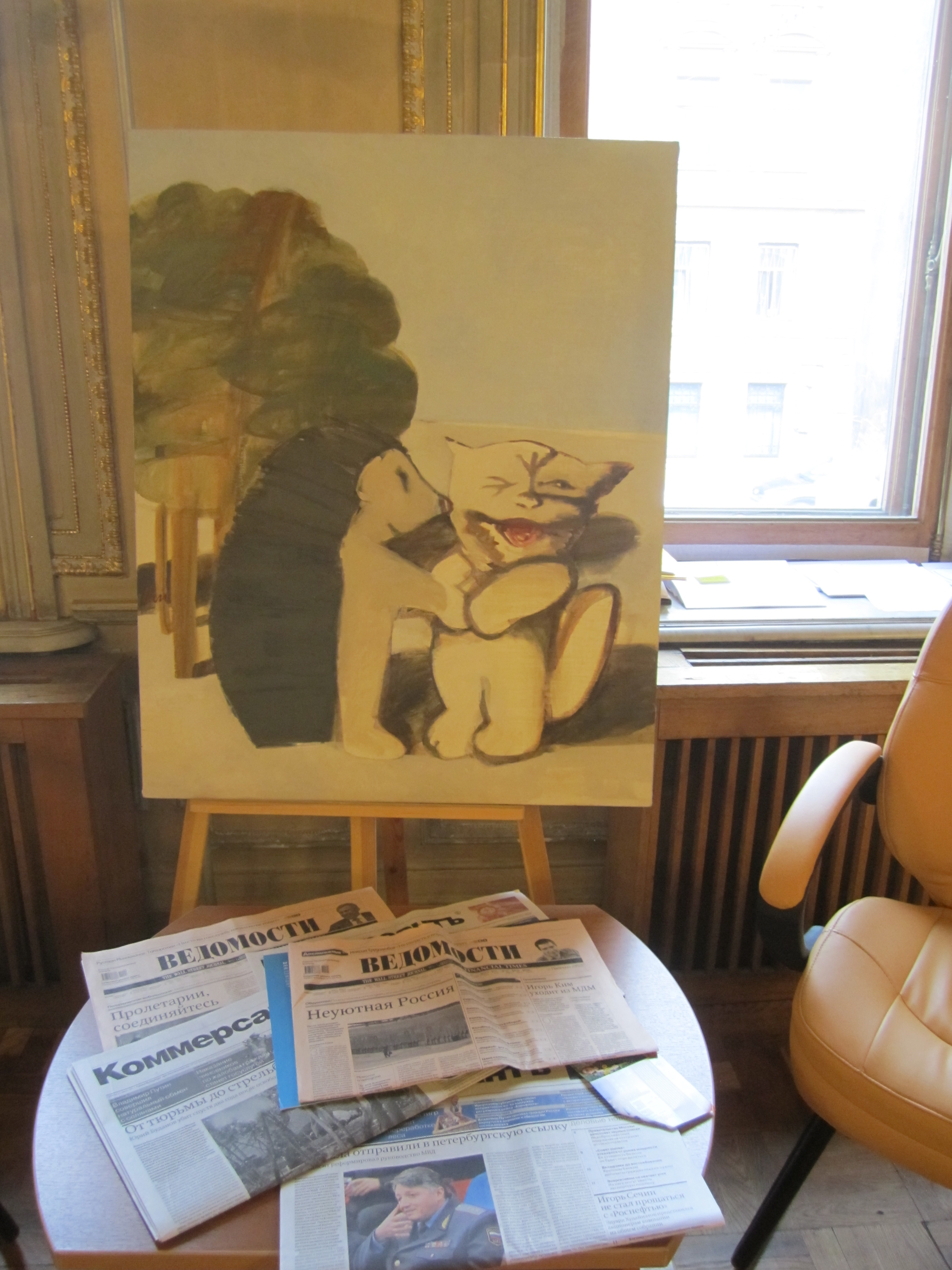
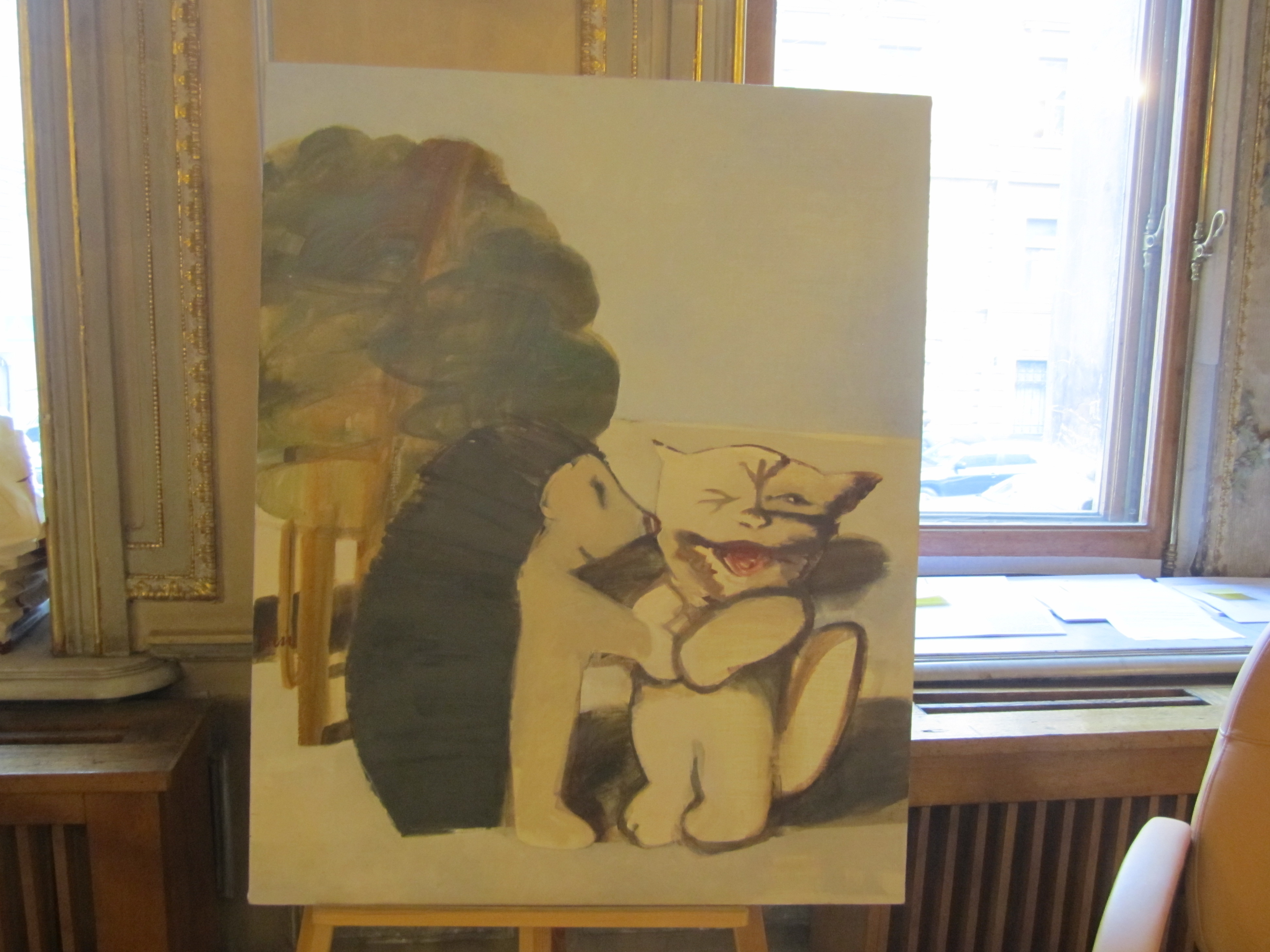
Painting in the waiting room of the Rector
And it is true, my project focuses on knowledge flows surrounding the construction of desire for developing the Shtokman natural gas field in the Barents Sea, which is a priority for Vladimir Putin, and which has experienced something of a set back, in part, because the Russian sector was late to take seriously, as everyone else was, the importance of unconventional natural gas development in the United States, which increased gas reserves and production enormously, and by default, called into jeopardy, one of the main marketing components of the offshore Barents Sea project (shipments of liquefied natural gas to the United States).
It is a long story, but the short of it is, that my project was exploratory, it still is exploratory — and at the time, it didn’t seem like a great fit to be dinkering around with from Oleg’s perspective.

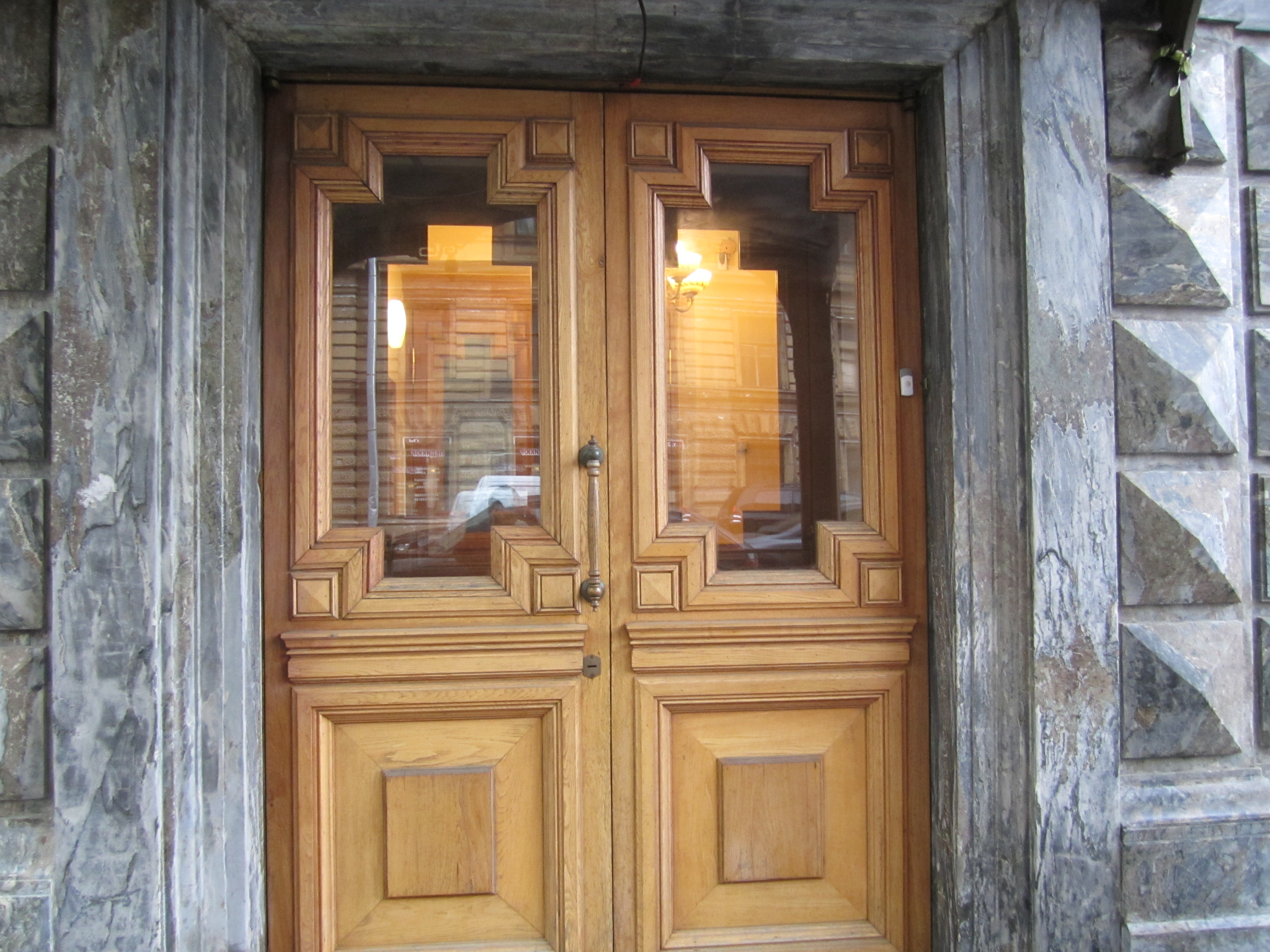
Brass shingle indicating University location
Front door near shingle
Well, jump forward a year, and here I am ensconced back at UC Berkeley, still plying my trade, wandering the landscape with my little project —
And lo, Oleg invites me to meet with him. I walk into his office, expecting to beat about the bush, and here he tells me that his university has just been awarded a grant from Exxon and possibly a second from BP and in fact, they need someone who does social sciences of energy, so please immediately, send over my CV and articles, so we can get the can kicking down the road.
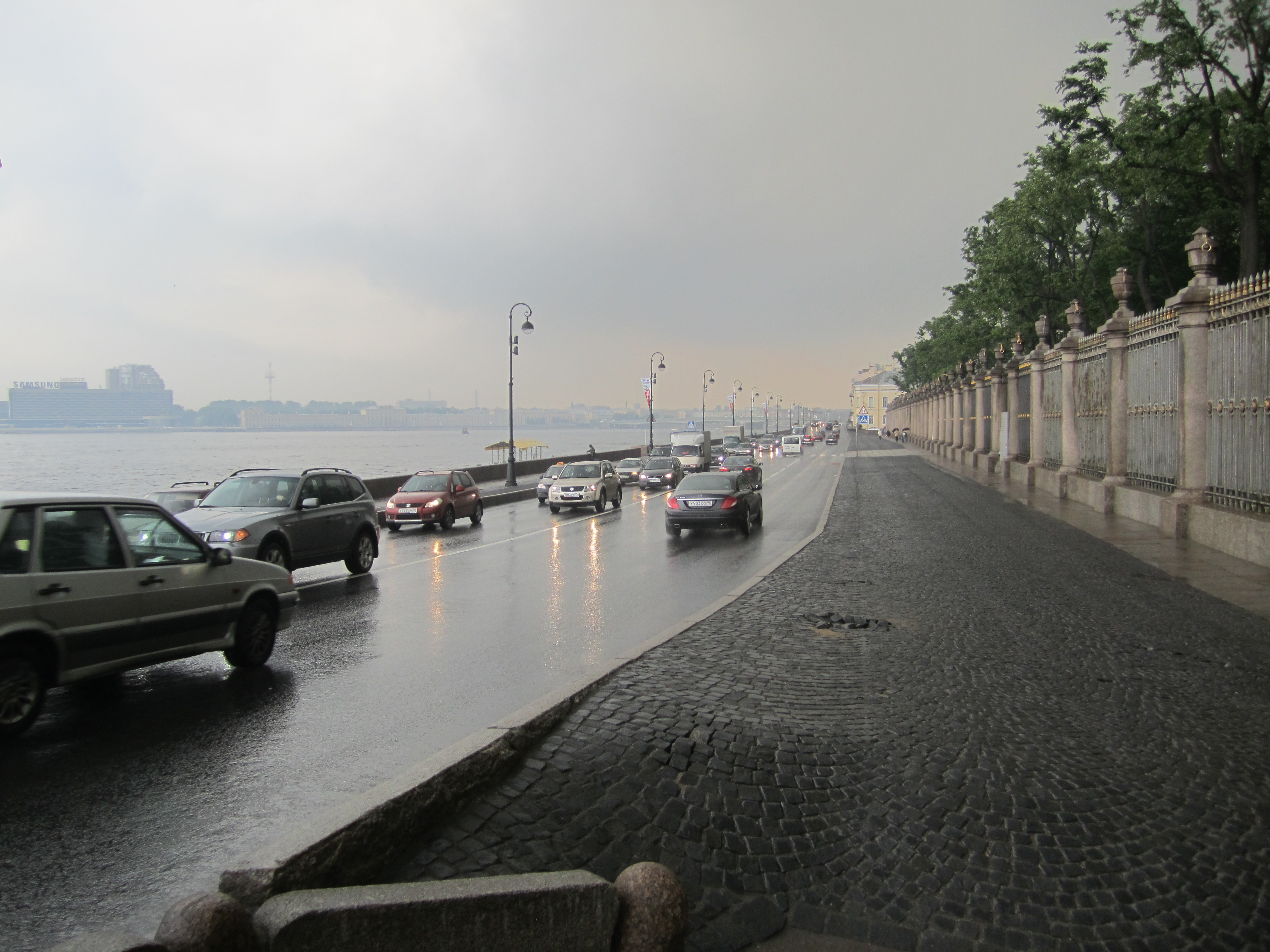
Street near door

Bober kissing koshka
As you can imagine, as he shook my hand, stating we would see each other at the Forum, I grabbed my umbrella and walked out dumbfounded. Let us see what’s next.
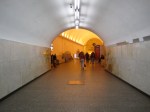
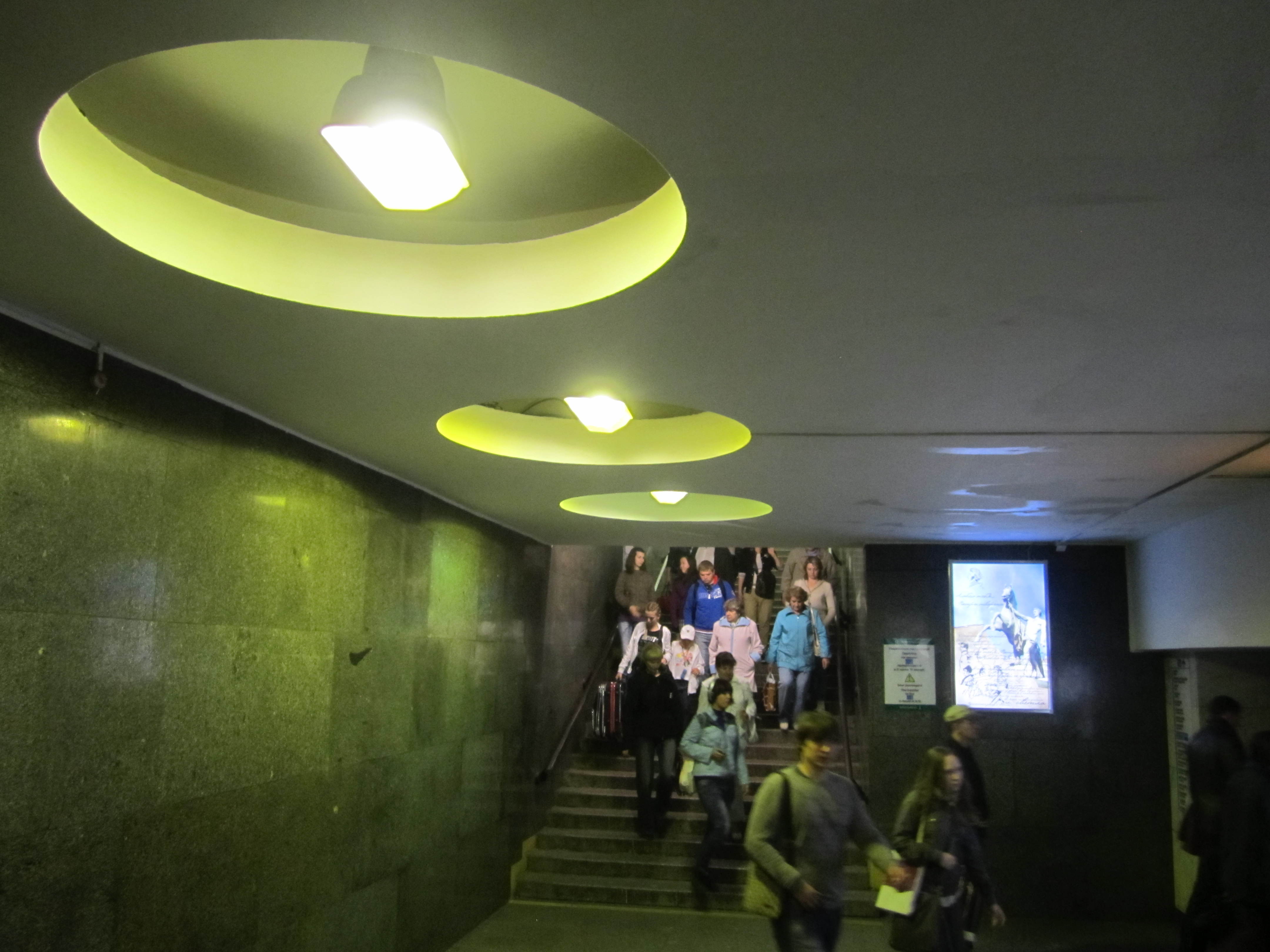
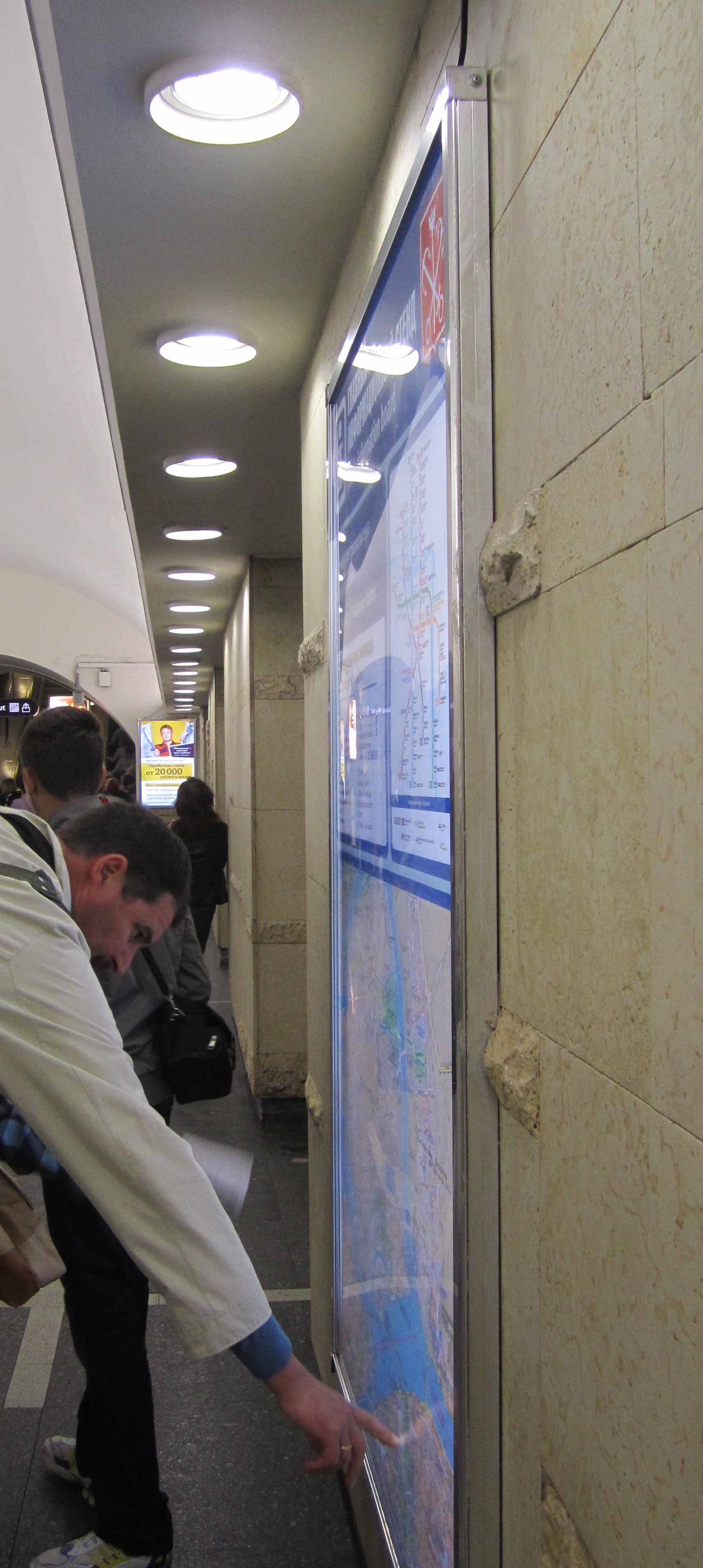
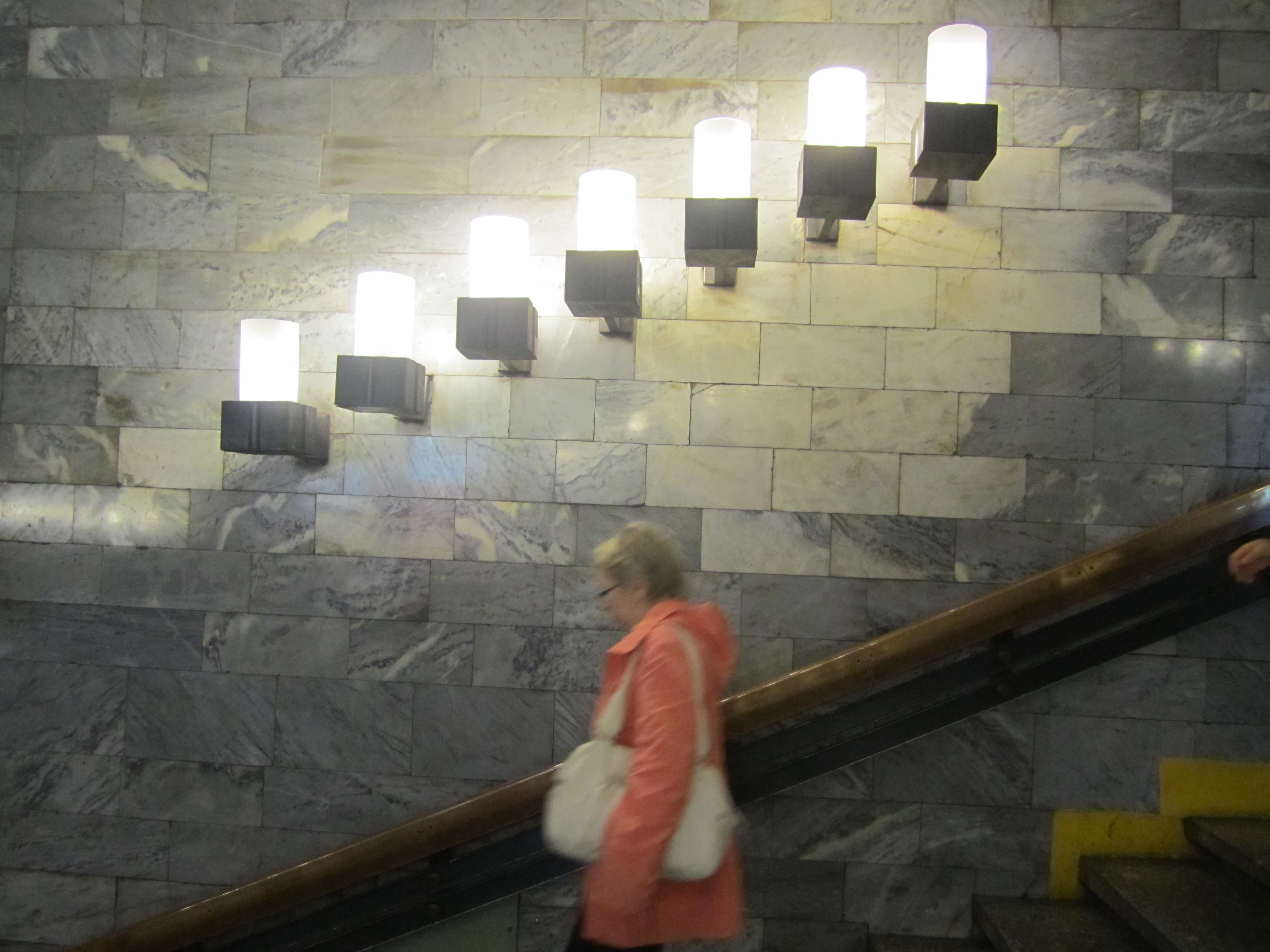
metro lighting
6/14: I went to see Goar Shaginyan, one of the handlers at the St. Petersburg International Economic Forum (SPIEF). Each guest is assigned a handler to answer questions, solve problems, et cetera. Goar was frightfully busy so I didn’t detain her.
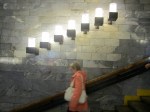
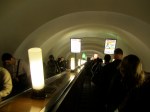
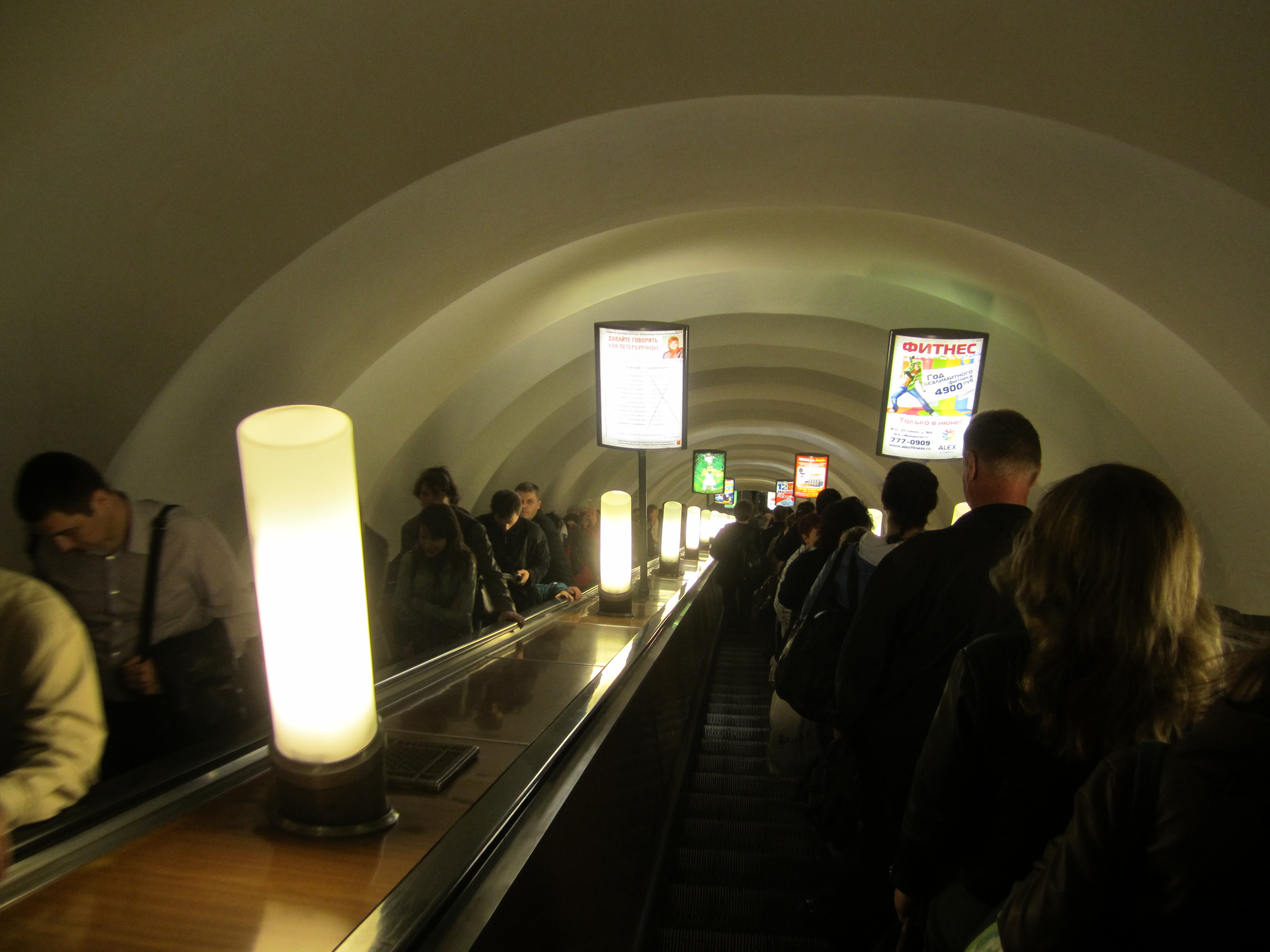
On the way, I took notice of the type of lighting in the St, Petersburg metro. Fluorescent lights, sodium lamps, green (?) lights, reflected and direct lighting. The foot-candle illumination of the St. Petersburg metro system has got to be pretty high– you can read a book by it, and possibly thread a needle.
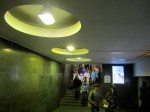
Metro Lighting
The SPIEF materials are available on Facebook, with a video interview of Petersburg Governor Valentina Matviyenko discussing its significance.
There are also sound bytes from experts anticipating events to take place, including resolution of a proposed joint proposal between two oil giants, British Petroleum, headed up by Robert Dudley, and the Russian concern, Rosneft.
Chatting with Goar, I learned of two types of SPIEF participation: Package-One and Package-Two. If you are important, you get Package-One, which is access to everything. If you are less important, like me, you get Package-Two, which provides access with restrictions.

light to read
The Minister for Economic Development, Elvira Nabiullina, decides the participation of each person with a “stamp” (the word Goar used).
For example, I cannot attend the first Plenary Session, with key note speeches by Dmitry Medvedev, President of the Russia and Hu Jintao, President of China. However, I can attend the second Plenary Session, with an address again by Medvedev.
Along with Medvedev, there will be addresses by Tarja Halonen, President of Finland, Nursultan Nazarbayev, President of Kazakhstan, and Jose Luis Rodriguez Zapatero, Prime Minister of Spain. I am looking forward to being in the same room with Medvedev.
Goar didn’t know what distinguishes between the two packages, but suggested that I publish more articles and maybe the Minister would reconsider next time.
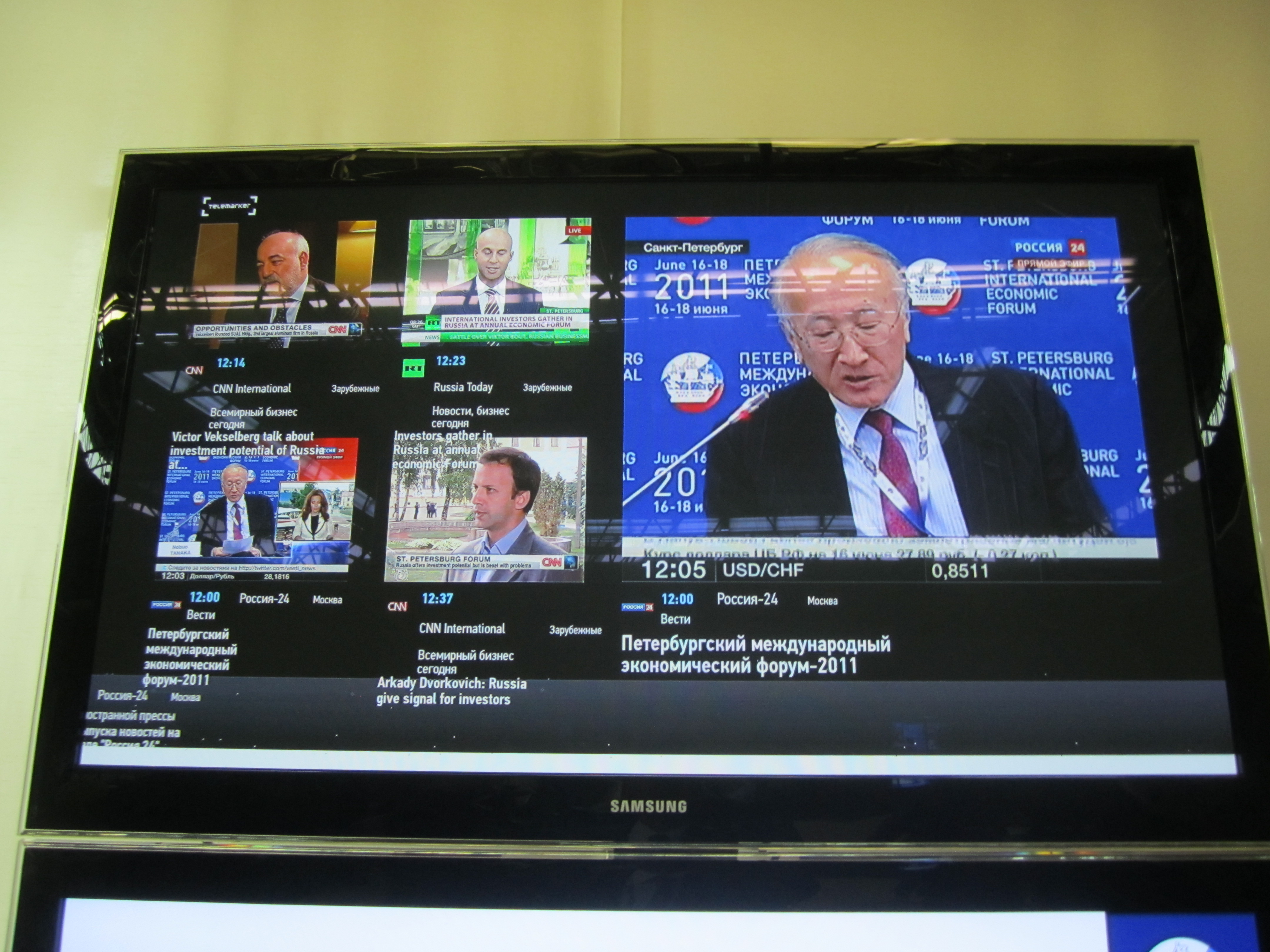
 Most of Package-One meetings will be broadcast through media, so I should be able to cover everything I wanted to attend. I left Goar to her last minute details.

Accrediting at Hotel Continental
6/13: Today, I went to get accredited for the Forum. Attending the event requires an invitation from the organizing committee (which I received), then, getting an ID badge. This requires printing out a confirmation receipt with bar code, and passport in hand– and checking in at one of the booths.
Last year I checked in at the airport — blew in, felt like a star! Forum staff spotted me and did the rigmarole. Impressive indeed.
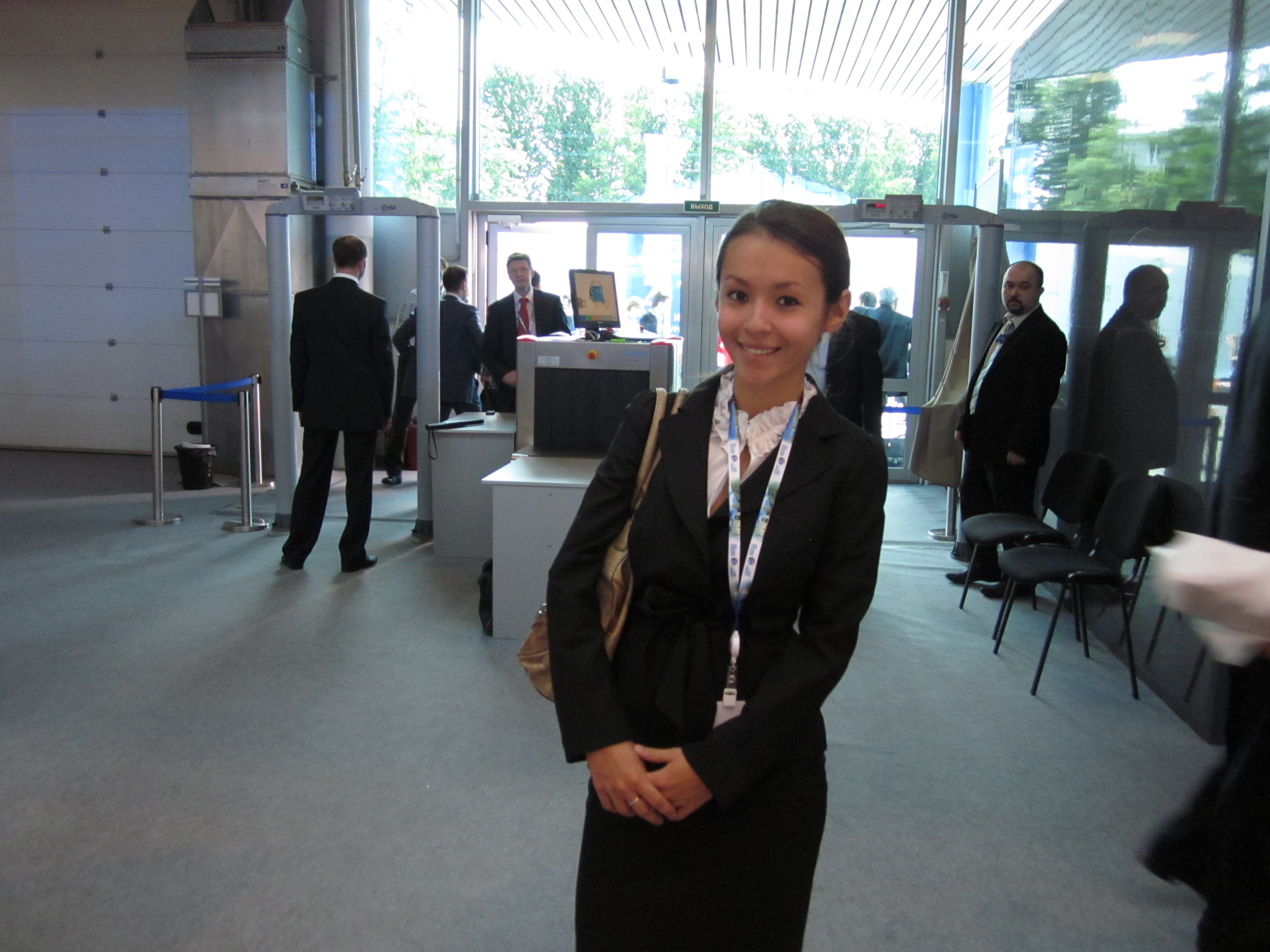
This year, I wanted to wander around the city to see where an elite would go, to get accredited. Well, the short answer, is that the spaces of accreditation feel Western, global, entrepreneurial and privileged. The Forum has since created the double badge identification card. One result is that I have to wear a lanyard around my neck, as I won’t be able to clip two badges on my suit.
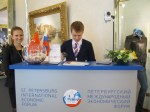
Hotel Europa
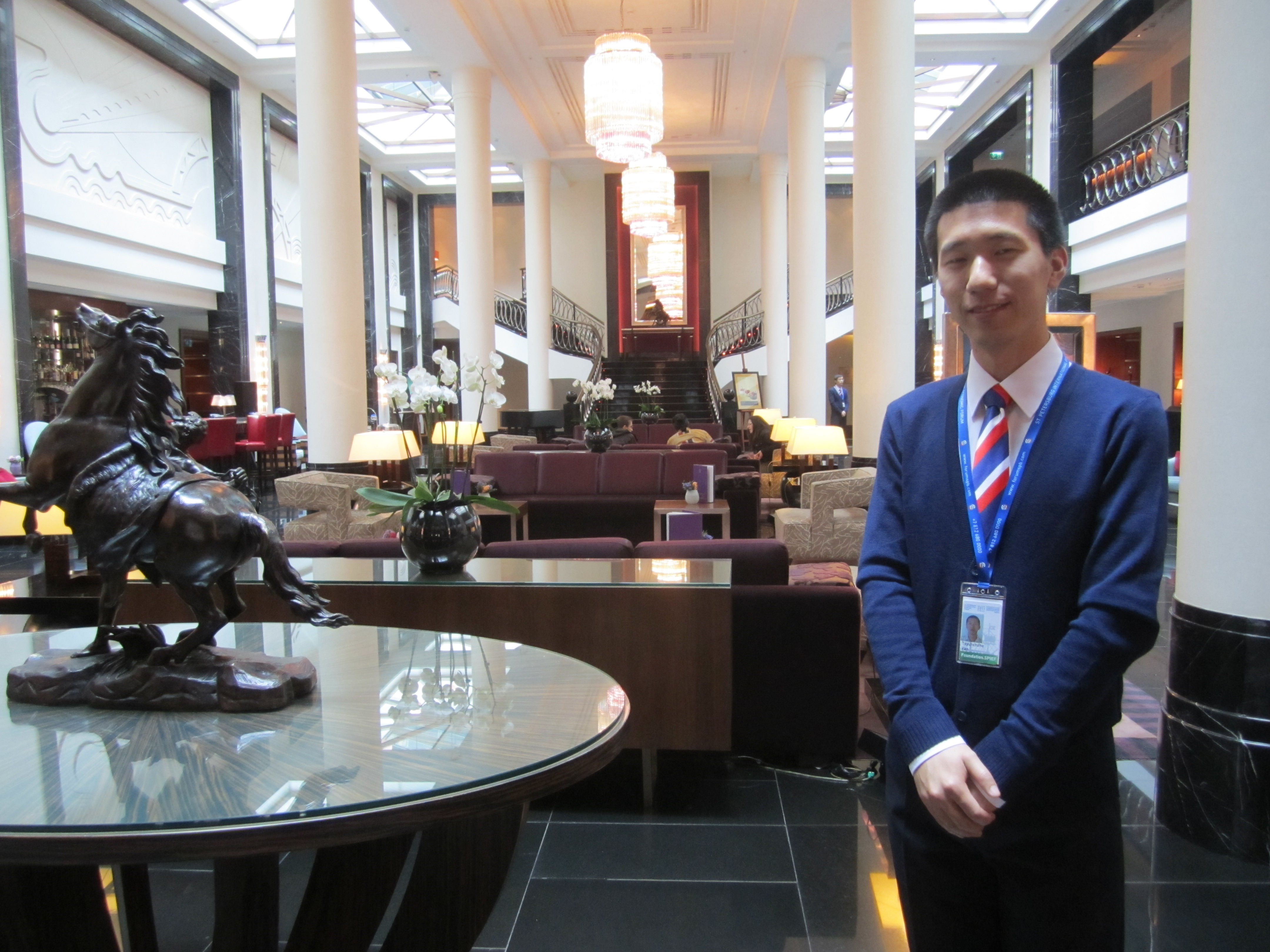
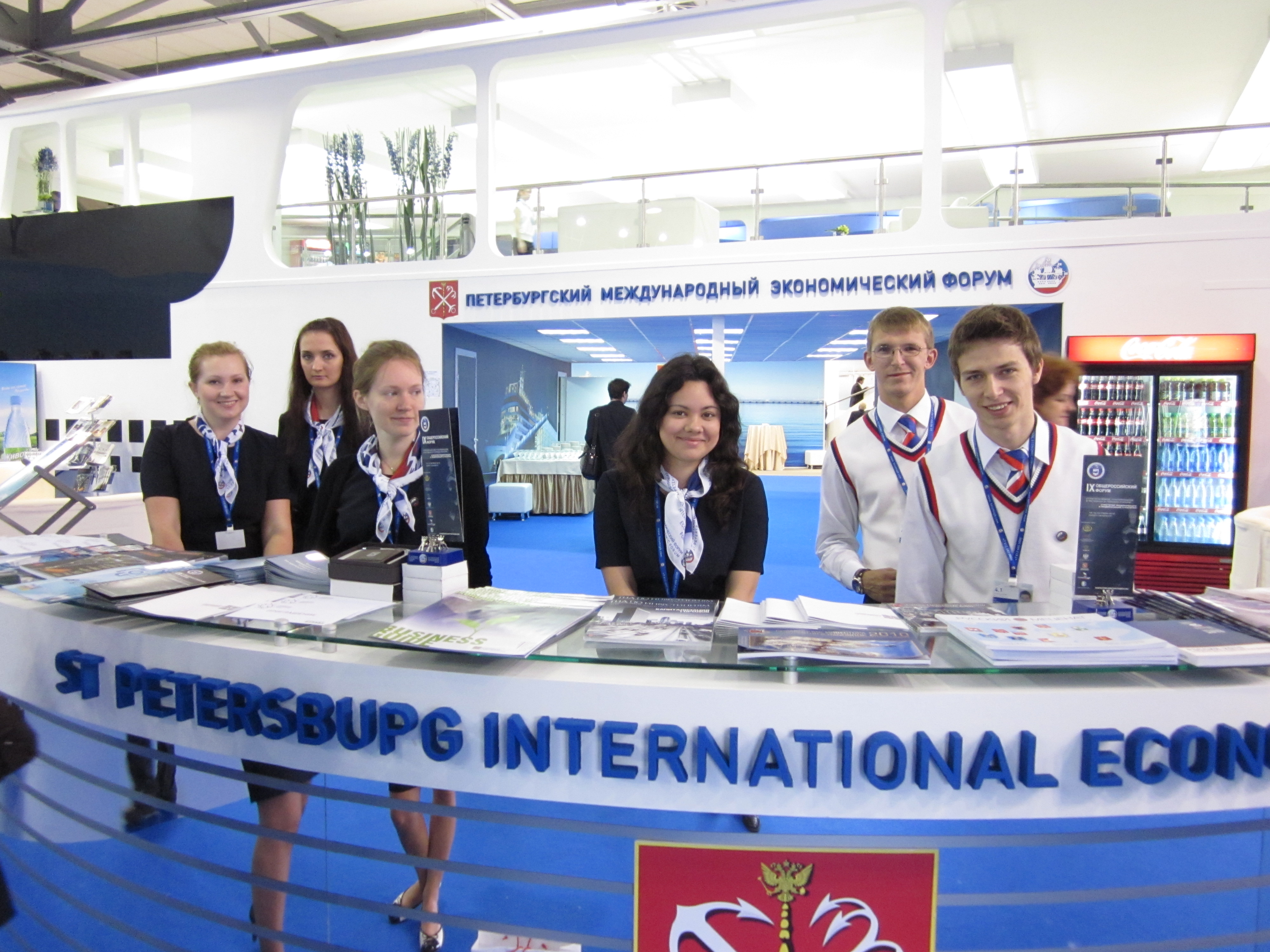
Difficult not to feel the excitement of the Forum by way of the volunteers. I spoke with several accreditation staff, and it is an elaborate process to volunteer. They take written exams to test what responses to give to questions from attendees.
They are instructed to state that the Petersburg Forum is the “Davos of Russia” — (world economic forum in Switzerland).
Anthropology passes as a kind of tourism. I travel, look at things, take photographs, get excited about meeting people, eat food, stay in hotels and take a shower.
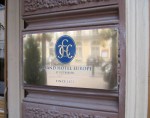
Spaces of Accreditation
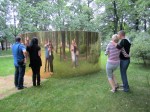
Spaces of Tourism
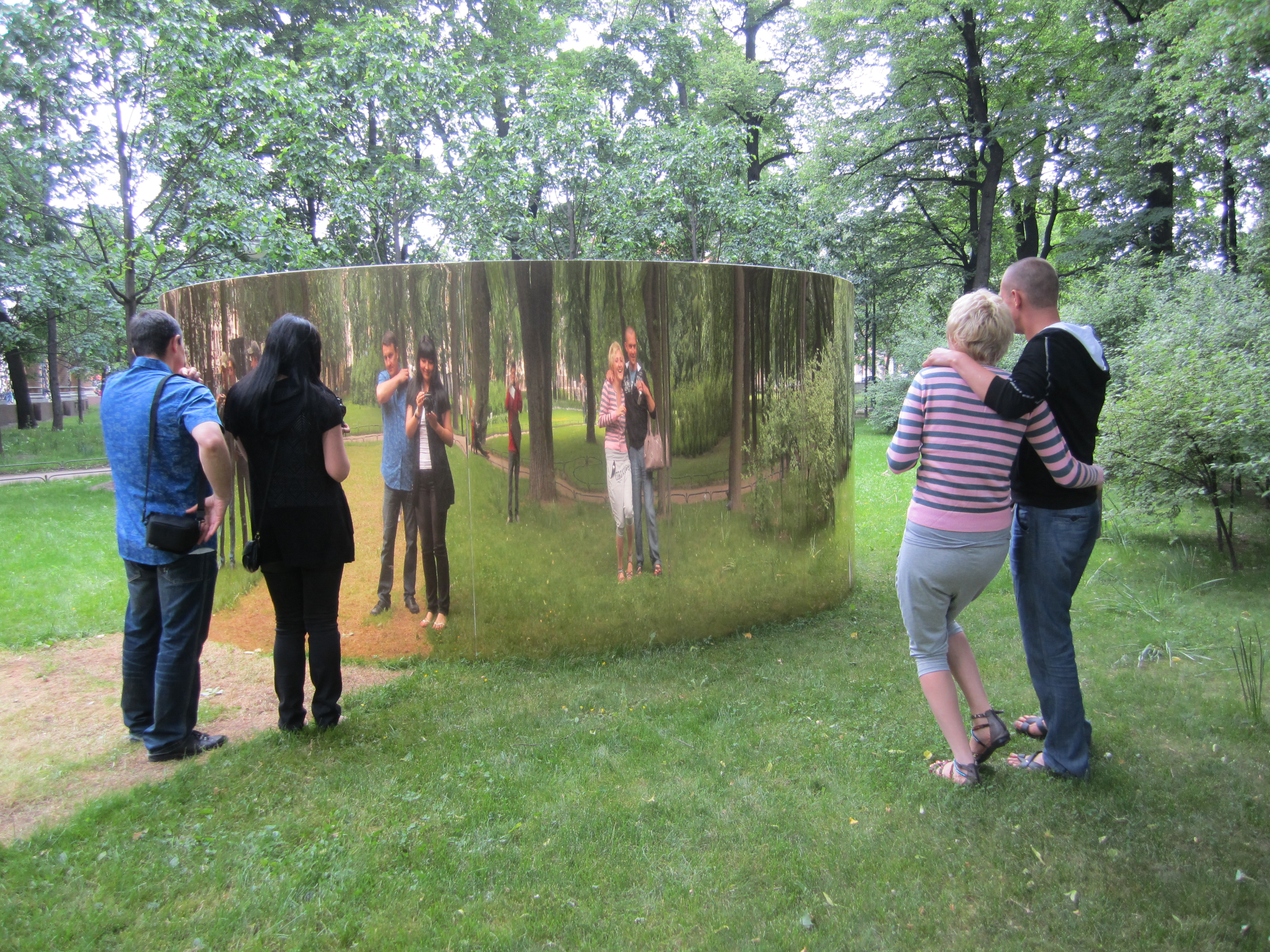
Sometimes, I notice the spots on the tourist map, like the Hermitage where Russia keeps its artistic treasures, or stumble onto exhibits in parks.
6/8: These days, it is fashionable to use the phrase space of exception to refer to an experience outside of time and structure. The phrase was coined by Giorgio Agamben, to refer to the power of government in creating spaces that strip the political rights from persons (e.g., concentration camps, Guantanamo), placing them in a state of limbo.
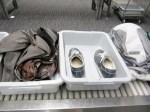
barefoot

The Terminal
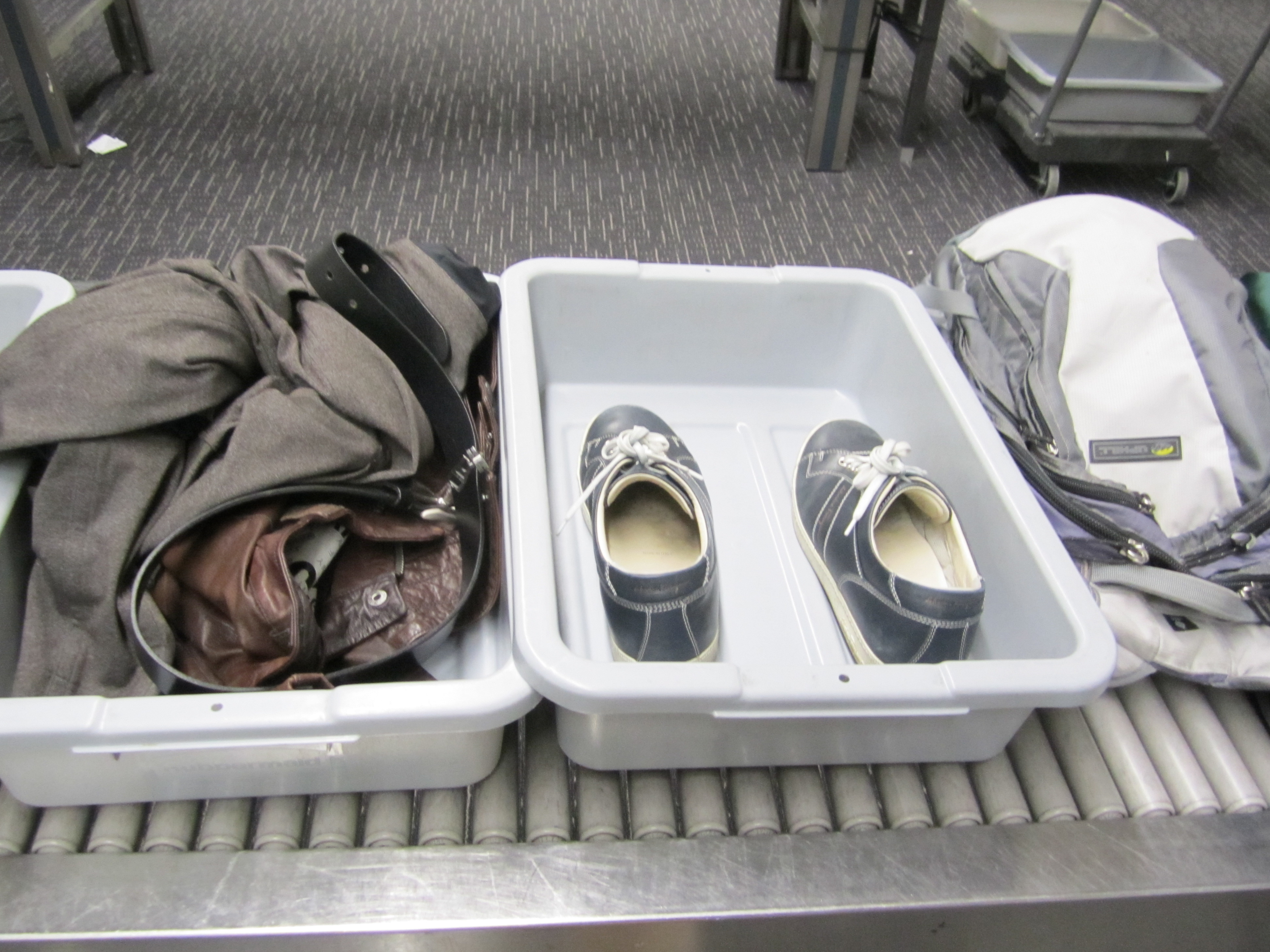
Friends often invoke the idea, space of exception, when traveling through an airport — in reference to strip searches and security cameras that dismantle a person’s rights within the space of transit.
It is easy to forget that the originary formula for space of exception is the word Liminality. Liminality means just that, a liminal or limbo state, outside of structure. It refers to the work of Arnold Van Gennep (1909), who years ago noted the importance of Rites of Passage, suggesting that ritual practice is a form of transition marking three phases: separation, margin (signifying threshold or liminality) and aggregation.
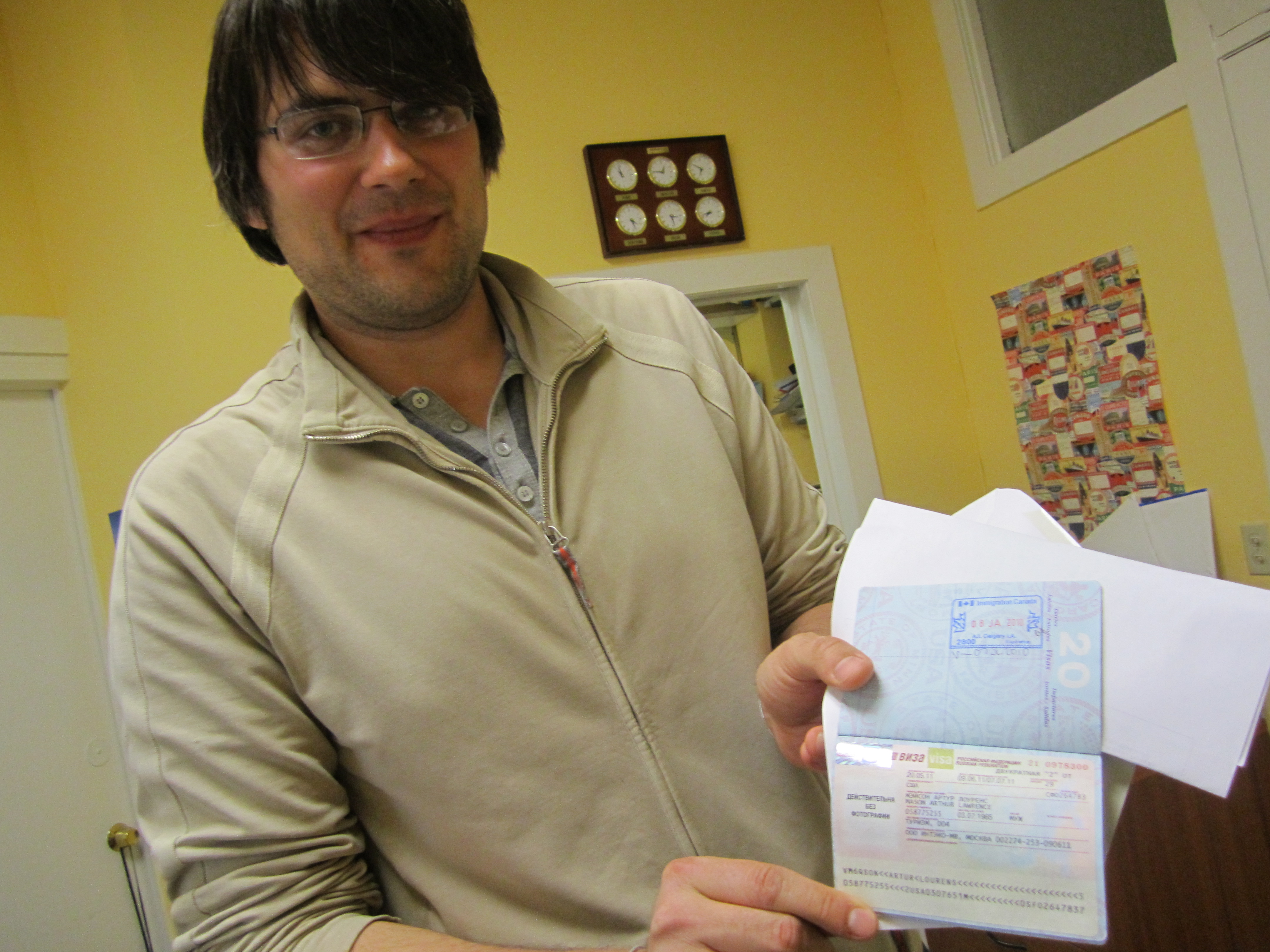
6/6: I obtained my Russian Visa from Russian Travel.

Jay Jay
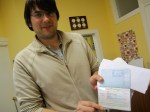
Andrey displays my visa
6/2: Gearing up for St. Petersburg:
- Village of Teriberka: Proposed Terminal for the Shtokman Gas Field.
- Key Categories of Individuals: Consultant Experts, Journalists, Executives, Government Officials, Academics, Financial Experts, Administrative Handlers.
- Key Analytical Categories: Russian Vanguard/Rear Guard; Norwegian-Russian Relations; Russian-Consultant Relations.
- Aesthetics and Art: Knowledge, Technocracy and Gesture.
- Meaning Created at the Site Itself: Davos of Russia.
- Securing the Body: Enhancing Corporeal Safety.
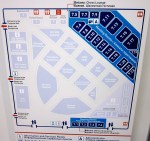
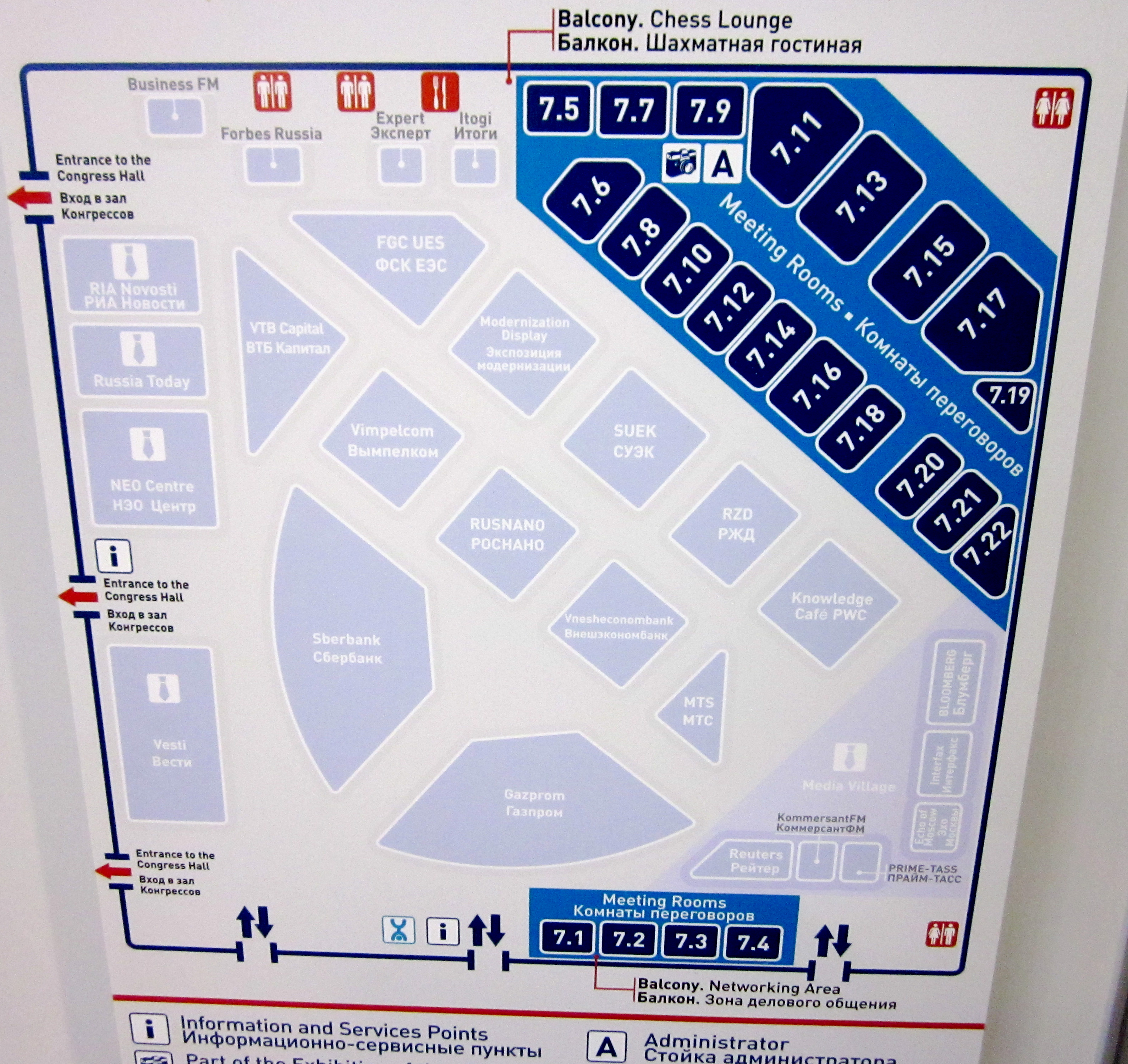
Energy Pavilion Plan
Chatting
Last year’s St. Petersburg International Economic Forum resembled a theme park.
Maps are available in pavilions to guide you with well known markers.
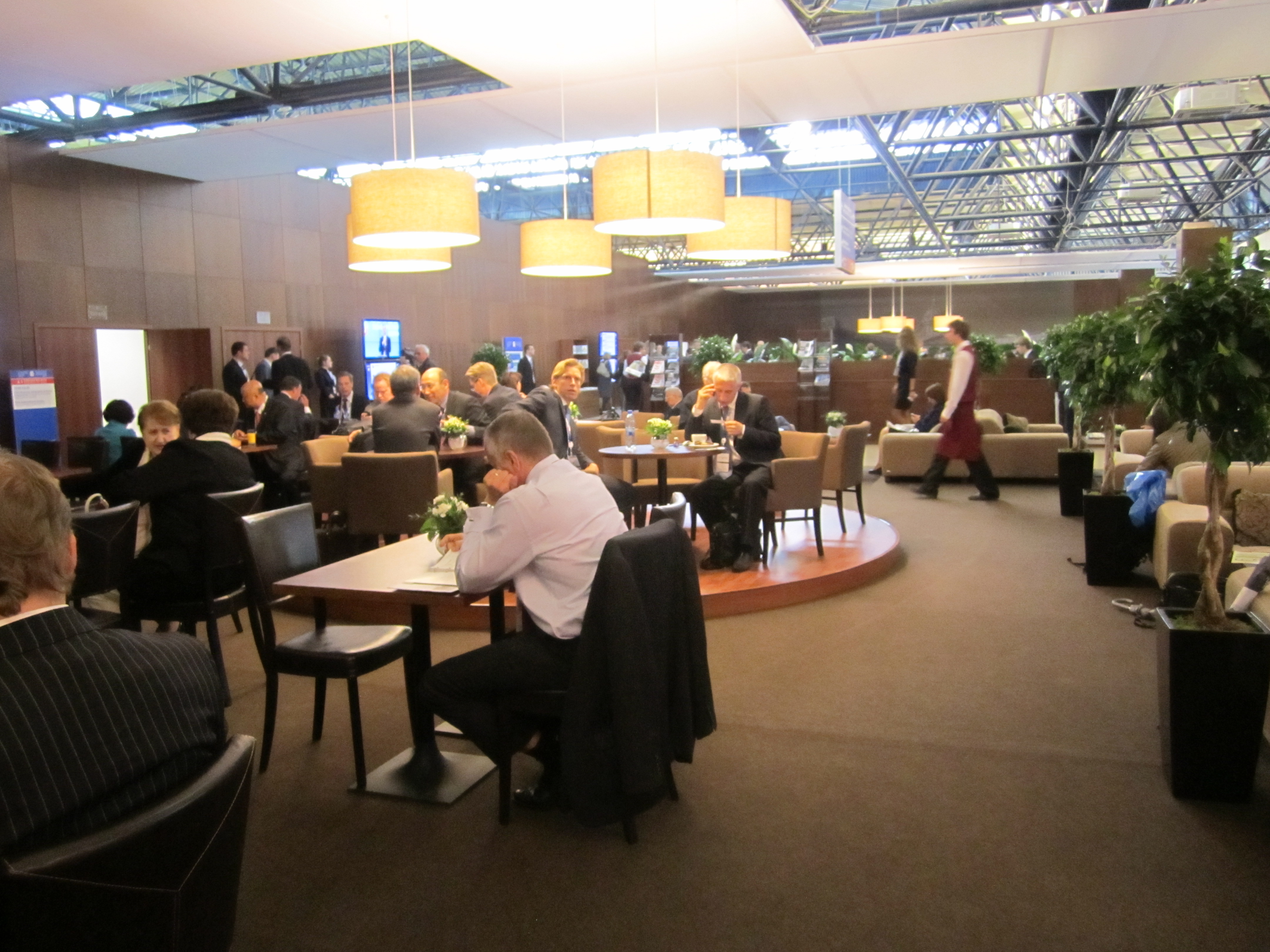
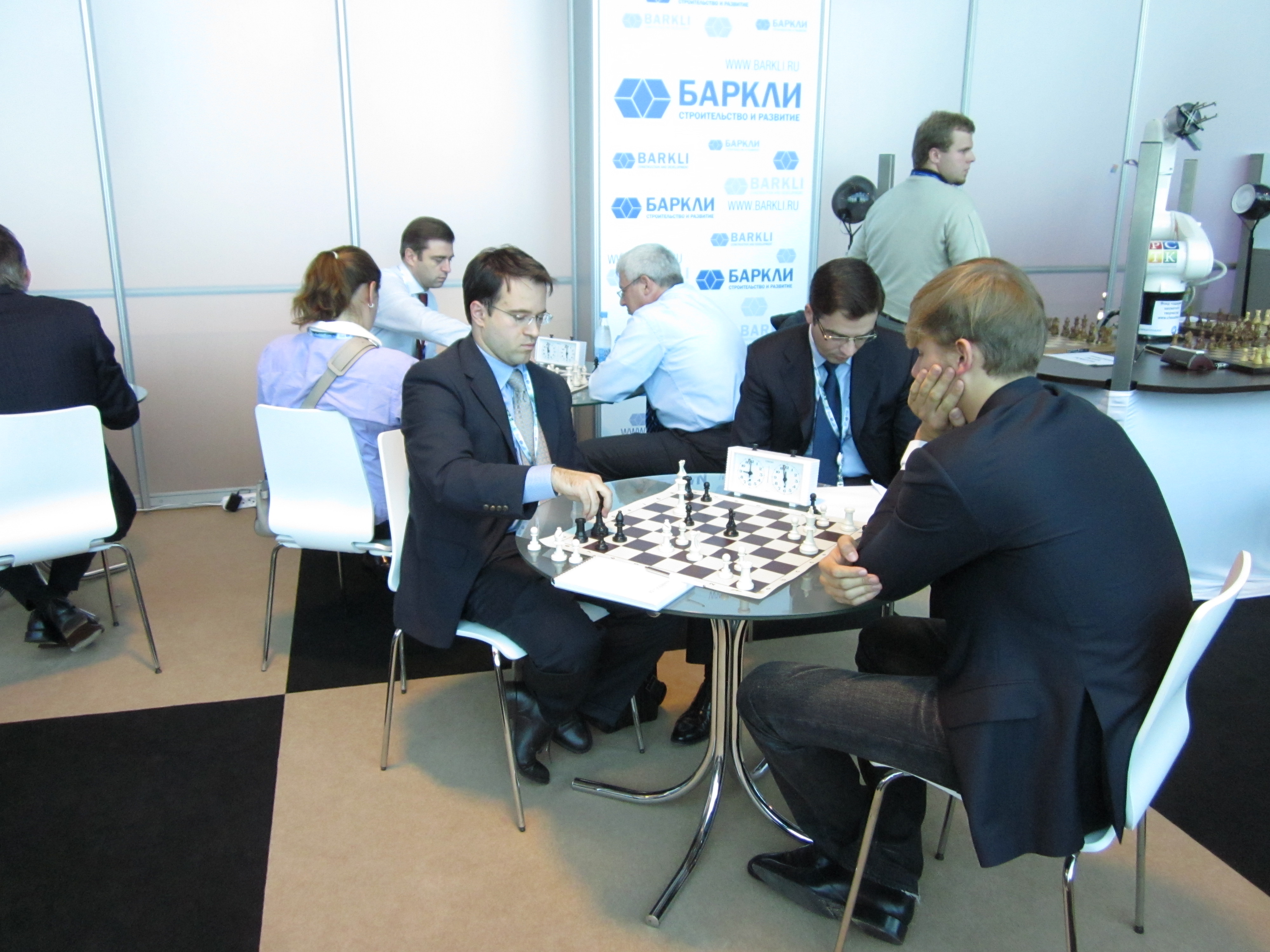
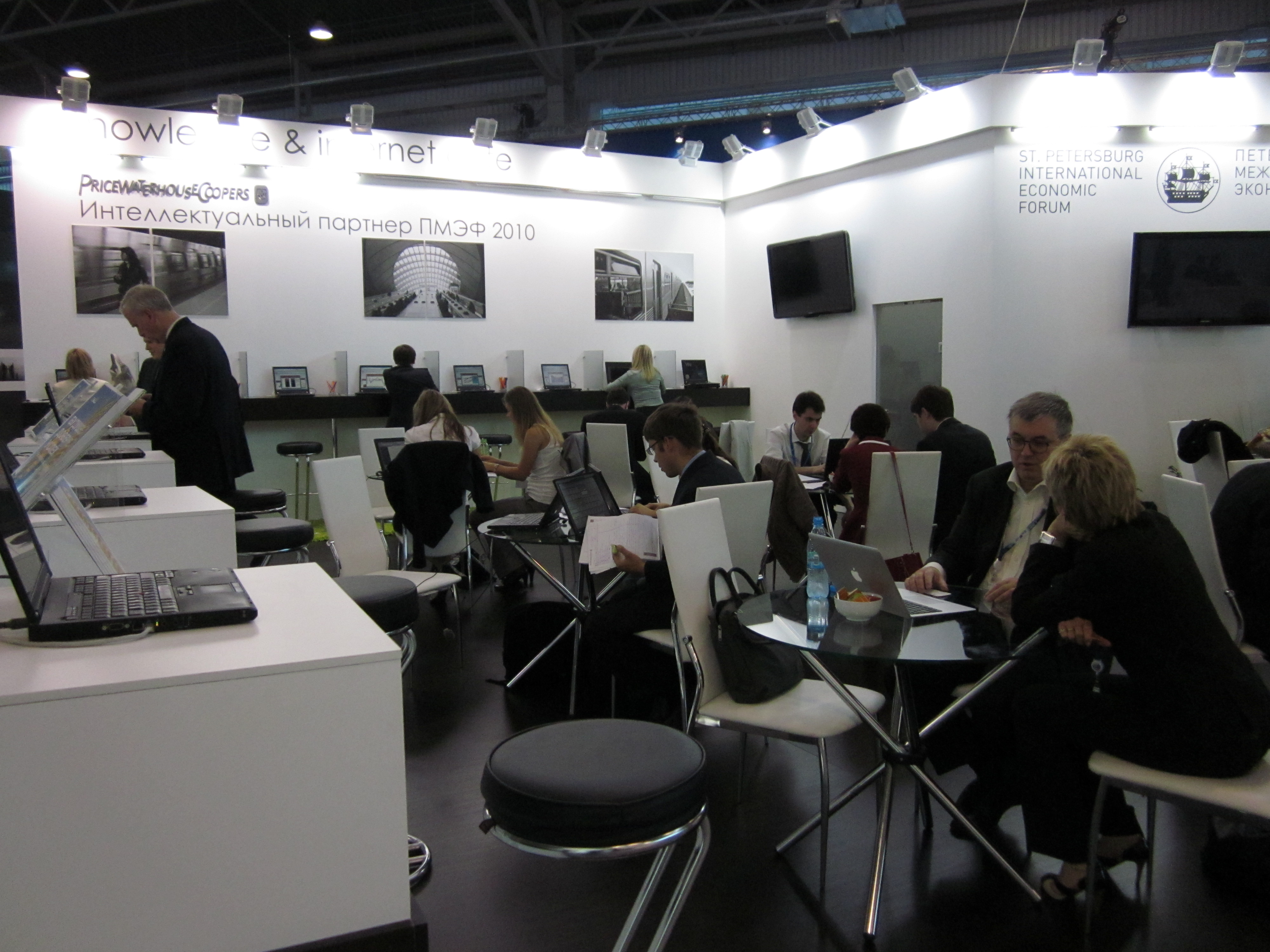
In the energy pavilion I found four points that seemed cardinal: Chess Lounge; Internet Knowledge Cafe; Gazprom installation; Russian financial concern, Sberbank. In between a lot of things happen– art installations, closed meeting rooms for executives, journalist booths, chatting, wandering, reading newspapers, drinking wine.
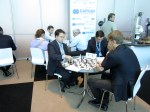
Chess Lounge
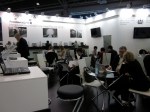
Knowledge Cafe
Both the chess and internet lounges are spaces of silent conversation– stationary locations, but still wandering consciously– across a boardgame or via internet.
Two other brash coordinates mark the boundary of this pavilion: Sberbank and Gazprom.
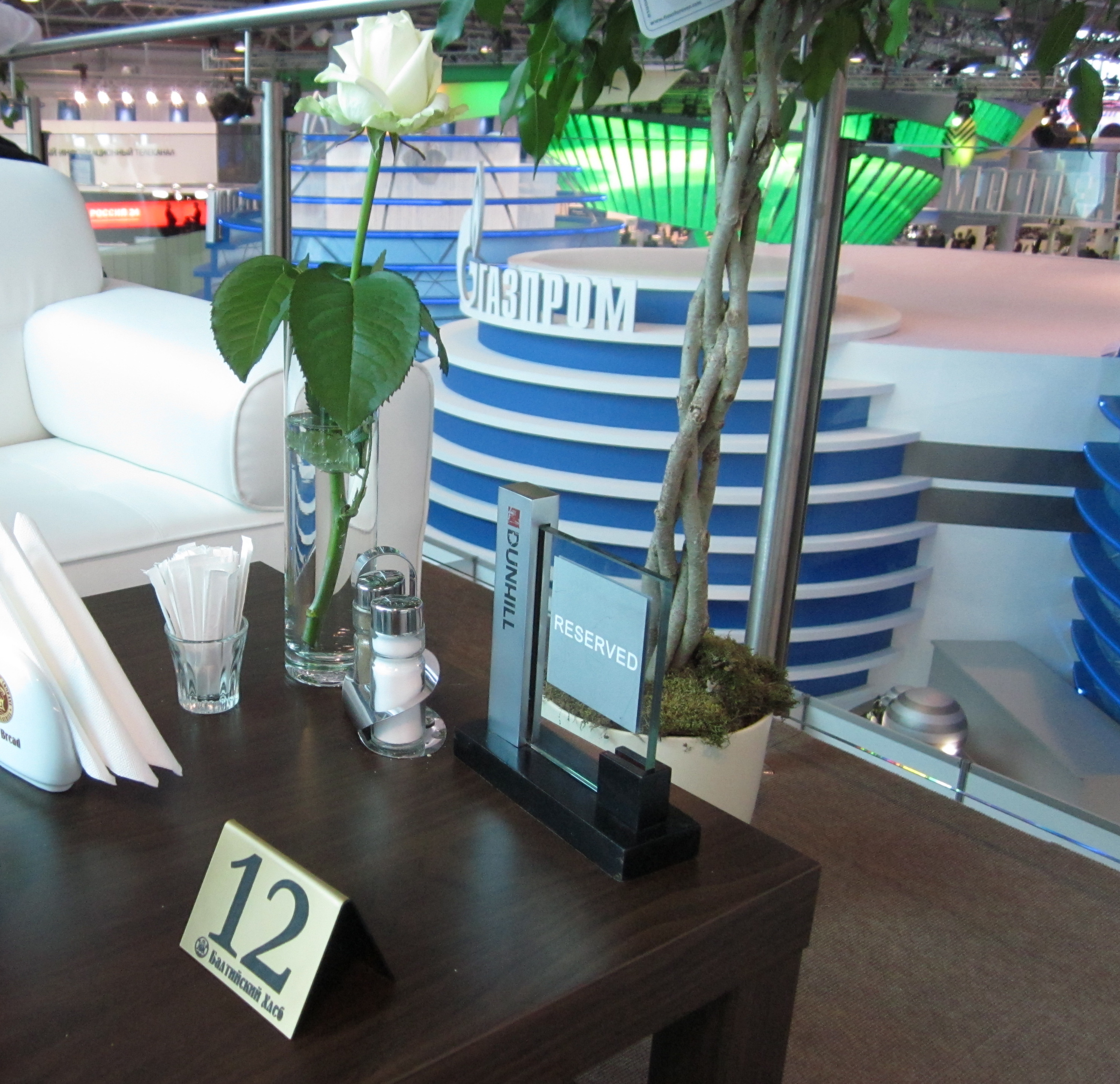
It’s difficult to say why I took these photos. It seems remarkable to me now that I did not focus on the Gazprom installation. My only image is from the balcony over looking the pavilion.
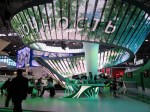
Sberbank
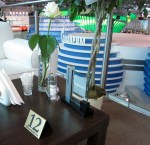
Gazprom
The installations did not seem to match the pavilion map. I was often confused, but excited by all the things going on as I passed through these spaces.
6/1: I went through my Oslo Energy Forum contacts to see who would be attending in St. Petersburg. Awaiting replies.
5/31: I had a great conversation with Mr. J., a handler for BP CEO Bob Dudley in London. I wanted to schedule a meet and greet with Bob in St. Petersburg. Mr. J. mentioned the possibility that Bob would be milling or he might simply run in and out.
5/19: Visa. I need a Russian Visa. Last year, I obtained a Visa via mail through Russian Connections Travel, located in San Francisco. This year, I collected my things and paid a visit to the company – in person.
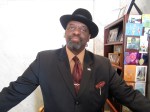
Jay Jay

Visa Office
The entrance to Russian Connections Travel is as close as you can get to the corner of Powell and Geary streets, at Union Square, without spilling over into the street. The first person you encounter inside the pre-war marble lobby is Jay Jay.
He signs you in and directs you to your destination. I’m a fan of novelist Dashiel Hammett, and the building fits a common description of haunts frequented by Samuel Spade, a central character in Hammett’s work of the 1920s and 30s hard boiled detective novels.
Upon arrival, Andrey Zakharenko, scolded me mildly for screwing up the visa application but was jocular over my aplomb and never blinked when I retook his photo several times, because of back lighting. A Muscovite, Andrey referred to me as a “rarity” — someone born in San Francisco who still lives here.

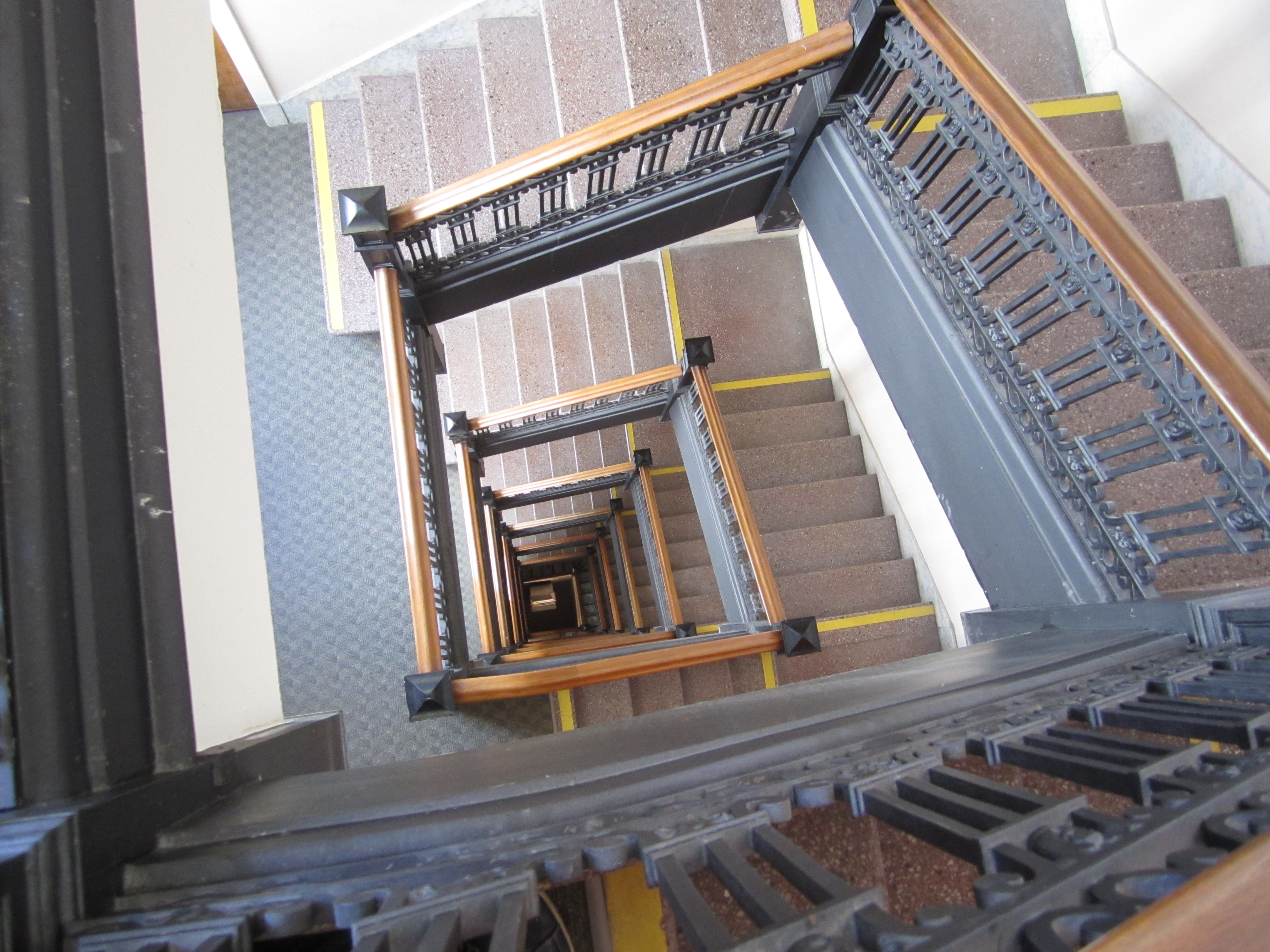
Sam Spade-like stairwell
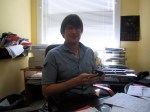
Andrey Zakharenko – Russian visa master
In the short time that we exchanged bawdy comments, I came to realize that here was a guy who pretty much sized me up within a few minutes of my passing over to him a passport, photos, application and check. It is that way sometimes.
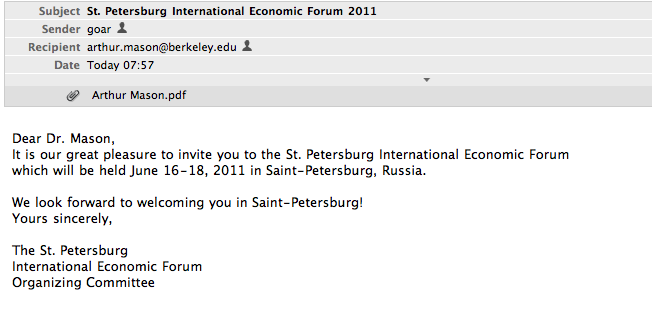
5/18: I just received confirmation from Goar Shaginyan about participation at the St. Petersburg International Economic Forum. I also bought the jet plane ticket to Russia. Exasperating. I sat continually pressing the purchase link only to be denied the least expensive flight. I gave in and purchased something in the mid range.
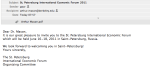
invitation
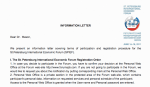
invitation
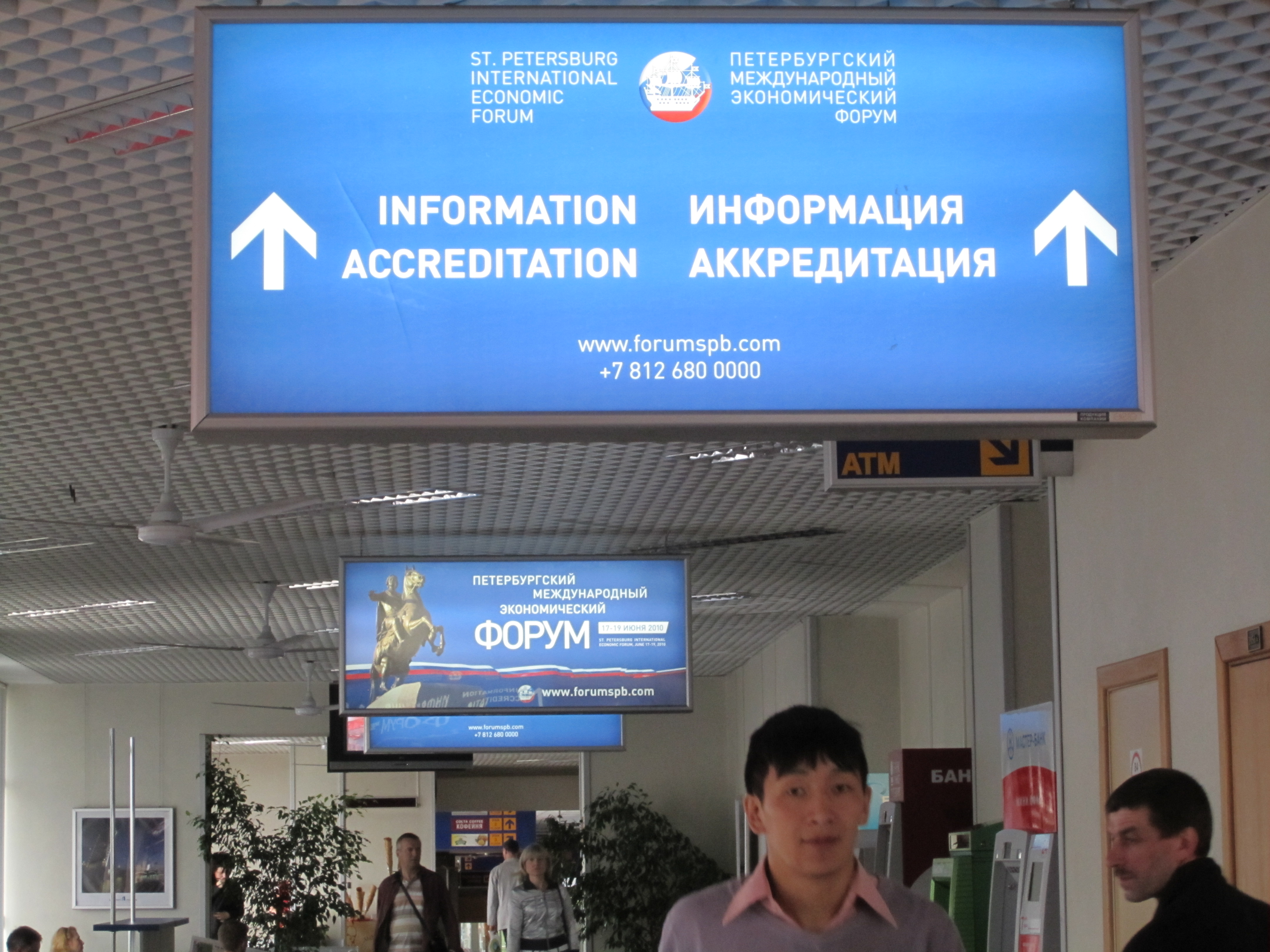
Today I am going to San Francisco for my visa. I should point out that getting into the Forum is a big deal once you get inside Russia. An entire area of St. Petersburg is cordoned with security police. Therefore, you must be accredited in advance, at various points in the city.
Last year, Alexandra Karamanova and I blew into St. Petersburg’s Pulkovo airport and were accredited right there at the terminal. It was superb. Directly out of customs, we noticed a young woman dressed in white and blue with a red scarf (colors of the Russian flag) waving to us, recognizing we were Americans, and asking us if we were heading to the Forum. At the time, I was oblivious to the attention that was unfolding directly in front of me as I hauled off the jet plane.

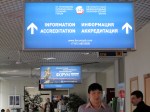
Accrediting at Pulkovo
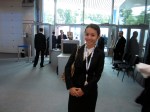
Alex and Security
Yet, as we approached the city by taxi we realized how securitized the event was and we thanked our stars that all was settled at Pulkovo.
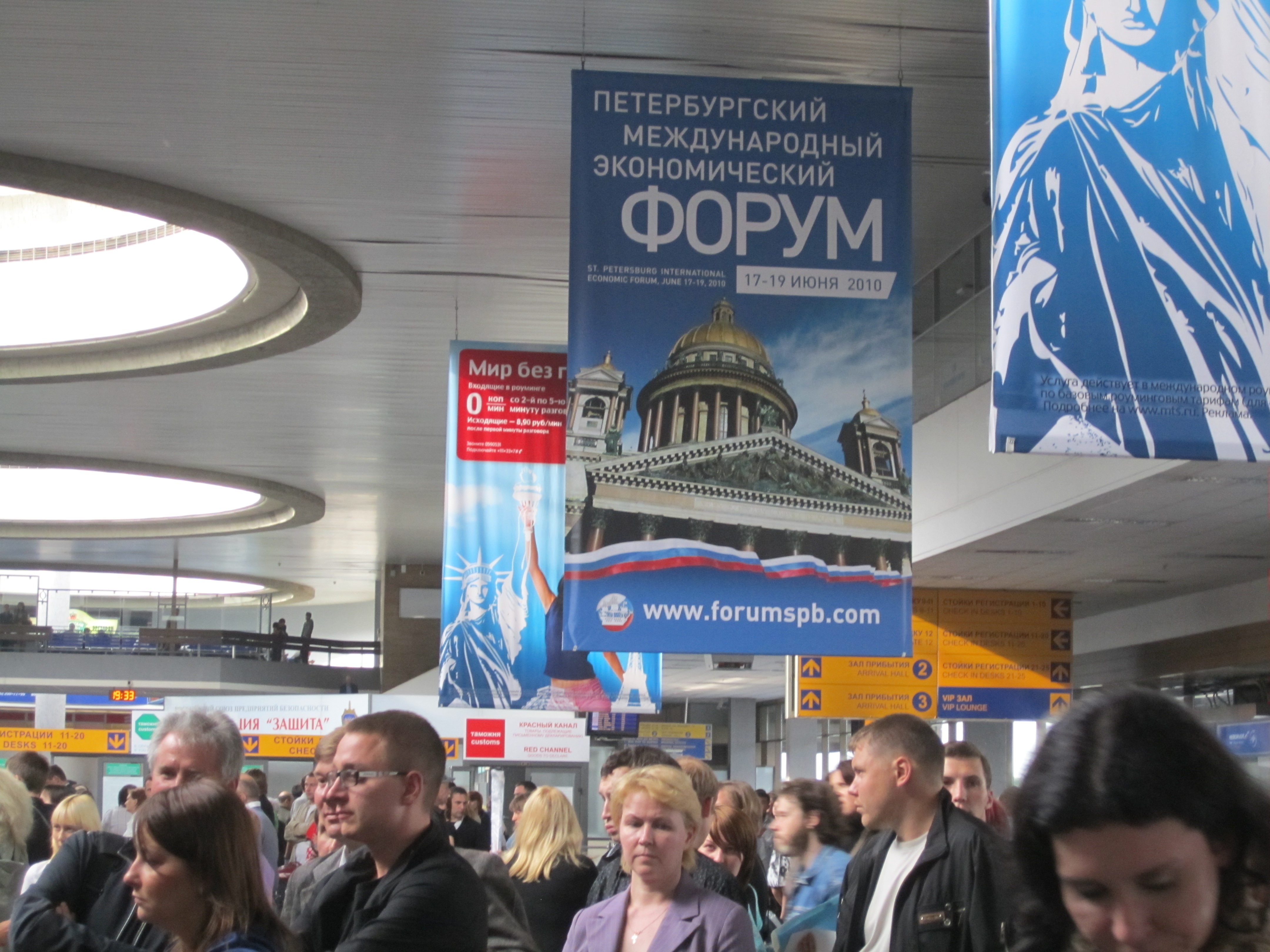
Banners hang across the city advertising the event. In truth only a tiny fraction of city residents attend. This year, I will be arriving a few days earlier than when the accreditation begins at the airport. I will have to visit a hotel site instead.
5/17: I was sitting around this evening when a buzz came over my I-Phone and I noticed the country code originating from Russia. It was a midnight call from Goar Shaginyan, letting me know that I’d been invited to attend the St. Petersburg International Economic Forum. Goar was so totally pleasant and I was in such a good mood. She had called earlier explaining that it would be another two weeks before the Forum organizers came to any conclusions about my invitation, and then lo, within a few hours, she called back wishing me a safe journey to Russia.
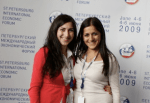
Goar Shaginyan (L), organizer for St. Pete’s Economic Forum
I first heard about this event while attending CERA week in Houston, North America’s mega exclusive energy event. I was chatting with Alexander Mikhailiants, former speech writer for Robert Dudley, when the latter was heading up the Russian-British joint venture oil company TNK-BP. Alexander quite specifically stated to me that if expertise and arctic gas was my interest, then I would have to pay a visit to the Petersburg Forum. Alexander has held various titles at TNK-BP, including Advisor to the CEO, International Affairs (when he was assisting R. Dudley).

Alexander Mikhailiants of TNK-BP
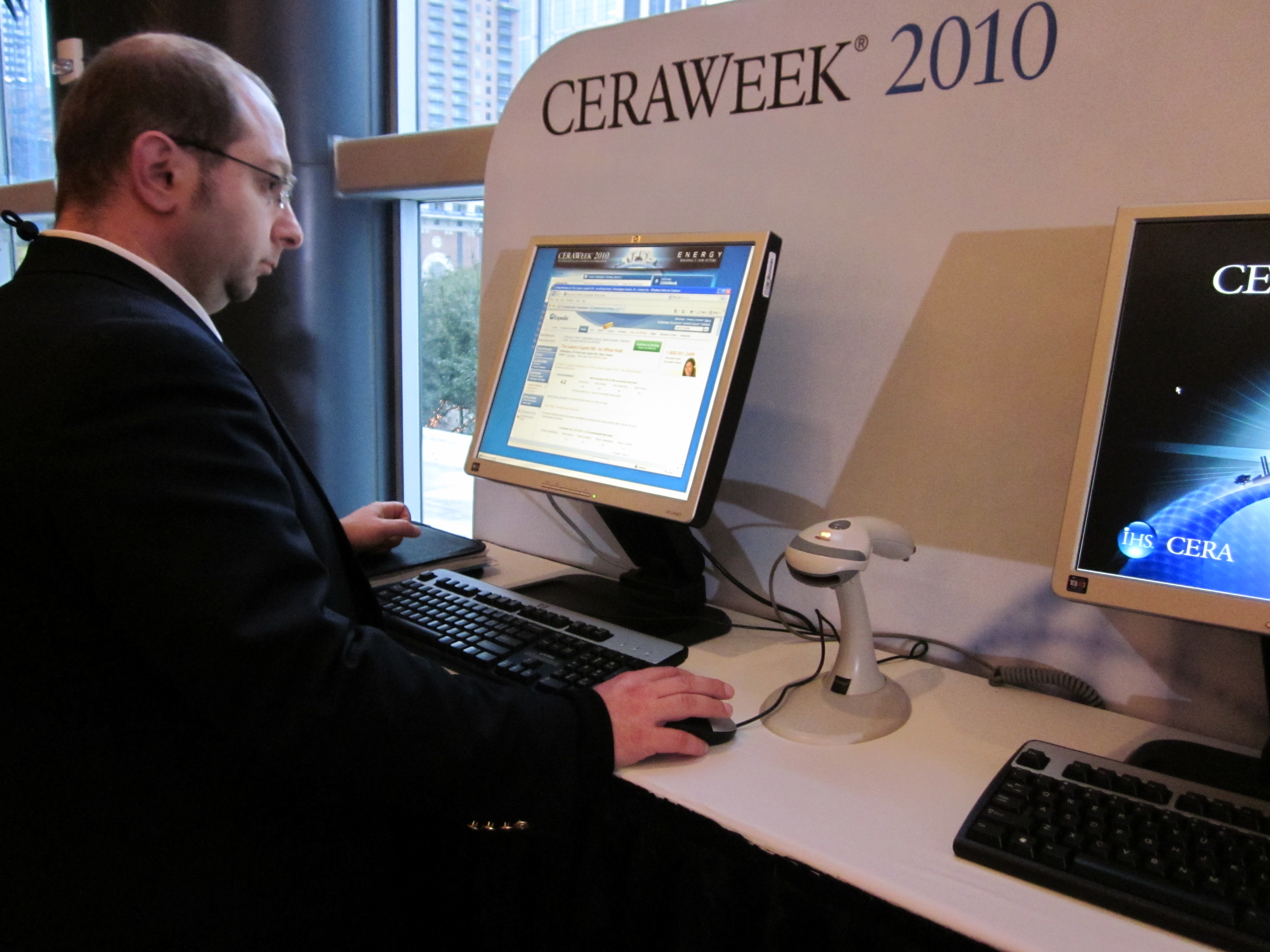
My talk with Alexander was the first with a Russian oil company executive about my developing research. Our meeting took place by chance. I had snapped a photo of a computer display that uses a security bar code. CERA conference participants use their identification badge as a key. The image was intended to capture the mix of security, computer access and corporate logo — but I realized that my photo captured the face of a client. I asked permission to keep the photo, and Alexander replied in the affirmative. I noticed his Russian accent, so I introduced myself.
I explained my project by showing him a poster presentation that I was able to access on the internet right there through the computer. Alexander was polite, intrigued and invited me to explain further. I mentioned that the previous CEO of his company, Robert Dudley had agreed to meet me in London to which he became excited and requested that I show him the actual email invitation.
After reading my email exchange with Dudley, Alexander stated that indeed — what I had was “real access”. He then explained that he had been Dudley’s speech writer and that I should pass on his regards. He nodded in the direction that we walk outside, indicating he wanted to smoke as well as explain to me the intrigue behind TNK-BP’s relationship with the Russian government.

invitation request
We sat down on patio chairs, across from two Cambridge Energy employees, who engaged us with small talk. Catching the hint that Alexander wanted to speak privately, they excused themselves as if they had already intended to leave.
Alexander explained the stumbling blocks of my project. He personally understood what I was attempting to carry out. His grasp of my exploratory idea, he explained, was a measure of his having been educated in America, and then picked up by TNK-BP while working for a consulting firm that placed foreign companies at the disposal of Russian business groups. In reality, few people in industry would understand what I’m doing. In fact, most would be down right suspicious, especially government, which was occupied by middle aged officials.
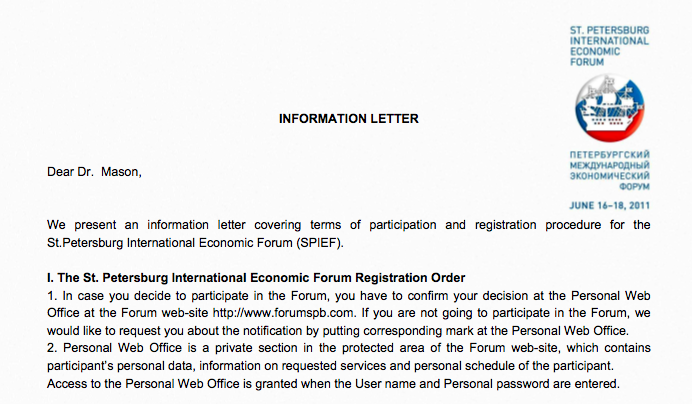
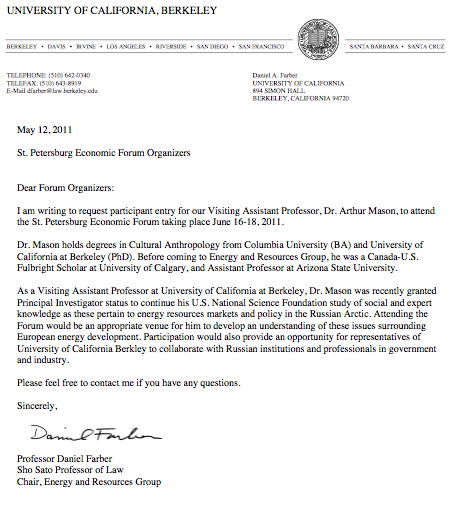
He is most likely correct. Nevertheless, I have been able to manage thus far. It could be that representatives of the Russian government and industry just don’t see what I’m doing as important. The fairly straight forward manner in which I represent my project is evidence. My letter submitted to the Organizers of the St. Petersburg Forum lays out the topic in plain terms (see above).
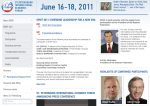
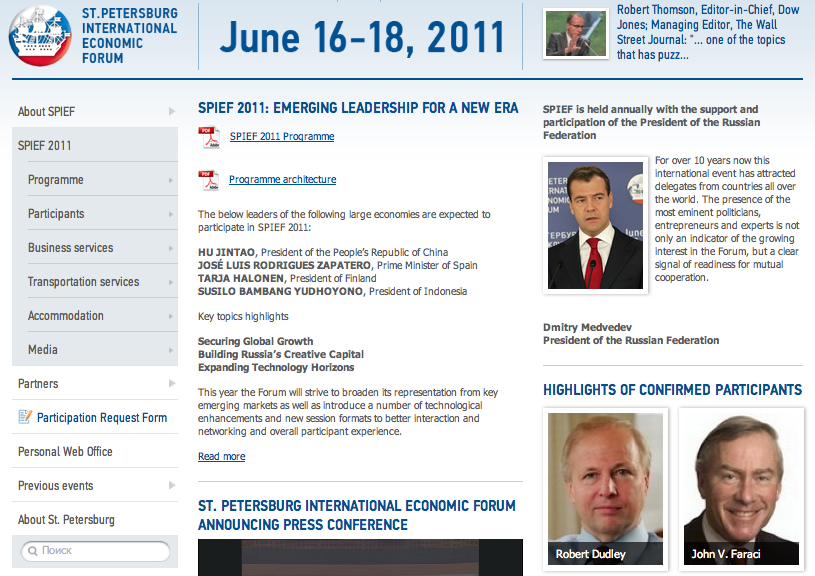
Robert Dudley, Honcho for BP appearing on St. Pete’s website
Returning to my conversation with Alexander, he opined that BP is sensitive to stakeholders (defined quite broadly as civil society), while Russian companies –no names mentioned — typically tend toward dictating terms.
He suggested I contact journalists, NGO groups and possibly the New School of Economics in Moscow. He gave me his business card, and wrote down his personal email address suggesting we stay in touch.
I have got to send an email to Robert Dudley, current head of British Petroleum. As I mentioned, last year at this time, I was supposed to see him in London. Before I arrived, there was the terrible oil spill in the Gulf of Mexico, and Robert was called away to handle the disaster. Robert will be giving a key-note at the St. Petersburg Forum, and the organizers have splashed his photo on the website.
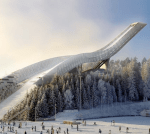
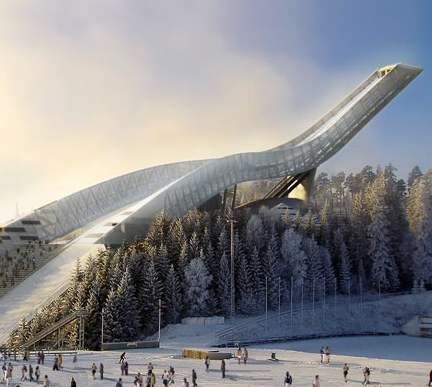
Press image of the new Holmenkollen ski jump
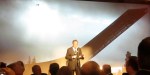
Oslo Energy Forum at Holmenkollen Hotel — an image of the new state-of-the-art ski jump serving as a seriously brooding back drop at dinner speeches
I noticed also another one of my friends will be giving a key note: Helge Lund, CEO of Statoil, Norway’s largest oil company. I first met Helge — a few months ago at the Oslo Energy Forum taking place at the high-end Holmenkollen Hotel, perched on top of Oslo next to the fully remodeled Holmenkollen ski jump.
Helge and I chatted.
I plan to devote a few posts to the Oslo Energy Forum — Europe’s oil and gas watering hole, by invitation only and costing $14000 to attend. In fact, Robert Dudley had spoken at the Forum one year previously. But as I said, I’ll come back to that event in a full blown manner.
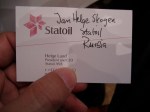
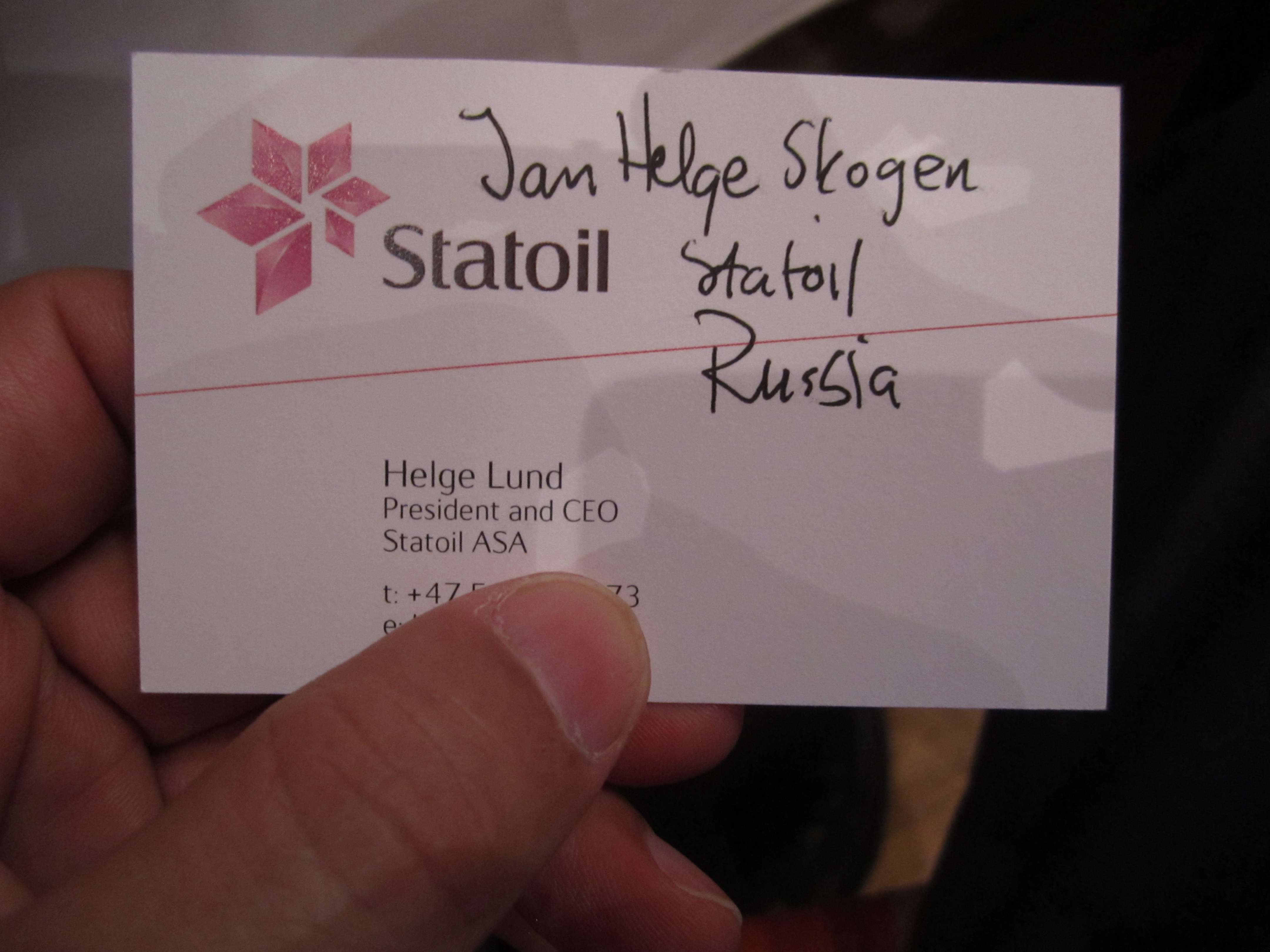
Helge’s calling card – with the Statoil head of Russia

Helge Lund, appearing on St. Pete’s website
I expressed curiosity to Helge about who had taken over as the new head of Statoil in Russia, and he promptly wrote down the name Jan Helge Skogen, with an invitation to contact him so that he could make the connection.
Last year, we had met Bengt Hansen, then president of Russian Statoil, a generous guy who gave us quite a bit of time in his Moscow office. We were introduced to Bengt by Ivar Tangen, previous chair of Oslo Energy Forum, who we met in Oslo a few weeks prior. And here is something funny, after our meeting with Bengt: In Moscow, we actually bumped into him in a restaurant — in the middle of Moscow. Can you imagine? How crazy is that?

Alex preparing to meet with Bengt Hansen, then President of Statoil, Russia
I always laugh at the memory. I had actually bumped into Bengt on my way out of the bathroom. There we were within eye shot of Alexandra Karamanova, who promptly hopped out of her seat and ran over so that the three of us looked like the best of buddies. I loved that. And I should add here, that when I was in Oslo in February, I was chastised at the dinner table by my neighbor, another Statoil heavy weight, who scolded me for not having crashed, er, gone to Bengt’s retirement party in Moscow. I had the address and had laid down an on-going bet with Alex about whether to go. I was told that the party was a buffet.
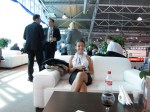
Alexandra Karamanova at St. Pete’s Economic Forum 2010
Oh well. Admittedly, we were a little wide-eyed last year when we attended all these events, roaming the Russian landscape as paparazzi neophytes. Speaking of which, we’ll miss Alex on this trip. She was so dog-gone helpful and hilarious to-boot. She is playing with the Arizona team, and since my relocation to Berkeley (Go Bears!), all my NSF funds will be spent in-house.
I’ll keep adding to this posting. I want to capture all the little doo-das, from the visa permit to the what nots– all the imponderability associated with what it actually takes to mingle with — well, I was about to say the not-so-famous, but we might have to correct that soon, to something more suitable for this particular occasion, perhaps the not-yet-so-famous but still, the Davos (World Economic Forum) of Russia.
5/10: We attended last year and ran into Daniel Yergin along with representatives of media, moguls, and stars.
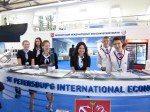
2010 St. Pete’s Forum

Beautiful People
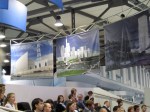
Future Visions
Click-to-enlarge these photos to appreciate the conspicuous status, ambition and wealth that permeates from the symbols in these images. The middle image has a white Mercedes in the background — technologies of the future.
To be allowed into the Economic Forum we need an invitation. To get an invitation, we need to sign up on the website and then hope the organizers consider our participation worthy of such an esteemed event. As part of our pitch, we include a letter from the faculty chair requesting participation (see above). Then, we call and speak directly with the organizers.
The event, as described to me several times by western executives represents a visit to kiss the ring. Here, they refer to a feeling that to conduct business in Russia, western CEOs have to be on their best behavior with Prime Minister Vladimir Putin.

French President Nicolas Sarkozy (with Alex)
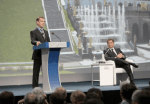
Russian and French Presidents cozy style
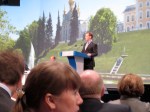
Russian President Dimitry Medvedev
Last year’s event was spectacular as these photos demonstrate. Yes, that’s right. There we are in the same room with two World Leaders!
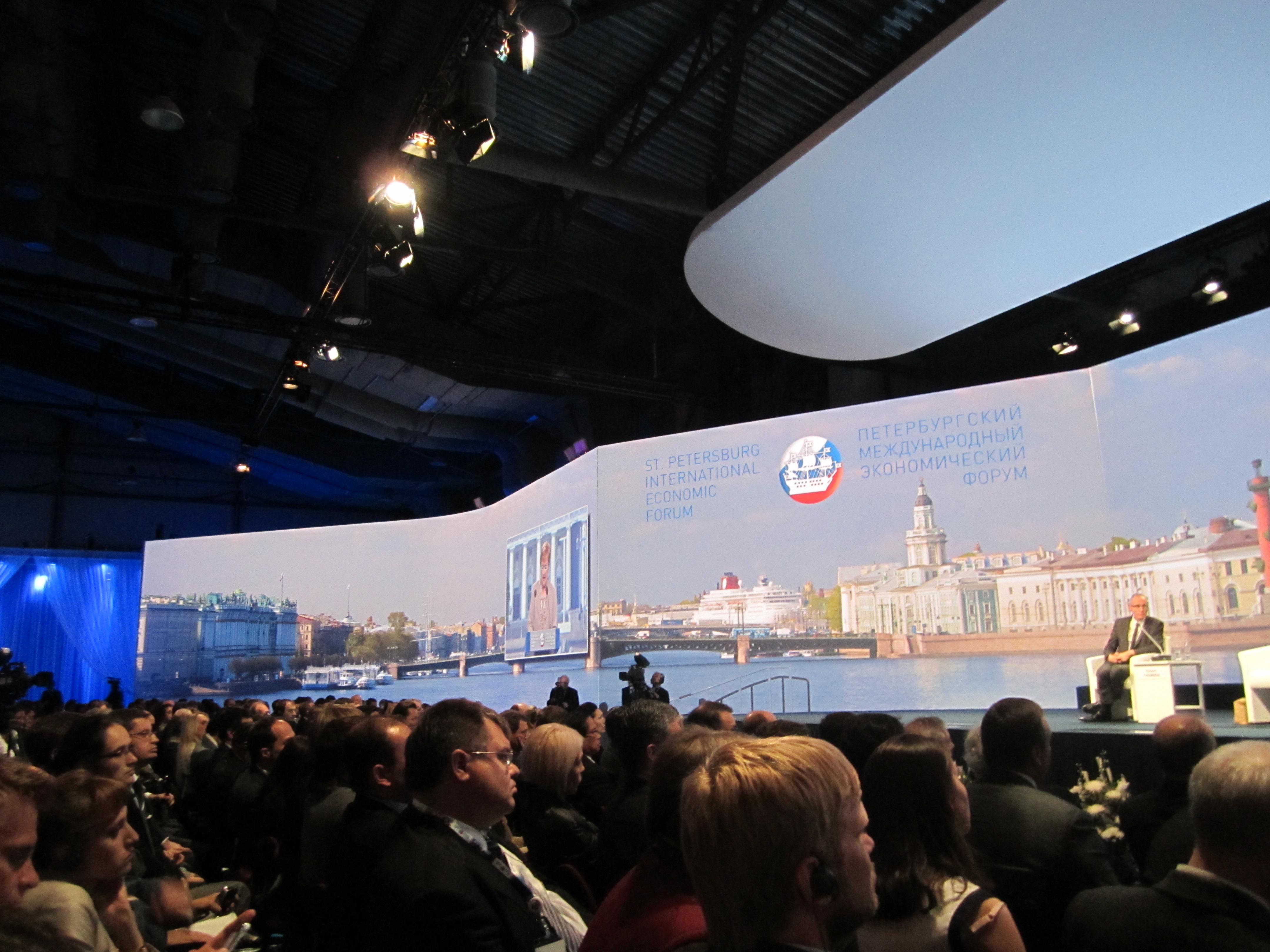
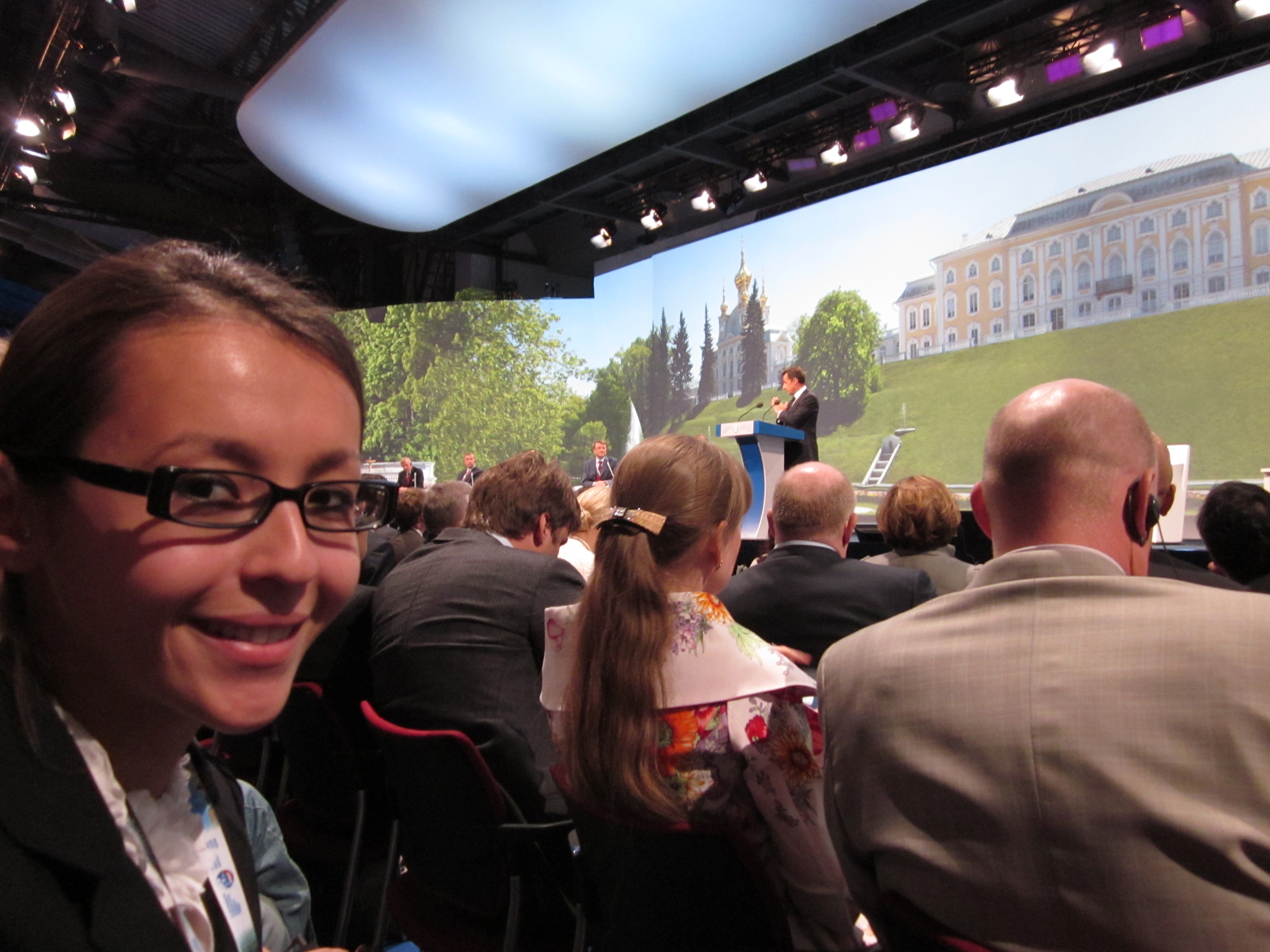
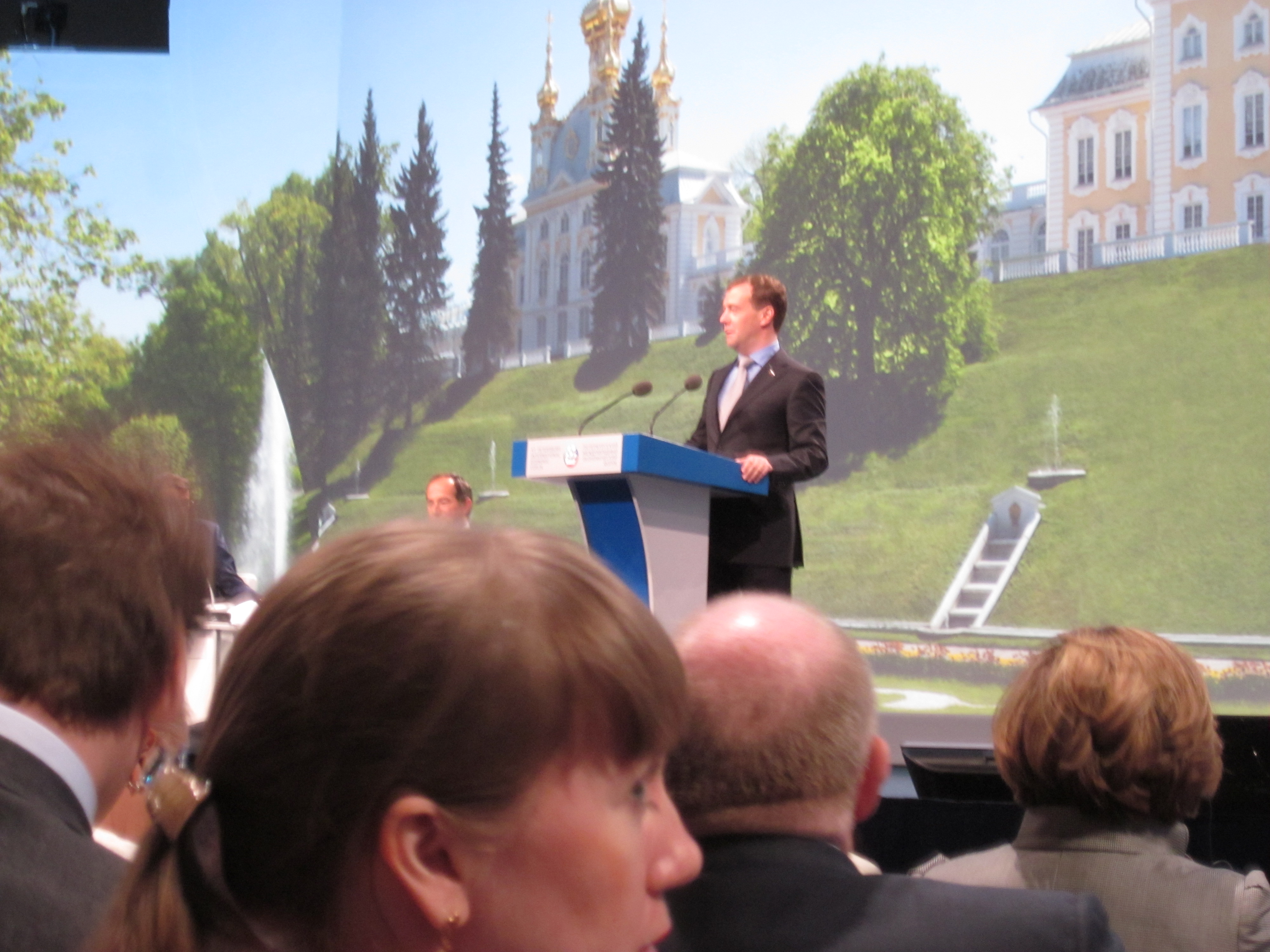
On the last day, we attended speeches by Russian president Dimitry Medvedev and French president Nicolas Sarkozy. Sarkozy, btw, decided to throw away his written notes provided to him by his aides, and speak off the cuff. It was the most jumbled set of ideas and expressions ever placed into perfect English translation. Notice in these photos, by the way, the emphasis on modernity by reference to a Russian Imperial past. The background mural on the stage, and for that matter, the entire Forum surroundings as depicted on the murals of the pavilions is a projected image of Peterhof palace (Petrodvorets) — a famous residence of Russian Tsars on the Finland coast.
Read Full Post »


 Capturing my attention was the inclusion of public lighting and renewables as suitable subjects, not only in the paintings, but also in the titles of the works themselves. One piece of Biliana is titled House with Solar Panels, while Dane had a few paintings with lamps, one titled Night Light.







































































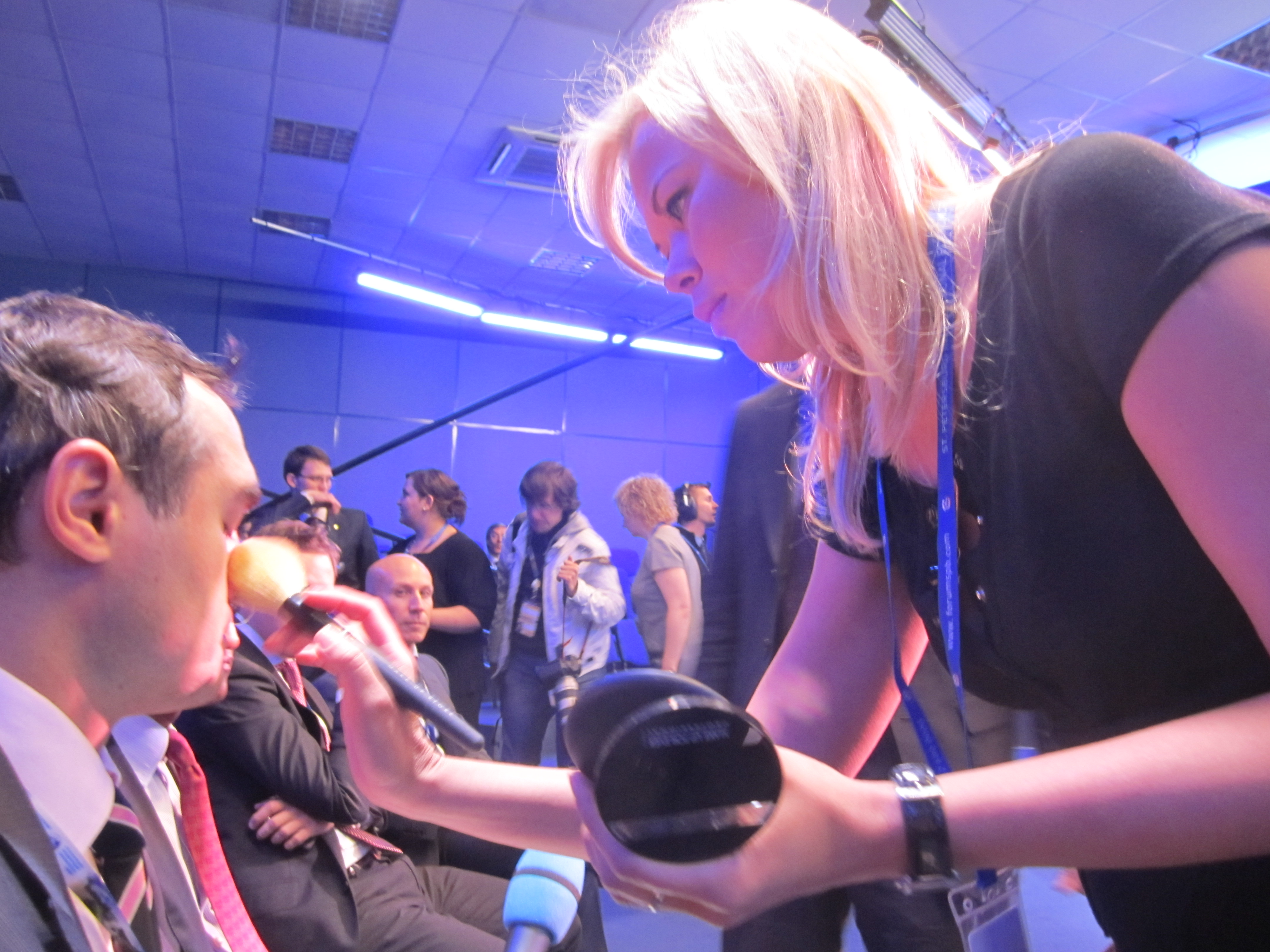


























 Paparazzi Ethnography