Feeds:
Posts
Comments

Archive for the ‘Paparazzi Ethnography’ Category


Epilogue

Back in Berkeley, attending to my routine, beginning my day in a cafe with a latte and veggie bagel sandwich. In the midst of my now productive calm – I want to comment on the casual, friendly and emotional exchanges that are often silenced in my write-ups.

latte-bagel-blog

All this traveling, reading, speaking, exchanging of ideas — it is emotion expressed in highly charged conversations among experts.

There is no better person to write about on the topic of emotional exchanges than Dr. Walter Kuehnlein. Walter, if I may be so informal, was the official chair of the conference. He also has some brilliant stories about developing the Kashagan oil field in Kazakhstan along the Caspian Sea, where he is lead expert advisor on sea ice conditions for the 160 billion dollar oil production project.

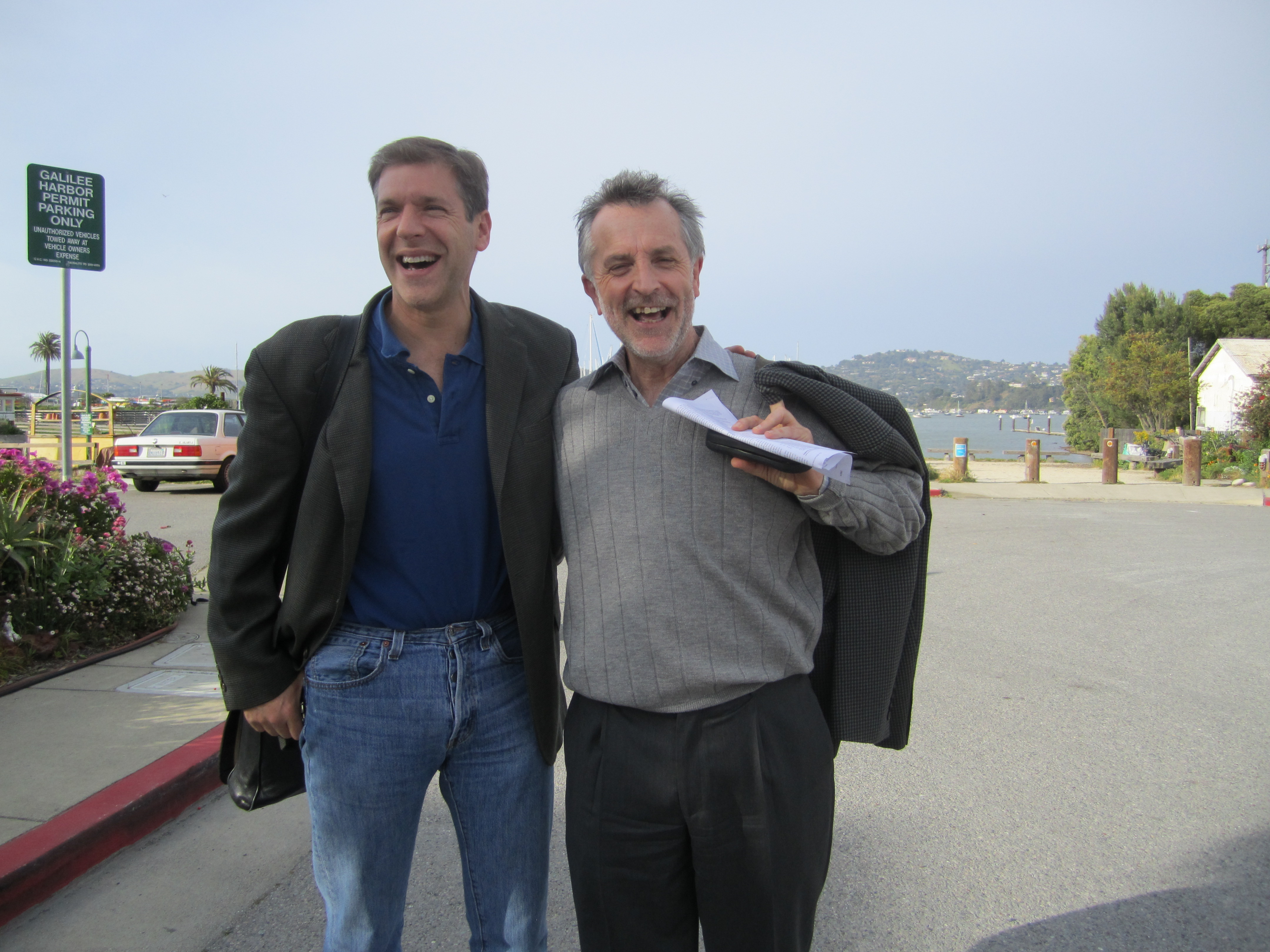
Walter and I became friends after we arrived back from the reception taking place at the Norwegian Consulate General’s home on Tuesday evening. We made a good impression that evening. Both of us were invited to return to the hotel via the comforts of a big black SUV escorted by two staff of the Consulate General. Upon entering the hotel, Walter and I bee-lined for the bar and began having a few Crown Royals before moving on to a Laphroaig single malt, in homage to Walter’s investments in the Scottish distillery.

Well, from there, we began to spar over a variety of moral and specifically philosophical standpoints about our personal commitments to purity versus practicality of aims. And this discussion raged on for several days, ending with a hug in the elevator as we departed for our separate destinations. In my opinion, Walter protests too much about the importance of being practical. In his opinion, I am rather naive about a commitment to the ideal. Both of us, in our own way, make compromises we must live with. Walter is perhaps more self-burdened with those compromises and far more wealthy and successful than I am. For my part, I am more self-righteous and selective about which compromises I will even admit to myself that I am making, and of course, sitting here in a breakfast cafe wondering over my fate as a visiting prof. Meanwhile, Walter is back in Hamburg, probably brunching with an aide to Kazakhstan president Nursultan Nazarbayev.

I should mention, as an aside, that Walter tells great stories about the written agreements between oil companies and the government of Kazakhstan. For example, the companies were contractually bound to have certain developments in place by certain times. An off-shore rig, which was being put together in Louisiana, but not yet completed – had to be moved to the Caspian Sea to make a deadline, and with the remaining parts flown in from the U.S. on an order of one million dollars per flight — requiring 800 flights. Can you imagine? A one million dollar airline ticket? And to be involved in such massively expensive projects.

Here’s a list of persons with whom I shared a meaningful exchange during the past week on consultancy and arctic energy development (in alphabetical order) along with their links to internet websites of firms they represent (note to self):


Yannick Benedek Technic
Troy Brown and Jimmy MaingotDrillTec
Cameron BodnarGovernment of Newfoundland and Labrador
Clare Edwards Kavik-Axys
Jim Kendall — Bureau of Ocean Energy Management- Dept. of Interior
Steven KopitsDouglas Westwood
Walter KuehnleinSea2ice
Gary IsaksenExxonMobil
Daniel LangesEmbassy of France
Consul General, Dr. Jostein and Sonia MykletunNorwegian Consul General
Gene PaviaUMIAQ
Wylie SpicerMcInnes Cooper
Eirik Torsvoll and Per Windingstad LarsenRoyal Norwegian Consulate General

It is dry just to list names. But I need to get in the habit of doing so. And I should note from this list some of the international origins of participants. On the last day, Yannick Benedek (from France), along with Troy Brown (from Germany) and Jimmy Maingot (Trinidad) as well as Walter Kuehnlein (Hamburg) all joined together at the bar to discuss massive energy projects, Shtokman, Kashagan, and the relationships between French and German companies and Russian intel gathering. Troy has great stories of his Moscow office, concerning intel gathering.

The clean-up crew

From there, Walter and I met up with Steve and Sue Woolley (Spain) to have drinks along with Wylie Spicer (Canada) and Jim Kendell (Washington, D.C.). Again, Wylie gave an excellent talk on regulatory issues. He really was the consummate emotionally distanced lawyer– a lawyer’s lawyer, while Jim was always quite concerned, nervous in fact, with how his federal government would view his activities — and would not accept that we buy him a round of drinks, even for a glass of merlot. Emotions run wild among the professionals. But clearly yoked to the utility and restraint of their particular status and position.

Day Four — Friday and wrap up

Great few presentations on LNG and risk management. List of to do items on this conference:

  • Names and websites and where they intersect on arctic research;
  • Post slides from talks;
  • Comparison of this conference to others that I’ve attended over the past year. Clearly, smaller gatherings are excellent to form closer bonds with industry personnel involved in projects.
Back to Berkeley


Day Three — Thursday

conference organizers and…

That is Steve and Sue Woolley, conference organizers celebrating after a successfully organized energy conference. They live in Spain, and manage everything out of IBC Energy in London. We all gathered in the bar after the thank yous and et ceteras. What did we talk about? I don’t even remember. It was hours ago already.

Here, I should like to thank Mark Nuttall for recommending to Sue that I present a talk. Mark was kind enough to send me his slides from last year, and that helped in thinking through my presentation.

To do list and notes to self:

  • International attendance: at one point in our discussion at the bar, I realized I was speaking to participants from Spain, Germany, Trinidad, Australia, France, Japan and Singapore
  • There was feedback on the Shtokman project with a few folks having competed on the initial requests early on
  • Interesting stories from the Woolleys on conference management.

Dr. Walter Kuehnlein — The Master

DaytimeTechnical Day –ice conditions, off-shore pipeline development, electrical heat tracing, pipe-in-pipe, safe line system, etc. These technical presentations are above my head.


Day Two –Wednesday

Wrap up ideas: I first traveled to the Arctic years ago. Back then, I imagined that I had caught a glimmer of the last frontier experience. I was awestruck by the midnight sun resting along the horizon. While I could not kick salmon out of streams (as historically noted), I could still throw a line-and-hook in the water and snag a Chinook in the gills without much bother. I was captivated by rural life of Alaskans, and spent quality time with Alana and Jerry Tousignaunt, who I’d met while volunteering as an archaeologist near Road’s End, in Chiniak, on Kodiak Island, Alaska.

Alana and Jerry lived in a camper with a plywood lean-to expansion. They had no running water, an outhouse and fired up a sauna once a week to bathe. Jerry taught me how to hunt, using 20-odd seven rifle and I used to sleep soundly on the plywood floor of their lean-to — wrapped in a few blankets. Up until that time, I had spent much of my life in the urban centers of New York and San Francisco and in upper-middle class neighborhoods of the San Francisco Bay Area, my first experiences of Alaska were a reprieve from the obligatory expectations of upward mobility, consumption. I cherished the experience.

inside light

Now, I have another type of arctic experience, one that does not take place under the midnight sun but instead, under florescent lights inside office buildings and hotel lounges. Men are accustomed to wearing suits and ties, while women wear skirts and high heels. No one speaks about fishing or hunting, and everyone is totally focused on maps, charts, designs, graphics – of how the Arctic can be managed. It is, nevertheless, an arctic experience.


Noon: Quite frankly, I did not expect to get the positive reaction I ended up receiving. I thought my first presentation to industry would flop. I’m inclined to interpret success here not necessarily based on my coherence and brilliance, but as an example of a real and longstanding need for managing relationships between industry and northern communities. The problems of arctic development are not technical, but social and of course, technical by social means.

Folks were intrigued by my argument getting different groups on one plane, managing the challenges of dealing with different stakeholders through social technologies that provide a continuous flow of information by a third party not-for-fee-service. I even was able to announce that we’re working on a Global Gas Center at Berkeley. I provided an advertisement, just like the other experts. Panelists of the following discussion titled future of oil & gas exploration in the Arctic, constantly referred to my talk and my ego inflated proportionately.

The Chief

I have decided to keep track of select persons who came up to me expressing interest in resolving issues through the type of discussion I provided. Both James Kendall, Regional Director of Alaska OCS Region, and Gary Isaksen, of ExxonMobil Exploration, expressed frustrations on how to manage and deliver a consistent message to community members in Alaska, and would be open to participating in brainstorming sessions for a Global Gas Center. Gene Pavia, of Umiaq (Ukpeagvik Inupiat Corporation) demonstrated a deep understanding of community frustrations with industry, ranging from fly-by community stops, where CEOs only come to villages for a few hours, to being inundated with details that are unmanageable. Gene expressed interest also in thinking through how to create stability and predictability on northern projects.

I was asked publicly by Cameron Bodnar, of the government of Newfoundland, whether Environmental Impact Assessment (EIA) reports provide the similar kind of proposal I refer to in my talk. I replied flatly in the negative. I reminded the audience that nuclear was not developed by market demand, rural electrification was not developed on market demand. Both were government sponsored mega projects.  Moreover, EIA reports are market mechanisms, where decisions to build are already completed based on market decisions, and where public discussion is back-ended. Thus, all these issues need to be front-ended.

10:00am: Just completed my presentation. Phew. That was, uh, well, I’ll find out during break—Steven Kopits patted me saying it was excellent, and Dr. K. made some warm comments as I left the podium, so hopefully I was worth my passage. Norwegian Consulate Jostein Mykletun is up now talking about High North issues. Norway is increasing presence, R&D and $$ up in the High North. Norway is open to more stakeholder involvement in the Arctic Council.

Three key elements in Norway Strategy: climate change, strategic operations, relations with Russia. Arctic sea ice and climate is changing at alarming rate. Jostein invited Senators McCain and Clinton up to Spitsbergen. “Arctic offers front row seats in the global theater of climate change”. The government has established a Center for Ice Climate and Ecosystem at the Polar Center in Tromsø and investing in research facilities in Svalbard. Border crossings- 140k between Russia and Norway in the arctic, when only a few years ago, there was 3000 crossing- they are developing a border passport when you live near the area.

8:30am: Presenting my first talk to the oil and gas industry in Houston, representing myself as an expert, just like the people that I usually study. Sue Woolley starting the meeting, “keep your badges on and watch your valuables – also plenty of time for mingling”. Sue is the organizer of the conference.

Dr. Walter Kuehnlien, managing director of Sea2Ice Ltd. takes over, begins his comments by stating, “so many distinguished experts here” – I’m actually sitting up at the front facing the audience — typing on my computer while this whole thing is ongoing. And I’m going to give my talk here in about 20 minutes.  This might be weird. Talking about social technologies in the middle of a Houston oil and gas industry audience. I’m a little nervous. Not panicked. But just wanting it to go back to my hotel room and watch tv. I always do this. Present some idea that is unproven and uncertain. Could be embarrassing. We’ll see.

Okay, back to Dr. Kuehnlien, he’s talking about the increases in demand of oil and gas, problems with nuclear power, etc. He has a vision about optimizing development. Mainly technical.

Next presentation. Steven Kopits. I am after Steven. Ugh. Steven just got up to the podium. Looks confident. “Good morning everybody” – talking about macro issues. Begins with an advertisement for his firm, Douglas Westwood is a consulting firm – leads with market research, oil services and technologies, banks, etc. Begins his talk with Oil demand issues. China demand is up, everything is up, even better than government projections. Oil demand continued. Oil demand continued. Macro.

I have about 10 more minutes and then I’m up. Nervous. Did I mention I had a few whiskies at the bar last night while arguing with Dr. Kuhenlien over the importance of Polish film director Roman Polanski? This morning, I shook Dr. K’s hand with trepidation, and then we both burst out laughing. I was so passionate about my ideals and fate of creative projects. Ugh. A few more minutes. Ouch, Kopits is done.

Okay, Dr. K. just introduced me, here I go. Ahhhh!

7:30am: Went through a dress rehearsal of my presentation this morning in my room. Walking through the lobby en route to give up my power point presentation at the conference. Noticing all the bulls starting their day in suit and ties — walking matter and happy to be one of them. And in the middle of my measured confidence I was stopped dead in my tracks by a song coming over the airwaves. What was it? That haunting melody? And then I recalled. It was Yo La Tengo‘s Can’t Forget (Available here on YouTube) — I practically fell off my rails. I used to listen to Yo La Tengo’s tracks years ago in Japan while visiting Miruna Stanica, now a professor of English somewhere on the East Coast. I could just sit in the lobby and keep the tune on rewind, sipping a coffee and drift away:
Day One —

The Meal

Reception: The Norwegians are so gracious! Especially in Houston! I was so lucky. I got to meet with Royal Norwegian Consulate General, Jostein Mykletun, Ph.D. and his gracious wife Sonia Mykletun, who has been running the Fulbright Scholarship for Norway for a couple years now. Who else was there at the reception. Well, everybody?

The fabulous Sonia Mykletun

We had so many opportunities to say hello to each other. And on top of that, we even had time to do a pow wow on carbon sequestration, the future, coal, natural gas , and everything you can think of that has energy in its title. And even the Arctic. — Green Coal. That was the ironic insight we came up with. No longer Clean Coal but Green Coal. Imagine!

There is no better activity I can think of than that of an ethnographer paparazzi of the not-so-famous, and in this case, of the so many talented professionals working on oil and gas in the Arctic.

The King and Queen of Norway, standing behind Eirik Torsvoll and Per Larsen, staff to the Consulate General

pow wow

en route to reception: I showered and left the hotel room for a glance around before heading off to the reception at the Norwegian Consulate. What did I witness? Higher end furnishings and a mall. Stores with food, steel wracks, clothing, people, starbucks, escalators, elevators, marble floors, brass railing, glass walls, air conditioning. Excitement. Fatigue. Restlessness. I remember such events from Arizona. The higher end mall always appears to me as an image of a feudal order. All the various non-mobility positions in place. The concierge is overheard attempting to manage hotel guests who are demanding that they be placed in executive suites. The candy store salesperson flatly refuses to be photographed by a tourist because of company policy. Arriving as I did from Elmwood in Berkeley, an intimate street with small worn-in shops, I had some difficulty adjusting my sight to the present surrounding.

hallways, beds, linens

coffee cups, cocktails, credit cards

air conditioning, gummy bears

2PM: I arrived into Houston and checked into the Westin Oaks Hotel at the Galleria. I forgot how tony this place is.

This is my first gig as an expert presenter to the oil and gas industry, so I’m going to document the entire affair…. I realized, upon arrival, that this venue was the previous location for the Cambridge Energy Week Executive conference, before they headed to the new Hilton, which I covered when I attended that affair last March.

Okay, let’s start with a simple equation: How much does a 1/2 hour presentation by an fledgling expert (me) actually cost an organization? Well, RT airfare ($326), three nights at the hotel ($299 x 3), RT cab fare to the Oakland airport from Berkeley ($85), RT cab fare to Houston airport ($100, but I opted for the shuttle so its $50). Of course, there is a taxi to the reception this evening at the Norwegian Consulate in Houston, and then a few meals but I don’t eat much. So in the end, the cost to hear me babble is about $1358 in expenses. But we should add that I’m going to be observing the event and collecting data, and that under typical conditions, I would be required to pay for the entrance fee ($2698). Thus, the final tally comes to $4056.


I am going to take a shower, and start taking some photographs of the hotel. I will post those later this afternoon before I head to the reception, and then by late night, I’ll have the talking heads posted as well.

Read Full Post »


Alex staging plaque


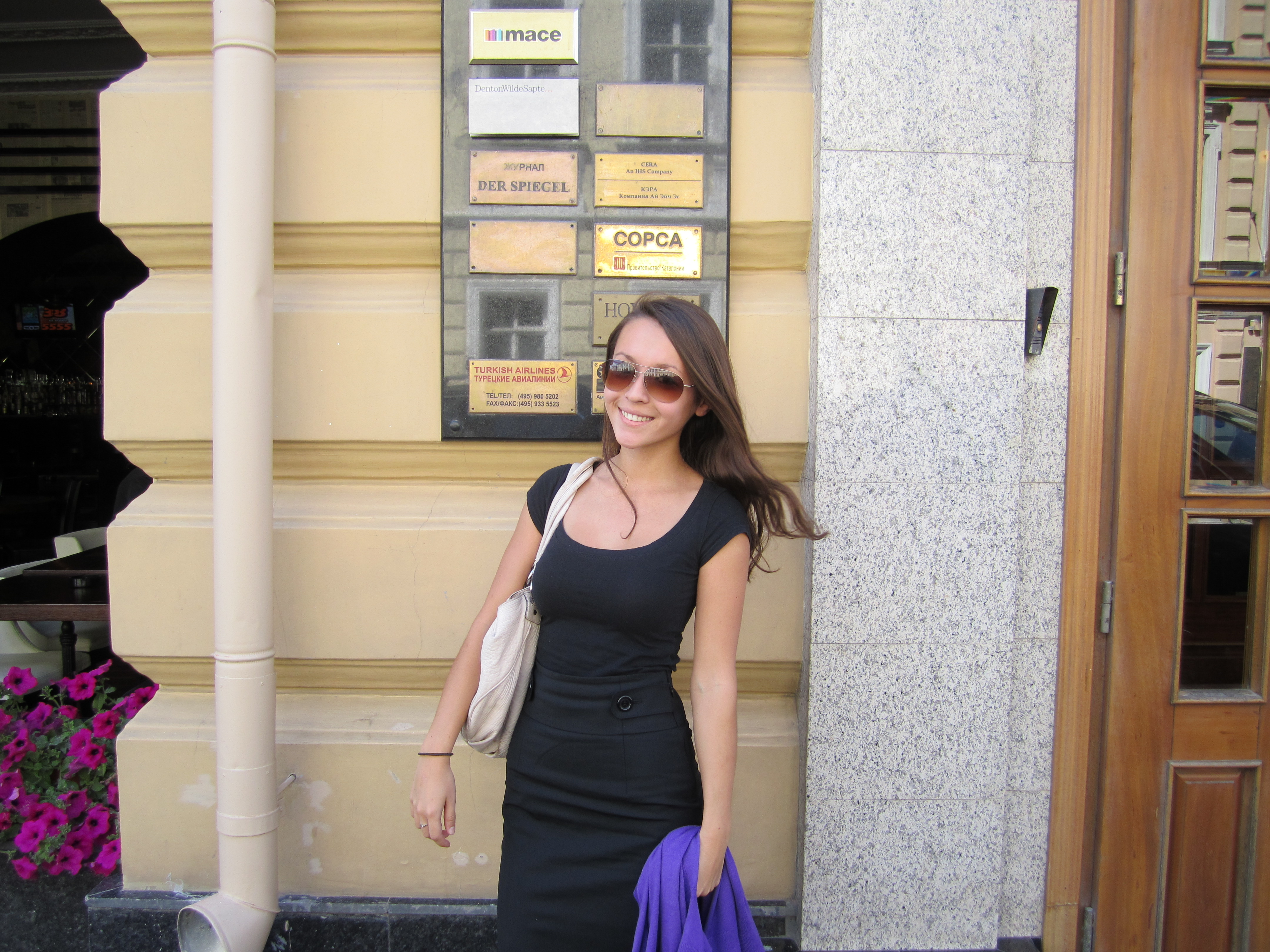
I find myself fascinated by the crypto-symbolism of sense making created by Cambridge Energy Research Associates or CERA. As many of you know, CERA is an energy consulting firm and global leader in providing advisory knowledge to decision makers on energy development. It is headed up by the charismatic energy guru Daniel Yergin. I first met Dr. Yergin while working as an energy lobbyist under Alaska Governor Tony Knowles. But that’s another story. CERA has 11 offices across the world so whenever we visit a destination with a CERA office we like to check in.

In Moscow, Russia, we visited Vitaly Yermakov at the CERA office. I have quite a bit to write about that meeting. But before going there I want to pause on the curiosity of this bronze plaque that identifies the Moscow office.

Please take a close look at this plaque, and you will come to understand what is so interesting about the intersection of anthropology and energy expertise. First of all, the plaque is glued to the entrance of a Moscow office building. And, as you can see from the empty holes on each corner — in fact, the plaque was created specifically to be bolted to the building. The use of bolts has a long history and predates the use of glue, which is relatively recent. That is, a bolted plaque provides a narrative about historical time. Unlike glue, which hides between the plaque and the building, bolts provide visible evidence of attachment in a material way that captures the viewers attention.

It’s not unusual to see a bolted bronze plaque in Russia. Together, the bolts, the bronze metal and the plaque —together— establish the mark of a reputable institution in the eyes of the pedestrian, and this process of marking applies widely from hotels to universities. Take a look here:


“European University in St. Petersburg” as engraved in the Cyrillic alphabet.


Bolts, bolts, bolts (admission: in the lower image, the plaque uses screws).


Nevertheless, you get the message. Using a bolt is Meaningful as evidenced — both, by the drill holes in the plaque and the visibility of bolts actually used to secure the plaque to the building.


So why are there no bolts on the CERA plaque?

It is certainly tempting to suggest the answer has something to do with the building itself, the materials used, etc. — a kind of materialist functional answer. Uh-huh. I thought about that one. So why is it then, that the bronze plaque, directly located to the left of the CERA plaque — have bolts?

Bolts and No Bolts By Comparison


Thus… this peculiar feature of marking energy expertise raises the question: why are there no bolts on the CERA plaque in Moscow?

Can you imagine? The presence and absence of bolts on a Moscow plaque as the basis for developing a theory of the role of Western energy consultant expertise in Russia? At any rate… let’s take a look at the sense-making surrounding the various types of lettering…

Notice that the hotels are written using a Latin alphabet and communicating in the English language proper. That makes some sense. These are expensive hotels often catering to tourists from Western Europe and the US. The only example of a purely Cyrillic alphabet belongs to the plaque announcing the European University in St. Petersburg. And that makes sense, in part, because they are already somewhat estranged by their institutional title and affiliation as a “European University in” Russia — so identification in purely Russian language would seem to soften the dissonance between their institutional identity and the requirement for presenting themselves as, well, a Russian institution (a European-ly Russian institute).

Then, there’s the bronze plaque above — “ЖУРНАЛ DER SPIEGAL” — indicating the German Newspaper Der Spiegal, written in both Cyrillic (ЖУРНАЛ) and Latin (DER SPIEGAL) alphabets.

Okay, this is going to sound a little nutty:

First, notice what the Der Spiegal plaque has in common with the hotel and university plaques. They are all using UPPER-CASE FONTS for ALL letters. By contrast, the CERA plaque capitalizes only select letters of words: (1) the beginning of each word; (2) acronyms in Latin and Cyrillic; (3) the first letter of each acronymic letter in cyrillic that spells out the company IHS.

That’s weird to me. Another thing: Notice please, that the CERA plaque has written in Latin alphabet the acronym “CERA”. And this acronym has a direct Cyrillic alphabet translation in the acronym “КЭРА”….

….By contrast, however, the acronym in Latin alphabet “IHS” is not translated into a Cyrillic alphabetized acronym, but instead, into the words “Aye Aech Es” by use of the Cyrillic alphabetized letters “Ай Эйч Эс” — This raises the question: why on earth do the words “IHS” when translated into the Cyrillic alphabet lose their direct translation as an acronym but appear on the plaque as a string of words (“Ай Эйч Эс”) that provokes an English pronunciation of the company?

Let me drive the point home: the acronym CERA produces a sound pattern in spoken English as “SERA”. By contrast, the acronym КЭРА produces a different sound pattern, that if heard by an English speaker, would sound like “KERA” — There is a difference in the sound pattern of the English versus Russian lettering, even though both acronyms refer to one and the same company. The plaque allows a Russian speaker to pronounce CERA as “KERA” (and not “SERA”) in the Russian language. Yet, this same plaque demands that a Russian speaking pedestrian create the sound pattern “Aye Aech Es” (Ай Эйч Эс) for the acronym IHS as it would be heard when speaking in English.


As a reminder, we’re looking at the representation on a bronze plaque in Moscow of an energy consulting firm — through their choice of lettering to create an image of the company for the pedestrian, and asking the question, why is it that the acronym “IHS” must remain pronounced in English through the cyrillic lettering “Ай Эйч Эс” — when a direct font translation if printed in Latin script would be rendered “CERA An Aye Aech Es Company”.

Now we have three puzzling questions surrounding CERA’s bronze plaque in Moscow:
(1) Where are the bolts?
(2) Why is there a mix of upper-case and lower-case lettering?
(3) Why is the acronym “IHS” rendered as words printed in Cyrillic, when the acronym “CERA” — in Latin alphabet is rendered as the acronym “КЭРА” in Cyrillic alphabet?


It is worthwhile to note that this staging of the — IHS/Ай Эйч Эс and CERA/КЭРА –formula is not a unique event to the plaque alone, but represents an aesthetic of form, a rationality of self-presentation as seen duplicated on business cards. Here is the Russian language business card of a CERA expert working in Washington, D.C. — notice the presence of “КЭРА/Ай Эйч Эс” on the very bottom of the image.

IHS CERA in Cyrillic type

On the English side of the business card, the Latin alphabet is pure and simple “CERA — An IHS Company”

Returning to the Russian side of the business card, the Cyrillic alphabet appears directly below the Latin alphabet — recreating the bronze plaque in Moscow almost completely in lettering and placement (the trademark which appears on this card is not on the bronze plaque).


Not incidentally, the business card provides an important clue for understanding the anomaly in acronyms — notice please the following:

CERA An IHS Company”

КЭРА Компания Ай-Эйч-Эс”


Do you see it? CERA and КЭРА are both printed in Bold Type Face.

Whereas only IHS is printed in Bold Type Face — Ай-Эйч-Эс is not. What this means is that the logic of Ай-Эйч-Эс is not that of an acronym, according to the company itself. It is in fact, thoroughly understood as a string of words, printed in Cyrillic alphabet, with the purpose of producing the sound “Aye Aech Es”.

As such, Ай-Эйч-Эс is a string of words. On the one hand, the sight of these words does not produce an immediacy of meaning that the three previous acronyms produce. The acronyms function as a hieroglyph — at one glance, we understand what they are meant to signify. Thus, Ай-Эйч-Эс is weighted down considerably. First, it requires a double-step to arrive at the meaning of the acronym (pronunciation and then realization). Second, the time-lag required for cognition dampens the effect of immediacy that accompanies the hieroglyphic sign function of the acronym. Third, the bold type face accents the immediacy of the hieroglyphic function, while the absence of bold type face emphasizes the immediacy of pronunciation function (i.e., “Ай Эйч Эс” appears like every other word that requires reading).

CERA stands for Cambridge Energy Research Associates. If you google the acronym CERA, a variety of company pages and news articles pop up in spades. However, if you google КЭРА, you are likely not to find anything, until you combine the acronym with a word string, such as “КЭРА energy”. So what does КЭРА actually stand for, if it is not a recognized acronym of the company in its own right?

Well, this is interesting. КЭРА is actually a transliteration of CERA. That is, it is the spelling of “Cambridge Energy Research Associates” in the Cyrillic alphabet: Кембридж Энерджи Рисерс Ассошиэйтс or КЭРА (Cambridge Energy Research Associates or CERA). In Russian, it is a string of word-sounds that would be recognized by a Russian speaker as totally foreign, of foreign origin. What this means is that the phrase does not follow any grammatical rule or usage in the Russian language that usually governs over the spelling and pronunciation of words. It is stable and static. It does not decline, for example, when used in the news media. Take the following example, of an advertisement for a job vacancy at CERA:

Looking at the first sentence, appearing under the news headline and company internet link — there are the words printed in cyrillic:


“Компания Кембридж Энерджи Рисерс Ассошиэйтс, Инк., КЭРА (Cambridge Energy Research Associates, CERA) –”


In English:

“[The] company [of] Cambridge Energy Research Associates, Inc., CERA….”


The point I want to make here is that the first word “company” in Russian (Компания) is typically followed by the name of a company appearing in its possessive declination, something like the following: Кембриджа Энерджй Рисерса Ассошиэйтса.

But here, of course, the phrase remains a transfixed loan word, without interruptions in Russian language. One might say, that it belongs to a category of Western capitalist word formations that are new to Russia, including the transliteration of the phrase “energy consulting” (энерджи консалтинг). The actual word Energy in Russian is Энергия or Energiya — “Energy”. It is not энерджи which in Russian, has the same pronunciation as the word in English energy.


But there is more: Look again at the Russian spelling — Кембридж Энерджи Рисерс Ассошиэйтс.


Actually, if you pronounce this phrase from your lips as it is spelled out, what you would actually hear is the following: Cambridge Energy Researsh Associates” — The word “Research” is actually mis-transliterated. The word is spelled without using a ч on the end, to create the “CH” sound. Instead, it is spelled with a с on the end, creating an “S” sound.


A small consideration perhaps, but then why go through the trouble of absolutely ensuring that that the “H” in the acronym “IHS”, is spelled in Cyrillic with the ч sound (Эйч)?


Thus, we add to our original three questions, a fourth question:

(1) Where are the bolts?
(2) Why is there a mix of upper-case and lower-case lettering?
(3) Why is the acronym “IHS” rendered as words printed in Cyrillic, when the acronym “CERA” — in Latin alphabet is rendered as the acronym “КЭРА” in Cyrillic alphabet?
(4) Why is the ч (“ch”) pronunciation important enough to be spelled out in the acronym “IHS” but apparently, not important enough to be spelled out in the word “Research”, when the latter word appears in the Cyrillic alphabet to denote the company name of Cambridge Energy Research (Рисерс) Associates?

And what does this all have to do, we wonder, with the fact that at the front door of the CERA/IHS office inside the building, the sign indicating the companies only refer to IHS?


These differences are beginning to suggest a critical set of distinctions that separate CERA and IHS as the joint company appears to itself and others inside of Russia.

Cultural logics of Western practice —

available at the passing glance of a pedestrian…


Paparazzi.Ethnography@berkeley.edu

Read Full Post »

Cazneau

6/1: Headed over to Cazneau to talk about next moves for establishing a UC Berkeley Global Gas Center. Previously, we received a proposal from them to run a Colab for fund raising and  business plan activity. Colab – Great Idea. But cost was high. After brainstorming, Kim Schilling suggested I meet with Cazneau CEO Tony Hayward. I was nervous. Tony was totally cool, but I know next to nothing about raising money. I wrote lots of notes, and drafted an email for their review. When we agreed on the contents, I forwarded it to my partners, Dan Kammen and Michael Watts. Meanwhile, Dan K. was back East, talking with Royal Dutch Shell about a potential funding opportunity.

When I was in Norway in February attending the Oslo Energy Forum, I had an opportunity to listen to Malcolm Brinded, Executive Director Upstream International, Member of the Board, for Royal Dutch Shell plc. Brian’s address as printed on his business card is a PO Box at the The Hague, The Netherlands.

Everyone at the Forum seemed quite concerned about natural gas, as if coal was getting the upper hand. Malcolm’s talk was quite well received. The man appears formidable in public, as a leader. I was lucky to share an exchange with him over drinks, but I do not recall what we discussed. Everyone enjoyed his talk and I have posted it here: Malcolm Brinded Opening Remarks: Oslo Energy Forum


5/18: Our latest proposal (Kammen, Watts, Mason): Center for Global Natural Gas Draft Proposal

5/9: Cazneau Group in Sausalito responds with a proposal for assisting in developing a Global Natural Gas Center at UC Berkeley.

4/22: We met with Cazneau Group in Sausalito for a brainstorming session on creating a Global Natural Gas Center at UC Berkeley.

The Cazneau Group is a collaboration solutions group that catalyzes individuals and organizations toward strategic partnerships. They do so primarily by creating a space for both experimental conversation and social interaction. They are caretakers for indeterminacy. The principals behind the Gas Center – Dan Kammen, Michael Watts and myself– are working with Cazneau’s team members, Founder and Director Jeff Hamaoui and Kim Schilling to create a new object of social, political and science exploration. Our meeting on April 22nd produced a lot of Eureka moments.

My description — Maturity and Expansion:

The natural gas industry is a large maturing energy system. Current users are both inheritors and descendants. As inheritors we act similar to feudal aristocrats who became dependent upon a form of energy capture (traditional feudal society), without questioning the rationality or vulnerability of a system for which they did not create. As descendants we are caretakers of a techno-ontological system whose added-value takes a specific form. As Marx said, we create history in conditions not of our choosing.

This system opened recently because of changes in industry restructuring. The self-enclosed aspects of a government-sponsored structured risk environment has given way to a competitive risk environment. These changes have overturned the hierarchy of social relations in the industry. What were once considered primary players (pipeline and energy companies) have become an older segment of industry. This older segment can no longer compete effectively alongside a newer segment of industry (marketing), without identifying new forms for understanding how the industry now operates. What has taken place then, is a need for what I call social technologies (scenario planning, workshops) that can provide information on navigating these new uncertainties.

Dan Kammen’s description — Legible Idea of Natural Gas:

Dan Kammen points out that natural gas in recent years has become visible — actually visible to a variety of energy users and politicians. This has taken place primarily through the shale gas hydrofracturing technique which is increasing supply outside of traditional supply areas. The effect has also contributed to a delinking of gas from oil in energy markets. The visible result can be seen in upstate New York, where seismic trucks now travel the same roads as school buses, creating potential dangers of traffic accidents that were unheard a few years ago. Politicians spanning from the ultra right to ultra left are coming to view natural gas as a future fuel, similar to the way nuclear power in the 1950s was thought of as too cheap to meter. That is, natural gas is creating an imagined community of energy users, creating alliances based on projections of unlimited fossil fuel use. In this way, natural gas can be understood as a legible idea that serves as an applied force that centralizes ideas, activities and authorities around some specially focused visible entity (e.g., natural gas).

Michael Watts’ description — Efficiency Idea of Natural Gas:

Michael Watts suggests that natural gas is a particular type of Gordian knot that entangles together all matters of intellectual ideas, practical activities, ontologies, fabulous geographies and social authorities. Through natural gas, the mind wanders across new frontiers, quantitative numbering schemes, relations of supply and demand, hop, stitches and jumps from Norway to Ghana and then disappears altogether. Darkly matters become revealed through whispering secrets while fantastic conflicts become mere suspicions. In this latter sense then, natural gas serves as an efficiency idea that accomplishes the task of coordination through the diffusion of certain intellectual ideas, practical activities and social authorities across society. As an applied force and diffusive force both ideas (Legibility and Efficiency) are distinct types of social power whose aim is to generate and intensify power (both social and natural) through coordination (e.g., of humans, of ideas, of power, of things).

Energy Czar

The Exchange

Social Entrepreneur — Jeff Hamaoui

The Academics

Read Full Post »

Dirk Brantle

Met with German philosopher Dirk Brantl, visiting here from the University of Tubingen. We met last week at the ERG picnic, when I asked him to discuss his research on 17th century author of Leviathan, Thomas Hobbs, for which Dirk has completed a doctoral dissertation and is in the process of writing a book on the topic.

Dirk had fascinating insights about Hobbs. One of the things Dirk pointed out is that, while graduating from Oxford, Hobbs never became a university professor. Instead, he was tutor to certain large families in England. Much of the material he based his writings upon was available to him in the libraries of these estates. And of course, Dirk walked through the logics of Hobbs’ critique of Aristotelian philosophy of virtuousness, suggesting that man by nature can only act according to his interests, and to be virtuous requires a strong sovereign force.

Dirk and I then discussed the possibility of meeting for a coffee and he requested that I send him something I was recently working on – which I was happy to do. I emailed my recent paper on Corporeality of Consultant Expertise, the talk I gave this past Wednesday previously.

Here’s a sense of the conversation I had with Dirk, because I wrote a few points down:

  • My book is essentially about the fleeting phenomena surrounding how agendas are set through expertise. Here what I am referring to is not political institutions or history of the industry, but instead, the all facets (through ethnography) of what happens when consultants engage with politicians. And this is captured from handshakes to the kinds of images used to influence politicians about decision-making.
  • In an earlier post, for example, and in the corporeality piece, I refer to a Heidegger-ean distinction of tradition versus modernity – primarily through the way humanness is represented on things- such as leather and wood that were close to our bodies and which we utilized over a long period of time, versus its absence on modern products, such as computers, car door handles, which do not carry a trace of the human heart and are disposed of readily. And in this case, my argument was that things that carry a Human Trace, are not necessarily carrying them in a deliberative manner. There is no virtue in leaving a human trace of the human hand on a wooden door post that has been opened for umpteen years. But the fact is, that once that door post, now 2 decades old, is encumbered with the trackings of the human hand, this non-agentive object takes on agency, because it represents the accumulation of time, subjected to it, of course, without intention. And in this manner, I refer to the hands of experts, which are like putty, because they never do any manual labor, but when shaken, demonstrate and take on agentive quality. That is, when you shake their hands, you are confronting a particular type of humanness, characterized by a certain corporeality in relation to a specific type of labor.
  • Take another example, in my book, government is not interested in economic training, but in how to channel the complexity of facts into the kinds of simplicity that can form the basis of political decision making. And through this we can see the intersection of scientific facts, interests of government interests of experts. Take for example, the importance that graphics play in demonstrating what the future of what shall be. This is an important point. When I first started working in energy politics, I used to see graphic designs that I could not understand. Nevertheless, much like a business awning with Chinese lettering, I could acknowledge meaning without registering understanding. And this distance between registration and legibility created a tension between what I did know and what I wanted to discover. This was particularly the case in certain graphics that depicted natural gas formations in the United States, which at first, I did not quite understand. But here again, in these images, which I was just coming to know, there were only a handful of ways of reading the message. I could acknowledge that the United States was being referred to, and that there were some “blue bubbles” that I could not yet register their meaning (they were supply areas). So what I could say is that in this image there was already a pre-judgment of things before I was even told by the consultants what the images meant. That is, the uncertainties themselves are bounded.
  • Another issue we talked about, from the importance of examining the fleeting phenomena of decision making, was that in such instances, you can actually examine how decisions are made, instead of simply state that institutions make decisions. And for this, one needs to recognize that the bodies I am examining are not subject to institutions of knowledge, but instead, are representatives of these institutions. They speak on behalf. In this sense, my informants represent two faces of sovereign body, in that they had properties by which institutions can take form. They were totally replaceable, because it was their position that remained, and yet, because they stood in those positions, they in effect, made decisions.
  • Again, one of the problems of my piece was moving from the historical to the empirical, which I never wanted to do. Capturing fleeting phenonena was always about the actual ritual context of the moment, despite whether or not, certain forms could be historicized. And so here, the idea was to understand, in a complex setting – how fleeting moments register events.
  • “Knowledge-Events”. In my corporeal piece, I refer to Eureka Moments. These are moments of inspiration in which what occurs is an idea that can change the reality of the world. In my conversation with the philosopher Dirk Brantl, he pointed out that in my work I refer to Eureka Moments as a type of Knowledge-Event Product created by experts for their clients. Dirk suggested that my use of the word product limited the possibility of the claim behind a Eureka moment (knowledge-event). So for example, once you share a Eureka moment, the question then arises, what is your responsibility to carry out the project? Are you at liberty to discard your pathway? Or with are you obligated to set an agenda? Would I need to remind you that we had that moment if you moved away from the agenda set by that Eureka Moment. In essence, How do Eureka moments create sociality and responsibility.

The Eureka moments I refer to are not the eureka of Archimedes but characterized by sociality.

Read Full Post »

les deman

March 22: I drove down to Half Moon Bay to meet natural gas energy consultant, Les Deman. Half Moon Bay is 25 miles to the south of San Francisco’s southern border. The town is located on the first available agricultural land along the ocean after a 20-mile stretch of cliffs to the north. So steep are these cliffs, in fact, that the State of California has decided to build a tunnel to bypass what continues to be the most dangerous pass on the coastal road, named Devil’s Slide, because of its continual erosion into the sea.

Everyone in the energy business I speak with begins their reference to Les Deman by making fun of his name because it sounds like “less demand” which suggests de-growth in an industry oriented toward unlimited progress—climate change notwithstanding.

Arriving early, and recognizing that I would have an extra half-hour before my meeting, I decided to walk down to the beach in order to grasp some fresh air.

These days, it seems more than ever, there is nothing like a little self-immolation to get my heart going: “What is my reason in meeting with Les? To collect his personal history? Compare notes? Outline my project? Assemble raw data quaint to the anthropologist? Or more likely: To horde data like swatches of cloth to a quilt-maker who collects with no other purpose than to observe the decay and clutter of the unrealized.” And so on.

Upon leaving the beach, I noticed the wooden staircase up to the road had a worn quality to each step, where the human foot had defied gravity. Martin Heidegger, in Building, Dwelling and Thinking, I believe is the essay, talks about the objects that hold residue of the human hand and foot. A wooden fence post or leather pouch, visibly worn with the continuous touch of the hand is simultaneously a material sign of the human being. Heidegger contrasted this nostalgic image to the modern daily technological wonders of our lives that never seem to leave a trace of the human heart. The Refrigerator Door. No matter how many times you slam the steel frame, your hand will never leave the quality of life on it.

Enduring indents in steps

Ephemeral indents in steps

Les Deman turned out to be a small-in-stature, dapper, semi-retired energy consultant, with 40 years of experience, beginning his first gig (after completing a Master’s in Economics at U. of Oklahoma) in a boutique energy consultancy in New York City in 1971. After nearly 2 years becoming acquainted with the oil and gas industry, he moved to Houston where he worked for a marketing firm, Texas Eastern gas transmission, which had been acquired by Panhandle Eastern, which was then acquired by Duke Energy, all natural gas marketing firms, and where Les spent a total of 18 years of his life.

At Tenneco, a firm he subsequently worked at, he was named Director of Competitor Intelligence, where he and four analysts under his guidance, examined competing natural gas transportation firms, struggling to discover — well, what made their competition tick, what gave them higher earnings, etc.

It was at Tenneco, that Les hired the North American natural gas consultant, Ed Kelly. Coincidentally — or not, because as Les says, consulting is a small world — Ed Kelly was the lead director for the State of Alaska contract with Cambridge Energy Research Associates (CERA). I write quite a bit about Ed Kelly in my book, actually. He is the subject of Chapter Two, when — during the period I was working as an energy lobbyist– we (State of Alaska Officials) were holed up in a hotel room, asking Ed his opinion about government support of arctic gas development. As Les explained, Ed Kelly and he were both at Tenneco, when the company was acquired by El Paso, after which Kelly went to CERA, and Les went to the Texas Railroad Commission, which is the regulatory body in the State of Texas.

His established corporate career came to a close after working for the Canadian firm, TransCanada Pipelines (2.5 years) and then Shell Energy North America where he worked an additional 10 years. Well, by my calculations, that comes up to 37+ years of corporate oil and gas economic experience. Good grief.

What had Les learned about energy consultants during that time?  What had he learned about himself as a consultant, or the role of those experts working independent of any particular sector of the market, or in general, the assemblage of capital for these project?

A few no-brainers reminded me of things I should know by now. For example, economics is a supply-demand market fundamentals prescriptions, that Les applies to anything he has his hands on, and this reminded me to how my own objects of analysis are shaped by my own discipline.

Something else, that consultant knowledge, in his view, rarely comes out with an idea ahead of its time, but in fact, after industry, as individuals and collective, have decided to move in a certain direction. In this sense, for Les, consultants are there to “bless the work” and to “cover the management’s ass”. What this means, in a sense, is that for Les, consultant knowledge (1) comes after and (2) verifies, rather than the predictive quality that I often assign to it. And this makes sense when I think about many of the reports created on Alaska natural gas – basically, they were following the money, there was an investment community interested in the projects and to some extent willing to put money behind it, so why turn your back so to speak.

One final point, Les remarked upon in connection to the added value of consultants was project “structuring”. There are, carved out into various projects, various ways to turn them around so that you could see what other values you could take from them, and on this practice, consultants were helpful.

Finally, after hearing me talk about some of my research, Les ask me the question, “are you interested in being a consultant”?

“No, not at all” was my response. Fee for service is not my gig. I left the man in the parking lot, and I was sort of taken aback by what I consider the ridiculousness of my situation. I seem to know enough about a topic, that someone else with experience would want to know how I am employing it in a way that I profit personally from the knowledge. And yet, I do not consider what I am doing knowledgeable, in the sense, that anything I do fits with the standard models of rational knowledge and behavior expected of any field, when making a profit for others. Making ideas rational is a critical point when selling knowledge-objects.

nothings speaks more of being than walk path

Read Full Post »

Chris Hecker

One of the things that I like about Berkeley, and by extension, the Bay Area, is that people are so clever. And I notice this especially in those instances when I attend a presentation by someone speaking on problems at the intersection of gameplay, aesthetics, and technology.

I didn’t realize that gameplay designers (and want to be designers) are some of the most creative speakers and thinkers today. They really have enormous capacities of energy and more importantly inspiration, to throw into their work.

Chris Hecker demonstrating Spy Party

Ask yourself the question, for example: On what topic do you throw hundreds of hours of your free labor without regard for the time of day, but simply because you’re possessed with the sense of play that comes from your inspiration on a project?

The answer for a lot of folks in the Bay Area is game design.

Tonight I attended a talk by Chris Hecker who does not consider game design as a shoot’em up plot driven model. Instead, he really wants to understanding games as a working art form, that crosses into craft.

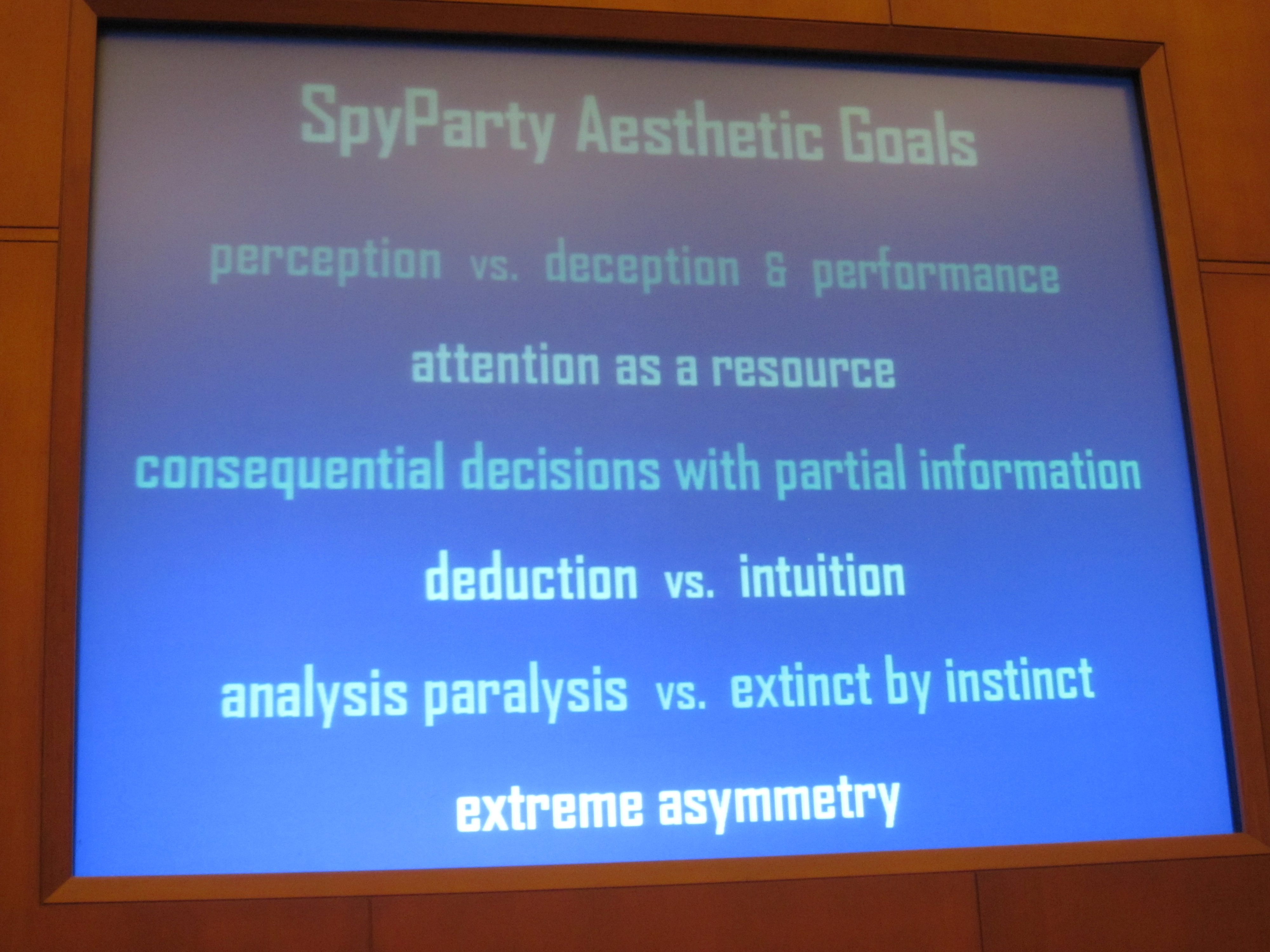
Speaking like an committed advocate, he introduced us to his working game design called SpyParty, where the focus is on interactivity, subtle human behavior and deception.

There were a number of themes he spoke to which were fabulous, including questions he asks about his games, but also his work more generally, such as, how do you spend your time, how much attention do you give, how connected are you? And these are great questions to ask, especially concerning the aesthetics of ethnographic sites, for example, when I consider the emotional involvement of my own informants.

Spy Party in motion

Aesthetic Goals

How ARE my informants in the energy industry different from game designers like, for example, Mr. Hecker?

Here’s a guy for whom art and entertainment in games, film, comics, are totally meaningful and where attention is a resource. Speaking of which, during his talk he made quite a few references to comics and film, comparing gaming at this point in history, to where film was in about 1910.


He lamented that comics never rose above superhero fictions, even though attempts by certain artists brought attention to comics as an art form, the industry and productivity as a whole, remained pretty much on the same level.

For film, he was more flattering, referring to the industry as much more vibrant in its ability to provide society with a rich aesthetic treatment of ourselves and imagination — but, there were turning points, early on, for example, Citizen Kane or Birth of a Nation.

Read the directions before playing


In that sense, he wonders what the future of games will be– whether it will get stuck in a trench of money making mass produced pulp, or rise above to become the 21st century’s aesthetic landscape of imagination.

Read Full Post »


Recently, I caught up with Energy Czar, Daniel Kammen — a Hero for our time.


Can you imagine?! He’s been invited to the 2012 Oslo Energy Forum as main speaker, along with Bob Dudley, current head of British Petroleum (who we have yet to catch up with), Helge Lund, CEO of Statoil (who we just met there a few months back), and Lee Raymond, Former CEO, Exxon Mobil, etc. and so on.

“Under no uncertain terms,” I informed the Energy Czar — while raising my forefinger skyward, “can you attend the Oslo Energy Forum 2012 without bringing me along.”

Good Grief! That’s StudioPolar‘s backyard!


Well, we’ll see. At $15K an entry ticket, to go once in my lifetime should be enough. And I should thank here the US Federal Government for thinking so highly of me to scoot me over there several months ago. But to go again. Now that would be the true test of the Paparazzi Ethnographic master.


Back to the Czar.

First, we chuckled over East Bay Express naming Dan Kammen Most Influential Cal Berkeley Energy Czar for handling the $8 billion portfolio for World Bank Group’s Energy Strategy

As a matter of fact, I checked in on Dan at the World Bank Group (WBG) in Washington, D.C., recently — to provide evidence that Dan was doing just that —  handling the WBG Energy Strategy.


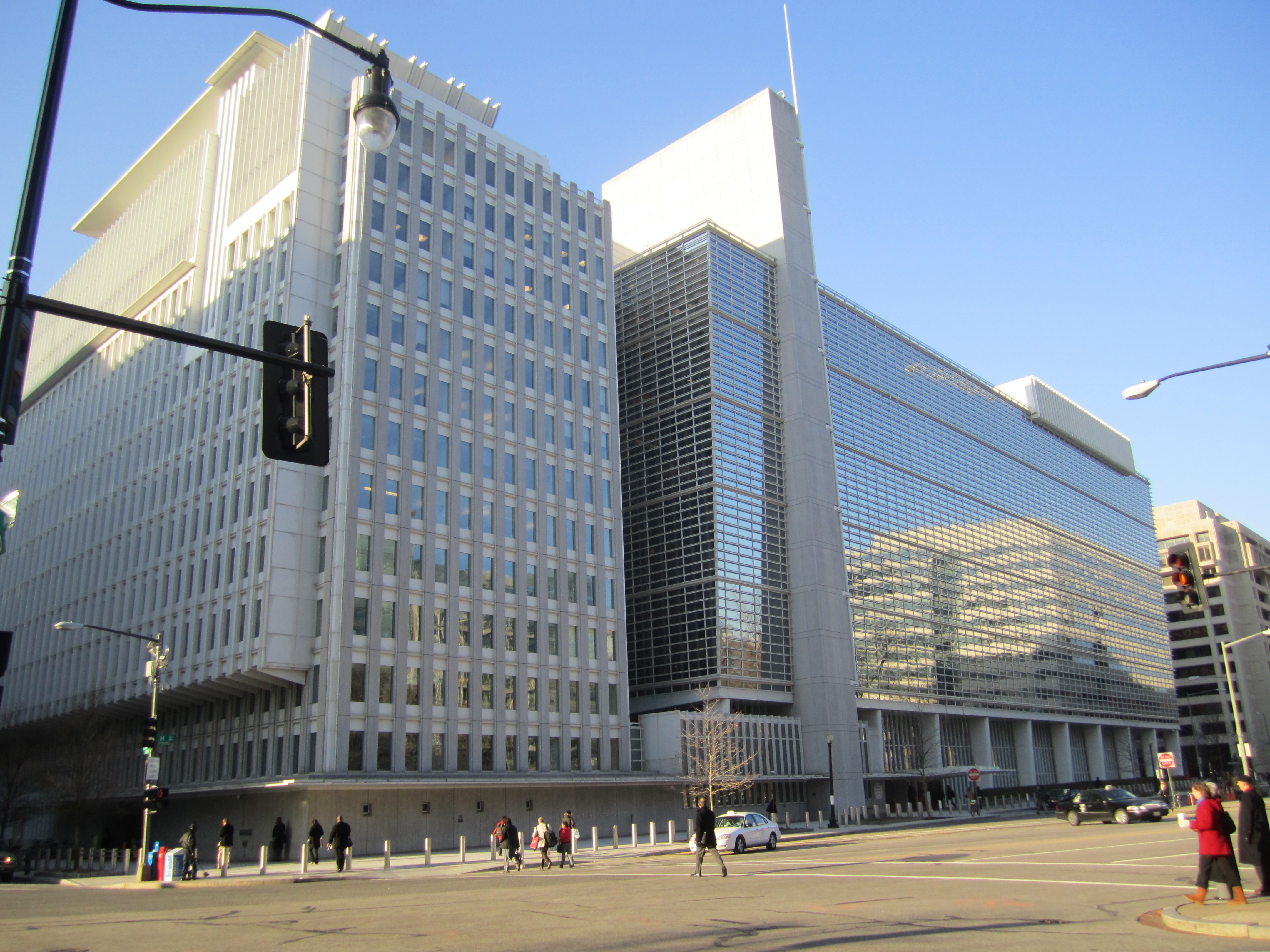
The World Bank Group building is impressive and located in the heart of Washington, D.C.


I managed to get through security with only a raised brow.

Just as I got my feet wet, we were called back out again, for an early lunch with Paul Isbell, Senior Associate at Center for Strategic and International Studies


Paul is a gracious host.


Paul is entertaining at the table as well.
We ordered wine with the meal.


Ordering such a fancy meal — I got to use fancy silverware — a fork with three prongs, a knife without a serrated edge and a little dent and a spoon with a dent…

World Bank Group is a big castle. There is everything! Dining, Customer Service Center where you get your United Nation’s passport, Health Clinic for travel vaccinations, Mail Department, Graphics Shop, Latte Dispensers, Library, Dry Cleaners, Restaurants, Employee Banking. There is artwork everywhere, and the atrium must be a couple hundred feet high, similar to a cathedral.


It was an interesting experience for a guy like me, coming all the way from a small town called Berkeley. I almost felt like I was hanging out with the big boys. Hey, Wait a New York minute! That’s what we do here!


I attended meetings with a lot of VIPs.


After several days, I realized I could just live there, literally, inside the WBG. Without coming out.

I would not get bored. I could be like a house cat. Roaming, purring, sleeping. Eat late brunches with Dan, visit the Customer Service Center for services, and have plenty of lattes in the atrium. That’s where all the business takes place by the way, right there, sitting and chatting over who’s next in line for big power plant.


Oops! Silly me. I almost got so carried away the WBG lifestyle, that I nearly forgot the tag line of the main story:

WBG declined to allow the Energy Czar to participate in assessment of clean energy alternatives in Kosovo…and to Dan’s credit, the story was splashed all over the news: e.g.,
Battle over Ugly Coal

I guess that’s what makes Dan Kammen the Energy Czar. He’s more than just a fat cat purring in the WBG.

Read Full Post »

« Newer Posts - Older Posts »