
University of the Arctic:


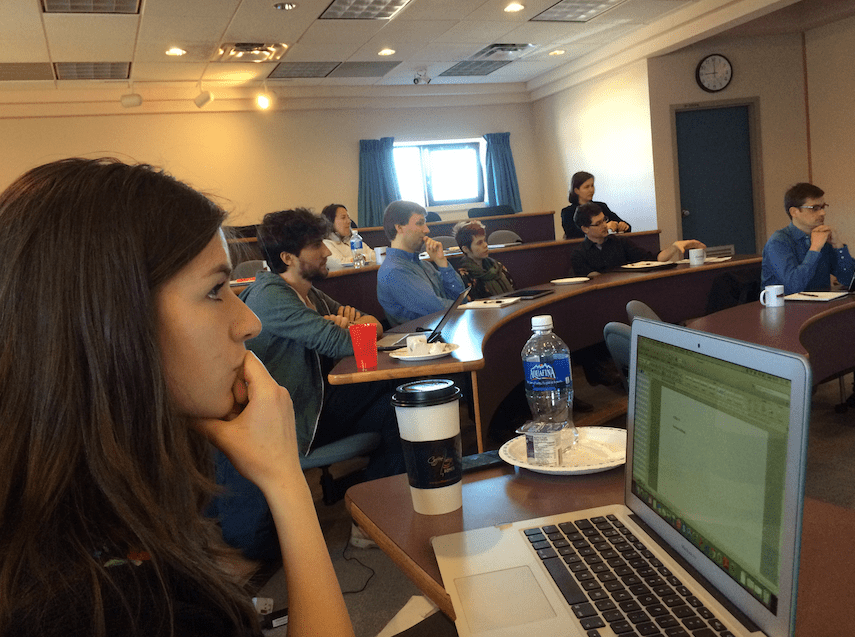
Extractive Industries Workshop !!!
U Arctic extractive industries workshop:
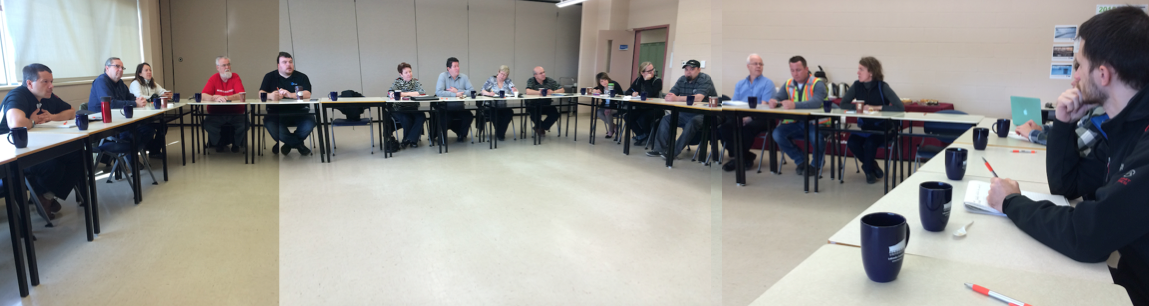
The Arctic as extractive industries resource frontier: legal and political economy developments, May 3-10, 2015
Memorial University of Newfoundland (MUN)
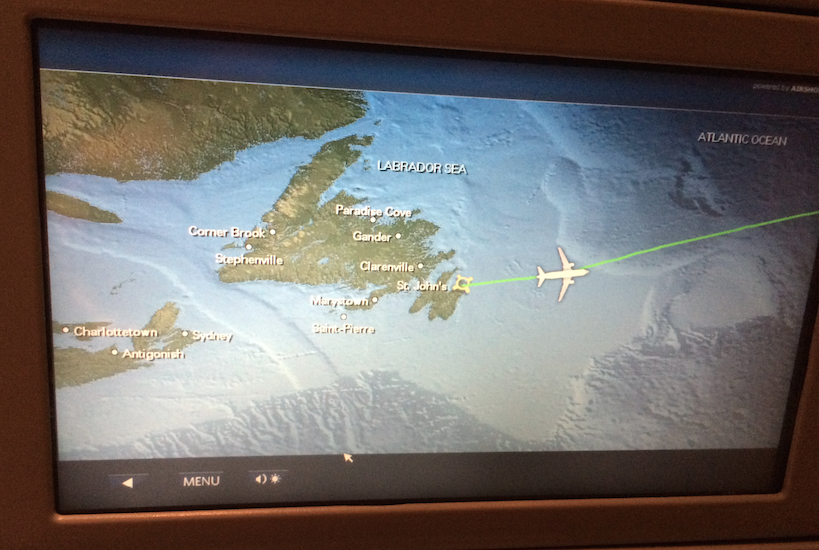
St. John’s, Newfoundland, Canada
(a place where “the passing of icebergs marks the arrival of spring”)
Day One: Memorial University Dean, [name here] is up now introducing us to the university emphasizing collaboration and dissolution of disciplinary boundaries.
First session, Natalie Slawinski, from Business school, talking about place-based perspective and the Arctic, lessons from Fogo Island. Four concepts of place — Phenomenological: places as areas of direct experience; Sociological: place as networks of people with interests and identities; Critical: a product of power relations; Ecological, as ecologically embedded.
How to get to Fogo: Changing one’s project design through inspiration of the interlocutor. Wise words of collaborator Zita Cobb says “nature and culture are the two most important things, while business and technology are the two wonderful tools to serve them”. Building resilience. Arctic/Northern place tend to be rural places, making them more resilient has its requirements. The economic engine of Fogo is a 29 room art hotel (Fogo island inn) – meant to pay homage to history, people, and extremely contemporary, attracting affluent visitors — the entire goal is to draw the fewest people possible while extracting the maximum of tourist dollars. Not just an economic engine, but also a cultural “engine” – open to the community. A place where visitors come to interact with the community. Interestingly, Zita made millions in the internet trade, and came back to Fogo to develop the local form.
Up now, we have Mark Stoddart also from Memorial University talking about “Offshoring” by John Urry. Extractive industry, whether tourism or oil development, are bound up in the carbon capital. The Carbon Complex: oil industry, vehicles, and media visuals, income flow coming to media from carbon heavy industries; carbon capital embedded in the Arctic ocean, and how we cultural interpret our relationship to development (including military). Peak oil, represents extraction higher levels of capital resulting in more extreme forms of energy: Extreme energy. Higher carbon footprints, higher possibilities for spills, extreme weather, etc. Referring now to his own work on media and Arctic developments, Mark explores media coverage constructions of binary interpretations of environment versus industry development (without much human consideration in the area). Agreement and disagreement “networks”. Undergoing dramatic ecological change discourse reinscribes older Arctic narratives as an untamable wilderness and resource frontier (check out: Northscapes series UBC Press).
The oil-tourism interface. Selling the experience of nature and grand coastal vistas, but also, quite willing to develop oil offshore at Old Harry reservoir, which potentially jeopardising these regions. How does international mass media produce understandings of these tourist regions.
Okay. Well, a coffee break, and now we are going to hear from Jessica Shadian and Natalia Loukacheva. Well, Natalia is up and stressing the importance of ownership, and especially in the context of rare earth minerals, or “geo-strategic resources”.
Read Full Post »









 Paparazzi Ethnography