10/28: 5 PM. Despite the early start, beginning at 8 AM, and as it appears now, our plans to continue until 8 PM and then break up into groups heading for dinner at restaurants nearby, Aleksanteri conference participants continue to enthusiastically engage their paper presenters on the issues.
 Minister of Economic Affairs for the Embassy of Sweden in Moscow, Martin Aberg, seen here smiling as evidence of the continued good mood, posed during a panel discussion on Russian institutional decision-making. A frequently asked question about the role of Putin in the energy industry: “If Putin is not all powerful, then what is he?” In a quick one sentence response, NUPI’s Director of Energy Program, Indra Overland, quipped: “Putin is most powerful person in a system in which he is still required to negotiate among actors in order to realize his interests”. NUPI stands for Norwegian Institute of International Affairs. The consulting firm, based in Oslo, Norway, was well represented here in Helsinki, by Indra and also by Jakub Godzimirski, Senior Research Fellow in the Department of Russian and Eurasian Studies, both of whom were happy to pose in front of our camera in this photo.
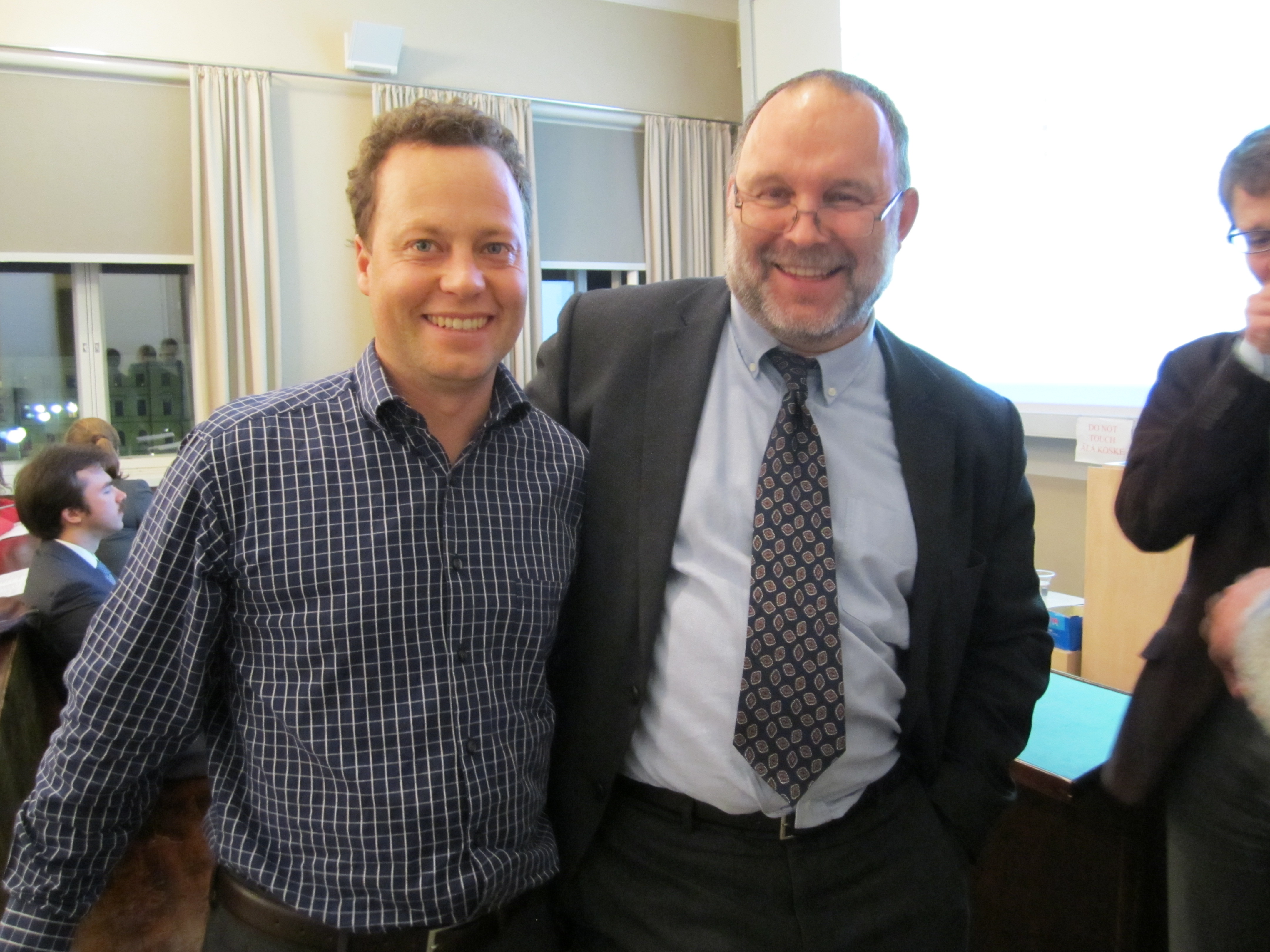 I actually met both Indra (on left) and Jakub at the Norwegian Research Council sponsored Petrosam Workshop this past June at the Radisson Hotel located at the Oslo Airport, Norway, where many of the themes taken up today, were also discussed in detail. Missing from the event here in Helsinki this week, but who almost accepted an invitation as a key note speaker, is the famous Russian natural gas guru and Director of Oxford Energy Institute in England, Jonathan Stern, giving the key note speech, in fact, at the Petrosam event in Oslo.
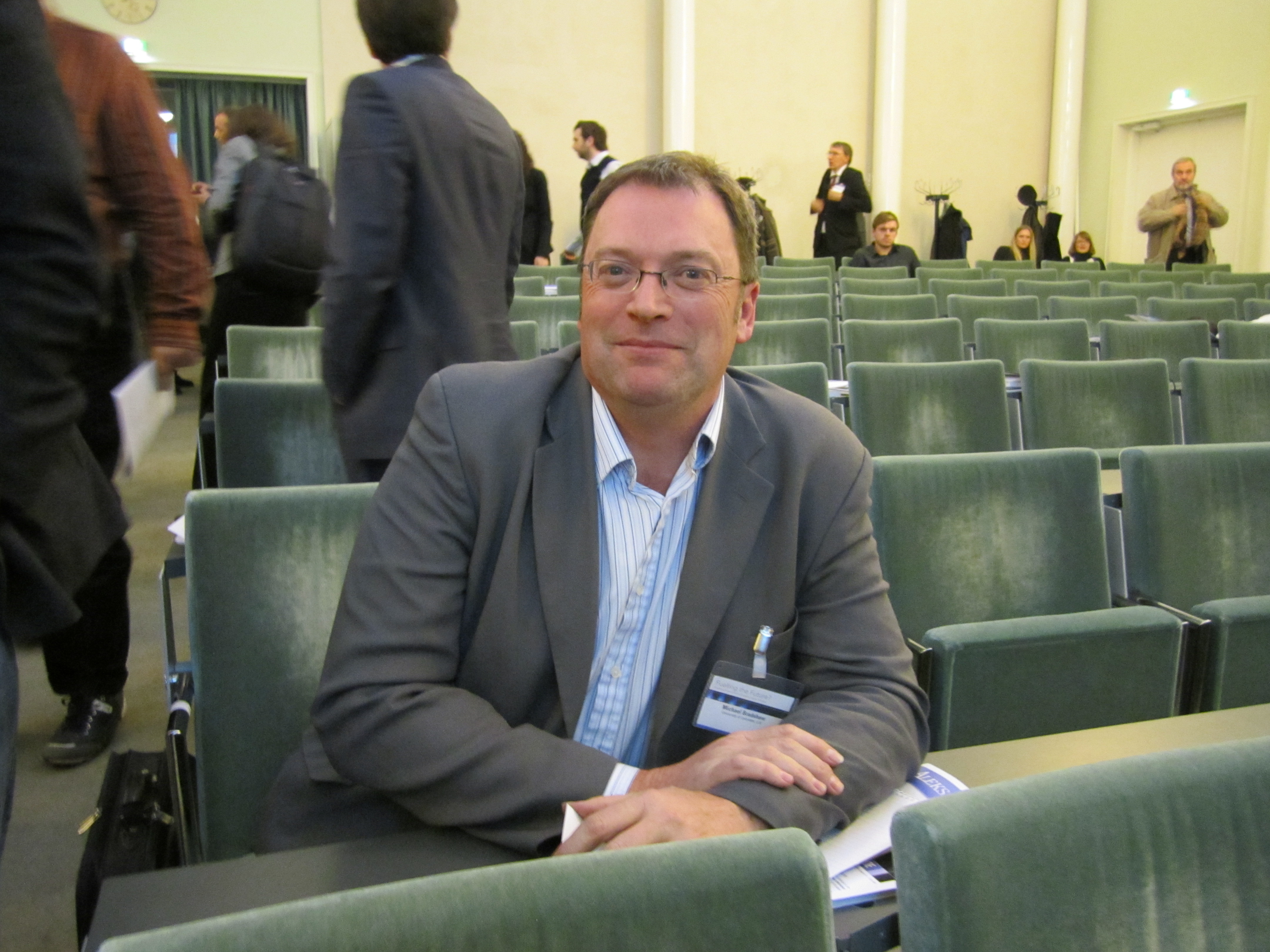 On that day, J. Stern did not fail to disappoint his audience, and in addition to focusing on a set of recent changes to fundamentals, which our Michael Bradshaw, seen here in a jovial mood, also pointed to yesterday, Stern offered a provocative set of comments about the declining state of academic knowledge on the oil and gas industry (but not in Norway), of which we will comment more about at a later date.
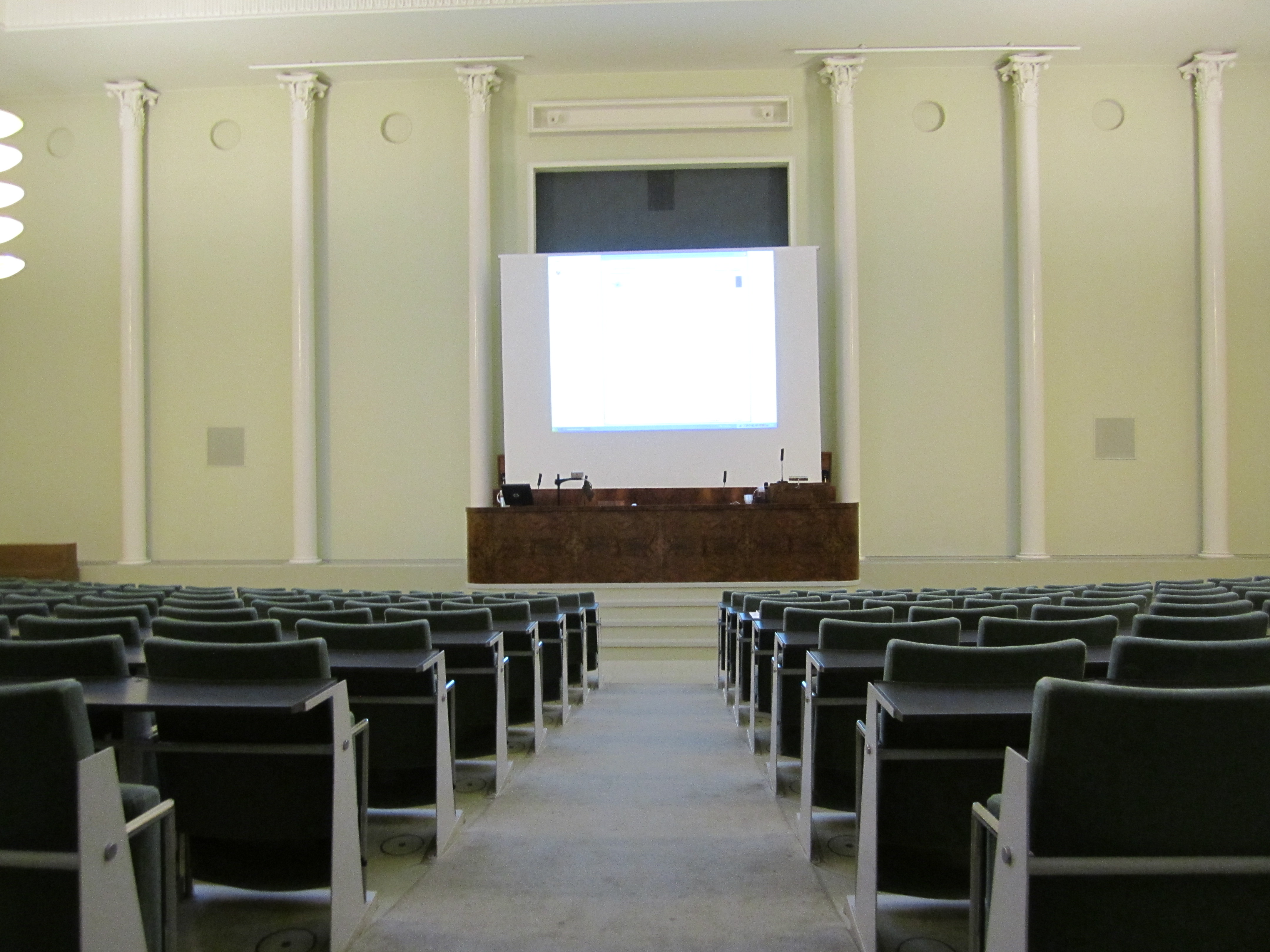
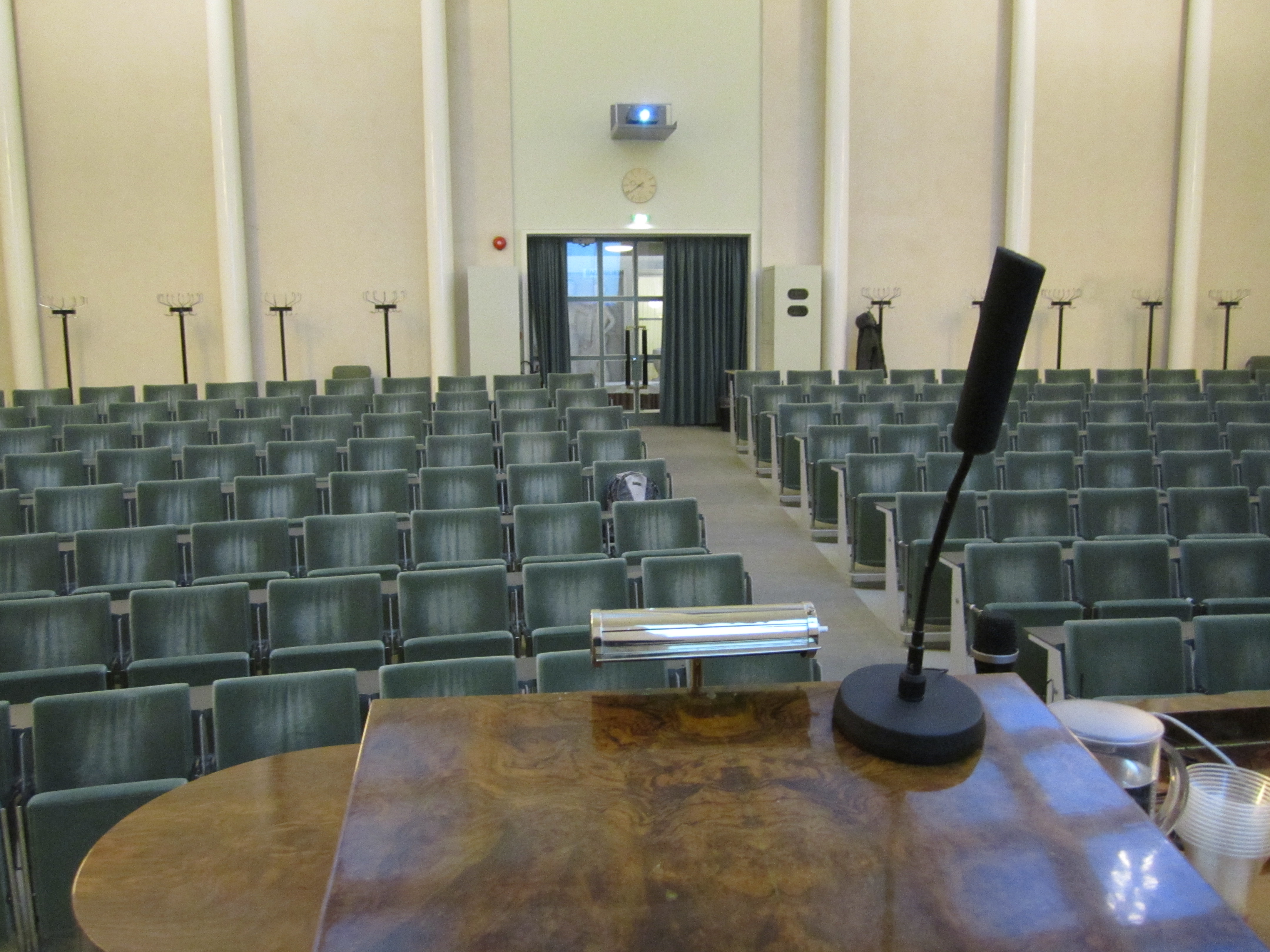
We had to chastise Doug Rogers for changing the photo on his university website, where he was seen looking out bravely over a Moscow sky line, but now faces the viewer in a headshot taken in his backyard. But we also cannot deny, especially speaking as anthropologists, that he gave a great presentation today, on the social and cultural faces of oil and gas. Rogers asked how do Russian oil companies legitimize their wealth to a national community that is often skeptical of that wealth? And then proceeded to awe us, despite the power point image projector not working correctly, and participants having to forego the earlier much more comfortable auditorium in exchange for a smaller more stuffy class room where we were now required to seat ourselves on what we can only describe as wooden benches akin to a churchly pew.
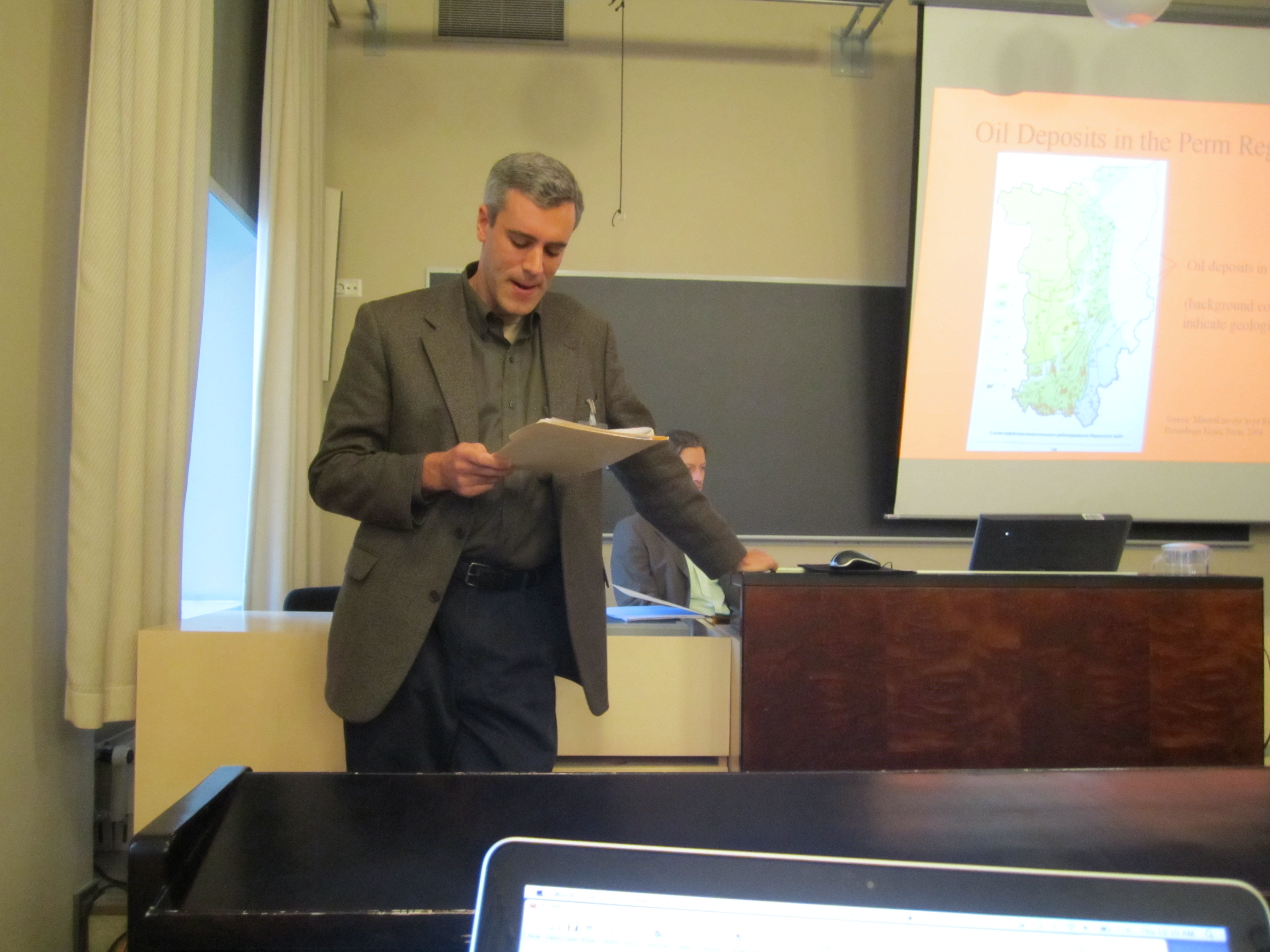 Rogers, in a casual style, suggesting a George Clooney-esque sensibility, made three points: (1) social and cultural projects (corporate responsibility) – have been a key way that Russian oil elites can and have aligned themselves with local elites; (2) this alliance often offers a good strategy to alleviate some of the local critiques of oil company wealth and (3) this strategy entails a political economy of public space, meaning that only those areas of oil development actually demand attention, while other areas, without oil resources, require less attention.

 10/28: 2PM. Lunch time already? Several of the participants headed downstairs to the graduate commons cafeteria where we could order a variety of hot and cold dishes, including tofu-rice pilaf, which seemed to be a favorite among our group. You probably know everyone in this photo by now (Doug, Florian, Stephan), but there on the far right in front, is a photo of geographer Corey Johnson, who we mentioned having a great pre-conference conversation with about pipeline materiality and nomenclature.
 We also had the grateful opportunity to have a very interesting discussion with Master’s student of International Studies at Finland’s University of Tampere, Laura Salmela, who of all things, happens to be doing very nearly the exact same kind of research in Russia that we are doing here at StudioPolar. We thus, had a very long discussion and came up with the idea that what we require is a systematic typology of methods for studying what we call the creation of communities of interpretation within the global energy industry. We have really, so many ideas on this topic, and as I mentioned to Laura, they are lying around in such a state of total fragmentation, but somewhat curiously, always manage to become coherent through inspired and experimental conversation, like a gust of wind that blows a sea of leaves into material structure, only to vanish again. We definitely need to get them down on paper.
And just as we’re putting our final thoughts down, Nicholas Koh has introduced himself to us, coming all the way from Singapore, and having just established at their National University, their very own Energy Studies Institute, which of all things, is interested in arctic natural gas development. 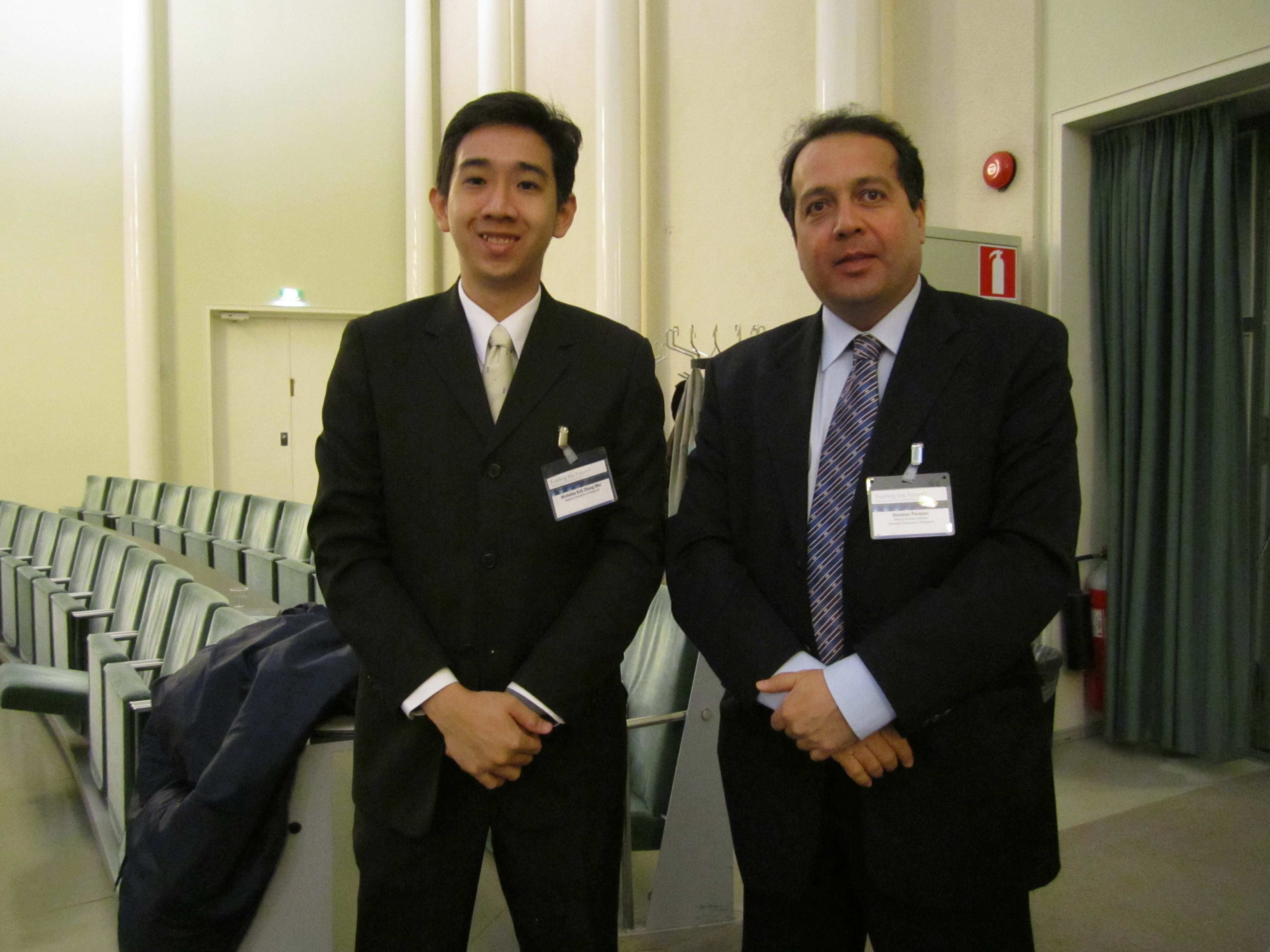 Nicholas was kind enough to introduce us to the head of the institute, Dr. Hooman Peimani, speaking tomorrow on Russian energy exports from Central Asia, and who has graciously invited us to contribute a chapter to a forthcoming book sponsored by their institute on arctic energy policy. Here they both are, Nicholas and Hooman.
10/28: 11 AM. This morning began with two separate panels, of which we participated on one titled Coexistence of Russian Hydrocarbon Extraction and Marginalized Livelihoods: Theory and Practice. 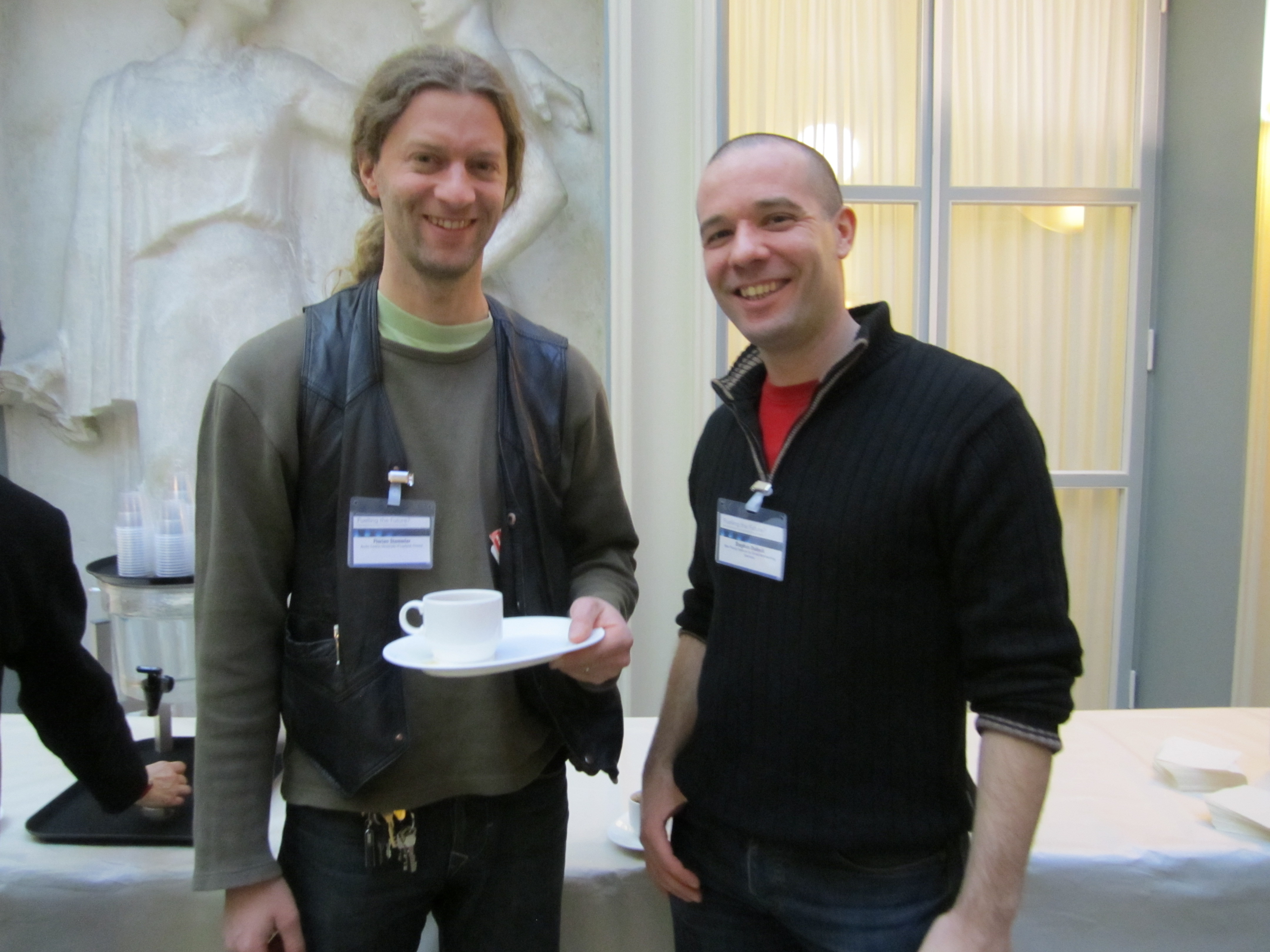 The panel was chaired and organized by Florian Stammler, anthropologist and Senior Researcher at Arctic Centre, University of Lapland. Florian, who is part of the Anthropology Research Team there, which he co-founded, is shown here in this photo, standing on the left next to Stephan Dudek, a social anthropologist and researcher at the Max Planck Institute, Frankfurt, who is also part of our panel.
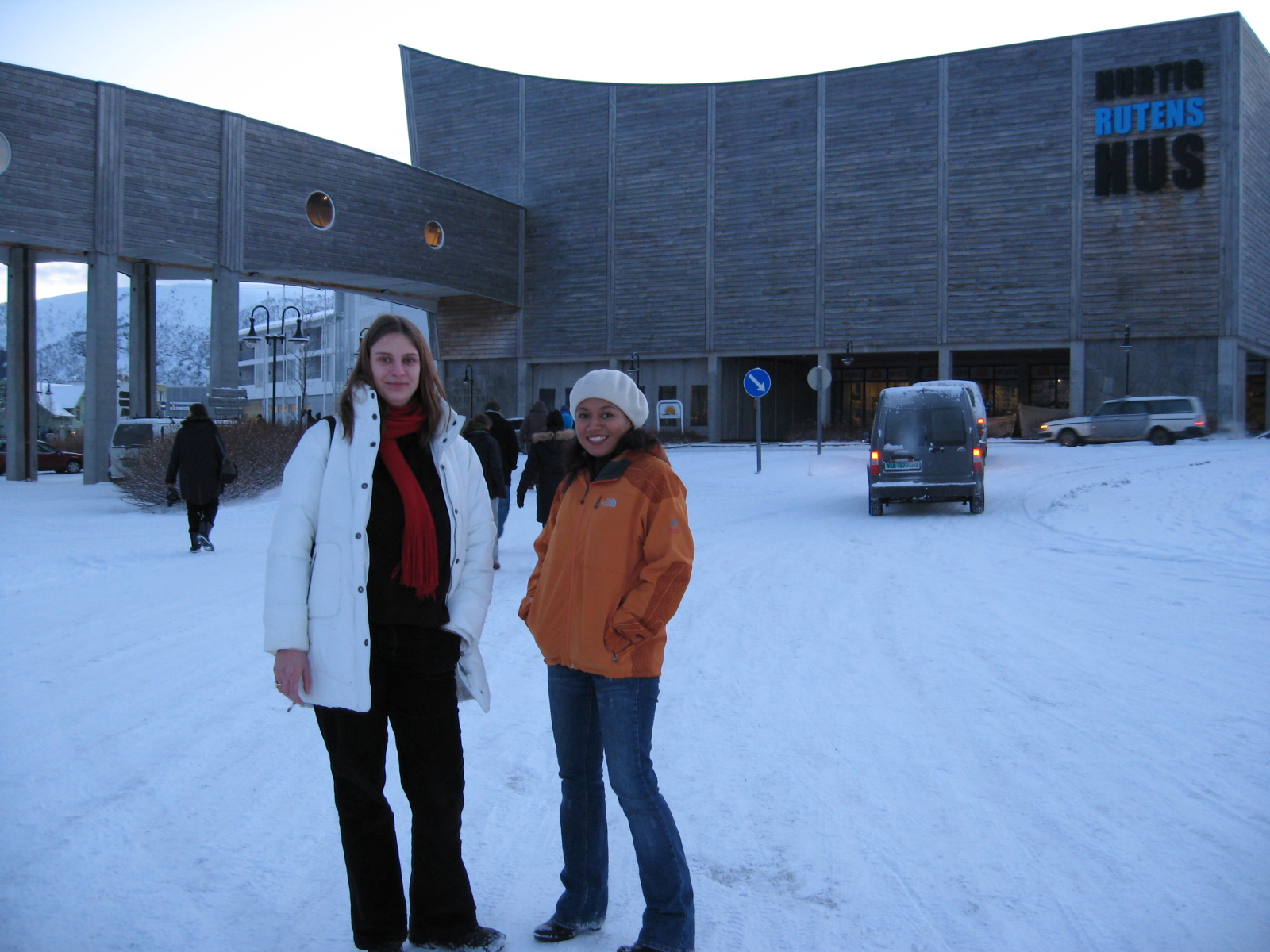
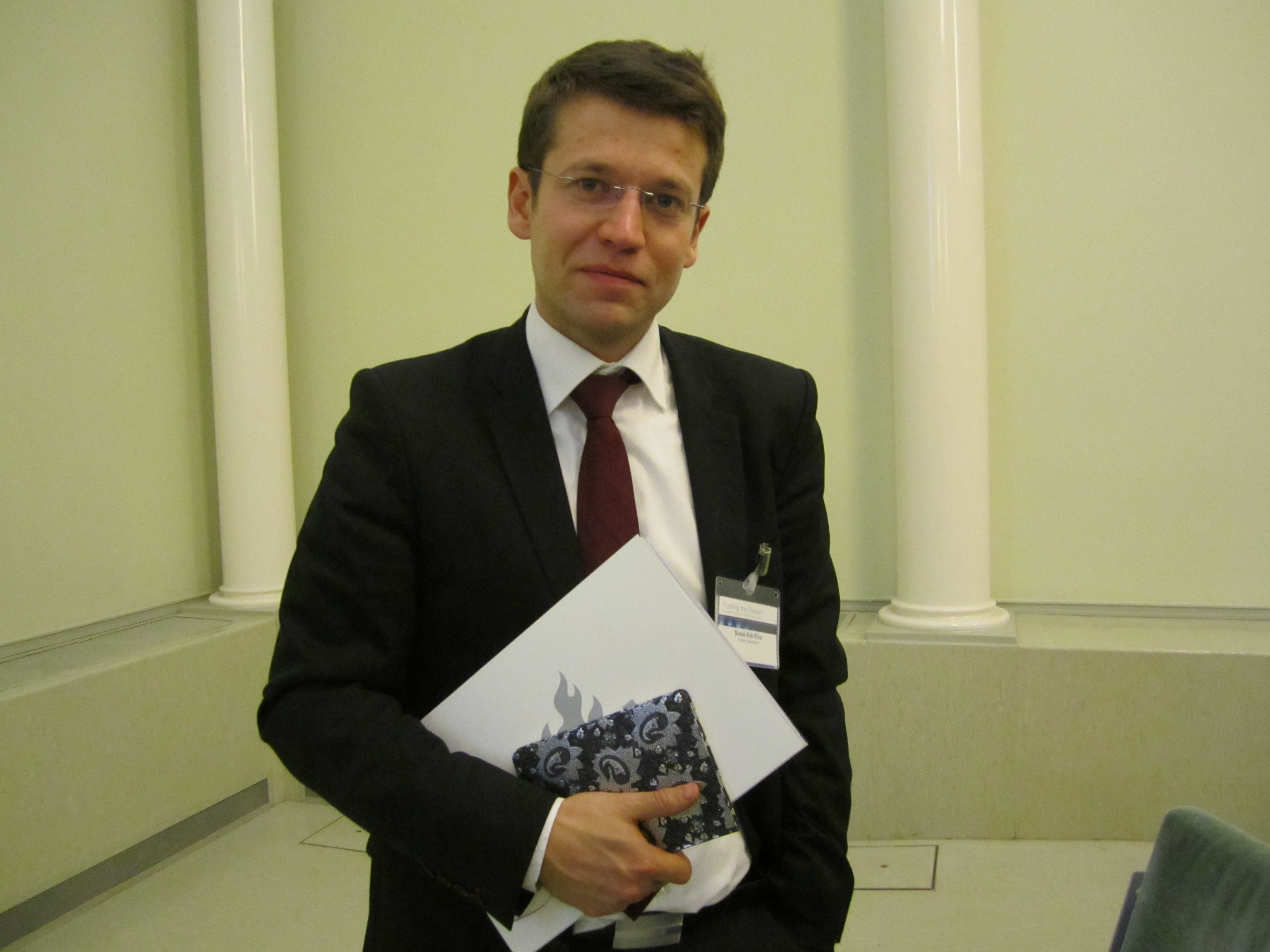
I took this photo yesterday, at the beginning of the conference, where I also had the chance to thank Florian for inviting me to participate on his panel this morning. I first met Florian in 2008 in Tromsø, Norway, at the Arctic Frontiers conference, where we also met Simon-Erik Ollus, who I shared a latte with yesterday and mentioned earlier. At the 2008 conference, Florian gave a spectacular presentation on human relationships between reindeer herders in Western Siberia and the local oil workers. 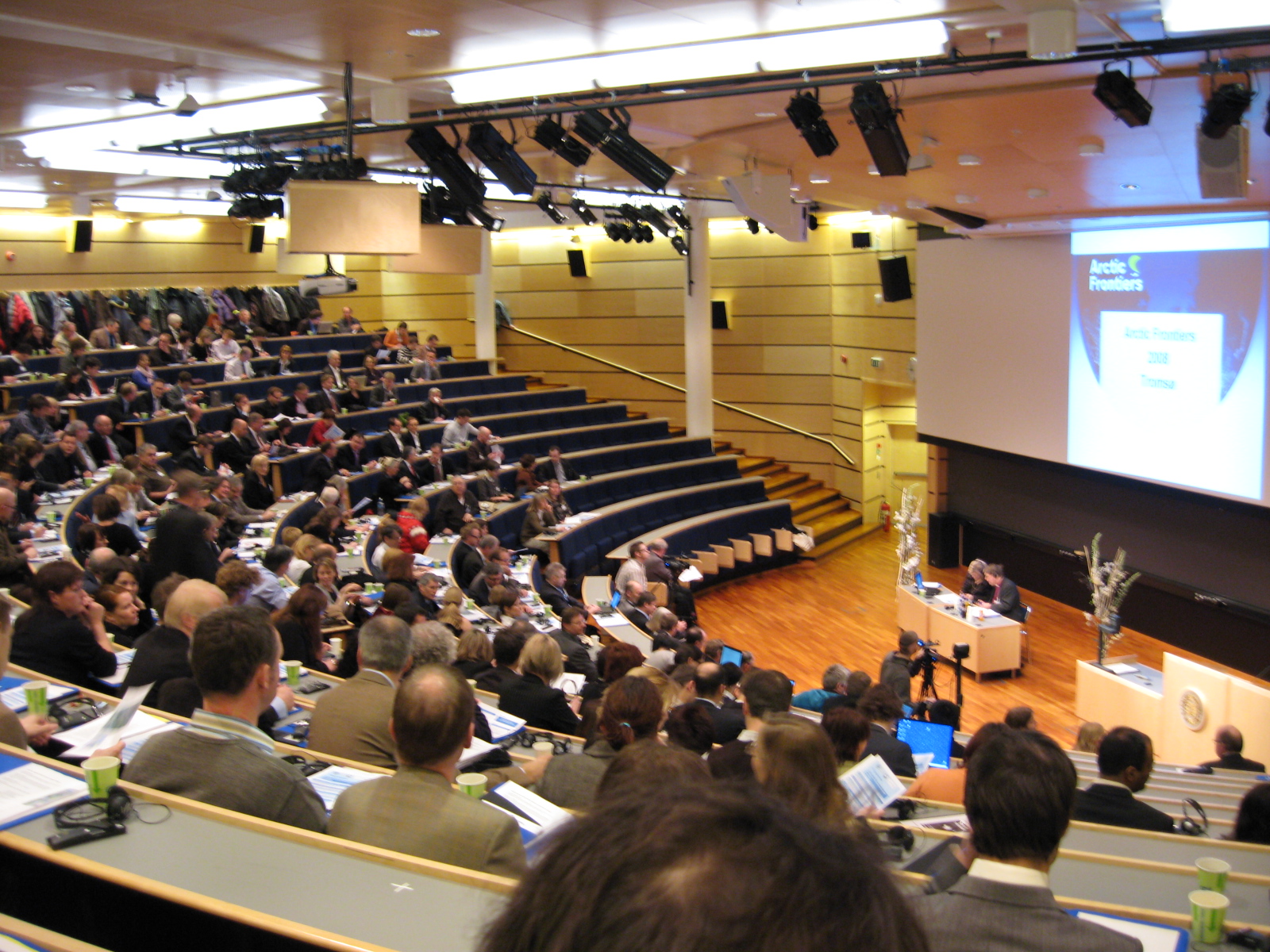 It was in front of a full crowd in a beautiful auditorium that was built recently in Tromsø and called the Polar Centre. And we just happen to still have a photo which we took at that event.
Actually, that Arctic Frontiers conference was quite spectacular, if I may digress for a moment. The conference took place at the beginning of International Polar Year, and invited to participate were early career researchers, where after the conference, several newly minted PhDs led by professors at University of Tromsø, boarded a Norwegian Cruiser and spent several days on the fjords, only to land in the beautiful Lofoten Islands, where we spent time at a candle factory discussing our research interests.
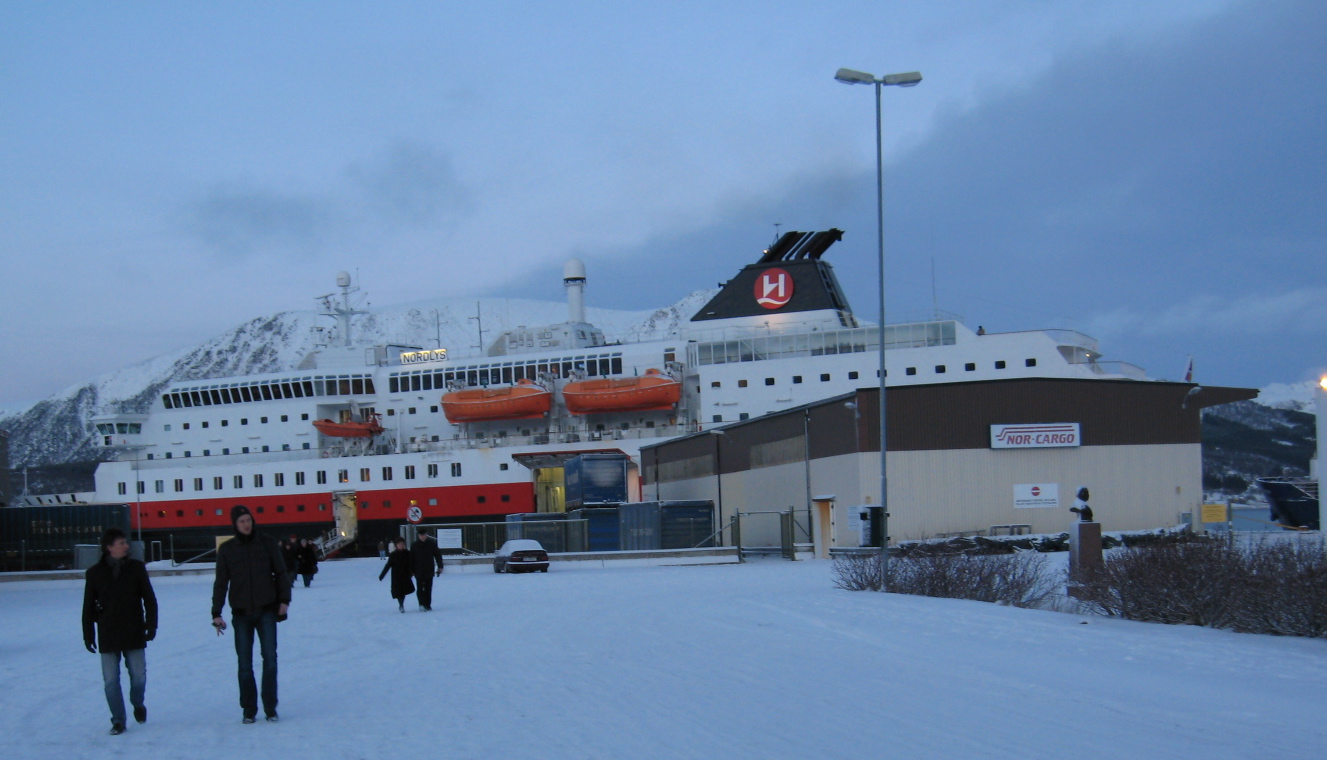
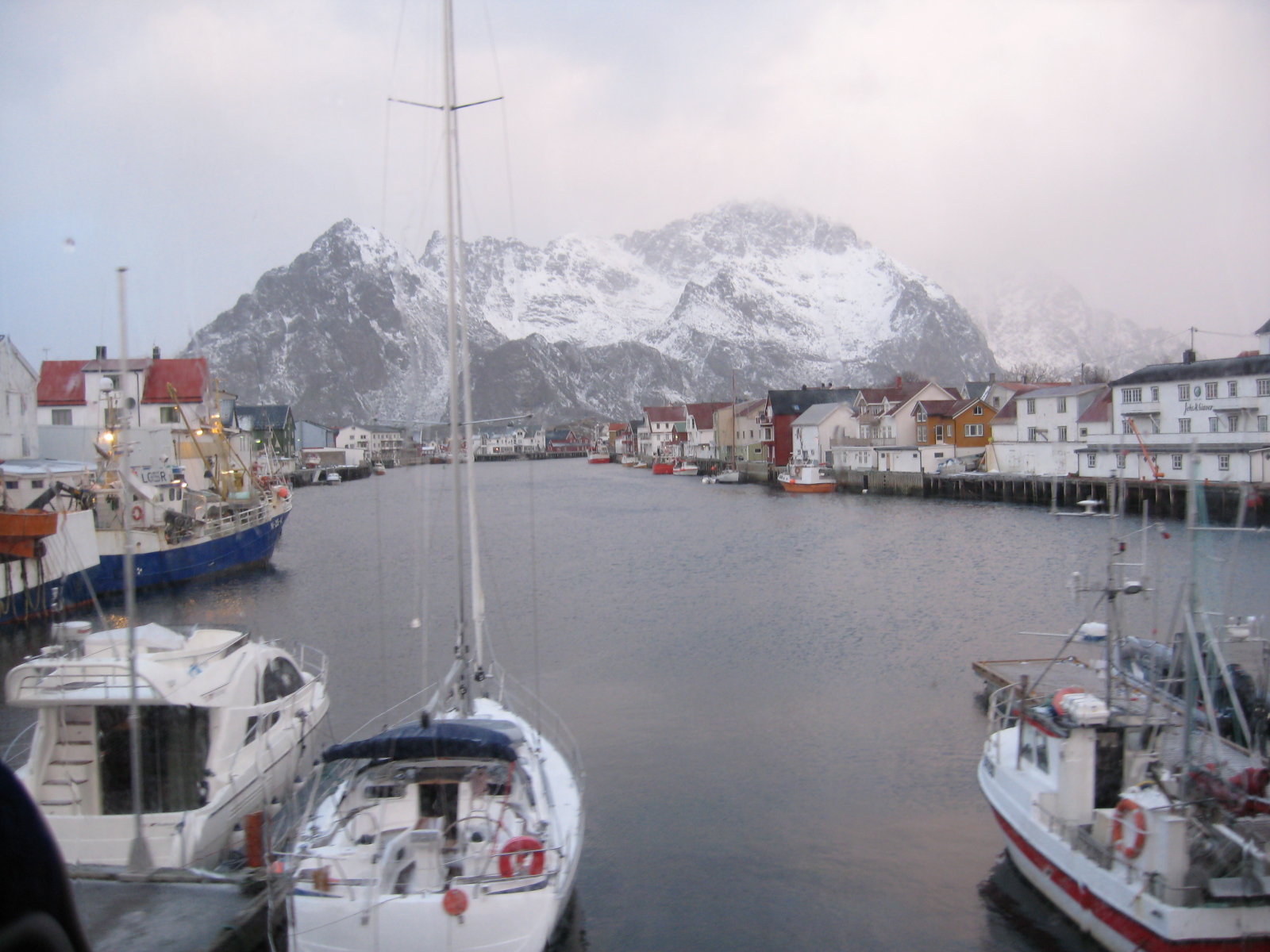
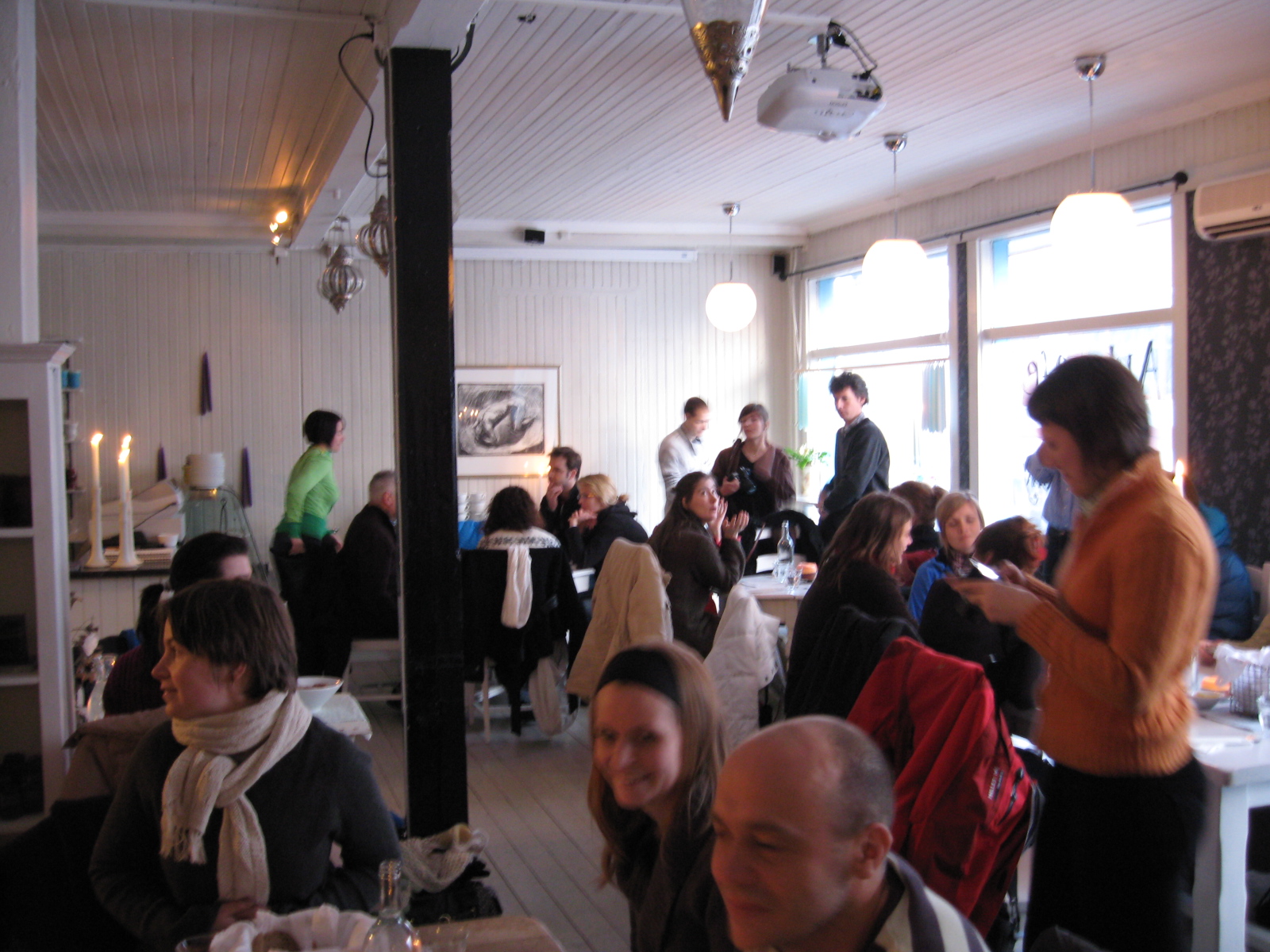
It was here in this community, a retreat commonly used by painters, poets and other artists, that with several natural scientists, including Ruth Müller, then post-doctoral researcher at Alfred Wegener Institute for Marine and Polar Research, Germany, that we conceptualized a “coupled-systems” project that would consider cascade effects on biotic as well as socioeconomic systems by potential oil spills and for which we received exploratory funds from Arizona State University in 2008. Here is a photo of Ruth standing on the left with Nazune Menka.
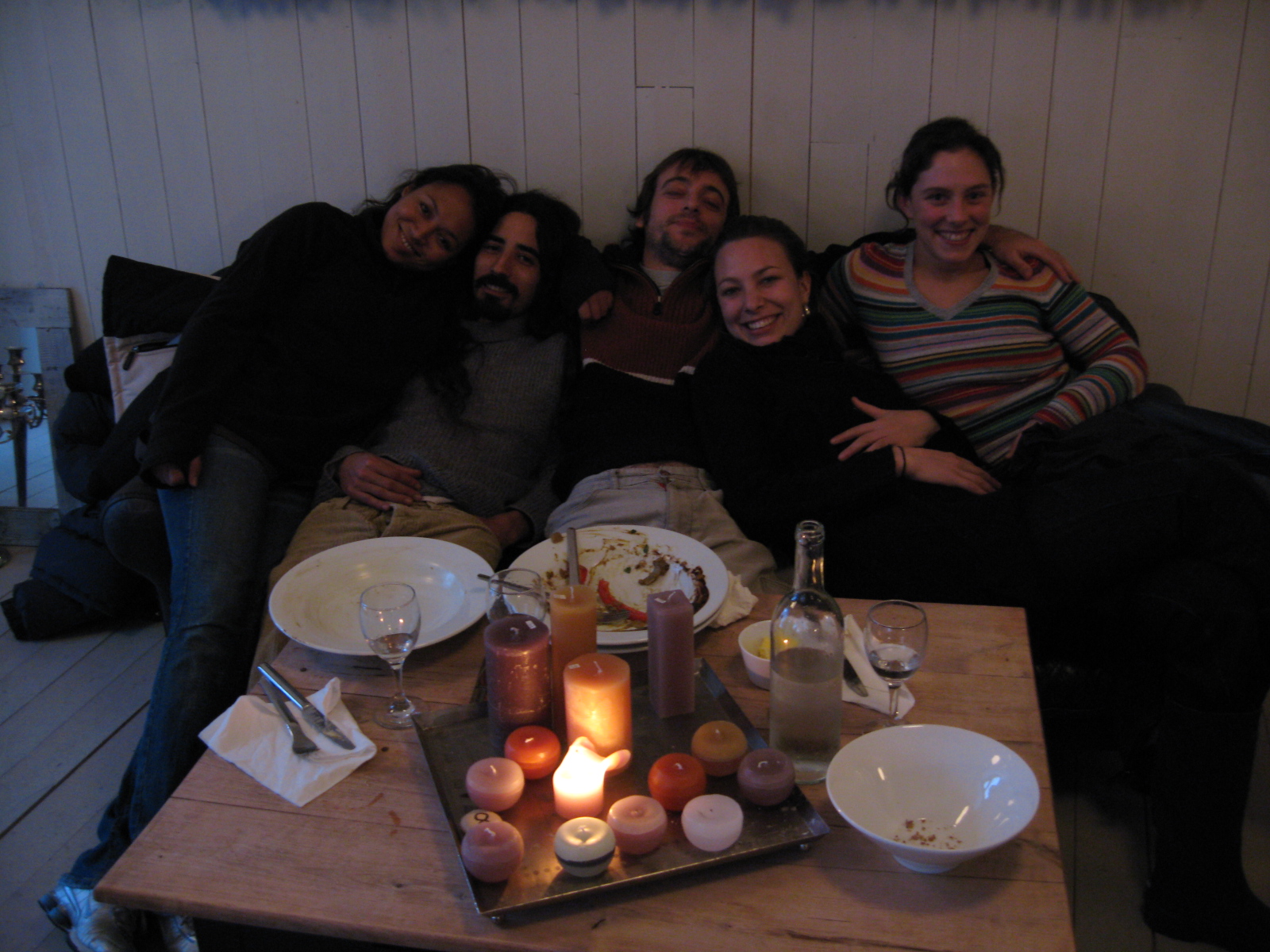
Come to think of it, during this same trip, we even had our own musical entertainment in the form of a very talented trio flown in from Barcelona, who accompanied us, and shared the good times. But the presentations this morning were great, and let us say something about those now.
10/28: 7AM. We want to take a moment and provide a few introductions. We were so taken by our own sense of analysis yesterday that we completely did not comment on all the wonderful conference participants we met yesterday. And this is in part because of the late hour that we began writing. In fact, I did leave the conference reception yesterday with the intention of writing it all up, so-to-speak, when in the lobby of the City Hall, where the evening activities were taking place, I made the acquaintance of two persons, who were indeed quite fashionably dressed. It turned out that they were sisters, one of whom lives in Helsinki, and the other in Baku, Azerbaijan, of all places, and works for the Center for Strategic Studies under the President of the Republic of Azerbaijan. This information we discovered before we even exchanged our names.
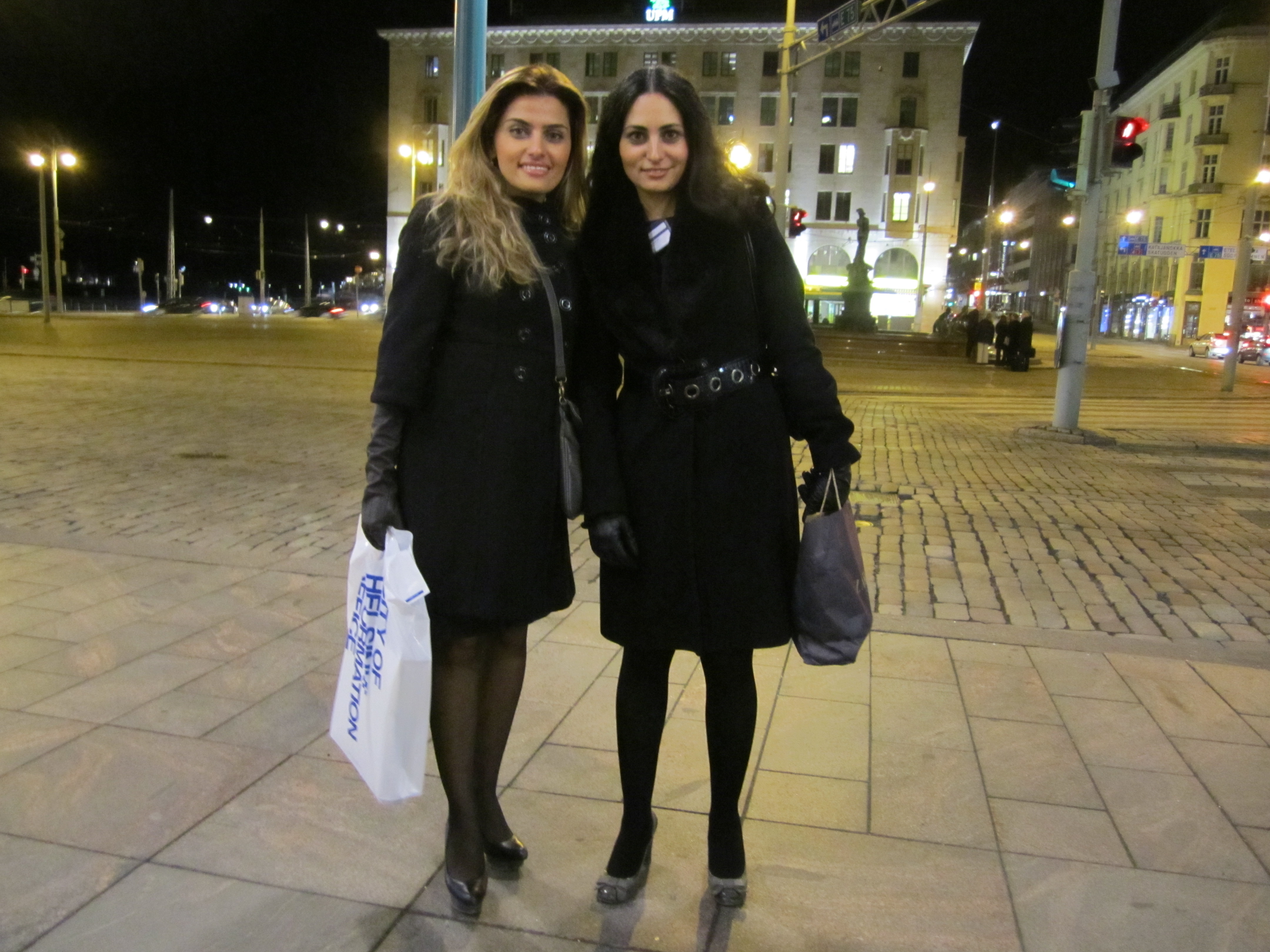
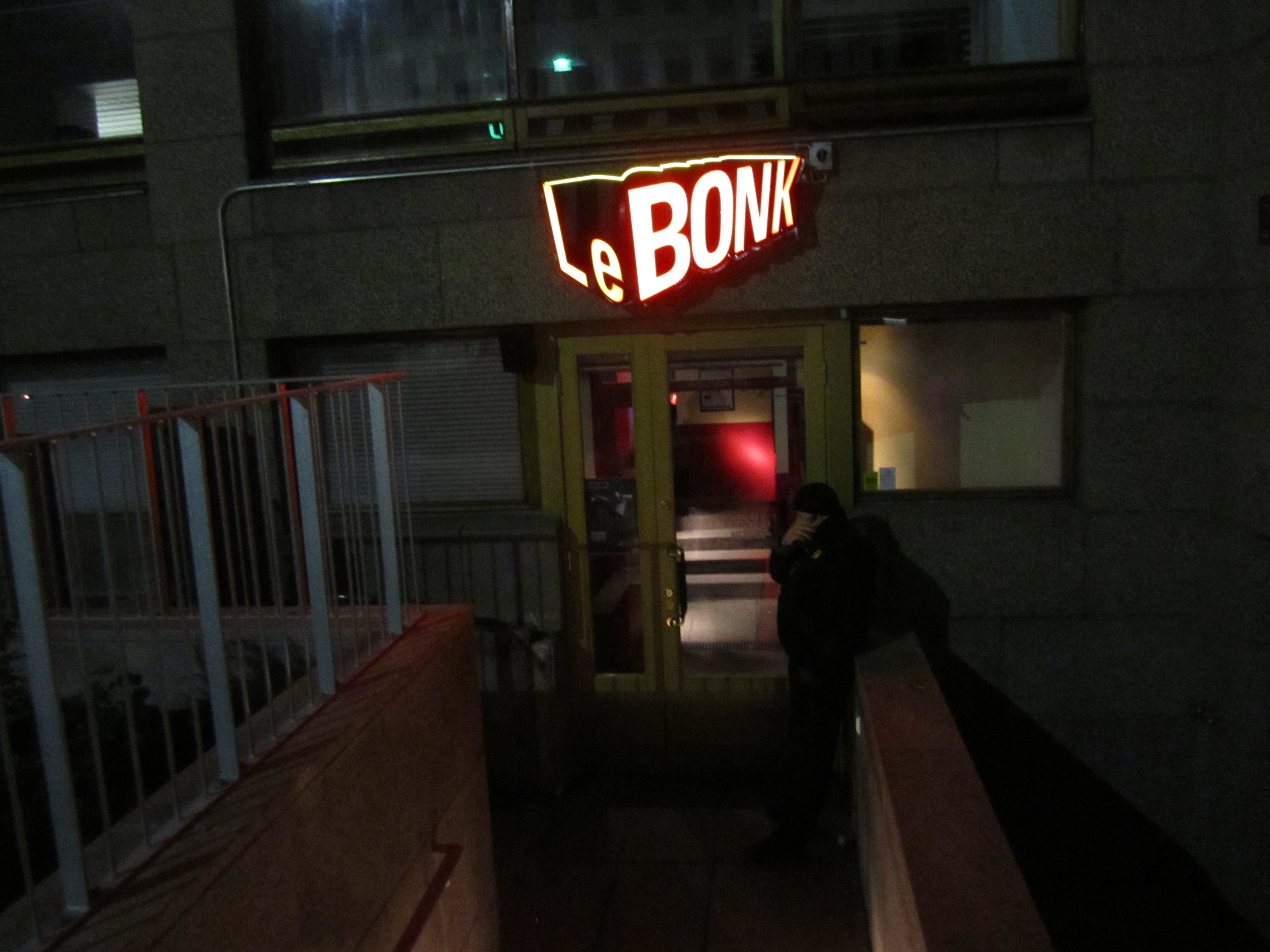 They were also leaving early, in order to attend a party here in town, for which Samantha and I suddenly and politely suggested that we attend. They immediately and graciously agreed, and finally, we formally introduced ourselves to each other and we snapped a photo of them both, right there in front of City Hall, and that is how we met with Ms. Gulmira Rzayeva and Ms. Esmira Rzayeva, both attendees of the conference.
  We walked over to a night club named Le Bonk where their friends and friendly acquaintances had gathered to celebrate the departure of a recently graduated MA student in media studies of Helsinki University, who is taking a job in London and whose name is, shown here in the middle, Imir Rashid. Congratulations Imir!
We should like to mention, that just previous to our departure from the City Hall reception, we had the chance for another meaningful exchange with Yale University assistant professor of anthropology Doug Rogers, who we’ve been wanting to meet in person for some time.
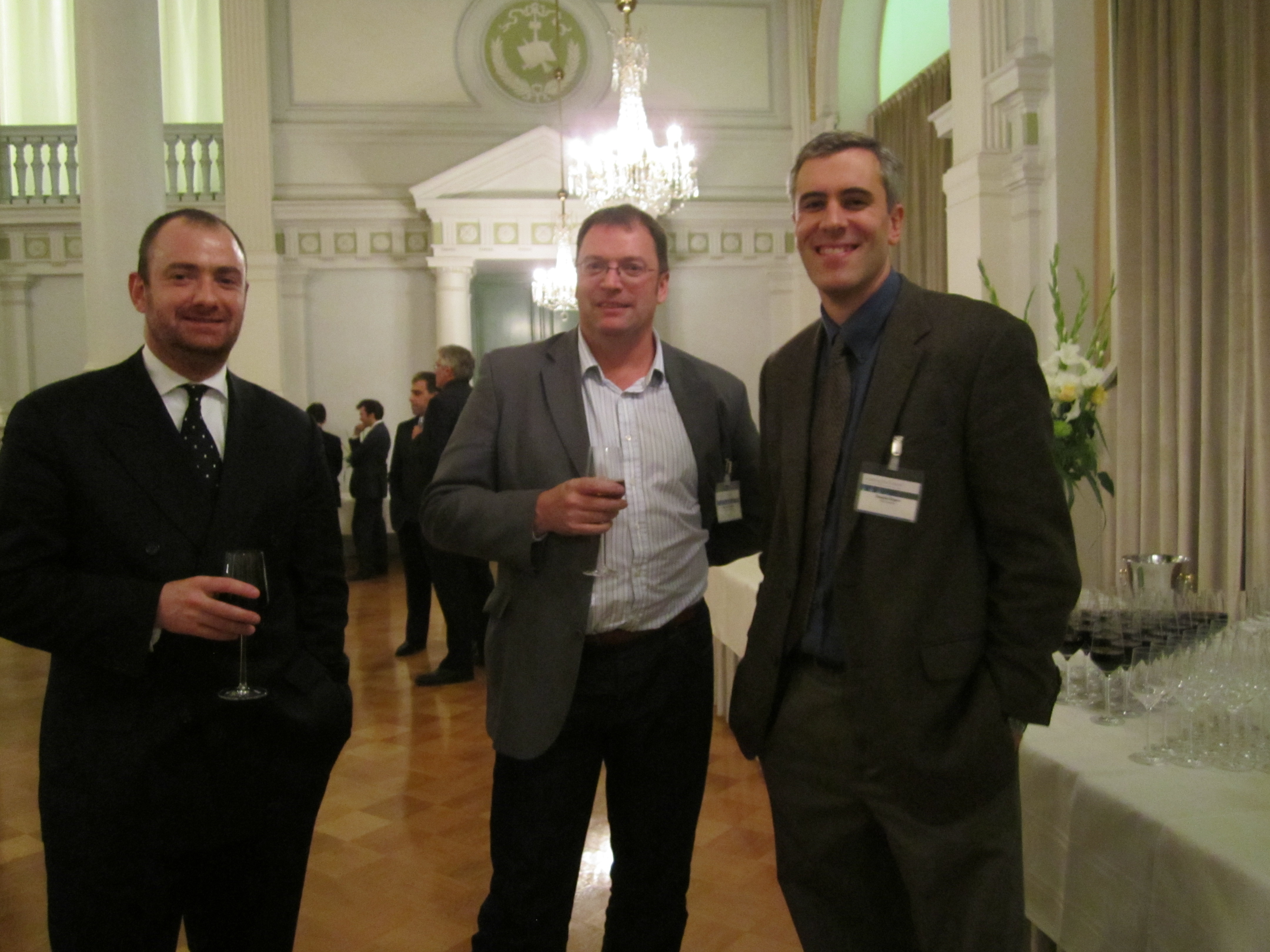 He is shown here on the far right standing next to professor of geography at University of Leicester, Michael Bradshaw, who gave an absolutely wonderful talk yesterday, on the important recent dynamics of natural gas developments, including the glut in the markets as a result of the financial crisis, and the abandoned prospects of exporting LNG to the United States from the proposed Shtokman field.
These were certainly important comments in a day that was rather taken up by a dialogue between general events of uncertainty within Russian energy policy, and the theoretical framework for considering these events, which were ably presented to participants by recently awarded PhD holder and acting professor at Aleksanteri Institute David Dusseault, who appears on the far left of this photo, and is one of the main organizers of this wonderful event. Congratulations on your newly minted PhD David! and thanks for bringing us all together here in Helsinki to discuss such an interesting topic. We have many more introductions we plan to make today, but we’re late now to give our own talk!













 Paparazzi Ethnography