Feeds:
Posts
Comments

Archive for the ‘Paparazzi Ethnography’ Category

streetstreetdoorERCtags

6/26
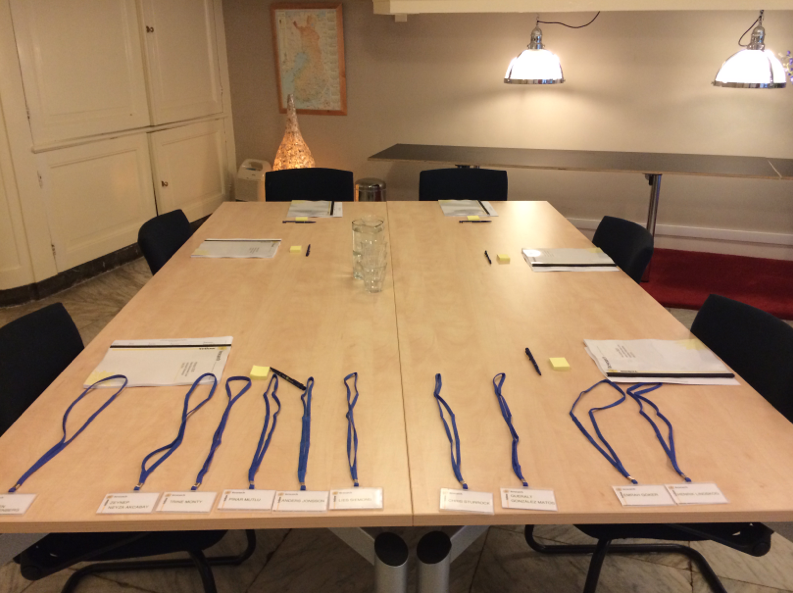
: Yellow Research workshop for the Horizon 2020: Marie Sklodowska Curie Individual Fellowships Call 2014 (European Research Council) led by Lotte Jaspers.

Superb meeting. Knowledge presented here may be proprietary. Any questions on content or concerns, please contact the editor and changes will be made to respect the intellectual property of presentations.
scenehouse


What are the main questions?

The Horizon 2020 is a new program. What are the new instructions, criteria for quality of applicants, and evaluation procedure? What are the added values that move a proposal beyond the threshold?

planeLet us begin: The key issue, one of the basic developments is the question: What is the appropriate next step in a career to go to the next level?

What is the current CV, but what is missing in order to get to the next position, and how does the Marie Curie help develop the skills, knowledge, expertise to go the next step.

How does the grant benefit the PI, what is the potential to grow?

Lotte nicely positions the issue within the change in the title of the grant itself, with the addition of “Sklodowska”, suggesting the emphasis is on how it was that Marie Sklodowska Curie, a Polish scientist, moved from Poland to develop more specifically and accurately her skill set.
streetscene
What is the scientific project, and what is novel? And why – is what you intend to do important for the fellow — important for the actual PI career?

What kind of training? What kind of courses are offered? How is the group run? Who are the PHD students (co-supervision), and how can the applicant use the structure of the group to mature? “Individual researcher applies jointly with host institution”.

Experienced researcher and Maturity. Who is the applicant. No age limits, but there are difficulties with expressing your growth pattern.
windowsWhat kind of knowledge is required to boost a career? Looking broader for where training can be carried out, looking at other universities and setups for support. What is the new criteria? It is the introduction of secondments. What is the current CV and what are the good places to go and you have been thinking about where to get the best knowledge for a top notch career?
coatsWith an excellent track record, how does one look to the future. How does one expand knowledge? Perhaps it is your focus on aesthetics, and that you require looking at structured interests, especially in Russia, where the political structural position is still quite important in relation to cultures of expertise (or, in order to get tenure, you need to get a PI)?

Two years. A project that fits the goals of where you want to go. A vehicle for movement in a specific direction.

The twelve person group in the room today is mainly composed of research advisors at various universities in Europe, including Norway, Sweden, Turkey, Denmark, Italy, and Spain.
talking
Looking at the project and the career candidate to benefit from the grant. (Don’t over boost, but state clearly “I’m here and need to get over there”).

The reviewer has a tough job.

handleCoffee Break: What a great morning Session.

Lotte was just wonderful. She provided us with a splendid beginning for a subsequent set of networking discussions over coffee that were quite illuminating.

Lies Siemons, e.g., from Tilburg University snapped up the three main issues that we all understood from the morning as fundamentally important: (1) make sure the proposal captures attention; (2) make sure there are organic components with the host organization, such as advising graduate students; (3) make sure the host organization is integrated into the project.
looking canalwindow

What is the fellow’s ambition? The majority are PIs in a research-intensive institution. And thus, what is it that you need?

Is it methodologies, techniques, knowledges? Skills, leadership — four categories: Knowledge and intellectual abilities; Personal effectiveness; Research governance and organization; Engagement, influence, and impact. Specify with the fellow, what you need, and let it provide a structure for the what areas are where you need to improve: Lay out your vision for what you want to achieve based on established tools, underpin your vision for going abroad. Wording and Analysis of vision (Pp. 3-4 third section).
analyzing CV E.g, co-supervision, leadership, and management skills — Organize some of the science/thematic meetings. Lotte is looking for what is missing now, given the six categories of the CV analysis. Hard skills and soft skills formal training on the job, “And that’s why I need the supervisor, and how can I explain that the training will boost the career” (Yellow research “philosophy”). What is the publication strategy to be regarded as outstanding.


Up Now is Aya van den Kroonenberg. Aya is Wonderful! – having worked with her previously on numerous occasions.ayavAya and Lotte
Wow. So interesting and impactful. A three percent success rate and an environment where the newly established feature of secondments become crucial.

Make sure it is “Training Through Research” — it is a training grant, and training should be addressed, not simply a research grant.

Quality, Innovation, and Credibility – likely terms that might be piled together on any other occasion, but here parsed out so precisely it is simply dizzying. Remember that objectives are tasks….addressing Reducing complexity in a simplified form that serves as the basis for registering quality, innovation, and credibility. For example, we are looking at a small table that addresses how the proposal compares to the current state of the art and how it will be advanced, all by a small simple table, that presents itself as a hieroglyph of expertise.
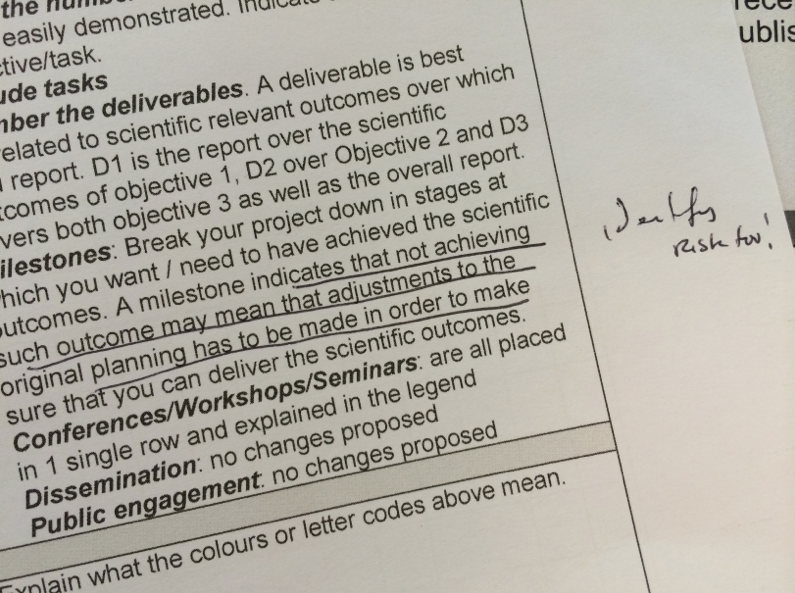
notes


LUNCH: (“the north[ern Europe] is starving the south[ern Europe] is saying ‘already?'”)


meallunchtimegrouphotwater
Back from lunch: Coherence between training and research – a perfect match of programs, e.g., help with organization of conference.

Under the new Horizon 2020, the host requires input on the production of the proposal much more so than at anytime previously. A lot of discussion about the role of the supervisor — for example, a Personal Career Development Plan (PCDP), each fellow establishes a PCDP. When, Who approves? and who updates?

Wow. Just more of everything in more detail. Attempting to get over the fact that last year, out of 5000 application submissions, there were 134 grants awarded.

window outside back

So, we all just had a major break out session, with participants developing comments for discussion with applicants of the Horizon 2020 MC individual fellowships Call. Here is the final product of our discussion:

• Integrate the larger picture of your career and host goals within the specific elements of a two year project as displayed in the Gantt chart – what happens after.
• Identify where you are on the continuum of early career or maturity
• Identify the crucial argument(s) for each section
• How to get your supervisor involved in the proposal
• Develop a strategy for having the host institution continually feed you with necessary knowledge for proposal integration with supervisor and specific services support
• Identify long-term and short term career goals and create coherent alignment with proposal
• Identify training targeted for post PhD independence – specific elements.
• Identify what is the Scientific excellence

Additional notes after getting together: What are the programs offered during the fellowship? First year define precisely and in the second year broadly. The need to make the evaluators excited about the project: What is the relevance of the topic? What is the scope of the project? Is it relevant?
Create coherence in the actual proposal
group
Final push: Impact, innovation and research component. Excellence in Science.

Non-commercial exploitation – How to communicate to peers and public your science (how do you get into contact? With whom? Ways to communicate – conferences, open science days, and story telling evenings). What is Effective? Who benefits (could there be potential for commercial exploitation and if not, that’s okay, as long as there is germane realism (communication over outreach with clear activities)?

One work package specifically for “training”.

Epilogue
Amazing.
What an Amazing Day!

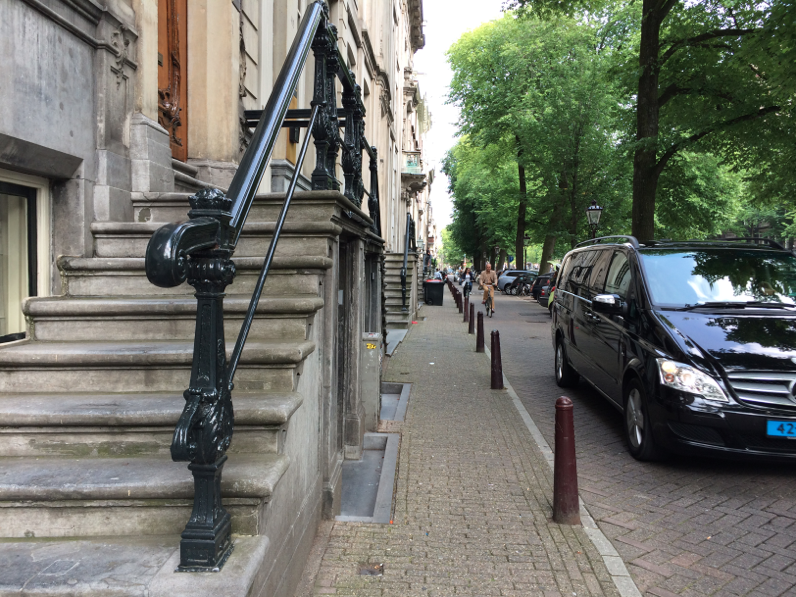
We all met for wine afterward, and chatted about anecdotal comments relating to the business at hand. Aya and Lotte were so professional, and in fact, defatiguable, given the scope of the discussions they presented. Congratulations! Yellow Research! Another successful panel.tablestreet scenemealamsterdamboat

Read Full Post »

fish


Site Visitation and Ad Hoc Conversation with Dr. Traci Speed: Geography of Established Landscapes (or, the “nature” of exotic spaces).


Fishy
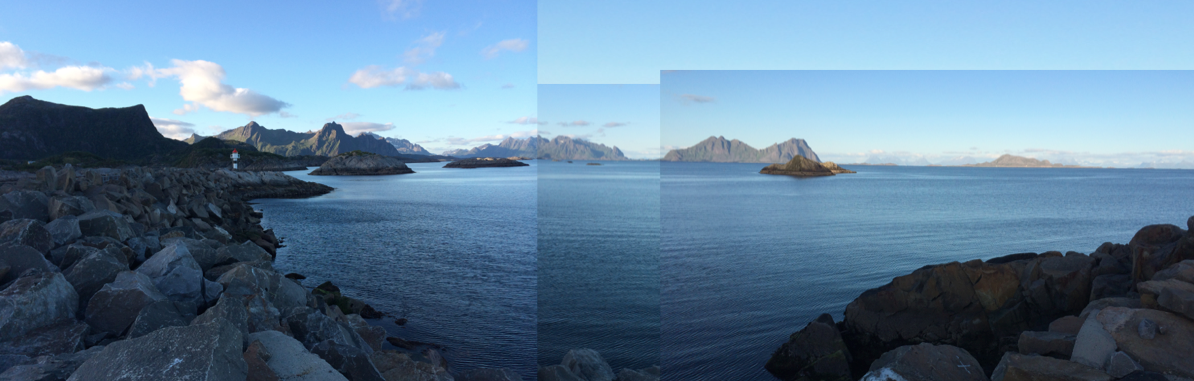
It is difficult to drive through Lofoten with its majestic landscapes without referring to a few passages from Nina Witoszek‘s analysis on nature and culture in nineteenth century Norway (ch.2, Origins of the Regime of Goodness). “The mountains are, in the last instance, our best Norwegians”, citing Henrik Wergeland, Norway’s romantic poet, as a way for Nina to describe nature and nature-related imagery as a totemic possession of Norwegians.downtown

Unlike nineteenth century Romantics elsewhere, for whom imagination, mystery, and miracle, were linked to worlds of madness synonymous with thraldom, a loss of the self in the uncanny eternal forces (p. 36), Norwegian nature was reasonable:

hillsidebeach“[Nature] is the rational element (in man) which we must believe to have been innate in the soul from its beginning [and] was the work of an Author who is himself ‘rational’; [whereas] the non-rational element is not properly called ‘natural'” (Tertullian cited in Witoszek).

nansenNotably, this conversation would be truly amiss–if the point was not further supported by the fact that reason, nature, and scientific rationality continue to play an important role in Norwegian cultural reason today.

As evidence, for example, consider the importance that Norwegian scientists place on the imagery of nineteenth century ecologist, explorer, and cosmopolitanist, Fridtjof Nansen, as he appears here on the left, in a life-sized oil and canvas portrait that, today, hangs within the institute that bears his name, in Lysaker, outside Oslo, and run by the distinguished Arctic social scientist Arild Moe.

And again, in a speech by marine biologist and scientific leader, Paul Wassman, as seen below, during his lecture at the Norwegian TransAtlantic Science Conference held at Rice University, Houston, in late 2012.nansen nansen2

Well, anyway.

What was really on our mind as we gazed over the spectacle, indeed, was whether or not the issue that captivated us–was perhaps an element of exoticism having to do with specified labor practices attributed to a geography that, in fact, has no basis for present conditions in reproducing the way people today live on the landscape.
there What we simply could not arrest from our thoughts was the possibility of seeing a landscape in which the total organizing potential refers to an entirely different form of labor than what is now possible through careerism, and thus, making it impossible for us to comprehend nature outside of an exotic framework.

Stated more simply: Who lives by organizing their entire social, political, and economic energies via cod fishing at high latitudes of variable weather patterns established by the Gulf stream?

It is a wonder to behold.
seagrass Inevitably, our pondering required caffeine and of course, aestheticized interiors, whether enjoying the comforts of a climate controlled automobile or the visible interactions of cafe society down in the Lofoten chain.
gummy shoptea

Additional shots by Traci Speed (!):

wall

bacalao

cola jello

deck

truck

Read Full Post »

enrouter troms

tromswingenrouter troms

Read Full Post »

finec3peterhoffinechoffy
petespalace1

petespalace2

Expectation and Expertise

St. Petersburg University of Economics and Finance


Environmental Politics and Policy Lectures June 2-7


Mohad
Where to begin… With the student presentations! Of course!!


fountain5

water

gazprom

dinner

fountain1

outdoors

Read Full Post »

Eighth International Congress of Arctic Social Sciences (ICASS)

University of Northern British Columbia

ICASS 8 –Prince George, British Columbia, 20-26 May 2014

Yay!


5/24: So. Here we are, attending a panel titled Arctic Extractive Industries: The Politics of Challenges and Opportunities, now just beginning, and chaired by Jessica Shadian (U Lapland), Gunhild Hoogensen Gjørv (U Tromsø), and Peter Evans (EverNorth Consulting).

Up first, we have Brigt Dale (Norland Research Institute), presenting analytical concepts for understanding and interpreting consequences of Arctic Mining. Dale Interesting coverage of the literature and the dichotomy of human utilization and unspoiled nature in resource development. But Brigt has a way of always touching the correct analytical bases, and we will be following his work for sometime.

By the way, we want to pass a note of congratulations to both him and Grete Hovelsrud, the latter, project leader of a newly awarded (and highly coveted) Petrosams grant, from Norwegian Council Norway. Congratulations!

Well. It is lunchtime. Yay!

friends Well, by now you know everyone around the table, but let’s now go to the main plenary session, the after lunch meeting of the tribe, titled, From Staples to Sustainability: Can Extractive Resource Development Lead to Sustainability in the Arctic?

Is it possible to increase revenues to northern communities from resource development? That is the question that Chris Southcott (Resources and Sustainable Development in the Arctic (ReSDA), main plenary speaker poses to the plenary audience. Well, that is an important question. Now, Chris hands over the microphone to the first speaker on the panel, Andrey Petrov (USA & IASSA Council Member), who is another panel co-chair, introducing the panelists. Lee Husky, Professor U Alaska, Pavel Sulyandziga (Chairman, International Indigenous Peoples of Russia), Gunn-Britt Rette (Arctic and Environmental Unit, Saami Council), Alona Yefimenko (Technical Advisor, Indigenous Peoples Secretarial Arctic Council).

plenaryLee Husky is up first: Taking a page out of a Hollywood movie, Husky’s answer to the problem of sustainability in the north is “Eat, Pray, Love”. It is a curious plan and rather reminds us of that famous cautionary quote by Desmond Tutu, “When the missionaries came to Africa they had the Bible and we had the land. They said ‘Let us pray’. We closed our eyes. When we opened them we had the Bible and they had the land.”

What a wonderful talk by Saami representative Gunn-Britt, and Alona, both pointing out industry extraction is by no means inevitable, and that the long term consequences of industrial land use is a challenge to communities who remain on the land long after industry has taken out its profits.speakers
Ok. Where are we? Ah. It is time for some International Relations and Law, a panel titled Rethinking the Borders of the North, and chaired by Monica Tennberg (U Lapland) and Maria Läteenmäki (U Eastern Finland).
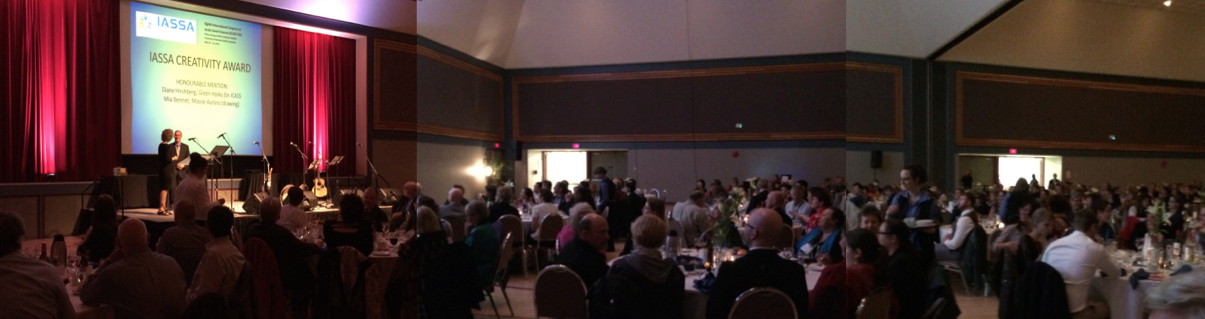
banquet


5/22: Day TWO.

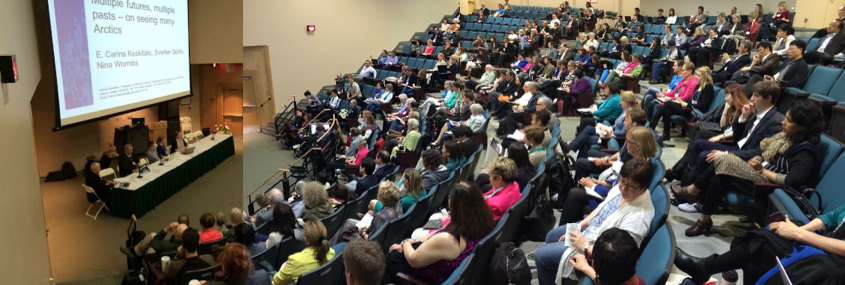
So. Here we are, in the main plenary hall discussing many aspects of the Arctic, listening to E. Carina Keskitalo referring to its discourse and organization, referring now to “multiple Arctics” and, yes, therefore, “multiple futures” – well that makes sense.

Multiple modernities, multiple nostalgias, numerous techno-economic rationalities — good grief — just a plain multiplicity of Arctricities.

And, we should remember that most of these Arctricities are historically constructed. Well. That makes sense since the present reflects the accumulated construction of the past, unless, of course, it reflects the insertion of the future into the present.

Here we are right now! In the Plenary room!

image2newness
Now Peter Skold talking about Stakeholders. A discussion about the development of a new and more complex relationship of a stakeholder collaborative. The stakeholder relationship has changed. There requires to be more research at the local level. And who speaks for the local.
Okay. Now up, Peter Schweitzer, University of Vienna, proving a well deserved congratulations to the speakers on a job well done.  Consciousness and confidence of historical construction and discourse about the multiplicity of arctics — as discussed in the present (but not necessarily in the past, so, in fact, deconstructing the empirical). Giving agency to ecosystems and natural resources, following Peter Skold’s issues.

downunderWell, well. A very interesting question from a member of the audience, a lawyer from China asks the panel, why not refer to non-Arctic Coastal States, and not simply non-Arctic stakeholders, implying that the Arctic Ocean is an international seascape and therefore, available to all stakeholders.

Moreover, he, whose name I did not catch, asks the panel to provide what forms of governance should be available to this international space.

Conference Papers: Recollections and Silences around the Soviet Nuclear Testing in Novaya Zemlya, Karina Lukin, as presented by Stephan Dudek. A panel on recollections led by Florian Stammler, with Julie Cruikshank as discussant.


meal45/21: Day ONE.

First up, we have an APECS meeting all day!

APECS stands for Association of Polar Early Career Scientists, originally founded by Jen Baeseman, and other early career folks, back during International Polar Year (IPY), in 2008.

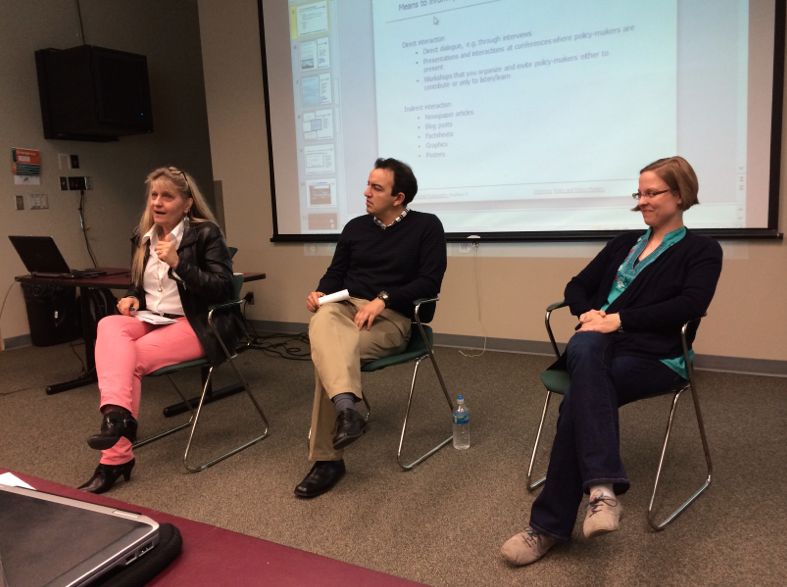
In this first session we have Drs. Anna Kerttula de Eschave, Program Officer, US National Science Foundation, and Kathrin Keil, Institute for Advanced Sustainability Studies, Potsdam, talking about the interface with policy makers.

univKathrin states that policy-makers are on a limited time frame, and require complex issues simplified in the format that can make decision making possible. This includes, demonstrating cutting edge research results and its relevance to policy, highlighting neglected aspects of a certain problem, highlight misconstrued issues in the mainstream media, identifying significant gaps, etc. Direct interaction (interviews, key networking events, workshops that you organize) and indirect interaction (news articles, blog posts, fact sheets).

Well in fact, we had a chance to catch up with both Drs. Kerttula (left) and Keil (right) this morning, for breakfast, looking smart and ready for work!Anna and Katrin There is always room for a little break as well, as depicted in fact, by this diptych below right, with University of Vienna Postdoctor, Gertrud Eilmsteiner-Saxinger (right) and PhD graduate student Susanna Gartler (left), looking happy and confident, as they should, given their projects on mobility and work in the Arctic, and a study of epistemological foundations of subsistence, respectively.gerti1gerti2


Okay!

Well, up now we have Anna Kerttula de Eschave, also talking about policy. Anna is a legacy child of Alaska politics, her father serving 36 years in the state legislature, and her sister, 16 years in the legislature, as elected officials. Anna herself held prominent roles in Washington DC, prior to NSF, working for Alaska Senator Ted Stevens, and later, as Associate Director for the Office of the Alaska Governor.

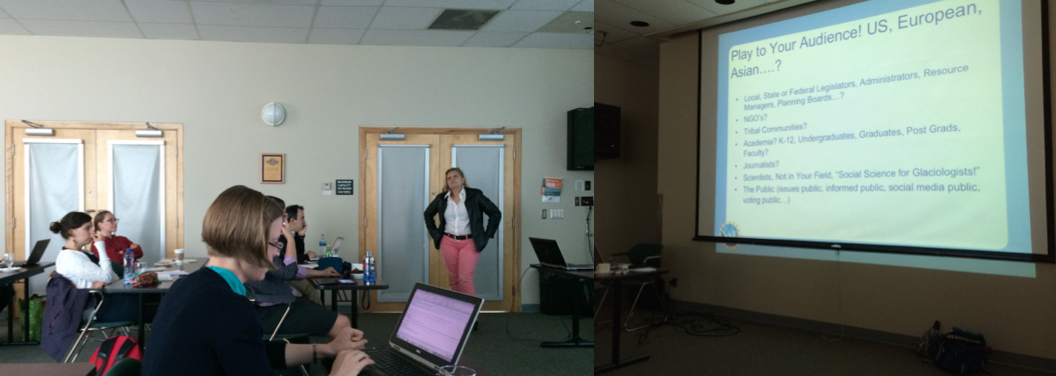
“Know your audience!”

An insightful reminder about tax-based science, requiring thoughtful outreach to different aspects of society to communicate your findings. Who is in the room, where are they from. “There is no policy cycle, it is an iterative process, working across parties, including experts.” Great line.

You need to show how your science is important to policy. Citing her father, if you can choose your politician with a personal interest in your topic, you can engage them. Public opinion matters. Actually, there is an excellent article by Sheila Jasanof (2012), who suggests since mid-century, publics underwriting research with substantial tax revenues “acquired a stake in what science produces, just as science acquired stakes in making its findings useful as a basis for continued public support” (p. 132 Oxford Encyclopedia of Climate Change, editor, Richard Norgaard).opinionAnd Anna points this out – stating that that democratization efforts have filtered into the processes of scientific discovery,  shoring up legitimacy of public funding for science—by seeking citizen acquiescence to research that purports to guarantee eventual widespread societal applications.

Data visualization websites for the Arctic: Patchwork Barents is a particularly spectacular example. Another great feature – accurate information for the public, made available to the public, getting info out in real-time, is the NASA site: Earth Right Now: Your planet is changing. We’re on it.. discussants

So, get training in web based-media and get your science out there (check out the videos, “Science, it’s a girl thing”, both the European Union and the Dartmouth University response).

Great final discussion on the interface of policy and science, and what the discussants point out, that the presentation mirrors a lobbying 101 format. Joining Anna and Kathrin is Dr. Roberto Delgado, Science and Technology Policy Fellow for National Science Foundation, seated in the middle.

Well, here is a better, one might say, dashing photograph of Roberto, who, we should add, holds a unique position at the Arctic Social Sciences Program, NSF, working under the mentorship of Anna Kerttula (great idea, wish we could apply! [and here’s the link!]) in the capacity of science-policy interface.sandt
Phew. Great session.
Not even the first day.
But what do we have here?

Ah yes, the Plenary session and of course, Food (!) which brings to mind, that famous saying earlier in the day, “Know your audience!”

meal3crowdplenarypolarcommissionJumping ahead of ourselves for a moment, who would have thought that in the taxi back to the hotel filled with the entire delegation of the Canadian Polar Commission, that the important group would be so well represented.

David Miller, National Coordinator (far left), Marc Meloche, Senior Policy Advisor (middle), and Nadav Goelman, Policy Analyst (right), have just completed a Northern review which they plan to share with us all in the coming days.

We learned quite a bit about David’s extensive experience working as a journalist in Yellowknife for the better part of a quarter century, first studying to be an architect and designer at U Calgary.

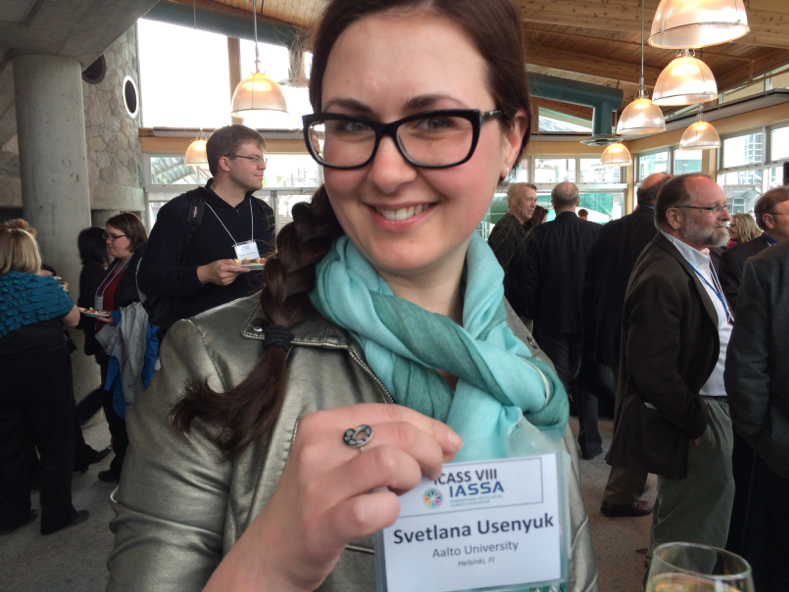
Back at the opening reception, we were able to catch up with some old and new friends and to hear from absolutely new participants to the Arctic. Well, we know Svetlana Usenyuk, working now as a post doctor in Finland, soon to be submitting a proposal for the European Research Council’s Horizon 2020 Marie Curie to work in the United Kingdom, and we wish her all the best, and of course, confident of a positive outcome.

But there are a few regulars from Alaska and non-Alaska arctic programs, including professor Philip Steinberg (right) and Diane Hirshberg (left) from University of Alaska Anchorage, who by the way, carries the UC Berkeley mantle in Arctic as the Alaska Chair of the Cal Alumni Association (Go Bears!).
svetlanaPhil
Well. Now, before we continue on to mention the other notables in the room, we must pause for a moment to remark that one of the more wonderfully curious keynote presentations at this arctic social science event was given by Chinsoo Lim, PhD, Vice President of the Korea Maritime Institute. korea

What a welcomed presence!

It is rare that the social sciences and in particular, the Arctic social sciences is addressed by a such a respectable member of industry, commercial vessel construction and the like, and by the looks of the crowd, Dr. Lim seemed to have an especially distinctive affect on everyone in the room, likely because of his polite and rather polished demeanor.

We simply could not help ourselves and had to catch up one-on-one with the good doctor who let us know, in fact, that his company has been covering all the Arctic bases these past few years, running the gauntlet so to speak, making themselves heard about the new opportunities, er, that is, shared opportunities for all, as the Arctic becomes constructed as a accessible and valuable seascape.
korea2Who else?

Ah, there they are, Kathrine Keil (left) and Daria Shapovalova (right).

keillarsWell, of course we know Kathrine from long times past, her status as Arctic policy studies aficionado is well deserved.

But then Daria is new, starting her PhD program in Law at University of Aberdeen, and having worked previously for the prestigious Norwegian Concern (again on arctic shipping) Det Norske Veritas (DNV), and perhaps hoping to return upon completion.

Actually, we here  at Paparazzi-Ethnography have spent an earlier occasion with at their Høvik DNV Headquarters, presenting out own ideas and agree wholeheartedly, that the company is indeed a major player in the future world of Arctic developments.

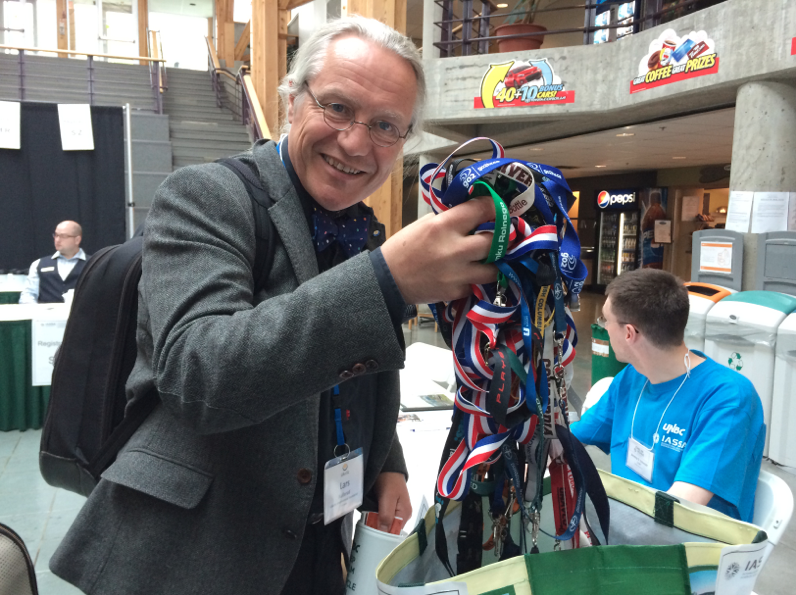
Ah. Now there is an ICASS notable, Chair, Key Note Speaker, U Arctic leader, Lars Kullerud, selecting a lanyard from a bag of chords collected at various universities.

We imagine that everyone is likely able to locate his own home town.

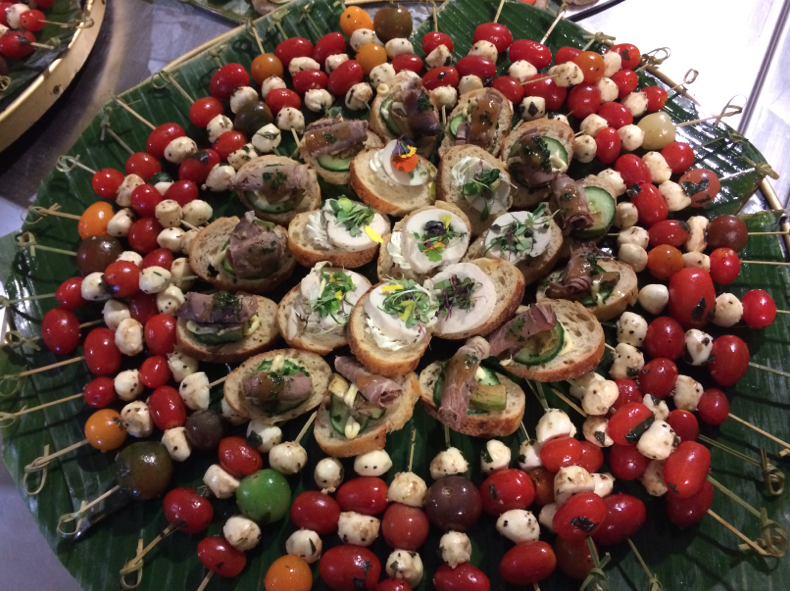
Well of course, how could we round out the evening without mentioning the spectacular services of Chef Rodney Mansbridge (right) and his Assistant James Begg (left). The offerings were just what so many of us required after such long journeys from several continents.
chefWell, in fact, a modest attempt to acknowledge the entire assembly deserves some opportunity, led capably by Willie Lum, Operations Manager for Eurest, in their efforts to provide what all conferences require, in fact, yes, demand, the golden touch of service.

Hurrah! to the folks of Eurest and may we all be polite guests to them over the duration of our conference stay here in Northern British Columbia.
crewsign

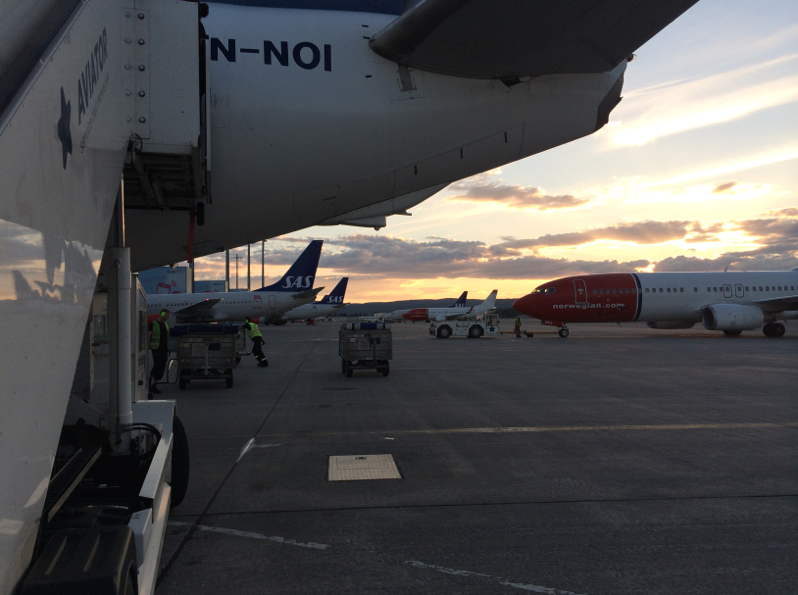
Traveling to the Eighth International Congress of Arctic Social Sciences (ICASS)

cloudhotelplaneprop

Read Full Post »

us

Subterranean Estates

5/19: This time, we all met at Michael Watt‘s office, with Hannah Appel, on the fifth floor of McCone Building, Department of Geography, north side entrance of UC Berkeley. Our task was to fill out the promotional material list required by Cornell University Press for our upcoming edited volume Subterranean Estates: Lifeworlds of Oil and Gas.

We spent some time catching up. For example, Michael mentioned having given a talk at Cornell University recently, which provided an opportunity to meet up with Malcolm R., chief editor for Cornell U Press. Hannah has been getting ready to move to Los Angeles, to take up her assistant professor position in the Department of Anthropology at UCLA.

The list of questions (distinctive qualities, key words, promotional quotes from marquee names, etc), took the better part of two hours.

skyplanerockshoe

Subterranean

Estates:

Lifeworlds of Oil and Gas

(the Oil Talk book).sky2meal

Read Full Post »

troms

mountainmountainsinside
5/14: When the opportunity for chatting with Kathryn Samuels arose, recently hired assistant professor at University of Maryland and US-Norwegian Fulbrighter this year in Tromsø, there was no possibility of missing the appointment.

We met at the Fram Centre to discuss Kathryn’s emerging work on the Arctic and energy heritage, for the moment, beginning a project in Svalbard, and just recently having submitted a proposal to the US National Science Foundation. As an anthropologist, she is interested in examining different forms of production in the Arctic, beginning with whale oil harvesting in the previous century, and looking at the constructed remains, discursive and material, that continue to inform the Arctic landscape.

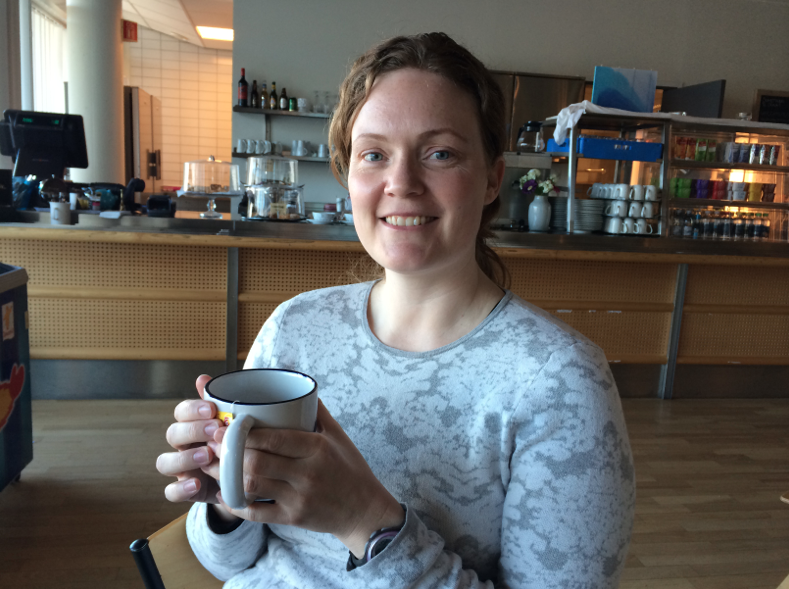
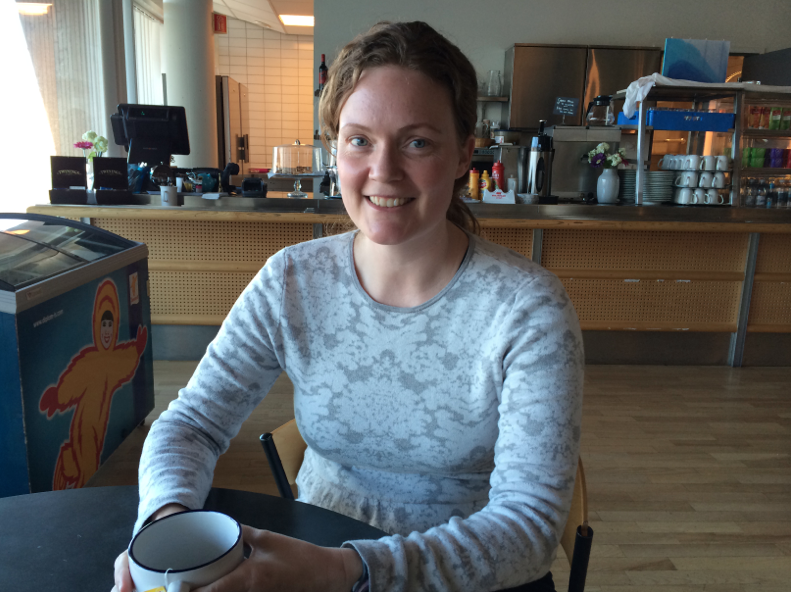
Here is a handsome diptych of Kathryn, below, sipping tea.
Sam1Sam2
Afterward, at University of Tromsø, a fascinating presentation by none other than arctic political scientist, Gunhild Hoogensen Gjørv, talking on her newly published manuscript that branches out to a new region, and on Ashgate press, titled, Understanding Civil-Military Interaction.gunhild

The talk was well attended, with fellow colleagues from the sociology/political science department, including Stuart Robinson.

Here, in this image on your right, Gunhild stands beside a powerpoint image to demonstrates the different types of groups involved in civil rebuilding.

She points out that while policy perspectives suggest a “civil-military” dichotomy, on the ground experience often reveals that these boundaries are less transparent, especially by folks living in the area.

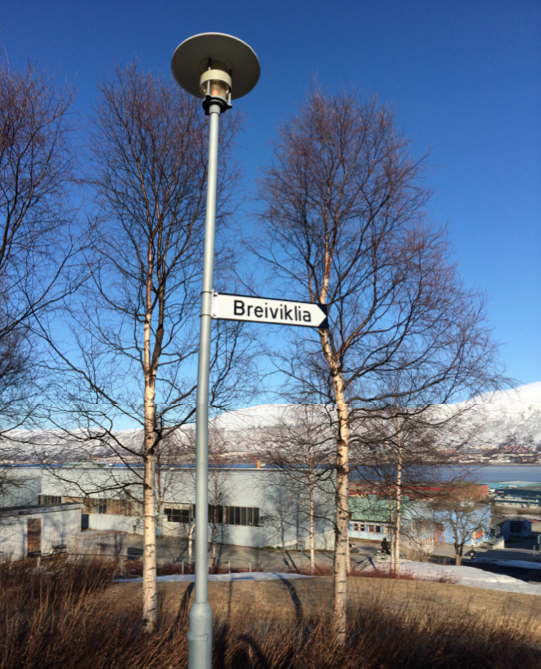
Breivik1


University of Tromsø, arriving

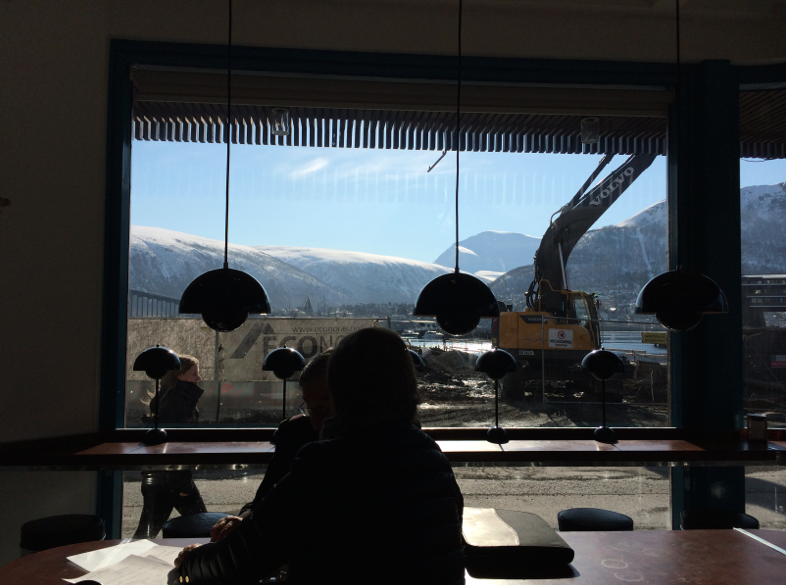
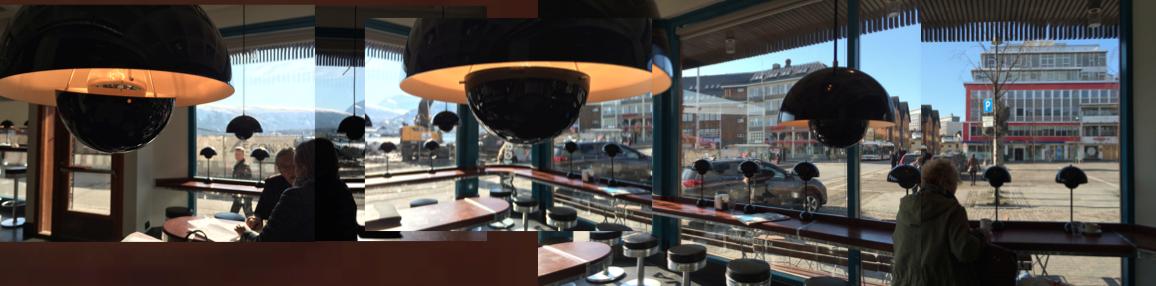
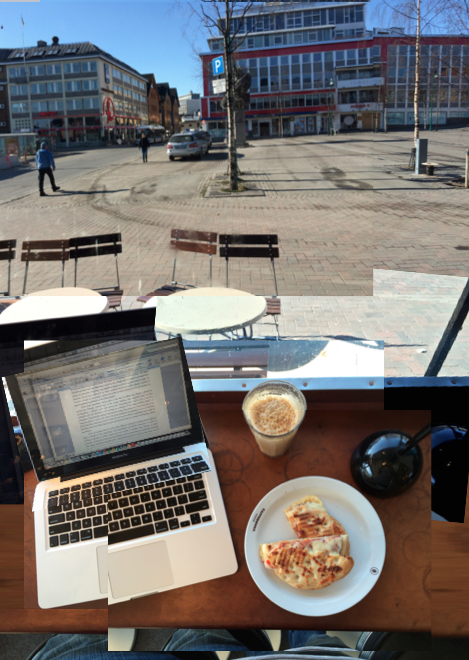
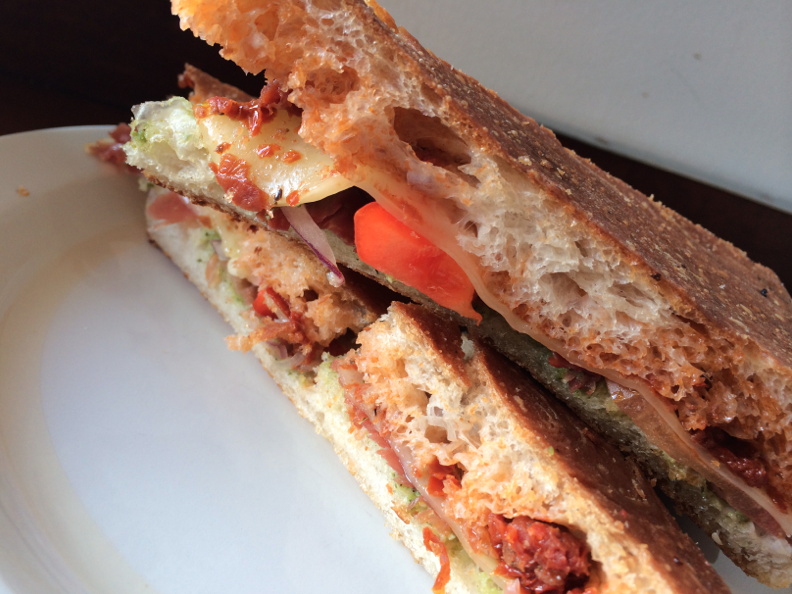
KaffebonnaThe Troms in grand style. We had a delicious panini upon arrival at Kaffebønna downtown troms, then headed over to greet the smart-looking Hege Fokedal who provided an office key to get started.
inside


A quick stop to the library for coffee and oj.


The flight was straight forward and quick. Had us up and working in the latest writer’s grotto before having had a chance to give a second thought.


Just now completing a first draft book manuscript on energy experts who develop Arctic futures, tentatively titled, ENERGY ESTATES: FROM NATURAL MONOPOLY TO A CULTURE OF EXPERTISE.


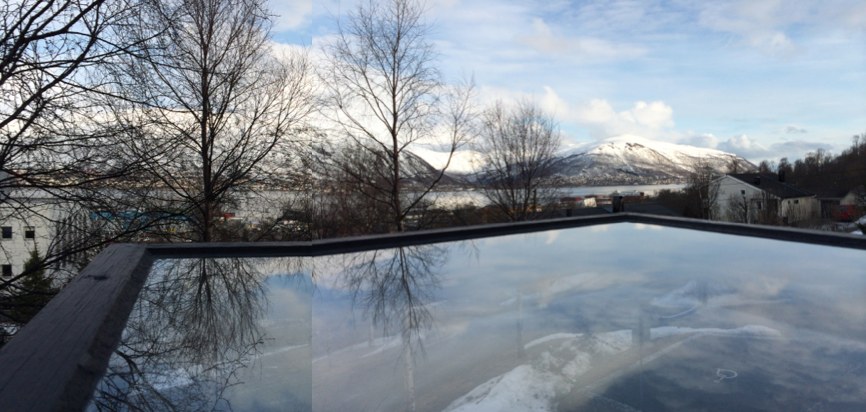
windowsnowy

The weather is marvelous, though indeed, a bit taciturn.

sky


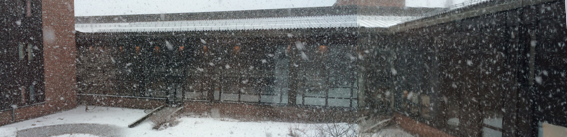
Well, what the heck, with so much sunlight, on average, 16 hours per day, it can snow for 10 hours, and still be gone in a flash.


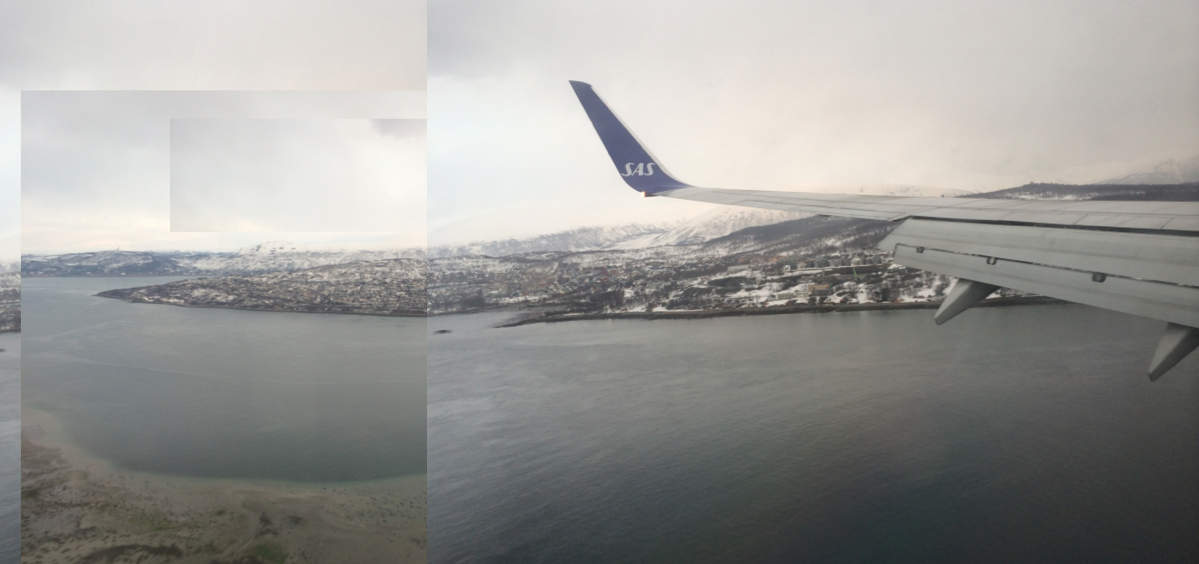
Images from the Sky Train.
planimealimeal3


Panini forest.
breakfast
foody

Read Full Post »

« Newer Posts - Older Posts »