

Norwegian-Russian cooperation – The path behind us and the path ahead
The Research Council arranges a Norwegian-Russian Conference on Petroleum Resources, Energy-Political Cooperation and Social Development in the Arctic Region
Location: Forskningsrådets lokaler på Lysaker
From: 19.11.2014 To: 20.11.2014
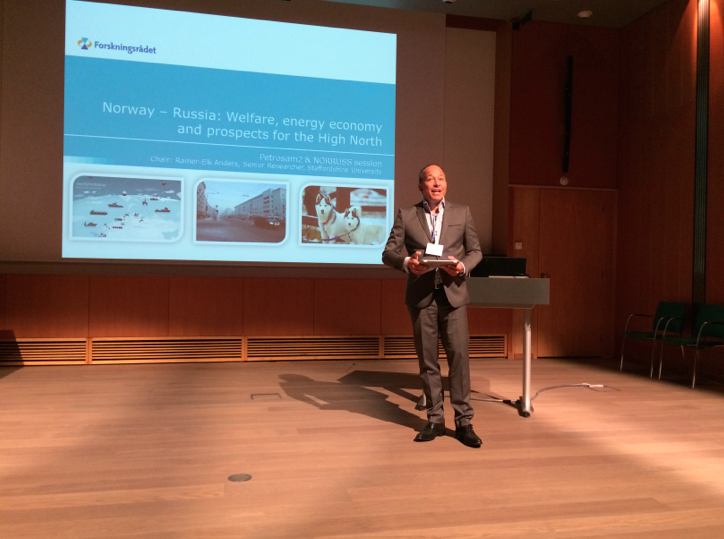
 Day Two: Chair Anders Rainer-Elk, Senior Researcher, Staffordshire U, serving as emcee introducing the PETROSAM 2 & NORRUSS Session: Norway – Russia: Welfare, energy economy and prospects for the Hight North, giving us a warm welcome to the first speaker, Jørn Holm-Hansen, NIBER, speaking on the Russian welfare state under various influences of stability and conflict, making general comparisons to Western states. Welfare reforms are developed through similar measures and methods as authorities in western Europe.
Okay. Now, we have a response by Frode Mellemvik, UiN, coming out of the gate with a few opposing comments (after lauding the project itself), first, asking why there is an “or” between “conflict” and “stability”, that is, the entire idea behind reform is conflict; wanting to know more about what these reforms identify as problems — for which the reforms are directed to solve; not all municipalities are behaving in the same way.

 Next up we have Dmitry Goncharov, Moscow School of Higher Economics, talking about the individual and the state in Russia, self images and civil society. Speaking now is Anne-Kristin Jørgensen, FNI, on Federal Russian politics, modernizing northern economies. Referencing president Dmytri Medvedev call to attention to modernization of Russia. Murmansk, for example, fisheries, mines and shipbuilding. Focusing on the fish sector and asking what drives modernization, the role of politics, obstacles and what is modernization. Reducing oil dependency and natural resources, while transforming Russia into a modern knowledge economy. Today’s Russia where state led industrialization sounds like a good idea, but where state led innovation is a less well good idea. Nevertheless, Putin has concentrated resources into a few corporate groups, which has fostered corruption rather than innovation, while focusing on internal developments often overlooks the benefits of “imitation” (import, copy) rather than innovation.
In the North, investment rates are modest, profitable companies tend to underinvest, modernization is slow and stepwise, market demand (not political priorities) drives modernization, modernization does not conform to political visions (innovative modernization is rare while modernizers prefer foreign technologies). Obstacles to Modernization: high cost of input factors, problems with attracting qualified labor; poor access to long term credit, high interest rates, strict collateral requirements.
Una Hakvåg also now talking about modernization, Russia’s defense industry, and engine for economic growth.
Paal Hilde, IFS, is now up questioning both speakers, in the former, asking for comparisons between the sectors (fishing, mining, shipbuilding), to what extent are there any spinoffs from this industry, and finally, the role of sanctions in the Russian economy. For the second speaker, Hakvåg, similar questions, method and the sustainability of Russian dense spending.
 Arild Moe, now talking on Russian oil and gas institutional adaptation (and resistance). Oil industry, success on the surface but problems in the ground. Sources are further apart from existing infrastructure, reserves are smaller and smaller, and geological structures are more complicated. Another reflection of problems in the ground are rates of recovery of total volumes that can be produced, which has fallen to low(er) levels. A tendency toward in higher investments and higher costs. Arctic has remained high on the agenda as an important resource base for contributing to higher volumes of production. Arctic also offers possibly for Big Units, big production.
Russian Arctic offshore has a long history. Exploration since early 1980s, Barents Sea, with high discovery rate and long term resource mapping. Progress hampered, however, by insufficient legal and tax conditions, negative attitude to foreign companies, and strong priority for domestic technologies.
In 2008, off shore development was entrusted to state dominated companies Rosneft and Gazprom monopolization, closing down other possibilities for investment, and even then, interest from the petroleum industry waned accompanied by Russian industry monopoly losing interest in development. Monopoly tracts are HUGE, leaving the whole management to the companies, or to the company (Rosneft). From 2010, New tendencies in Russian offshore policy. A need for division of risk, foreign capital, technology and project implementation experience acknowledged. New attractive tax conditions emerged as well as possibility for joint ventures with Russian majors, while political prestige concerning Arctic emerged.
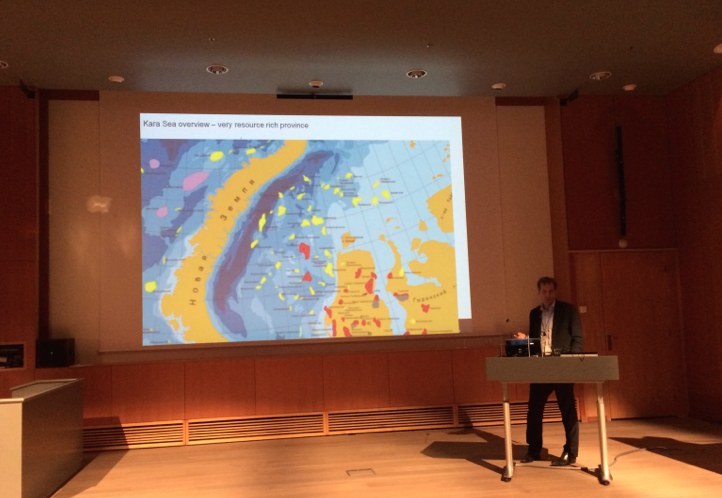
 New Cooperation arrangements, Between Rosneft and Exxon Mobil in Kara Sea, Laptev, and East Siberian Sea; Between Rosneft and ENI in the Barents; Between Rosneft and Statoil in the Barents.
Now it is reasonable to ask whether there is reconsideration of the Arctic offshore offensive under way. Dependence on western companies exposed, western companies less enthusiastic, new political risk assessments; offshore petroleum costs increases, oil price outlook, long lead times and capital constraints.
The authorities are inclined to believe in the Arctic for political prestige, but it is a matter of how long they can do that, even when the net income to the Russian state budget might be rather small. What about shale?
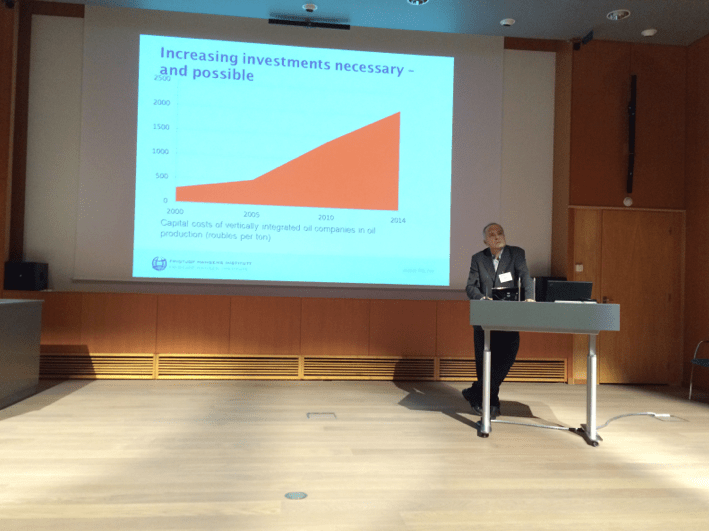
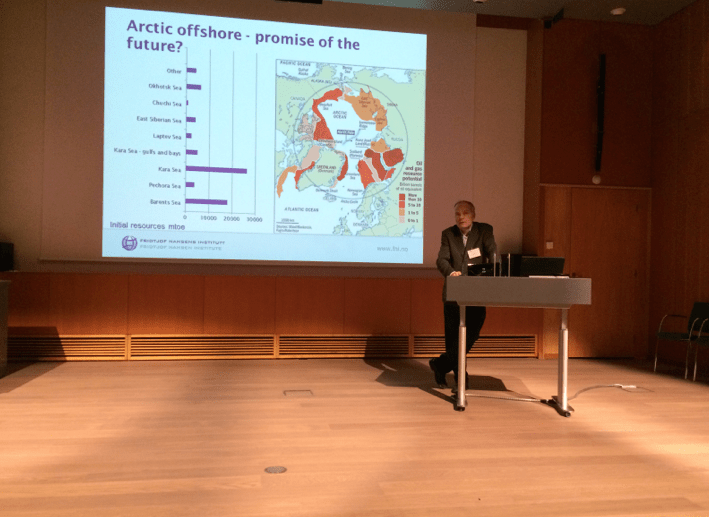 Moving from traditional oil production to taking advantage of shale will not be easy, requiring new tax rules, new licensing system, high start up costs, not possible to determine reserves and output in advance. There are requirements for new financial mechanisms and stimuli, transport infrastructure. Technological development and different companies, a multitude of technological approaches (competition).
So, there are many uncertainties for taking advantage of the resource potential. Russian majors inflexible and focused on traditional oil. Existing regulations concerned with control, not stimulation, many vested interests in present system, and role of foreign companies, how will reform happen before decline in traditonal oil production sets in?
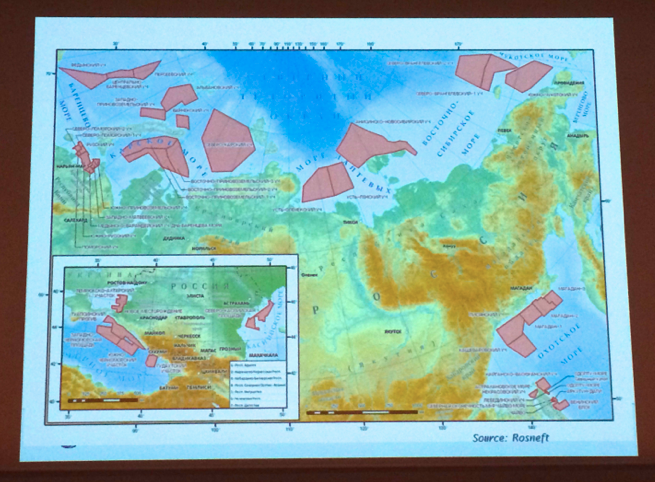 I rarely pause to discuss images, leaving them open to interpretation, but this PPT above, which Arild presented is a fascinating portrait of Rosneft (Russian oil company) tracts offered to the company by government, absolutely huge areas, which as Arild suggests creates a kind of monopoly over reserves that drives down competition and development.
Responses include Thina Saltvedt, Nordea Markets, and Ole Gunnar Austvik, BI, both want more details about shale developments and conceptual description of analytical approach.
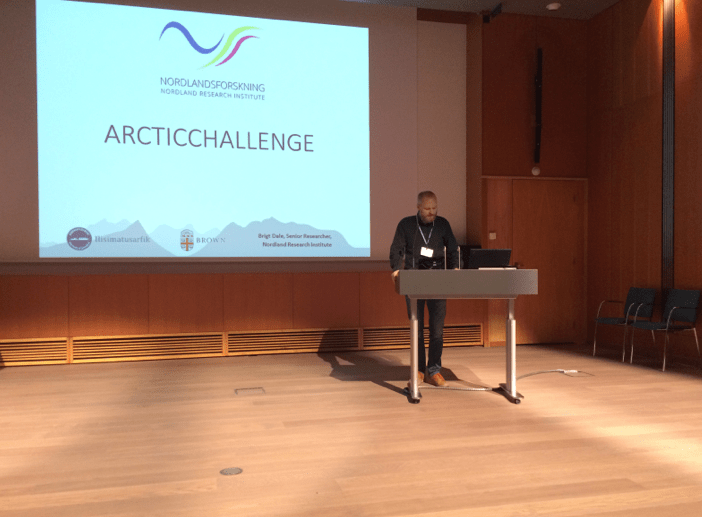
 Brigt Dale, talking about Arctic petroleum through comparison of Norway, Greenland and US. Examining how disappointed actors in the battle over opening Lofoten region for oil development are gearing up for another fight to open up the area.
Various political commentators and elected officials are creating discourses that reify the region in terms of development and progress versus non-development and societal stagnation. Alternatively, industrial concerns want the local to speak for itself, which presents a more organic lobbying effort over development in the region.
“A dialogue where the goal is fixed”.
 Well, up now we have Tore Henriksen, UiT, investigating the legal framework for Arctic shipping. International environmental law and the IMO (International Maritime Organization), convention on biological diversity, and considering the adequacy of the Polar Code. Moving from these global regulatory concerns to considering more national and regional regulation of shipping, for example, the role of Russia as a coastal state, what extent of jurisdiction of Russia over foreign vessels under international law, how does Russia exercise jurisdiction and its perception of international law in the Arctic.
Gunhild Hoogensen Gjørv is up now, identifying the importance of how each project should highlight relevant features of their own epistemological form. 
As for example, when referring to Brigt’s presentation, thinking about where to draw the lens of analytical inquiry around community, politician, industrial concern, et cetera.

3:10 PM: Final gathering to think collectively about the two-day event.
 NORRUSS program board members (above) are now coming to the front of the stage to address specific questions brought up by audience participants. Ilan Kelman asks about the necessity of long-term projects to build up research communities over time. NORRUSS response points out that, yes, the issue has been brought up by the board and one affect would be fewer recipients for funds, however, advantageous it may be. Also, the Russia context is changing so quickly that the boundary of what Up-to-Date actually means is a moving target. Finally, a priority of NORRUSS is the business sector, which is flexible to move in different directions with results in a much more truncated time frame (“quicker”). Additionally, long term projects raise difficulties about oversight.
Arild Moe asks about the border lines of the program, how are they envisaged? Are you headed toward a “broader” conception of the Arctic or will it focus on the Russian-Norwegian region. NORRUSS response points out that both topical areas are a priority. Nevertheless, the government will again make a new decision of priorities in two years, though a weakening of these priorities are unlikely. A gentleman from the back is raising the question of Russian-Norwegian support in which bi-lateral funding schemes are not as legible on either side. That is, Russian funding of joint-national projects are restricted in ways that are not aligned with Norwegian funding schemes. Another concern raised is that there should be both small and large project funding. Greater grant flexibility. Nevertheless, bi-lateral relations with partners always take a while to put together. So, perhaps, a mechanism to investigate progress. Also, a point about European Research Council: FP7 framework did not receive money from Russia and yet gave Russian researchers the opportunity to participate. The follow up program, Horizon 2020 no longer provides Russian researchers with funds, since they have not yet received funds from Russia.
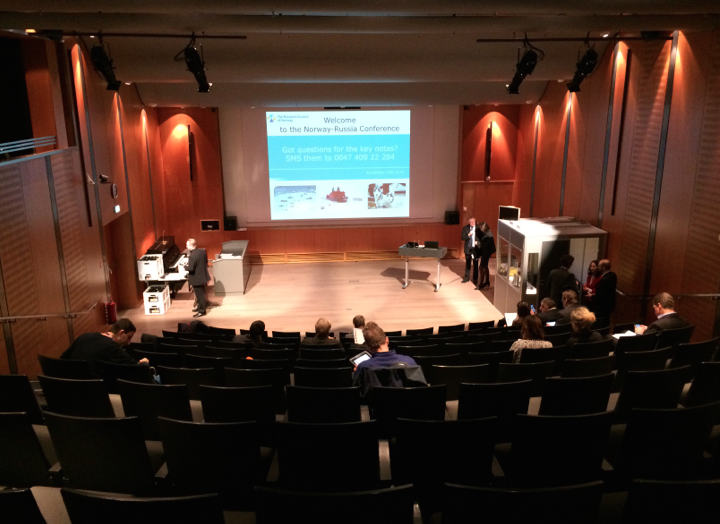
 11/19- Day One: Areas of common concern, moving forward through common interest, given the political realities of sanctions against Russia, and the intertwined multiple stakeholders Russian-Norwegian developments in the Barents area.
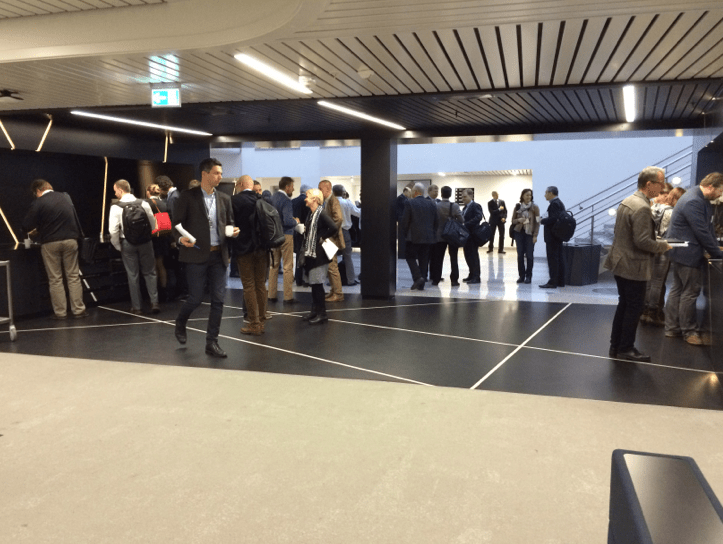
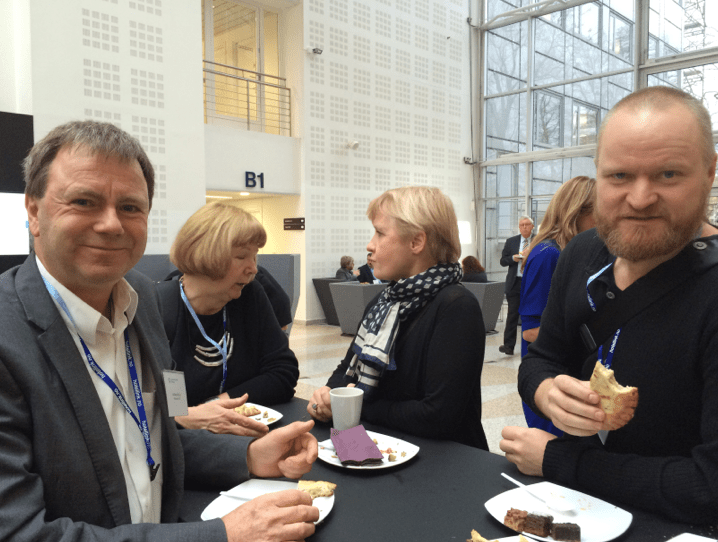
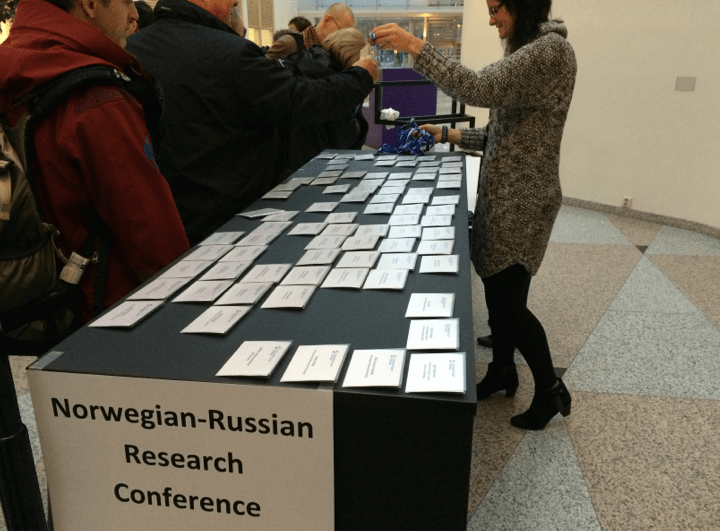
I always arrive a bit early to capture the scene, there are a lot of different types of folks here, academic, industry, government, Arild Moe, Deputy Director of Fritijof Nansen institute just walked in, as did Brigt Dale from Nordland Institute. A young woman is playing Brahms on the piano forte, along with a few tunes from the French movie Amelie. Diplomats, scientists, colleagues.
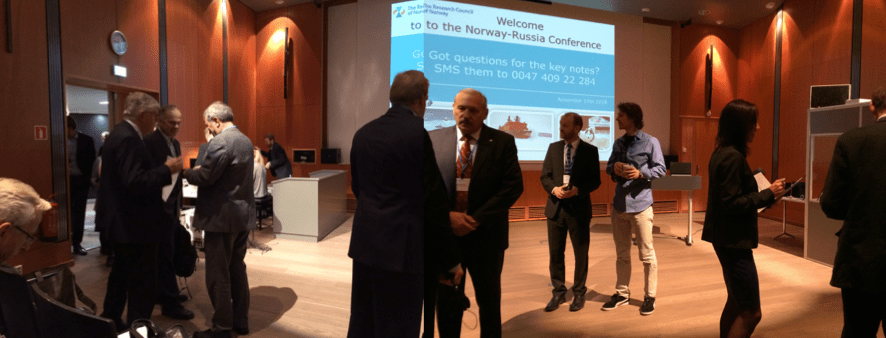

 Arvid Hallen, Research Council Norway introduces the setting, beginning with the pianist, daughter of RCN administrator, having played the piano since childhood [applause]. Now talking about co-existence, politically and environmentally, and a history of Russian-Norwegian science, referring to Fridtjof Nansen and Russian science leaders.
Arvild covers the history of Research Council Norway’s recent cooperation over the past three years with Russia, in the Arctic regions, e.g., SIOS (Svalbard Integrated Arctic Earth Observing System). As well, the Prime Minister’s release of The Arctic: From Opportunities to Work report. The High North has opportunities to exploit but what is required are daunting decisions, much learned through the ongoing projects of RCN-Russian cooperation.
Moderator is now up renown journalist, author, speaker, Siri Lill Mannes.
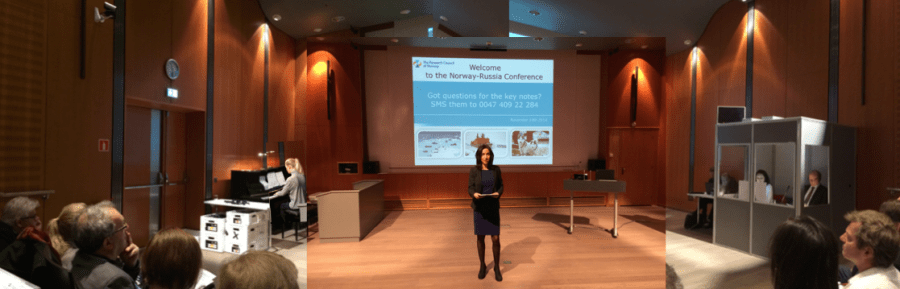
 Up now from the Russian delegation is the Maxiim Koloss, Attache for Science and Research Russian Embassy in Norway, speaking of the demarcation line developments (Russia/Norway) and sharing of data in this border region, also, that existing sanctions should not get in the way of discussions about these developments. From this perspective, Russian foreign minister invited Norwegian delegations to continue oil development projects, while work continues between the two groups in the Barents sea on several projects. Plans are made for signing a program between Statoil and Gazprom on scientific sharing, cooperation between two countries however, are more complicated because of sanctions, as for example Kara sea developments have slowed. In these circumstances, to continue Norwegian-Russian work on energy dialogue — the RCN meeting will make a significant contribution to this interaction.
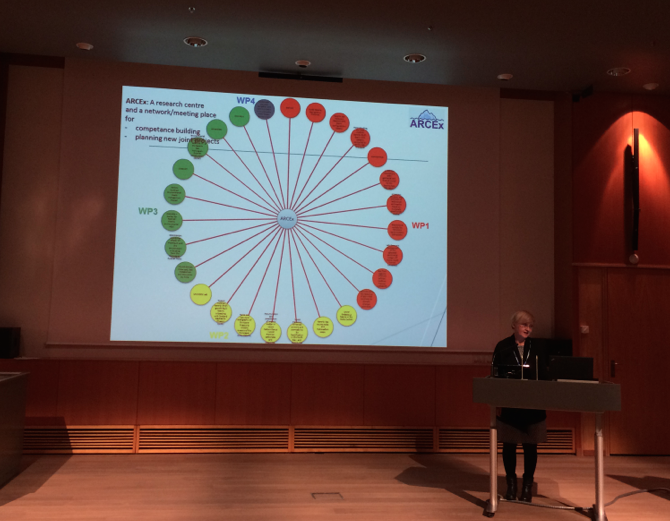
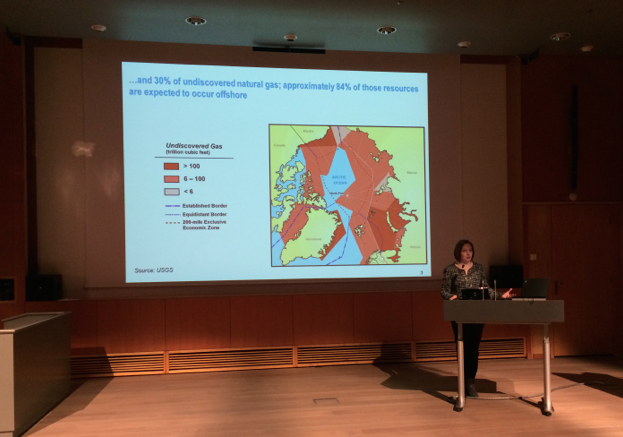
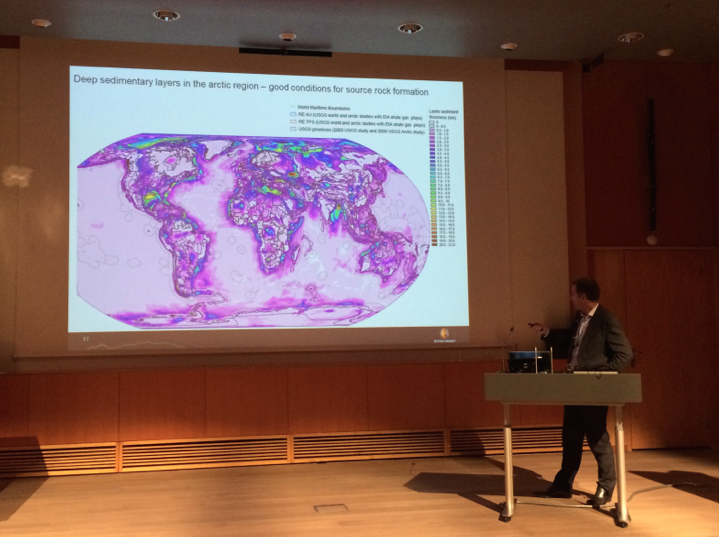
Karin Andreassen, Professor and Center leader for ARCeX, is up now, talking about Eco-Safe Arctic Petroleum Exploration. A new research center for Arctic exploration in Tromsø, use of best available technology and practices to minimize risk in Arctic environment. ARCEx (Research Centre for ARCtic Petroleum Exploration). Aims to build research and knowledge on Petroleum exploration in the Arctic, focus on Resources and geoscientific conditions in the north, including knowledge and methods on eco-safe exploration, and education for the petroleum sector, hosted by U Tromsø and broad national academic and industry partnerships and close collaboration with international partners.
 A third of the funding is industry, a third from RCN, and the rest from academic partners, beginning with a catalogue of projects that partners are involved in and that relate to ARCex, such items as, for example (WP1) “Basin analysis” to increase regional geological development in the Barents Sea (linking sedimentary basins to deeper structure, basin evolution, uplift and erosion, arctic petroleum basins; petroleum systems and play connects, providing detail knowledge on basin characteristics and paleogeography to improve prediction of the resource potential, and field based studies; environmental risk management (seismics and marine life). Using Drones for marine mammal surveys in Arctic areas, using drones for sea mammal reaction to testing. Karin points out that all these work packages involve training of graduate students as well as new masters programs (in Arctic petroleum sciences, geography) linking geology, environment and technology.
Collaboration with Russian institutions and researchers – promoting Norwegian-Russian student exchange at MA and PhD levels, New ARCEx courses offered to Russian students, and developing joint agreement with MSU for ARCEx students to participate in the courses. A network and a meeting place for focusing on the same topic, competence building and planning new projects. ARCex conference in April, 2015.
Q & A: Emcee Siri Lill Mannes is taking questions on SMS, and asks whether industry is providing support, and how difficult it is. Karin points out that companies have for several years waited for Tromsø to get active in the North and not just Norwegian companies, but also Russian companies [a question over actually “which Russian companies” makes a tense moment, as sanctions are creating some nervousness about actually existing cooperation]. What does Drone information give you? Karin: ice conditions are more reliable than satellite and a good method to map out marine mammals, and seismic acquisition mapping. Would a global climate treat affect your activities? Karin: the world still needs energy and the High North has the potential to provide that energy, and it is more important that we develop in the most responsible way, so research is crucial. What are the main geological differences between Russian/Norwegian areas? Karin: Erosion of bedrock that has affected underlying geology. If you could pick one challenge the Center should solve, what would that be? Karin: we need to find good students. Recruiting good researchers is a problem (because they get hired immediately by the oil industry). Would an oil spill be “more damaging” because its sensitivity? Karin: This is a main issue with a few of the work packages, to study how ecological systems will be affected by an oil spill, it is a main objective.
Dr. Vladimir Zhmur, Russian Foundation for Basic Research, Department Head for the Competition projects in Geosciences. This foundation was organized more than 20 years ago, and has become the basic foundation for basic support for science in Russia. Aspects of the foundation – Structure and objectives, grants, expertise, financing, and achievements. Structure: Above all, the legal framework in Russia states that funds are part of a government foundation — there is legislation outlining that public funds are created to support scientific and technological innovation; and more succinctly, supporting technological and innovative projects, on the basis of competitiveness — a template borrowed from the United States National Science Foundation: supporting basic research, young scientists, identifying growth points, promoting regional and international scientific cooperation, strengthening the image of Russian science in the global community. Not very much money is used on humanities. Russia has another foundation for supporting humanities.
International funding programs with Norway are new, starting in 2011. Topics for joint funding are related to climate change in the Arctic, environmental monitoring, control and understanding of marine pollution, mainly technological projects, technology and knowledge for offshore fields development under Arctic climatic conditions; improving modeling of permafrost (capture, storage and release of GHGs) and its impact on climate — well, in general, all of these initiatives are related to the Arctic. For the 2015 call, “we expected quite a few number of projects but only received four” (three of which will be funded). One problem is that all Norwegian research is “applied” while Russian research favors “fundamentals” (theoretical). “If we go more toward applied science we will have more interest by the Norwegian partners”.
Q & A: How successful are foreign institutes in getting funding from the Russian state? Vladimir: As a rule “Russian money doesn’t cross the border” — money from abroad doesn’t come to Russia and Russian money doesn’t go abroad (to foreign institutes).
Up now we have Morten Smelror, Director Geological Survey Norway talking about Russian- Norwegian cooperation. A century of cooperation. Fridtjof Nansen, Eduard von Toll, were both Norwegian explorers who received support from Russian government. Svalbard, for example, represents Russian and Norwegian permanent settlements and economic actives related to geological resources. Geological mapping and research has been carried out for decades.
Norwegian-Russian North Area Project (1988-1993) – Russian Academy of Science and Geological survey of Norway, worked together. Since 1989 and especially 1991, a lot of field research, mainly geological mapping, seismic surveys. Late 1980s and 90s, Norwegian-Russian petroleum geology studies in the Barents area. In 2003, an initiative on circum-Arctic geoscientific collaboration by invitation from Russian ministry of natural resources in 2003. 2005-2009, Geological history of the Barents and Kara Seas. The BeoBaSe project. Recently, other agreements.
Q & A: Has the new chill in the political climate affected geological mapping? Morten: well, yes and no. Which events and activities have been the most influential for research? Murmansk 1987 speech and 2010 accord. [Great presentation on history of Norwegian-Russian research, ed.]
Coffee Break
Thor Chirstian Andvik, Project Director Barents, INTSOK — Ru-No Barents Project. Success comes from cooperation. Arctic offshore is a growing theme (why we are here?) – how can an high cost area be developed in a safe way: Key role in long term global energy supply. Russian-Norwegian oil and gas industry cooperation in the High North, A national Strategic Project 2012-2015. Industry and Government support for activities. Tasks: Assess common technology challenges Russia and Norway face in development of High North; Analyze existing technologies, methods and best practice Russi and Norwegian industry cans offer; Based on the above, visualize the need for innovation.
Focus areas: logistics and transport; drilling, well operations and equipment; environmental protection, and oil spill contingency; pipelines and subsea installations; floating and fixed installations. 11 industry workshops held with 5 focus area resorts published. key finding: extended operations into the High North requires specific technologies beyond the contemporary. Logistics and transport: increase amount and quality of data on sea ice and weather conditions, forecasting models, etc; Drilling and well operations: Better understanding of the effect of ice loads on structures to be incorporated in design standards and ice management methods, developing efficient disconnect/reconnect systems for mooring and risers; safeguarding the Blow out Preventer, etc; Environmental protection and oil spill contingency, establish long-term environmental monitoring programmes for areas where there are missing data needed for environmental risks assessments, etc. Pipelines and subsea installations: develop components optimized for fast installation of seabed modules and use of submarine technologies in ice-affected waters with challenging seabed conditions, etc.; Floating and fixed installations group: improved data on met ocean conditions including gathering and sharing of data on wind, waves, polar lows and sea ice extension. Imperative that results from findings are addressed by industry, research institutions and authorities. [Another great presentation, ed.]
Q & A: who will improve all these conditions? Thor: sending the ball back to industry; What is the best way to create a cross-border response system for oil spill challenge? Cooperation through utilizing better technology. You previously worked on the Shtokman project, what is the lesson to be learned? Thor: Nothing is easy [laughter], cooperation between the three companies, a lot of knowledge came out of the program, a lot of this knowledge has been brought into the Ru-No Barents program.
Sveinung Løset, Professor, NTNU and center leader of SAMCOT, speaking on technology-needs for Arctic Offshore Field development, focusing on physical environmental impact on surface structures/ships. Why not apply Beufort technology or Sakhalin technology to the Arctic? Why don’t we just copy the technology developed for Beaufort Sea, Grand Banks, etc to Arctic? Most of Barents sea is not covered by ice. Designing for structures, you have to consider open water, continuous ice and broken ice. ISO 19906 Arctic Offshore structures does not give any answers for proper design in these waters (ntnu.edu/SAMCot).
WPs 1&2: quantifying the physical environment — 6 doctoral theses defended (25 PhD in the pipeline); 150 international journal and conference papers; 330 deliverables. Methods of Research. Begin with Theory, go into the field, combined with laboratory work and numerical analysis.
Anatoly Zolotukhin, Director, Institute of Arctic Petroleum Technology, Gubkin Russian State U of Oil and Gas, begins with a joke about an “old Jew on the bed” asking about his children, and told they are all there next to him, and so he asks, who is then running the boutique? Anatoly points out that it is good to be among friends given the difficult political condition. 41 BTOE European Arctic resources. Probability assessed quantitates in the Great Barents (Russian and Norwegian) are between 20-30 thousand million barrels. Development scenarios. Different structures and different volumes — long prospects. a few challenges.

 Technical availability analysis of fields in Arctic has shown that for nearly 90 percent of prospective technology does not yet exist. Multi criterion approach for dealing with Barents Sea Technical accessibility see above images) — Also human factors: harmonization of training requirements in Russia and Norway. Environmental studies/monitoring: satellites, underwater, etc. Indigenous respect (mentions that he was in Reykjavik at the Arctic Circle event where this topic came up); Training of specialists – one petroleum specialist annually “delivers” ca 1000 TOE — to produce 100 million TOE per annum, should have ca 100 000 specialists with professional petroleum education. This is equivalent to annual training of more than 3000 specialists in petroleum industry.
Q & A: What’s the biggest difference between Russia and Norway? In Norway, there is more careful selection of specialists (CVs, etc.), while in Russia, personal connections prevail in the selection process; Career development, in Norway, you can climb the ladder, in Russia, all promises for career advancement are simply that, promises; Salaries are several times difference between Russia and Norway. How will you assure you can bring Norwegian trained students back to Russia? Anatoly: Russian industry needs to think about that…
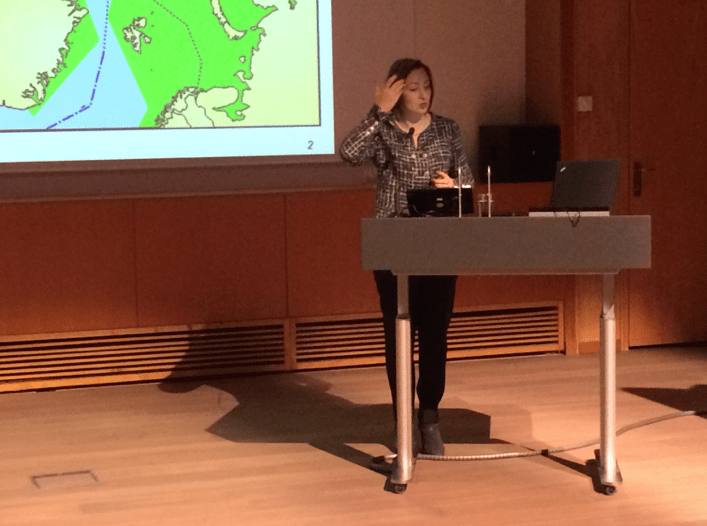 Tatiana Mitrova, Professor, Russian Academy of Science, talking about Norwegian/Russian challenges outlook over the next 5 to 10 years: Energy demand is stagnating (crises, structural changes, energy efficiency); Energy supply is growing, accompanied by increasing competition with Australia, Brazil, East Africa and North American unconventional hydrocarbons, which will target Russian core markets in Europe and Asia; Stagnant or even falling energy (and commodities) prices – shale revolution has already decreased prices in North America and Europe, additional shale oil will limit pieces growth.
Huge shifts are taking place on the liquid fuels market: demand decline in OECD and increasing supply of unconventional liquids. By 2040, oil will increase by 1 bn tons. There are no fundamental reasons for significant growth of oil prices at the forecasts levels of demand. It happens that some people will invest huge amounts into uneconomic projects, and the question is whether we want these projects. And another question is geopolitical issues, Iraq, Iran and Brazil will enter the markets with hew huge supply volumes, they will be able to squeeze and additional part of more oil squeezing out Arctic. No significant oil price growth expected: annual average equilibrium oil prices will remain within $90-$120/bbl price range.
So, in short, low demand growth with plenty of supply suggests that the Arctic projects are a risky strategy. You can invest your nest egg into them and actually get a return, but not in the way that makes any logical market supply-deman interaction sense. Shale gas is expensive, but certainly not as expensive as Shtokman. On the right of supply curve, any supply project will get sidelined (read, Arctic Barents).

 As such, from market fundamentals perspective, there is no reason that growth and price will rise. Arctic projects are a “special sphere of research” — so many books and conferences, but actually, if you look specifically at the actual projects, there are only several, and they do not provide an easy start for thinking about in the moment. They are “start ups” – not actual projects that will provide present returns. Cash making is years ahead.
An area with huge potential, so that we cannot forget about it. Preparation yes, but making it efficient in the most technological and environmentally safe way, and we have a lot of time to think about the projects, their preparation, before investment occurs or before realization occurs, and thus, the Norwegian-Russian collaboration makes for a lively connection.
 Q & A: What is the break even price for oil in Barents Sea? Mitrova: $110 to $120 per barrel. Any delay, overtime overrun, project management becomes crucial. Will EU impose sanctions on Russian gas? Mitrova: extremely unwise, shooting your own foot. Currently, Russia provides 30% of gas to EU, so that Europe will not be ready to be left without gas/electricity for punishing Russia. What about Russia, what would it do? Mitrova: 40% revenue comes from oil and 10% comes from gas, so of course, it would be a disappointment, but not a disaster. But with all negotiations with China, Eastern pipes, etc, Russia now does not expect EU to be a growing market, and looking for other markets. Will climate (change) influence the market? In terms of energy consumption, very dry summers, cold winters, are actually demanding more energy to compensate for them, because we are use to some very narrow range of comfort level, so again, there are additional energy needs, and prices should increase rather than decrease with climate change, and renewables, CCS, all adding costs. [Excellent talk, gracious to a fault given the desire of everyone to “hear” the Russian point of view and to demand conciliation, ed.]

 Are Russia and Norway companions or competitors? To answer this question comes Peter Arbo, Professor U Tromsoe, talking about common challenges in the High North. Upstream, companies have been collaborating for a number of years (Russian and Norwegian) — provides a number of examples. Downstream, the two countries are competitors, overall Russian supplies 30 percent of gas consumption and Norway 20%, though the countries are competing, they still maintain a common interest, keeping gas consumption up, for their state budgets 30% of State revenue in Norway and 50% in Russia. Norwegian fields are in decline, while Russia has greater fields, but both see the Arctic as instrumental for further development.
Two lessons: cross-border research serves as an open road and second, cooperation has taken place despite the cold war. So how has cooperation taken place on oil and gas? (1) Marine ecosystems and environmental monitoring. Oil development would be a new stressor to Barents area, given present impacts from climate change. Ecosystem management through working groups (Arctic Council) etc.; (2) Geology – key elements of resource base, Barents area is different structurally from North Sea and continental shelf, but Russian and Norwegian Barents area is a similar structure, with various kinds of knowledge exchange and accumulations; (3) Technology and safety in operations, ice free areas, areas close to the ice edge and ice covered all year round (4) logistics, transportation, communication — satellite based systems, etc., several companies and institutions collaborating on these topics include INTSOK, etc; (5) Search, rescue, oil spill preparedness, there is collaboration here as well; (6) impact on society and indigenous people — the way industry affects local community and utilize local labor requires more research (7) education and training.
Conclusion: Norway and Russia share a common destiny and responsibility in the High North; Cooperation is required and beneficial in many fields and the two countries have been able to cooperate under shifting geopolitical constellations; channels of communication must be kept open as regards oil and gas development in the High North.
Q & A: How will sanctions affect cooperation? Arbo: Sanctions will make it difficult for Russia to develop offshore resources, and Russia needs the knowhow and financing to carry it out, also, reduced prices for oil is an affect for sanctions, and further reduced demand for growth, scientific collaboration should continue, but if resource development is restricted, scientific activity will decline; How will collaboration continue when NGOs are identified as enemy agents within Russia? Arbo: Having opposition to oil and gas development is important and Norwegian civil society favors this [Great last response, basically, that transparency and conflict in debate is development ed.].

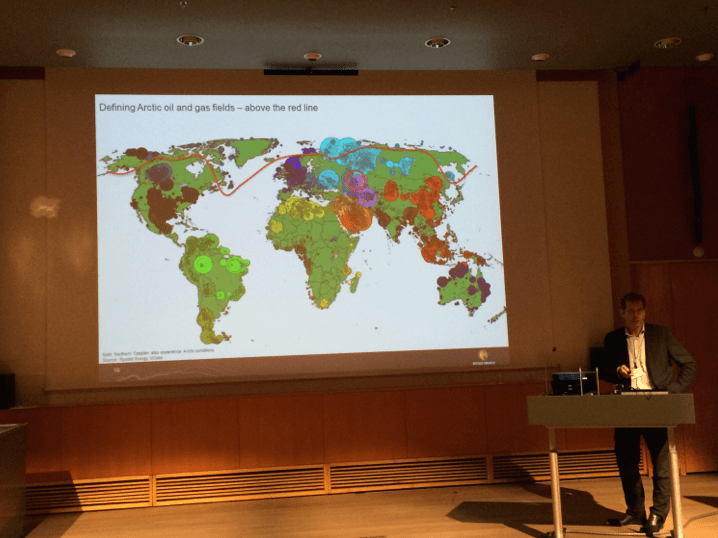

 Jarand Rystad, Managing partner, Rystad Energy, looking at oil macro and the consequences for the High North: Shale productivity shock (surprise), weaker demand; geopolitics – Saudi inaction. Three factors. Shock 1. US shale production deliver above expectations. Shale plays in NA could deliver more than 12 million bbl/d in 2020. second, Global liquids demand dramatically in below expectations Q2-Q3 2014. Very weak demand growth. Third, understanding Saudi Arabia. why don’t they cut oil production in October and November. Wants to control oil price to hurt Russian economy. Also, testing the downside of the low oil prices for a longer term goal in the US shale gas. Lasting 3 years. $80 USD sustainable to 2015. $95 USD sustainable to 2018. higher than $95 per barrel moving forward.
Arne Melchior, NUPI working on NORRUSS project trade integration, geopolitics and the economy of Russia.
Aileen Espiritu, talking about Arctic urban sustainability in Russia. While socio-economic and climate factors can impact the sustainability in Arctic urban settlements, effective resource extraction policies can greatly reduce adverse consequences to global environment.
Ilan Kelman, NUPI, CSR for Arctic Petroleum talking about corporate perspectives in community development and corporate social responsibility. When benefit sharing agreements are negotiated with communities, they tend to lack attention to individual views at the local level. The concept of CSR has a lot of cultural construction, so that Russian and Norwegian views differ, and that it is also understood differently by different sectors. Method using interviews, looking at input and output models or analyzing them and community discussions to provide context. Hammerfest (20 interviews); Komi Republic (23 interviews); Murmansk (30 interviews, 10 with Norwegians); Naryan-Mar (34 interviews with company representatives, company executives, NGOs, Nenets).
Q & A: what is the greatest challenge in meeting one on one with folks? Ilan: what is our responsibility to informants, to engaging and supporting communities through activism or what not, defining the role of research for communities.
Vladislov Kozlovsky, Institute of Oceanology, talking about the state of the bottom communities of the Kara and Barents sea. Benthic or bottom communities (organisms). Warm waters from Gulf Stream affect Benthic communities.
Up now, Lionel Camus and Salve Dahle talking about oil and gas activities in the Arctic environmental issues and solutions. Polar night is starting today in Tromsø, no sun for the next couple months. Environmental issues assessment requires Net environmental benefit analysis (NEBA). Large possibility of reserves in the Arctic and movement by industry to produce oil and gas. The upcoming Goliath platform, shipping, tourists on Svalbard (65000), Lundin oil company has found oil on the Barents. Today, there are solutions to mitigate an oil spill. Chemical dispersant, in situ burning, chemical herders, mechanical recovery, natural attenuation. How to decide what technology to use requires a good understanding of the habitat – pelagic, seabird, benthic community, atmosphere, shoreline, and pack ice. What is the best response option? and how are you going to take the best decision? Taking a decision requires a tool which Lionel calls NEBA, a recognized internationally recognized methodology, meaning there is Pan Arctic understanding. Goal: to balance the risks, benefits and trade offs of managing competing impacts.
Phase 1 produced literature review to create state of the art and identify gaps of knowledge; Phase 2, research project, fieldwork, lab work, desk work, fabrication of the NEBA support tool, 2014-2017; phase three, operational testing phase 2017.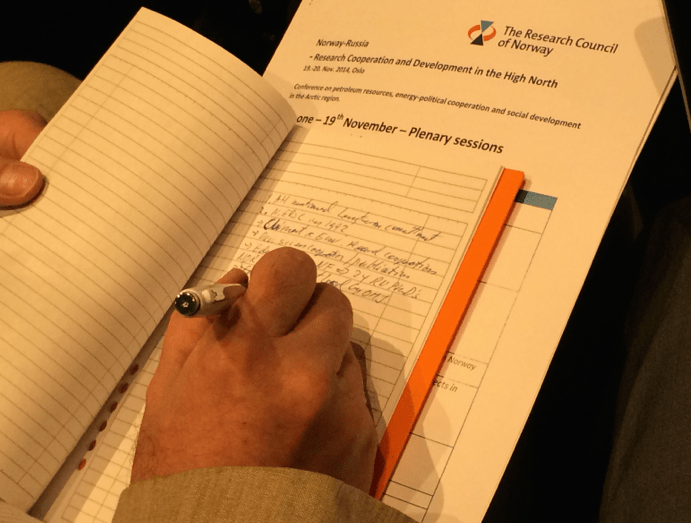





































 Paparazzi Ethnography