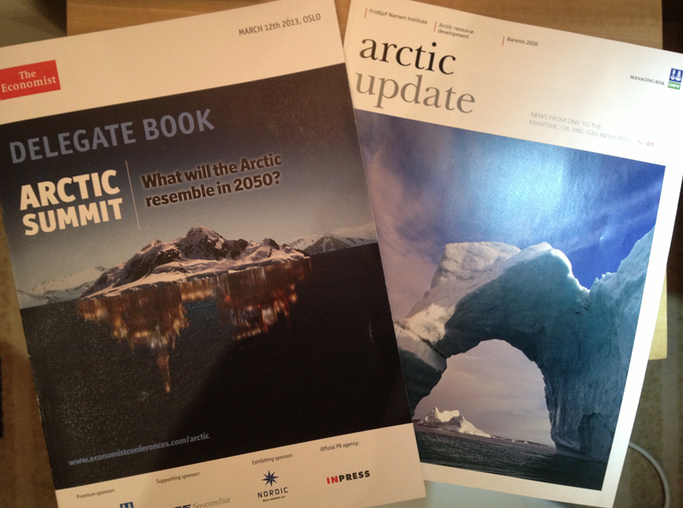
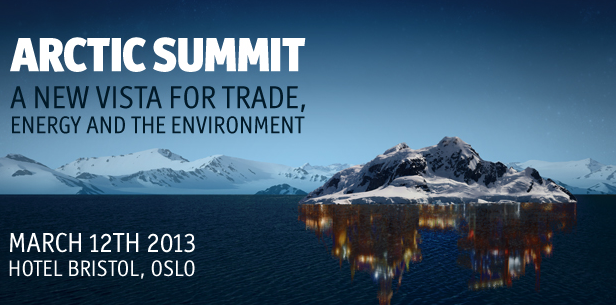
The Economist’s One-Day Arctic Summit meeting on oil and gas development in the High Arctic
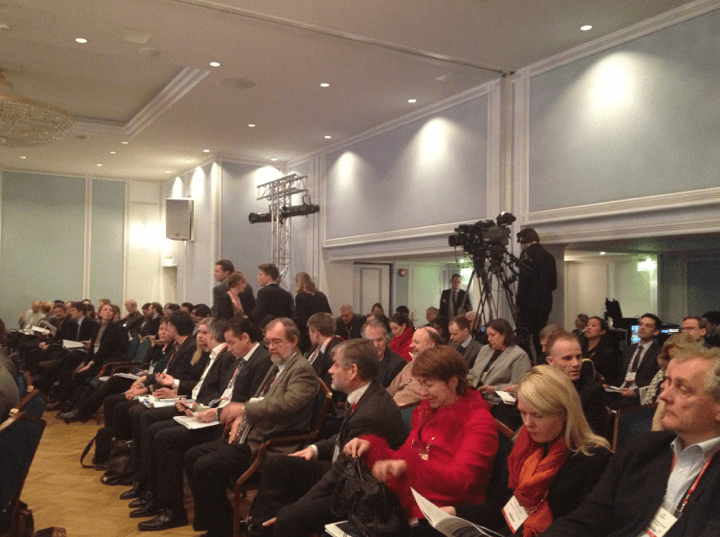
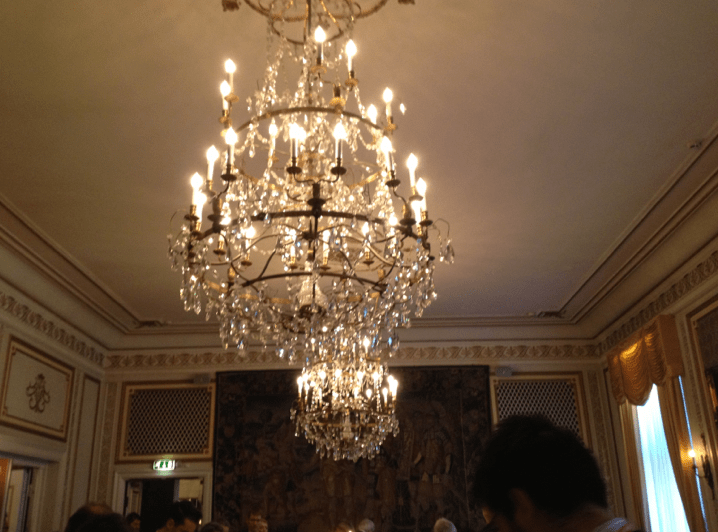
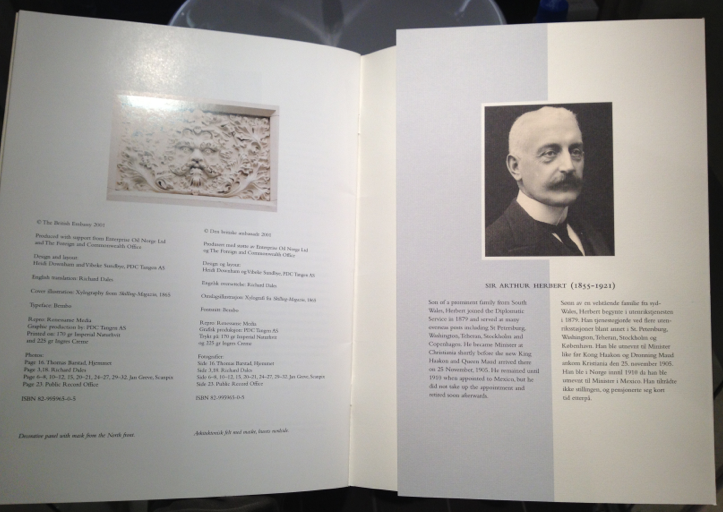
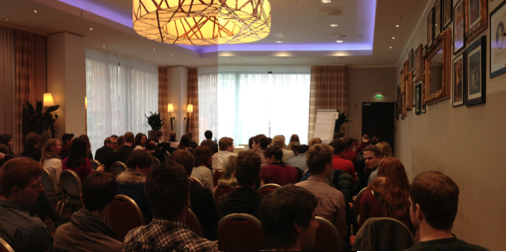
 Epilogue: The Hotel Bristol is known among old timers in Oslo, mainly artists, for its Moorish Hall, once a two story high lobby decorated in the Moroccan style. There was resistance when some years ago, the ceiling was lowered to create a second floor– what was now the conference hall where we gathered for the Arctic Summit meeting.
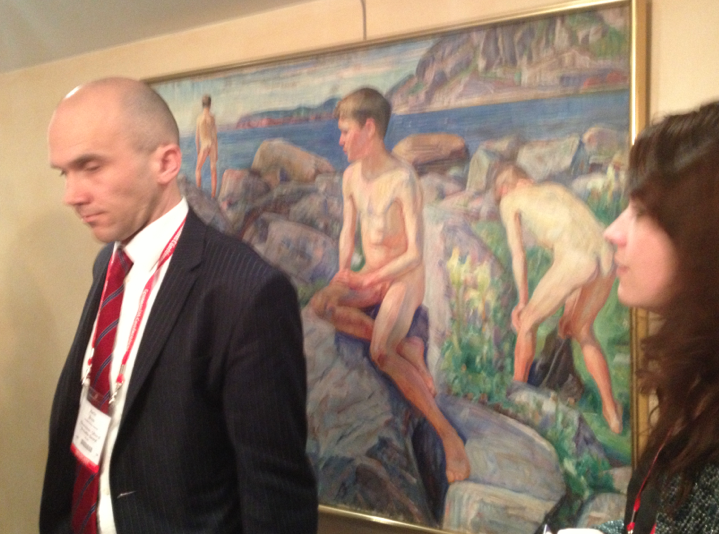
Some art remains, such as this image of innocence above — were it hanging in public in the United States, it would surely raise eyebrows, especially in the context of a business conference. Here, as you see by the reaction of those waiting in line to gather their coats, the painting registers negligibly as a signature of sexualized bodies.

 Perhaps the most central theme of the meeting was a discursive divide between representatives of the environment and industry.
Meanwhile, voices of government and local community were for the most part absent.
The environmental side was predictably blunt in declaring that “The Arctic” — whatever that is– should remain safeguarded, and that perhaps there is no possible scientific or industry account in the present that can legitimately guarantee development without catastrophe.
 On the industry side, in a rather interesting but somewhat disorganized way, they sought to delineate the Arctic into various zones of expectation.
Representatives of both Statoil and DNV delivered various terms that drew attention, on the one side, to an industrialized Arctic in the present (near north) and on the other side, to a potential development zone, that could be drawn into the present by the lessons learned in the near High North (North Sea). A final zone of distinction was the untouchable, unthinkable High Arctic, the zone (still as of yet) of all-year ice area.
 All in all, it was intriguing. No one of course, presented a topic called “Steps to Non-Development”, which would have been our topic.
Not even the environmentalists could think fast enough on their feet to come up with that. Given that the entire meeting was sponsored by three industry companies, by an organization titled The Economist, the concept of Development the elephant in the room.
 By the way: Did we not say from the outset that we had a superb time at the meeting?
Everyone of our friends from across Norway was in town — a veritable who’s who of nearly top drawer delegates– the Highest of the nearly-High, including folks from INTSOK, CICERO, Research Council Norway, DNV, American Embassy, Nansen Institute, Fram Centre, etc.
In short, we had a blast. Many thanks to the wonderful folks of the The Economist for such a pleasurable day.

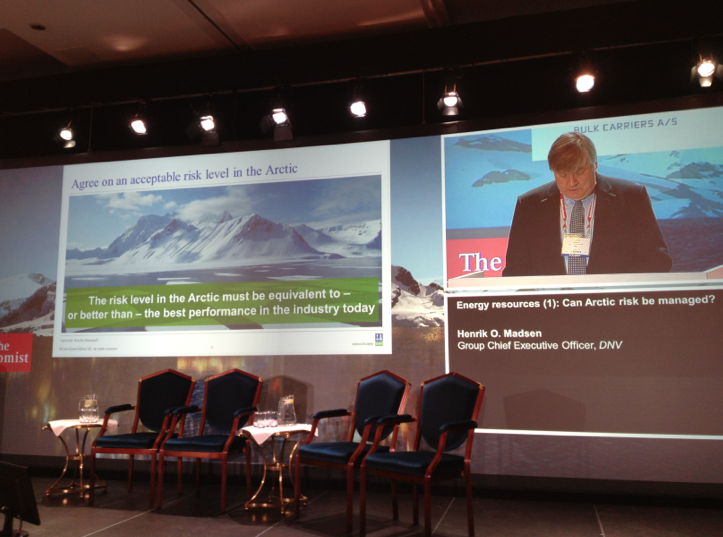
3/12: Up now is Henrik Madsen, CEO, Det Norske Veritas (DNV), just after the first coffee break. I have notes for the morning session and will post them below soon.


Henrik up now, citing the Torgeir Larsen, State Secretary, Ministry of Foreign Affairs, Government of Norway, who provided the opening address (see below), that there are many Arctics, different from other areas in terms of variation ice and snow conditions, bio production, light (animates ice coverage on video — talk begins with a dramatization with voice over).
 To understand the High Arctic, moving from the known areas to the more challenging areas.
Each area of the Arctic has its own set of individual risks. “Zero Risk” equals Zero Activity. Some risks are so great that government will not carry it out. Nuclear power will NOT happen in Norway, for example, even though risks according to others are very low.
Possible, we should want to go to ships operating on LNG, bunkering of LNG all over the Arctic, to reduce the possibility of spills.
This would require a modal shift, using a CO2 friendly, would require different shifts, more truck travel, more Suez canal, so, more costly, how they are introduced in a step wise manner, and avoid modal shifts we don’t want to see.
 How safe is safe enough?
Well, everyone would agree that it should not be lower than in the North Sea, and could argue that it should be higher. Then can we develop safety standards. Barents 2020 (report on standards written by DNV) supported by the Russian authorities sponsored by Ministry of Foreign Affairs, Norway, creates standards for safety level.
 Accident preparedness: No perfect solutions for oil spill on ice, a need to develop of new solutions, also for search and rescue. Fishing fleet could have a role.
It would not be difficult to design fishing vessels that could serve as stand-by vessels, recovery vessels and search and recovery.
Mocando: complex systems fail in complex ways. The accident only happened because many barriers had not work as intended.
Comprehensive risk management.
 Oil and gas is complex already. A wholistic approach to manage.
Collaboration, different relation to risks in operation.
Collaboration between industry, civil society, regulatory bodies, take inclusive approach, share data, share experience and development of barriers, to mitigate consequences of accidents, and share this with partners.
To sum up.
Collaboration among stakeholders; Stepwise exploration; Risk-based approach.
 Now we have Runi M. Hansen, Head of Arctic Unit, Statoil:
Why are we in the Arctic?
We need oil and gas to raise living standards for global growth. We believe that offshore development will put new demands on industry and communities.
Quite important to mention here, that the Arctic is “not only the arctic” — we like to divide the Arctic into 3 categories: Workable Arctic ( No Ice — Alaska, Western Canada, Barents Sea, East Greenland); Stretch Arctic (Ice part of the year); Extreme Arctic (North East Greenland– ice all year).
Step-wise approach. Developed from shallow water to ultra-deep, applied to Arctic, meaning Southern Norway moving north. Finally “Collaboration” — across industry, community, government (develop technology).
 USGS — resources
Offshore constraints_ high oil prices will go out 2017, over $100 barrel. Long term oil price environment makes Arctic development more viable.
Breaking even oil prices, will vary, depending on the chain in different locations. Offshore will come under greater scrutiny, regulations will differ from country to country, relief well; oil and gas arctic will develop major competition from unconventional development of arctic oil and gas development.
After 2020. While media attention to territorial issues, but technical issues and costs involved in drilling and regulatory environment will be more major. Competition with shale are equally important.
 The Stretch Arctic — going through various regions of the “Stretch Arctic” across the Greenland locations, mainly an exploration category. “Far in the future” — “Should we be discouraged by progress in Western Greenland” because of the lack of finds.
Off shore Russia? — working on a deal with Rosneft, developing 6 operation, exploration wells in Russia, Arctic Sea of Okhotsk.
“Pulled out of Shtokman- competition enormous, Statoil pulls out. Is it wary?”
Shtokman was a specific case. We are working actively with our portfolio all the time.


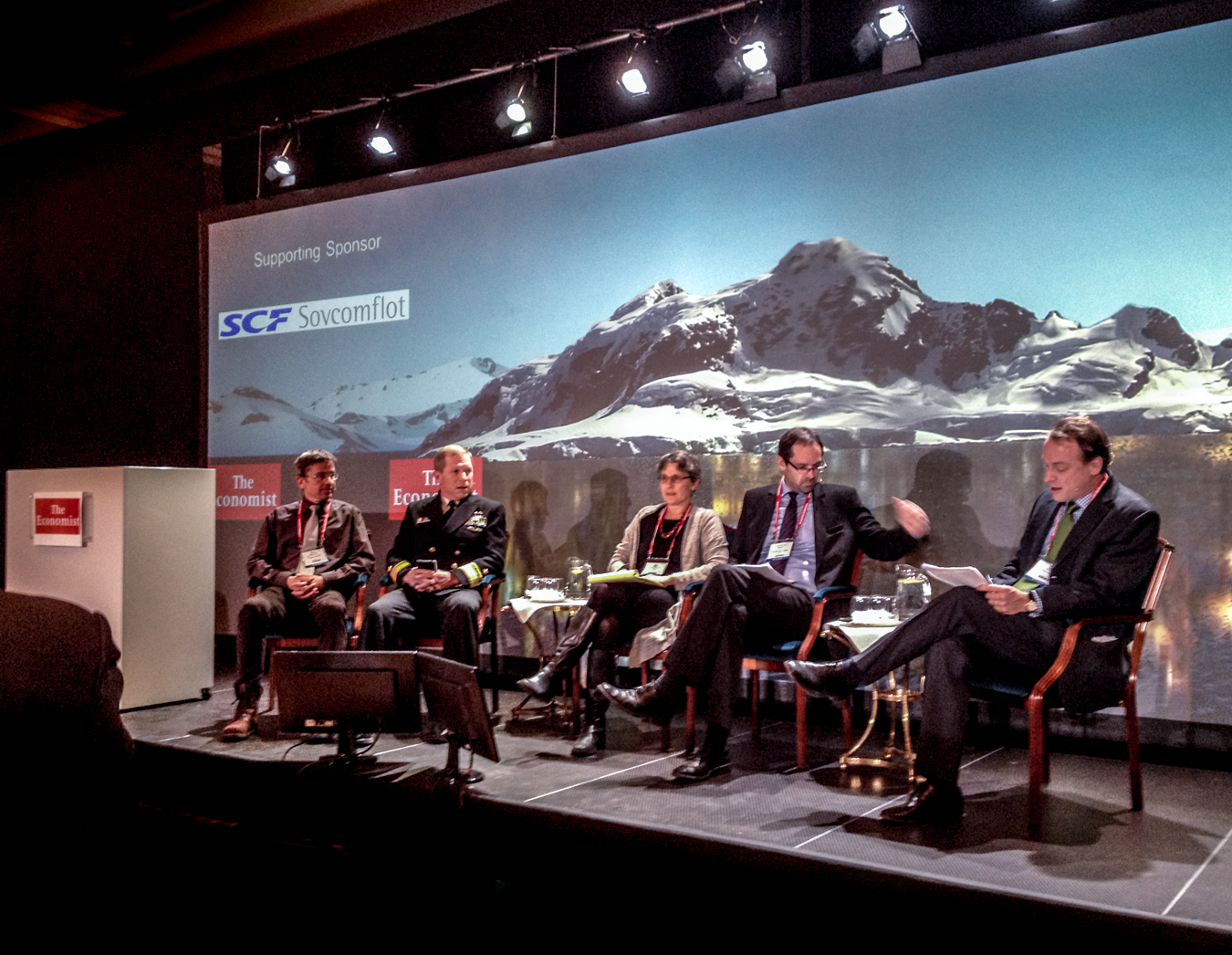
 Commentator, The Economist’s James Astill:
One gets the impression, there has been tremendous excitement over the past years about Arctic development, but over the past few years, opportunities elsewhere are more possible, and that the Arctic is slipping out of view.
Statoil: Arctic is “longterm” — our exploration strategy (3 strategies), “early access at scale”. Alaska example, we have a set back, not even before 2025 development.
We postponed drilling to 2015.
We have to remember that we are not committed to drill a well there, we will do it when we are ready, and compare with portfolio worldwide.
Henrik: Emergence of shale gas has created retraction from the Arctic. Drilling for many years already, so progress over many years in the future.
Commentator “How should we look at technology?”
 Henrik_ we have bits and pieces of technology, there is a lot we can do today, and always moving step by step. On East Greenland, Research Rescue is a big deal, oil spill on ice, infrastructure can be better.
 Statoil: Prevention is everything for us. especially in the Arctic, no room for error. nine companies working together to develop ideas about oil and ice.
Peter Kiernan– lead Analyst Energy, Economist Intelligence Unit — looking at Shell, 5 to 8 years later, Shell decides not to go back into the Chuckchi, because of regulatory.
Shtokman collapsed, European gas demand slumped, shale works. Expectations being down played. Definitely a long term option.

After Lunch, Environmental Panel
 Nina Jensen, CEO and Secretary General, WWF-Norway, went over time by twice her allotted amount.
Frederic Hauge, President, The Bellona Foundation, now up, talking about safety and the Arctic.
“Slow down the campaigning and be more informative” —Pano Kroko, Chairman, Environmental Parliament. The true value of capital is life. The returns, quarterly, that is life. Proper investment, looking at the present, 200 years of investment from the Arctic, oil from Whales, oil from the ground. Not a fantastic land, a lot of economic activity, as it should be, a life investor, long term value of arctic.
Oil and gas industry is “too heavy on our long term evaluation”. Solar energy, green bonds. “Arctic is not a virgin…[she’s] not a hookah [hooker?] in Bangkok”.
 Nina Jensen; The Arctic is unique, life developed a thousands of years for above and below the ice, changes are happening so rapidly, we cannot diagnose the changes and where the last ice area will be.
We don’t say that we don’t want to ban economic development, we need more knowledge on how life is changing, build resilience, have adequate science for development.
(Presentation consistent with Madsen’s talk, an emphasis on responsible regulation and sound science. I wonder if she could envision a moment of adequate science and government regulation).
 Pano Kroko, you’re not going to stop people looking for oil, gas, tourism.
Will happen, already happening. Coastguard co-ordination. Oil spills are eventualities, they are actualities. A lot of companies have to consider all these things in place, industrial bases need to be put in place.
Next Session — New Shipping routes.
 Exploring the potential of new trading routes.
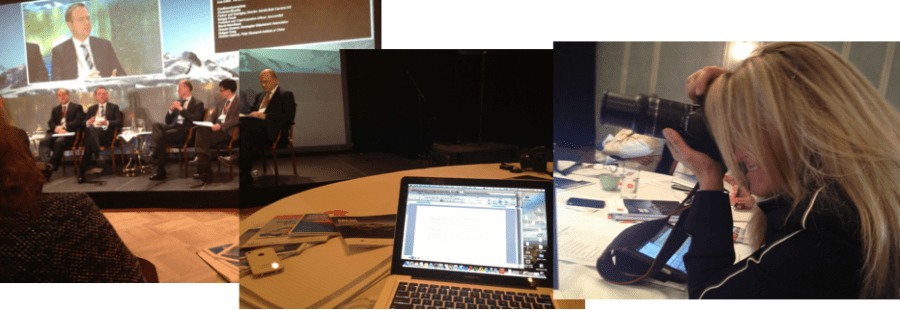
Sturla Henriksen: Norwegian Shipowners Association (NSA): Published a report, high stakes in the Arctic, global warming, a need to take a comprehensive approach, global implications with generational perspectives.
Internationally accepted regulatory framework, need infrastructure that can underpin safe and sustainable development (search and rescue, forecasts weather, polar load pressures, oil spill contingency, need to develop industrial standards).
Offshore oil and gas will be the activities increasing fast with largest commercial potential (2) Arctic destination for supporting regional communities and tourism (3) trans-arctic crossings Cathay to Europe. Key element to create common understanding, an Arctic business council.
Oslo.
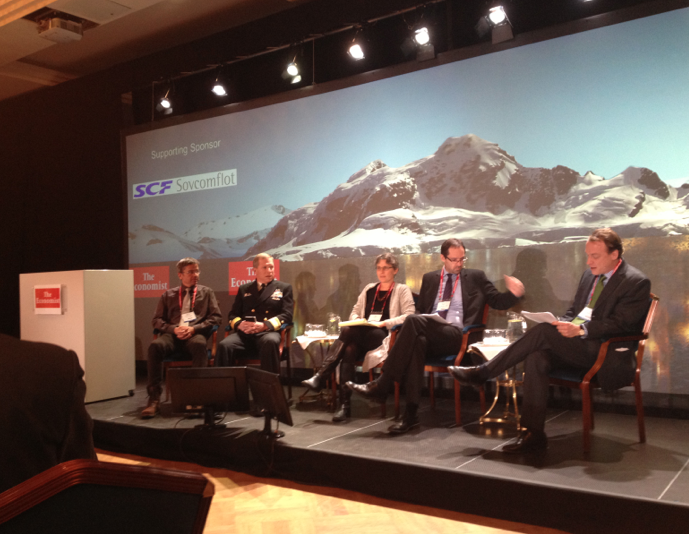
Sergey Frank, President, Sovcomflot (one of the Summit’s sponsors), moving one unit of cargo via shipping is much more green than aviation, trucks, train.
Sturla: 90 percent of world trade is shipping and 2 percent of co2 emissions.
 Dr. Huigen Yang, Director General, Polar Research Institute, China, responding to Arild Moe‘s point about regulation of coastal states_ Arctic more open for collaboration — especially for shipping, if Northern sea route is open, all countries would participate, more dialogue, more collaboration, open sea, northern sea route is open for four months, if ship is allowed to pass freely, if ships require convoys– reduce convoy passage.
Artic — Sergey Frank — co-producing ships, reacting — Russian government to be responsible to respect the traditions of the Arctic, rules and regulations have to be tougher, and stability in this region.
 Government– protect environment but not establish protective regimes, important that regulatory framework be based on law of the sea, specific regulatory measure, also, circumpolar states need to establish cooperation in standardization in safe and sustainable frameworks in this area.
We have now– floating Arctic dialogue: George Atkinson, Exec. Dir. Institute on Science for Global Policy. Creating consensus- environmentally compatible energy. (three areas of region — infectious diseases. politics simple, no one wants disease). Politics on environmentally compatible energy.
 Focusing on decision makers — who in the long run can make short term decisions. But they also focus on public endorsement. Lindblad project,
National Geographic– environmental capacity session, on the ship.
Geo-politics, collaboration and governance Panel
Gustaf Lind. Ambassador of Norway. “If I would have sat here in 2003, and said that Arctic Council would be doing policy, would be doing policy, permanent secretariat for the AC, my colleagues would even more confused.” If I would say that we have applications for observer status, my colleague would say that I’m completely insane.

 Arctic states and indigenous representatives, have been able to react to the Arctic, and have adapted the Arctic Council to this new situation. Shift from “Decision shaping forum” to policy making forum.
Ambassador Anton. Arctic is home and its future — 1/5 GNP in Arctic. it is the largest part of Russia, and we (try to) act responsibly and constructively. We are “solving” problems. The boundary limitations between Norway and Russia, The Canadian/Denmark boundary dispute resolved. Most information in the public is total ignorance.
 The key element of the situation in the Arctic is growing cooperation, and we welcome that. Judging what I heard today, the most important think I have heard is that we think of the Arctic as “one Arctic” — very strong commitment from each of the states to find solutions to pressing problems. Many of the proposals that I have heard today are included in Arctic policy, and will be released May 15, as part of the ministrial meeting.
Main challenges mitigation and adaptation to climate change, sustainability, future of the Arctic is peace, sustainable development, cooperation, strong arctic council.
James Herman. Ambassador to Norway, European Union.
1) Global warming will continue to be an issue (2) exploitation of resources will take some time (3) Arctic has become a region of stability and peace, and do everything to preserve it (4) this will have to reinforce international cooperation
 Steffen Weber, Secretary General — EU Arctic Forum. Everyone agrees that people want development, responsible development, sustainable development.
Business and politics is separating from each other. Besides the state as the main actor in the Arctic, private actors, investors having a major impact in the Arctic. It is a business space, not just a political or practical space.
 James Astill — Anxiety comes from Westerners seeing Russia as a protagonist in instigating fights.
Anton Vasilien, ambassador at Large- Russia responds, that there is no conflict driven agenda. Rather.
All Arctic States share in common : Arctic interest in maintaining sovereignty, maintaining balance between economic development and sustainability, knowledge based science, there should be very clear support coming from the Arctic… But they also can achieve these goals because they are involved in strong conversation with each other.
Geopolitically risks– Steffan.
The Arctic is a cool place, and will continue to be a cold place no matter what the climate change. and people are likely to cooperate because it is cold.
 James Astill blows him off, “Ach – I don’t disagree”
Where is Arctic Council going in ten years:
Gustaf Lind — we have decided to have a budget, but for projects, payments for projects, waiting for Russian money and we’ll move forward. more appetite for legal binding agreements, legal international cooperation.
Anton — scope will be broadened, bring more issues. quite obviously that one direction to go, Arctic business ties in the Arctic. But I agree with Gustav that Arctic Council (high level intergovernmental forum) should involve into full fledged international organization.
 Still a rather long way to this final destination. An organization that could have a common set of priorities. An organized that has a budget from member states, thirdly, chooses its projects based on its priorities.
Steffan, I found Anton’s statements interesting, it would lead to more connections to business and science communities.
American Navy — “I don’t believe that militarization is the goal of anyone, it is military control, and it is a good idea” — Militarization versus military presence.
 Janos Herman — EU. responding to a Chinese
Kevin Vallely — Rowing the Northwest Passage — Explorer and Adventurer. giving a lecture about his rowing a boat across the Arctic during summer. Did some research last night to understand what “exploration” means. Traveling around the world, Sumatra, has a passion for the North West Passage, “alway have” —
 8/9: We learned of the Arctic Summit, organized by The Economist, from Timothy Moore, great guy that he is, US Ambassador to Norway’s right hand man, who blew in our direction the names of sponsors and a few hints as to how to attend the event as special envoys. We would like to acknowledge his support. We do that here at StudioP‘s Paparazzi Ethnography — acknowledge the continued support of our sponsors and mentors, without which our grasp toward enlightenment would be that much more distanced.




































 Paparazzi Ethnography