Feeds:
Posts
Comments

Cazneau

6/1: Headed over to Cazneau to talk about next moves for establishing a UC Berkeley Global Gas Center. Previously, we received a proposal from them to run a Colab for fund raising and  business plan activity. Colab – Great Idea. But cost was high. After brainstorming, Kim Schilling suggested I meet with Cazneau CEO Tony Hayward. I was nervous. Tony was totally cool, but I know next to nothing about raising money. I wrote lots of notes, and drafted an email for their review. When we agreed on the contents, I forwarded it to my partners, Dan Kammen and Michael Watts. Meanwhile, Dan K. was back East, talking with Royal Dutch Shell about a potential funding opportunity.

When I was in Norway in February attending the Oslo Energy Forum, I had an opportunity to listen to Malcolm Brinded, Executive Director Upstream International, Member of the Board, for Royal Dutch Shell plc. Brian’s address as printed on his business card is a PO Box at the The Hague, The Netherlands.

Everyone at the Forum seemed quite concerned about natural gas, as if coal was getting the upper hand. Malcolm’s talk was quite well received. The man appears formidable in public, as a leader. I was lucky to share an exchange with him over drinks, but I do not recall what we discussed. Everyone enjoyed his talk and I have posted it here: Malcolm Brinded Opening Remarks: Oslo Energy Forum


5/18: Our latest proposal (Kammen, Watts, Mason): Center for Global Natural Gas Draft Proposal

5/9: Cazneau Group in Sausalito responds with a proposal for assisting in developing a Global Natural Gas Center at UC Berkeley.

4/22: We met with Cazneau Group in Sausalito for a brainstorming session on creating a Global Natural Gas Center at UC Berkeley.

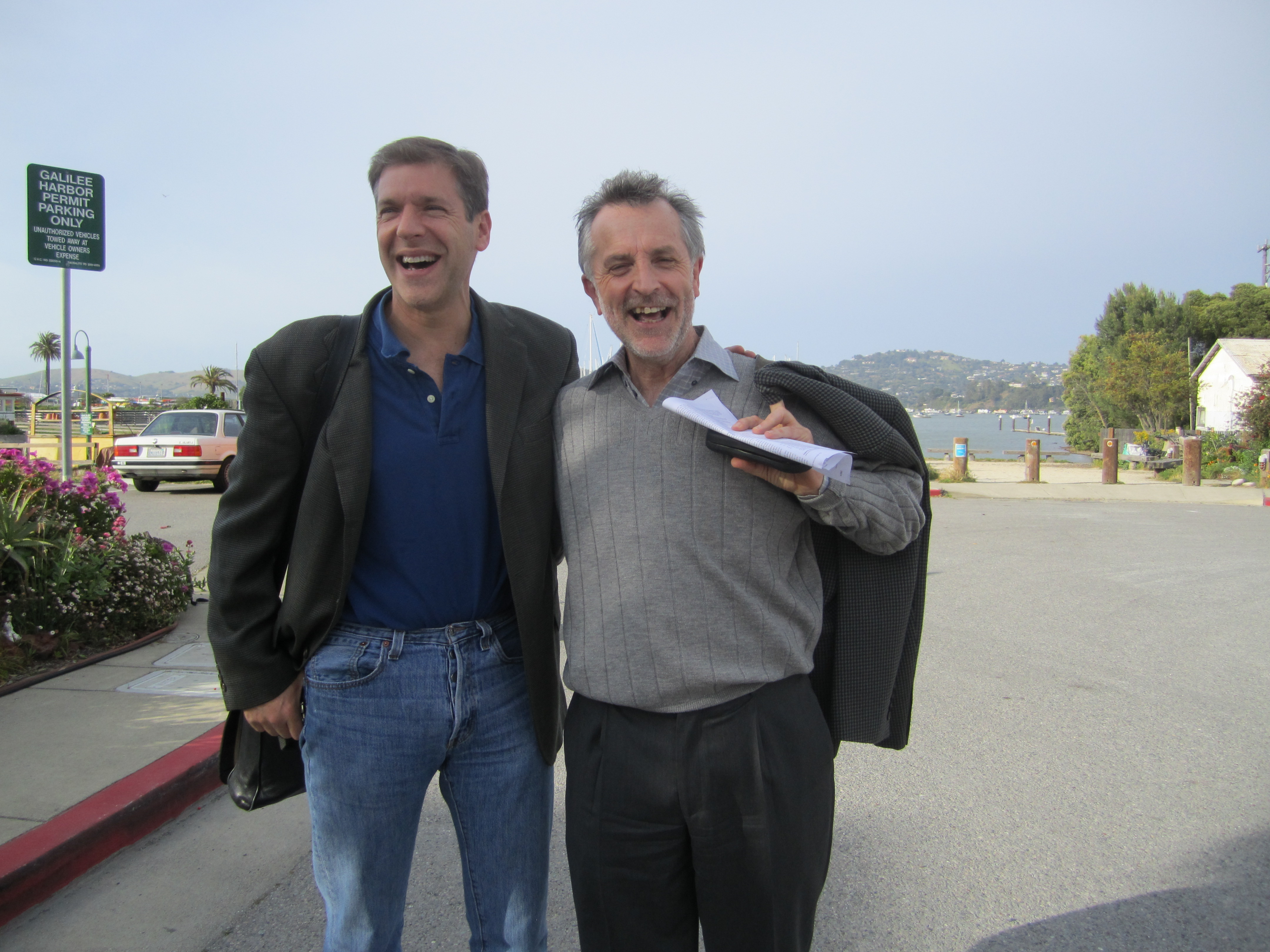
The Cazneau Group is a collaboration solutions group that catalyzes individuals and organizations toward strategic partnerships. They do so primarily by creating a space for both experimental conversation and social interaction. They are caretakers for indeterminacy. The principals behind the Gas Center – Dan Kammen, Michael Watts and myself– are working with Cazneau’s team members, Founder and Director Jeff Hamaoui and Kim Schilling to create a new object of social, political and science exploration. Our meeting on April 22nd produced a lot of Eureka moments.

My description — Maturity and Expansion:

The natural gas industry is a large maturing energy system. Current users are both inheritors and descendants. As inheritors we act similar to feudal aristocrats who became dependent upon a form of energy capture (traditional feudal society), without questioning the rationality or vulnerability of a system for which they did not create. As descendants we are caretakers of a techno-ontological system whose added-value takes a specific form. As Marx said, we create history in conditions not of our choosing.

This system opened recently because of changes in industry restructuring. The self-enclosed aspects of a government-sponsored structured risk environment has given way to a competitive risk environment. These changes have overturned the hierarchy of social relations in the industry. What were once considered primary players (pipeline and energy companies) have become an older segment of industry. This older segment can no longer compete effectively alongside a newer segment of industry (marketing), without identifying new forms for understanding how the industry now operates. What has taken place then, is a need for what I call social technologies (scenario planning, workshops) that can provide information on navigating these new uncertainties.

Dan Kammen’s description — Legible Idea of Natural Gas:

Dan Kammen points out that natural gas in recent years has become visible — actually visible to a variety of energy users and politicians. This has taken place primarily through the shale gas hydrofracturing technique which is increasing supply outside of traditional supply areas. The effect has also contributed to a delinking of gas from oil in energy markets. The visible result can be seen in upstate New York, where seismic trucks now travel the same roads as school buses, creating potential dangers of traffic accidents that were unheard a few years ago. Politicians spanning from the ultra right to ultra left are coming to view natural gas as a future fuel, similar to the way nuclear power in the 1950s was thought of as too cheap to meter. That is, natural gas is creating an imagined community of energy users, creating alliances based on projections of unlimited fossil fuel use. In this way, natural gas can be understood as a legible idea that serves as an applied force that centralizes ideas, activities and authorities around some specially focused visible entity (e.g., natural gas).

Michael Watts’ description — Efficiency Idea of Natural Gas:

Michael Watts suggests that natural gas is a particular type of Gordian knot that entangles together all matters of intellectual ideas, practical activities, ontologies, fabulous geographies and social authorities. Through natural gas, the mind wanders across new frontiers, quantitative numbering schemes, relations of supply and demand, hop, stitches and jumps from Norway to Ghana and then disappears altogether. Darkly matters become revealed through whispering secrets while fantastic conflicts become mere suspicions. In this latter sense then, natural gas serves as an efficiency idea that accomplishes the task of coordination through the diffusion of certain intellectual ideas, practical activities and social authorities across society. As an applied force and diffusive force both ideas (Legibility and Efficiency) are distinct types of social power whose aim is to generate and intensify power (both social and natural) through coordination (e.g., of humans, of ideas, of power, of things).

Energy Czar

The Exchange

Social Entrepreneur — Jeff Hamaoui

The Academics

Dirk Brantle

Met with German philosopher Dirk Brantl, visiting here from the University of Tubingen. We met last week at the ERG picnic, when I asked him to discuss his research on 17th century author of Leviathan, Thomas Hobbs, for which Dirk has completed a doctoral dissertation and is in the process of writing a book on the topic.

Dirk had fascinating insights about Hobbs. One of the things Dirk pointed out is that, while graduating from Oxford, Hobbs never became a university professor. Instead, he was tutor to certain large families in England. Much of the material he based his writings upon was available to him in the libraries of these estates. And of course, Dirk walked through the logics of Hobbs’ critique of Aristotelian philosophy of virtuousness, suggesting that man by nature can only act according to his interests, and to be virtuous requires a strong sovereign force.

Dirk and I then discussed the possibility of meeting for a coffee and he requested that I send him something I was recently working on – which I was happy to do. I emailed my recent paper on Corporeality of Consultant Expertise, the talk I gave this past Wednesday previously.

Here’s a sense of the conversation I had with Dirk, because I wrote a few points down:

  • My book is essentially about the fleeting phenomena surrounding how agendas are set through expertise. Here what I am referring to is not political institutions or history of the industry, but instead, the all facets (through ethnography) of what happens when consultants engage with politicians. And this is captured from handshakes to the kinds of images used to influence politicians about decision-making.
  • In an earlier post, for example, and in the corporeality piece, I refer to a Heidegger-ean distinction of tradition versus modernity – primarily through the way humanness is represented on things- such as leather and wood that were close to our bodies and which we utilized over a long period of time, versus its absence on modern products, such as computers, car door handles, which do not carry a trace of the human heart and are disposed of readily. And in this case, my argument was that things that carry a Human Trace, are not necessarily carrying them in a deliberative manner. There is no virtue in leaving a human trace of the human hand on a wooden door post that has been opened for umpteen years. But the fact is, that once that door post, now 2 decades old, is encumbered with the trackings of the human hand, this non-agentive object takes on agency, because it represents the accumulation of time, subjected to it, of course, without intention. And in this manner, I refer to the hands of experts, which are like putty, because they never do any manual labor, but when shaken, demonstrate and take on agentive quality. That is, when you shake their hands, you are confronting a particular type of humanness, characterized by a certain corporeality in relation to a specific type of labor.
  • Take another example, in my book, government is not interested in economic training, but in how to channel the complexity of facts into the kinds of simplicity that can form the basis of political decision making. And through this we can see the intersection of scientific facts, interests of government interests of experts. Take for example, the importance that graphics play in demonstrating what the future of what shall be. This is an important point. When I first started working in energy politics, I used to see graphic designs that I could not understand. Nevertheless, much like a business awning with Chinese lettering, I could acknowledge meaning without registering understanding. And this distance between registration and legibility created a tension between what I did know and what I wanted to discover. This was particularly the case in certain graphics that depicted natural gas formations in the United States, which at first, I did not quite understand. But here again, in these images, which I was just coming to know, there were only a handful of ways of reading the message. I could acknowledge that the United States was being referred to, and that there were some “blue bubbles” that I could not yet register their meaning (they were supply areas). So what I could say is that in this image there was already a pre-judgment of things before I was even told by the consultants what the images meant. That is, the uncertainties themselves are bounded.
  • Another issue we talked about, from the importance of examining the fleeting phenomena of decision making, was that in such instances, you can actually examine how decisions are made, instead of simply state that institutions make decisions. And for this, one needs to recognize that the bodies I am examining are not subject to institutions of knowledge, but instead, are representatives of these institutions. They speak on behalf. In this sense, my informants represent two faces of sovereign body, in that they had properties by which institutions can take form. They were totally replaceable, because it was their position that remained, and yet, because they stood in those positions, they in effect, made decisions.
  • Again, one of the problems of my piece was moving from the historical to the empirical, which I never wanted to do. Capturing fleeting phenonena was always about the actual ritual context of the moment, despite whether or not, certain forms could be historicized. And so here, the idea was to understand, in a complex setting – how fleeting moments register events.
  • “Knowledge-Events”. In my corporeal piece, I refer to Eureka Moments. These are moments of inspiration in which what occurs is an idea that can change the reality of the world. In my conversation with the philosopher Dirk Brantl, he pointed out that in my work I refer to Eureka Moments as a type of Knowledge-Event Product created by experts for their clients. Dirk suggested that my use of the word product limited the possibility of the claim behind a Eureka moment (knowledge-event). So for example, once you share a Eureka moment, the question then arises, what is your responsibility to carry out the project? Are you at liberty to discard your pathway? Or with are you obligated to set an agenda? Would I need to remind you that we had that moment if you moved away from the agenda set by that Eureka Moment. In essence, How do Eureka moments create sociality and responsibility.

The Eureka moments I refer to are not the eureka of Archimedes but characterized by sociality.

les deman

March 22: I drove down to Half Moon Bay to meet natural gas energy consultant, Les Deman. Half Moon Bay is 25 miles to the south of San Francisco’s southern border. The town is located on the first available agricultural land along the ocean after a 20-mile stretch of cliffs to the north. So steep are these cliffs, in fact, that the State of California has decided to build a tunnel to bypass what continues to be the most dangerous pass on the coastal road, named Devil’s Slide, because of its continual erosion into the sea.

Everyone in the energy business I speak with begins their reference to Les Deman by making fun of his name because it sounds like “less demand” which suggests de-growth in an industry oriented toward unlimited progress—climate change notwithstanding.

Arriving early, and recognizing that I would have an extra half-hour before my meeting, I decided to walk down to the beach in order to grasp some fresh air.

These days, it seems more than ever, there is nothing like a little self-immolation to get my heart going: “What is my reason in meeting with Les? To collect his personal history? Compare notes? Outline my project? Assemble raw data quaint to the anthropologist? Or more likely: To horde data like swatches of cloth to a quilt-maker who collects with no other purpose than to observe the decay and clutter of the unrealized.” And so on.

Upon leaving the beach, I noticed the wooden staircase up to the road had a worn quality to each step, where the human foot had defied gravity. Martin Heidegger, in Building, Dwelling and Thinking, I believe is the essay, talks about the objects that hold residue of the human hand and foot. A wooden fence post or leather pouch, visibly worn with the continuous touch of the hand is simultaneously a material sign of the human being. Heidegger contrasted this nostalgic image to the modern daily technological wonders of our lives that never seem to leave a trace of the human heart. The Refrigerator Door. No matter how many times you slam the steel frame, your hand will never leave the quality of life on it.

Enduring indents in steps

Ephemeral indents in steps

Les Deman turned out to be a small-in-stature, dapper, semi-retired energy consultant, with 40 years of experience, beginning his first gig (after completing a Master’s in Economics at U. of Oklahoma) in a boutique energy consultancy in New York City in 1971. After nearly 2 years becoming acquainted with the oil and gas industry, he moved to Houston where he worked for a marketing firm, Texas Eastern gas transmission, which had been acquired by Panhandle Eastern, which was then acquired by Duke Energy, all natural gas marketing firms, and where Les spent a total of 18 years of his life.

At Tenneco, a firm he subsequently worked at, he was named Director of Competitor Intelligence, where he and four analysts under his guidance, examined competing natural gas transportation firms, struggling to discover — well, what made their competition tick, what gave them higher earnings, etc.

It was at Tenneco, that Les hired the North American natural gas consultant, Ed Kelly. Coincidentally — or not, because as Les says, consulting is a small world — Ed Kelly was the lead director for the State of Alaska contract with Cambridge Energy Research Associates (CERA). I write quite a bit about Ed Kelly in my book, actually. He is the subject of Chapter Two, when — during the period I was working as an energy lobbyist– we (State of Alaska Officials) were holed up in a hotel room, asking Ed his opinion about government support of arctic gas development. As Les explained, Ed Kelly and he were both at Tenneco, when the company was acquired by El Paso, after which Kelly went to CERA, and Les went to the Texas Railroad Commission, which is the regulatory body in the State of Texas.

His established corporate career came to a close after working for the Canadian firm, TransCanada Pipelines (2.5 years) and then Shell Energy North America where he worked an additional 10 years. Well, by my calculations, that comes up to 37+ years of corporate oil and gas economic experience. Good grief.

What had Les learned about energy consultants during that time?  What had he learned about himself as a consultant, or the role of those experts working independent of any particular sector of the market, or in general, the assemblage of capital for these project?

A few no-brainers reminded me of things I should know by now. For example, economics is a supply-demand market fundamentals prescriptions, that Les applies to anything he has his hands on, and this reminded me to how my own objects of analysis are shaped by my own discipline.

Something else, that consultant knowledge, in his view, rarely comes out with an idea ahead of its time, but in fact, after industry, as individuals and collective, have decided to move in a certain direction. In this sense, for Les, consultants are there to “bless the work” and to “cover the management’s ass”. What this means, in a sense, is that for Les, consultant knowledge (1) comes after and (2) verifies, rather than the predictive quality that I often assign to it. And this makes sense when I think about many of the reports created on Alaska natural gas – basically, they were following the money, there was an investment community interested in the projects and to some extent willing to put money behind it, so why turn your back so to speak.

One final point, Les remarked upon in connection to the added value of consultants was project “structuring”. There are, carved out into various projects, various ways to turn them around so that you could see what other values you could take from them, and on this practice, consultants were helpful.

Finally, after hearing me talk about some of my research, Les ask me the question, “are you interested in being a consultant”?

“No, not at all” was my response. Fee for service is not my gig. I left the man in the parking lot, and I was sort of taken aback by what I consider the ridiculousness of my situation. I seem to know enough about a topic, that someone else with experience would want to know how I am employing it in a way that I profit personally from the knowledge. And yet, I do not consider what I am doing knowledgeable, in the sense, that anything I do fits with the standard models of rational knowledge and behavior expected of any field, when making a profit for others. Making ideas rational is a critical point when selling knowledge-objects.

nothings speaks more of being than walk path

Chris Hecker

One of the things that I like about Berkeley, and by extension, the Bay Area, is that people are so clever. And I notice this especially in those instances when I attend a presentation by someone speaking on problems at the intersection of gameplay, aesthetics, and technology.

I didn’t realize that gameplay designers (and want to be designers) are some of the most creative speakers and thinkers today. They really have enormous capacities of energy and more importantly inspiration, to throw into their work.

Chris Hecker demonstrating Spy Party

Ask yourself the question, for example: On what topic do you throw hundreds of hours of your free labor without regard for the time of day, but simply because you’re possessed with the sense of play that comes from your inspiration on a project?

The answer for a lot of folks in the Bay Area is game design.

Tonight I attended a talk by Chris Hecker who does not consider game design as a shoot’em up plot driven model. Instead, he really wants to understanding games as a working art form, that crosses into craft.

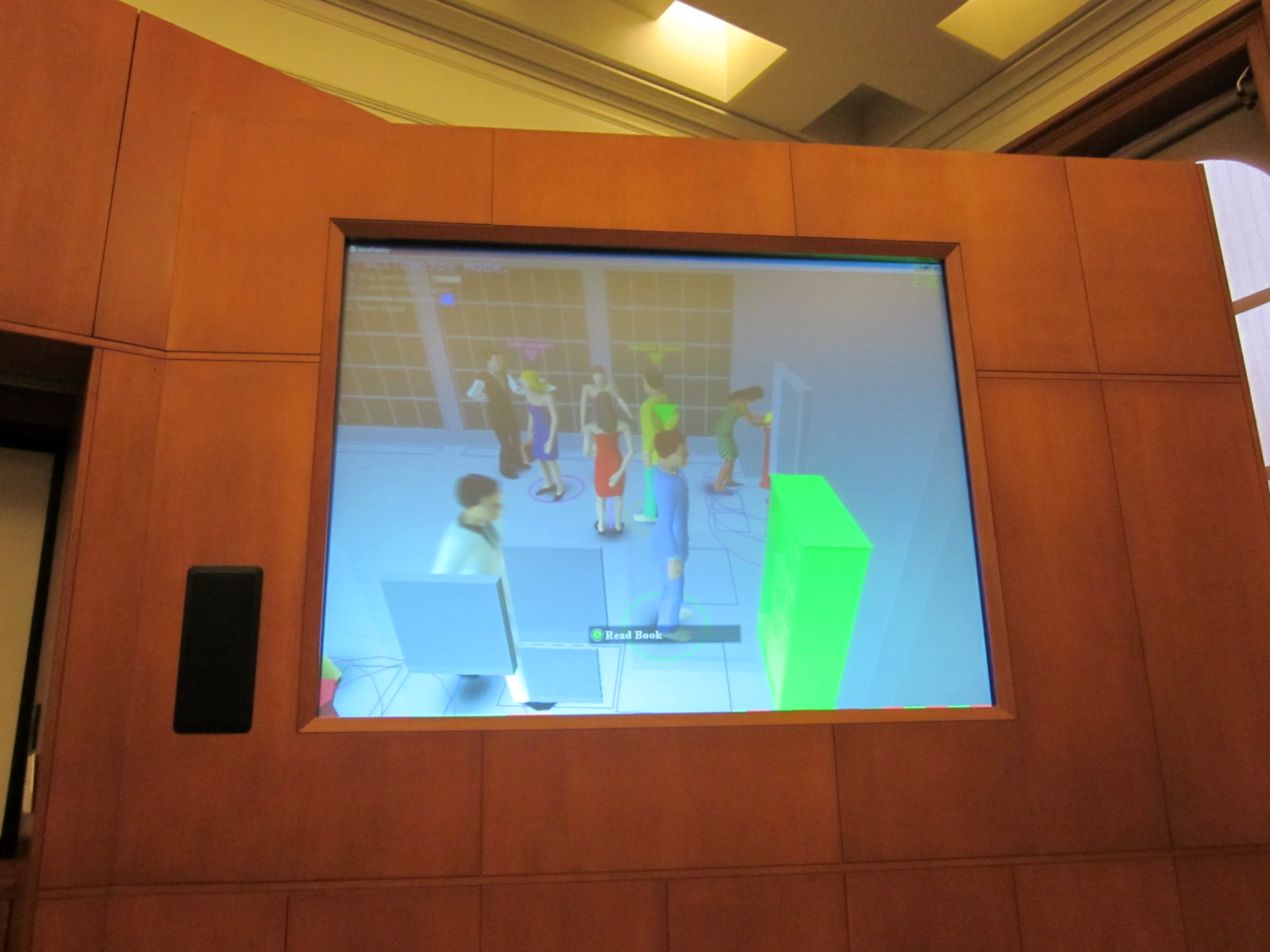
Speaking like an committed advocate, he introduced us to his working game design called SpyParty, where the focus is on interactivity, subtle human behavior and deception.

There were a number of themes he spoke to which were fabulous, including questions he asks about his games, but also his work more generally, such as, how do you spend your time, how much attention do you give, how connected are you? And these are great questions to ask, especially concerning the aesthetics of ethnographic sites, for example, when I consider the emotional involvement of my own informants.

Spy Party in motion

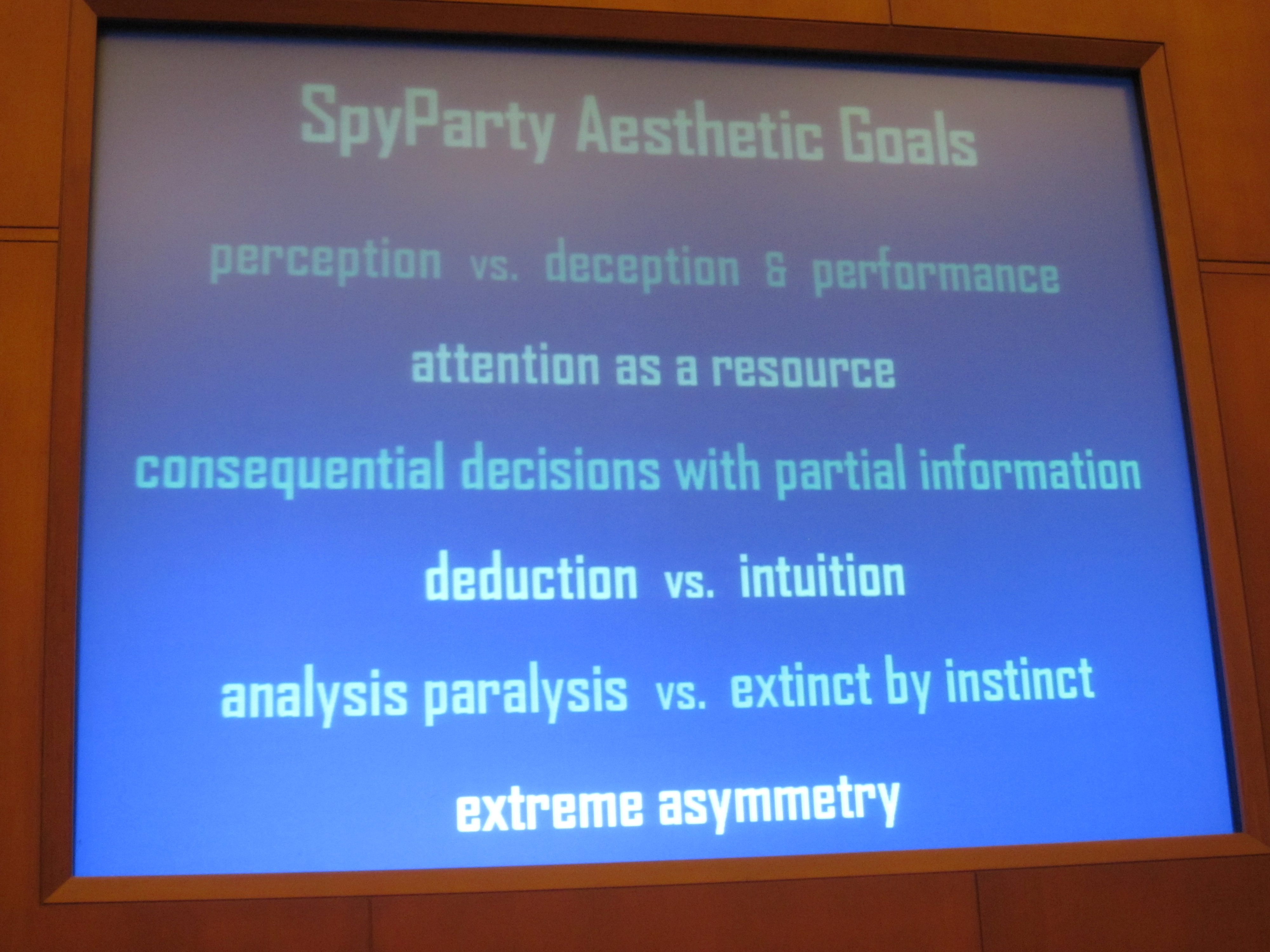
Aesthetic Goals

How ARE my informants in the energy industry different from game designers like, for example, Mr. Hecker?

Here’s a guy for whom art and entertainment in games, film, comics, are totally meaningful and where attention is a resource. Speaking of which, during his talk he made quite a few references to comics and film, comparing gaming at this point in history, to where film was in about 1910.


He lamented that comics never rose above superhero fictions, even though attempts by certain artists brought attention to comics as an art form, the industry and productivity as a whole, remained pretty much on the same level.

For film, he was more flattering, referring to the industry as much more vibrant in its ability to provide society with a rich aesthetic treatment of ourselves and imagination — but, there were turning points, early on, for example, Citizen Kane or Birth of a Nation.

Read the directions before playing


In that sense, he wonders what the future of games will be– whether it will get stuck in a trench of money making mass produced pulp, or rise above to become the 21st century’s aesthetic landscape of imagination.

Energy Czar


Recently, I caught up with Energy Czar, Daniel Kammen — a Hero for our time.


Can you imagine?! He’s been invited to the 2012 Oslo Energy Forum as main speaker, along with Bob Dudley, current head of British Petroleum (who we have yet to catch up with), Helge Lund, CEO of Statoil (who we just met there a few months back), and Lee Raymond, Former CEO, Exxon Mobil, etc. and so on.

“Under no uncertain terms,” I informed the Energy Czar — while raising my forefinger skyward, “can you attend the Oslo Energy Forum 2012 without bringing me along.”

Good Grief! That’s StudioPolar‘s backyard!


Well, we’ll see. At $15K an entry ticket, to go once in my lifetime should be enough. And I should thank here the US Federal Government for thinking so highly of me to scoot me over there several months ago. But to go again. Now that would be the true test of the Paparazzi Ethnographic master.


Back to the Czar.

First, we chuckled over East Bay Express naming Dan Kammen Most Influential Cal Berkeley Energy Czar for handling the $8 billion portfolio for World Bank Group’s Energy Strategy

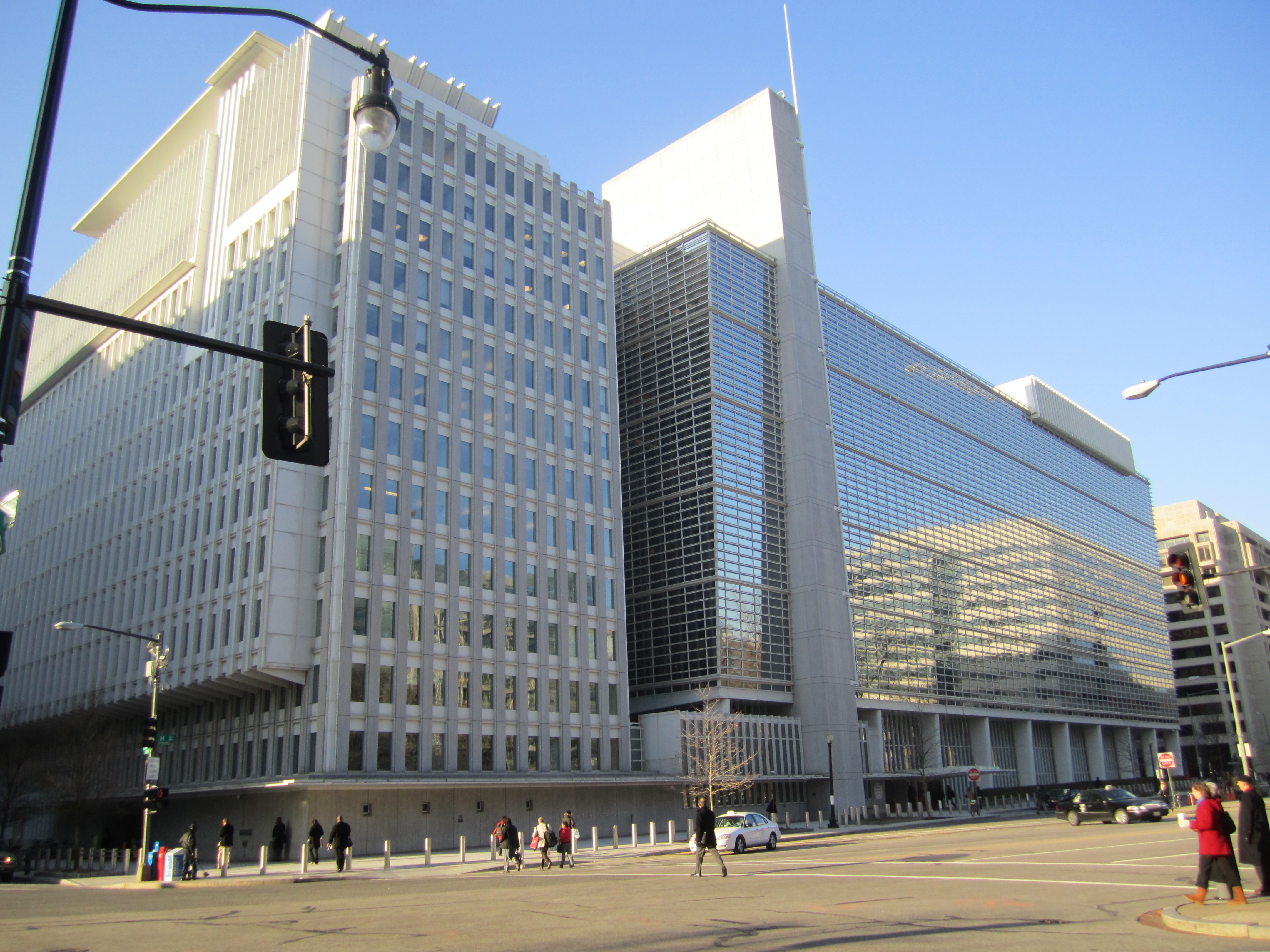
As a matter of fact, I checked in on Dan at the World Bank Group (WBG) in Washington, D.C., recently — to provide evidence that Dan was doing just that —  handling the WBG Energy Strategy.


The World Bank Group building is impressive and located in the heart of Washington, D.C.


I managed to get through security with only a raised brow.

Just as I got my feet wet, we were called back out again, for an early lunch with Paul Isbell, Senior Associate at Center for Strategic and International Studies


Paul is a gracious host.


Paul is entertaining at the table as well.

We ordered wine with the meal.


Ordering such a fancy meal — I got to use fancy silverware — a fork with three prongs, a knife without a serrated edge and a little dent and a spoon with a dent…

World Bank Group is a big castle. There is everything! Dining, Customer Service Center where you get your United Nation’s passport, Health Clinic for travel vaccinations, Mail Department, Graphics Shop, Latte Dispensers, Library, Dry Cleaners, Restaurants, Employee Banking. There is artwork everywhere, and the atrium must be a couple hundred feet high, similar to a cathedral.


It was an interesting experience for a guy like me, coming all the way from a small town called Berkeley. I almost felt like I was hanging out with the big boys. Hey, Wait a New York minute! That’s what we do here!


I attended meetings with a lot of VIPs.


After several days, I realized I could just live there, literally, inside the WBG. Without coming out.

I would not get bored. I could be like a house cat. Roaming, purring, sleeping. Eat late brunches with Dan, visit the Customer Service Center for services, and have plenty of lattes in the atrium. That’s where all the business takes place by the way, right there, sitting and chatting over who’s next in line for big power plant.


Oops! Silly me. I almost got so carried away the WBG lifestyle, that I nearly forgot the tag line of the main story:

WBG declined to allow the Energy Czar to participate in assessment of clean energy alternatives in Kosovo…and to Dan’s credit, the story was splashed all over the news: e.g.,
Battle over Ugly Coal

I guess that’s what makes Dan Kammen the Energy Czar. He’s more than just a fat cat purring in the WBG.

Alaska Energy Forum

Expatriates in D.C.


I was in Washington, D.C. attending a party for members of the Alaska Family — persons of high-profile from Alaska, who have since oriented their careers toward securing federal dollars from the U.S. Congress on behalf of the state. What a pleasure to reunite with informants who gathered for a small reception of the annual Alaska Energy Forum.

That is Jack Ferguson, everyone’s favorite (and some say highest-paid) Alaska lobbyist. All around well-liked guy, he has a way with capturing the mood of the moment. I was told of one such an instance when a newly elected Governor of Alaska Frank Murkowski flew to Washington D.C. in the middle of winter to meet with several lobbyists who he had known previously when serving as Alaska’s U.S. Senator. One of the meetings took place over lunch with Tom Roberts, a lawyer for a high profile D.C. law firm. For decades, Roberts has provided lobbying services to the Canadian pipeline construction company, Foothills Pipelines Ltd., who holds critical permits to build the proposed gazillion dollar natural gas pipeline along the Alaska Highway route.

Years before, both Jack Ferguson and Tom Roberts had served, at different times, as Chief-of-Staff to Murkowski while the latter was U.S. senator. Both had continued a mutually supportive friendship. In fact, Roberts served as treasurer on Murkowski’s gubernatorial campaign. Actually, at the beginning of Murkowski’s gubernatorial reign, Roberts was considered part of the Governor’s Kitchen Cabinet, in large part, because that very phrase designating that particular group was assigned during that very luncheon with Roberts — when Jack Ferguson, came in out of the cold, threw off his jacket and bellowed across the restaurant, “there they are, the ‘Kitchen Cabinet’!”. The name stuck and was used throughout the following months to refer to the decision making authority of D.C. friends of the governor and also — as the reason for the lack of decision making authority among highly placed political appointees back in Alaska.


Returning to the occasion, everyone was in good spirits, and there were so many folks that I had not seen in some time. Members of the Press and leaders of Oil Companies, buddy–buddying, schmoozing, rubbing palms and patting backs, just like ole times. Of course, even Alaskans can get on the wrong side of each other, but, according to John Katz, everyone eventually gets “under the tent”.

John has served under seven or eight Alaska governors, I forget how many now — as the Federal-State Director in the D.C. Office. He has so many quotes to sum up the situation. Another of my favorites, especially in the context of energy legislation: “Success has a thousand fathers but failure is an orphan”.

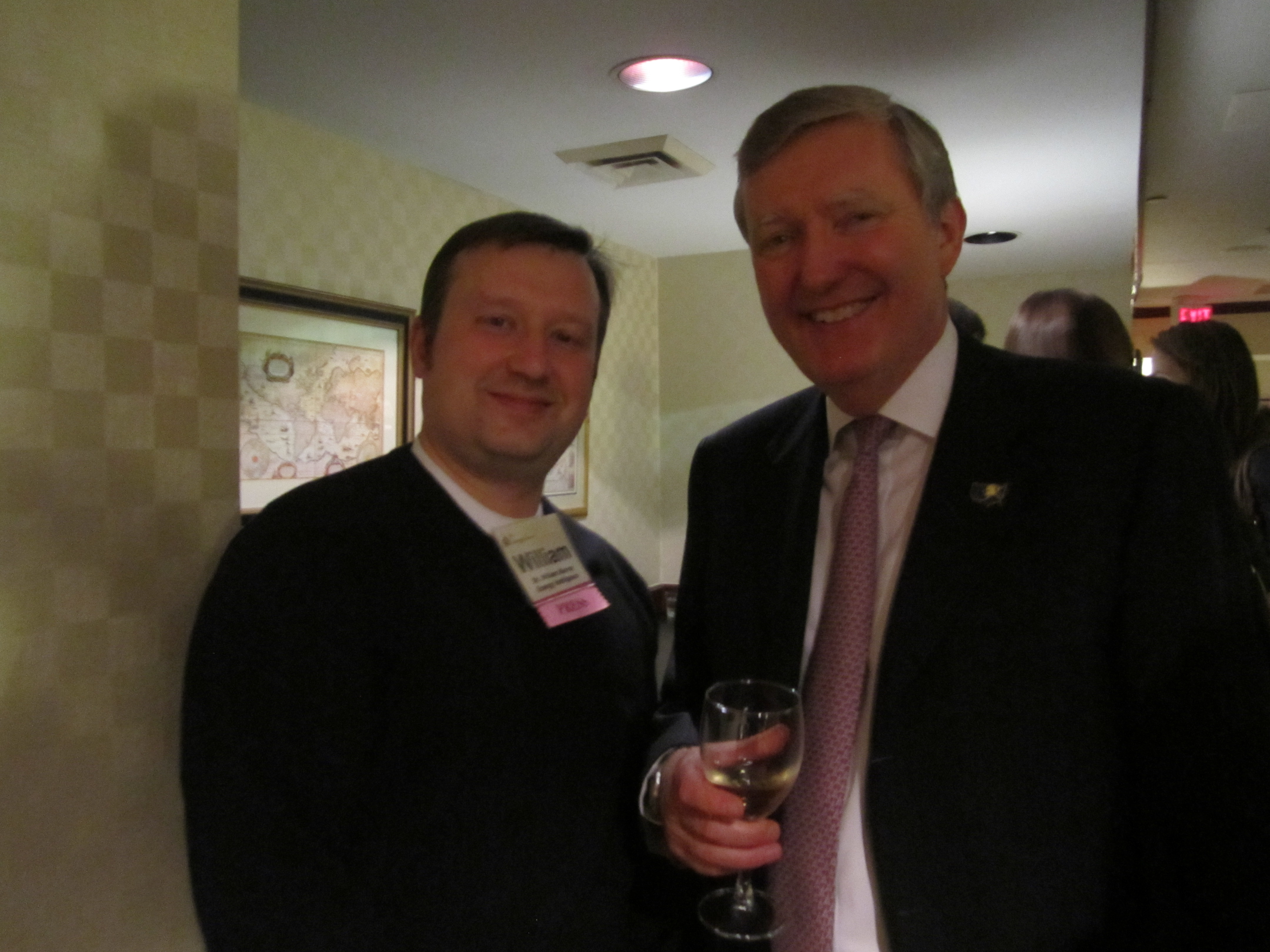
Here we are. That’s energy journalist, William Murray, Political Correspondent for Energy Intelligence, standing next to David C. Nagel, Executive Vice President of British Petroleum (BP).

David just stepped into the seat at the D.C. Office of BP. But his arrival did not disrupt the position of an old playmate, Brian W. Miller, Senior Director, US Government Affairs for BP, who was also in attendance that evening.

Drue Pearce, Senior Policy Advisor for Crowell Moring, was in attendance as well. Drue has had such a long and distinguished career in Alaska politics. I first met her when she was a State Senator in the Alaska Legislature. She then went on to become Special Assistant to Secretary of Interior Gale Norton, in Washington, D.C. — That must have been an amazing experience. I remember meeting the Madam Secretary in her office, with Drue, while accompanying the newly elected Alaska Governor, Frank Murkowski, on his inaugural tour of D.C. heavies.

I wish I had my camera on that occasion! Wow. What a beautifully plush office. Frederick Remington paintings of the Old West hung on the darkly wooden paneled walls, photos from Edward Curtis, capturing the twilight of the West. There was a central drawing room that any executive would envy. I had to hold my breath — so nervous to be in the inner-sanctum of federal bureaucratic power. On such occasions, whenever offered a drink, wine or juice, I declined for fear that I would spill the darn thing and make a fool of myself in front of such a distinguished party.

Drue completed her political appointment career with the Presidentially appointed, and Senate confirmed title of Federal Coordinator, which was an amazing post — and one that is now being held by none other than Larry Persily, former Alaska journalist and political appointee under two Alaska Governors: Tony Knowles and Sarah Palin.

Yup. That is Larry Persily, Federal Coordinator of the Alaska Natural Gas Transportation System. The Office of the Federal Coordinator (OFC) was created to expedite the construction of an Alaska natural gas pipeline, if it ever got off the ground. Actually, the OFC, is a precursor to the OFI, Office of the Federal Inspector, which was created several decades ago, under President Jimmy Carter, when the original plans for the Alaska pipeline were created. The whole idea behind these offices is to create a one-stop shop for all federal government issues to be handled, so just in case the project does move forward, it does not get mired down in squabbling over regulations.

Wow. That is Rita Stevens, flanked by Oil men from Marathon Oil Company. Geez. I know Rita from my first trip to Alaska, on Kodiak Island, when I was an undergraduate student at Columbia University. Rita is married to Gary Stevens, former college professor and now president of the Alaska State Senate. Both flew in from Juneau, Alaska, for the meeting.

We all hugged, and then went out for dinner, right then and there, with other Alaska politicians from the State Legislature.

Around this time, several months ago now, I was in Houston, Texas, with members of the oil and gas industry on arctic natural gas development. I mentioned the need to create communities of participation, that bring together in one room the principals of energy companies and sovereign arctic officials, so that everyone becomes familiar with each other and understands how to communicate across a broader band-width of demands than what continues to be narrowly construed as, on the one side “economic viability”, and on the other side “increasing local revenue”.

One example of a roundtable meeting took place between Alaska Governor Frank Murkowski and the principals of Alaska energy companies. I believe the mutual understanding that grew from these face-to-face meetings ultimately led to the contract drafted between the Governor and the Alaska oil and gas producers on conditions of a natural gas pipeline project. Terry Koonce, former head of ExxonMobil met with the Governor at pre-arranged roundtables to speak openly about requirements on the Alaska pipeline.

However, when the Governor finally delivered to the Alaska State Legislature the contract, to be ratified, Alaska lawmakers faulted and dropped the agreement. Was it the weakness of the contract itself? Or was it the lack of engagement between lawmakers and principals of energy companies? As an observer, I found the ordeal a missed opportunity.

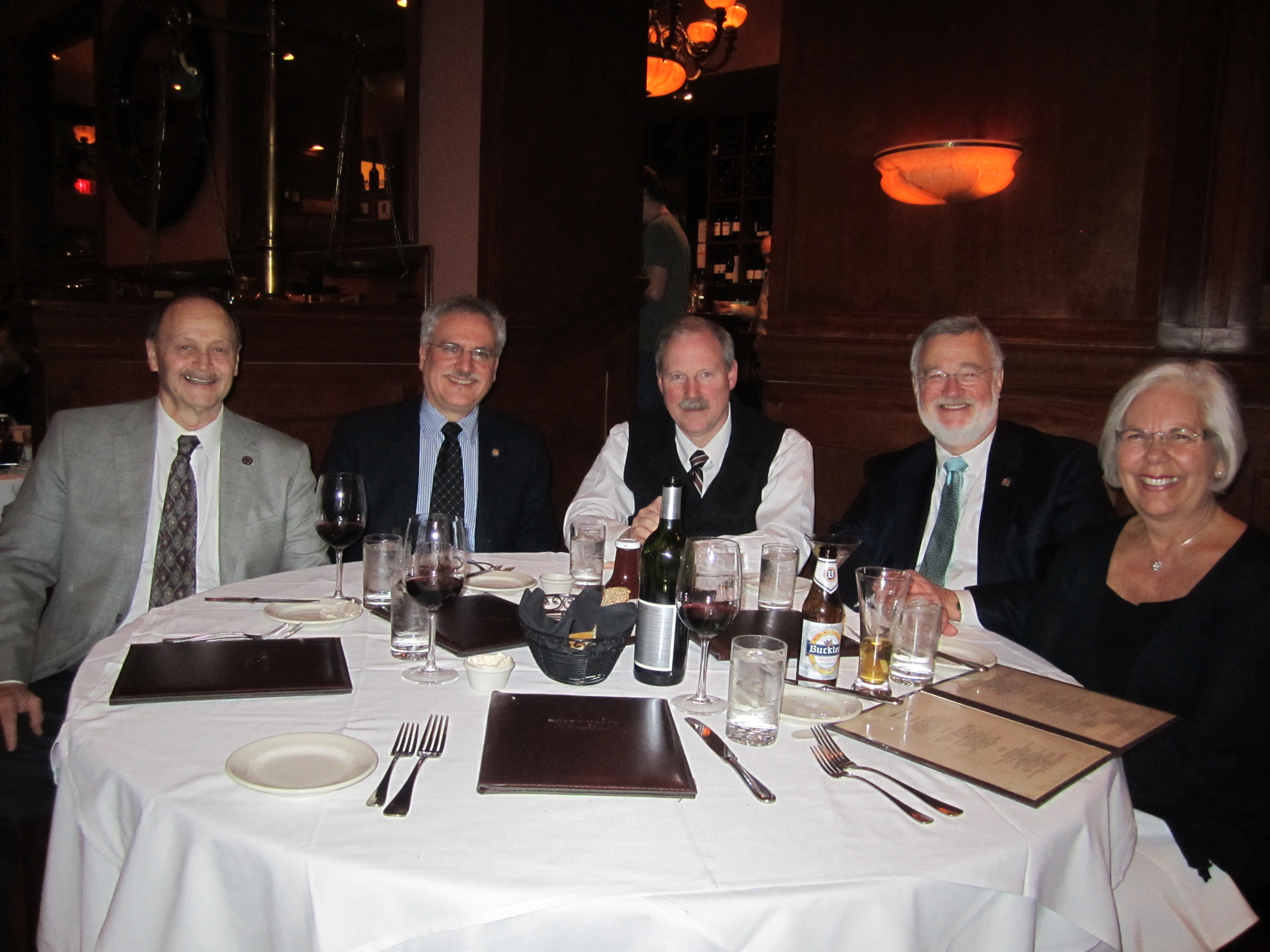
The need for alliance building through face-to-face roundtable contacts became clear to me while I was having dinner with Alaska’s State Senate Majority Leaders visiting Washington D.C. Seated on the right is State Senate President Gary Stevens, and to his left co-chair of the Finance Committee, Bert Stedman — two of the most influential persons involved in negotiations over energy tax relief legislation proposed by the Alaska governor.


A primary question for me that evening was the following:


Can someone please explain to me how it occurs that on their night off in Washington, D.C. the only non-politician having dinner with these Alaska leaders is a Photographist and International Travelry Specialist? And not, for example, Jim Mulva, CEO of ConocoPhillips who could best portray his company’s long term interests in Alaska and explain why he is requesting a tax break from the state?

To be fair to Mr. Mulva, he does communicate in-person frequently with Alaska U.S. Senator Lisa Murkowski, at her office in the Hart Senate Building on Capitol Hill, which is where I first met him, introduced to me by energy lobbyist Don Duncan. It was in this moment of our meeting, actually, that I developed right-there-on-the-spot my initial theory of corporeality of the intellectual professional, based on a handshake with this powerful, charming and charismatic individual.

Arild Moe


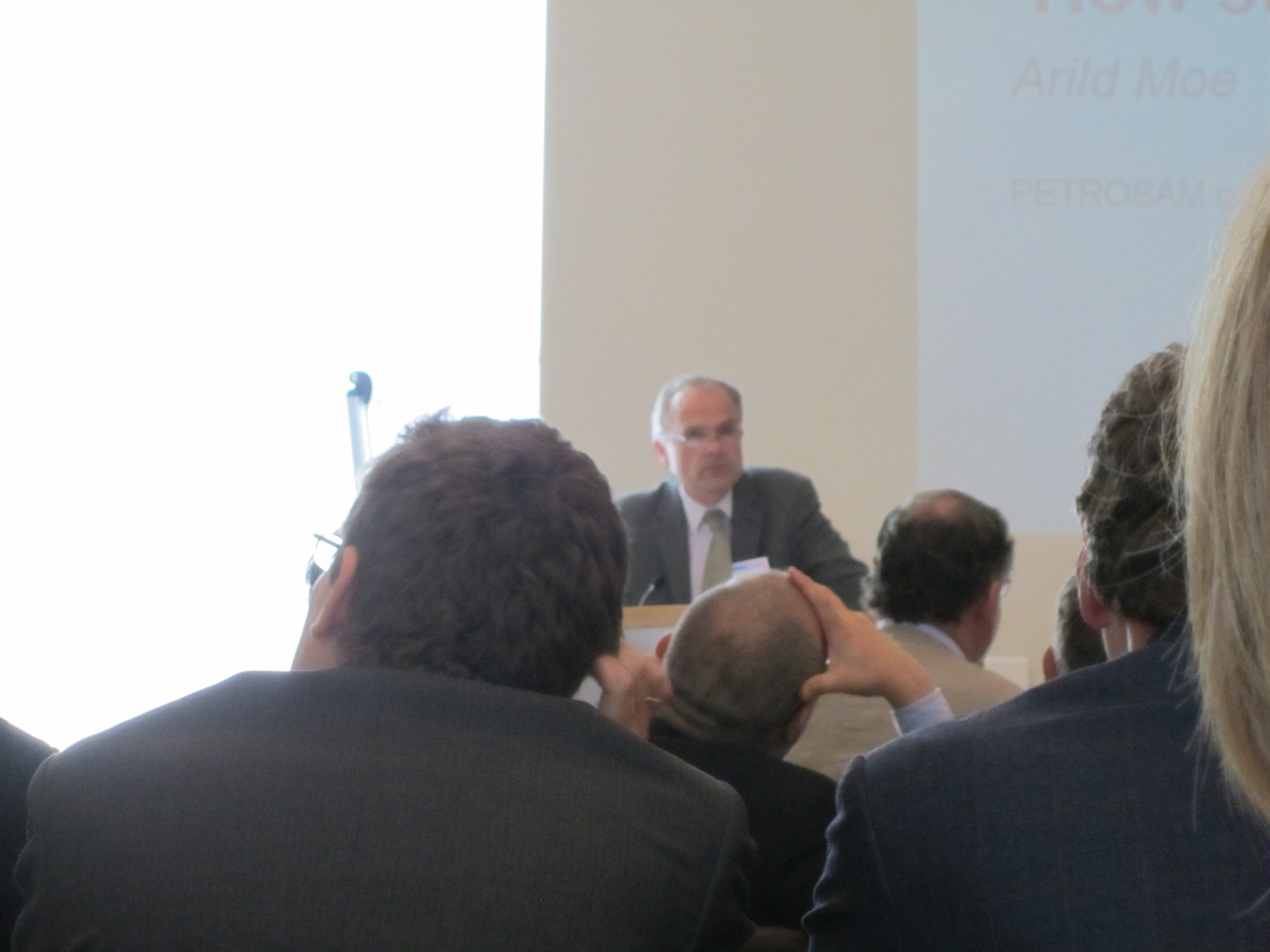
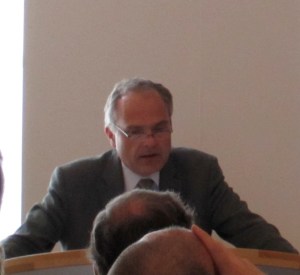
Above, in the photograph, seated on the left, is Jonathan Stern, with one arm crossed and fingers touching his lips –contemplating the expert commentary of the man holding the microphone — Arild Moe.

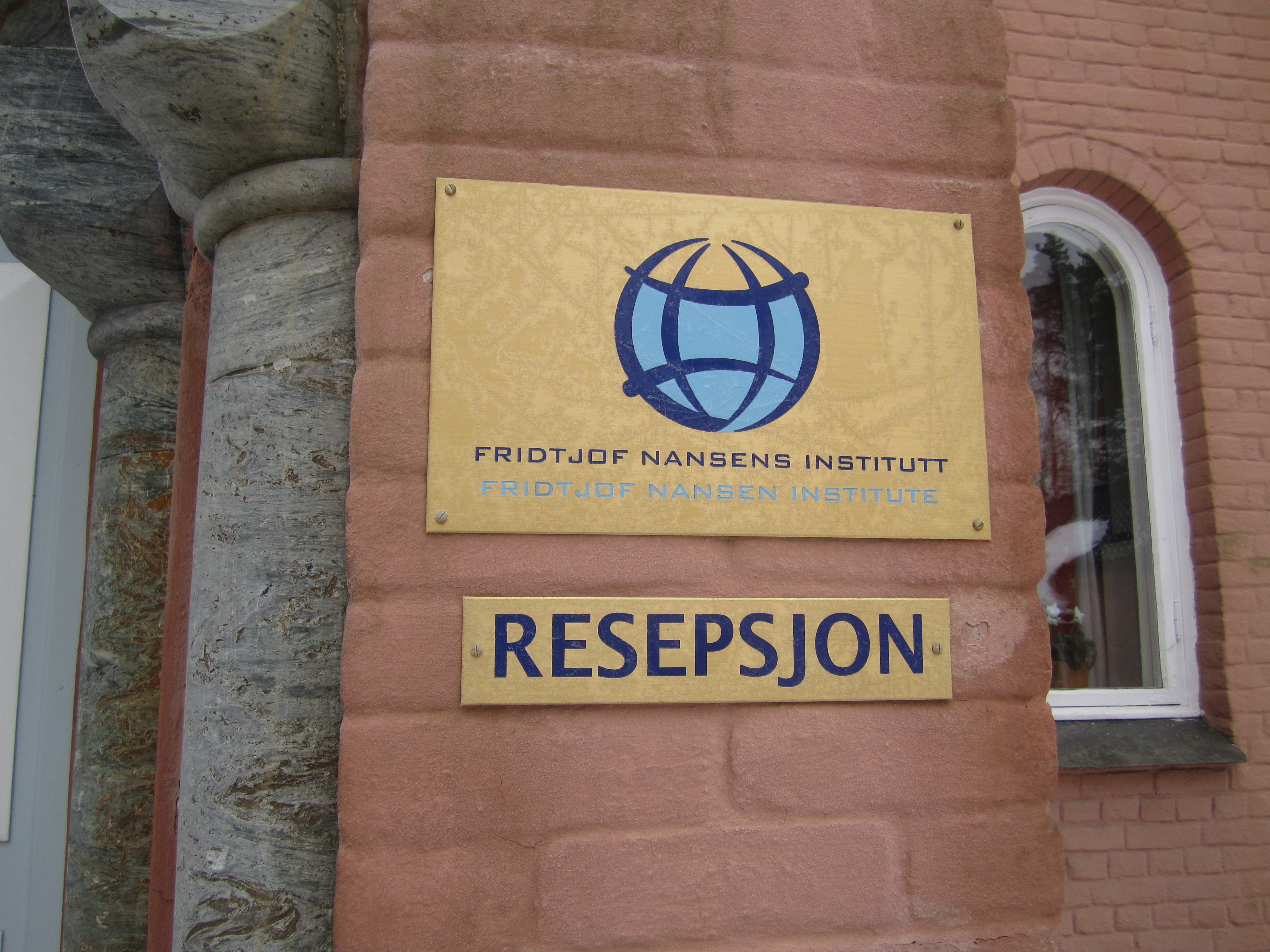
Both men are gurus of Russian natural gas development. They are analysts who have known each other — been working with each other — forever. Jonathan, about whom I write in a separate blog, see below, is Director of the Oxford Energy Institute, London. Arild is Deputy Director and Senior Research Fellow, and some say — soon to be Director — at the Norwegian think tank, Fridtjof Nansen Institute, located just outside Oslo, in Lysaker.

I had the opportunity of visiting with Arild at his digs on the outskirts of Oslo, and I am going to write about our meeting now. In fact, on the heels of that discussion, a few weeks later, while in Houston, attending a dinner at the home of the Royal Norwegian Consulate General, Jostein Mykletun, Ph.D., — his gracious wife Sonia Mykletun (pronounced: moo-kle-TOON), who has been running the Fulbright Scholarship in Norway for some years now, invited me then and there to apply for the Arctic Chair.

The Marvelous Sonia Mykletun, creator of the Norwegian Fulbright Arctic Chair (notice in this image, the size of artwork in the background — forms of distinction making up the time and space experience of diplomatic life — a time-piece Sonia wears, increasingly rare — and seating arrangements, in pairs, facing each other, intensifying face-to-face contact).


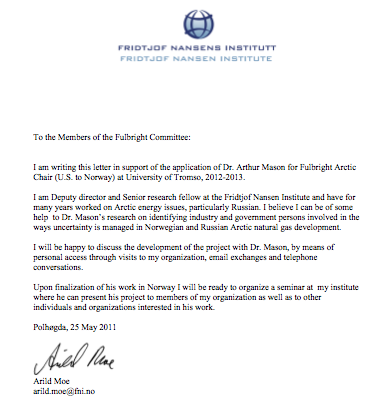
In support of the Fulbright application, and as I said, falling on the heels of Arild’s and my unique discussion in Lysaker, Dr. Arild Moe was kind enough to provide me with a support letter for my research in hopes of nailing down the Fulbright award. Of course, at StudioPolar we love to capture the imponderabilia — the little details of events among “high rollers” — as a Calgarian friend likes to refer to such folks, and so I post the letter here as an artifact of Guru Power, pure and simple.


No. 1 — On to Lysaker


Okay, where were we? Oh, right. Visiting the Chalet in Lysaker… Yes. As I was mentioning, I was in Oslo, holed up inside a Hotel near the main square, Rica G 20. There’s an aura about the place…



G 20


For some hours, perhaps days, I lay on my back, with hands crossed over my chest, in the pine-wood coffin position. An idea came to me quite suddenly, without advanced warning, to get up and telephone Arild off-the-cuff — to inquire whether we might meet. In truth, we had not spoken before, though, I did send him a detailed email to which he did not respond. Also, I did see him from a distance… the previous summer at the Petrosam workshop in Oslo, organized by Econ Pöyry, the “Nordic branch” of the global consulting company Pöyry Plc. The photos above, of Arild and Jonathan Stern, talking about changes to the European gas industry, were taken at Petrosam.


Luckily, Arild invited me for lunch at the institute the very next day, about 30 minutes from downtown Oslo by public transportation.


I hung up the phone receiver and after a few moments, returned to my reclining position. There, I went over the exchange on the telephone. My name, academic affiliation and statements of having received US Science Foundation support to study intermediaries (consultants) involved in natural gas development in the Norwegian-Russian Arctic.

The information caught the attention of my listener. I finished the introduction and waited, silently, perhaps several seconds, and then, began again, this time, haltingly, with gaps and pauses:


I study intermediary actors…they… They’re successful — in mobilizing expectations among the energy industry’s upstream and downstream communities…. [pause] … And. The complexity and erratic business of gas development in the Arctic… It’s created an economic niche for intermediaries who educate leaders about these spaces of uncertainty.”

And then with increasing rapidity: “And despite the growing importance of intermediaries not much is known about this form of expertise as it relates to Norwegian-Russian Arctic gas development, the precise characteristics of knowledge produced, the kind of influence they exert, or their role in influencing the European gas industry.”


There was a great deal of silence after I spoke, as if Arild was going over the sentences in his mind, rolling them and wondering what’s next, not knowing what my specific request would be. It’s a meeting. To Meet. An invitation To Discuss an Idea.

Arild is calm and quiet spoken. There was not much response really. We exchanged emails so that he could send me specific instructions — which train to take, the need to transfer to a bus, and to walk 10 minutes — in order to arrive at the institute. He ended the conversation abruptly but quietly with the words, “look forward to seeing you tomorrow”.


The soul of a train station: The platform. The feel of time clicking with an almost atomic-clock precision. Every second of delay in arrival and departure schedules reverberates of total banality. And still, a heightened sense of expectation remains over a threshold of departure.


The clock on the platform warning of my late arrival.


Late March and still snow on the outskirts of Oslo.

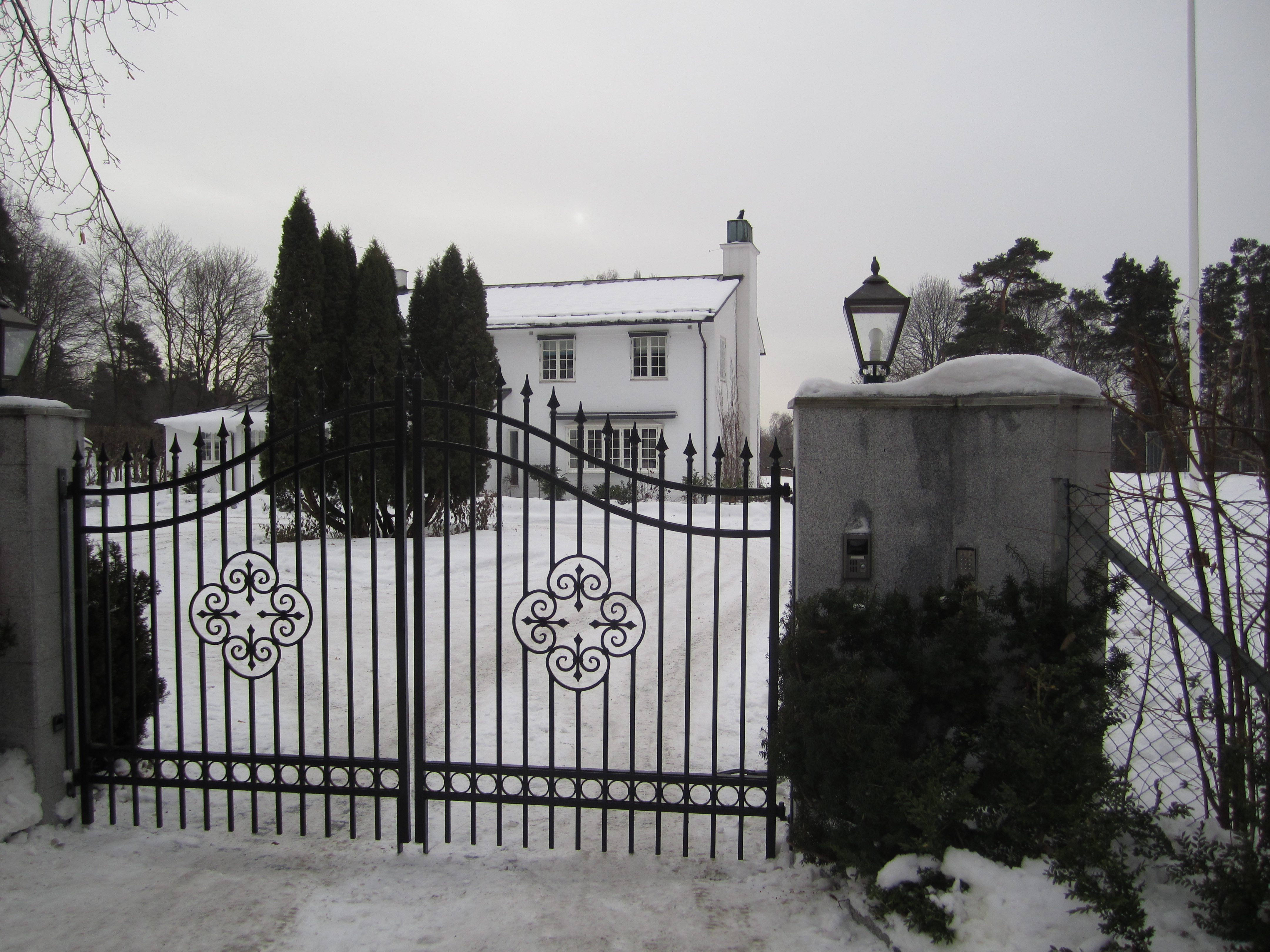
The institute is located away from a main thoroughfare, in the woods. Walking up toward the driveway, I pass palatial homes, courtyards, fences with electronic security, distance between residences are wide. The neighborhood reminds me of where ambassadors live, or where embassies are located.



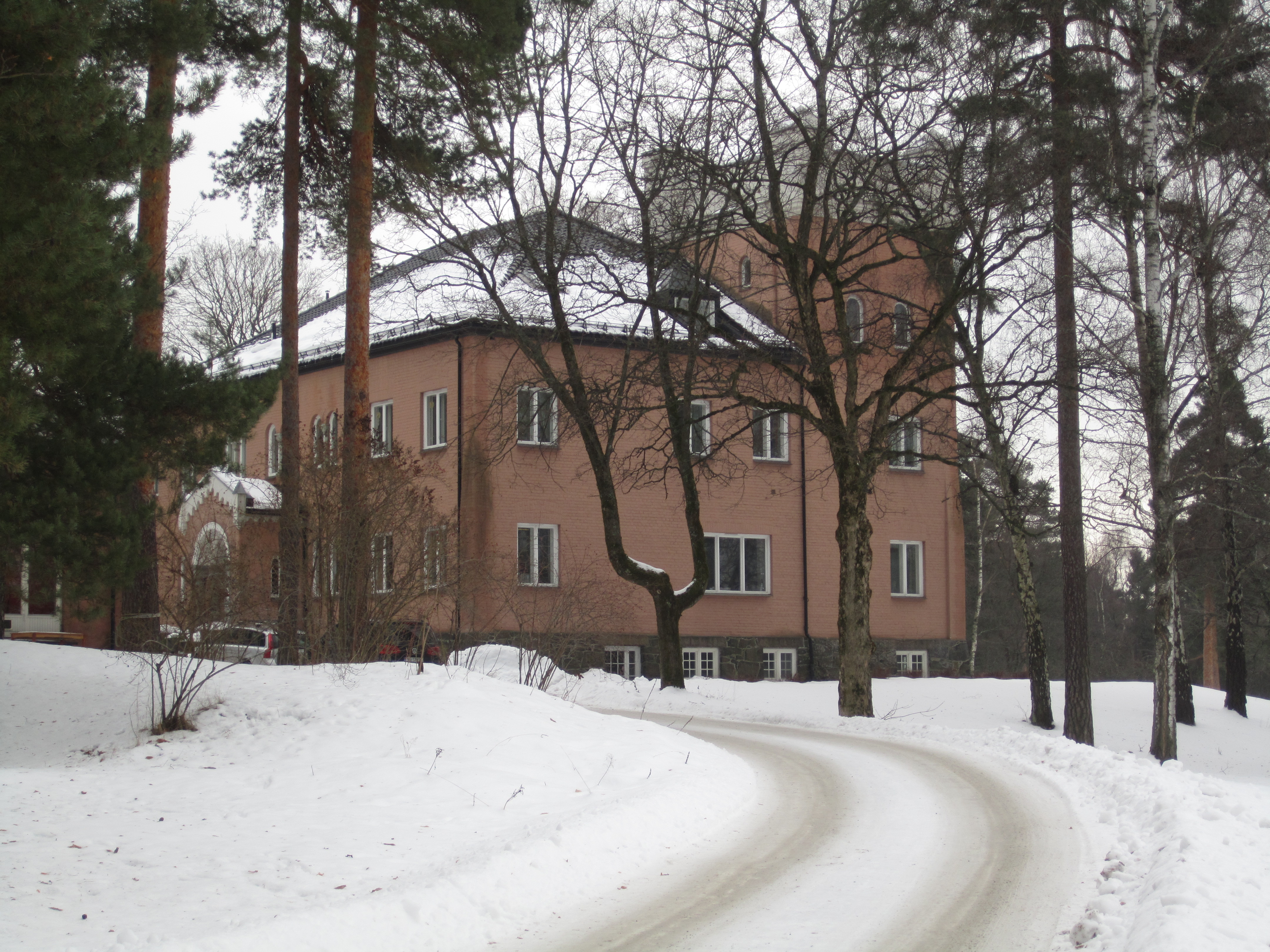
I walked along the road continuing past the homes for 10 minutes, just like Arild mentions over the telephone, and conscious now, that I am no longer in a city — where city sounds are now replaced by my breathing and tromping over snow and gravel. There, sooner than I expect, but certainly time enough, the institute takes form, and finally the entrance.


resepsjon


The door opens and I am shown into the reception room. I did not inquire into the history of the building, where the institute carries out its operations.


I was announced — and invited to explore the interior while waiting for Arild….


No. 2 — Interiors


The work of hands.


Imagine entering into a room, and noticing suddenly — without picturing even the outline of a face, the presence of a person — through the image of a type of work they accomplish. In this case, someone earns a living by laying out in an orderly fashion, a stack of newspapers, as one of their daily tasks.
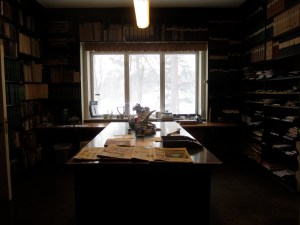


Imagine again selecting one journal, to read. Or flipping through another, and still yet another. Nevertheless, within some shortened period of time, perhaps over the next half-an-hour, each paper that is disrupted, is returned to the table, placed back into an orderly fashion.


Here, as with several offices I visited in Oslo, I became aware that this particular task, of ordering the newspapers daily (hourly), is a vanishing movement, soon to enter into the dustbin of discarded historical practice, forgotten, perhaps without nostalgia. It is a reminder of what remains of an earlier time but that still takes place somewhere as part of someone’s present.


There, the newspapers lay, simply and elegantly.


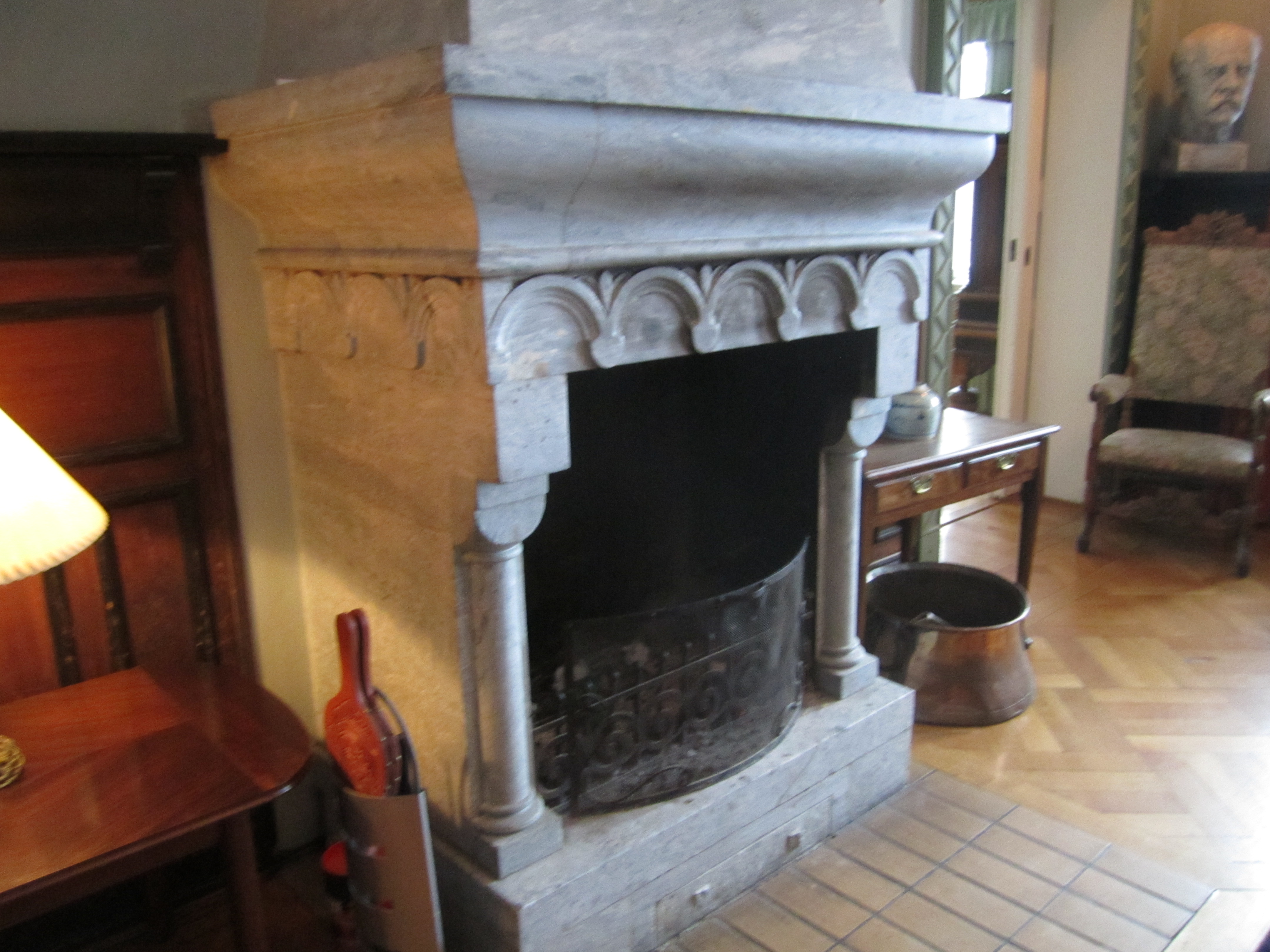
By its appearances, the building of the Fridtjof Nansen Institute looked to have been built at the turn of the 20th century. The ground floor, at the entrance, there is a spacious hall, a living room with a fireplace, and natural light streaming through long vertical windows. The rooms are laden with dark wooden trim, wooden floors, and banisters.


My first thought from glancing at these rooms was of a nightclub in San Francisco, the Red Devil Lounge.


But also of a dwelling for rock bands of the 1960s, in the Haight-Ashbury area of San Francisco’s Golden Gate Park, the residences of Jefferson Airplane, Janis Joplin– with plaster mold busts of famous heads staring out from the corners of the room and occupants slipping on pogo boots, moving their lips in repetition of the lyrics of songs. Who uses a fireplace to keep warm these days?


It was a space of science, belonging perhaps to a former century.
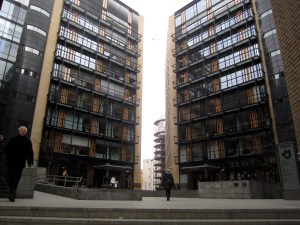


What a contrast to the spaces of Norwegian think tanks located in downtown Oslo, housed in ultra, ultra modern settings.


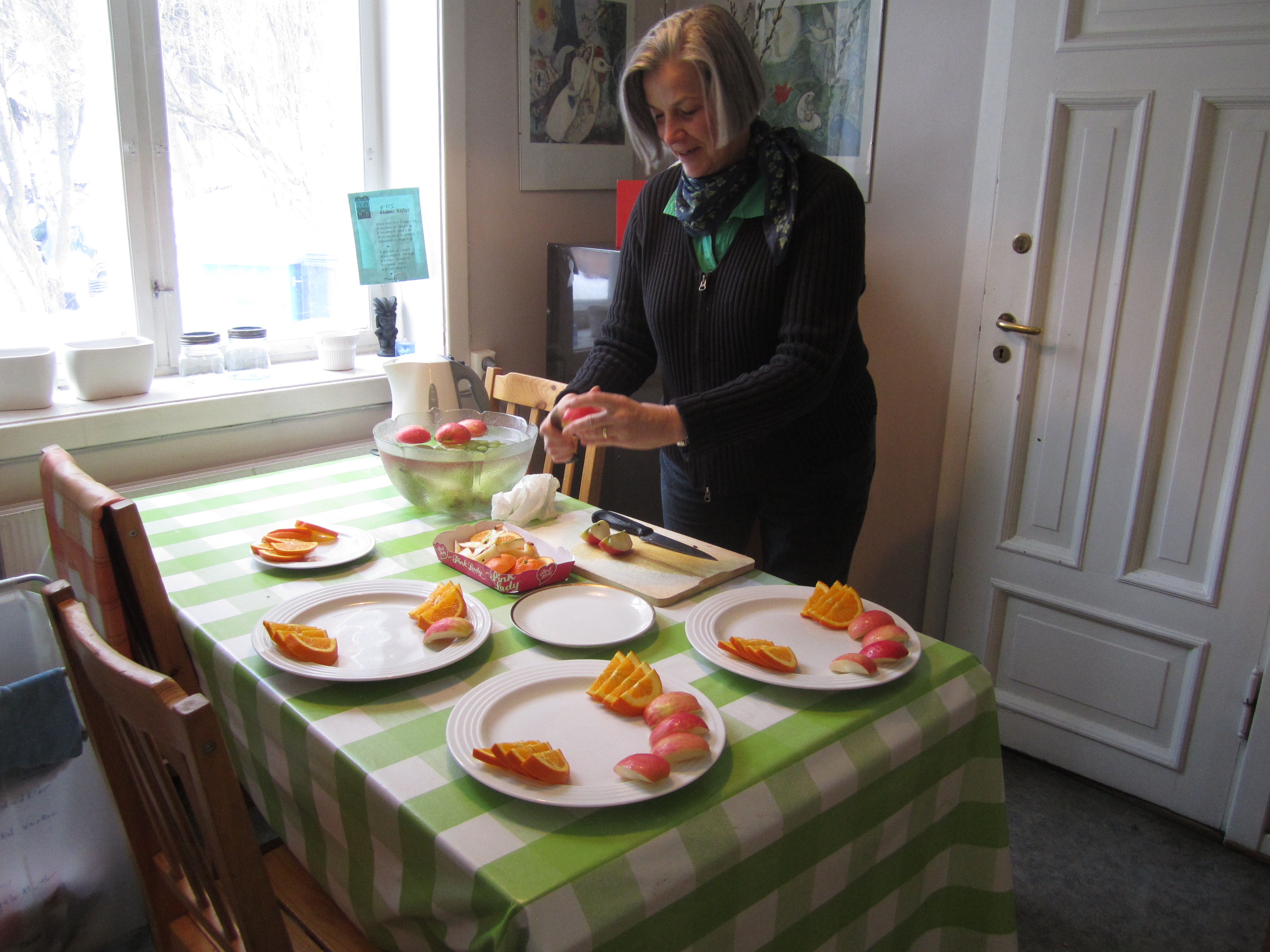
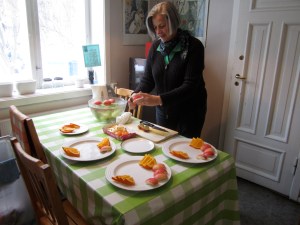
Lunchtime takes place at the same hour every day, and staff move tables into position in the main room, where everyone sits together. One staffer provides fresh cut fruit. I noticed all of this, but did not participate, as Arild invited me into the smoking room, for a tete-a-tete so to speak.



No. 3 — tête-à-tête …

Now seated facing each other, with the door to the main room closed, I produced from a worn manila folder, a small, shiny 8″ x 11″ hand out, which I placed on the table and slid to Arild. He looked over the hand out, and I stated in rapid low tones all the necessary details of my research. My fanaticism for the idea. Dispassionate ambivalence combined together with a low intensity of speech, as if delivering an incantation.


Arild held the sheet of paper presenting such details as they pertain to the North American Arctic, and began, in a deliberate manner, to compare themes he recognized between gas development in the Shtokman case, of the Russian Barents Sea area, and the Alaska gas play, on the North Slope.

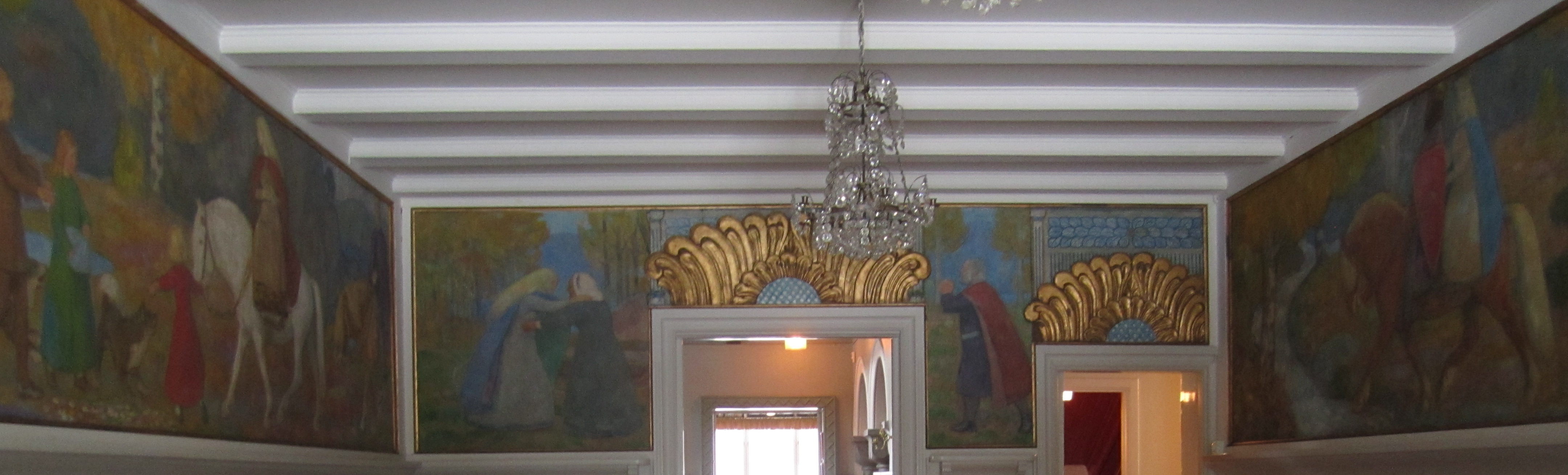
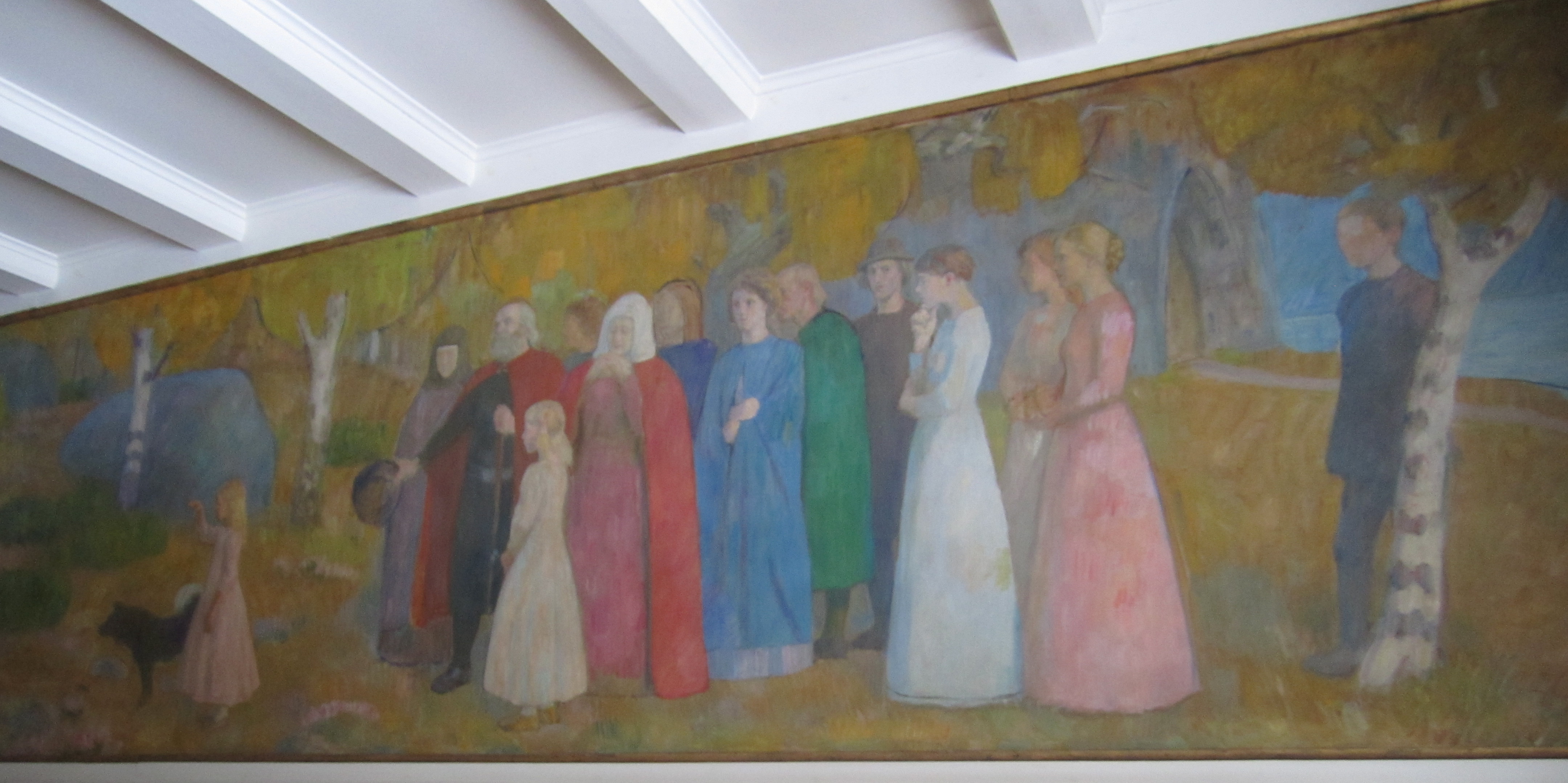
Oil paintings and wall murals figure prominently at the Fridtjof Nansen Institute. Each room has a theme. In the dining area, a long table suitable for serving over 20 persons is flanked by painted walls on three sides, depicting medieval Scandinavian themes — lords in gallant dress mounted upon horses, children with mothers holding hands, on-lookers, young adults, and elderly masters.

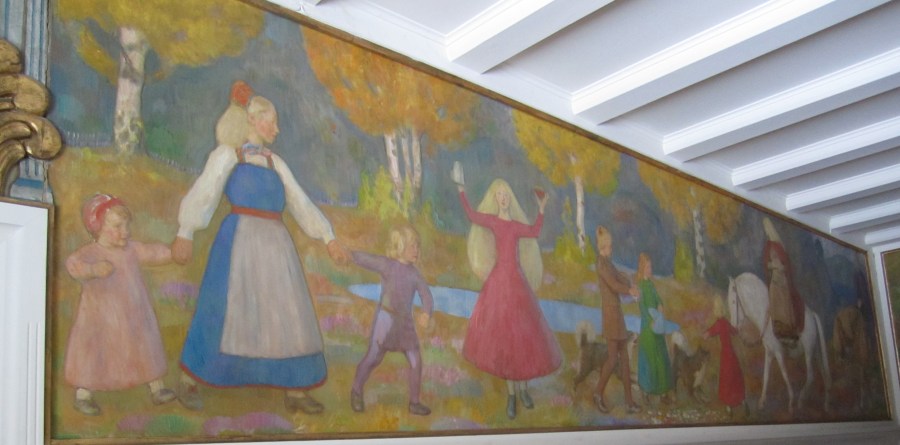




In the main drawing room, the image of communitas associated with the dining area– consistent with the carnivalesque period of the medieval era — is thoroughly left behind and instead, replaced by a period of the early modern. Here, the baroque is at work, with its stern Christian ethic and separation of the classes.


I want to compare these wall images now, for a moment —


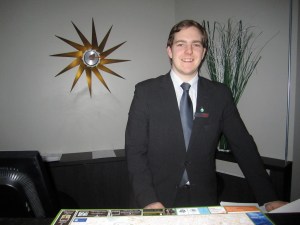
I want to compare these Work Place Images saturated as they are, with an intensity of cultural form and temporal depth – to compare them with the image that hangs beside the Night Porter at Rica G20. At my hotel, downtown, away from the detached and cloistered natural environment of Lysaker (a workspace of the leisure class), the porter has his very own wall image, an object of representation for him of his surroundings. This image is saturated also with temporal significance, that of urban time – of train schedules, delays, departures, the platform, labor shifts, and of course, money (i.e., quantifiable qualities as expressions of value) — all consolidated in the image of the Wall Clock. Here, mimicry of gesture and formalism are absent — there is no image of gallantry or thrift through which one can identify and model behavior — as is associated at Fridtjof Nansen Institute. The Wall Clock, offers a form of mimicry according to which only time-space discipline is the theme.


Presidential Timber.
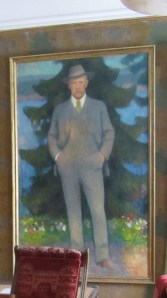
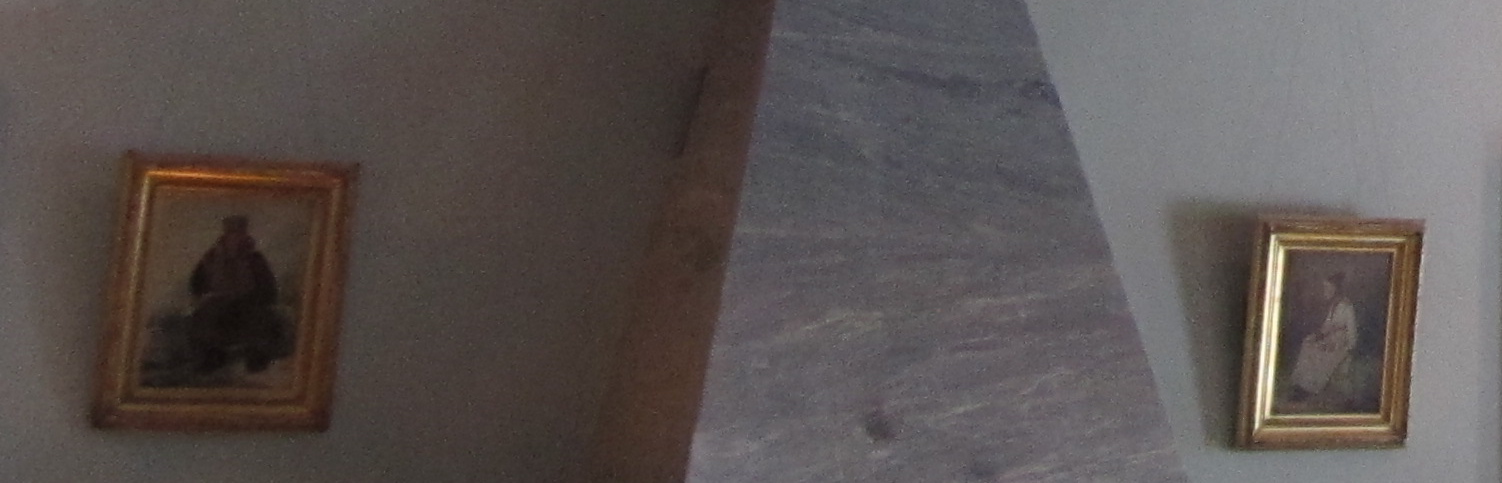
In the room where Arild and I met, I sat directly in front of an image of a man, who stood directly as an image of a tree. Staring at me from Arild’s vantage point, was an image of an early 20th century Scandinavian modern gracing my presence, in imitation of a fir tree.


Arild presented a list of ideas:

  • In Russia, power is still centralized where decisions are negotiated in secret (versus in D.C. where decisions are dependent up on three forms – judicial, legislative, executive). From this perspective, the questions that arise surrounding Shtokman do not concern how decisions are made, but when decisions are made.

  •  The logic of Shtokman is less concrete than the case for the pipeline in Alaska. Issues concerning arctic offshore in Russia are broader and much more vague. In Alaska, the controversies and issues are fairly concrete. There is a lot of data surrounding pipes, numbers, completion dates, volumes, etc.
  • For these reasons above, there is much more uncertainty on Shtokman, and that this uncertainty exists in an earlier state than the Alaska case. Essentially, the Alaska case represents a project located at an entirely different stage of temporality than the Shtokman project.
  • In this sense, expertise, an issue that my research is about, expertise in Russia, is primarily concerned with the technical and geological. The Russian research institutes are focused with a clear sense of purpose on this point.

Now, here, is where I had to interject and ask about this last point. If it is true that issues are technical, then what do we make of all the talk by people like Jonathan Stern and Arild himself, on these projects, the sense of expectation etc.?

  • We diverted the question to discuss Global Russians, which I had discovered the previous summer from the St. Petersburg Economic Forum, wherein Russians with education from abroad had returned to Moscow and are now working with western financial firms, and providing assessments of the Shtokman project. According to Arild, they have few links and knowledge about the past. That is to say, the overarching decisions are still made by members of the older nomenklatura, all the strategic decisions are their decisions.