Feeds:
Posts
Comments

nsf research – 2


Clusters
Coming immediately to our minds with the data we collected summer 2010 is how information tends to cluster around themes. In Lysaker, we met with energy consultant Ivar Tangen, childhood friend of Bengt Hansen, president of Statoil in Moscow. Statoil is a Norwegian oil company and one of three companies that formed Shtokman AG, the partnership group with plans to develop the Barents Sea off-shore natural gas field called Shtokman. The other two companies are Russia’s Gazprom, owning majority stake (just over 50%), and France’s Total S.A. The connection of Ivar Tangen to Bengt Hansen was close so that we established with Statoil Moscow on one phone call, our meeting, upon arriving to Russia. It is a question: what type of connection creates the meeting with one phone call?

Statoil conference room

When I worked for Alaska Governor Tony Knowles, in his D.C. Office– Knowles was regal indeed, enjoying all forms of formality paid to him in his person –we thought about the access issue–who had it and who didn’t. In D.C., we always took note upon seeing a memo addressed to the power-holder (governor) that was written, “Dear Tony,…” — who could write that instead of “Dear Governor”? These guys are typically so formal– it is rare to see them addressed at the office in any other manner than their sociological title. Moving on. We arrived to the Statoil office in Moscow, and had our meeting with Hansen (Norwegian) + two deputies (Russian), in the conference room.

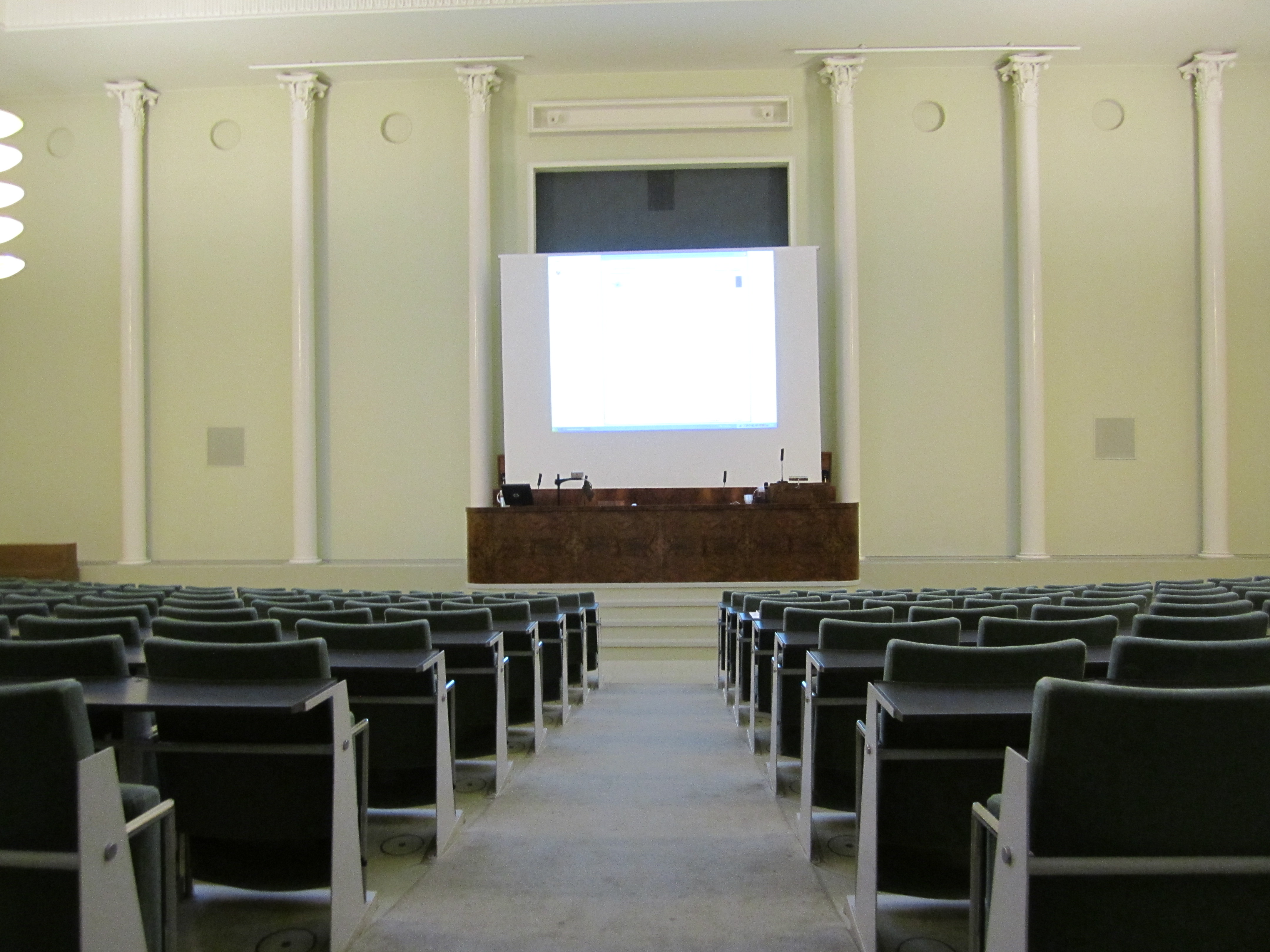
This photo above on the left, is the conference room a few minutes before the meeting. Here, the angle of view is one corner of the office, but revealing indeed. This is the entrance side, and directly you confront two images: first, the wall map of oil and gas production in Russia (on the left), and second, a high-rise window perspective of the Moscow landscape. You should be able to increase the size of all the images by clicking on them. Both perspectives, the map and the city landscape, represent their own particular form of cadastral map– a miniature resource map– of Russia’s hydrocarbons, and of the city scape.
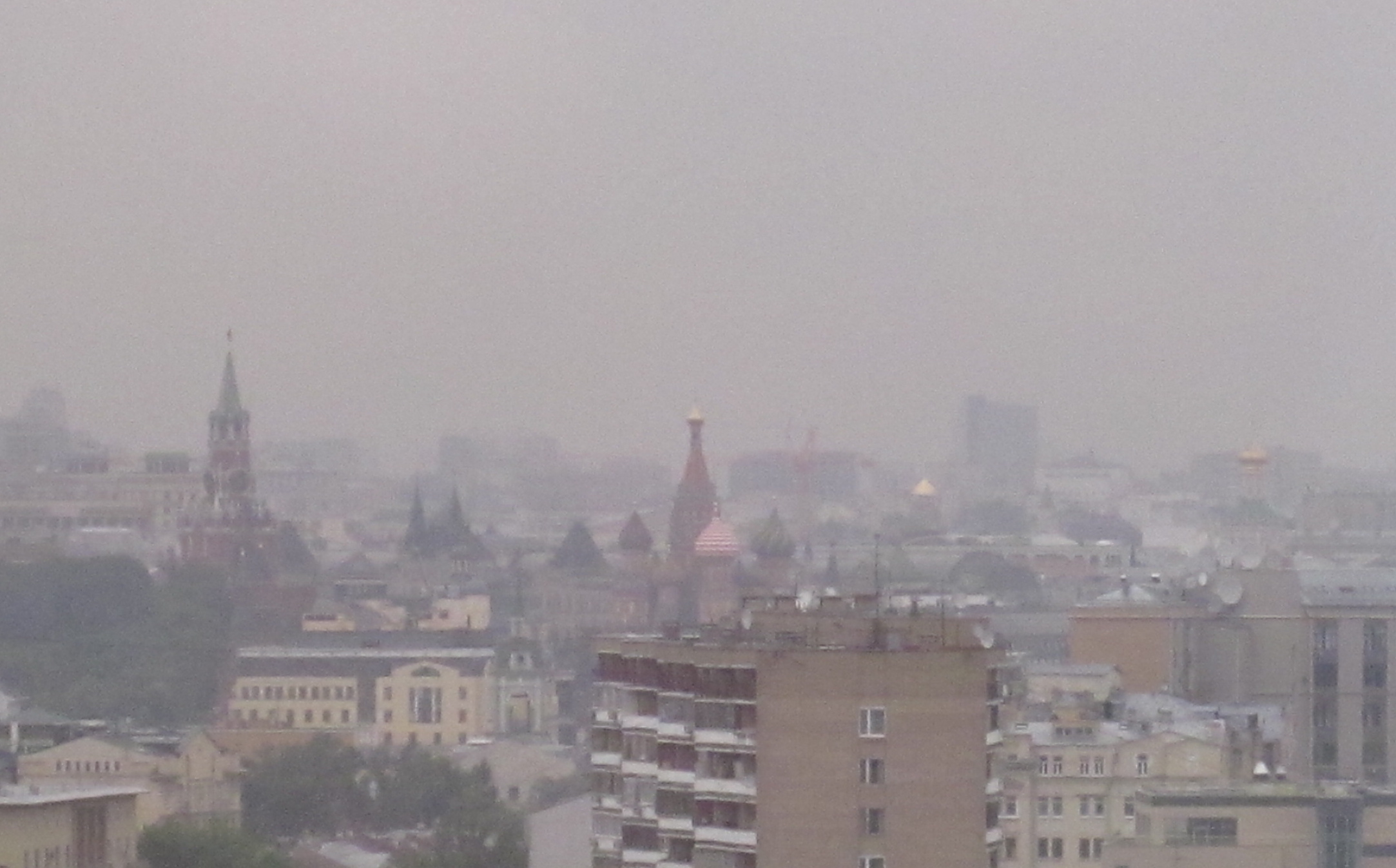
Kremlin from Statoil watchtower

In fact, looking out this window, as seen in this image on the left, (walking closely as if to the map to see where resources are), you see the Kremlin in center. Admittedly, not much to see. We’re not Muscovites, and not even looking for it, but it was easy to spot gazing out. You get a sense, pretty quickly, when looking out the window, that you’re gazing out of a particular kind of watch tower — a tower of power-holding, and gazing off, on to another tower of power-holding. When we finally arrived at the Kremlin, we looked for the Statoil office building and found it easily. It’s there in the below photo to the left, the watchtower building standing in the middle…

Returning to the image above, the conference room, what you see then, upon entering, are two framed windows looking out upon the Russian landscape: the first, a cartographic landscape of resources presented in miniature or model scale and brought into the interior of  decision-making (e.g., Scott’s Seeing Like a State) and the other is the miniature image of the city-scape, where the power of the state is brought into the conference room, again, at the level of decision-making. Many times, we were reminded of the power of the Russian state, especially at the St. Petersburg Economic Forum, by way of metaphor, in which attendees refer to “kissing the ring” as a form of deference among western businesses paying tribute to Putin and friends.

Statoil Moscow reception

There’s other things we will refer to, for example, the first image of Hansen above, where it was taken, at the Petroleum Oil and Gas Congress in Moscow on the eve of his retirement, and how everyone in the room gave him a standing ovation, and really, you could see that he was an endearing figure to many in the Russian oil and gas industry, and this would be in contrast to descriptions of other western operators, which we won’t get to at the moment. But finally, this image here on the left, taken of the reception table of Statoil Moscow, which has the Herald Tribune newspaper, and a few glossy Statoil brochures in English. All materials here are in English, and we know for certain that the Statoil brochures are also printed in Russian (a Russian copy sits below in the photo on the left, which we obtained at the Oil and Gas Congress).

Statoil’s Russian Brochure

So for us, it is indication, that whoever comes through the door and sits down (that is, whoever is made to wait and not immediately brought through to Hansen), the person(s) are likely to be English speakers. You could read it in different ways. Maybe non-English speakers are not made to wait, which could be another reason the oil/gas community respected Hansen– Or again, maybe all business was at that level, instructed by the very beginning, to be in English, after all, Statoil is a Norwegian company.

To wrap up, in these photos, we see examples of what we call clusters. A set of information particles, that are now and have since become arranged in a certain form, as an image. What you see is a discursive effect on the landscape of meanings regarding the encounter (that is, when one is lucky enough to pass through a set of images regarding the power-holder of a major oil company). And here, again, we’re referring to an aesthetics and factory of the sensible (J. Rancier), the surfacial features which provide the sense making that work to position the common sense of decision making on Shtokman natural gas development.

Joe Kantenbacher

11/10: I met for coffee today with Joe Kantenbacher, whose seminar lecture I had the good fortune of attending last week. Joe ably provided data on how scholars have talked about the topic of behavior modification, as it relates to energy and climate change. The presentation was provocative indeed. Joe began by pointing out that if climate change is anthropogenic (human induced), then, instead of looking for financial or technical solutions to green house gas emission reductions, we should orient ourselves toward identifying a climate policy that can shape the aggregate set of human activities to reduce our carbon footprint. After all, as Joe points out, last year, residential households in the United States were responsible for producing thirty-nine percent of the nation’s green house gas (GHG) inducing carbon dioxide.

Joe Kantenbacher

Joe’s presentation was a trial run for a paper he plans to deliver in a few weeks at the Behavior, Energy and Climate Change (BECC) conference taking place in Sacramento, California. According to the their website (link here), BECC is focused on understanding the nature of individual behavior in order to accelerate our transition to an energy-efficient and low carbon economy. One aspect of the conference — whose attendance anticipates policy makers, social scientists and media —  is to “achieve viable solutions” for reducing greenhouse gas emissions by efforts as design, effectiveness of policies, and individual actions.

With these preoccupations, Joe decided to cull from bodies of scientific literature the kinds of stimuli or technique that researchers had concluded would result in behavior modification. If this last sentence sounds a little complicated, well, it is, in part, because the topic is a little complicated. But the point was so interesting, that I began to think about it in discursive and historical perspective. And before I go there, I want to provide a little more description about Joe’s presentation which captured my interest, while fully acknowledging that I cannot unpack his full intellectual vision.

At the beginning of his talk, Joe casually reminded us of the various models used in different academic fields for interpreting behavior modification – such as prices (economics), culture (anthropology), and normative values (sociology). Second, he pointed out that each of these fields identifies society as the appropriate scale for examining behavior modification (I add a footnote of dissent on this point as anthropology has abandoned society altogether in favor of the subject and rationalities that govern the individual). Third, while society may be the scale for investigating behavior among different disciplines, each approach suggests a specific rate-of-change. Economists, for example, believe change can occur overnight (e.g., triggered by a spike in prices) while sociologists believe that rates of change follow longer patterns of structural shift, such as, for example, from feudalism-to-capitalism, or from modernism-to-post-modernism.

I enjoyed the review. It was a reminder of the need to keep a sharp look out for what we are calling: scale of object, temporality of dynamics, and form of registering events.

Well, here is where Joe’s talk became even more curious. After culling through the record of 1970s-1980s science literature, and pulling articles that crossed over topics of behavior, energy and climate change, he then created a visual networking image to elucidate the spatial relations of different disciplinary authors who were publishing topics akin to each other.

VOSviewer program

At first, upon seeing the image, I must admit that I thought his discussion had shifted toward the epidemiological. But as he explained to us, he was using VOSviewer, a program that can help you construct maps based on network data using a clustering technique. Toward the end of his talk, which I don’t quite recall, my visual attraction so distracted by the VOSviewer image, Joe suggested that researchers had and could identify a variety of forms, by which modification of behavior takes place, and these forms include: public commitment, invoking norms, tailored information, feedback, modeling, goal setting, and a few others. Some of these techniques for influencing behavior could be considered antecedent (before-hand), such as goal-setting, while other could be considered consequential, or what might be called carrot-and-stick (e.g., rewards, feedback).

I think Joe is on to something, in that he has identified a suite of practices, aimed toward governing the body, around the issue of energy and climate change. The lecture struck me profoundly because of the possibility of a history of future unintended consequences that may derive from the inception of a certain idea-force:

Climate change is a scientific fact. But what will it mean to us, that it is now a social fact? Stated differently, in addition to an empirically changing world that we register by science-based instrumentation, what does it mean for us, as a group of persons, to call attention to ourselves as responsible and capable of changing the global climate? What possibly can it mean, to begin living under an idea-force  — a regime of life, in which we identify ourselves, collectively, as the Sun King?

Karlene Roberts


Catastrophic Events and High-Reliability Systems

11/9: One of our emerging projects at StudioPolar plans to explore the reliability of electricity grids in the Arctic. We can not help but notice that across the Arctic, from Fairbanks, Alaska, to Nuuk, Greenland, everyone lives in homes that are heated solely by electricity. No one knows the names or biographies of the technicians who run the local power plants and upon whose lives these communities depend. Even so, community members appear confident in the reliability of these ghost machines, so much so, that few residents consider back-up plans for an emergency situation (God forbid), in the case that power-stations shut down.

Karlene Roberts

We find two things remarkable about this condition: (1) someone, or some group of persons, working in the government housing and planning office decided one day, that there was enough reliability in electricity systems to approve building homes, in areas where temperatures range from 32 to -40 degrees fahrenheit for months on end, without any traditional mode of back-up heating, such as fuel-oil or wood stoves, and; (2) these really are reliable systems, and technicians in arctic communities do get up every morning and produce electricity, despite the fact that these regions are often talked about as high-risk for many occupations and lifestyles.

We also wonder, as an aside, and this is something we must resolve, why these technicians are not celebrated, and emerge as political and economic leaders of these communities, given the crucial role they perform in these societies. We became particularly aware of this in Nuuk, Greenland, where politicians garner quite a bit of local celebrity, including the premiums of vanity that are associated with their rule.

With these issues in mind, I was grateful to lunch today at the faculty club with Karlene Roberts, whose research over the past several decades concerns the evolution of large-scale technologies with high levels of operating reliability performance that are crucial to political legitimacy. Karlene received her PhD in Psychology from UC Berkeley, and after working at Stanford, became the first woman ever appointed to the Hass School of Business here at UC Berkeley. In fact, she has been a frequent collaborator with ERG’s Gene Rochlin and Todd LaPorte, a political scientist also at UC Berkeley.

There are so many research fields Karelene is working in at the moment, and which overlap with our own interests at StudioPolar, that the conversation was dizzying. Just to mention a few: she is actively engaged in UC Berkeley’s Center for Catastrophic Risk Management with which we plan to participate; also, she is working with members of Statoil, the Norwegian oil company, through their collaboration with UC Berkeley’s Center for Executive Education, and which is titled the Statoil Project Executive Program, or, in Statoil language, according to the company website, Project Academy. We plan to follow up on all of these links and will report back in updates on our NSF EAGER research.

New Orleans

Several of us headed to New Orleans for the American Anthropological Association annual meeting. The trip was the food.

10/29: 8:50 PM. The conference is over. Our path toward understanding, for which we traveled across far-flung places, has once again left us individually standing in the dark. Still, we depart alone, but also stay united. It is our zeal for an idea, a belief in what remains enlightened.

6:56 PM. “Closing ceremony: looking back, moving forward: trajectories for continuing research on the Russian energy sector” — this is the title as it appears in the program to call attention to the end of the three-day conference (with the one exception, that we have decided to not capitalize each letter, as the organizers have done so in the conference program). Recently PhD minted and conference organizer David Dusseault is on stage in the Small Hall auditorium at this very moment, a charismatic political scientist whose nor’easter accent provides a welcomed staccato of punctuation to the boxes and tables that appear in his power point images. We are now very close to applauding ourselves for the past three days of intense, informative and friendly discussion and awaiting who will have the last word…

5 PM. Inside the University of Helsinki’s Main Hall, where the conference is taking place, we find ourselves spending time among statues of the classical world. There they stand, the men and women of the ancients, on the steps between the panel rooms, located across the balcony halls, we come face to face with these early ancestors. The very contrast by standing among these prior cosmopolitans and our discussions of the politics and policies of modern energy systems, reminds us of the contrasts between today’s energy requirements and those of the early world. As Vaclav Smil poses the issue in his 2000 article available in the Annual Review of Energy: the amount of power available to today’s affluent American household was only possible (but without the convenience and convertibility) for an owner of a Roman latifundia of 6000 slaves. Can you imagine.

3:00 PM. Time now for a networking break, as everyone heads out to the caffein bar for more BTUs in order to get through the final half of the day. We should mention here that — as we were leaving the auditorium, and pausing for a photo op to include, in addition to Dr. Cui and Master’s student of diplomacy Scott Milgroom, the very intriguing British ex pat in Moscow Ian Pryde, who is founder and chairman of Eurasia Strategy and Communication — the importance  of empires in decline, which as Ian reminded us, that it was not so long ago, that Britain faced its own loss of national self-esteem after World War II, and that in Russia, in the context of a comment that we had made yesterday about global Russians returning to Moscow, there is today, in cosmopolitan Russia, attempts to recapture that earlier pride through establishment of incubation parks to woo the newly educated Russians arriving home from the West.

And this was, in fact, the very topic of the well presented talk by Dr. Nikita Lomagin of St. Petersburg State University, Russia, who suggested that perception of self in today’s Russia is quite important, and that the willingness to be viewed positively, or rather, the question of how to demonstrate that you are important revolves around energy. The importance of energy security, and more clearly, defining ones strength as a petro-state, was created in Russia through a state programatic developing out of the 1990s that would focus on strengthening position of strategic markets in Europe, diversification of these markets, investments in Russian infrastructure, stimulating local consumption, and access to new technologies in all stages of the production chain. And this, according to Dr. Lomagin, defines energy security in Russia today– security that is as much a part of development and protection of economy as it is promoting and protecting imperial consciousness.

1:30 PM. One point Dr. Sherr made during his key note speech this morning, which we found interesting, was that, in energy as in most other spheres, it is remarkable, that Russia is able to compartmentalize its relationship with China. And moreover, the ideas that dominate Russia’s concern are primarily those dealing with the relationship of Russia to EU and the United States. And with these thoughts in our minds, so it was, that we also found interesting the key note provided by Professor Shoujun Cui of Renmin National University, Beijing, China, who delivered quite a few common sense understandings about pipeline politics in the context of Russian, Chinese, and central Asian pipeline transport systems. Dr. Cui posed the question of whether natural gas pipelines should head West from the Caspian basin, including from Russia, toward Europe which will experience low economic growth rates in the future — (of which two are already proposed and referred to as the Nabucco project from Turkmenistan and South Stream from Russia, but in fact are in zero sum competition westward) or, would it not be best for pipes from, say Turkmenistan, to flow eastward to connect up with the China Central Asia pipeline.

Let us interject, from our own humble perspective, that there must be incredibly confident forecasts for economic growth and demand of natural gas existing in China to continue to build and connect the long distance pipes westward of which Dr. Cui speaks. From our point of view, in the North American context, where the incremental gas demand market in many cases would prefer to destroy demand rather than plop down the multibillion dollar figures necessary for connecting Arctic gas to the pipeline grid structure (and even where announcement to build would destroy the price for natural gas), there must really be something going on in the East Pacific. It may be time to enroll in those Chinese language classes we always find ourselves joking about. Dr. Cui suggested to us, as a partial answer, that the authoritarian government allows for making long-term energy decisions, whereas a U.S. legislator’s horizon is only as far as the next election.

9:45 AM. Key note speaker, James Sherr, Senior Fellow, Russia and Eurasia Programme, Chatham House (“funded by the foreign office and the Rothschild’s, and set up in the 1930s” according to a conference attendant who wants to remain anonymous), London, began speaking this morning to a largely empty auditorium. Apparently, revelers of the conference last night kept him up at the bars until the wee hours, and could themselves, not make his 8:30 AM talk. Nevertheless, even by his own admission, of having to operate today on two-and-a-half hours sleep, he gave a provocative speech on Russian energy policy internally and abroad over the coming decades. Even Alexey Gromov, Deputy Director-General of the Institute for Energy Strategy in Russia, who has taken the lead in pointing out fundamental misperceptions students of Russian energy policy often make, gave Sherr his enthusiastic approval (photo on the right, Sherr in middle and energy expert, Vladimir Paramonov on left).

If we can distill his lecture, and my apologies to Dr. Sherr in advance, into several dense points: (1) vertical power under Putin is misperceptive –and while there has been a fundamental change since the 1990s in relations between the Russian government and energy sector, moving from a situation in which money effectively bought power and privatized parts of the state, toward a reversal since 2003, where power buys money in the sense that the state simply takes property– in fact, real power is concentrated not solely in Putin himself, but in a small number of persons who derive their profits from the energy sector – while being linked closely to security services of the federation (i.e., no unitary actor in Russia); (2) there is a struggle taking place, within this circle, and which will mean much more than classical policy discussions as they take place in the EU, in the sense that the struggle over policy outcomes—answers to questions such as will the energy market become more flexible, more market driven, liberalized, etc.—will depend upon the protagonists engaged in their own struggle, and for those actors these tribulations will take precedent over the debate of modernization itself; (3) yes, modernization itself, what about modernity in the energy sector? It will be inhibited by specific structural features that are beyond the struggles of individuals—infirmity of property rights, lack of entrepreneurship acting independently from the state, strengths of personalities and weakness of state institutions, weakness of judicial order and rule of law – and these conditions will likely lead and strengthen conservatism (in addition, Russia’s likely recovery from the financial crisis), and even intensify the meaning of these struggles to which Sherr so passionately refers. Finally, when it comes to Europe in any event, Russia is proving to be effective at integrating its commercial aspects of its energy policy with its geopolitics, and this is especially the case in those instances, such as Ukraine, where Russian banks are further integrating that country toward becoming, what Alexey Gromov quipped during the Q and A period, a Russian domestic market.

10/28: 5 PM. Despite the early start, beginning at 8 AM, and as it appears now, our plans to continue until 8 PM and then break up into groups heading for dinner at restaurants nearby, Aleksanteri conference participants continue to enthusiastically engage their paper presenters on the issues.

Minister of Economic Affairs for the Embassy of Sweden in Moscow, Martin Aberg, seen here smiling as evidence of the continued good mood, posed during a panel discussion on Russian institutional decision-making. A frequently asked question about the role of Putin in the energy industry: “If Putin is not all powerful, then what is he?” In a quick one sentence response, NUPI’s Director of Energy Program, Indra Overland, quipped: “Putin is most powerful person in a system in which he is still required to negotiate among actors in order to realize his interests”. NUPI stands for Norwegian Institute of International Affairs. The consulting firm, based in Oslo, Norway, was well represented here in Helsinki, by Indra and also by Jakub Godzimirski, Senior Research Fellow in the Department of Russian and Eurasian Studies, both of whom were happy to pose in front of our camera in this photo.

I actually met both Indra (on left) and Jakub at the Norwegian Research Council sponsored Petrosam Workshop this past June at the Radisson Hotel located at the Oslo Airport, Norway, where many of the themes taken up today, were also discussed in detail. Missing from the event here in Helsinki this week, but who almost accepted an invitation as a key note speaker, is the famous Russian natural gas guru and Director of Oxford Energy Institute in England, Jonathan Stern, giving the key note speech, in fact, at the Petrosam event in Oslo.

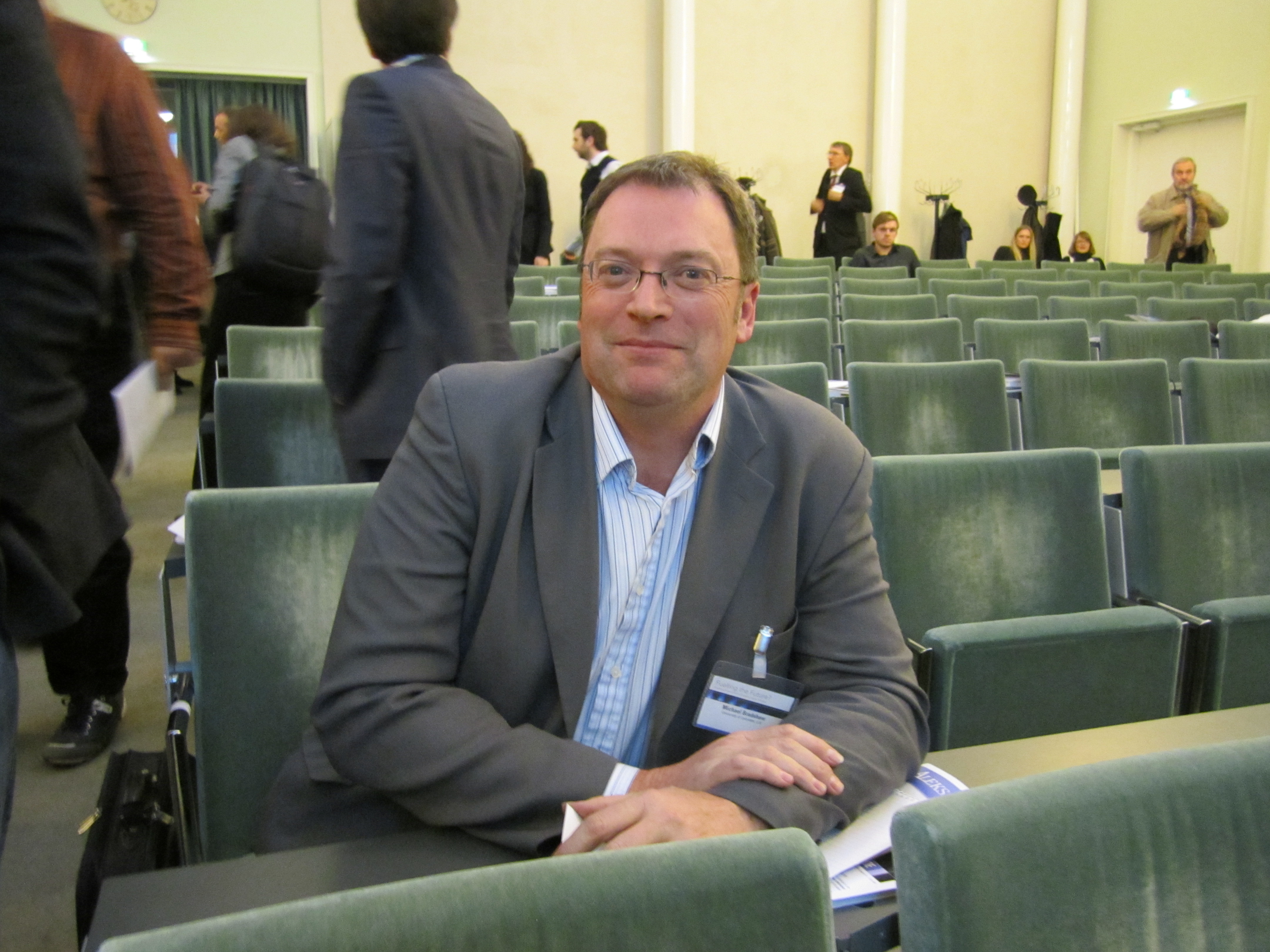
On that day, J. Stern did not fail to disappoint his audience, and in addition to focusing on a set of recent changes to fundamentals, which our Michael Bradshaw, seen here in a jovial mood, also pointed to yesterday, Stern offered a provocative set of comments about the declining state of academic knowledge on the oil and gas industry (but not in Norway), of which we will comment more about at a later date.

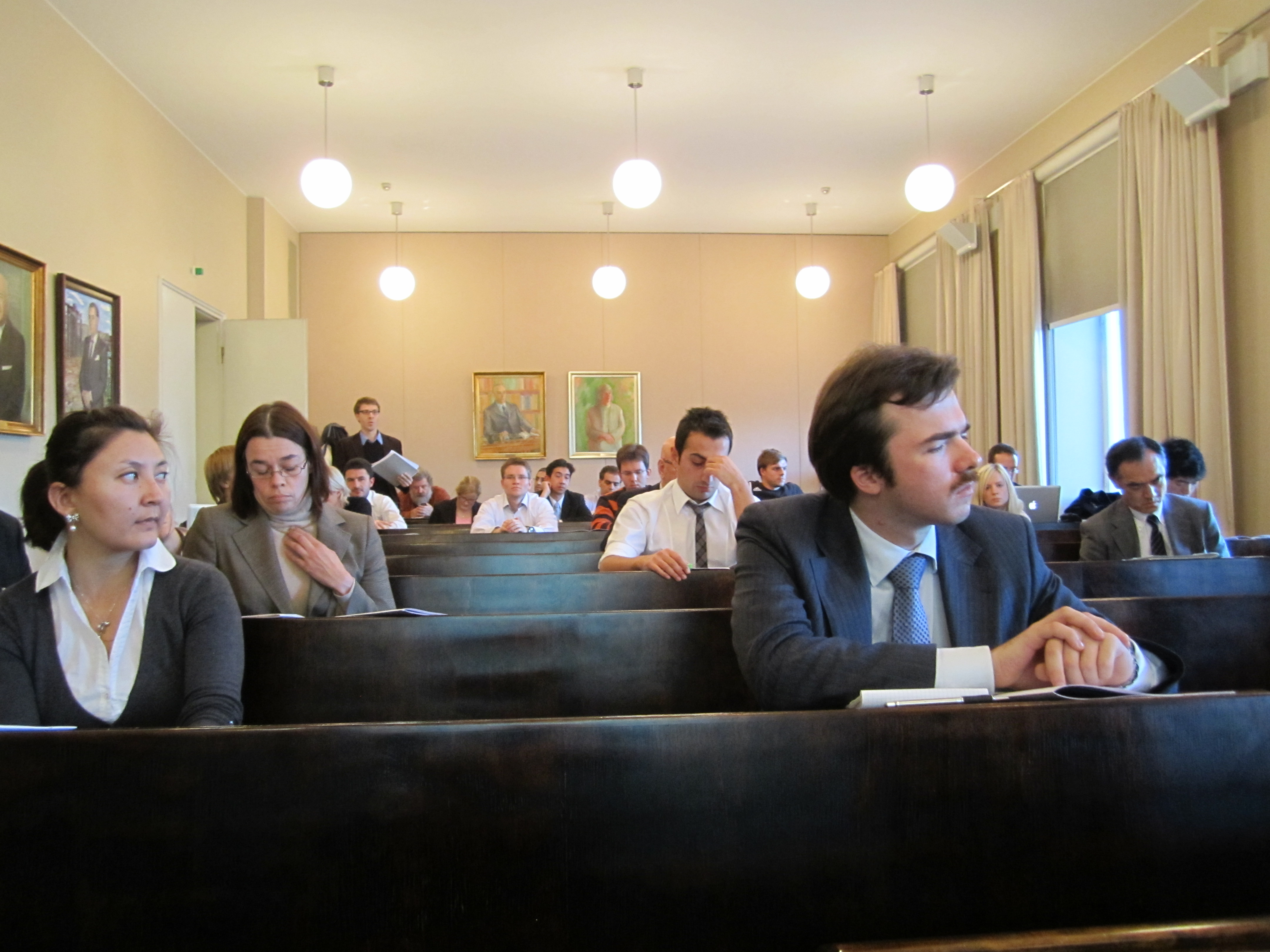
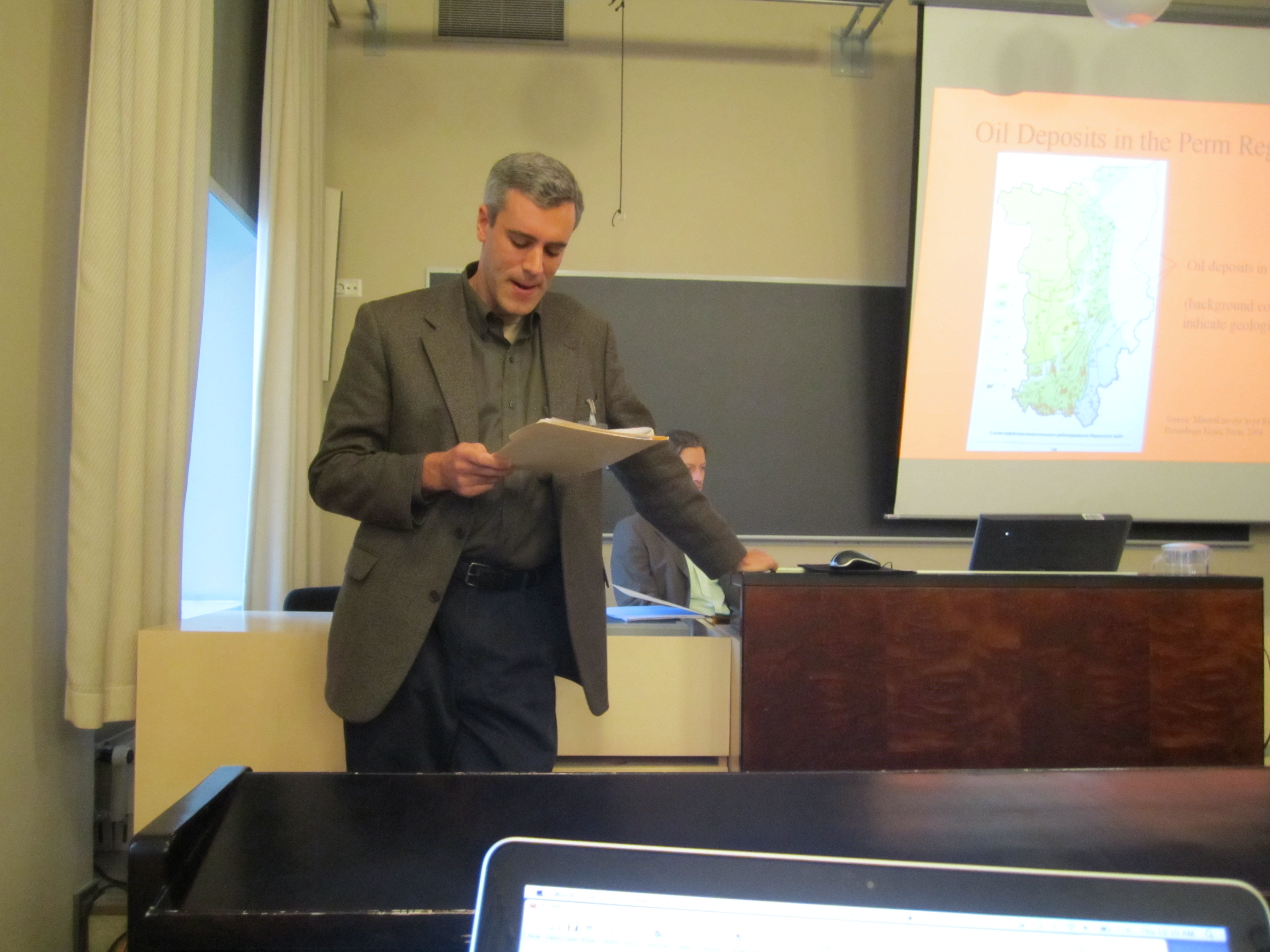
We had to chastise Doug Rogers for changing the photo on his university website, where he was seen looking out bravely over a Moscow sky line, but now faces the viewer in a headshot taken in his backyard. But we also cannot deny, especially speaking as anthropologists, that he gave a great presentation today, on the social and cultural faces of oil and gas. Rogers asked how do Russian oil companies legitimize their wealth to a national community that is often skeptical of that wealth? And then proceeded to awe us, despite the power point image projector not working correctly, and participants having to forego the earlier much more comfortable auditorium in exchange for a smaller more stuffy class room where we were now required to seat ourselves on what we can only describe as wooden benches akin to a churchly pew.

Rogers, in a casual style, suggesting a George Clooney-esque sensibility, made three points: (1) social and cultural projects (corporate responsibility) – have been a key way that Russian oil elites can and have aligned themselves with local elites; (2) this alliance often offers a good strategy to alleviate some of the local critiques of oil company wealth and (3) this strategy entails a political economy of public space, meaning that only those areas of oil development actually demand attention, while other areas, without oil resources, require less attention.

10/28: 2PM. Lunch time already? Several of the participants headed downstairs to the graduate commons cafeteria where we could order a variety of hot and cold dishes, including tofu-rice pilaf, which seemed to be a favorite among our group. You probably know everyone in this photo by now (Doug, Florian, Stephan), but there on the far right in front, is a photo of geographer Corey Johnson, who we mentioned having a great pre-conference conversation with about pipeline materiality and nomenclature.

We also had the grateful opportunity to have a very interesting discussion with Master’s student of International Studies at Finland’s University of Tampere, Laura Salmela, who of all things, happens to be doing very nearly the exact same kind of research in Russia that we are doing here at StudioPolar. We thus, had a very long discussion and came up with the idea that what we require is a systematic typology of methods for studying what we call the creation of communities of interpretation within the global energy industry. We have really, so many ideas on this topic, and as I mentioned to Laura, they are lying around in such a state of total fragmentation, but somewhat curiously, always manage to become coherent through inspired and experimental conversation, like a gust of wind that blows a sea of leaves into material structure, only to vanish again. We definitely need to get them down on paper.

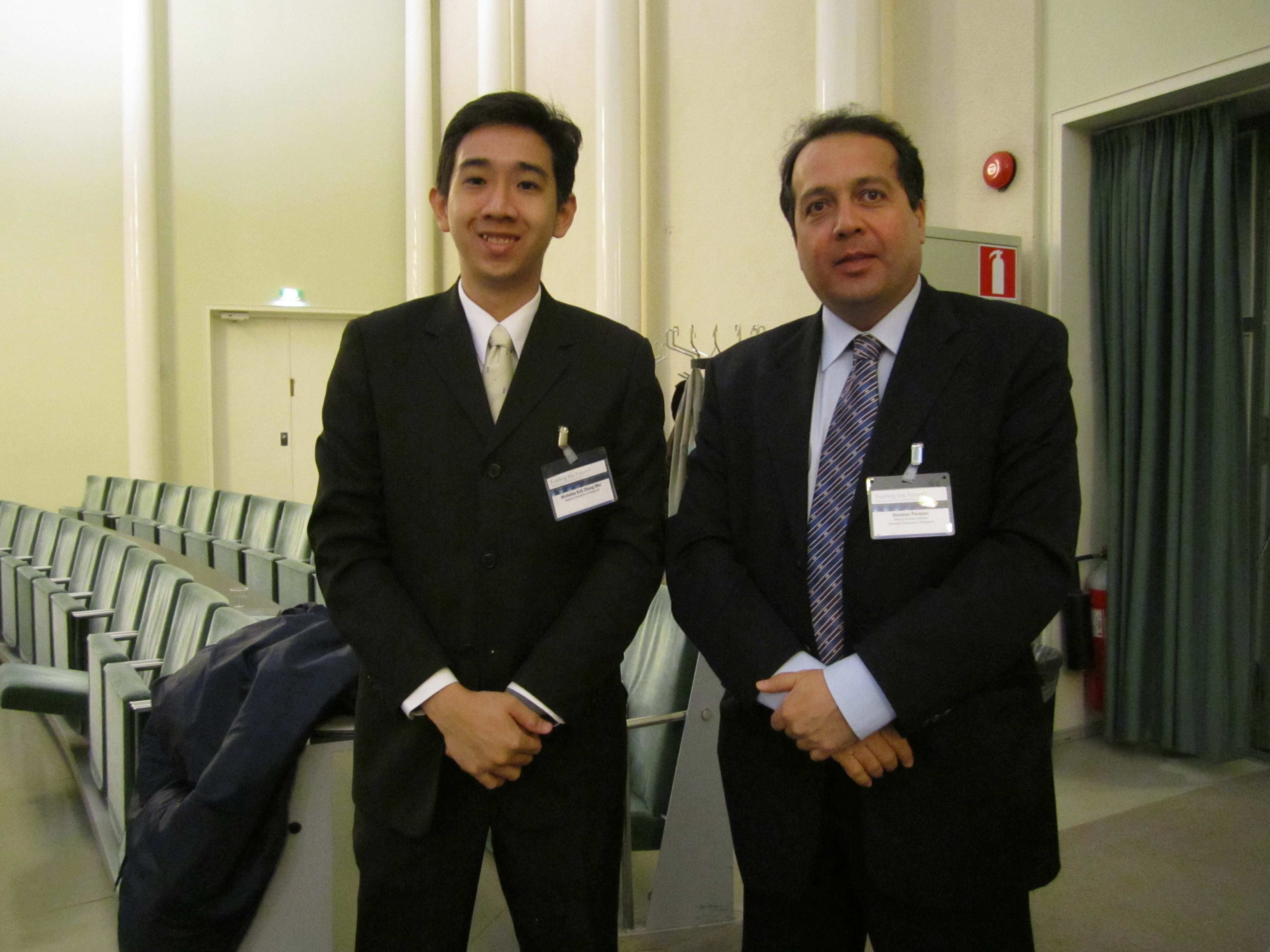
And just as we’re putting our final thoughts down, Nicholas Koh has introduced himself to us, coming all the way from Singapore, and having just established at their National University, their very own Energy Studies Institute, which of all things, is interested in arctic natural gas development. Nicholas was kind enough to introduce us to the head of the institute, Dr. Hooman Peimani, speaking tomorrow on Russian energy exports from Central Asia, and who has graciously invited us to contribute a chapter to a forthcoming book sponsored by their institute on arctic energy policy. Here they both are, Nicholas and Hooman.

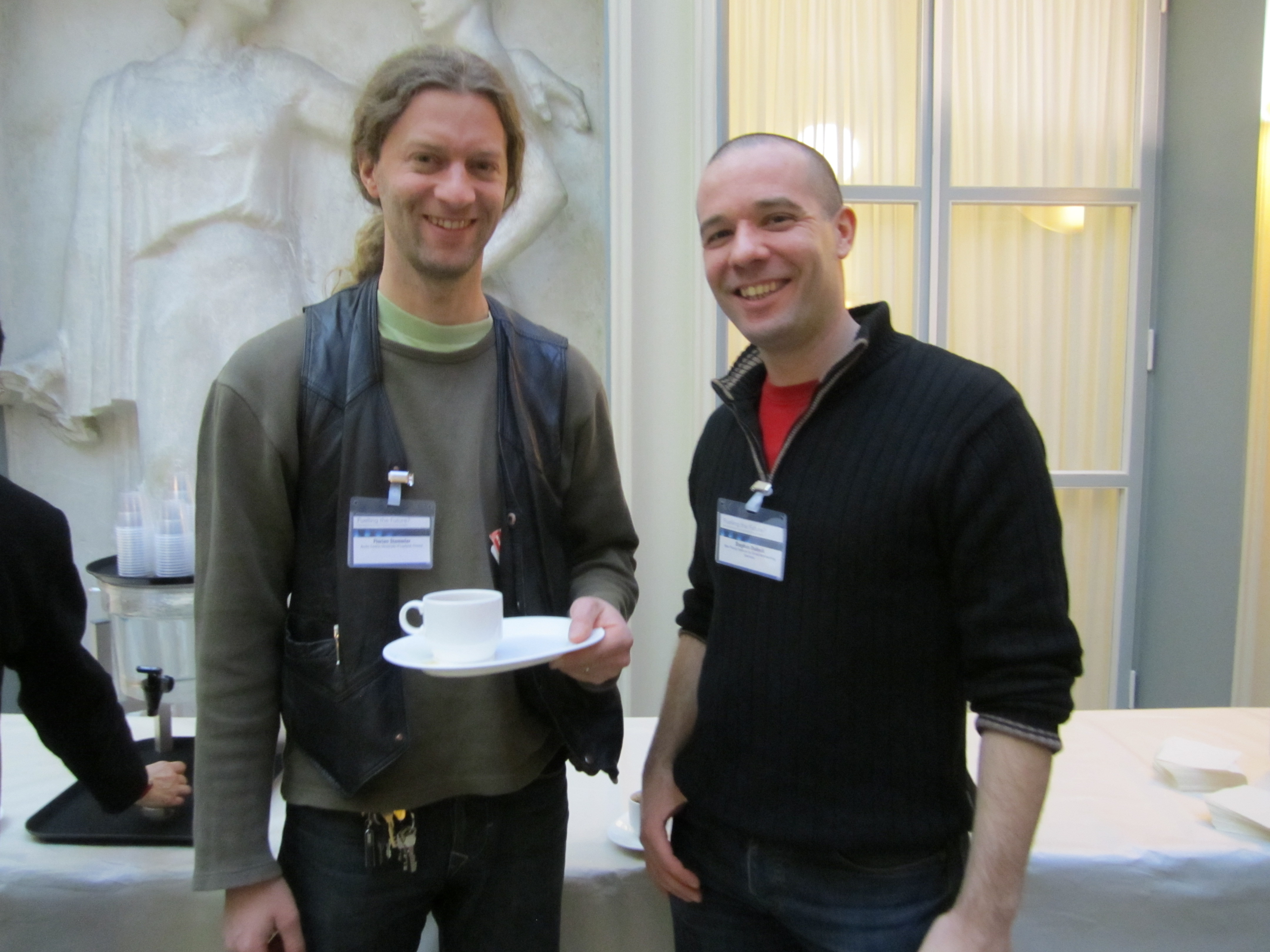
10/28: 11 AM. This morning began with two separate panels, of which we participated on one titled Coexistence of Russian Hydrocarbon Extraction and Marginalized Livelihoods: Theory and Practice. The panel was chaired and organized by Florian Stammler, anthropologist and Senior Researcher at Arctic Centre, University of Lapland. Florian, who is part of the Anthropology Research Team there, which he co-founded, is shown here in this photo, standing on the left next to Stephan Dudek, a social anthropologist and researcher at the Max Planck Institute, Frankfurt, who is also part of our panel.

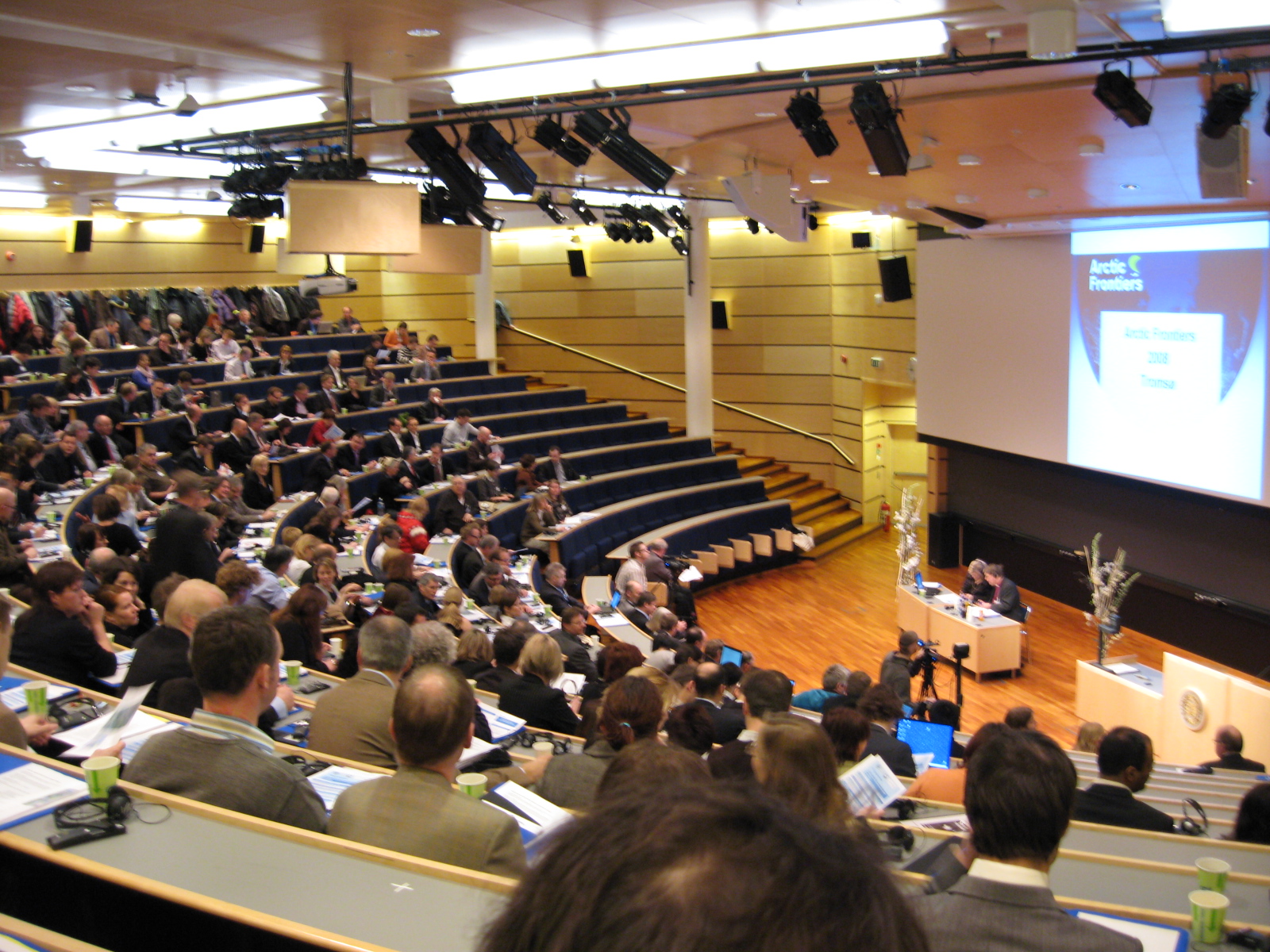
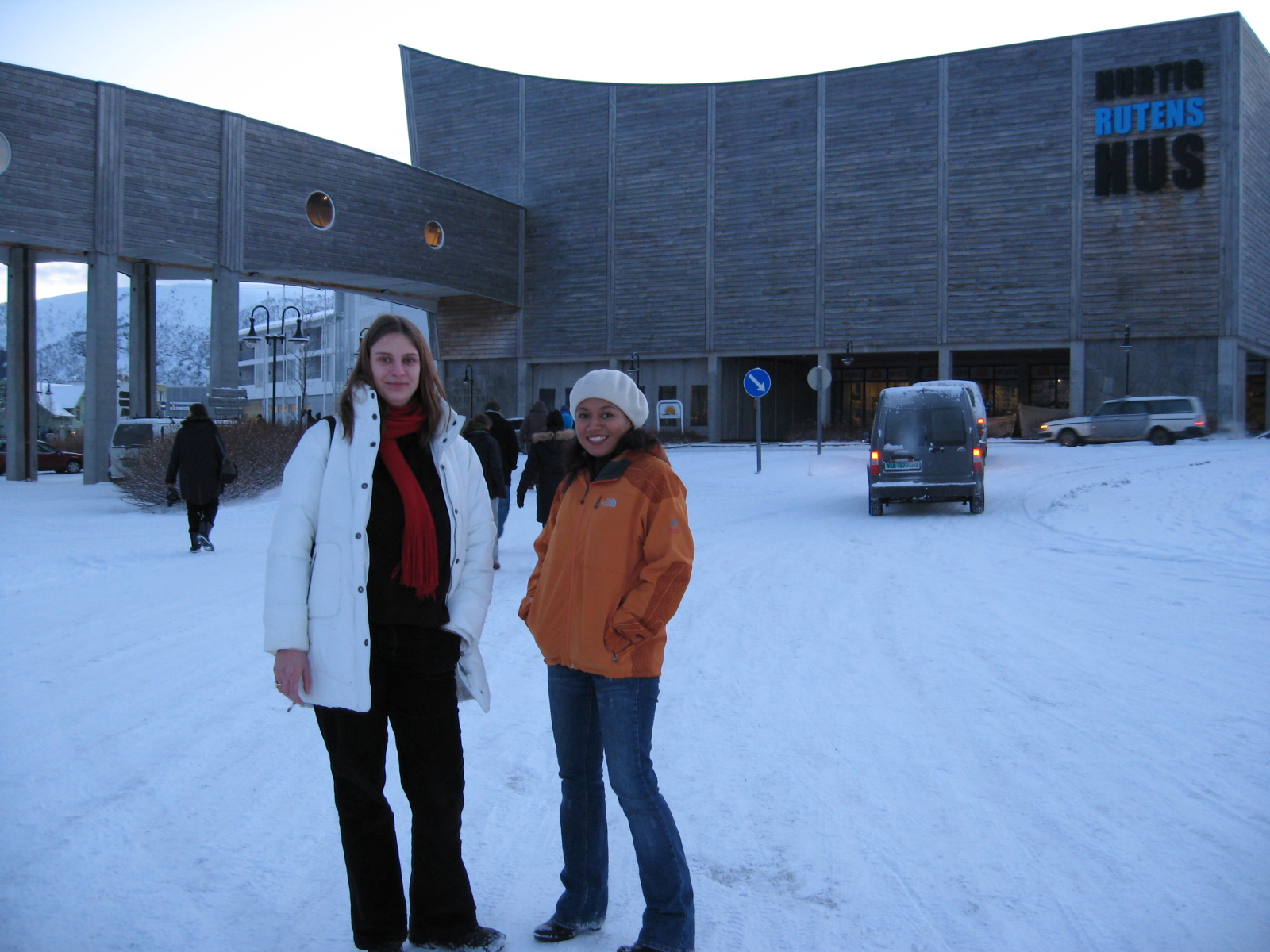
I took this photo yesterday, at the beginning of the conference, where I also had the chance to thank Florian for inviting me to participate on his panel this morning. I first met Florian in 2008 in Tromsø, Norway, at the Arctic Frontiers conference, where we also met Simon-Erik Ollus, who I shared a latte with yesterday and mentioned earlier. At the 2008 conference, Florian gave a spectacular presentation on human relationships between reindeer herders in Western Siberia and the local oil workers. It was in front of a full crowd in a beautiful auditorium that was built recently in Tromsø and called the Polar Centre. And we just happen to still have a photo which we took at that event.

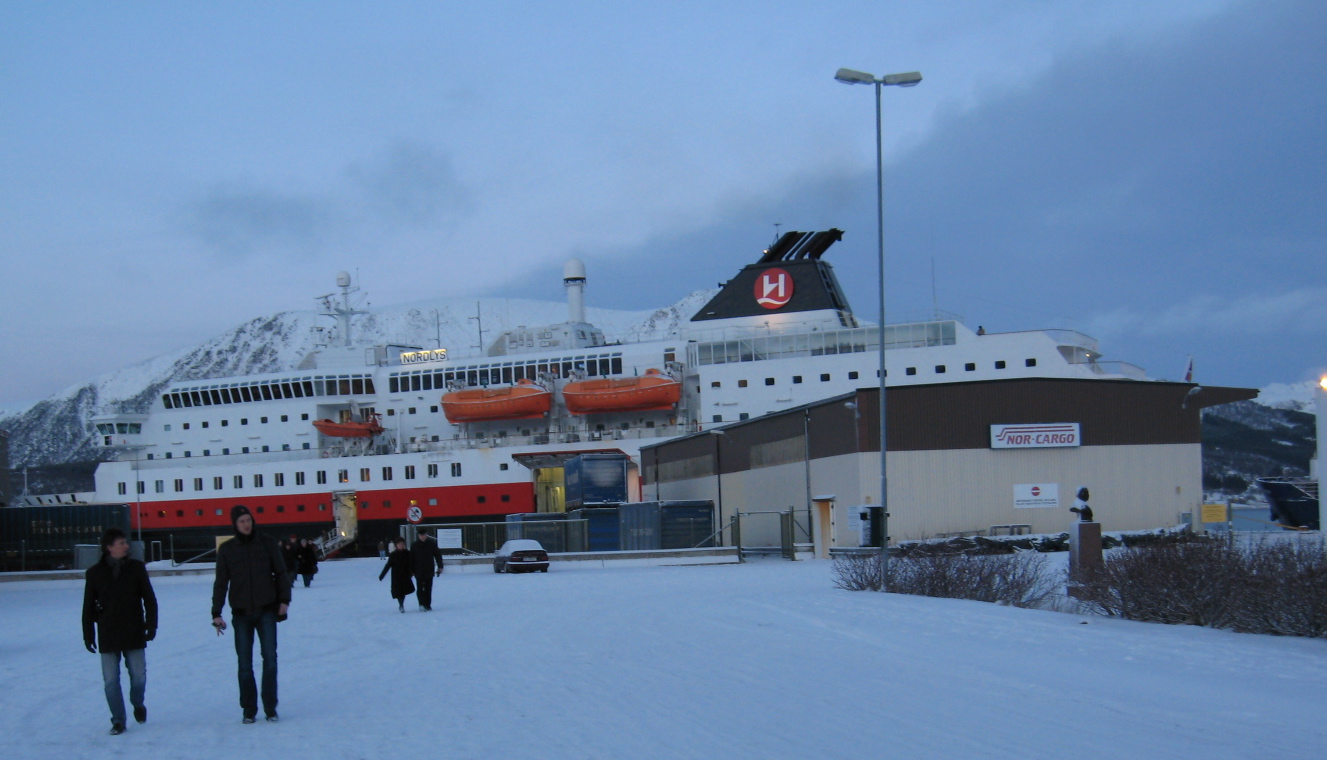
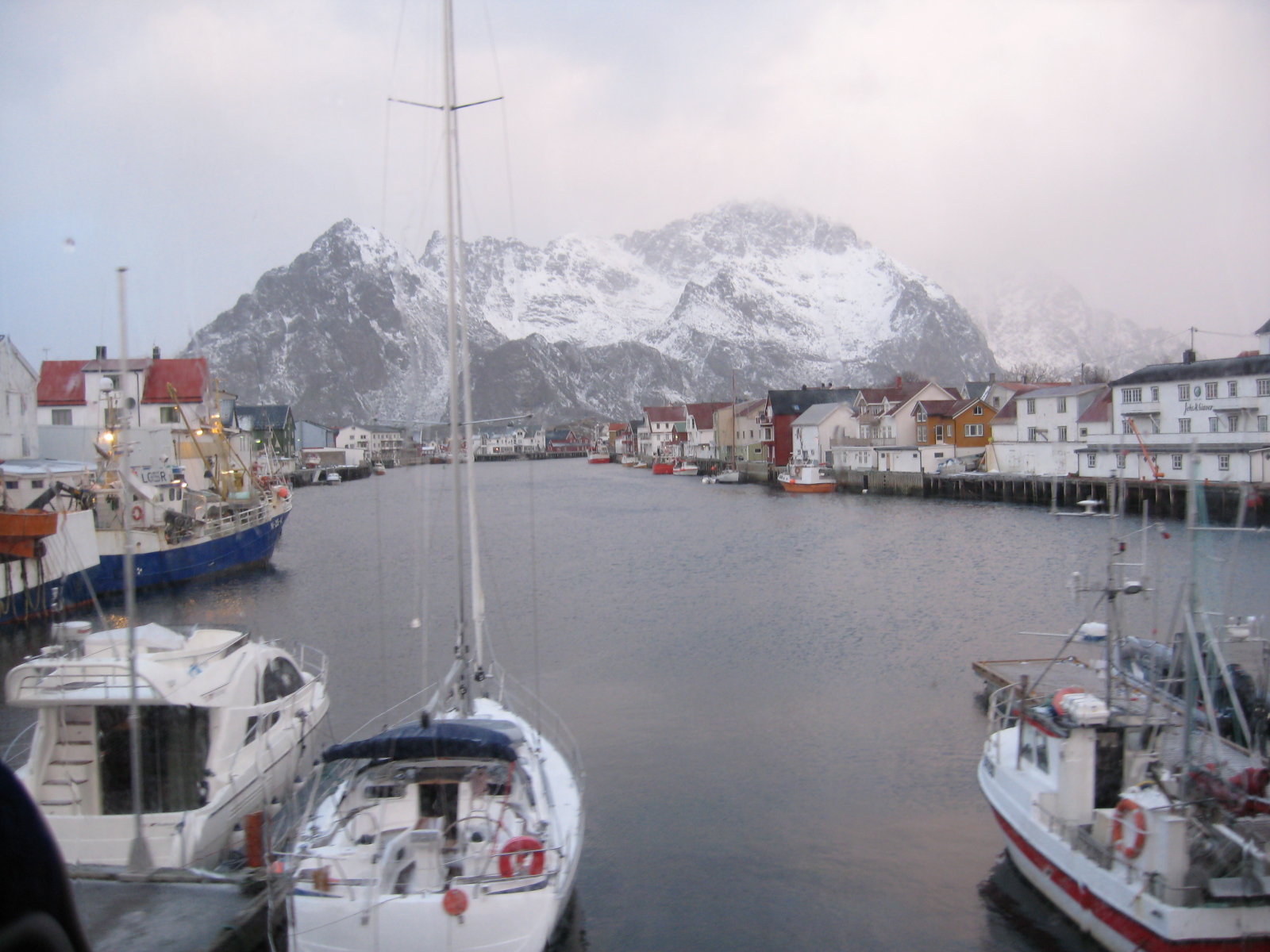
Actually, that Arctic Frontiers conference was quite spectacular, if I may digress for a moment. The conference took place at the beginning of International Polar Year, and invited to participate were early career researchers, where after the conference, several newly minted PhDs led by professors at University of Tromsø, boarded a Norwegian Cruiser and spent several days on the fjords, only to land in the beautiful Lofoten Islands, where we spent time at a candle factory discussing our research interests.


It was here in this community, a retreat commonly used by painters, poets and other artists, that with several natural scientists, including Ruth Müller, then post-doctoral researcher at Alfred Wegener Institute for Marine and Polar Research, Germany, that we conceptualized a “coupled-systems” project that would consider cascade effects on biotic as well as socioeconomic systems by potential oil spills and for which we received exploratory funds from Arizona State University in 2008. Here is a photo of Ruth standing on the left with Nazune Menka.


Come to think of it, during this same trip, we even had our own musical entertainment in the form of a very talented trio flown in from Barcelona, who accompanied us, and shared the good times. But the presentations this morning were great, and let us say something about those now.

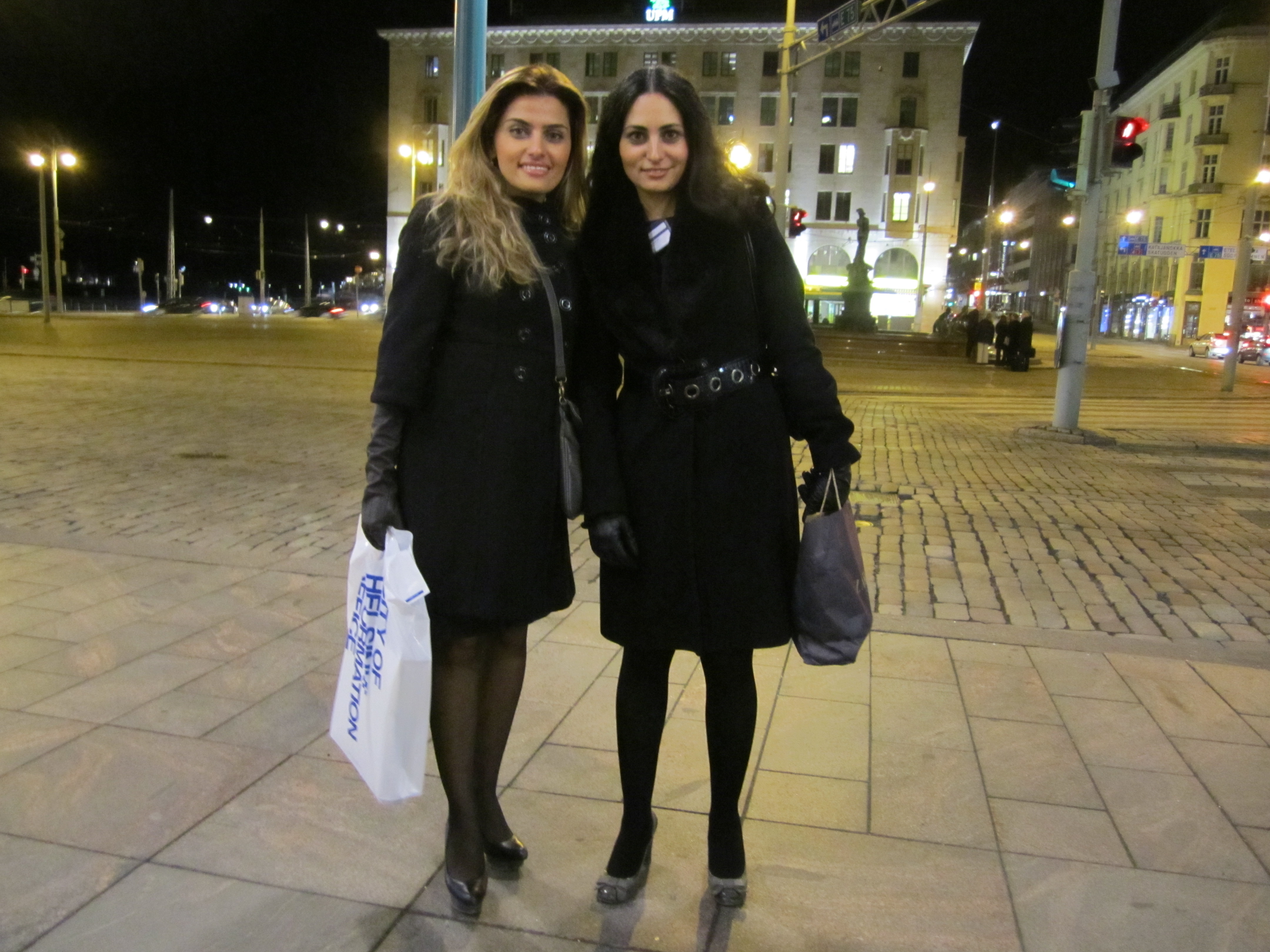
10/28: 7AM. We want to take a moment and provide a few introductions. We were so taken by our own sense of analysis yesterday that we completely did not comment on all the wonderful conference participants we met yesterday. And this is in part because of the late hour that we began writing. In fact, I did leave the conference reception yesterday with the intention of writing it all up, so-to-speak, when in the lobby of the City Hall, where the evening activities were taking place, I made the acquaintance of two persons, who were indeed quite fashionably dressed. It turned out that they were sisters, one of whom lives in Helsinki, and the other in Baku, Azerbaijan, of all places, and works for the Center for Strategic Studies under the President of the Republic of Azerbaijan. This information we discovered before we even exchanged our names.

They were also leaving early, in order to attend a party here in town, for which Samantha and I suddenly and politely suggested that we attend. They immediately and graciously agreed, and finally, we formally introduced ourselves to each other and we snapped a photo of them both, right there in front of City Hall, and that is how we met with Ms. Gulmira Rzayeva and Ms. Esmira Rzayeva, both attendees of the conference. We walked over to a night club named Le Bonk where their friends and friendly acquaintances had gathered to celebrate the departure of a recently graduated MA student in media studies of Helsinki University, who is taking a job in London and whose name is, shown here in the middle, Imir Rashid. Congratulations Imir!

We should like to mention, that just previous to our departure from the City Hall reception, we had the chance for another meaningful exchange with Yale University assistant professor of anthropology Doug Rogers, who we’ve been wanting to meet in person for some time.

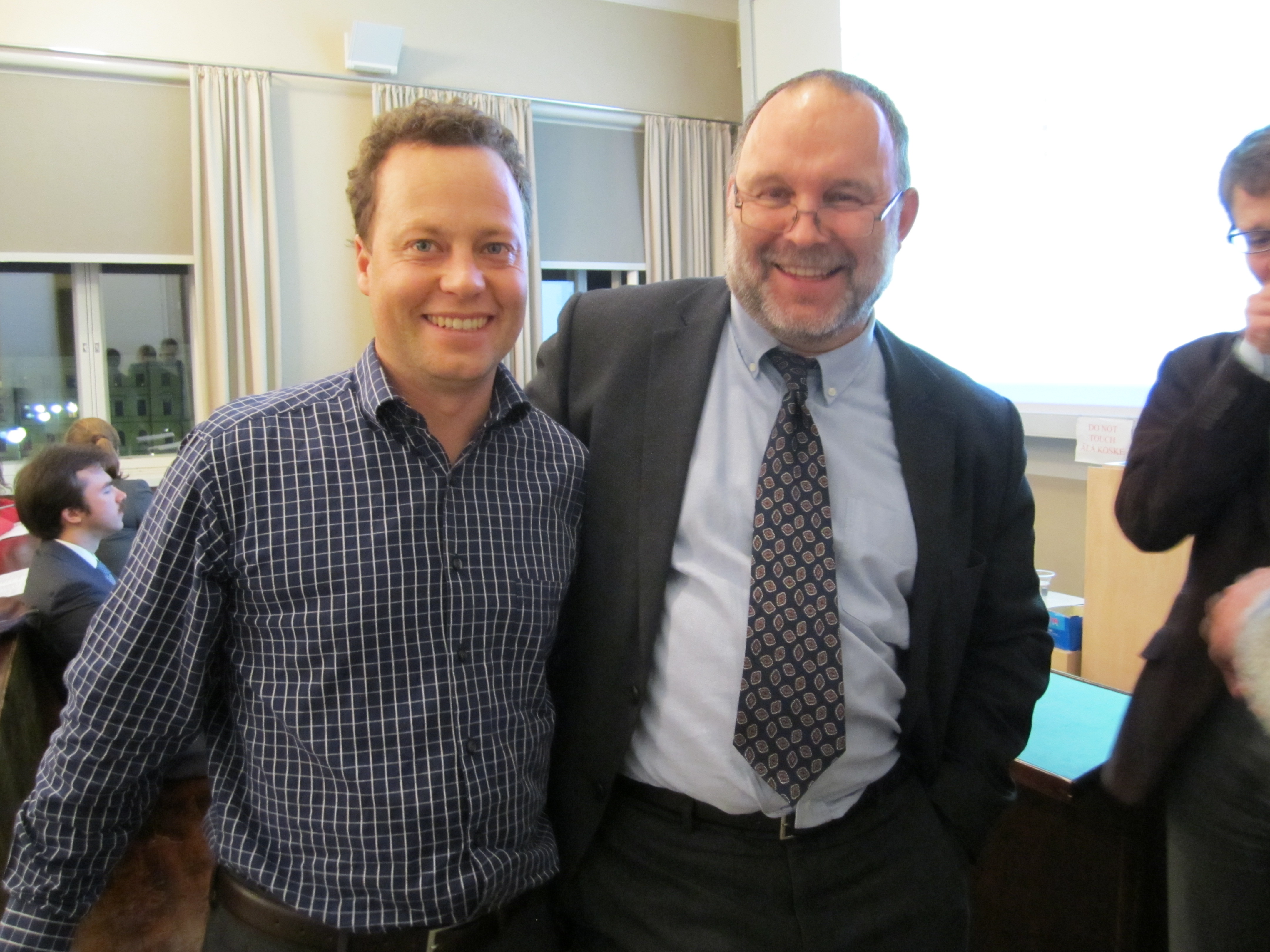
 He is shown here on the far right standing next to professor of geography at University of Leicester, Michael Bradshaw, who gave an absolutely wonderful talk yesterday, on the important recent dynamics of natural gas developments, including the glut in the markets as a result of the financial crisis, and the abandoned prospects of exporting LNG to the United States from the proposed Shtokman field.

These were certainly important comments in a day that was rather taken up by a dialogue between general events of uncertainty within Russian energy policy, and the theoretical framework for considering these events, which were ably presented to participants by recently awarded PhD holder and acting professor at Aleksanteri Institute David Dusseault, who appears on the far left of this photo, and is one of the main organizers of this wonderful event. Congratulations on your newly minted PhD David! and thanks for bringing us all together here in Helsinki to discuss such an interesting topic. We have many more introductions we plan to make today, but we’re late now to give our own talk!

—  Aleksanteri Conference: Fueling the Future


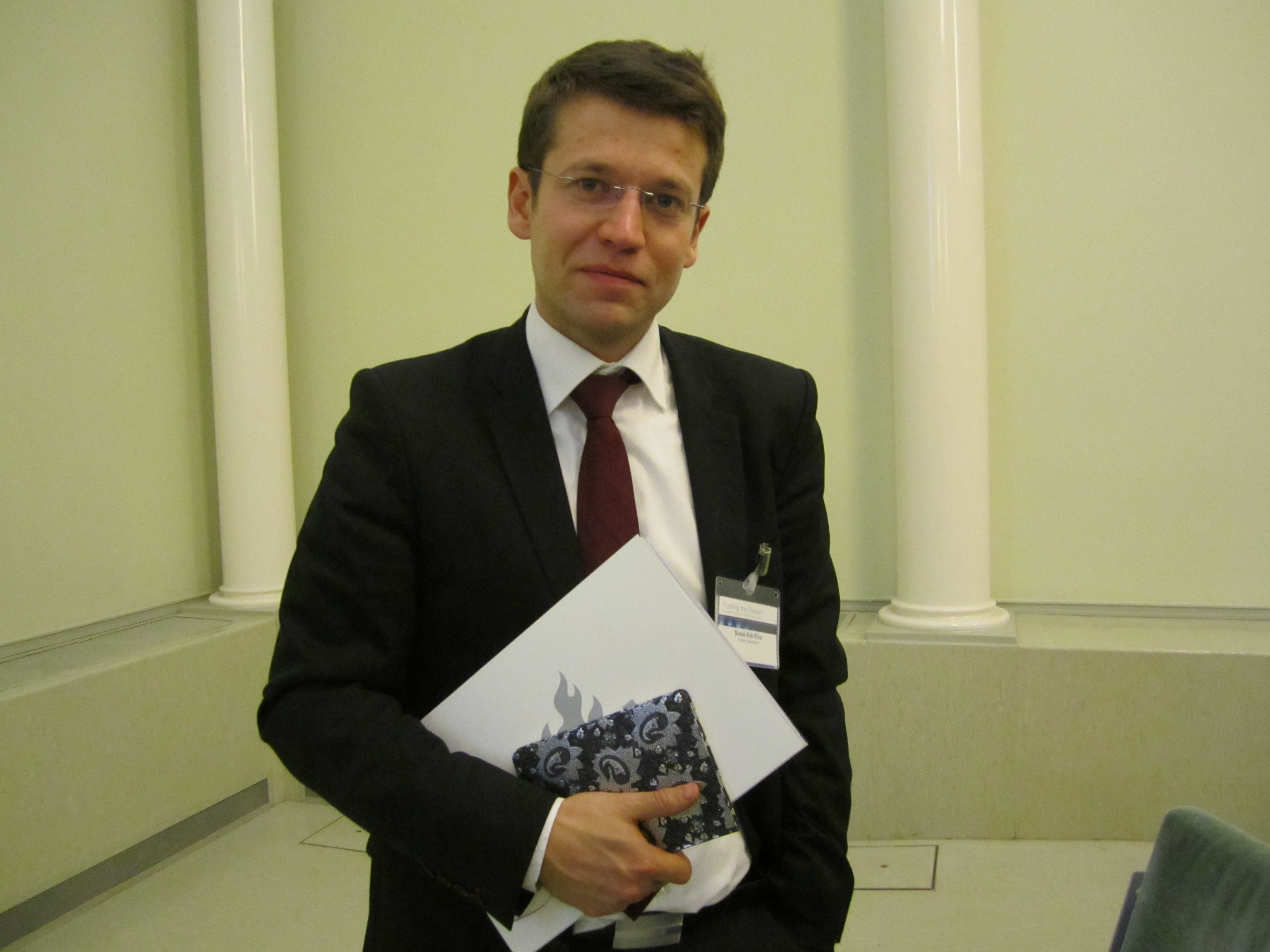
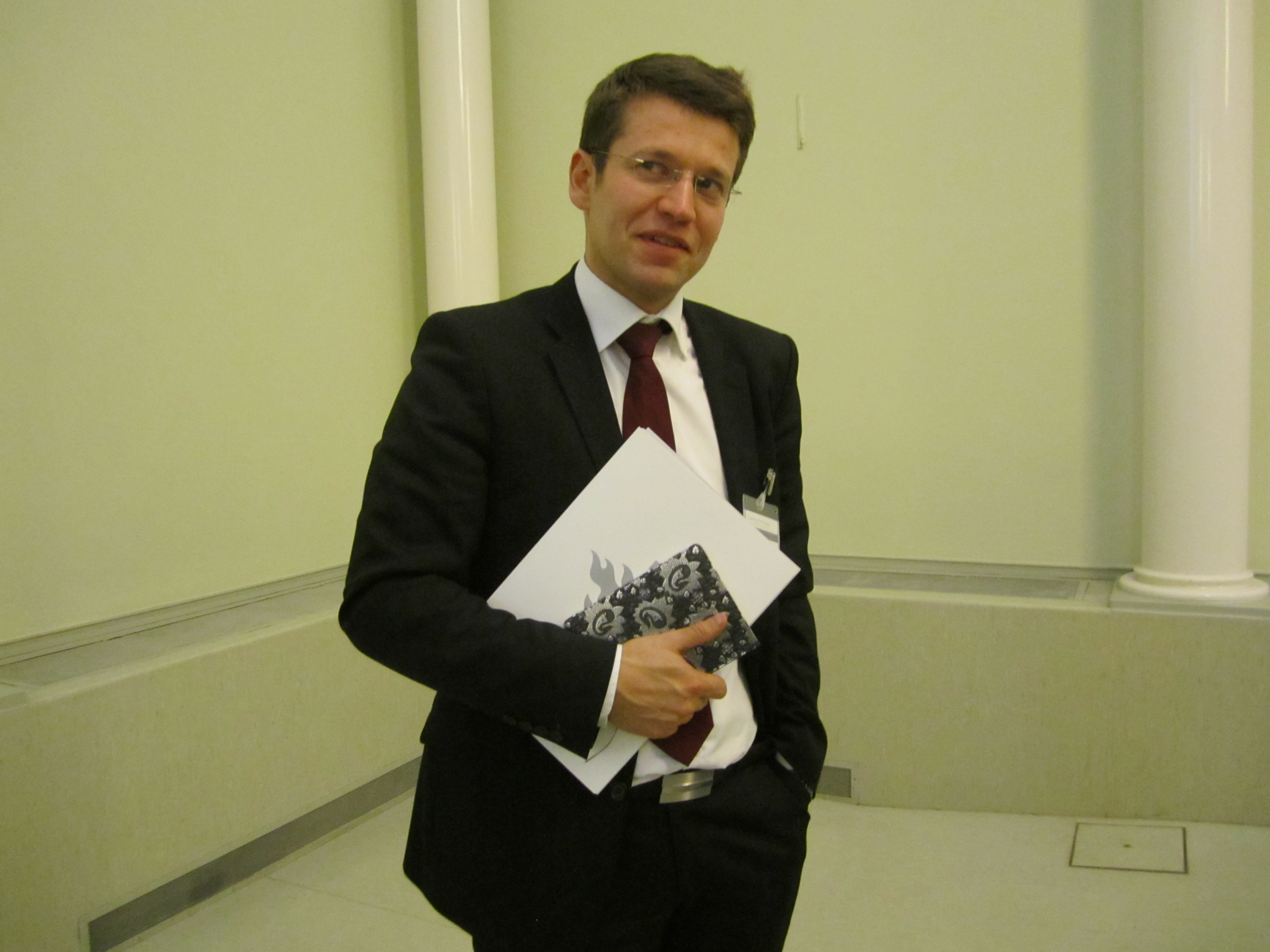
10/27: At the end of the first day, I met with Simon-Erik Ollus, Finnish economist specializing in Russian electricity development. In 2008, Simon gave a wonderful talk about Russia’s electricity industry at the Arctic Frontiers conference in Tromsø, Norway.

The Arctic Frontiers conference coincided with the release of a scientific report Assessing Arctic Oil and Gas Development, sponsored by Arctic Council. I still remember the clarity with which Simon spoke, and wanted to meet him in person to discuss how ideas about Russian energy development circulate and shape arctic development. This evening, when we met, he told me he had since quit academia, and went into private sector. He is Vice President, Chief Economist at Fortum Corporation.
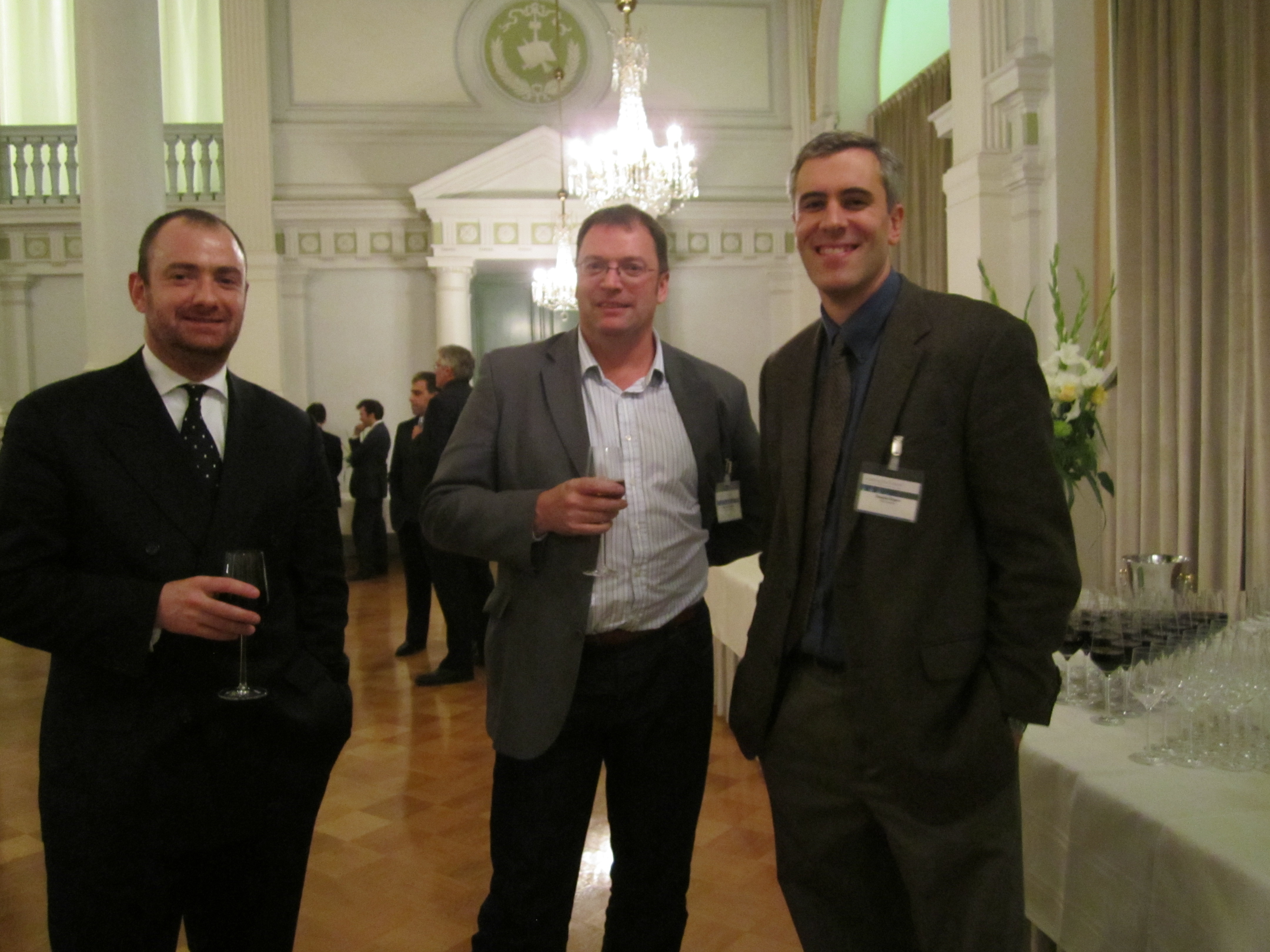
We only had a brief time to discuss, as he needed to pick up his daughter. He suggested we grab a coffee. We left the conference slightly before the other participants, who were now all intending to walk to the Helsinki City Hall, for a catered reception. For the world, I did not want to miss the reception! But I did want to speak with Simon-Erik, so I followed him without protest to a nearby coffee shop. As it turns out, it was perhaps the best thing I could do, because within the space of a few minutes, he asked me how my work was going. Specifically, he asked, indeed, that if I examine communities of experts, and that if I study the way they get together and share ideas, what in fact, did I think so far of today’s meeting?

This was a brilliant question. I certainly had not thought about it until that moment. I had no idea what I would have written about in this particular blog right now, had he not asked that question. I was in fact, stunned. I told him that he just asked me an excellent question, and in fact, I was now, in this instant, prepared to provide an answer. We entered the coffee shop, and he treated me to a Finnish-type roll and latte. We sat under a dome, with a red ball hanging down, and there was an echo effect. This is what we told him:
I’ve been studying energy workshops, conferences, executive roundtables and other gatherings for a long time. And so there are certain things I know to look for. For example, the first thing I look for in a meeting is to see what type of venue has been chosen for the gathering. Is it a university? Is it a hotel? Is it a 4 Star hotel? Venue makes a big difference in the way knowledge can be transmitted. Typically, anthropologists don’t think so. We pride ourselves on giving talks at universities where the speaker system doesn’t work well, or where there might be some problem with the image projector. These issues we accept with a feeling that the knowledge will somehow rise above all these petty issues that preoccupy more wealthier (and thus superficial) gatherings. But even for anthropologists, venue matters, otherwise we would hold job talks in New York’s Times Square – and just think how much knowledge would be transmitted then!

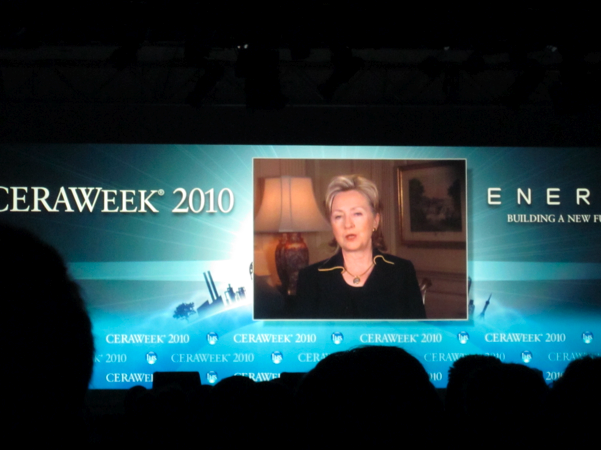
In my previous experience, the venues of energy consultants are very high-end. They usually take place in 4 star hotels, like CERAweek, which takes place at the new Hilton in Houston. There, all activities can be orchestrated without a glitch. For example, a lot of electricity needs to be used, and the stream of energy needs to be reliable. There are huge walls screens with Secretary of State, Hilary Clinton, speaking. Just think if the venue didn’t have appropriate energy requirements, and electricity back up. Hilary’s time is important, and she probably couldn’t wait the 20 minutes required to boot her back up.

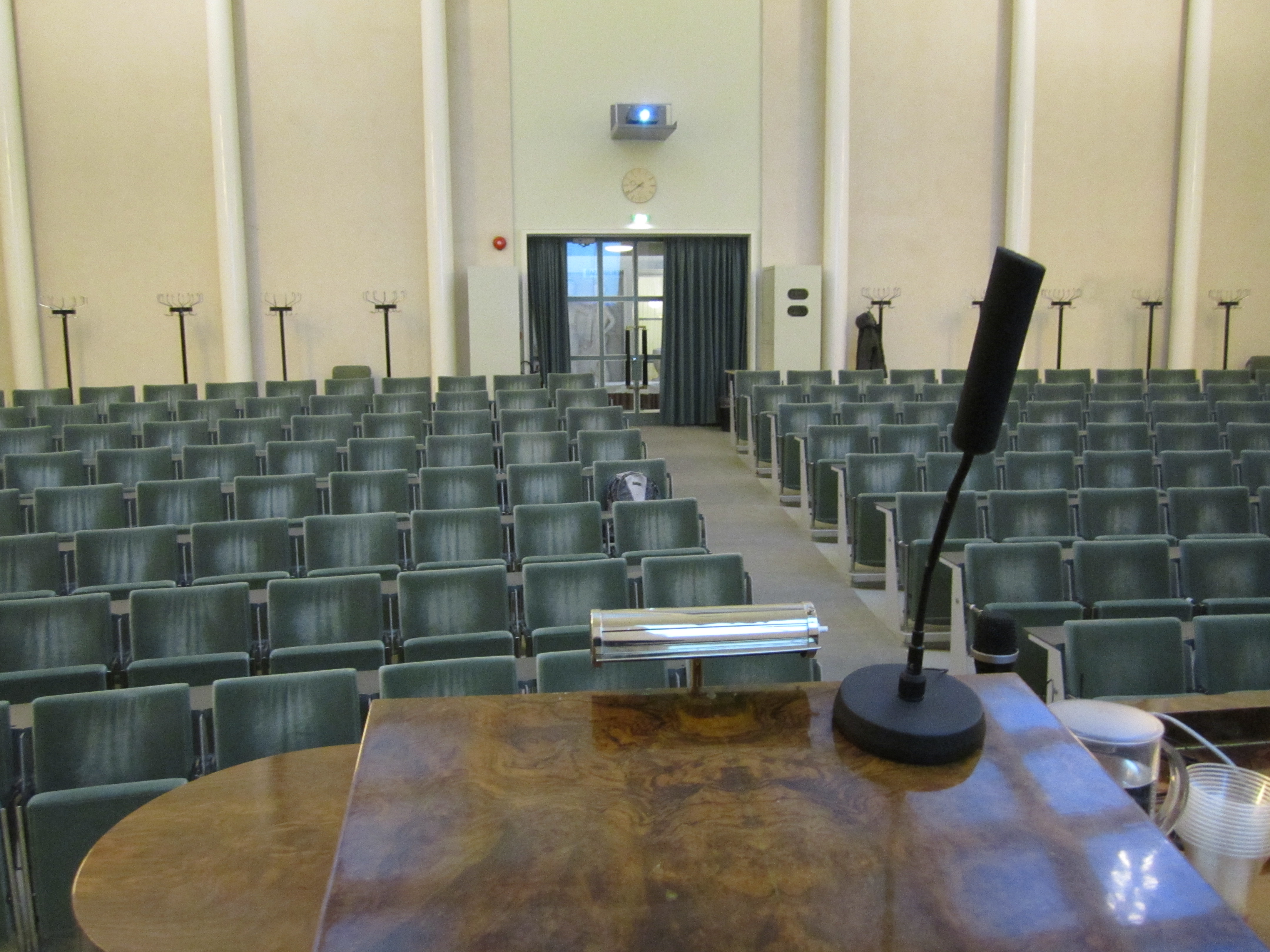
For this reason, I arrived early, before anyone else, to the Aleksanteri meeting space, to take a few photos. As you can see, it’s beautiful. I knew right there and then, that the organizers of this event, had indeed, a few ideas they wanted to convey. That is, they were ambitious with their thoughts. They needed a space to match that ambition. They wanted to make sure their ideas would float comfortably across the room. And that we, the participants, would be comfortably seated, warm, cozy, even receptive to the ideas when they began to float.

The second thing I look for is the attendance list. This is a big indicator of how ideas will circulate at a meeting. When you organize an event, you make a decision about who will attend. You make a conscious selection about who you want to surround yourself with and with whom you want to speak to and with whom you would like to share your ideas with. Such decisions include how many Americans you want in the room. In my experience, Americans always think we’re right and we have the best ideas. And so if you put too many of us in the room together, whether we are natural scientists, politicians, social scientists or even anthropologists, we are going to be the only ones in the room that are right. That’s just my experience.

Based on casual observation, the ratio of one American to 10 non-Americans creates a healthy balance of idea sharing, where ideas are not drowned out by the confidence that we take with us. That doesn’t sound too analytical, and I won’t go into it more than that right now, but simply to say, at this conference, there are not that many Americans. And the effect has been so far, that no particular set of ideas has dominated the conference, with exception of the ideas that the organizers have put forth, which I will talk about more in a minute.

Another thing I look for on the participant list, is which institutions are attendees coming from. This is another big issue. Often times, academics coming from prestigious named universities bring added-value to an event, precisely because they bring the prestige of the named institution to bear on the various ideas under consideration. I’ve worked at numerous universities, including UC Berkeley, Arizona State University and University of Calgary. I’ve attended Columbia University and University of Alaska. My experience suggests that when I meet another academic from a prestigious university, I tend to promote my affiliation with UC Berkeley and Columbia, instead of the other institutions, as if doing so lends my ideas more credibility. This may not mean much in terms of scientific progress, but it sure means something to a lot of us in academia when it comes to passing judgement about what differentiates great ideas from ideas that are just so-so. In Europe and Russia, this also seems to matter. Without going into too much detail, I noticed that among the few Americans in attendance, one was from Yale, another from Harvard, and myself, representing UC Berkeley. In fact, the four of us found ourselves instantly and comfortably chatting to each other, like bees in a bonnet.

A final point in terms of attendance list is the actual number of attendees. If the number is too small, it no longer can be considered an event but instead, an intimate setting. You need a critical number of persons, to generate a sense of excitement about the feeling that you’re attending a happening. But if the crowd is too large, then there’s no incentive to feel part of a group more generally. Nope, you need at minimum, 100 people, to make everyone feel confident that we’re in this together, but at the same time, to give everyone both enough anonymity so that they feel they’re being watched, but enough intimacy, so that they’re movements can be observed by the same people over a few days stretch, and thus, to create a sense of meaningful behavior among peers. In these three senses then, limiting Americans, highlighting prestigious institutions, and finding the magic number of attendees to create a sense of a happening, today’s conference was an absolute success. And here, I use the word success to refer to creating the kind of context where what can develop is a community of interpretation. I use the phrase community of interpretation to refer to a setting in which, much like a crucible, ideas over a several day period can be forged, launched, tested, honed, and made one’s own. These are the attendance requirements for creating and disseminating a new idea so to speak.

Well, let’s now take a look at the new idea that was being promoted today. Ideas are totally important. Think how much money the recent movie Inception made at the box office. What was that about? Planting an idea so it grows and becomes part of the entire total social phenomena of the person. That’s right. There are so many great examples in the social sciences where ideas are shown to be material forces that structure the individual and society. Both Max Weber and Norbert Elias, two of my favorites on how ideas shaped us as modern individuals, and have left me spinning like that little totem in the movie Inception, spinning around without stopping, yet thinking I’m doing it all on my own volition.

But let’s go on. To create a community of interpretation, in this case, about Russian energy strategy, you need a good idea. The existential requirements of a good idea are pretty straight forward. First, the idea can’t have too many terms and new words and the relations between these terms can not be such, that they need to be committed to memory before walking into the conference. You can dazzle people with complicated stuff and that will work, but if you’re going to move people to a consensus about a new idea, and not just a word or a term, and moreover, have decided to not prep them in advance of the meeting, it’s best to choose something that people can conceive of as an instrument that can be applied to a variety of different but structurally similar empirical examples. Like a can opener. It’s a good idea, no matter how big or small the can is. The only stipulation is, that what can be opened must be a can.

Let’s take the example of an alliance between persons of decision-making power without appropriate knowledge to make decisions (leaders), and persons of knowledge without decision-making power (academics, consultants). You can sell that idea as something that works, because it applies in a wide variety of empirical examples, just so long as you have those two elements, knowledge without position and position without knowledge. Simple. Well, in today’s presentation, there was an elaborated idea about understanding Russian energy strategy in terms of the structuration of energy policy. Right off the bat, people want to know what the story is with structuration, does it have a history? whose history? Giddens? what? You see there. You don’t need to discuss history with an idea like “tipping point” — which by the way is just Threshold. It’s an instrument void of history, or rather, it has transhistorical application, dangerous indeed. Gosh, we have to retire for the evening, we’ll finish this later.