Feeds:
Posts
Comments

Posts Tagged ‘Houston’

Arild Moe


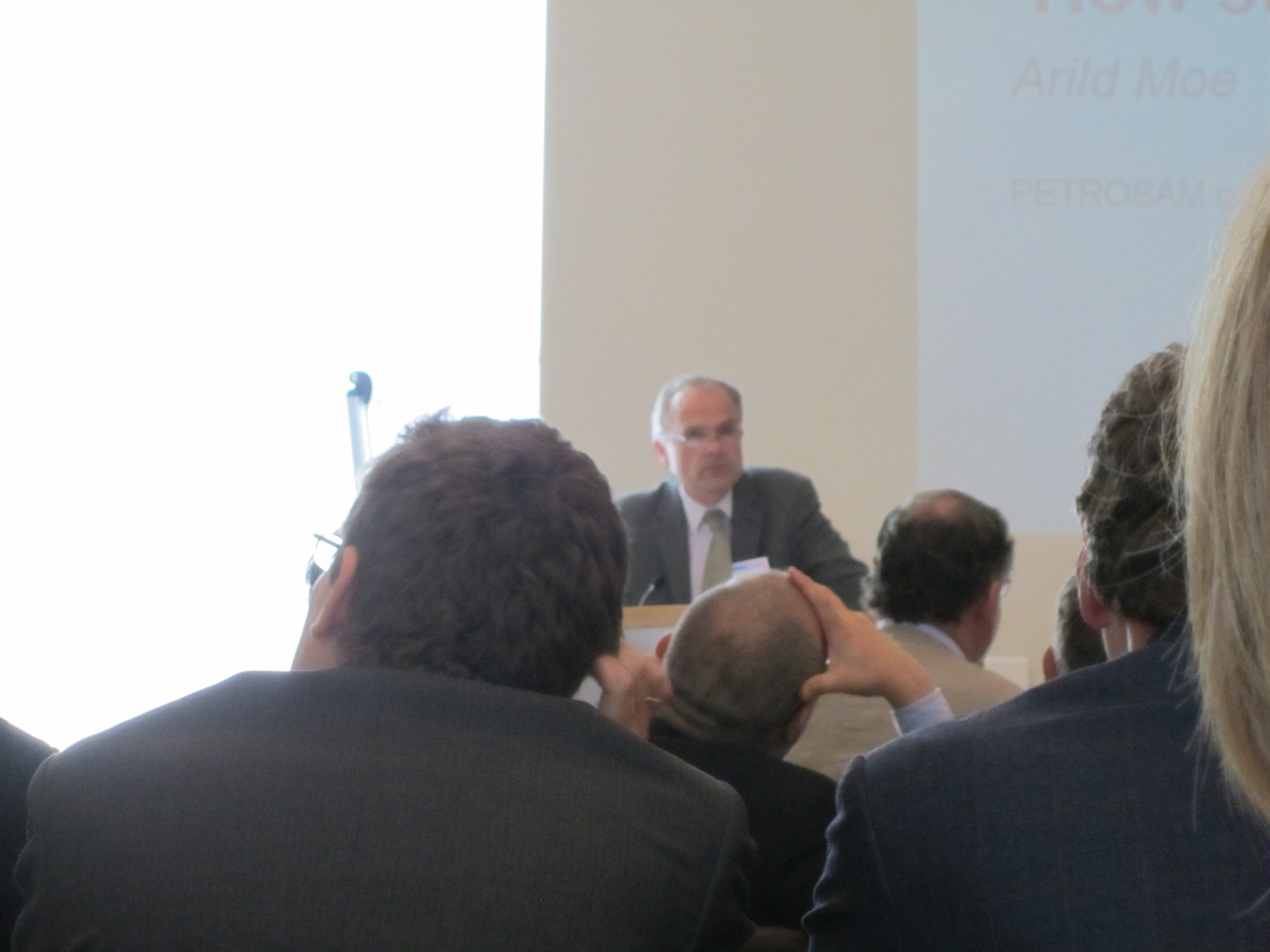
Above, in the photograph, seated on the left, is Jonathan Stern, with one arm crossed and fingers touching his lips –contemplating the expert commentary of the man holding the microphone — Arild Moe.

Both men are gurus of Russian natural gas development. They are analysts who have known each other — been working with each other — forever. Jonathan, about whom I write in a separate blog, see below, is Director of the Oxford Energy Institute, London. Arild is Deputy Director and Senior Research Fellow, and some say — soon to be Director — at the Norwegian think tank, Fridtjof Nansen Institute, located just outside Oslo, in Lysaker.

I had the opportunity of visiting with Arild at his digs on the outskirts of Oslo, and I am going to write about our meeting now. In fact, on the heels of that discussion, a few weeks later, while in Houston, attending a dinner at the home of the Royal Norwegian Consulate General, Jostein Mykletun, Ph.D., — his gracious wife Sonia Mykletun (pronounced: moo-kle-TOON), who has been running the Fulbright Scholarship in Norway for some years now, invited me then and there to apply for the Arctic Chair.

The Marvelous Sonia Mykletun, creator of the Norwegian Fulbright Arctic Chair (notice in this image, the size of artwork in the background — forms of distinction making up the time and space experience of diplomatic life — a time-piece Sonia wears, increasingly rare — and seating arrangements, in pairs, facing each other, intensifying face-to-face contact).


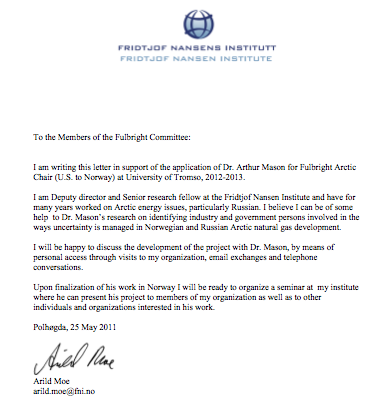
In support of the Fulbright application, and as I said, falling on the heels of Arild’s and my unique discussion in Lysaker, Dr. Arild Moe was kind enough to provide me with a support letter for my research in hopes of nailing down the Fulbright award. Of course, at StudioPolar we love to capture the imponderabilia — the little details of events among “high rollers” — as a Calgarian friend likes to refer to such folks, and so I post the letter here as an artifact of Guru Power, pure and simple.


No. 1 — On to Lysaker


Okay, where were we? Oh, right. Visiting the Chalet in Lysaker… Yes. As I was mentioning, I was in Oslo, holed up inside a Hotel near the main square, Rica G 20. There’s an aura about the place…



G 20


For some hours, perhaps days, I lay on my back, with hands crossed over my chest, in the pine-wood coffin position. An idea came to me quite suddenly, without advanced warning, to get up and telephone Arild off-the-cuff — to inquire whether we might meet. In truth, we had not spoken before, though, I did send him a detailed email to which he did not respond. Also, I did see him from a distance… the previous summer at the Petrosam workshop in Oslo, organized by Econ Pöyry, the “Nordic branch” of the global consulting company Pöyry Plc. The photos above, of Arild and Jonathan Stern, talking about changes to the European gas industry, were taken at Petrosam.


Luckily, Arild invited me for lunch at the institute the very next day, about 30 minutes from downtown Oslo by public transportation.


I hung up the phone receiver and after a few moments, returned to my reclining position. There, I went over the exchange on the telephone. My name, academic affiliation and statements of having received US Science Foundation support to study intermediaries (consultants) involved in natural gas development in the Norwegian-Russian Arctic.

The information caught the attention of my listener. I finished the introduction and waited, silently, perhaps several seconds, and then, began again, this time, haltingly, with gaps and pauses:


I study intermediary actors…they… They’re successful — in mobilizing expectations among the energy industry’s upstream and downstream communities…. [pause] … And. The complexity and erratic business of gas development in the Arctic… It’s created an economic niche for intermediaries who educate leaders about these spaces of uncertainty.”

And then with increasing rapidity: “And despite the growing importance of intermediaries not much is known about this form of expertise as it relates to Norwegian-Russian Arctic gas development, the precise characteristics of knowledge produced, the kind of influence they exert, or their role in influencing the European gas industry.”


There was a great deal of silence after I spoke, as if Arild was going over the sentences in his mind, rolling them and wondering what’s next, not knowing what my specific request would be. It’s a meeting. To Meet. An invitation To Discuss an Idea.

Arild is calm and quiet spoken. There was not much response really. We exchanged emails so that he could send me specific instructions — which train to take, the need to transfer to a bus, and to walk 10 minutes — in order to arrive at the institute. He ended the conversation abruptly but quietly with the words, “look forward to seeing you tomorrow”.


The soul of a train station: The platform. The feel of time clicking with an almost atomic-clock precision. Every second of delay in arrival and departure schedules reverberates of total banality. And still, a heightened sense of expectation remains over a threshold of departure.


The clock on the platform warning of my late arrival.


Late March and still snow on the outskirts of Oslo.

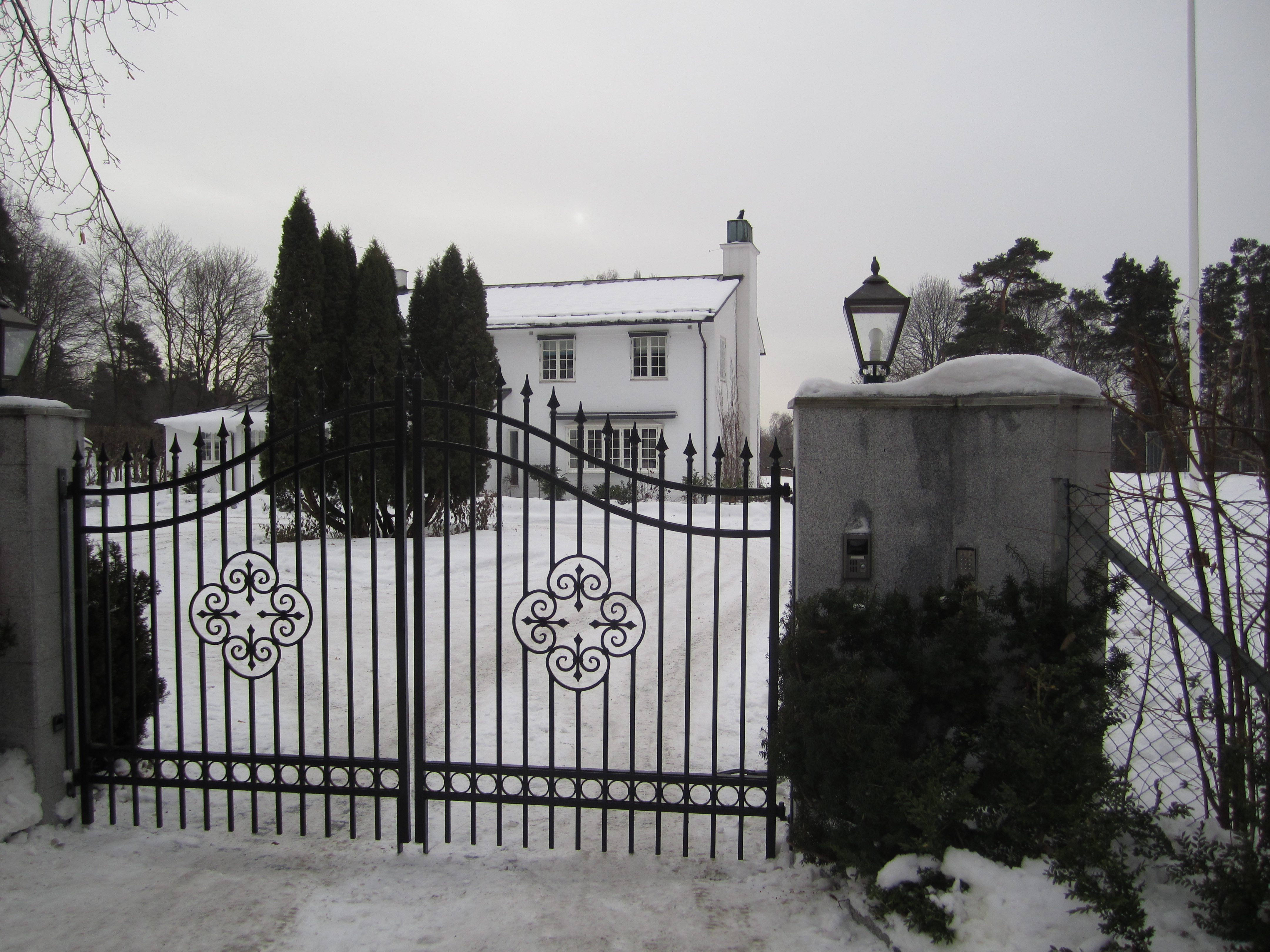
The institute is located away from a main thoroughfare, in the woods. Walking up toward the driveway, I pass palatial homes, courtyards, fences with electronic security, distance between residences are wide. The neighborhood reminds me of where ambassadors live, or where embassies are located.



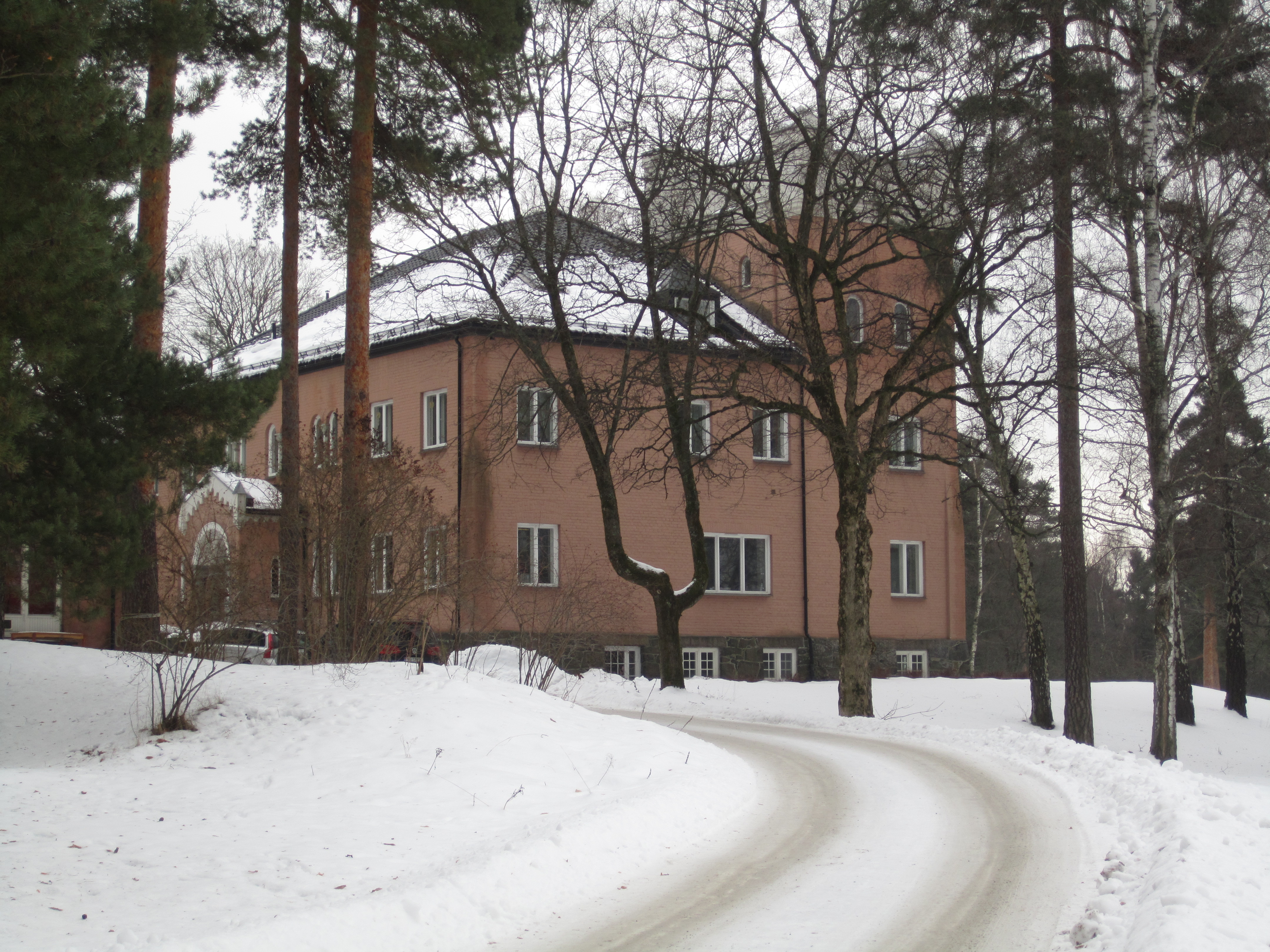
I walked along the road continuing past the homes for 10 minutes, just like Arild mentions over the telephone, and conscious now, that I am no longer in a city — where city sounds are now replaced by my breathing and tromping over snow and gravel. There, sooner than I expect, but certainly time enough, the institute takes form, and finally the entrance.


resepsjon
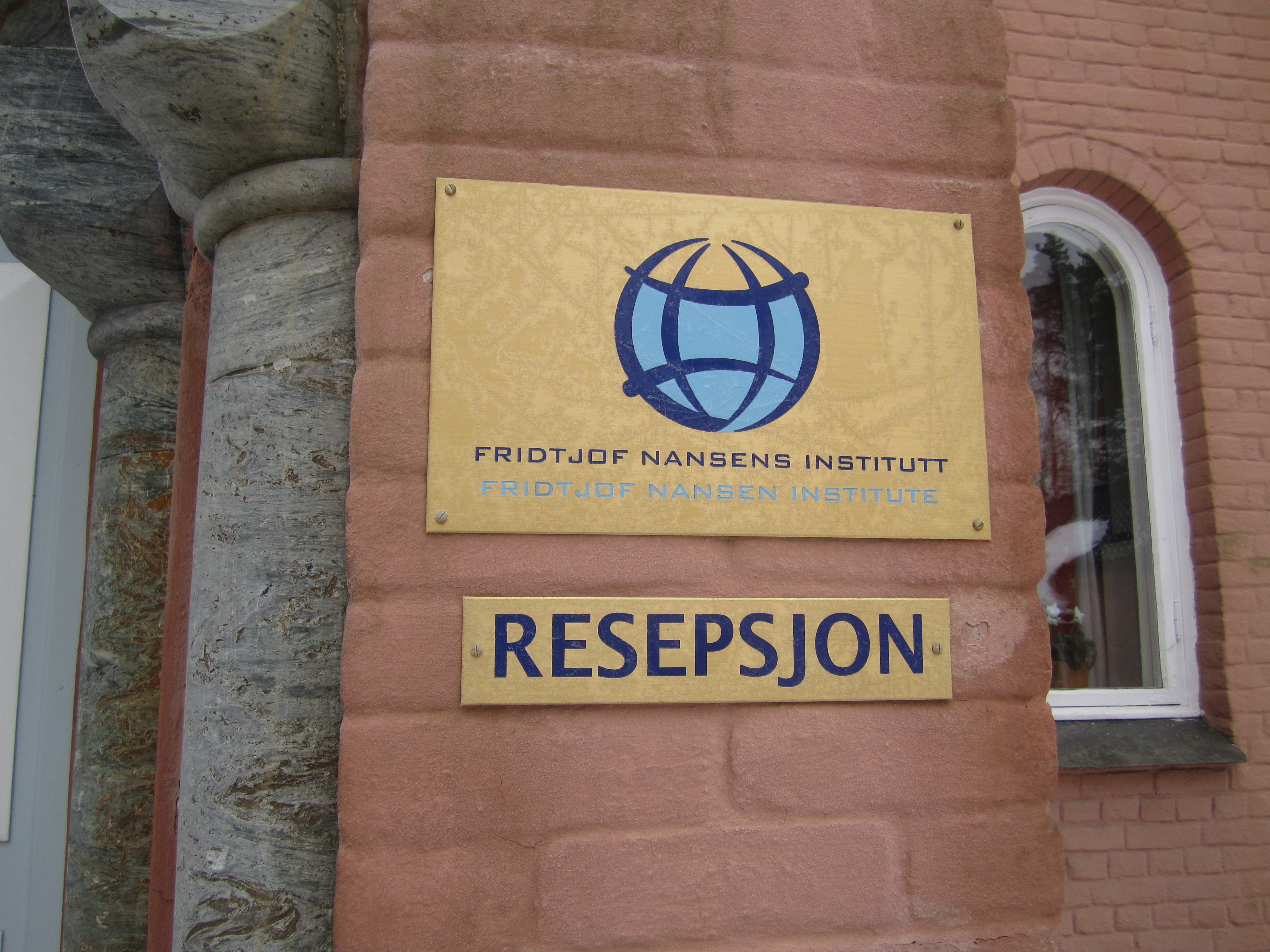


The door opens and I am shown into the reception room. I did not inquire into the history of the building, where the institute carries out its operations.


I was announced — and invited to explore the interior while waiting for Arild….


No. 2 — Interiors


The work of hands.


Imagine entering into a room, and noticing suddenly — without picturing even the outline of a face, the presence of a person — through the image of a type of work they accomplish. In this case, someone earns a living by laying out in an orderly fashion, a stack of newspapers, as one of their daily tasks.


Imagine again selecting one journal, to read. Or flipping through another, and still yet another. Nevertheless, within some shortened period of time, perhaps over the next half-an-hour, each paper that is disrupted, is returned to the table, placed back into an orderly fashion.


Here, as with several offices I visited in Oslo, I became aware that this particular task, of ordering the newspapers daily (hourly), is a vanishing movement, soon to enter into the dustbin of discarded historical practice, forgotten, perhaps without nostalgia. It is a reminder of what remains of an earlier time but that still takes place somewhere as part of someone’s present.


There, the newspapers lay, simply and elegantly.


By its appearances, the building of the Fridtjof Nansen Institute looked to have been built at the turn of the 20th century. The ground floor, at the entrance, there is a spacious hall, a living room with a fireplace, and natural light streaming through long vertical windows. The rooms are laden with dark wooden trim, wooden floors, and banisters.

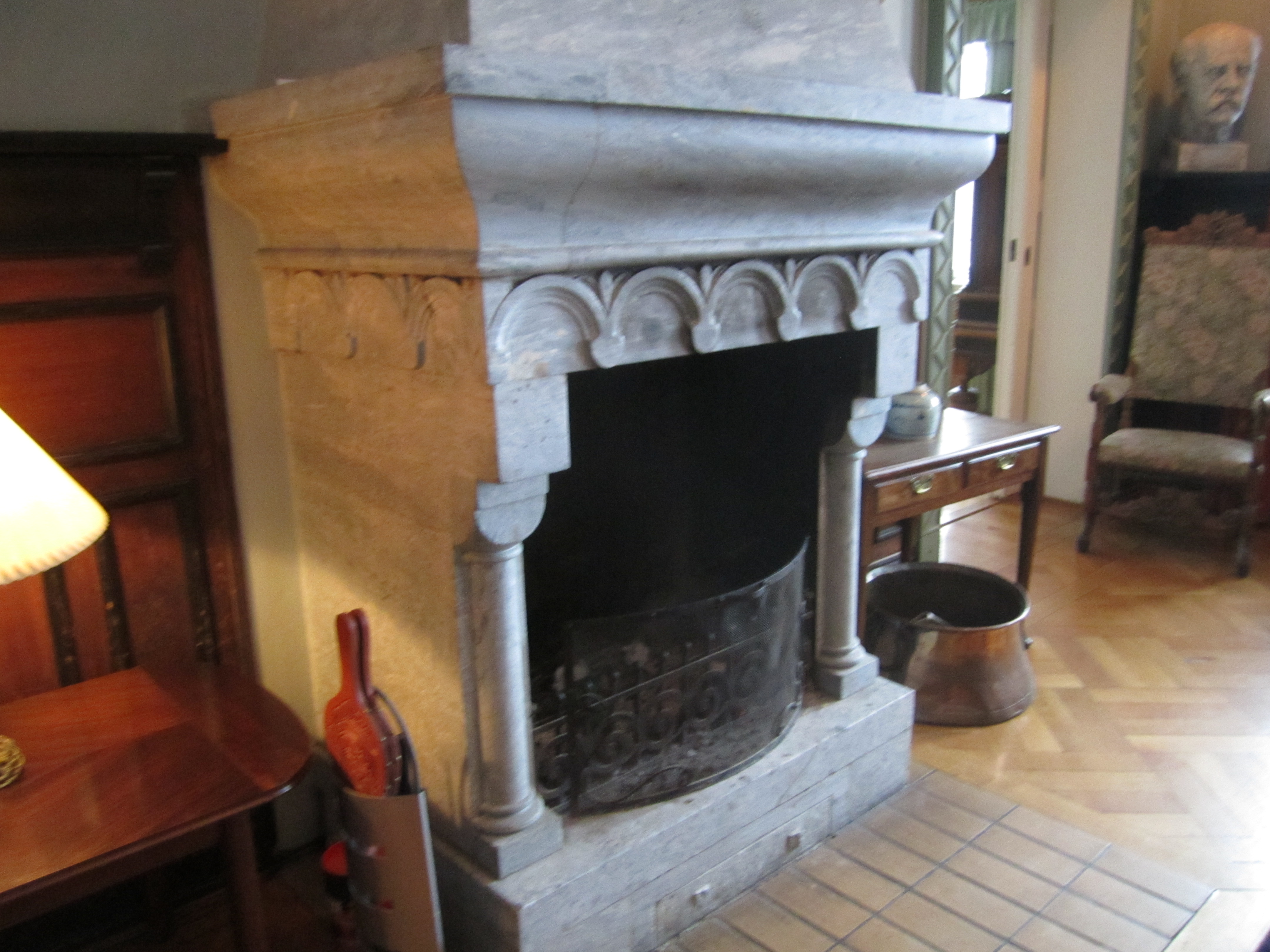

My first thought from glancing at these rooms was of a nightclub in San Francisco, the Red Devil Lounge.


But also of a dwelling for rock bands of the 1960s, in the Haight-Ashbury area of San Francisco’s Golden Gate Park, the residences of Jefferson Airplane, Janis Joplin– with plaster mold busts of famous heads staring out from the corners of the room and occupants slipping on pogo boots, moving their lips in repetition of the lyrics of songs. Who uses a fireplace to keep warm these days?


It was a space of science, belonging perhaps to a former century.
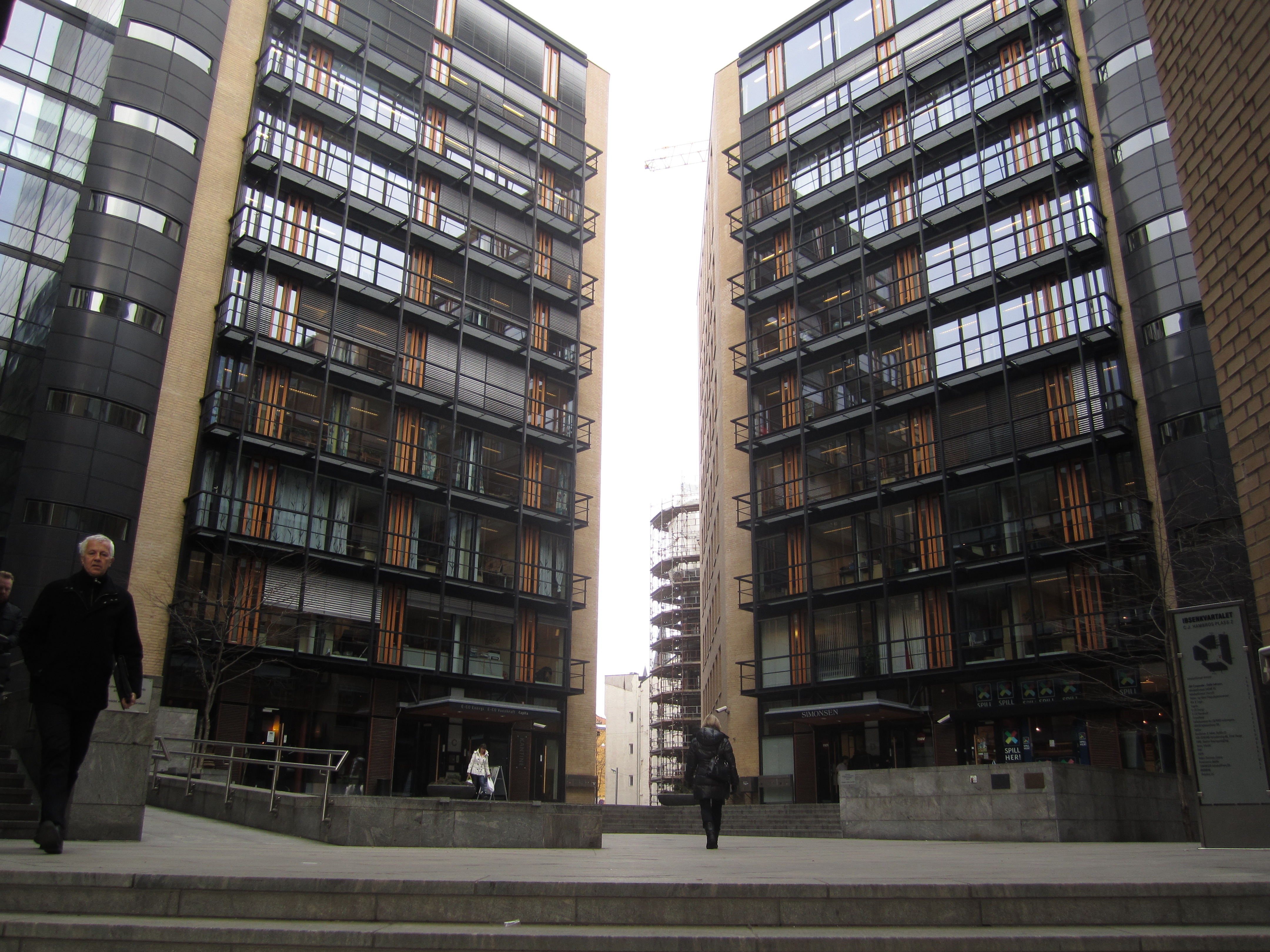


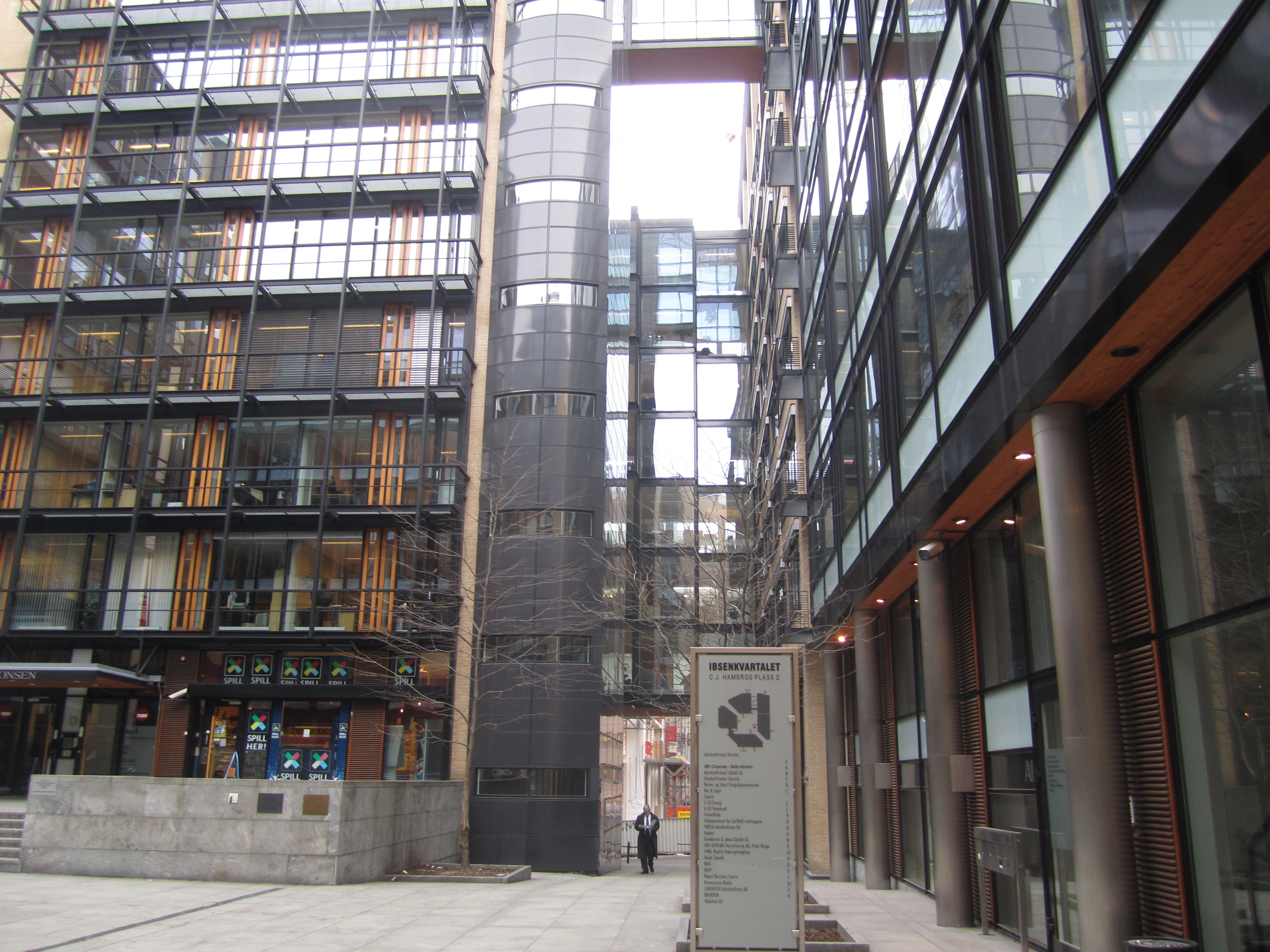
What a contrast to the spaces of Norwegian think tanks located in downtown Oslo, housed in ultra, ultra modern settings.


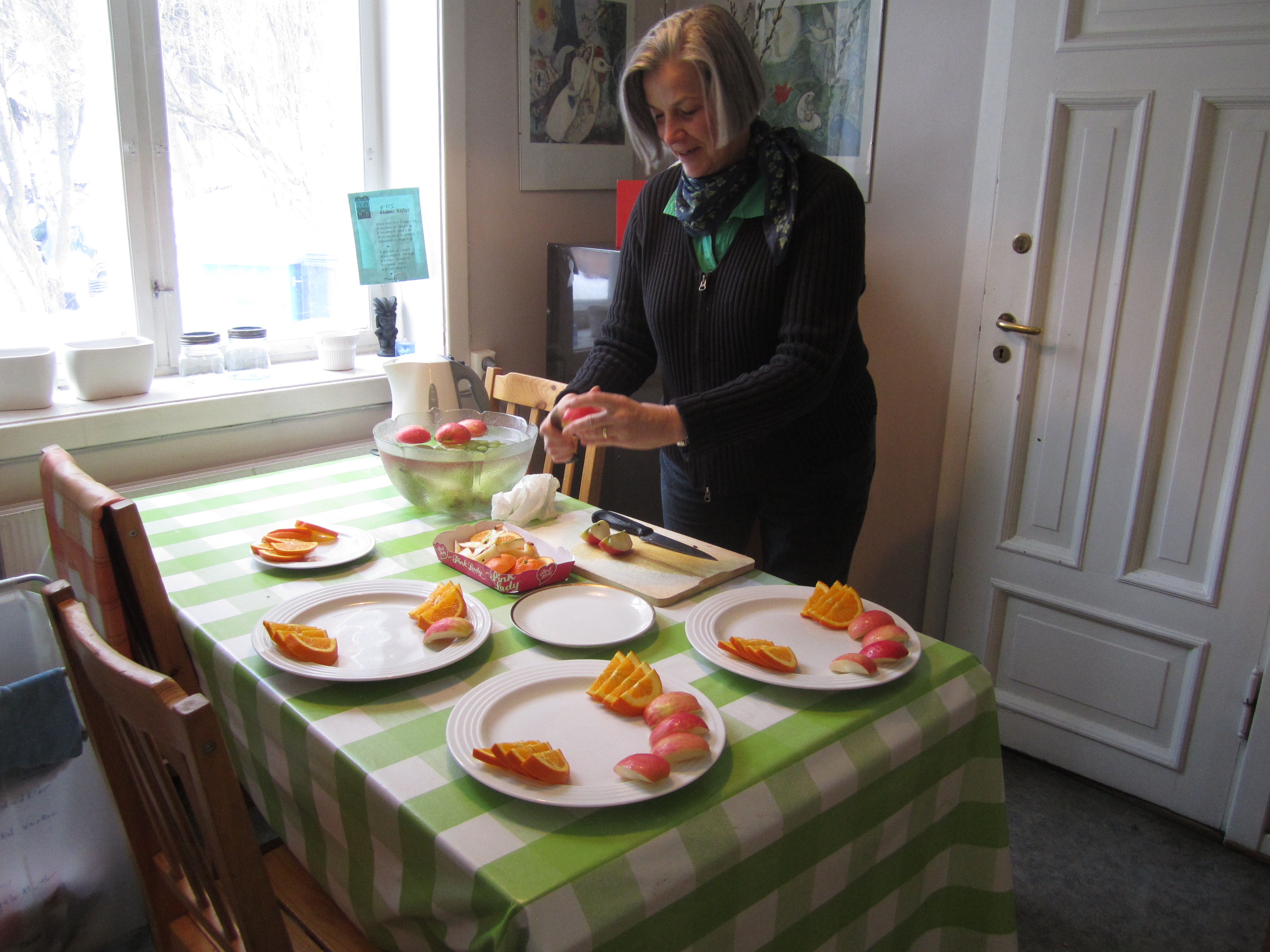
Lunchtime takes place at the same hour every day, and staff move tables into position in the main room, where everyone sits together. One staffer provides fresh cut fruit. I noticed all of this, but did not participate, as Arild invited me into the smoking room, for a tete-a-tete so to speak.



No. 3 — tête-à-tête …

Now seated facing each other, with the door to the main room closed, I produced from a worn manila folder, a small, shiny 8″ x 11″ hand out, which I placed on the table and slid to Arild. He looked over the hand out, and I stated in rapid low tones all the necessary details of my research. My fanaticism for the idea. Dispassionate ambivalence combined together with a low intensity of speech, as if delivering an incantation.


Arild held the sheet of paper presenting such details as they pertain to the North American Arctic, and began, in a deliberate manner, to compare themes he recognized between gas development in the Shtokman case, of the Russian Barents Sea area, and the Alaska gas play, on the North Slope.

Oil paintings and wall murals figure prominently at the Fridtjof Nansen Institute. Each room has a theme. In the dining area, a long table suitable for serving over 20 persons is flanked by painted walls on three sides, depicting medieval Scandinavian themes — lords in gallant dress mounted upon horses, children with mothers holding hands, on-lookers, young adults, and elderly masters.
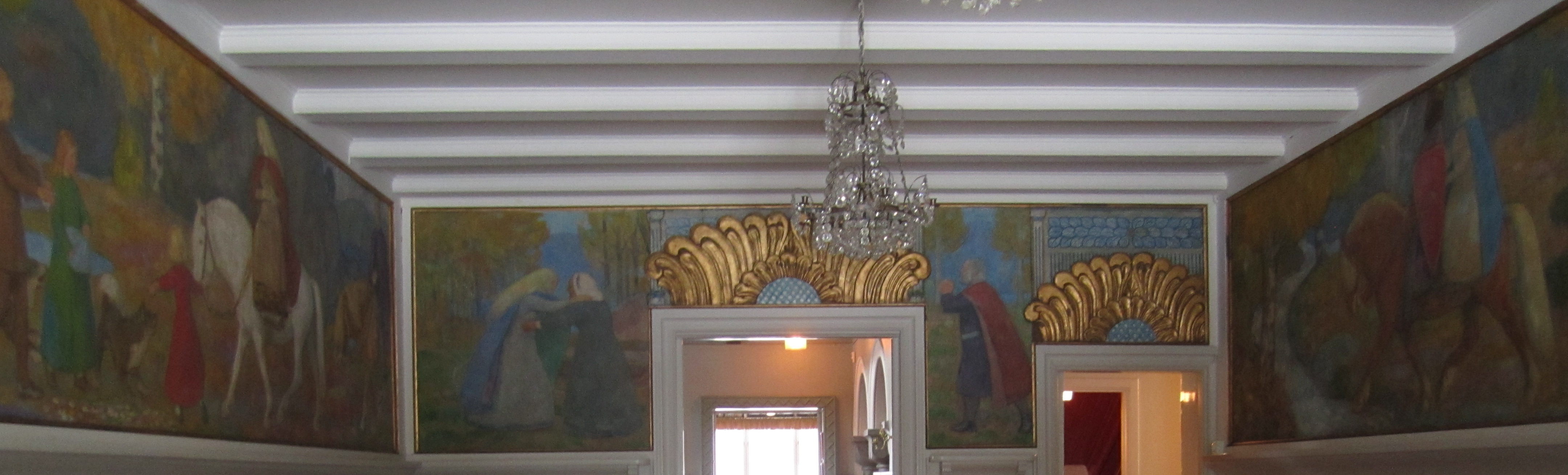

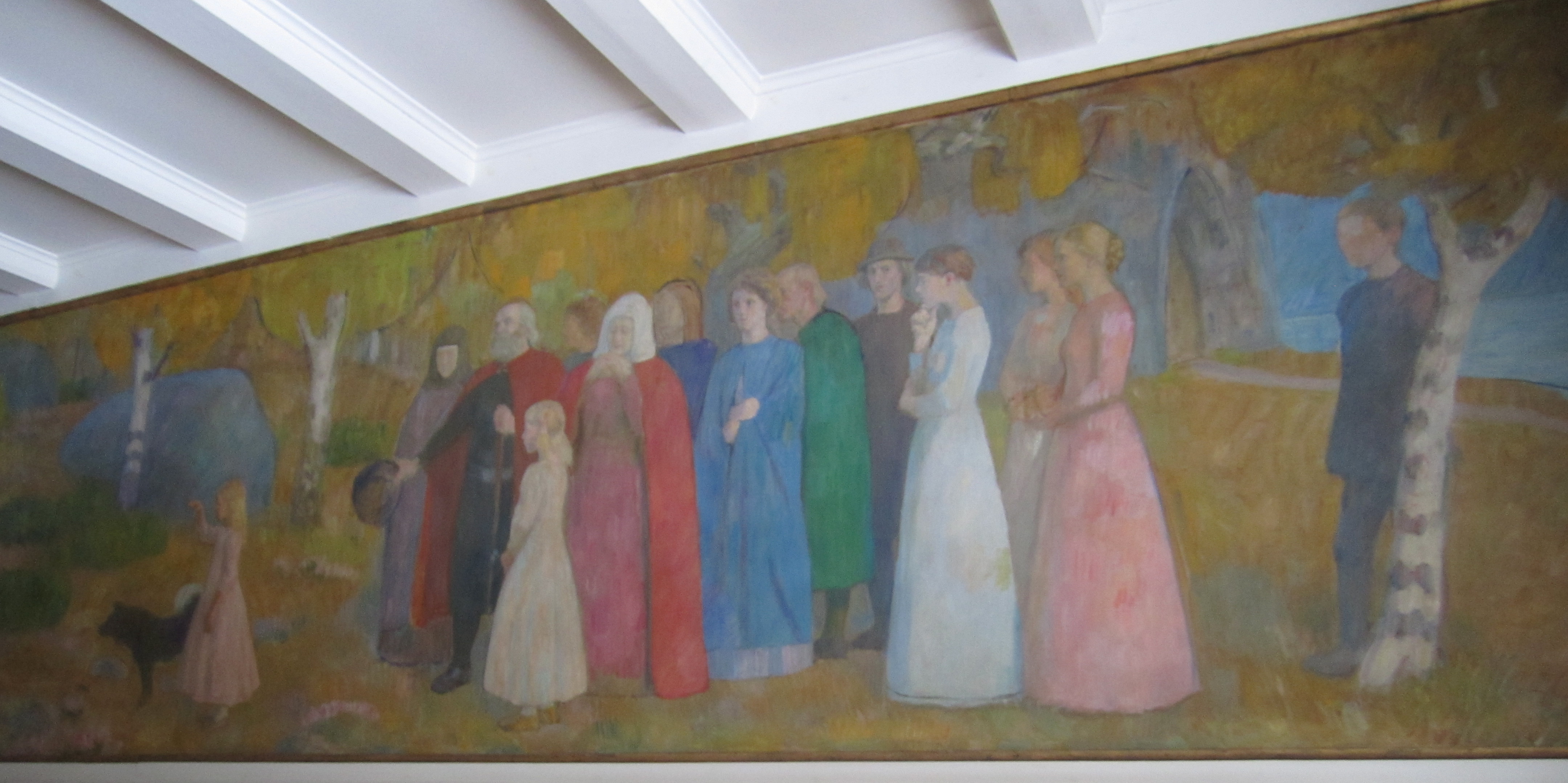


In the main drawing room, the image of communitas associated with the dining area– consistent with the carnivalesque period of the medieval era — is thoroughly left behind and instead, replaced by a period of the early modern. Here, the baroque is at work, with its stern Christian ethic and separation of the classes.
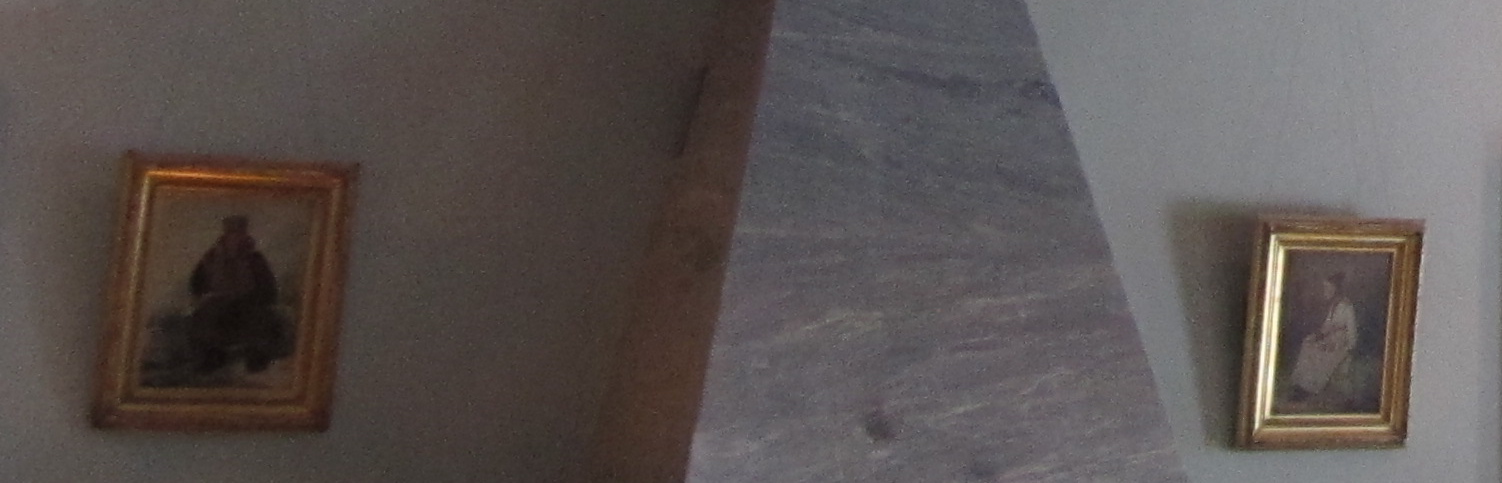


I want to compare these wall images now, for a moment —


I want to compare these Work Place Images saturated as they are, with an intensity of cultural form and temporal depth – to compare them with the image that hangs beside the Night Porter at Rica G20. At my hotel, downtown, away from the detached and cloistered natural environment of Lysaker (a workspace of the leisure class), the porter has his very own wall image, an object of representation for him of his surroundings. This image is saturated also with temporal significance, that of urban time – of train schedules, delays, departures, the platform, labor shifts, and of course, money (i.e., quantifiable qualities as expressions of value) — all consolidated in the image of the Wall Clock. Here, mimicry of gesture and formalism are absent — there is no image of gallantry or thrift through which one can identify and model behavior — as is associated at Fridtjof Nansen Institute. The Wall Clock, offers a form of mimicry according to which only time-space discipline is the theme.


Presidential Timber.

In the room where Arild and I met, I sat directly in front of an image of a man, who stood directly as an image of a tree. Staring at me from Arild’s vantage point, was an image of an early 20th century Scandinavian modern gracing my presence, in imitation of a fir tree.


Arild presented a list of ideas:

  • In Russia, power is still centralized where decisions are negotiated in secret (versus in D.C. where decisions are dependent up on three forms – judicial, legislative, executive). From this perspective, the questions that arise surrounding Shtokman do not concern how decisions are made, but when decisions are made.
  •  The logic of Shtokman is less concrete than the case for the pipeline in Alaska. Issues concerning arctic offshore in Russia are broader and much more vague. In Alaska, the controversies and issues are fairly concrete. There is a lot of data surrounding pipes, numbers, completion dates, volumes, etc.
  • For these reasons above, there is much more uncertainty on Shtokman, and that this uncertainty exists in an earlier state than the Alaska case. Essentially, the Alaska case represents a project located at an entirely different stage of temporality than the Shtokman project.
  • In this sense, expertise, an issue that my research is about, expertise in Russia, is primarily concerned with the technical and geological. The Russian research institutes are focused with a clear sense of purpose on this point.

Now, here, is where I had to interject and ask about this last point. If it is true that issues are technical, then what do we make of all the talk by people like Jonathan Stern and Arild himself, on these projects, the sense of expectation etc.?

  • We diverted the question to discuss Global Russians, which I had discovered the previous summer from the St. Petersburg Economic Forum, wherein Russians with education from abroad had returned to Moscow and are now working with western financial firms, and providing assessments of the Shtokman project. According to Arild, they have few links and knowledge about the past. That is to say, the overarching decisions are still made by members of the older nomenklatura, all the strategic decisions are their decisions.


Read Full Post »

Security of Expertise

In this posting, I want to make a few comments on the great deal of security and restriction surrounding participation at energy roundtable events, or when I attend meetings in the offices of industry personnel.

Bodyguard at Executive Roundtable in Houston

Certain forms of security can be transparent, such as the presence of police personnel, as this photograph from CERAWEEK 2010 in Houston shows on the right (click on photo to expand). CERA Week just moved their venue to the spectacular new Hilton (for years they were at the Westin Galleria).

We (then assistant, Alex Karamanova and I) encountered these bodyguards quite frequently, whenever we attended such events, especially if there are over a few dozen people attending. At this particular event, which takes place in Houston annually and gathers together all the most important industry leaders for a week-long discussion on energy trends, you typically can see anywhere from five to seven policemen wandering around in the main lobby area, with their fire-arms on display. These guys are pretty big. We personally would not want to mess around with them.

Bodyguards at Executive Roundtable in Houston

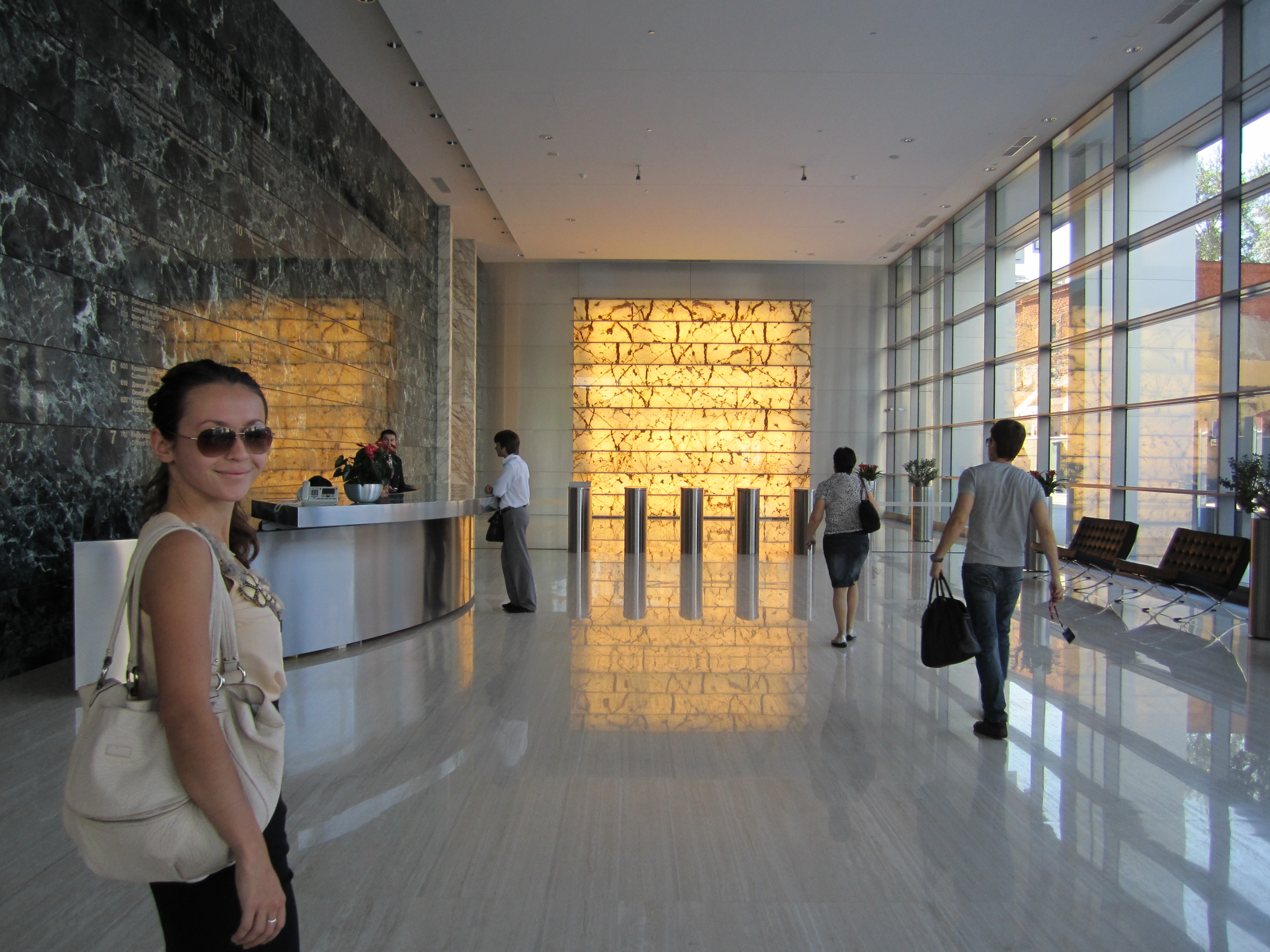
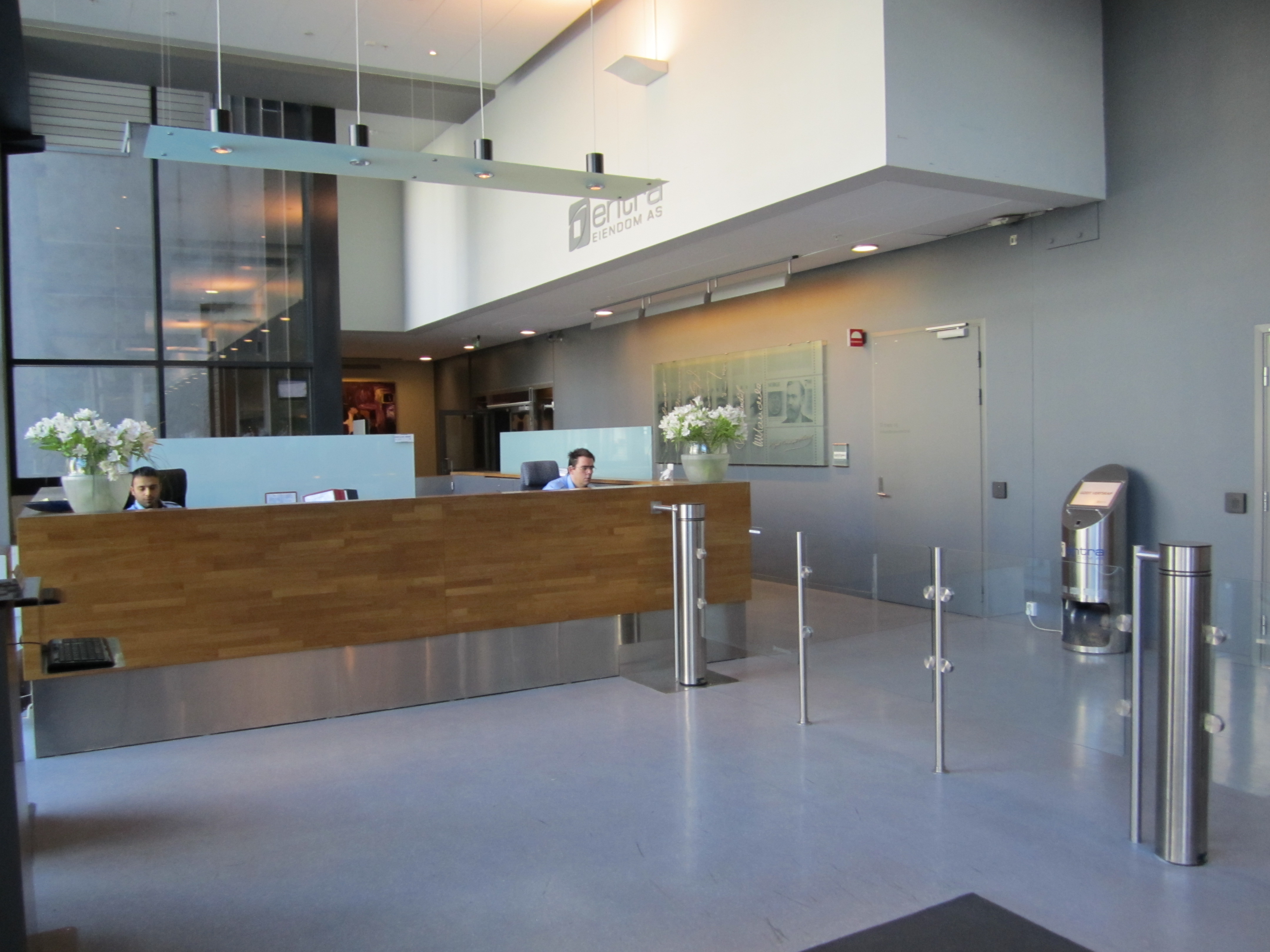
Another form of security is the turnstile, which is often a part of the built in material framework of the entrance for corporate offices, but can also be temporary installations at the entrance of pavilions where, for example, at the St. Petersburg International Economic forum in Russia we encountered them all the time.

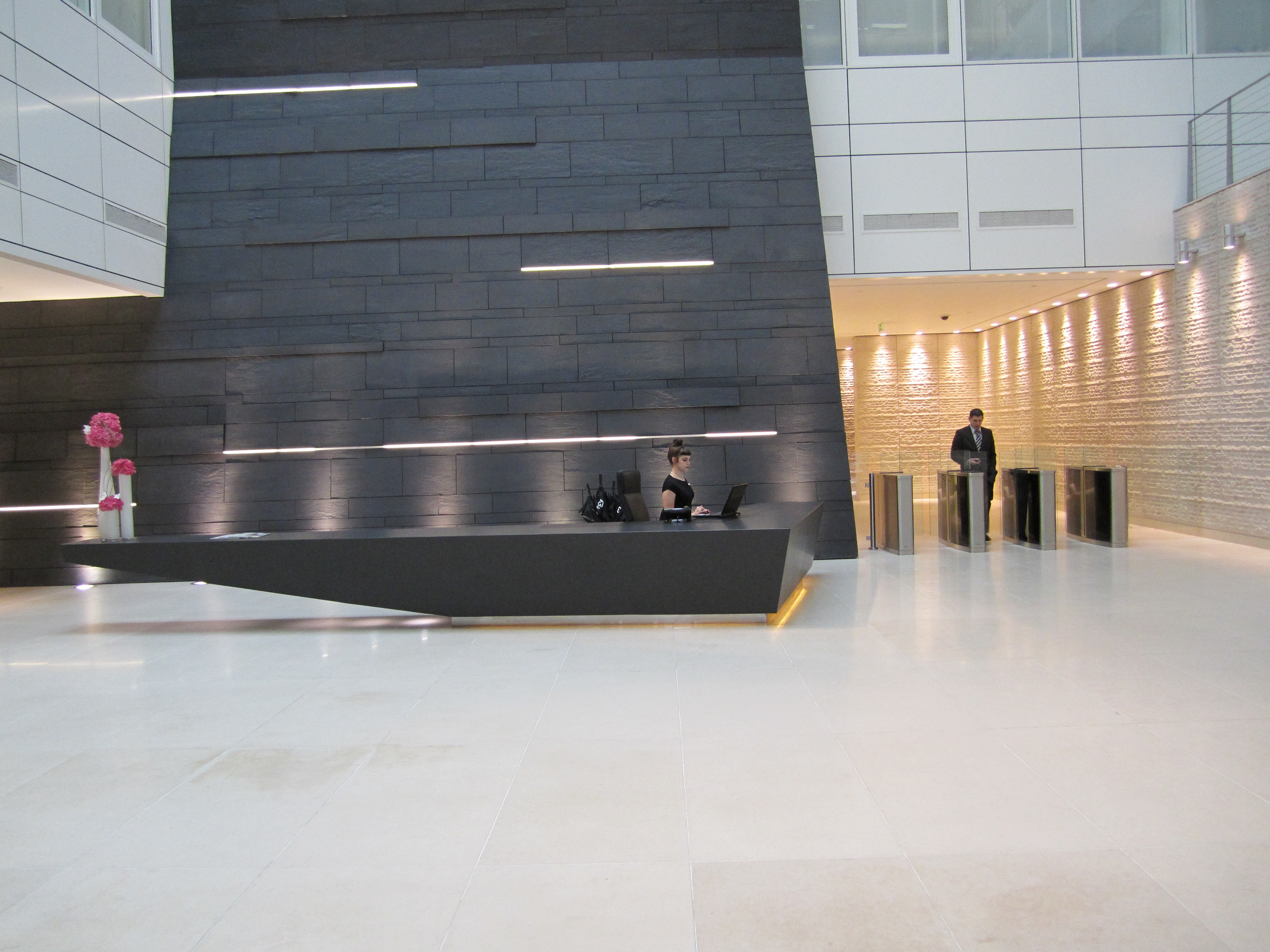
Turnstile security is common, and found in many places across the world, we’re surprised not more is written about it. Typically, it is accompanied by a security personnel on duty, and depending on the building, the security personnel can be ominous or feminine.

Turnstile Security at IHS in London

Turnstile Security at Citibank in Moscow

Turnstile Security at Shell in Moscow

Turnstile Security at EconPory Consultants in Oslo

Turnstile Security in St. Petersburg Economic Forum

Metal Scanners at St. Petersburg Economic Forum

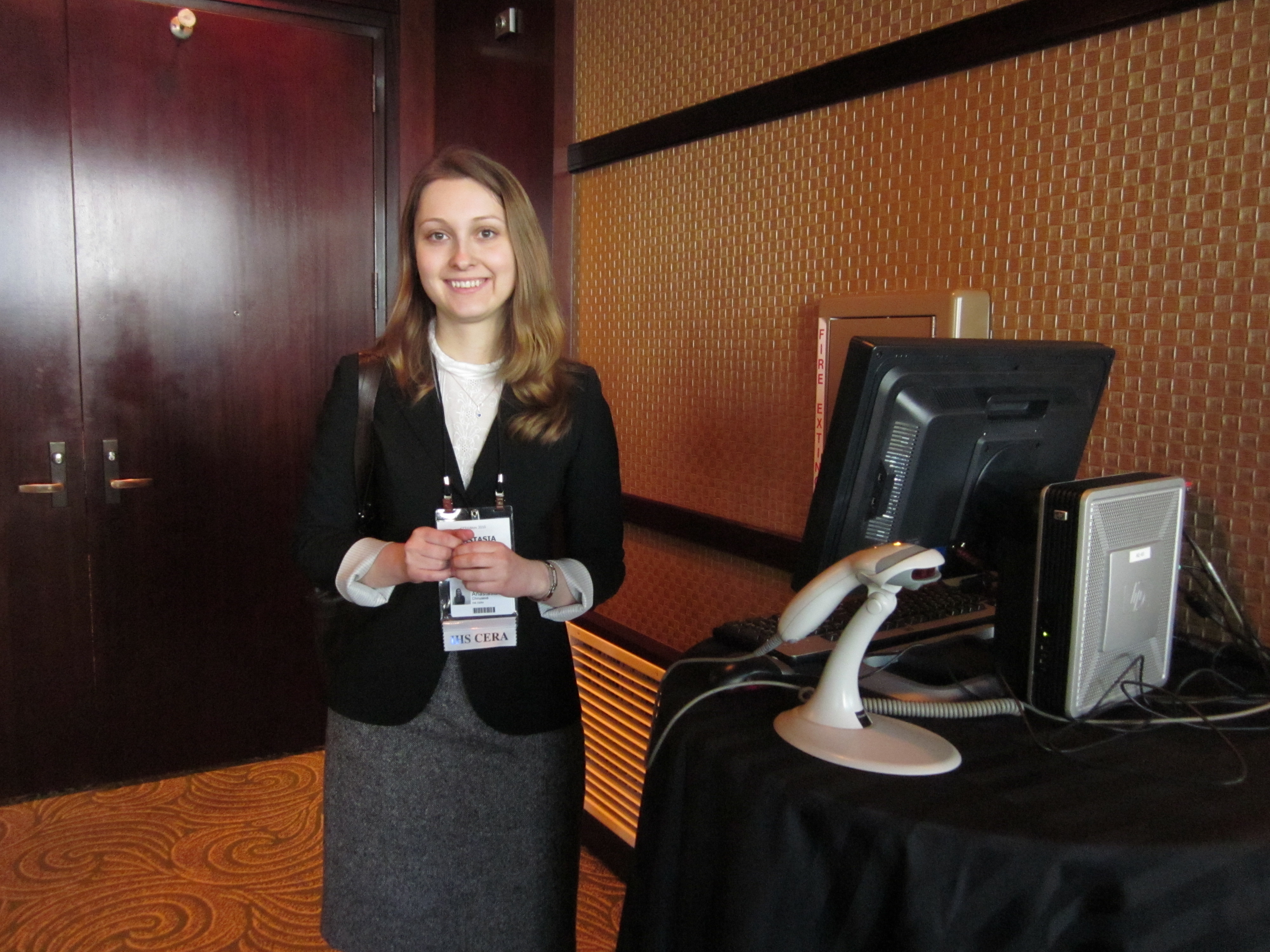
The photos above depict some of the more obvious forms of securing the body in relationship to experts and expert knowledges. We use ourselves as decoys to take the photos since there are restrictions surrounding taking photographs of security. There are many more forms. Perhaps the third most ubiquitous form of security, behind the policeman and the barricade, is the identification badge. Everyone wears an identification badge. Such badges typically hang from lanyards around the neck and are used not only to identify the names of clients, but also they typically have bar codes that can be used to access computers or enter into rooms where experts are giving presentations.

Security Badge with Barcode

Security Badge Barcode to Access Computer

Accessing Expert Roundtable Room Via Barcode Security

Did we mention yet what all this security is for? We will just mention at this moment that these places are pretty tony (exclusive, elegant), and security ensures that everyone present can relax in an elite sequestered environment where knowledge is a highly expensive, sequestered commodity.

CERA week drinking fountain (bar) Houston

IHS lobby in London

CERAWeek Meet & Greet under the Chihuly

One way to think about security and sequestration is to consider it from the perspective of having a front-stage and back-stage. This idea was initially developed by Erving Goffman who suggested a person’s identity is continually shifting and based upon performance through roles and consensus between the actor and the audience as a kind of dramaturgical development.

We are also interested in these contexts through which actors take on various roles. In particular, we want to know the way these contexts are specifically orchestrated and become manifest so that actors, whether they be experts or clients of expertise, come to understand themselves, specifically on the basis of their expertise and non-expertise.

One way to approach this idea is to refer to the space where clients are specifically allowed to view, participate, and otherwise have access to expertise as the front-stage and also, to refer to the space where clients are forbidden from entering as the backstage. Moreover, in relation to this backstage, we could posit that spaces are further sequestered by certain rules which relate to what portion of an event a client has paid for. For example, on the photo above, the badge indicates TuesWed, meaning participation is paid up until the end of Wednesday). These sequestrations or perhaps, restrictions, could include also the given status of a particular participant (speaker, sponsor, journalist), or the position of a client within their own organization that accords them with certain privileges and access to events, etc. There are many examples and variations. Of course, when taken from a public point of view, for example, say, the viewer of this site who is unfamiliar with such events, all industry access we typically encounter might be considered back-stagings, since these events require large payments in advance, formal invitations, elaborate vettings of identity, and so on.

Because we are in the process of writing a book about our experience with consultant expertise, and intend to include a chapter on security and the body, we will take some time here to elaborate on issues of front-stage/back-stage, as well as other observations we have made concerning where the body is positioned in relation to expert knowledge. It is a question: how does the body become positioned in relationship to (restrictions on) expert knowledge? Or rather, how does a body acquire identification by its relationship to experts and expertise?

Imagine, for a moment, the bronze and marble sculpture by Auguste Rodin called The Thinker. Well, the entire premise of this posture is that there is an appropriate position for carrying out the practice of thinking, for carrying out the activity of receiving knowledge, that is, how to possibly appropriately receive knowledge. In fact, The Thinker is an excellent example of the contemplation of modern knowledge which, as it turns out, requires its own specific bodily position (hunched over with chin on one’s fist). What a contrast to  kneeling with ones hands held together (as in contemplation of religious knowledge)!

We used to point out, in fact, during our undergraduate class discussions, that the position of The Thinker is typically the appropriate posture for acquiring knowledge by graduate students when speaking to their professors, while for undergraduates, typically, at least in the courses we have taught, the favored posture is slouching in the chair.

Helsinki Affair: We were in Helsinki recently (see posts on Aleksanteri) and asked by a fellow attendant at the conference to discuss the issue of security in relationship to expertise. Fortunately, a peculiar event took place just one day before that captured our attention in a way that we had never quite contemplated previously.

Typically, by way of background, academic conferences we have attended, which is to say, gatherings of expertly trained professionals working in the monastic realm of university social science research, there are few signs of security, apart from the identity badges hanging on lanyards across the chests of attendees, and in fact, it is often difficult to acknowledge what constitutes a breach of security. Only two instances in our memory standout. In New Orleans this past week at the anthropology meetings, we were asked to wear our name tags by guards at the hotel, a first! Also, several years ago, while attending a 4S conference (science and technology), fellow-colleagues, at the senior level, who founded the organization, began checking attendees for their badges, and possibly even politely interrogating them about why they weren’t wearing their name tags. And this was because attendees were not paying their registration fees for the event, and the organization was worried about how to pay its bills! However, this is all petty memory, nothing more than to establish that security breaches are not typically on the mind of academics who gather to freely exchange their ideas.

But we want to recall this event that took place in Helsinki because it was so unusual in our mind. We had arrived early to the appointed floor where we planned to attend the opening ceremony, perhaps one hour earlier than the event. There, outside the plenary hall, a rectangular table was just setting up with three conference personnel laying out identity badges for participants, as well as glossy, quite elaborate in fact, brochure about the 3-day Aleksanteri conference.

While sitting on the side lines, we noticed a Finnish speaking woman, who entered into the reception area, and then proceeded to stand in front of the rectangular table, pausing for quite some time, without making much of a fuss, but at the same time, without providing any indication of what indeed she was intending to accomplish. We recall that her clothing was rather piecemeal, tattered, and, while not entirely shabby, we noticed that the dress did not reflect the style typical of the academic class of personnel meandering through university buildings, who were clad in corduroys, layered sweaters and scarves with matching color schemes.

Well, what happened next was peculiar. The unknown woman, who remained unnamed despite her subsequent capture and immediate release by conference personnel, actually grabbed a brochure, and began running away with it. And these acts, of deliberately grabbing and running, created an immediate sensation among the personnel at the reception, as if to say, that the product being abducted with, the brochure, was something of rare value, which in fact, while expensively produced, was hardly secretive, in that the information therein was readily available on the internet, and perhaps, quite possibly given the organization’s well funded reputation, had been produced with many extras beyond what was required by participants, so that any reasonable request for the brochure, which had now become some kind of sanctified treasure, would have resulted in a relatively mindless gesture of handing over a copy. But in fact, it was this act of deliberate theft on the part of the unknown woman, or instead, the staging of what could only be at that moment interpreted as theft, that a melee ensued, with the main conference administrator running down the hall way, yelling in English “stop that woman, stop that woman”!

Frankly, we couldn’t believe what we were watching, and at the same time, thoroughly recognized what we were observing. The unknown thief passed us, turned the corner and while attempting to gallop down the steps to another level, was immediately intercepted by some university personnel, who happened to be walking up the stairs, and when upon the immediate arrival of the conference administrator, who after wringing the brochure away from the woman’s hands, and then realizing that the entire situation itself was some how a reaction, or rather, an over reaction (to an impulse of the issues such as running, yelling, abducting), the event immediately in fact, ended, and all was quiet once again.

Well, in fact, the only unfortunateness associated to this event occurred during our discussion of the issue of security and expertise a day after, when with good intentions, we reawakened this peculiar moment to the conference administrators, because we were discussing the topic and had asked them of their impression of this occurrence, under the pretext of understanding in what context, actually, could knowledge surrounding such an open conference transform into delicate secrets that required security. To our dismay, the conference administrator in nervous bodily movements, began making repeated excuses for retrieving the brochure, assuring us that the entire situation was simply a strange misunderstanding. Our own repeated disclaimers failed to reassure that we were only discussing the issue as a rare example of the fact, that only under such strange mishaps as mentioned above does knowledge have restrictions at a social science conference. Well, this was a departure point for our discussion, and we certainly apologized to our hosts if the mere recollection of the chase scene disturbed their conscience. But here again, the notion that they would feel something untoward about their own actions, serves to emphasize the impractical nature and peculiar effect of exercising some kind of privileged authority over the circulation of academic knowledge in certain circumstances as just stated. This is a very different effect indeed, from the deliberate forms of security surrounding what we call the Hands Made of Putty effect.

Hands Made of Putty: whenever we shake hands with experts, especially those in their late 50s and older, we feel like we’re holding the hand of a baby. During earlier fieldwork in Alaska, when we were interested in rural villagers, we noticed how hard their hands were and with what zing they gripped us in handshakes (ow!). Typically, they received this strength from working many decades in the fishing industry where they constantly would be using their hands to turn a cold steel wench, pull an icy wet rope, throw a slimy salmon into a brailer, or whatever activity was required. We spent one summer in the Gulf of Alaska commercial salmon fishing, and we know that physical activity in these work environments is a habitus that is not quickly or easily acquired, but quite often, for persons working decades in these fields, it becomes durable. Among retired fishermen in their 80s, their handshakes were still quite strong and their hands were tough like metal.

And by the way, the reference to Alaskans is not oblique. Many of those client-expertise interactions we witnessed, at least in the formative part of our ethnography were precisely those between Alaskans who had worked for their state and emerged as local politicians striving to make decisions about resource development for which energy experts were required. So in fact, the hand shake was one of the more distinct interactions between expertise and clients of expertise which distinguished what an expert actually is (Dr. Putty Hands).

One thing that strikes us then, about some of the experts we deal with these days, is how fragile their body is physically. This soft cellular physicality, developed from years of typing or holding a coffee mug, could be brought to physical harm quite easily and great damage would result, precisely because of this fragility. This is a serious issue. Even giving an expert a strong handshake is tantamount to aggression and would raise eye-brows. This relationship of enforcing superiority over another person through the handshake by demonstrating physical prowess is strange indeed, and while it rarely occurs, it actually can take place. In those weird instances where an expert is confronted with someone whose aim is to send a message that their inferior status as a intellectual producer could be compensated by the fact that they could handily beat the expert to a pulp is one possible scenario that experts really want to avoid. A good way to avoid this is always to have body guards immediately visible and present. (We might add parenthetically that debates over ideas along with a few drinks can result in various types of ripostes or duel-like banter and in certain circumstances, end in violent exchanges. It happens all the time in bars across the world. To ensure that these fragile bodies are not harmed, there needs to be visibly present, forms of personal security that can act at any moment.)

Variations on Participation: here, for future reference, we aim to discuss different roles that clients can take in participation at workshops and conferences. Journalists, speakers, former employees who have entered industry, academics, etc. all have different forms of access to front stage and back stage. We could begin with out own experiences…

Added-Values and Friendships: here, for future reference, we identify how sometimes friendships allow for possible access to events in ways that they would otherwise not happen, say, of the particular contract a company has with an organization may create opportunities for extra-contact with experts, called added-value discussions.

Read Full Post »

« Newer Posts