Feeds:
Posts
Comments

Posts Tagged ‘London’


No. 1 — Technology Transfer …


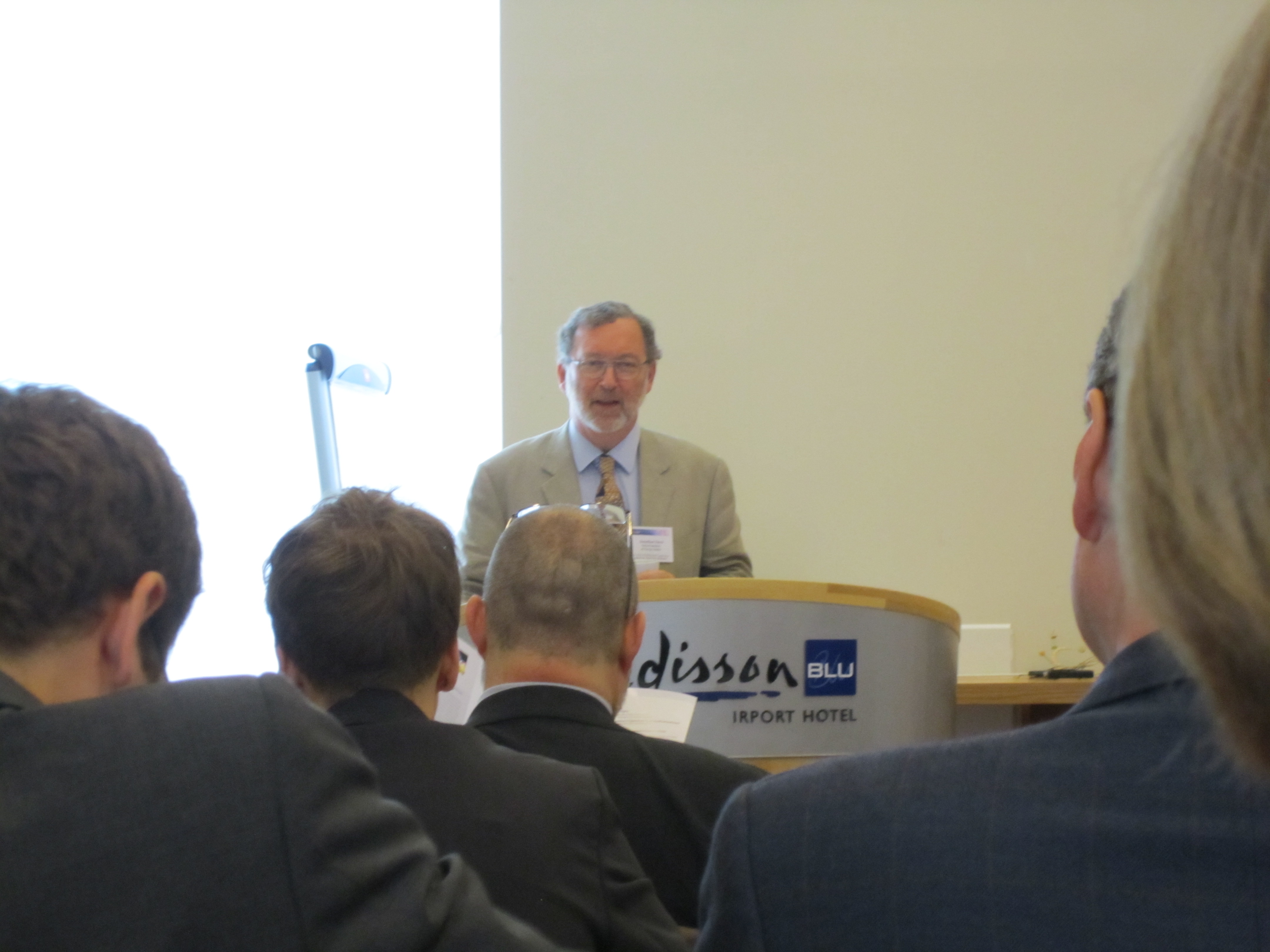
My current research in northern Europe and Russia, an approach different from what I undertook for the North American Arctic, began from email exchanges with the Russian natural gas guru, Director of Oxford Energy Institute, Jonathan Stern.

Actually, prior to this — as my initial purpose for contacting Stern — I stumbled across a curious set of quotes from his early work on the Russian natural gas industry development written during the late 1980s — fascinating for according to Stern’s telling, the corporeal body of Western expertise remained in “the West”.

And it transfixes because of the question the sentence raises: what form of Western expertise circulates into Russia on the topic of natural gas development prior to the 1990s, if it is not the body of the Western expert?


Stern states:

As far as the Soviet domestic industry is concerned, I would suggest that the Soviet authorities will be extremely reluctant to allow Western Personnel on Soviet soil, particularly for a project such as the construction of a large-scale pipeline” (124).


Today, Western experts travel through into Russia — on Soviet soil — and provide advice on various concerns of the natural gas industry. The corporeality of Western expertise, the actual body of the natural gas energy expert is the topic of my research, and its circulation within Russia. For this reason, I became fascinated by the kind of language used by Stern, to describe the circulation of Western expertise into Russia — without the body of the expert. Here are some examples:


It is argued that irrespective of current technology transfer, however, ‘more American exploration and exploration equipment for maximal development of the Samotlor fields in West Siberia and potential reserves in East Siberia onshore and offshore may be a critical requirement” (152, emphasis mine).


and again,


There are certain key areas in which Western technology does play an important role. For the gas industry, straight purchase of large-diameter pipe and compressor station units continue to be of immense importance…” (150, emphasis mine).


and,


The imported technology and hard currency that such development would contribute to the Soviet economy was one incentive, and this was backed by the realization that, without Western assistance, ten to fifteen years would be added to the lead times for bringing the east Siberian deposits into projection” (117, emphasis mine).


In the following quotes, notice the emphasis on material technology transfer:


Italy has been receiving Soviet gas since 1974 in return for steel pipe deliveries from [the company] Findsider” (105, emphasis mine).


Many Western contractors are involved in the project, with much of the pipe coming from West Germany and Japan” (78, emphasis mine).


It is doubtful whether Soviet capacity to manufacture large-diameter pipe can expand at a sufficiently rapid rate to meet the increasing demand. The inference must be that in the future, as in the past, they will rely to a large extent on imports of these materials from the West” (74, emphasis mine).


All the gas currently exported to Western Europe is in exchange for deliveries of pipeline and gas field equipment” (49, emphasis mine).

In Short

      • technology transfer
      • key areas [of] Western technology
      • imported technology
      • Western assistance
      • steel pipe deliveries
      • pipe coming from West Germany and Japan
      • materials from the West
      • deliveries of pipeline and gas field equipment


…without the body.


No. 2 — To Paddington Station …

I remember quite distinctly the several hours before my first meeting with Jonathan, when we had just flown into London. A driver from Howard Swiss Hotel met us at the airport. Through to London, we passed the cheaper bed and breakfasts recalling my previous visits, either alone, with friends or with my father and now grateful that on this trip I was released from those shoddy rooms.
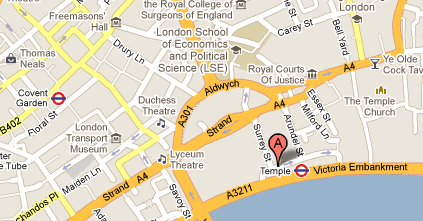
Settled, we walked up Victoria embankment along the river, past Cleopatra’s needle, then up through Trafalgar Square past the national museum through Piccadilly Circus and through China town, before finding a British pub for dinner. From there we walked through Covent Garden back to the Swissotel. The town was buzzing. A hot afternoon. We among the throng. I wondered how OS would respond to the crowds and architecture. There was no difference between our conversations from the office. A changed environment but still speaking about the same issues. Didn’t sleep much, waking at 4AM, watching a film.

We walked over the millennium bridge, past the Tate Modern Museum along the river to breakfast at the Roast on Stoney Rd. a recommendation from the Concierge.  Here is where our trip began. I could say that it began earlier, when the night before we departed, and instead of working in the office, we drove into P., having dinner on CB. But it was in the Roast, having coffee after breakfast, that I began to express my underlying motivations about the trip. That I began to unpack the style of my thinking about what expectations I did not have concerning research, data, and meetings with professionals.

I suggested that we were focusing on method, and especially our method. Learning was not important, or not as important as reflecting on our expectations about the context of learning and representing knowledge. That is, how up to that point, we could say: we flew, we rested and now we would be in meetings. But how instead, we had talked ourselves into a frenzy about what things could and could not possibly mean, and therefore, how the spaces in between the so-called real events could sink the entire project, and that I would like to see things nearly sink, because of my desire to emphasize everything.

We left breakfast toward the Tate Modern, and discovered the time was overdue, and we needed to head back to the hotel to prepare for our appointment with J. S.

We were seated in Café Rizzata at Paddington Station, and J. S. came up to shake our hands, and then stated he would grab something to drink from the vendor. As I watched him at the counter, I reminded myself that I had carried out this exact scene hundreds of times—meeting with someone to discuss my project. What is my project? The meeting itself, an experimental exchange in which a guest is invited to share some thoughts for which there is no determined outcome, and no result.

Which raises several points that OS and I talked about for the next 2 hours, after the end of the meeting. And then again in particular, during dinner over ramen with chopsticks and on the way back to the hotel past the millennium bridge where we decided to grab the last call on the embankment looking across the River Thames.

In a conversation between Shatov and Nikolai Stavrogin from Fyodor Dostoevsky’s The Demons, Shatov states: “Can’t I see by your face that you’re at grips with some awesome new thought?”

He continues, explaining to Stavrogin, about the power of an expression used by the latter several years before: “there was a teacher uttering immense words, and there was a disciple who rose from the dead. I am that disciple and you are the teacher.” Shatov continues: “It is hard to change gods. I did not believe you then because I did not want to believe… but the seed [the idea] remained and grew” (emphasis mine).

Stavrogin replies in various ways: “I was not joking with you then, either; in persuading you, I was perhaps more concerned with myself than with you.”  Stavrogin again: “If I had a belief, I would no doubt repeat it now as well; I wasn’t lying, speaking as a believer…but I assure you that this repetition of my past thoughts produces an all too unpleasant impression on me.” And finally, “On the contrary, with your ardent words you’ve revived many extremely powerful recollections in me. I recognize in your words my own state of mind two years ago…[which]…even seems to me that they were still more exceptional, still more absolute….”

I met with Jonathan two weeks later in Oslo, at the Petrosams workshop sponsored by the Research Council of Norway, and then nearly six months later at Holmenkollen, at the Oslo Energy Forum. Prior to all of these meetings, but certainly after reading his books, we had several exchanges over email where my topic of Western expertise in Russia began to take shape.

Read Full Post »

Security of Expertise

In this posting, I want to make a few comments on the great deal of security and restriction surrounding participation at energy roundtable events, or when I attend meetings in the offices of industry personnel.

Bodyguard at Executive Roundtable in Houston

Certain forms of security can be transparent, such as the presence of police personnel, as this photograph from CERAWEEK 2010 in Houston shows on the right (click on photo to expand). CERA Week just moved their venue to the spectacular new Hilton (for years they were at the Westin Galleria).

We (then assistant, Alex Karamanova and I) encountered these bodyguards quite frequently, whenever we attended such events, especially if there are over a few dozen people attending. At this particular event, which takes place in Houston annually and gathers together all the most important industry leaders for a week-long discussion on energy trends, you typically can see anywhere from five to seven policemen wandering around in the main lobby area, with their fire-arms on display. These guys are pretty big. We personally would not want to mess around with them.

Bodyguards at Executive Roundtable in Houston

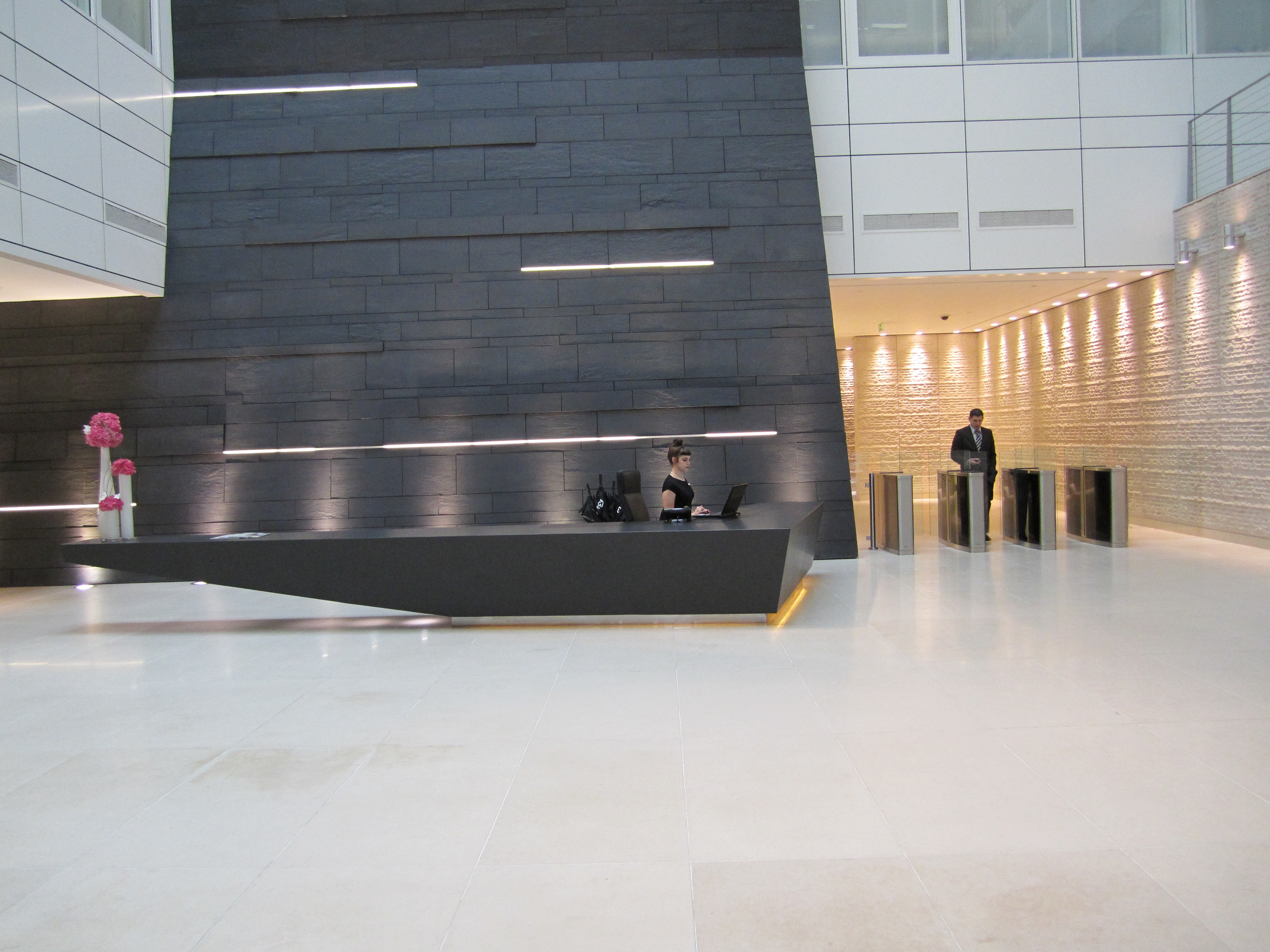
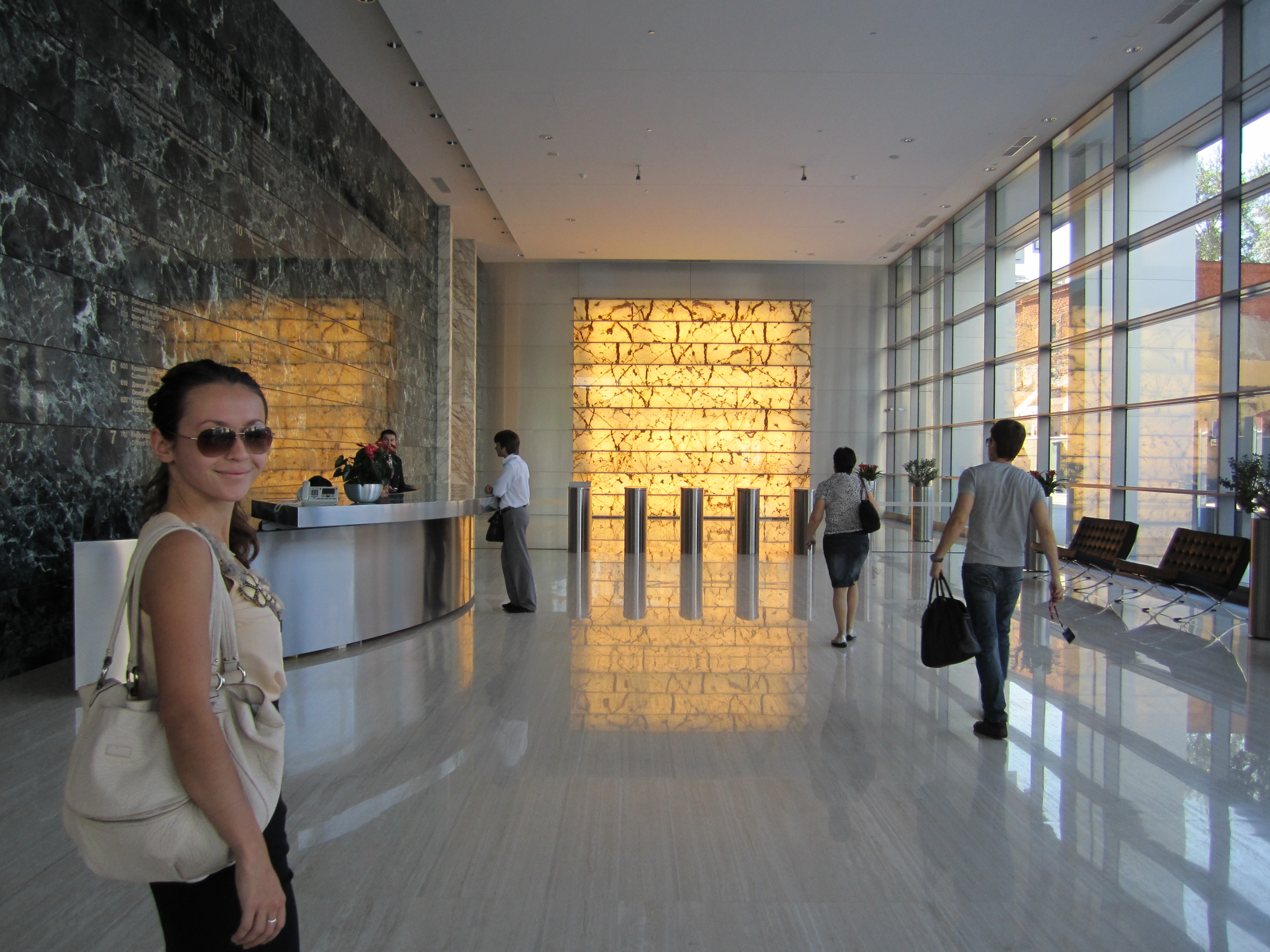
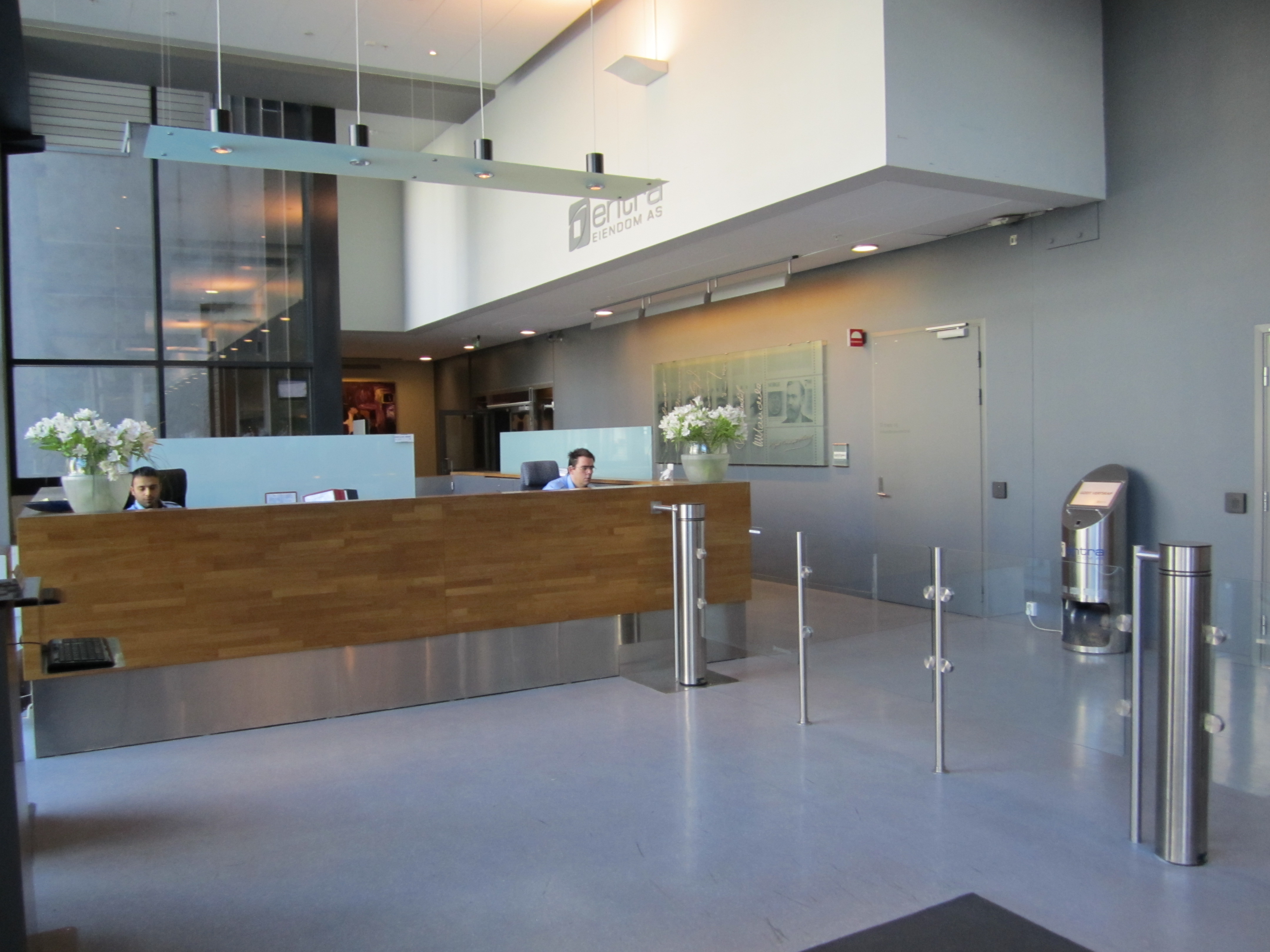
Another form of security is the turnstile, which is often a part of the built in material framework of the entrance for corporate offices, but can also be temporary installations at the entrance of pavilions where, for example, at the St. Petersburg International Economic forum in Russia we encountered them all the time.

Turnstile security is common, and found in many places across the world, we’re surprised not more is written about it. Typically, it is accompanied by a security personnel on duty, and depending on the building, the security personnel can be ominous or feminine.

Turnstile Security at IHS in London

Turnstile Security at Citibank in Moscow

Turnstile Security at Shell in Moscow

Turnstile Security at EconPory Consultants in Oslo

Turnstile Security in St. Petersburg Economic Forum

Metal Scanners at St. Petersburg Economic Forum

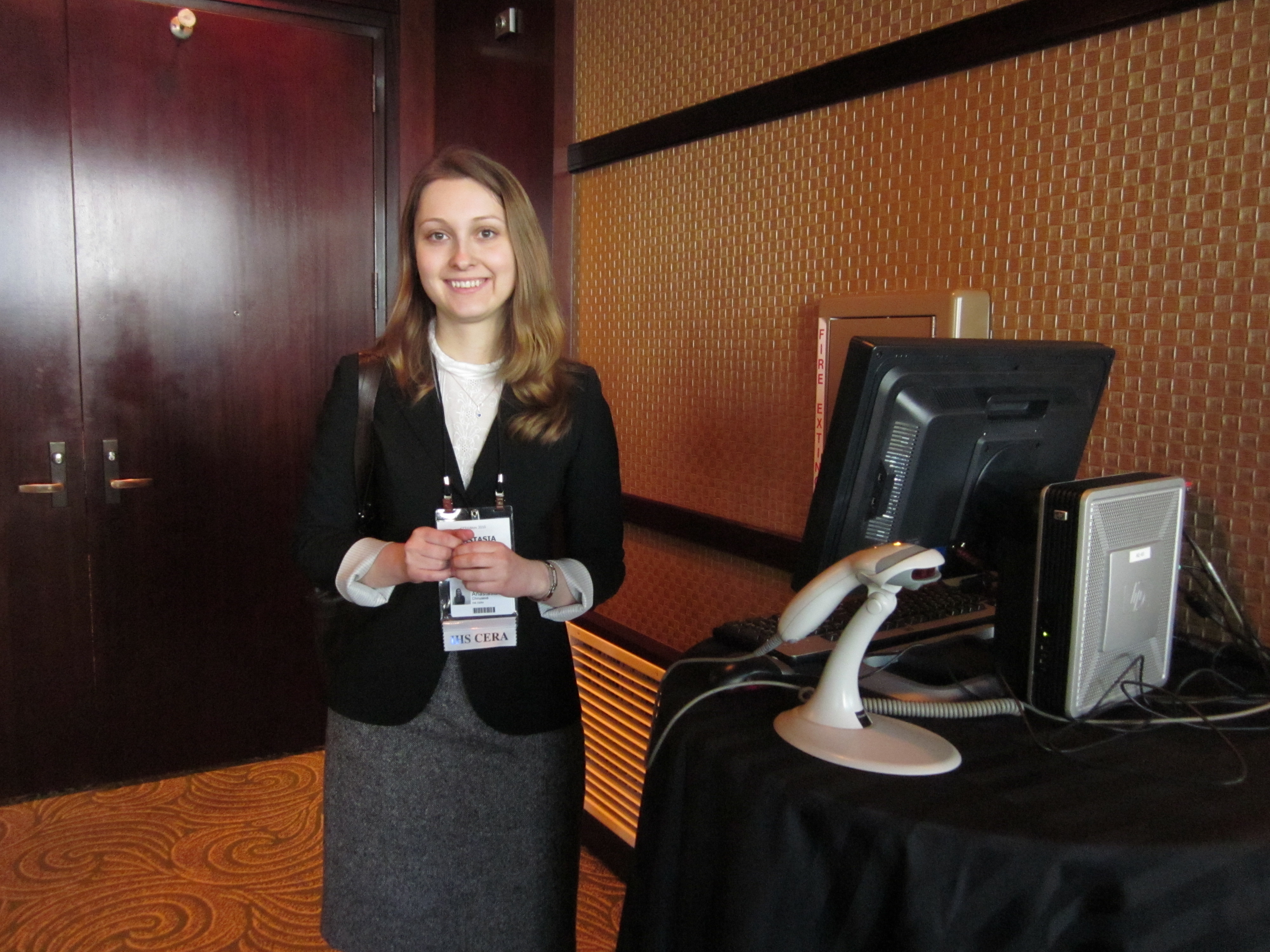
The photos above depict some of the more obvious forms of securing the body in relationship to experts and expert knowledges. We use ourselves as decoys to take the photos since there are restrictions surrounding taking photographs of security. There are many more forms. Perhaps the third most ubiquitous form of security, behind the policeman and the barricade, is the identification badge. Everyone wears an identification badge. Such badges typically hang from lanyards around the neck and are used not only to identify the names of clients, but also they typically have bar codes that can be used to access computers or enter into rooms where experts are giving presentations.

Security Badge with Barcode

Security Badge Barcode to Access Computer

Accessing Expert Roundtable Room Via Barcode Security

Did we mention yet what all this security is for? We will just mention at this moment that these places are pretty tony (exclusive, elegant), and security ensures that everyone present can relax in an elite sequestered environment where knowledge is a highly expensive, sequestered commodity.

CERA week drinking fountain (bar) Houston

IHS lobby in London

CERAWeek Meet & Greet under the Chihuly

One way to think about security and sequestration is to consider it from the perspective of having a front-stage and back-stage. This idea was initially developed by Erving Goffman who suggested a person’s identity is continually shifting and based upon performance through roles and consensus between the actor and the audience as a kind of dramaturgical development.

We are also interested in these contexts through which actors take on various roles. In particular, we want to know the way these contexts are specifically orchestrated and become manifest so that actors, whether they be experts or clients of expertise, come to understand themselves, specifically on the basis of their expertise and non-expertise.

One way to approach this idea is to refer to the space where clients are specifically allowed to view, participate, and otherwise have access to expertise as the front-stage and also, to refer to the space where clients are forbidden from entering as the backstage. Moreover, in relation to this backstage, we could posit that spaces are further sequestered by certain rules which relate to what portion of an event a client has paid for. For example, on the photo above, the badge indicates TuesWed, meaning participation is paid up until the end of Wednesday). These sequestrations or perhaps, restrictions, could include also the given status of a particular participant (speaker, sponsor, journalist), or the position of a client within their own organization that accords them with certain privileges and access to events, etc. There are many examples and variations. Of course, when taken from a public point of view, for example, say, the viewer of this site who is unfamiliar with such events, all industry access we typically encounter might be considered back-stagings, since these events require large payments in advance, formal invitations, elaborate vettings of identity, and so on.

Because we are in the process of writing a book about our experience with consultant expertise, and intend to include a chapter on security and the body, we will take some time here to elaborate on issues of front-stage/back-stage, as well as other observations we have made concerning where the body is positioned in relation to expert knowledge. It is a question: how does the body become positioned in relationship to (restrictions on) expert knowledge? Or rather, how does a body acquire identification by its relationship to experts and expertise?

Imagine, for a moment, the bronze and marble sculpture by Auguste Rodin called The Thinker. Well, the entire premise of this posture is that there is an appropriate position for carrying out the practice of thinking, for carrying out the activity of receiving knowledge, that is, how to possibly appropriately receive knowledge. In fact, The Thinker is an excellent example of the contemplation of modern knowledge which, as it turns out, requires its own specific bodily position (hunched over with chin on one’s fist). What a contrast to  kneeling with ones hands held together (as in contemplation of religious knowledge)!

We used to point out, in fact, during our undergraduate class discussions, that the position of The Thinker is typically the appropriate posture for acquiring knowledge by graduate students when speaking to their professors, while for undergraduates, typically, at least in the courses we have taught, the favored posture is slouching in the chair.

Helsinki Affair: We were in Helsinki recently (see posts on Aleksanteri) and asked by a fellow attendant at the conference to discuss the issue of security in relationship to expertise. Fortunately, a peculiar event took place just one day before that captured our attention in a way that we had never quite contemplated previously.

Typically, by way of background, academic conferences we have attended, which is to say, gatherings of expertly trained professionals working in the monastic realm of university social science research, there are few signs of security, apart from the identity badges hanging on lanyards across the chests of attendees, and in fact, it is often difficult to acknowledge what constitutes a breach of security. Only two instances in our memory standout. In New Orleans this past week at the anthropology meetings, we were asked to wear our name tags by guards at the hotel, a first! Also, several years ago, while attending a 4S conference (science and technology), fellow-colleagues, at the senior level, who founded the organization, began checking attendees for their badges, and possibly even politely interrogating them about why they weren’t wearing their name tags. And this was because attendees were not paying their registration fees for the event, and the organization was worried about how to pay its bills! However, this is all petty memory, nothing more than to establish that security breaches are not typically on the mind of academics who gather to freely exchange their ideas.

But we want to recall this event that took place in Helsinki because it was so unusual in our mind. We had arrived early to the appointed floor where we planned to attend the opening ceremony, perhaps one hour earlier than the event. There, outside the plenary hall, a rectangular table was just setting up with three conference personnel laying out identity badges for participants, as well as glossy, quite elaborate in fact, brochure about the 3-day Aleksanteri conference.

While sitting on the side lines, we noticed a Finnish speaking woman, who entered into the reception area, and then proceeded to stand in front of the rectangular table, pausing for quite some time, without making much of a fuss, but at the same time, without providing any indication of what indeed she was intending to accomplish. We recall that her clothing was rather piecemeal, tattered, and, while not entirely shabby, we noticed that the dress did not reflect the style typical of the academic class of personnel meandering through university buildings, who were clad in corduroys, layered sweaters and scarves with matching color schemes.

Well, what happened next was peculiar. The unknown woman, who remained unnamed despite her subsequent capture and immediate release by conference personnel, actually grabbed a brochure, and began running away with it. And these acts, of deliberately grabbing and running, created an immediate sensation among the personnel at the reception, as if to say, that the product being abducted with, the brochure, was something of rare value, which in fact, while expensively produced, was hardly secretive, in that the information therein was readily available on the internet, and perhaps, quite possibly given the organization’s well funded reputation, had been produced with many extras beyond what was required by participants, so that any reasonable request for the brochure, which had now become some kind of sanctified treasure, would have resulted in a relatively mindless gesture of handing over a copy. But in fact, it was this act of deliberate theft on the part of the unknown woman, or instead, the staging of what could only be at that moment interpreted as theft, that a melee ensued, with the main conference administrator running down the hall way, yelling in English “stop that woman, stop that woman”!

Frankly, we couldn’t believe what we were watching, and at the same time, thoroughly recognized what we were observing. The unknown thief passed us, turned the corner and while attempting to gallop down the steps to another level, was immediately intercepted by some university personnel, who happened to be walking up the stairs, and when upon the immediate arrival of the conference administrator, who after wringing the brochure away from the woman’s hands, and then realizing that the entire situation itself was some how a reaction, or rather, an over reaction (to an impulse of the issues such as running, yelling, abducting), the event immediately in fact, ended, and all was quiet once again.

Well, in fact, the only unfortunateness associated to this event occurred during our discussion of the issue of security and expertise a day after, when with good intentions, we reawakened this peculiar moment to the conference administrators, because we were discussing the topic and had asked them of their impression of this occurrence, under the pretext of understanding in what context, actually, could knowledge surrounding such an open conference transform into delicate secrets that required security. To our dismay, the conference administrator in nervous bodily movements, began making repeated excuses for retrieving the brochure, assuring us that the entire situation was simply a strange misunderstanding. Our own repeated disclaimers failed to reassure that we were only discussing the issue as a rare example of the fact, that only under such strange mishaps as mentioned above does knowledge have restrictions at a social science conference. Well, this was a departure point for our discussion, and we certainly apologized to our hosts if the mere recollection of the chase scene disturbed their conscience. But here again, the notion that they would feel something untoward about their own actions, serves to emphasize the impractical nature and peculiar effect of exercising some kind of privileged authority over the circulation of academic knowledge in certain circumstances as just stated. This is a very different effect indeed, from the deliberate forms of security surrounding what we call the Hands Made of Putty effect.

Hands Made of Putty: whenever we shake hands with experts, especially those in their late 50s and older, we feel like we’re holding the hand of a baby. During earlier fieldwork in Alaska, when we were interested in rural villagers, we noticed how hard their hands were and with what zing they gripped us in handshakes (ow!). Typically, they received this strength from working many decades in the fishing industry where they constantly would be using their hands to turn a cold steel wench, pull an icy wet rope, throw a slimy salmon into a brailer, or whatever activity was required. We spent one summer in the Gulf of Alaska commercial salmon fishing, and we know that physical activity in these work environments is a habitus that is not quickly or easily acquired, but quite often, for persons working decades in these fields, it becomes durable. Among retired fishermen in their 80s, their handshakes were still quite strong and their hands were tough like metal.

And by the way, the reference to Alaskans is not oblique. Many of those client-expertise interactions we witnessed, at least in the formative part of our ethnography were precisely those between Alaskans who had worked for their state and emerged as local politicians striving to make decisions about resource development for which energy experts were required. So in fact, the hand shake was one of the more distinct interactions between expertise and clients of expertise which distinguished what an expert actually is (Dr. Putty Hands).

One thing that strikes us then, about some of the experts we deal with these days, is how fragile their body is physically. This soft cellular physicality, developed from years of typing or holding a coffee mug, could be brought to physical harm quite easily and great damage would result, precisely because of this fragility. This is a serious issue. Even giving an expert a strong handshake is tantamount to aggression and would raise eye-brows. This relationship of enforcing superiority over another person through the handshake by demonstrating physical prowess is strange indeed, and while it rarely occurs, it actually can take place. In those weird instances where an expert is confronted with someone whose aim is to send a message that their inferior status as a intellectual producer could be compensated by the fact that they could handily beat the expert to a pulp is one possible scenario that experts really want to avoid. A good way to avoid this is always to have body guards immediately visible and present. (We might add parenthetically that debates over ideas along with a few drinks can result in various types of ripostes or duel-like banter and in certain circumstances, end in violent exchanges. It happens all the time in bars across the world. To ensure that these fragile bodies are not harmed, there needs to be visibly present, forms of personal security that can act at any moment.)

Variations on Participation: here, for future reference, we aim to discuss different roles that clients can take in participation at workshops and conferences. Journalists, speakers, former employees who have entered industry, academics, etc. all have different forms of access to front stage and back stage. We could begin with out own experiences…

Added-Values and Friendships: here, for future reference, we identify how sometimes friendships allow for possible access to events in ways that they would otherwise not happen, say, of the particular contract a company has with an organization may create opportunities for extra-contact with experts, called added-value discussions.

Read Full Post »

« Newer Posts