Feeds:
Posts
Comments

Posts Tagged ‘Moscow’

In Moscow, we had breakfast with Citigroup energy analyst Alexander Korneev. The meeting was part of our effort to establish connections with financial analysts who determine market understandings and provide assessments of developing energy projects in Russia. Alexander creates assessments on the East Barents Sea offshore natural gas project called Shtokman, and we wanted to follow up with him on this topic.

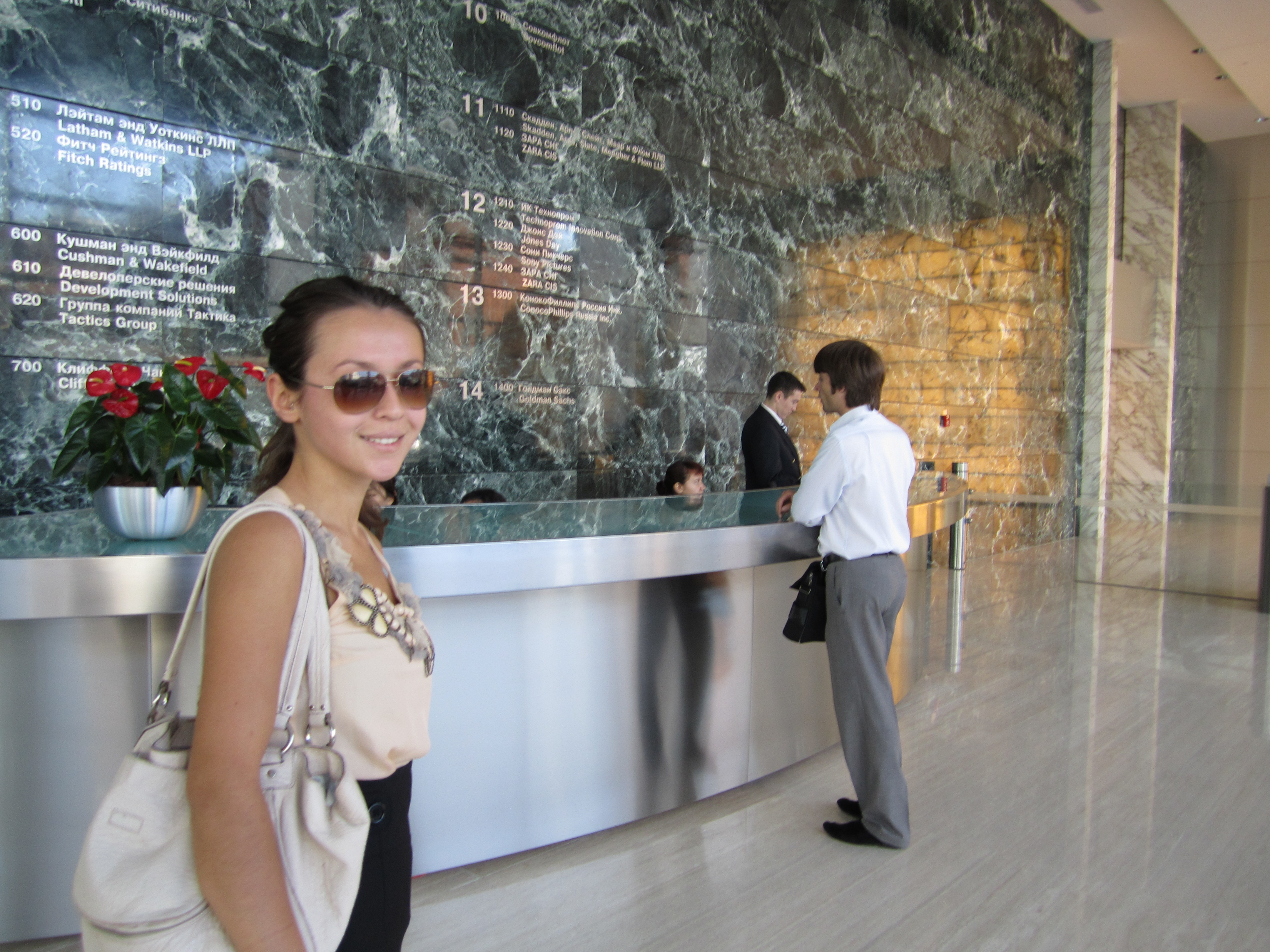
It was also an opportunity for us to enter into the Citigroup Highrise located in downtown Moscow…

Alexander K. is frequently quoted in the press as you can read here. He is a spokesperson for determining the financial health of Russian oil and gas companies. Alexander K. is listed also as a co-author on a number of Citigroup insight reports concerning the timing of development on the Shtokman offshore arctic natural gas project.

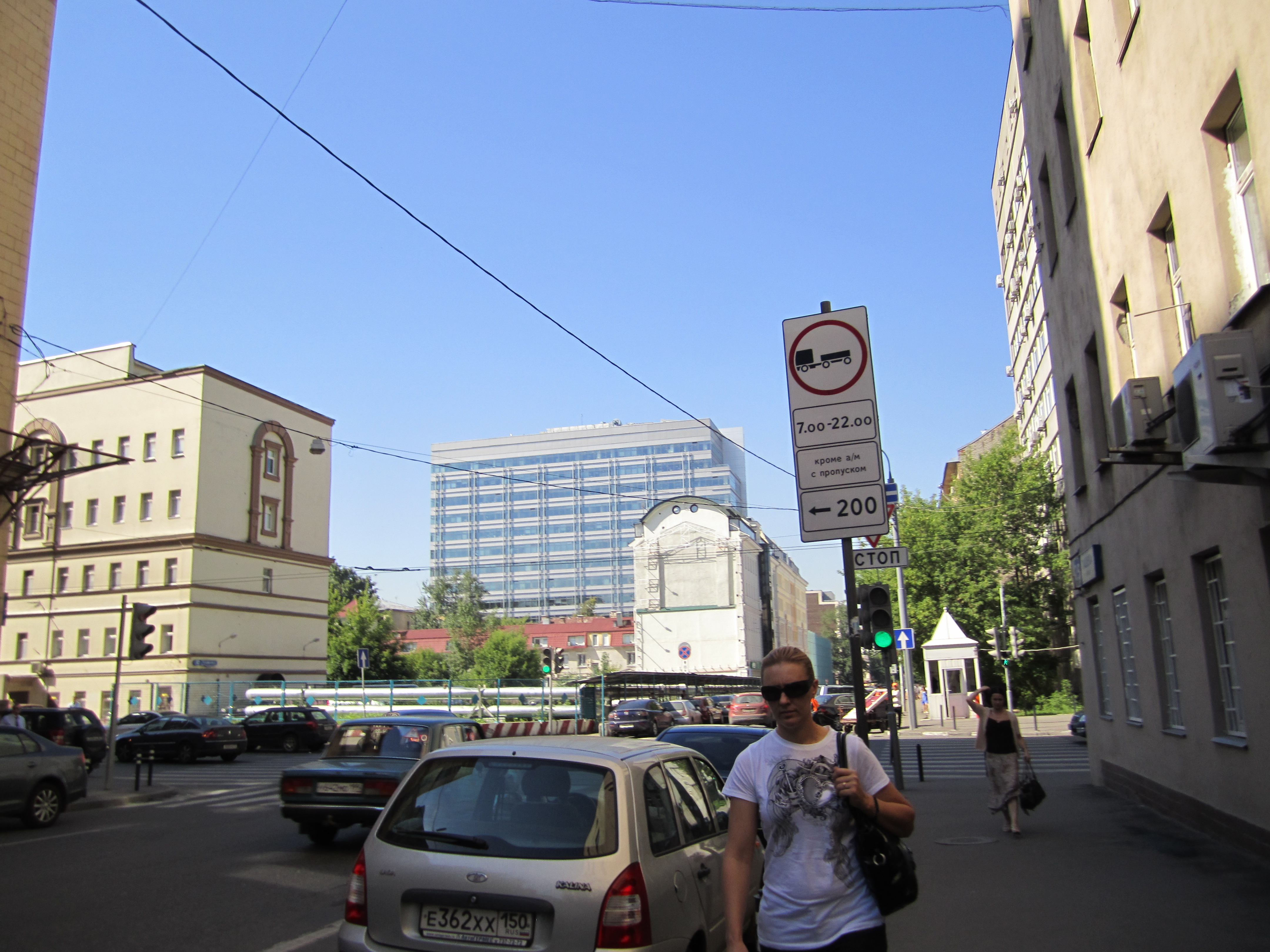
We couldn’t help noticing our route to the Citigroup Building, and we want to take a moment and set the stage for how we arrived at breakfast. We took the subway as far as Mayakovskaya station, and then began wandering around the neighborhood, looking for Ulitsa Gasheka 6 (Гашека ул.), the very address for the Citigroup building. It was difficult for us to get our bearing coming out of the subway and while wandering the neighborhood, we decided to play a guessing game about which building would be the Citigroup.


In fact, the Citigroup appeared to us as an Island of Inland Empire, rising out of an older neighborhood in the mode of a brand new office center, all to its own, like an island of financial exception.

The following image, by the way, captures the external world of the everyday life that surrounds Alexander K. The buildings are some of the objects of representation that serve as the dominant in structuring the images that Alexander K. (as a financial analyst) has of himself, including his ideological relationship to the world and the principle behind his aesthetic orientation of himself to his surroundings.

For example, Alexander K. is aware that he holds an office in a building and that this awareness confronts him visually every morning upon his exit from the subway station. He is aware also that others can see this building as they leave the subway — as we do, for example, as we walk toward his building.

Thus, the field of vision belonging to Alexander K.– alongside and on the same plane with the self-consciousness he has of himself– also absorbs into it, the entire world of objects that surround him, and – in fact – the other fields of vision (e.g., us) who hold another point of view on the world, but whose point of view is now exposed to the visible reality of Alexander K’s world (e.g., the Citigroup Building we see from the subway station among other buildings).

One might say, following Mikhail Bahktin‘s description of the Hero in the novel of Fydor Doestoevsky, that: to the all-devouring consciousness of Alexander K., there is juxtaposed to this, a world of other consciousnesses that he encounters.  And he absorbs these other features and consciousnesses, which are rolled into his own material.

How does this occur? What consciousness will he now confront — Well, ours! and everything that we understand of him as we move through a set of visuals to visit him. What are these visuals that we absorb, and for which he will in turn be confronted with, which he already is aware of? Let’s look at the following visuals as expressions of power and distance:


Well, there’s the security turnstyles:


The visibility of titles of prestige:


Reception room of Alexander K. – notice the images posted on the wall…

“In power that may exist but is not visible in the appearance of the ruler the people do not believe. They must see in order to believe…. the most visible expression of this total focusing [on the] person and his elevation and distinction, is etiquette.” (Norbert Elias Court Society p. 118, emphasis added).

Here, what I want to draw attention to is the ritualistic visibility of the building itself, the titles of offices placed into the marble wall behind the security desk, the requirements for identifications badges to pass through the security turnstyles, what is important here, is: (1) objects within the field of vision and (2) the aesthetic distinction that this particular field of vision provides. As we move through this sequence, from (a) envisioning the building from the entrance of the subway, (b) the building’s visual amidst the neighborhood, (c) through security and recognizing the various company offices in proximity to Citigroup, (d) and finally arriving at Alexander’s reception desk, where we encounter, well, another set of visuals, about — buildings:


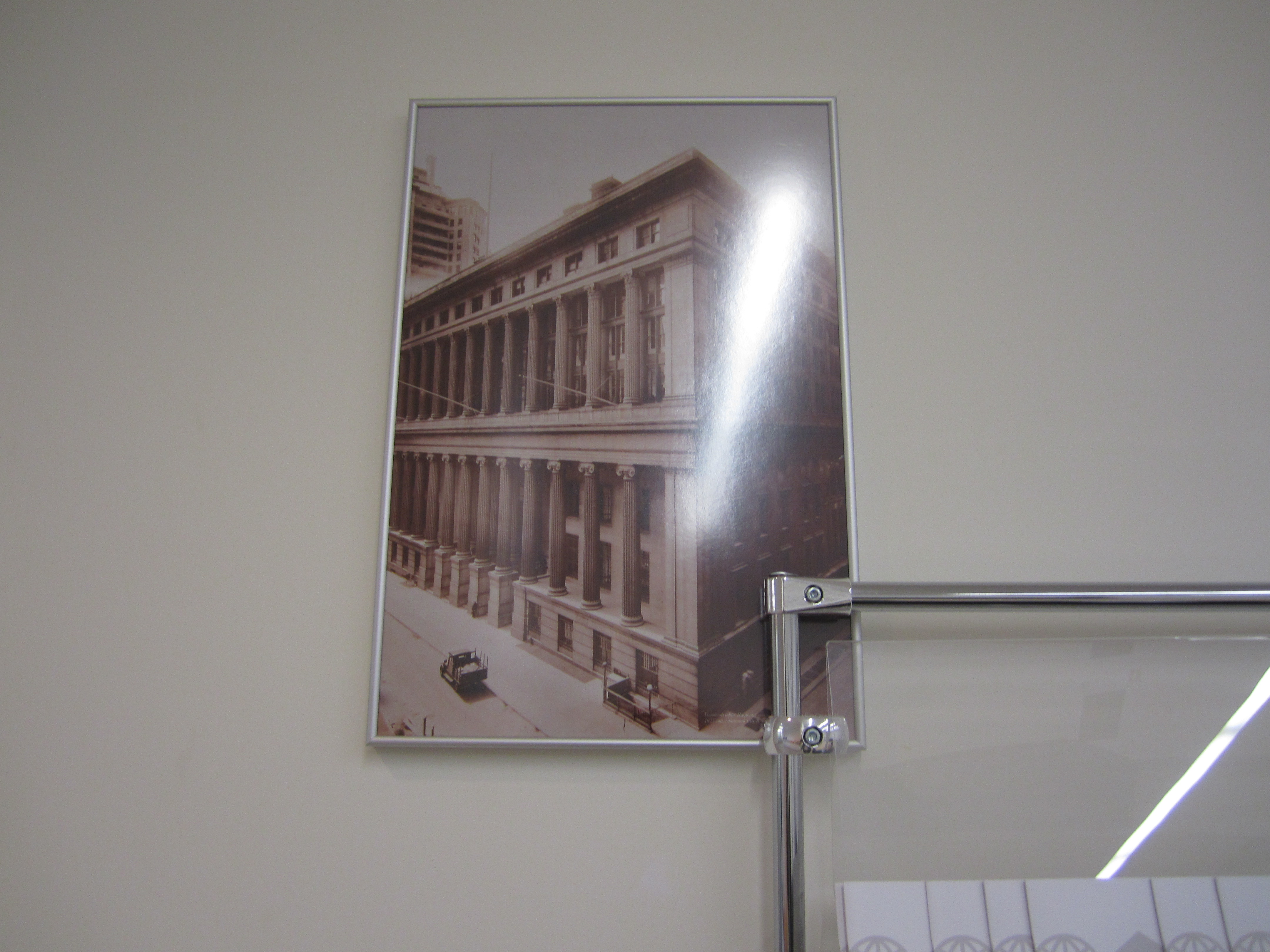
Images of power and history: A buiding within a building.


Reminders of where you are:


The image actually has a descriptive in Russian and English:


Notice in these photos that hang on the wall of Citigroup reception, what we become witness to is a visual on the historical power of Citigroup as an expression of a building, an actual building in the past, that is brought to us in the present, as a visual expression of the permanance of capital, metropolitanism (New York and Madrid) and expanse across territories (the fact that these images are in Moscow).


Oh boy, okay, where shall we go for breakfast?


Citigroup on one side:


Eatery on the other:


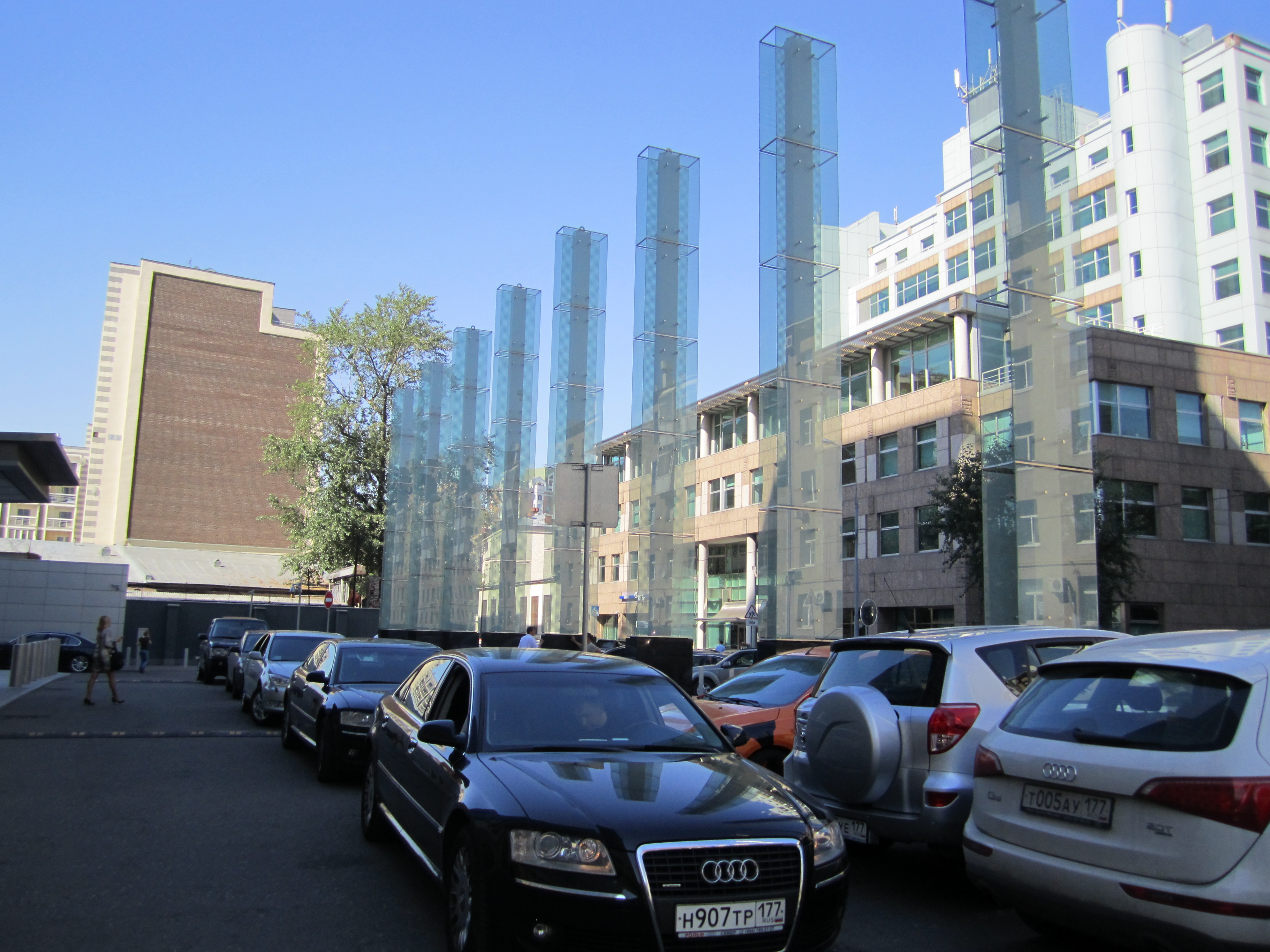
Audi parking in-between (compare with cars in previous gashenka street photo)

Architecturally, we have two new buildings that comprise this particular cityscape — from this perspective (which is the only perspective you see if you google Citigroup Moscow), what we find is a self-sufficient ideologically and structurally self-enclosed sphere.

What is required of us, is to leave the building, pass Starbucks, and enter into another entrance, that of a high-end eatery directly across this parking lot. No reference, assimilation or visual of the surrounding neighborhood.


Citigroup entrance:


…passing Starbucks…


Eatery entrance directly across from 6 Gasheka:


We have entrances of steel and glass, clean streets, even pavement–what we have here is a type of interior, with the only exposure to Moscow being the sky. It is a pose, similar very much so, to that of the galleria of the World Bank in Washington, D.C. (as seen in this image, taken while visiting the Energy Czar, Dan Kammen).


—  But there, the exposure to finance as composed by the World Bank building itself — reaches its zenith. In that building, it is a private public square without any interference from the city scape.


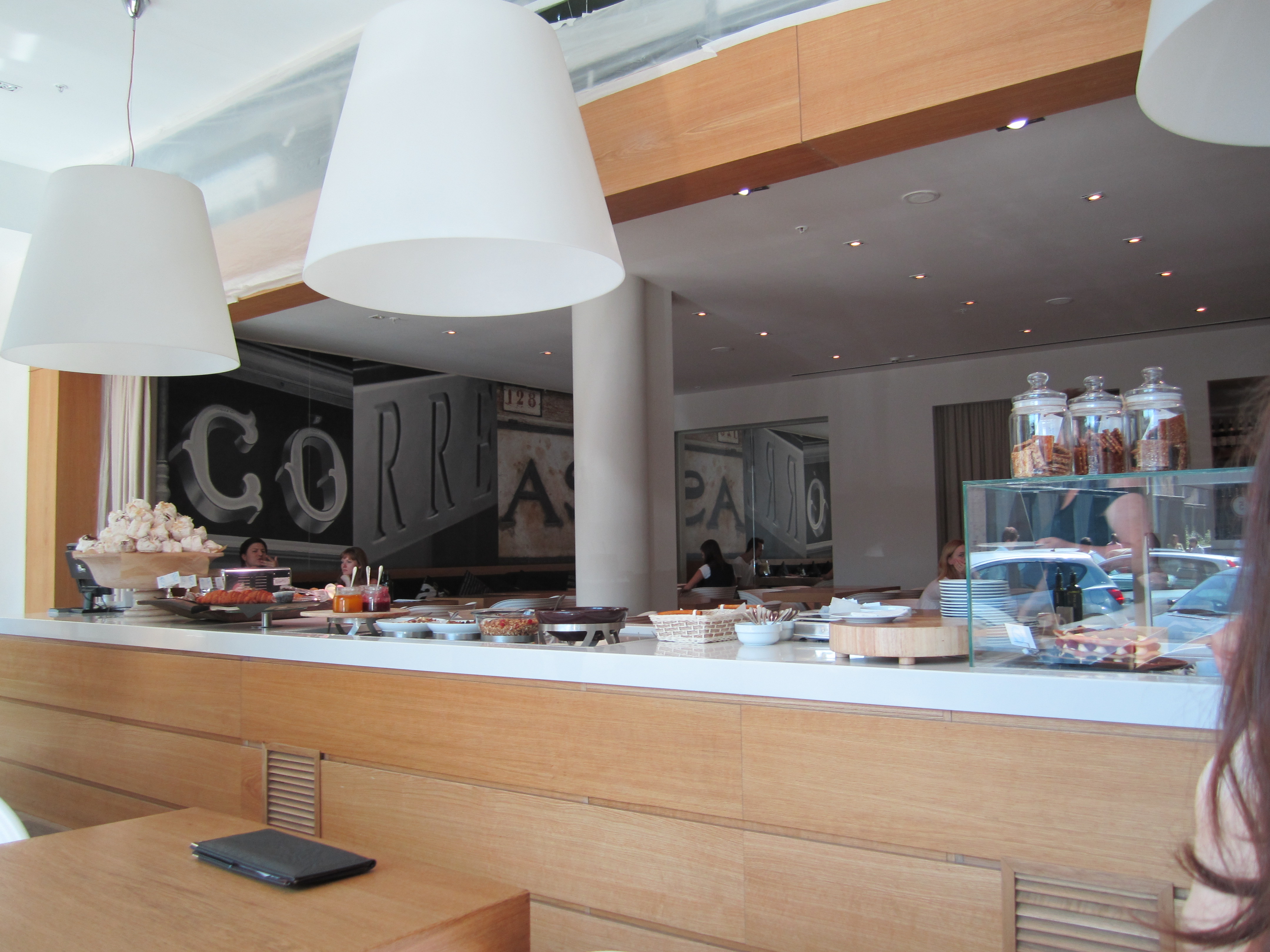
Okay, breakfast.

Buffet left, center and right


Vanguard and Rearguard
Knowledge-making surrounding energy development in Russia today consists of two contrasting social groups: a rear-guard made up of an older generation of specialists whose structural position as managers of organizations such as Gazprom and the government ministries is based upon accumulated political capital, that is, their built-up personal connections throughout their career, and; a vanguard or alternatively labeled the Global Russians (Globalnye Ruskie) – a phrase adopted at the St. Petersburg Economic Forum this past June, to identify a younger generation of Russians educated in the West and who are now serving as experts in Moscow either in the capacity as energy analysts, journalists, etc. for western firms (e.g., Citibank), or for newly created government entrepreneurial incubation parks. This vanguard group is further characterized by their reliance upon American economic discourses concerning relationships between capital expenditures, transparent reporting, and returns on investment.

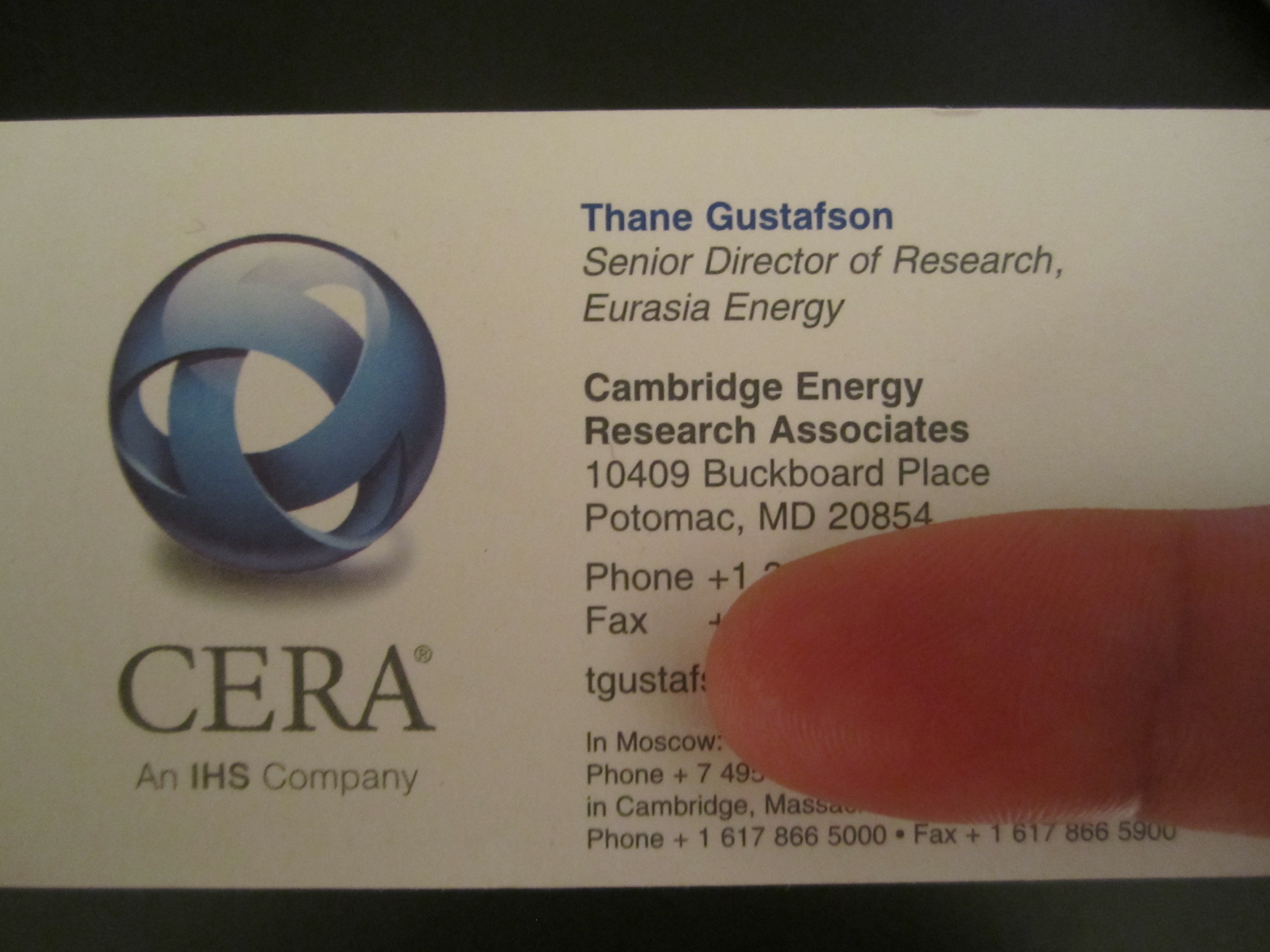
Business card in English

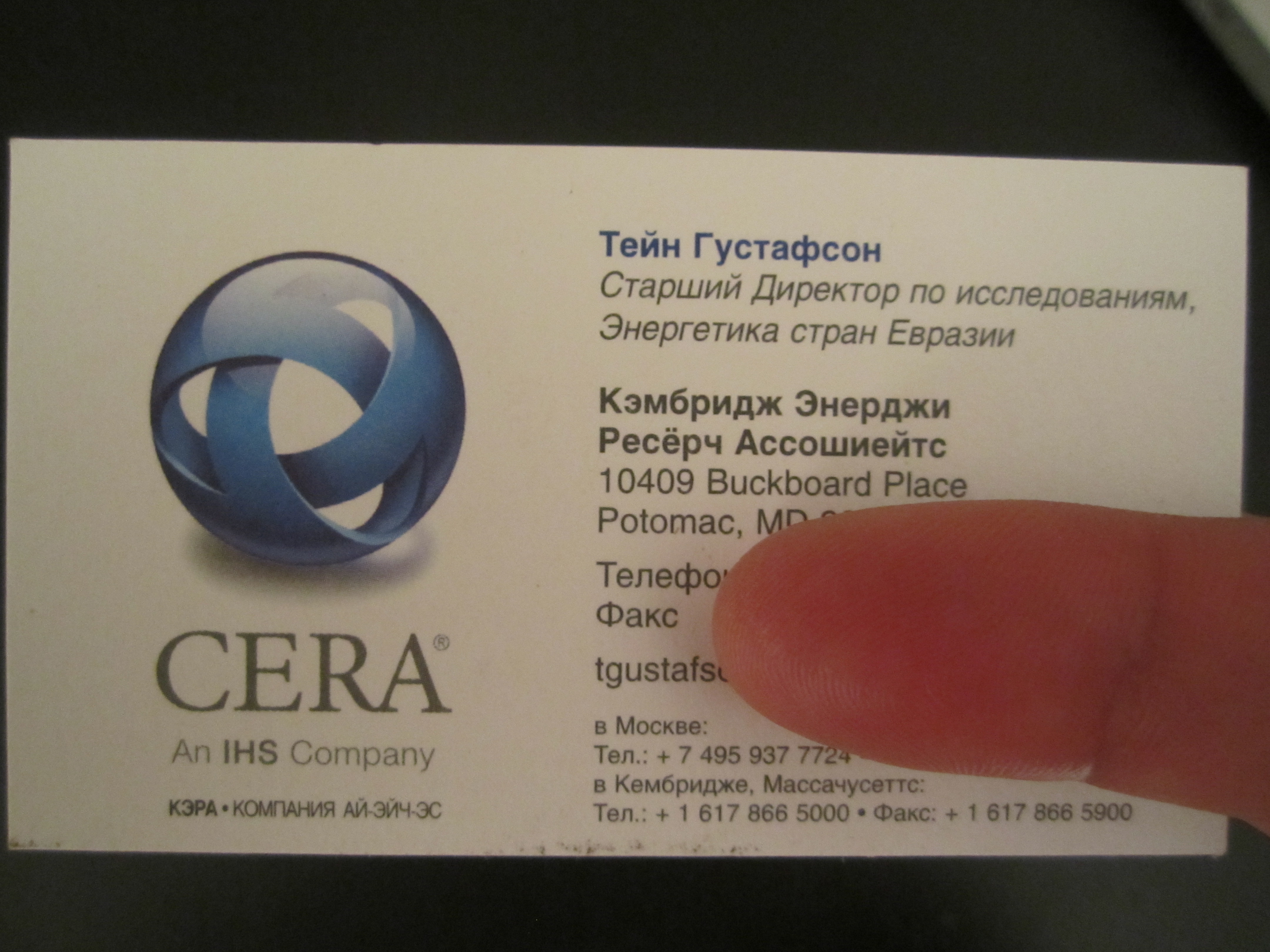
Business card in Russian


Alexander K. clearly belongs in the latter group of vanguards.

Read Full Post »

The Following

Mr. G.


Mr. G. in Houston, USA


Mr. G. in Moscow, Russia


Mr. G. in St. Petersburg, Russia


Mr. G. back in Houston, USA


Read Full Post »


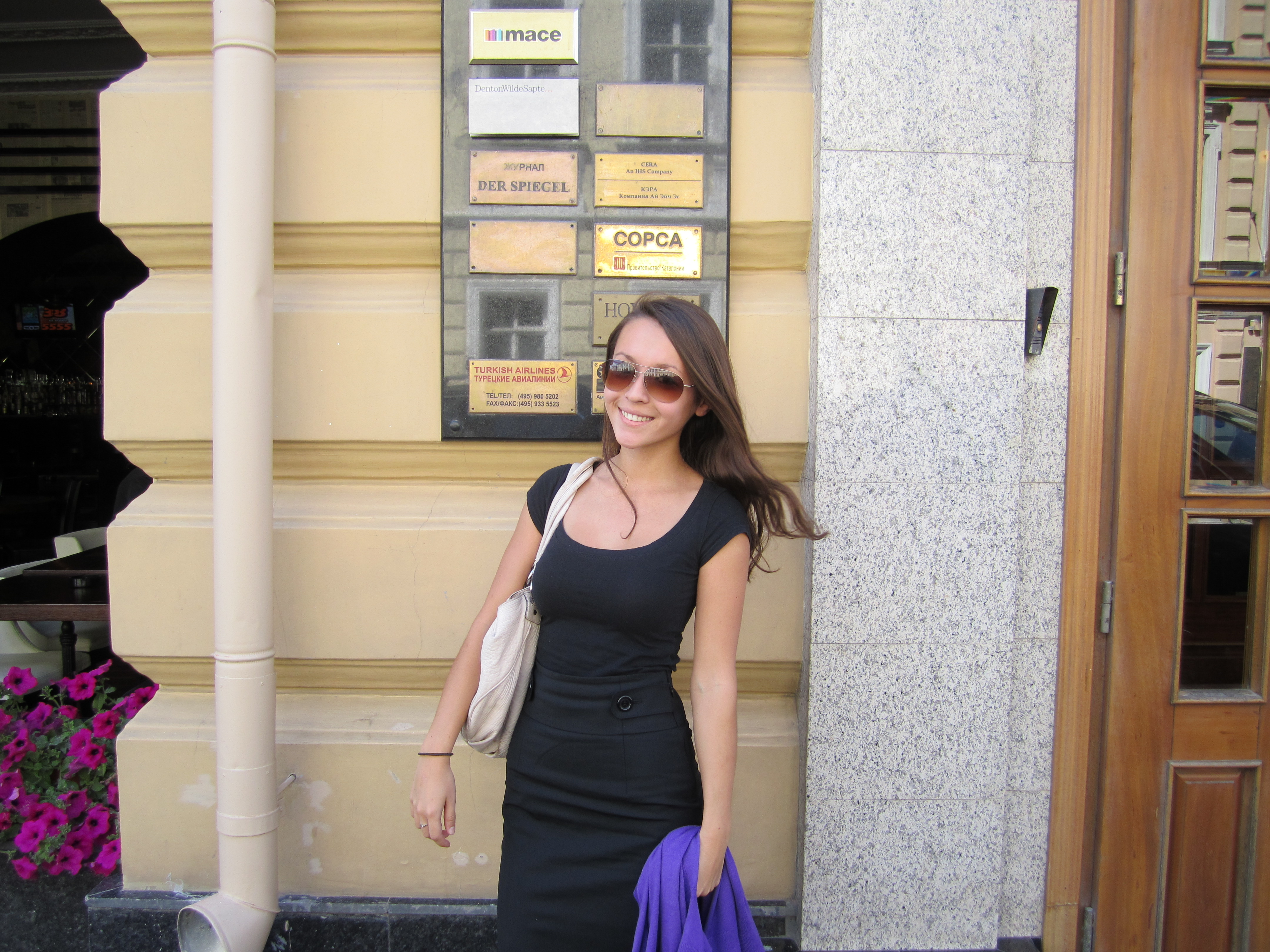
Alex staging plaque


I find myself fascinated by the crypto-symbolism of sense making created by Cambridge Energy Research Associates or CERA. As many of you know, CERA is an energy consulting firm and global leader in providing advisory knowledge to decision makers on energy development. It is headed up by the charismatic energy guru Daniel Yergin. I first met Dr. Yergin while working as an energy lobbyist under Alaska Governor Tony Knowles. But that’s another story. CERA has 11 offices across the world so whenever we visit a destination with a CERA office we like to check in.

In Moscow, Russia, we visited Vitaly Yermakov at the CERA office. I have quite a bit to write about that meeting. But before going there I want to pause on the curiosity of this bronze plaque that identifies the Moscow office.

Please take a close look at this plaque, and you will come to understand what is so interesting about the intersection of anthropology and energy expertise. First of all, the plaque is glued to the entrance of a Moscow office building. And, as you can see from the empty holes on each corner — in fact, the plaque was created specifically to be bolted to the building. The use of bolts has a long history and predates the use of glue, which is relatively recent. That is, a bolted plaque provides a narrative about historical time. Unlike glue, which hides between the plaque and the building, bolts provide visible evidence of attachment in a material way that captures the viewers attention.

It’s not unusual to see a bolted bronze plaque in Russia. Together, the bolts, the bronze metal and the plaque —together— establish the mark of a reputable institution in the eyes of the pedestrian, and this process of marking applies widely from hotels to universities. Take a look here:


“European University in St. Petersburg” as engraved in the Cyrillic alphabet.


Bolts, bolts, bolts (admission: in the lower image, the plaque uses screws).


Nevertheless, you get the message. Using a bolt is Meaningful as evidenced — both, by the drill holes in the plaque and the visibility of bolts actually used to secure the plaque to the building.


So why are there no bolts on the CERA plaque?

It is certainly tempting to suggest the answer has something to do with the building itself, the materials used, etc. — a kind of materialist functional answer. Uh-huh. I thought about that one. So why is it then, that the bronze plaque, directly located to the left of the CERA plaque — have bolts?

Bolts and No Bolts By Comparison


Thus… this peculiar feature of marking energy expertise raises the question: why are there no bolts on the CERA plaque in Moscow?

Can you imagine? The presence and absence of bolts on a Moscow plaque as the basis for developing a theory of the role of Western energy consultant expertise in Russia? At any rate… let’s take a look at the sense-making surrounding the various types of lettering…

Notice that the hotels are written using a Latin alphabet and communicating in the English language proper. That makes some sense. These are expensive hotels often catering to tourists from Western Europe and the US. The only example of a purely Cyrillic alphabet belongs to the plaque announcing the European University in St. Petersburg. And that makes sense, in part, because they are already somewhat estranged by their institutional title and affiliation as a “European University in” Russia — so identification in purely Russian language would seem to soften the dissonance between their institutional identity and the requirement for presenting themselves as, well, a Russian institution (a European-ly Russian institute).

Then, there’s the bronze plaque above — “ЖУРНАЛ DER SPIEGAL” — indicating the German Newspaper Der Spiegal, written in both Cyrillic (ЖУРНАЛ) and Latin (DER SPIEGAL) alphabets.

Okay, this is going to sound a little nutty:

First, notice what the Der Spiegal plaque has in common with the hotel and university plaques. They are all using UPPER-CASE FONTS for ALL letters. By contrast, the CERA plaque capitalizes only select letters of words: (1) the beginning of each word; (2) acronyms in Latin and Cyrillic; (3) the first letter of each acronymic letter in cyrillic that spells out the company IHS.

That’s weird to me. Another thing: Notice please, that the CERA plaque has written in Latin alphabet the acronym “CERA”. And this acronym has a direct Cyrillic alphabet translation in the acronym “КЭРА”….

….By contrast, however, the acronym in Latin alphabet “IHS” is not translated into a Cyrillic alphabetized acronym, but instead, into the words “Aye Aech Es” by use of the Cyrillic alphabetized letters “Ай Эйч Эс” — This raises the question: why on earth do the words “IHS” when translated into the Cyrillic alphabet lose their direct translation as an acronym but appear on the plaque as a string of words (“Ай Эйч Эс”) that provokes an English pronunciation of the company?

Let me drive the point home: the acronym CERA produces a sound pattern in spoken English as “SERA”. By contrast, the acronym КЭРА produces a different sound pattern, that if heard by an English speaker, would sound like “KERA” — There is a difference in the sound pattern of the English versus Russian lettering, even though both acronyms refer to one and the same company. The plaque allows a Russian speaker to pronounce CERA as “KERA” (and not “SERA”) in the Russian language. Yet, this same plaque demands that a Russian speaking pedestrian create the sound pattern “Aye Aech Es” (Ай Эйч Эс) for the acronym IHS as it would be heard when speaking in English.


As a reminder, we’re looking at the representation on a bronze plaque in Moscow of an energy consulting firm — through their choice of lettering to create an image of the company for the pedestrian, and asking the question, why is it that the acronym “IHS” must remain pronounced in English through the cyrillic lettering “Ай Эйч Эс” — when a direct font translation if printed in Latin script would be rendered “CERA An Aye Aech Es Company”.

Now we have three puzzling questions surrounding CERA’s bronze plaque in Moscow:
(1) Where are the bolts?
(2) Why is there a mix of upper-case and lower-case lettering?
(3) Why is the acronym “IHS” rendered as words printed in Cyrillic, when the acronym “CERA” — in Latin alphabet is rendered as the acronym “КЭРА” in Cyrillic alphabet?


It is worthwhile to note that this staging of the — IHS/Ай Эйч Эс and CERA/КЭРА –formula is not a unique event to the plaque alone, but represents an aesthetic of form, a rationality of self-presentation as seen duplicated on business cards. Here is the Russian language business card of a CERA expert working in Washington, D.C. — notice the presence of “КЭРА/Ай Эйч Эс” on the very bottom of the image.

IHS CERA in Cyrillic type

On the English side of the business card, the Latin alphabet is pure and simple “CERA — An IHS Company”

Returning to the Russian side of the business card, the Cyrillic alphabet appears directly below the Latin alphabet — recreating the bronze plaque in Moscow almost completely in lettering and placement (the trademark which appears on this card is not on the bronze plaque).


Not incidentally, the business card provides an important clue for understanding the anomaly in acronyms — notice please the following:

CERA An IHS Company”

КЭРА Компания Ай-Эйч-Эс”


Do you see it? CERA and КЭРА are both printed in Bold Type Face.

Whereas only IHS is printed in Bold Type Face — Ай-Эйч-Эс is not. What this means is that the logic of Ай-Эйч-Эс is not that of an acronym, according to the company itself. It is in fact, thoroughly understood as a string of words, printed in Cyrillic alphabet, with the purpose of producing the sound “Aye Aech Es”.

As such, Ай-Эйч-Эс is a string of words. On the one hand, the sight of these words does not produce an immediacy of meaning that the three previous acronyms produce. The acronyms function as a hieroglyph — at one glance, we understand what they are meant to signify. Thus, Ай-Эйч-Эс is weighted down considerably. First, it requires a double-step to arrive at the meaning of the acronym (pronunciation and then realization). Second, the time-lag required for cognition dampens the effect of immediacy that accompanies the hieroglyphic sign function of the acronym. Third, the bold type face accents the immediacy of the hieroglyphic function, while the absence of bold type face emphasizes the immediacy of pronunciation function (i.e., “Ай Эйч Эс” appears like every other word that requires reading).

CERA stands for Cambridge Energy Research Associates. If you google the acronym CERA, a variety of company pages and news articles pop up in spades. However, if you google КЭРА, you are likely not to find anything, until you combine the acronym with a word string, such as “КЭРА energy”. So what does КЭРА actually stand for, if it is not a recognized acronym of the company in its own right?

Well, this is interesting. КЭРА is actually a transliteration of CERA. That is, it is the spelling of “Cambridge Energy Research Associates” in the Cyrillic alphabet: Кембридж Энерджи Рисерс Ассошиэйтс or КЭРА (Cambridge Energy Research Associates or CERA). In Russian, it is a string of word-sounds that would be recognized by a Russian speaker as totally foreign, of foreign origin. What this means is that the phrase does not follow any grammatical rule or usage in the Russian language that usually governs over the spelling and pronunciation of words. It is stable and static. It does not decline, for example, when used in the news media. Take the following example, of an advertisement for a job vacancy at CERA:

Looking at the first sentence, appearing under the news headline and company internet link — there are the words printed in cyrillic:


“Компания Кембридж Энерджи Рисерс Ассошиэйтс, Инк., КЭРА (Cambridge Energy Research Associates, CERA) –”


In English:

“[The] company [of] Cambridge Energy Research Associates, Inc., CERA….”


The point I want to make here is that the first word “company” in Russian (Компания) is typically followed by the name of a company appearing in its possessive declination, something like the following: Кембриджа Энерджй Рисерса Ассошиэйтса.

But here, of course, the phrase remains a transfixed loan word, without interruptions in Russian language. One might say, that it belongs to a category of Western capitalist word formations that are new to Russia, including the transliteration of the phrase “energy consulting” (энерджи консалтинг). The actual word Energy in Russian is Энергия or Energiya — “Energy”. It is not энерджи which in Russian, has the same pronunciation as the word in English energy.


But there is more: Look again at the Russian spelling — Кембридж Энерджи Рисерс Ассошиэйтс.


Actually, if you pronounce this phrase from your lips as it is spelled out, what you would actually hear is the following: Cambridge Energy Researsh Associates” — The word “Research” is actually mis-transliterated. The word is spelled without using a ч on the end, to create the “CH” sound. Instead, it is spelled with a с on the end, creating an “S” sound.


A small consideration perhaps, but then why go through the trouble of absolutely ensuring that that the “H” in the acronym “IHS”, is spelled in Cyrillic with the ч sound (Эйч)?


Thus, we add to our original three questions, a fourth question:

(1) Where are the bolts?
(2) Why is there a mix of upper-case and lower-case lettering?
(3) Why is the acronym “IHS” rendered as words printed in Cyrillic, when the acronym “CERA” — in Latin alphabet is rendered as the acronym “КЭРА” in Cyrillic alphabet?
(4) Why is the ч (“ch”) pronunciation important enough to be spelled out in the acronym “IHS” but apparently, not important enough to be spelled out in the word “Research”, when the latter word appears in the Cyrillic alphabet to denote the company name of Cambridge Energy Research (Рисерс) Associates?

And what does this all have to do, we wonder, with the fact that at the front door of the CERA/IHS office inside the building, the sign indicating the companies only refer to IHS?


These differences are beginning to suggest a critical set of distinctions that separate CERA and IHS as the joint company appears to itself and others inside of Russia.

Cultural logics of Western practice —

available at the passing glance of a pedestrian…


Paparazzi.Ethnography@berkeley.edu

Read Full Post »

Security of Expertise

In this posting, I want to make a few comments on the great deal of security and restriction surrounding participation at energy roundtable events, or when I attend meetings in the offices of industry personnel.

Bodyguard at Executive Roundtable in Houston

Certain forms of security can be transparent, such as the presence of police personnel, as this photograph from CERAWEEK 2010 in Houston shows on the right (click on photo to expand). CERA Week just moved their venue to the spectacular new Hilton (for years they were at the Westin Galleria).

We (then assistant, Alex Karamanova and I) encountered these bodyguards quite frequently, whenever we attended such events, especially if there are over a few dozen people attending. At this particular event, which takes place in Houston annually and gathers together all the most important industry leaders for a week-long discussion on energy trends, you typically can see anywhere from five to seven policemen wandering around in the main lobby area, with their fire-arms on display. These guys are pretty big. We personally would not want to mess around with them.

Bodyguards at Executive Roundtable in Houston

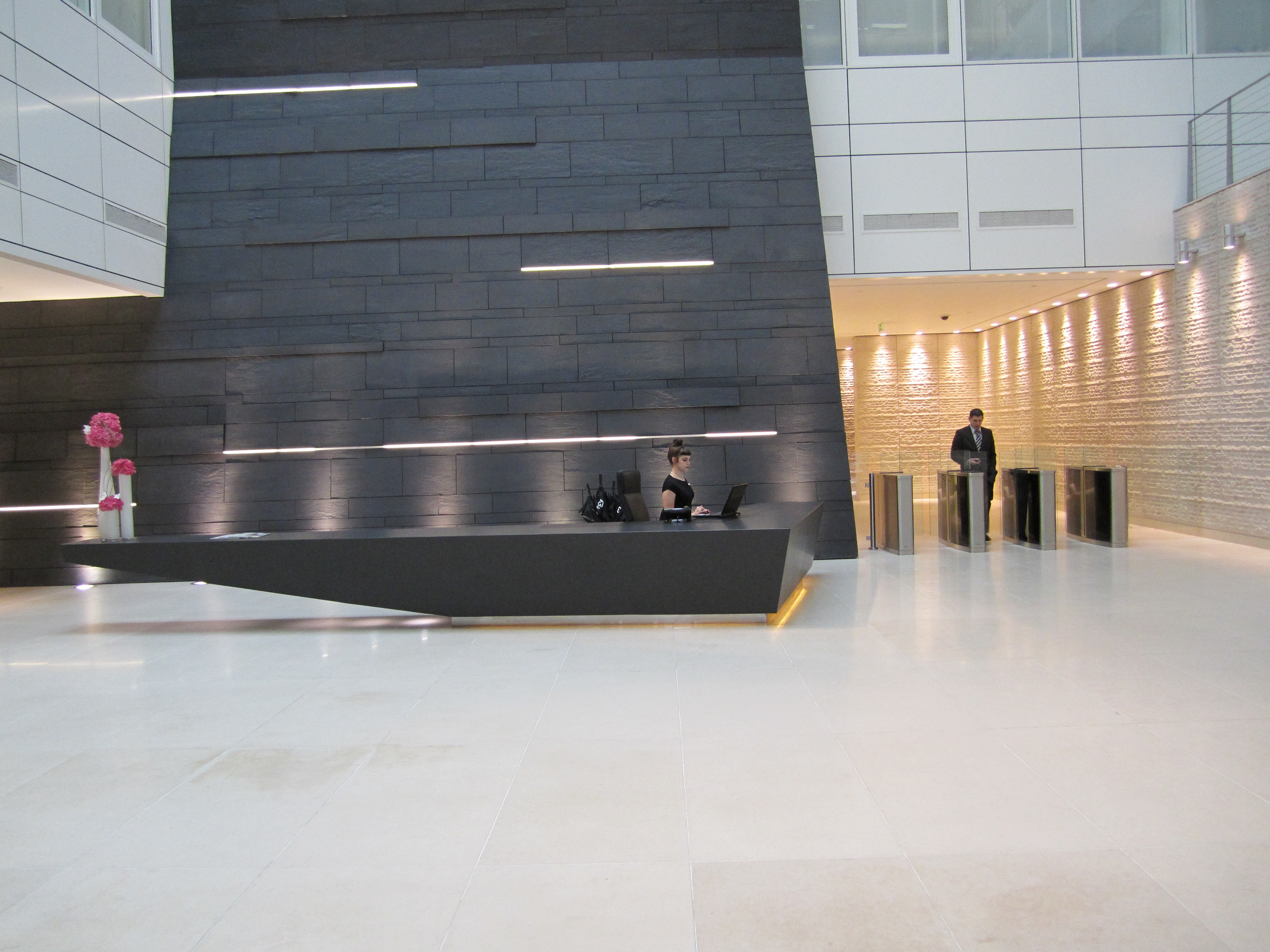
Another form of security is the turnstile, which is often a part of the built in material framework of the entrance for corporate offices, but can also be temporary installations at the entrance of pavilions where, for example, at the St. Petersburg International Economic forum in Russia we encountered them all the time.

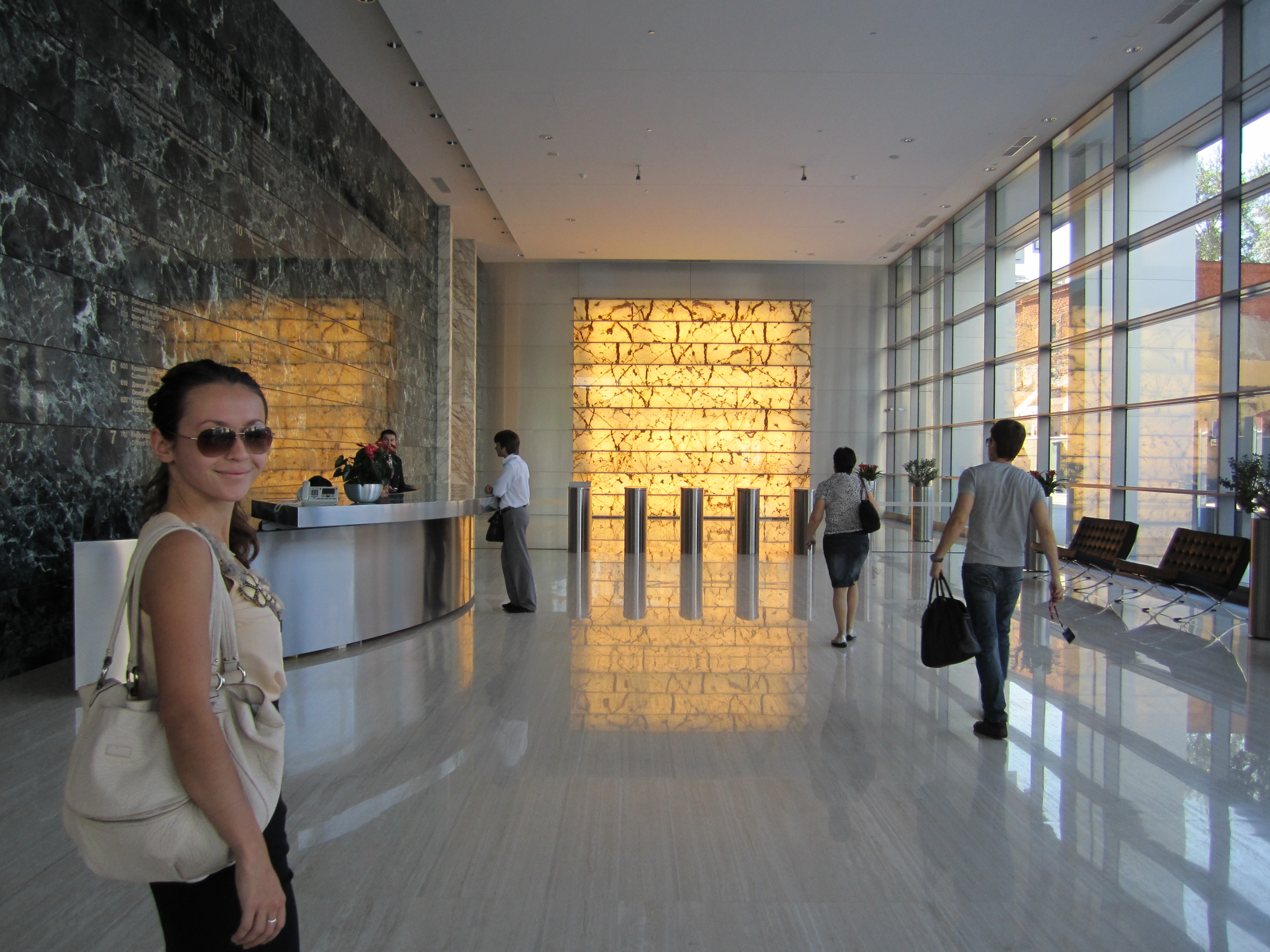
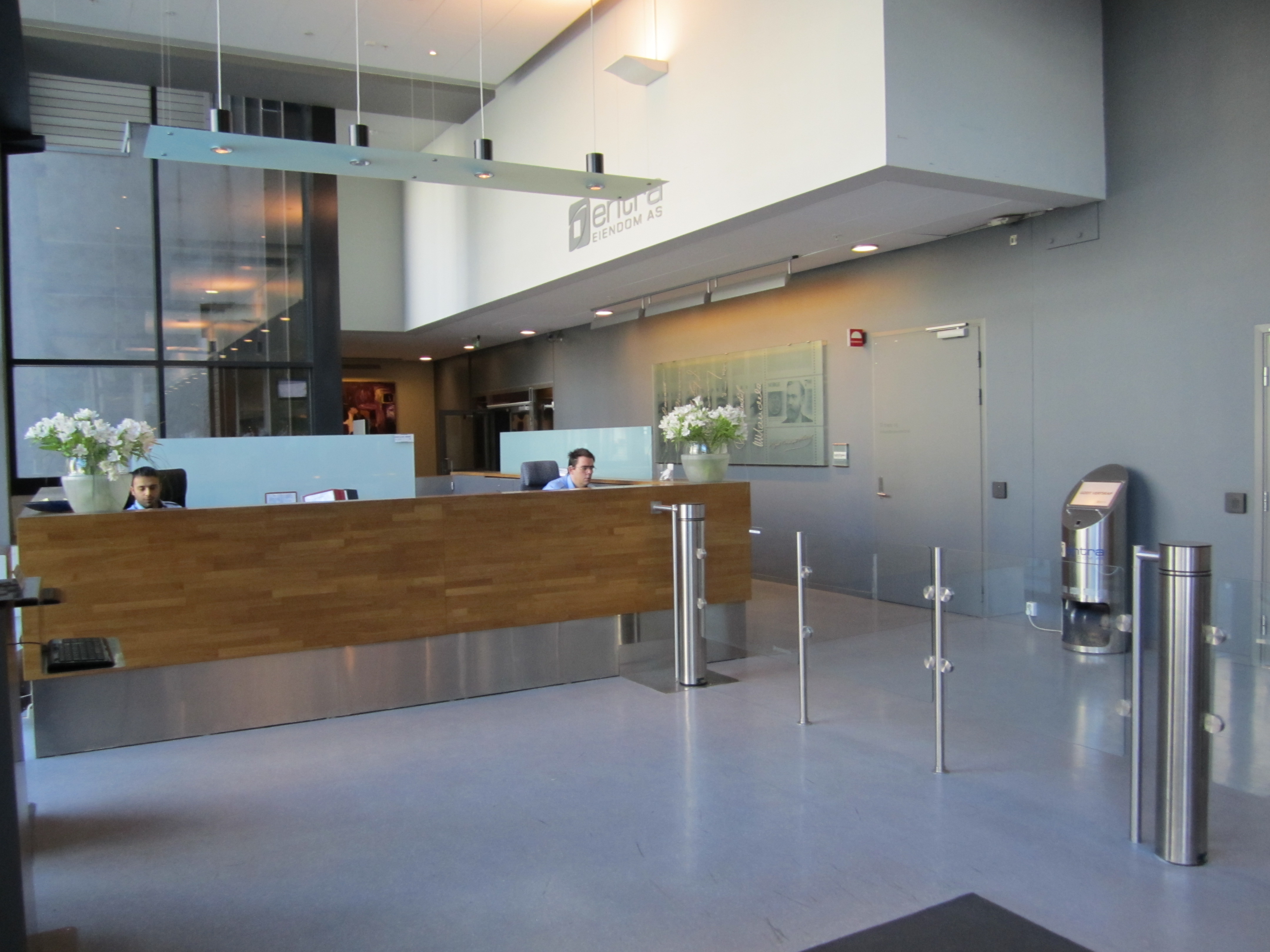
Turnstile security is common, and found in many places across the world, we’re surprised not more is written about it. Typically, it is accompanied by a security personnel on duty, and depending on the building, the security personnel can be ominous or feminine.

Turnstile Security at IHS in London

Turnstile Security at Citibank in Moscow
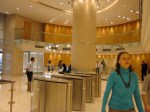
Turnstile Security at Shell in Moscow

Turnstile Security at EconPory Consultants in Oslo

Turnstile Security in St. Petersburg Economic Forum

Metal Scanners at St. Petersburg Economic Forum

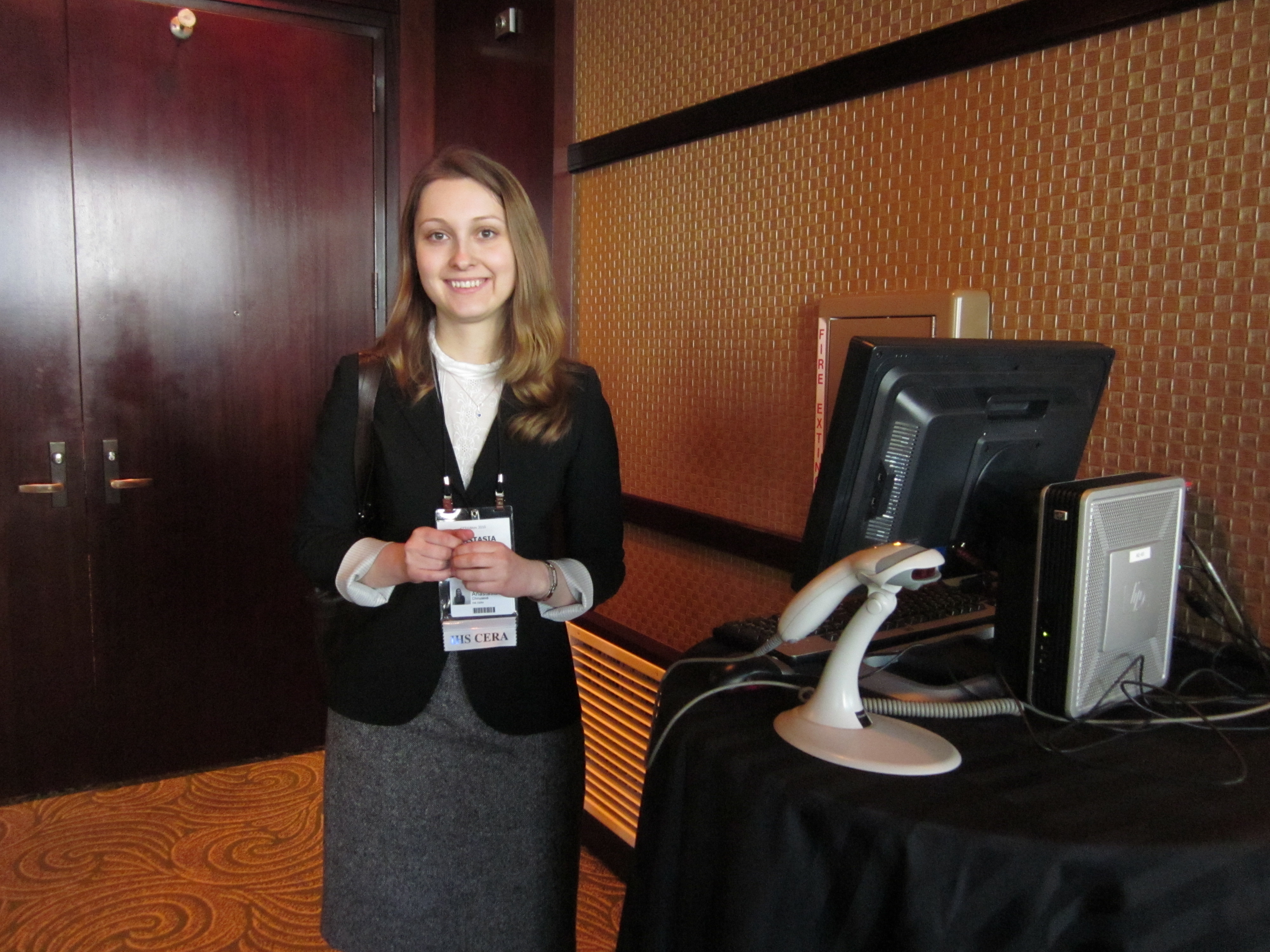
The photos above depict some of the more obvious forms of securing the body in relationship to experts and expert knowledges. We use ourselves as decoys to take the photos since there are restrictions surrounding taking photographs of security. There are many more forms. Perhaps the third most ubiquitous form of security, behind the policeman and the barricade, is the identification badge. Everyone wears an identification badge. Such badges typically hang from lanyards around the neck and are used not only to identify the names of clients, but also they typically have bar codes that can be used to access computers or enter into rooms where experts are giving presentations.

Security Badge with Barcode
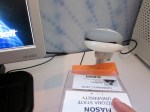
Security Badge Barcode to Access Computer

Accessing Expert Roundtable Room Via Barcode Security

Did we mention yet what all this security is for? We will just mention at this moment that these places are pretty tony (exclusive, elegant), and security ensures that everyone present can relax in an elite sequestered environment where knowledge is a highly expensive, sequestered commodity.

CERA week drinking fountain (bar) Houston
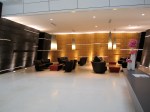
IHS lobby in London

CERAWeek Meet & Greet under the Chihuly

One way to think about security and sequestration is to consider it from the perspective of having a front-stage and back-stage. This idea was initially developed by Erving Goffman who suggested a person’s identity is continually shifting and based upon performance through roles and consensus between the actor and the audience as a kind of dramaturgical development.

We are also interested in these contexts through which actors take on various roles. In particular, we want to know the way these contexts are specifically orchestrated and become manifest so that actors, whether they be experts or clients of expertise, come to understand themselves, specifically on the basis of their expertise and non-expertise.

One way to approach this idea is to refer to the space where clients are specifically allowed to view, participate, and otherwise have access to expertise as the front-stage and also, to refer to the space where clients are forbidden from entering as the backstage. Moreover, in relation to this backstage, we could posit that spaces are further sequestered by certain rules which relate to what portion of an event a client has paid for. For example, on the photo above, the badge indicates TuesWed, meaning participation is paid up until the end of Wednesday). These sequestrations or perhaps, restrictions, could include also the given status of a particular participant (speaker, sponsor, journalist), or the position of a client within their own organization that accords them with certain privileges and access to events, etc. There are many examples and variations. Of course, when taken from a public point of view, for example, say, the viewer of this site who is unfamiliar with such events, all industry access we typically encounter might be considered back-stagings, since these events require large payments in advance, formal invitations, elaborate vettings of identity, and so on.

Because we are in the process of writing a book about our experience with consultant expertise, and intend to include a chapter on security and the body, we will take some time here to elaborate on issues of front-stage/back-stage, as well as other observations we have made concerning where the body is positioned in relation to expert knowledge. It is a question: how does the body become positioned in relationship to (restrictions on) expert knowledge? Or rather, how does a body acquire identification by its relationship to experts and expertise?

Imagine, for a moment, the bronze and marble sculpture by Auguste Rodin called The Thinker. Well, the entire premise of this posture is that there is an appropriate position for carrying out the practice of thinking, for carrying out the activity of receiving knowledge, that is, how to possibly appropriately receive knowledge. In fact, The Thinker is an excellent example of the contemplation of modern knowledge which, as it turns out, requires its own specific bodily position (hunched over with chin on one’s fist). What a contrast to  kneeling with ones hands held together (as in contemplation of religious knowledge)!

We used to point out, in fact, during our undergraduate class discussions, that the position of The Thinker is typically the appropriate posture for acquiring knowledge by graduate students when speaking to their professors, while for undergraduates, typically, at least in the courses we have taught, the favored posture is slouching in the chair.

Helsinki Affair: We were in Helsinki recently (see posts on Aleksanteri) and asked by a fellow attendant at the conference to discuss the issue of security in relationship to expertise. Fortunately, a peculiar event took place just one day before that captured our attention in a way that we had never quite contemplated previously.

Typically, by way of background, academic conferences we have attended, which is to say, gatherings of expertly trained professionals working in the monastic realm of university social science research, there are few signs of security, apart from the identity badges hanging on lanyards across the chests of attendees, and in fact, it is often difficult to acknowledge what constitutes a breach of security. Only two instances in our memory standout. In New Orleans this past week at the anthropology meetings, we were asked to wear our name tags by guards at the hotel, a first! Also, several years ago, while attending a 4S conference (science and technology), fellow-colleagues, at the senior level, who founded the organization, began checking attendees for their badges, and possibly even politely interrogating them about why they weren’t wearing their name tags. And this was because attendees were not paying their registration fees for the event, and the organization was worried about how to pay its bills! However, this is all petty memory, nothing more than to establish that security breaches are not typically on the mind of academics who gather to freely exchange their ideas.

But we want to recall this event that took place in Helsinki because it was so unusual in our mind. We had arrived early to the appointed floor where we planned to attend the opening ceremony, perhaps one hour earlier than the event. There, outside the plenary hall, a rectangular table was just setting up with three conference personnel laying out identity badges for participants, as well as glossy, quite elaborate in fact, brochure about the 3-day Aleksanteri conference.

While sitting on the side lines, we noticed a Finnish speaking woman, who entered into the reception area, and then proceeded to stand in front of the rectangular table, pausing for quite some time, without making much of a fuss, but at the same time, without providing any indication of what indeed she was intending to accomplish. We recall that her clothing was rather piecemeal, tattered, and, while not entirely shabby, we noticed that the dress did not reflect the style typical of the academic class of personnel meandering through university buildings, who were clad in corduroys, layered sweaters and scarves with matching color schemes.

Well, what happened next was peculiar. The unknown woman, who remained unnamed despite her subsequent capture and immediate release by conference personnel, actually grabbed a brochure, and began running away with it. And these acts, of deliberately grabbing and running, created an immediate sensation among the personnel at the reception, as if to say, that the product being abducted with, the brochure, was something of rare value, which in fact, while expensively produced, was hardly secretive, in that the information therein was readily available on the internet, and perhaps, quite possibly given the organization’s well funded reputation, had been produced with many extras beyond what was required by participants, so that any reasonable request for the brochure, which had now become some kind of sanctified treasure, would have resulted in a relatively mindless gesture of handing over a copy. But in fact, it was this act of deliberate theft on the part of the unknown woman, or instead, the staging of what could only be at that moment interpreted as theft, that a melee ensued, with the main conference administrator running down the hall way, yelling in English “stop that woman, stop that woman”!

Frankly, we couldn’t believe what we were watching, and at the same time, thoroughly recognized what we were observing. The unknown thief passed us, turned the corner and while attempting to gallop down the steps to another level, was immediately intercepted by some university personnel, who happened to be walking up the stairs, and when upon the immediate arrival of the conference administrator, who after wringing the brochure away from the woman’s hands, and then realizing that the entire situation itself was some how a reaction, or rather, an over reaction (to an impulse of the issues such as running, yelling, abducting), the event immediately in fact, ended, and all was quiet once again.

Well, in fact, the only unfortunateness associated to this event occurred during our discussion of the issue of security and expertise a day after, when with good intentions, we reawakened this peculiar moment to the conference administrators, because we were discussing the topic and had asked them of their impression of this occurrence, under the pretext of understanding in what context, actually, could knowledge surrounding such an open conference transform into delicate secrets that required security. To our dismay, the conference administrator in nervous bodily movements, began making repeated excuses for retrieving the brochure, assuring us that the entire situation was simply a strange misunderstanding. Our own repeated disclaimers failed to reassure that we were only discussing the issue as a rare example of the fact, that only under such strange mishaps as mentioned above does knowledge have restrictions at a social science conference. Well, this was a departure point for our discussion, and we certainly apologized to our hosts if the mere recollection of the chase scene disturbed their conscience. But here again, the notion that they would feel something untoward about their own actions, serves to emphasize the impractical nature and peculiar effect of exercising some kind of privileged authority over the circulation of academic knowledge in certain circumstances as just stated. This is a very different effect indeed, from the deliberate forms of security surrounding what we call the Hands Made of Putty effect.

Hands Made of Putty: whenever we shake hands with experts, especially those in their late 50s and older, we feel like we’re holding the hand of a baby. During earlier fieldwork in Alaska, when we were interested in rural villagers, we noticed how hard their hands were and with what zing they gripped us in handshakes (ow!). Typically, they received this strength from working many decades in the fishing industry where they constantly would be using their hands to turn a cold steel wench, pull an icy wet rope, throw a slimy salmon into a brailer, or whatever activity was required. We spent one summer in the Gulf of Alaska commercial salmon fishing, and we know that physical activity in these work environments is a habitus that is not quickly or easily acquired, but quite often, for persons working decades in these fields, it becomes durable. Among retired fishermen in their 80s, their handshakes were still quite strong and their hands were tough like metal.

And by the way, the reference to Alaskans is not oblique. Many of those client-expertise interactions we witnessed, at least in the formative part of our ethnography were precisely those between Alaskans who had worked for their state and emerged as local politicians striving to make decisions about resource development for which energy experts were required. So in fact, the hand shake was one of the more distinct interactions between expertise and clients of expertise which distinguished what an expert actually is (Dr. Putty Hands).

One thing that strikes us then, about some of the experts we deal with these days, is how fragile their body is physically. This soft cellular physicality, developed from years of typing or holding a coffee mug, could be brought to physical harm quite easily and great damage would result, precisely because of this fragility. This is a serious issue. Even giving an expert a strong handshake is tantamount to aggression and would raise eye-brows. This relationship of enforcing superiority over another person through the handshake by demonstrating physical prowess is strange indeed, and while it rarely occurs, it actually can take place. In those weird instances where an expert is confronted with someone whose aim is to send a message that their inferior status as a intellectual producer could be compensated by the fact that they could handily beat the expert to a pulp is one possible scenario that experts really want to avoid. A good way to avoid this is always to have body guards immediately visible and present. (We might add parenthetically that debates over ideas along with a few drinks can result in various types of ripostes or duel-like banter and in certain circumstances, end in violent exchanges. It happens all the time in bars across the world. To ensure that these fragile bodies are not harmed, there needs to be visibly present, forms of personal security that can act at any moment.)

Variations on Participation: here, for future reference, we aim to discuss different roles that clients can take in participation at workshops and conferences. Journalists, speakers, former employees who have entered industry, academics, etc. all have different forms of access to front stage and back stage. We could begin with out own experiences…

Added-Values and Friendships: here, for future reference, we identify how sometimes friendships allow for possible access to events in ways that they would otherwise not happen, say, of the particular contract a company has with an organization may create opportunities for extra-contact with experts, called added-value discussions.

Read Full Post »


Clusters
Coming immediately to our minds with the data we collected summer 2010 is how information tends to cluster around themes. In Lysaker, we met with energy consultant Ivar Tangen, childhood friend of Bengt Hansen, president of Statoil in Moscow. Statoil is a Norwegian oil company and one of three companies that formed Shtokman AG, the partnership group with plans to develop the Barents Sea off-shore natural gas field called Shtokman. The other two companies are Russia’s Gazprom, owning majority stake (just over 50%), and France’s Total S.A. The connection of Ivar Tangen to Bengt Hansen was close so that we established with Statoil Moscow on one phone call, our meeting, upon arriving to Russia. It is a question: what type of connection creates the meeting with one phone call?

Statoil conference room

When I worked for Alaska Governor Tony Knowles, in his D.C. Office– Knowles was regal indeed, enjoying all forms of formality paid to him in his person –we thought about the access issue–who had it and who didn’t. In D.C., we always took note upon seeing a memo addressed to the power-holder (governor) that was written, “Dear Tony,…” — who could write that instead of “Dear Governor”? These guys are typically so formal– it is rare to see them addressed at the office in any other manner than their sociological title. Moving on. We arrived to the Statoil office in Moscow, and had our meeting with Hansen (Norwegian) + two deputies (Russian), in the conference room.

This photo above on the left, is the conference room a few minutes before the meeting. Here, the angle of view is one corner of the office, but revealing indeed. This is the entrance side, and directly you confront two images: first, the wall map of oil and gas production in Russia (on the left), and second, a high-rise window perspective of the Moscow landscape. You should be able to increase the size of all the images by clicking on them. Both perspectives, the map and the city landscape, represent their own particular form of cadastral map– a miniature resource map– of Russia’s hydrocarbons, and of the city scape.

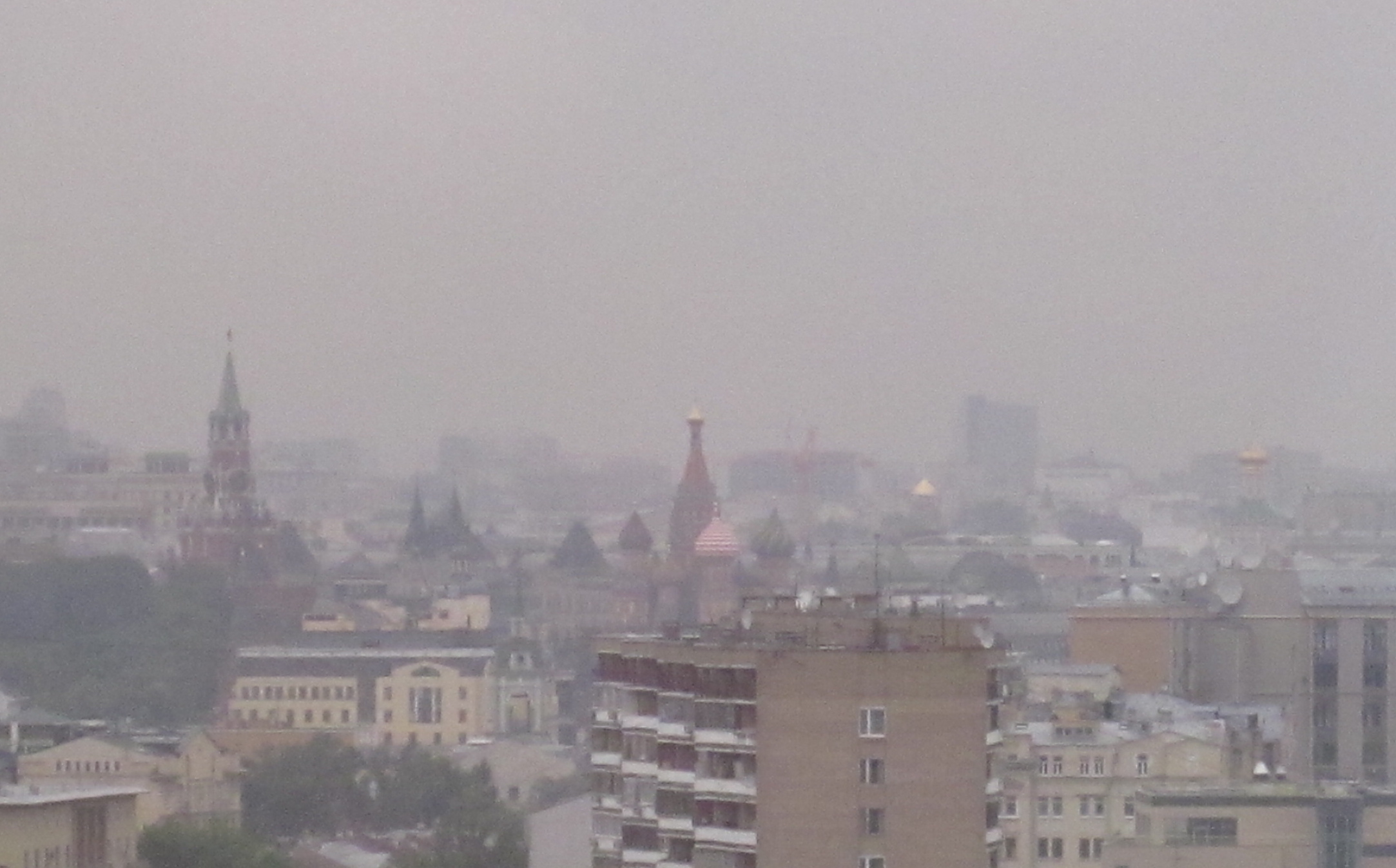
Kremlin from Statoil watchtower

In fact, looking out this window, as seen in this image on the left, (walking closely as if to the map to see where resources are), you see the Kremlin in center. Admittedly, not much to see. We’re not Muscovites, and not even looking for it, but it was easy to spot gazing out. You get a sense, pretty quickly, when looking out the window, that you’re gazing out of a particular kind of watch tower — a tower of power-holding, and gazing off, on to another tower of power-holding. When we finally arrived at the Kremlin, we looked for the Statoil office building and found it easily. It’s there in the below photo to the left, the watchtower building standing in the middle…

Returning to the image above, the conference room, what you see then, upon entering, are two framed windows looking out upon the Russian landscape: the first, a cartographic landscape of resources presented in miniature or model scale and brought into the interior of  decision-making (e.g., Scott’s Seeing Like a State) and the other is the miniature image of the city-scape, where the power of the state is brought into the conference room, again, at the level of decision-making. Many times, we were reminded of the power of the Russian state, especially at the St. Petersburg Economic Forum, by way of metaphor, in which attendees refer to “kissing the ring” as a form of deference among western businesses paying tribute to Putin and friends.

Statoil Moscow reception

There’s other things we will refer to, for example, the first image of Hansen above, where it was taken, at the Petroleum Oil and Gas Congress in Moscow on the eve of his retirement, and how everyone in the room gave him a standing ovation, and really, you could see that he was an endearing figure to many in the Russian oil and gas industry, and this would be in contrast to descriptions of other western operators, which we won’t get to at the moment. But finally, this image here on the left, taken of the reception table of Statoil Moscow, which has the Herald Tribune newspaper, and a few glossy Statoil brochures in English. All materials here are in English, and we know for certain that the Statoil brochures are also printed in Russian (a Russian copy sits below in the photo on the left, which we obtained at the Oil and Gas Congress).

Statoil’s Russian Brochure

So for us, it is indication, that whoever comes through the door and sits down (that is, whoever is made to wait and not immediately brought through to Hansen), the person(s) are likely to be English speakers. You could read it in different ways. Maybe non-English speakers are not made to wait, which could be another reason the oil/gas community respected Hansen– Or again, maybe all business was at that level, instructed by the very beginning, to be in English, after all, Statoil is a Norwegian company.

To wrap up, in these photos, we see examples of what we call clusters. A set of information particles, that are now and have since become arranged in a certain form, as an image. What you see is a discursive effect on the landscape of meanings regarding the encounter (that is, when one is lucky enough to pass through a set of images regarding the power-holder of a major oil company). And here, again, we’re referring to an aesthetics and factory of the sensible (J. Rancier), the surfacial features which provide the sense making that work to position the common sense of decision making on Shtokman natural gas development.

Read Full Post »

« Newer Posts