Feeds:
Posts
Comments

Posts Tagged ‘Oslo’

This evening, 12/14: The octogenearian, Siberian specialist, Eskimologist, Caucasian scholar, and not infrequent Moscovite celebrity, Dr. Serguei Arutiunov, during a stroll through Moscow some years ago, pointed out to me the importance of geographic positioning in the European city.

As a result of Westerly winds moving across Europe, the aristocratic- and upper-classes, in London, Paris, Berlin, Vienna, and as far east as Moscow, located themselves on the West End of cities, for access to the freshest and healthiest air — while the East Ends became homes of the working-classes, factories, one might say, the remainders of life passed over by the wealthy.

In this way, one can imagine the historically specific development of social and economic divisions unique to each city, based on geographic positioning — the specific languages e.g., cockney in London, forbidden liaisons between East End boys and West End girls, romanticized in movies and pop songs, and yet, a specific trend that has resulted in some rather general conclusions.
factory factoryThe geographic positioning of etiquette and form, admittedly, is a small data point, perhaps, in the development of the modern city.

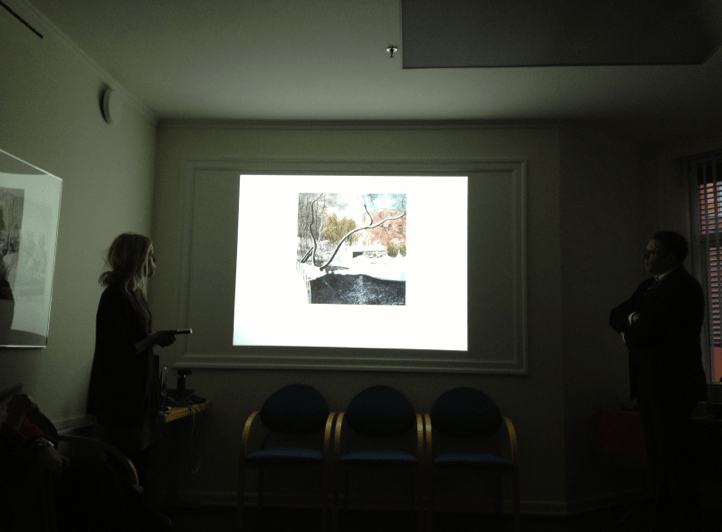
Nevertheless, it was given renewed breath this evening, when curator and art historian, Ingrid Wisløff Aars, provided guidance on eighteen artistic prints by Ole Ek’s (1913-2004) titled “Akerselva fra Maridalen to Vaterland”, now on exhibit in the Fulbright office, Oslo. In the course of her introduction to these prints, which traces images reflected along Oslo’s Akerselva River, Ingrid pointed out that the West End of Oslo, was the location of the wealthy and the East End, was the home of factories and working classes.

Thus, in these two images above, the first, a projection of a print, and the second, the actual print — we see Akerselva River. We see also, the factory position on the East End of the River.

imageOne participant to the evening mentioned that the prints do not include visible persons.

And yet, in this particular image, we can see Ole Ek, the person, quite clearly. He is, literally, standing on the West side of the river, looking East toward the Factory. And where else should he position himself? After all, he is an artist, and thus, distanced from the material of labor and the enterprise.

And by definition, then, where are we located — as observers to the image?

imageWe too, are located on the West End. As in the very image above — it is an image, to borrow from the Pet Shop Boys, of West End girls, located as they should be, on the privileged, observational, conversational, side of the river.

An innovation of Ek, apparently, that the very persons, it turns out, he left absent from the prints, are actually, very much present, as observers looking over to the East. The persons of the image, are audience participants — And because the factory is a house of labor, on the East End, we can expect that the audience, located inside, observing the image, on the West End, is located in another type of house: A Salon. A Factory on one side for laborers (East End), and a Salon on the other side for observers (West End). Voilà:

salonOf course,  I could go on, but you get the message. Of other things that caught my attention this evening, in addition, of course, to the wonderful company of everyone involved (including the gløgg):

type curator print

 Curatorial practice: Script written with a type writer, then cut with scissors by hand and finally hand-pasted (no doubt using water soluble glue) to the matte.


pingpong12/14: I started my Julegløgg at Litteraturhuset yesterday, with Kåre Haage, chatting about this and that for several hours over a pig head cheese sandwich rolled up in potato wrap, like a Norwegian shawarma. Oof, did I roll him over the coals with all the speechifying I engaged in.

But Kåre is a mentor for certain, former ambassador/consular general for Norway to Russia, he took me on as I began this project looking at Norwegian-Russian border energy development, and has since provided commentary on all matter of issues.
pong
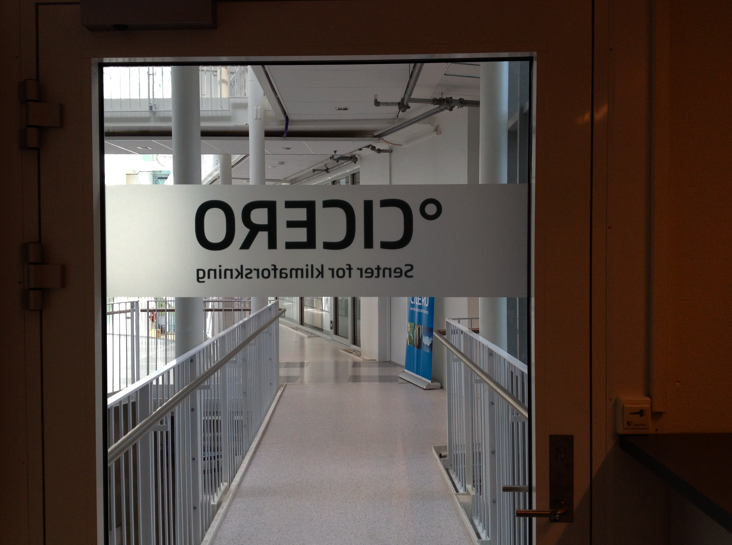
Well, later that same afternoon, I had the opportunity to buzz over to CICERO, a strategic knowledge institute associated with University of Oslo, to have a chat with collaborator Ilan Kelman, who hails from Toronto, about whom I write in an earlier blog this past summer, when we met to discuss upcoming projects on energy development in the Barents.

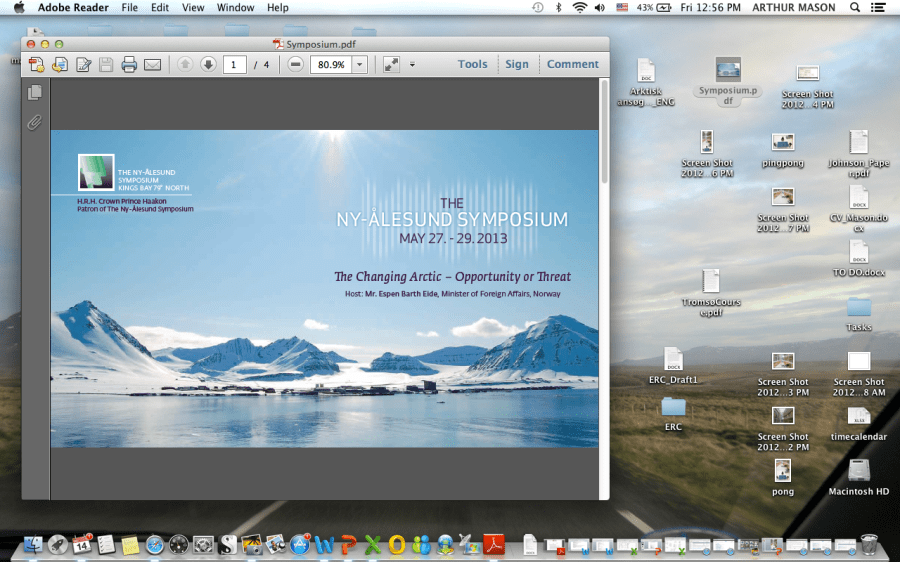
And in fact, as coincidence would have it, I came back this morning to CICERO to meet with a few other folks, namely Erik Tollefsen and Pål Prestrud, to discuss my attendance at the 2013 Ny-Ålesund Symposium in May, where on the agenda, alongside attendance with heavy hitters in oil and gas industry, NGOs, government and all that good et ceteras, is a discussion about the future of Arctic oil and gas development, right up my alley.
symposium
Pål and Erik were swell. I came, blowing into town, unwrapping my intellectual wares, like a true American pitchman, they listened politely, pushed back, asked for details, crossed swords, politely, over coffee, with me burning their ears out, jumping hot foot from one topic to another, making sure comprehension remains at a minimum 85% with the remaining 15% incomprehensible as a defense to marking out my own legitimacy as an academic. We were happy.

It looks to be a good venue this year, and with proposed Helge Lund in the room, CEO of Statoil, I would get another opportunity to mingle up close and personal with folks I met in 2011 at the Oslo Energy Forum at Holmenkollen, what a spectacular roundtable that was.

I am now headed over to the Fulbright office for the julegøgg proper, homemade pepperkaker, Christmas spirit and art exhibit. Through a partnership with “Kunst på Arbeidsplassen” (Art in the workplace), Rena Levin has announced a new exhibit adorning the Fulbright office walls, Ole Ek’s (1913-2004) “Akerselva fra Maridalen to Vaterland”. KPA director and art historian, Ingrid Wisløff Aars will be on hand to  guide us through the 18 prints by Ek, which describe the scenic  and historical walk along Akerselva from Maridalsvannet down to Vaterland (near the Opera), where Akerselva flows into the sea.

 pong-y

Read Full Post »

Nobel PP Ceremony # 2


Finally, some sun.


Klangkarussell – Sonnentanz,

soooo schön!

Read Full Post »

Embassy in Oslo

12/7: Just returned from lunch at the American Embassy in Oslo, where I had such a fabulous time. Public Affairs Officer, Timothy Moore came down to meet me and thus, began my tour. We started with a chat in his corner office. The Embassy building is large, black, and imposing, built in 1959 and designed by Finnish-American architect, Eero Saarinen. The building has a parallelogram appearance about it, with strong pointy corners, and worth reading about further, so I have included the link here to the embassy site.

buildingThe security experience is rough, as you might imagine, and entering the building provides a self-enclosed experience on its own. Security came out and disciplined me for not having read the sign and standing behind the painted yellow line. When speaking with the guard though the gate, he inquired whether I was some kind of special agent, probably something to do with my academic tone, a combination of defiance and leisure.

At any rate, we warmed up to each other rapidly. I ran back to the Fulbright office, where I had started my day, to drop off my laptop computer (no computers in the building), and he promised to let me in out of the cold upon return, which he did. Intimidating, for first timers to the building, but the guards are polite, even if they appear a little stressed upon first glance when they greet you.

entrance Screen Shot 2012-12-08 at 6.36.21 AM

Typically, I employ a pseudonym to refer to folks as high up the chain as Tim, and I need to send this blog over to ensure he is happy with it. But I want to highlight Tim’s article on Norwegian policy, which I liked, especially his point about the ethos of Good which, based on a religious unity of message, becomes historically branded so to speak to a kind of concept of enterprise (note to self). Here is a copy of his piece, titled, Norway’s Focused Communication Strategy.

The interior of the American Embassy in Oslo is delightful. What a cool place to work. As you walk in, past the security gate, you enter into an atrium with a small reflection pool. “Gong by Harry Bertoia” — is etched into a brass plaque that sits on the front corner of the pond. Sure enough, as you look up, there hanging down from the 50 foot ceiling is a large Bronze Gong by sculptural artist from the 1950s, Harry Bertoia. What a fabulous sight. Tim even gave it a whack for my amusement. What a magnificent sound.

Did I mention that Tim received a BA in cultural anthropology from UC Berkeley? We had discussed this upon our introduction to each other, now a few weeks back, in Houston at the Norwegian Government sponsored TransAtlantic Science Week, where he was accompanying US Ambassador to Norway, Barry White.

Tim’s office is great. Let me just state that for the record. I felt like I was back in Washington, D.C., talking with a real live policy operative. But he is! And we chatted about everything. For lunch, we went downstairs to the cafeteria, and I ordered an omelet with a side salad. The cafeteria is a warm inviting place, and with its own street entrance, which the Embassy uses for social functions. In fact, Tim mentioned that the Obama inauguration is taking place in that very set of rooms near the cafeteria, in January, and he invited me to attend! So. Of course. I will be there.

After a litany of topics and introductions to members of staff, we exchanged notes on Arctic research. As you can imagine, he has a lot of connections, and knew things going on that I was not aware of, though, in truth, I had a few gems he was unfamiliar with too, and it was good to be able to offer my own little cache. We will come back to Tim, but for now, let me take a few steps back and a few steps forward, as one of the main purposes of my Oslo trip, was to come, pick up my invitation to attend the Oslo Nobel Peace Prize Ceremony, on December 10.

nobel

This week, I am holed up in Kamper Apartments near the Toyen subway station, 20 minutes walk from the national theater downtown. After waking up later than planned, wrestling with jet lag and academic sleep patterns, I swooped down upon the Norwegian Fulbright Office, to pick up my actual invitation for the Nobel Prize ceremony on Monday. Rena Levin and Kevin McGuiness are gracious hosts, giving me a place to hang out, check my email and do work on the side. I arrived there around 10:30 AM, settled in for one hour, had a home brew of coffee before heading out to my lunch at the American Embassy nearby.

coffee

Upon returning back to the Fulbright Office, I managed to do a lot of email transactions. There are so many small details associated with relocating to another country, and on top of that, I already needed to book flights back to Oslo in January and February, for the Presidential Inauguration (Jan. 21) and a dinner at the US Ambassador’s residence (Feb. 14).

Oslo looks a lot different than it did in August, that is for certain, when I was here to attend the Fulbright orientation, lest the good reader forget:

zum winter

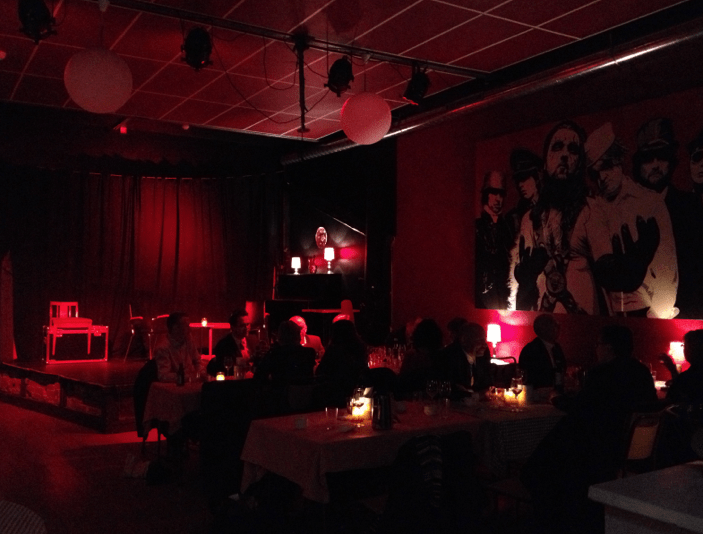
I should note in passing, that I had a wonderful evening as I blew into Oslo — still completing a National Science Foundation proposal, and chatting over skype with Maria Stoilkova, U Florida, about its final completion, when I decided around 10PM the first night, to check out in my neighborhood Kamper Bistro, a fabulous wine bar, delicious food, and a cabaret scene, crazy close to where I am staying.

KamperBistro


11/15: I was just in Houston, Texas, attending the TransAtlantic Norwegian-American Science Week Conference, organized by Norwegian Consular General, Dr. Jostein (pronounced “U-stine”) Mykletun. In Norway, Jostein is a well known diplomat and more recently has come to be referred to respectfully as “Mr. Houston”, in no small part, because his name can nearly be pronounced in same the manner of the city for which he is currently appointed.

Between the hotel and the intensity of the meetings, I was able to get in some tennis along the way. I played on Thursday and Friday at the Rice University courts, nearby where the conference was taking place.

Actually, on Thursday evening, I began to wonder aloud whether I would make it to Norway in time for the Peace Prize ceremony. Tennis felt like so much fun. Perhaps I should just stay in Berkeley through December.

We went to dinner that night, me and some umpteen Norwegian experts, ministerial policy makers, university professors, administrators and so and and so forth. There was mixed opinion about what I should do. A few were incredulous that I would even bring up the topic. Moira P. who had visited the ceremony “several times” was ambivalent. Grete G., with whom I made the acquaintance that very evening, after I staggered into the ZaZa hotel lobby, having rescued myself from an overnight trip to Texas A & M — hoped my decision would not cost me too much, sentimental words as we parted that evening, driven back from the restaurant on the ZaZa hotel “magic bus”.


11/7: I received today a scanned copy of my invitation to the Nobel Peace Prize Ceremony next month in Oslo. Because of tight security, I will have to bring along the actual invite which is waiting for at the Fulbright Office in Norway.

Here is what the scanned copy looks like:


December 10 Ceremony – brought to you by Paparazzi Ethnography


Read Full Post »

10/23: European Research Council (ERC) proposal workshop, Consolidator Grant:


YR_Leaflet_ERC_Consolidator_Grant_OSLO.

Binder ERC StG chapter 5 and 6 incl 2012.


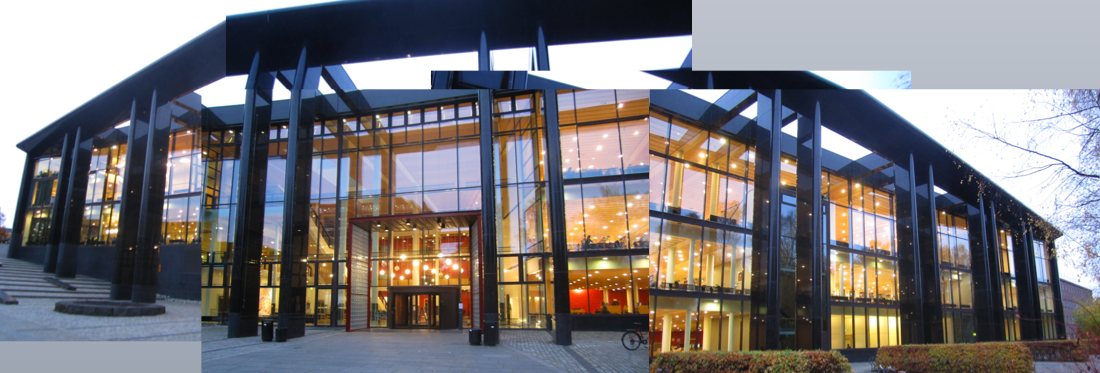
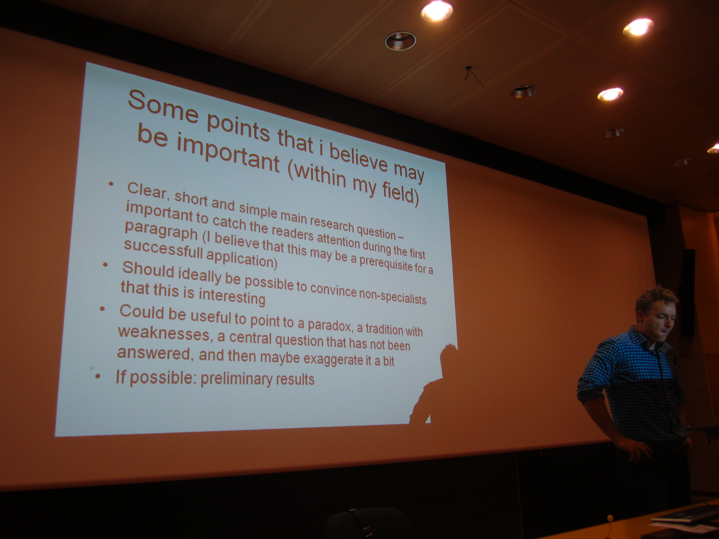
Here I am, sitting in Auditorium 2, Georg Sverdrups Building, University of Oslo, attending a workshop to prepare a European Research Council (ERC) proposal.

Workshop begins:

Mette Skraastad. A great workshop convenor.


The workshop begins with C. H. commenting on his successful proposal on emergence and decline of constructive memory:

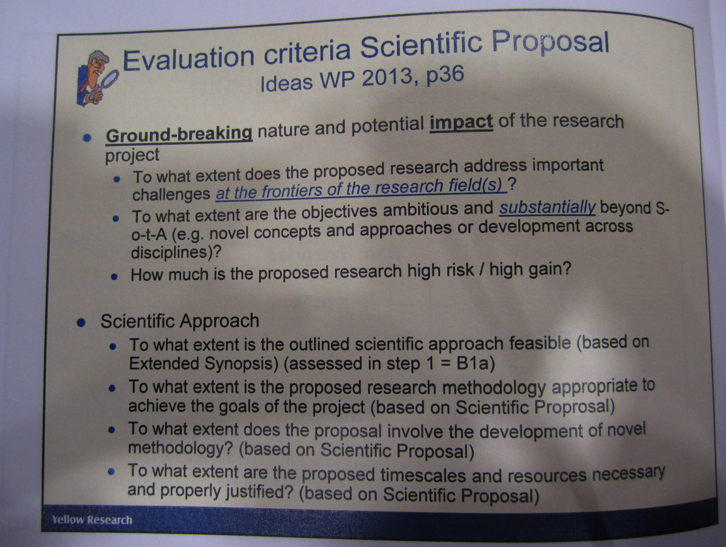
Proposal needs to be enthusiastic, stand out from the crowd. Imagine a friendly reviewer and write a proposal. Success rate is 10 percent. Do not make it complicated. Follow the guide application closely. High gain but low risk. Point to possible challenges but point to solutions. Identify novelty. Why is it ground breaking? Demonstrate how it can happen. Discuss the proposal with previous panel reviewers. A substantial proportion of “luck or unluck”.


Find a paradox in the field in order to create novelty.
How can we unite different aspects of a field?


Per: Have the proposal ready before Christmas.

Mette Skraastad: Look for great research questions. All about being original. That is why you need time. What will the panel find that is interesting?

Wow! This person is tough.

An entire university is behind these projects. Plenty of time to edit and review. Write the project, discuss it with ERC members, previous reviewers, etc. Put the effort into each project proposal and get it on paper as soon as possible. Must be consistent — all throughout. Everything throughout the proposal should be consistent.

The entire point of the ERC is to select European Scientific leaders.

There were 4800 project proposals on the last call. For this reason they split the Starting proposal from the Consolidating proposal. FP7 Activities and Themes. A lot of proposals will be submitted for the Consolidator.

High risk research is best. But demonstrate that it is low risk by providing preliminary results — there must be high risk research elements. They assume that you have a team, because it is a consolidating. Explain how this will contribute to your career. Independent: you need to have several publications without your advisor.

It is 10:15AM and my brain hurts. A need to create new knowledge.

If I have a team, I need to justify all activities of members. What is their specific value added activity. Clarify what kind of people I need and why (for what kinds of specific tasks). Look at my strengths and weaknesses. How do I deal with my weaknesses, clarify how I plan to deal with it.


There are two steps. If I get lucky and get past the first step, then there is an actual interview process in Brussels for the second part.

Template is available Nov. 7.


Now, Mette is mentioning the importance of “Keywords” — what keywords you choose will determine how referees will be selected. Keywords based on research field.

Select potential external referees. Go to their website and identify key words about their research. Identify potential external referees for the ERC, help them out.

Mette is going through the process of review. Nothing new here. I know this process. Basically a fight over who is getting what.

This is the EGG of the proposal. Where is the novelty. In the approach?


If it is incremental, it is not ground breaking.


There needs to be an analysis of why it is high risk, and an analysis of why it is high gain.
There needs to be a description of methods. High quality methods, high quality results.


“To my knowledge, this is novel, and for these reasons”. Then, I need to identify where others are around the world when talking about this research.

Need objectives. Each part of the project is mandatory to achieve the overall mission of the project. Explain how I will achieve objectives. Objectives + Hypothesis must lead to Insight. Wow. Page 21, make note of the “focused project” over “open project”, the latter disregarded.


There must be a clear indication of what I can create as objectives. And there must be time to obtain data.

Do I have access to data? Where will it be coming from? What is the larger integration of activities and approaches that make it reasonable to go after the ERC, and that it is the human mind that is selecting the empirical evidence.

Wow.

I just had an insightful lunch conversation with the workshop convener, Mette.

She says that I need to use the North American case study as an example of why my project is Feasible in Europe, and to show the exciting findings of the previous project etc. And then, use that work to show that I am the ONLY person who can do this work in Europe. That is something I have not yet done, lead off with my previous research, how I did it, the findings, and then describe what the differences are in Europe, the different languages, culture, etc. And how I plan to go about it.

It was quite funny. When I told her “I’m the only person who can do this”, I actually raised on tippy toes with my nose in the air, to which she immediately responded, “And that is how you have to present it to the ERC!”

Okay, we are now dealing with Methodology in Detail, with Key Intermediary Goals (to measure whether we are progressing toward the objectives at intermediary stages).

In overall activities, explain generally and give the feeling as well as provide back up plans, when you are not achieving the specific goal (p. 23).

Everything novel has high gain, what is the risk, is it feasible, yes or no.

Break the project down into WPs/ Strands/ streams/ subprojects with activities/tasks, milestones and a Gantt chart (what is a Gantt chart?). Good grief, how could I get so far in my funded research without ever using a Gantt chart?

Show that I have experience in handling data., etc, to explain to the panel members that I know what I am doing. Also, present thoroughly that I have access to specific data. Provide actual names, and justify why I am selecting certain houses. Is the institute the right environment to carry out the research.

They do not like to see collaborators. They want to see experts who can help out [This is really important]. Clear about the well defined objectives — AND come up with a hypothesis. what am I expecting?


On team members: “Mr. Smith with one paper is out. Mr. Jones with a lot of publications is in”. Make sure you include people who are worthy in your project. You have to select specialists.

There is one panel member that is going through all the references. As soon as there is one that is not there – they know that the project cannot be trusted.

Make sure that I am using an appropriate template, what is more convincing, a table, or what- Page 25. What is up and running at my institute that demonstrates that I am carrying out top quality research.

Well that just tops all. Mette is amazing. She has been talking for over 4 hours, and everyone in the room is exhausted, but she continues, and will continue for another 3 hours.
Must have citations to my own work.


I have to select the panel for whom this work will make the biggest impact.
How much data am I generation, and am I creating results.
Create a table, on B2b – Example of Challenge Analysis (page 27). Create a table for the grant. What are the milestones/outcomes, what are the risks, where are they located, what is the backup plan(s)?

Last year would be used to write a monograph. Year 5. Make sure they can assess what is novel, what is interesting, where the cutting edge is. What do I have that I bring into the project and what am I asking for from the ERC. Mostly salaries.

Explain why I want a workshop and who I plan to invite. I need to explain why I need a certain amount of money.


Read Full Post »


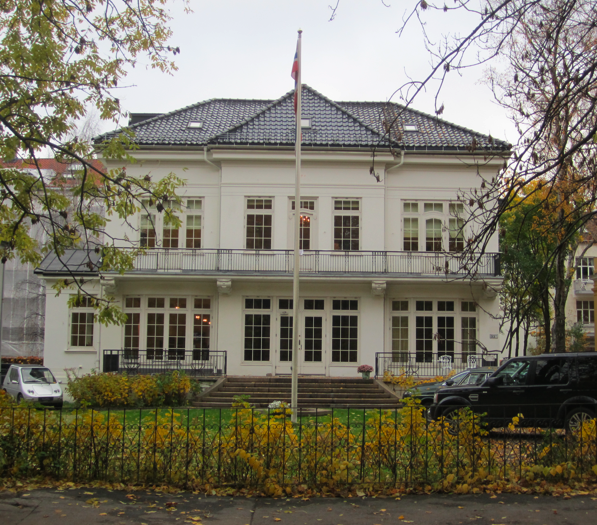
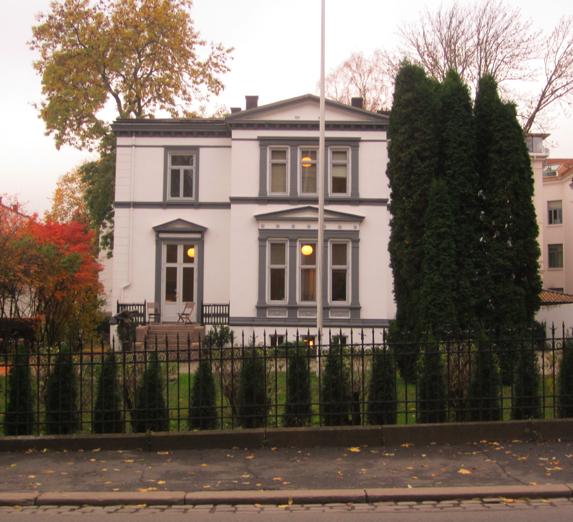
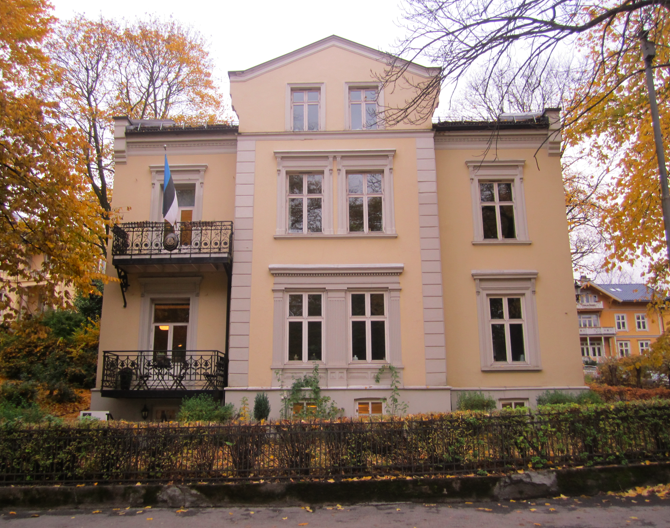
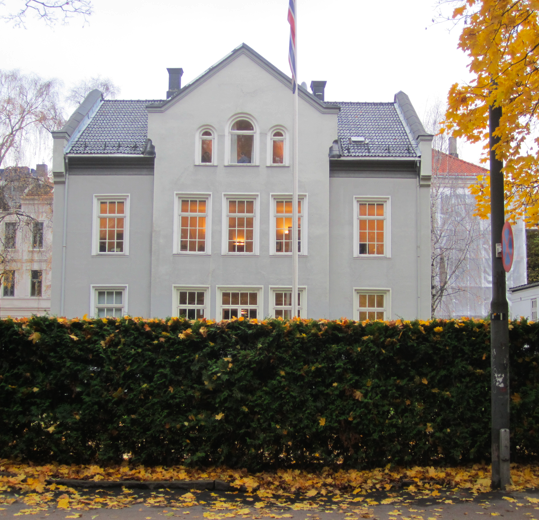
10/22: I headed back to Kafe Oslo to complete these notes, taking stock of the estate sized homes along Embassy Row, directly behind the King’s Palace.

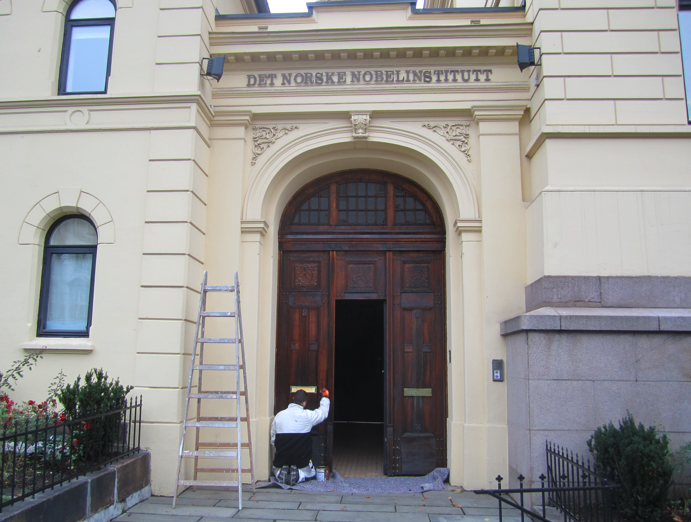
I could not help thinking in detail about my exchange this morning with Tom von Nikolaus, having just taken place in a cafe near the American Embassy, a section of Oslo I am familiar with from my August visit to the Fulbright orientation at the Nobel Institute.

My assistant Annamots, refers to him as “The Oil and Gas Man“.


To me, Tom von Nikolaus is the Dick Cavett of Norway’s Oil and Gas Industry, thoroughly networked, and at the same time, standing as front man for its high-end ritualized appointments.

For the reader, I call him Tomvon.

Tomvon was my first informant on Norwegian oil and gas issues, having first met him summer 2010. Agreeing to meet over coffee, I introduced my conception of knowledge flows and actors on Barents Sea Shtokman development.

With maturity, humor, and thoughtfulness — Tomvon instructed me on several research aspects.

In particular, there is a need to consider the role of oil and gas majors in employing independent experts to justify developments that might prove delicate if presented as in-house social relations campaigns.


During our next meeting, I accepted his invitation to attend the prestigious Scandinavian Energy Forum (another pseudonym), wherein I mingled with heavies of Western European industry and finance.

With several I have established agreeable relations, in London for example, with former CEO of Amerada Hess, philosopher-capitalist, Francis Gugen.


Tomvon —


alongside several others from Norwegian social life who straddle the higher lattices of government and industry —


including Norway’s Consular General in Houston, Jostein Mykletun


— provided a letter of support for my US Norwegian Fulbright Award 2012-2013. I thanked him in person over a handshake this morning.

Let me set the stage further:

I had enlisted Annamots to create a thank you letter for the Fulbright award to acknowledge persons providing strong support. It was on the basis of this support — as told to me by Fulbright Officers, in addition to my proposal — that my application entered into the winning circle.

The bar on my application was high. 5 years previously, I received a Fulbright for Canada. Having completed the mandatory hiatus period for re-applying, receiving a second award so close to the first (given there are only two opportunities per career), seemed unlikely.


There is a longer story.

But I learned years ago the importance of a well crafted thank you letter.


As part of my ethnography on Alaska politics serving as volunteer for the Gretchen Guess State House election campaign, we crafted a letter of appreciation to acknowledge financial contributors.

At the time, it seemed to me ridiculous that one letter, replicated to all donors, but signed in the hand of the candidate, could be viewed as anything more than a cynical gesture. And yet, evidence revealed to me the exact contrary, that it remains to be said, when crafted with earnestness — an acknowledgement of thanks is a signature of sincerity.


A final set of points:


I had spent considerable time preparing to meet with Tomvon —

I knew it would be brief — 30 minutes between his travels between Stavanger and Moscow.

I began by noting that U. Tromsø had invited me to establish a research presence in Norway, including support for the Fulbright; an appointment to apply for national and European grants (having submitted four); a teaching course on methods; and establishing partnerships with other academics, e.g., a recent workshop to consider High North futures.

I wanted to follow a step further, to build long term capacity for the University on topics around leadership, decision-making, and expertise related to High North energy, based upon personal connections between academia, industry, government, and experts, but also, stressing the importance of valuing the proprietary nature of exchanges.


My meetings at U. Tromsø last week, taking place with Vice President for Research, Curt Rice (avid supporter also of my Fulbright), and in-house High North Oil and Gas Guru, Peter Arbo, was focused on an Institute for Social Science research, of which I will write more in the future.
Thus, at issue was a request of Tomvon to keep me in the loop of Energy Forums and other meetings; establish introductions with key persons with whom we could create a baseline social network for learning about Norwegian energy development;  and hold internship possibilities in energy knowledge firms.

And this was the context of our discussion as we sat down over two lattes and warm bread buns filled with blue cheese.

Our conversation began with Tomvon’s present trip to Moscow —

on behalf of the Norwegian Ministry of Foreign Affairs, to be accompanied by a small core of academics in order to engage with government and industry leaders of both Norway and Russia.

“The opening of a new ocean”, as the topic of the Arctic was put to Tomvon by the US State Department this past September, when he visited the United States, along with meetings with the Marine Corp. and other significant US government attachés on this topic.

It came as something of a surprise to me, that he mentioned the names Gunnar Sander and Arild Moe, the former — a professor with whom I had participated in a workshop last week at U. Tromsø, on the topic of High North Futures; the latter — who also provided a support letter for my Fulbright and current Deputy Director of the Fridtjof Nansen Institute — both of whom would accompany Tomvon en route to Moscow today.

After discussion of aims of the trip, and touching on more names, mentioning my visit to China this past March, in response to a point he made about India’s interest in the Arctic, a reminder to a presentation by Shyam Saran, Former Indian Foreign Secretary and Special Envoy for the Indian Prime Minister on Climate Change, from whom we both heard a speech on India’s emerging role in the Arctic at the 2011 Scandinavian Energy Forum, mentioned above


— Tomvon asked what were my intentions?


I responded with the request, “to be included in discussions over The Opening of a New Ocean”.


Read Full Post »

♣ Oslo

10/22: Dinner at Bjørnsletta.

I left the city briefly, at least out of downtown, taking the subway to dine at the home of Alan Tiecher, IT consultant for SEKKK Corp., a consulting firm with 300 employees here in Oslo.

We had met in Berkeley, at a Carbon Sequestration workshop last year and kept in contact over email. Alan invited me to dinner, to meet his wife and family and to provide tips on Norwegian interpersonal relationships as I begin my Fulbright research. We discussed my upcoming meeting the following morning with Tomvon, see later post.

Over several beers and a traditional Norwegian meal (cutlet, potatoes, lingonberry sauce), we discussed our different career paths. Alan and his wife, Christina, along with two small children, had travel extensively, having lived in Berkeley, in Chile, visiting South Africa frequently. Alan had spent four years in the United Kingdom, at university near the city of Bath.

Christina holds an IT senior position as analyst with a firm in downtown Oslo but was considering a change in careers.

As Alan walked me back to the elevated subway stop, I seem to have surprised him by pointing out that a change in careers is difficult, especially successful ones as in cases such as his wife. Only through great conviction, I said, is it possible to remain relevant thereby neutralizing the power of currency. My surprise came when he responded that I indeed thought money was relevant.


10/19: I gave a talk at DNV today and will post my impressions shortly.


The Guard House outside of Det Norske Veritas (DNV), an architectural blend of panopticon security and kiosk disney.


10/18: I swooped into Oslo last night, arriving late from Tromsø and taking the train into town. The entirety of University of Tromsø it seemed, was working over night to complete proposals for the Research Council Norway, myself no exception, and was exhausted on the flight over.


It was a fury of efforts. I was the North American in town at that moment and thus, was thrown on to proposals other than mine, to meet the international requirements of the call, subsequently finding myself competing against myself.

I awoke in a different climate entirely, Oslo far south from Tromsø, and began putting together my talk for DNV, invited by Brad Libby, for friday. Early evening, I met up with Torild Nissen Lie, also of DNV, with whom I shared a few drinks and spoked about work and life in general. Torild has a fascinating career at DNV, a huge company involved in oil and gas development. She hired 20 folks over the past 2 years, and it was interesting to hear about employment practices of high end professionals.

Without going into details, we had a good laugh over the differences between academic and entrepreneurial affiliations.

Here is a quick video of Torild and Bradd, along side Emma Wilson on the left, when we were all together not too long ago at the Arctic Frontiers conference in Tromsø.

I had Torild laughing over a point about the importance we place on the body in relation to knowledge. In my paper tomorrow, for example, I point out that posture and thinking are linked to either magical causality or rational techo-economic causality — that, when giving thought to multi billion dollar West African offshore oil and gas development, kneeling with palms held tightly together in the form of prayer would unlikely be considered an appropriate form for contemplating success.

Read Full Post »

8/13: I lunched today with Annika Nilsson, Senior Research Fellow, Stockholm Environment Institute (SEI), working on Arctic environmental issues. We had a lot to discuss, Oof, so good to finally connect!

Annika works closely with Dag Avango, Researcher at nearby Royal Institute of Technology, and Gunhild Hoogensen Gjørv, from U. Tromsø. As a coincidence, Annika and Dag are heading up to work with Gunild this fall, on Arctic resource development, actors, and networks. Since I will be up there as well, hashing out the European Research Council proposal (with Peter Arbo and Sidsel Saugestad), at once, we suggested we both coordinate our travel dates to organize a symposium on Arctic resource development at U. Tromsø, which certainly would be helpful for me, given Annika and Dag’s great work on networks and knowledge production in the Arctic.

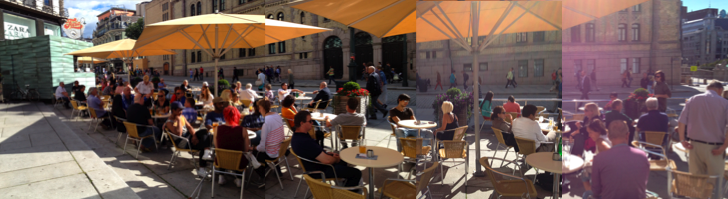
Just a tangent here, we had great weather, dined outdoors near the SEI, what fabulous buffet style lunch at the nearby cafe.

I always make the most of a sit down meal, the ritual dimension of sharing so important on such occasions. Among the ancients, kinsmen were those who shared with their commensals. As such, it was only natural that they and their kindred god should seal and strengthen their fellowship by meeting together to nourish their common life by a common meal.

“Only persons who are a part of the circle within which each person’s life is sacred [through the shared meal] can be considered a comrade” (Robertson Smith p. 269 Religion of the Semites).

Okay. Enough Religion 101. Back to the story.

Annika works among remodeled late 19th century buildings that once served as a veterinary school. Just shows to go how life in urban Stockholm has changed these past one-hundred years, with absolutely no need for industry upkeep of horse and carriage. Perhaps academic activity will one day take place out of converted car sales parking lots.

I did not realize that we had so much in common! project wise that is, so it was for this reason, we took the time to catch up on alignment. For example, Annika is participating on Assessing Arctic Futures: Voices, Resources and Governance — quite similar to a proposal on sustainability we are putting together, due next month — the we here being Florian Stammler (Arctic Centre, Roveniemi), Maria Stoilkova (U. Florida), and UC Berkeley ERG’s own Evil Genius, Anna Katenbacher, my assistant who continually keeps my head above Ostriching into the ground.

Annika is also working on the Barents oil gas development project, and developing a working paper through another researcher, Nadezhda Fillimonova, recently graduated from Uppsala U. with a Master’s degree (congrats Nadia!), over which I became quite excited to hear about, given my own current research on the Barents Shtokman project.

In fact, I am just now putting together a briefing paper for Annika’s end-of-the-week workshop with colleagues to let them know I have been in town, that we connected over lunch, and that we are ready to move forward on a few proposals.

Thanks again Annika! for a great meal and chat.


Onward to Uppsala!


8/12: To Stockholm.

Airport sushi (my Berkeley reprieve).

What canned vegetables see (inside Stockholm subway station).


Voilà

Stockholm is such a beautiful city.

I was here just several months ago, paying a visit to Nadezhda Fillimonova, working then at Stockholm Environment Institute, about whom I blog below. But the city in April bears no resemblance to what I am seeing before me today, so green and warm.


8/11: CICER-O (on Saturday)

On Saturday, I visited Dr. Ilan Kelman. I was lucky to come across his acquaintance from a one, Dr. Marius Næss, with whom I lunched just several days previously in Tromsø, mentioned in my Tromsø post below. Our meeting was today brief, but in fact, we were capable of rolling out, as it were, in this quieted exchange, several research interests over which we share a mutual direction.

Dr. Kelman hails from the great North American city of Toronto, a favorite of mine to be sure, with its Chicago look and NYC feel. Tip-tap, Tip-tap was the sound of the metronomic form by which we moved across our priorities as we got to know each other at high-noon, and may I add here, how refreshing it is to be able to cross paths so nimbly, as if acquainted already with each other’s typologies of form.
Ilan is lead author on a superb (and successful) Norwegian Research Council application on oil and gas communities in the Arctic and sustainable visions of the future, which is one purpose for our meeting — on a Saturday afternoon, a real no-no in terms of Life-Balance issues, as was instructed to me this past week at Fulbright Norway orientation. But, oh well, as Ilan hails from N. America, we were happy to meet at the CICERO building on a weekend.

CICERO has a Mad Men TV-show set feel. Lucky for me there was plenty of coffee from a typical latte making machine I have become quite familiar with, and for which I include in my descriptions surrounding the corporeality of expertise.

We covered a whole slew of items, including a lengthy discussion on Ilan’s Island Vulnerability Studies and Disaster Research, which can be found more generally on his website.

Something that caught my attention was the walk back to central Oslo. CICERO is on the road to Holmenkollen, which enroute by foot, I managed only to find by main thoroughfare, although the Google maps suggested alternate routes. And on my way back, these routes became apparent to me. What they are, in fact, and the reason for which I could not trace the original path to CICERO, are small walking paths along side little streams flowing down from Holmenkollen.


What a fabulous way to walk through a city.


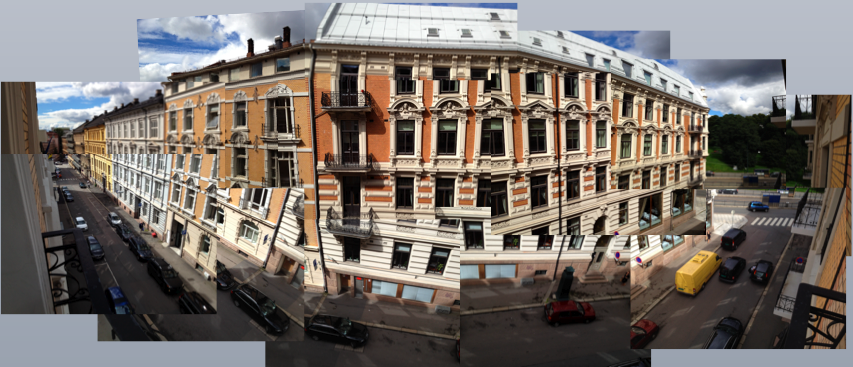
8/10 Epilogue: We reconvened to discuss things we know about or wanted to know what the other thought about.


We began from the balcony and moved to the street.


Chatting till twilight…

…from Dusk.

Read Full Post »

« Newer Posts - Older Posts »