27-31 May –
Pan-Arctic Extractive Industries PhD Programme:
An initiative under the Umbrella of the University of the Arctic, led by Jessica Shadian, Florian Stammler (Arctic Centre, U Lapland), Gunhild Hoogenson-Gjorv, U. Tromsø.
PhD Course/Symposium
Course Website/
Course Info
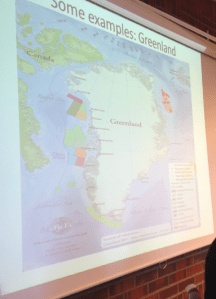
5/31: Student Presentations.
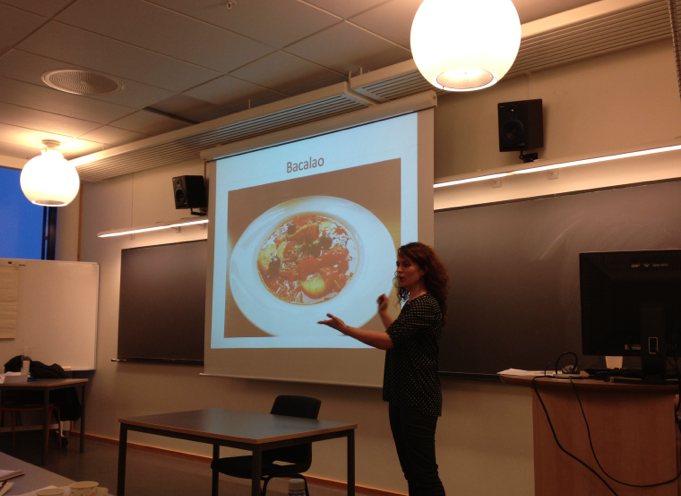
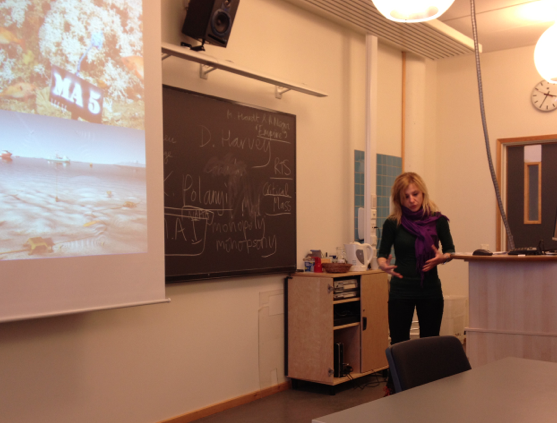
Elena Nuikina, U Vienna, Vorkuta, Russia, coal mining — superb talk on her work in Russia, great ethnography, looking at development as a process of expansion through efficiencies of scale.
What makes a mono-industrial town located in North of Russia a viable place? How viability is negotiated? (Fluid process; looking at perceptions, strategies and tactics to make Vorkuta a viable place? Viability for whom?). Chapter 2, How international experts, authorities, companies and ordinary residents envision future existence of the town? What were the projects aimed at future viability of the town? How is viability negotiated in changing context? Development Scenarios for Vorkuta. Whether it should be a workers’ camp or “town”.
Shrinkage — Instead of Restructuring — (Industry shrinking, spatial re-organization of the town down to 5 mines from 12; from 200,000 down to 90,000; outmigration of people (via programs + self-driven) — Consequences: Changing economic life in the town; municipal and social services; ghost towns on the margins of Vorkuta; changing social dynamics in the town (mafia, social activism, leadership, social capital, social cohesion). Possibly a positive movement where “development” from shrinkage could result in “higher living standards” — So development, instead of leading toward largess, the concept of development is Progress, whose telos is efficiency. A playground for World Bank, a laboratory for carrying out processes elsewhere. Strategies of efficiency that are utilized by different actors in different ways. Temporality — short term stays as part of the discourse in labor and out-in migration.
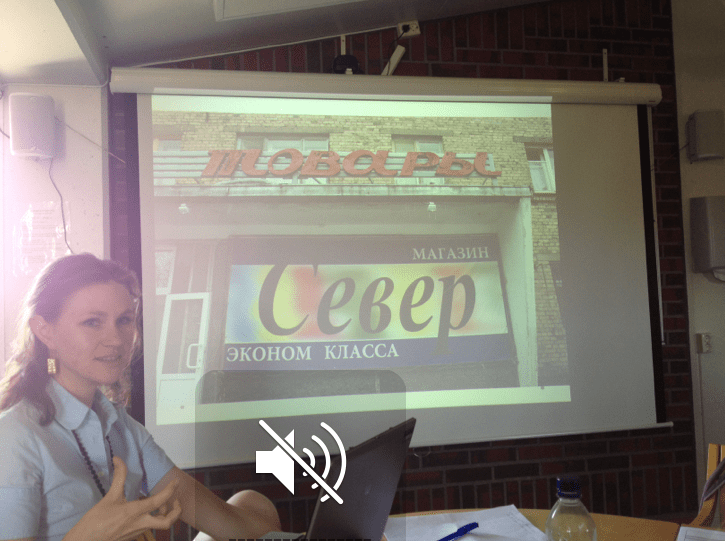
Tara Cater is up next, Dept. Geography, Memorial University, talking about High North Canada. Engaging with Indigenous and non-Indigenous actors involved in mining communities. Piotr Graczyk, PhD student, U Tromsø, up now talking about regime frameworks and the relationships between state’s interests, constructivist approaches involving agent-structure interaction, and foreign policy analysis decision making.
5/30 — after lunch: Russian Nickel Industry: Soviet Industrialism, Russian Capitalism and the Environment, Lars Rowe, Fridtjof Nansen Institute. How nickel industry came to be in Northern Norway. Petsamo/Pechenga region. Finnish Corridor: the Tartu (Dorpat) Peace Treaty (1921) — given to Finland because of the desire for an outlet to the (arctic) ocean; Finnish geological investigations (1921-1934), looking for iron, but found nickel instead; Inco (Canada) vs. IG Farben (Germany), considered the biggest find outside of Canada — but without expertise in the Country to develop the ore, and engaged various companies. Nickel concession settles with Inco, which secures Petsamo in 1934; 1934-39, Company town Kolosjoki (Nickel); Power plant at Jäniskoski. Nickel — steel alloys, makes steel – stainless, stress resistant, munitions, armor plates, secure supplies, deny supply to competing powers.
 Then war comes to the area. Winter war 1939-1940. Moscow Parenthesis 1940-41/ Finland, Germany, and Soviet Union; Molotov’s sudden demand, Finland needs security: Hitler or Stalin? 1941-1944: Germany controls Petsamo; October 1944: Soviet takeover. 3 months after the peace, after Soviet’s give back Petsamo to Finns. But then, they ask the Finns for Petsamo back. In Pechenga: Nickel, Zapolyarnyi (1957); Prirechnyi (1962); Five hydroelectric power plants (1951-1970) – two built by Norwegians, three Finnish, two Russians (a minimum of border crossing by Western personnel); Five new ore deposits; The Norilsk ore [The issue of Western personnel on “Soviet Soil” is something Jonathan Stern disavows in his story of Natural Gas industry technology transfers]
Arn Keeling. Environmental history and extractives. Extractive industries: histories of exploitation, degradation and conflict; Cumulative effects assessment: immanent/future development focus (may include effects of past activities projects on current and future development).
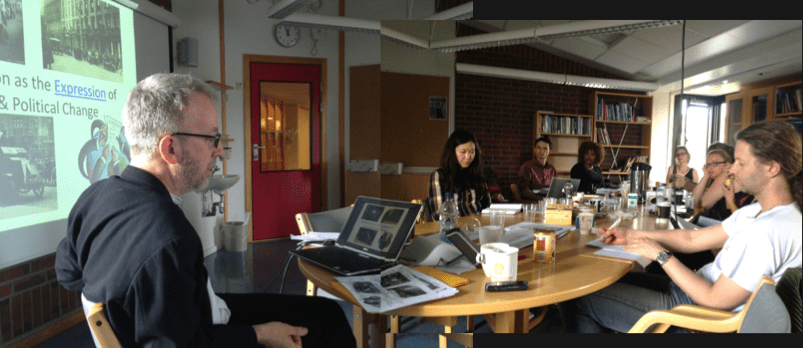
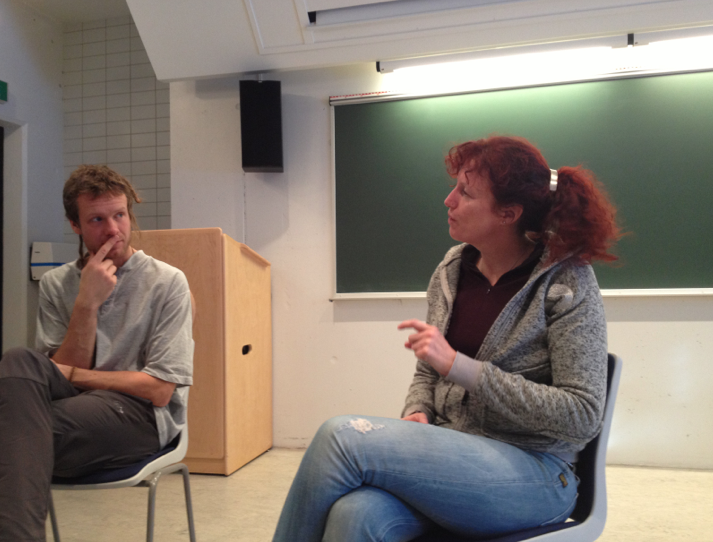
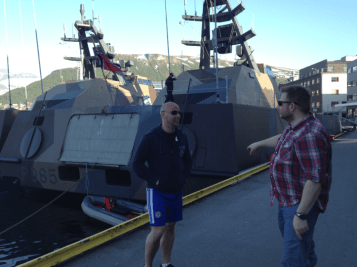 5/29: Stuart Robinson, is up — U Tromsø, Globalisation as the Expression of Social and Political Change: a Pretext— delivering up great job. Hanging on his every word. Okay, here we go:
What Globalization expresses, social and political change on a fundamental level. How things are made and how economic systems function. Using Globalization as a lens for talking about political problems associated with Marxism as a tradition of thought ostracized through sleights of hand. Marxism, as a word and ism, we mean something different when we talk about racism, rationalism, a pathology — a dismissal and straw man effect.
Hi Leena!!!
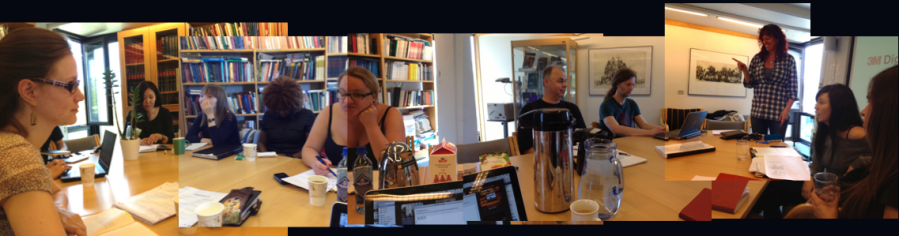
The materialist view — the overstatements of dichotomies of liberalism (voluntary actions) versus materialisms of Marx, given that liberalism itself is a materialist position. Not the things themselves, though those are important themselves, but the process of production, that sustains of lifeworlds, creates all kinds of organizational demands and the shaping of social relationships — which is more material, than the view that the actions of individuals and rational action is somehow the nomos of geographies of life.
 Making things and cooperation. The production and distribution of goods, organization of market system for distribution — and more profound and complex than the simplicity of what goes on in a factory. Consumption and production in our lives take up so much of our time, as human beings in world that we live in, dynamics of employment. The normalization on the cultural plane, being a cog within an industrial process: Hannah Arendt.
Subsidiarity — the idea of constellation of heterogenous actors, granted autonomy to do what one does best, coordinated — paradoxical decentralization. Autonomy — a body that would operate independently as a good service provider, as operating as a private company, operated with municipality as having controlling interest, and then giving up the interest, merely a regulatory framework, and then becomes a model of competition. A kind of transnational organization that permeates on the policy level and its replication.
 Fordism — intensified factory organization (collectivised capital ownership and finance, automation, strengthened hierarchy, scale) combined with political economy of distribution (producer-consumer contract). Changed the dynamic of work, from the natural rhythms of work to the factory assembly line (“not the employer who pays the wages, but the customer who pays the wages”). Marketing — playing on insecurities, worries about aging, worries about being socially accepted; Banking and credit– paying on installments, forms of debt, etc.

PostFordism– integrated with Fordist practices, growing concentration of capital, centralization of decision making in larger corporations, typically marketing position in markets — living the usual assumptions of free markets, but the reality of most markets are one or more forms of monopoly and oligopoly relationships and even difficult to understand who the actors are, resulting in an increase in a transnational organization. Global factory and the integration of how things are made through collaboration of intra-industry trade, and the relationships whether competitive or collaborative, and the neoliberal classical model assuming an externalization of rational actors meeting in the market place, which may or may not be the case.
 The boundary between firms — disguising the influence of monopoly and monopsony (supplier of a good but dependent on another actor who distributes those goods). High tech system of design, and distribution and networked together with the most disgusting sweatshops, and the externalization of sweatshops — what can we say — that these locations are part of the transnational corporation, the phoenix rising of the centrally planned economy, under the guise freedom of contract, free markets, insertion of free market under a heavily centralized production process and the internal operations of a global corporation vertically integrated.
 Steering at a distance – autonomy over process but responsibility over results. Control the outcomes, recording the publications and providing rewards effectively discipling the subject. Geo-political marketing, multi-lateral trade through NAFTA, and other investment regimes.
Praxis: Engineered Autonomy — Division of labor/tasks (differentiate, allocate); coordination (compartmentalise, quantify, time); Tutelage (focus decision making, rationalise lines of command, allocate goals and incentives, monitor).
Fabulous stuff
Thanks Stuart!!!
Okay Q & A…
Florian questioning about the socialist corporation and the company towns of extractive industries. The draconian rules of the gated community for maximizing profit. The issue of trust– marketing and advertising is all about generating feelings of insecurity, that trust has broken down, and a social system of insecurity — a notion that you need to be worried about not socially competitive, about attack….
Industrial transformations — changing the lay of the land — making extractive industries rather cutting edge, and making traditional industries’ cutting edge backward — the need to move into new areas where the networked model of organization is effective — broad church of actors. Product tagging, topography of global economy. The Logic of Capitalism and the logic of society – continuing commodification that stress of society – society. Possibilities of social organization.
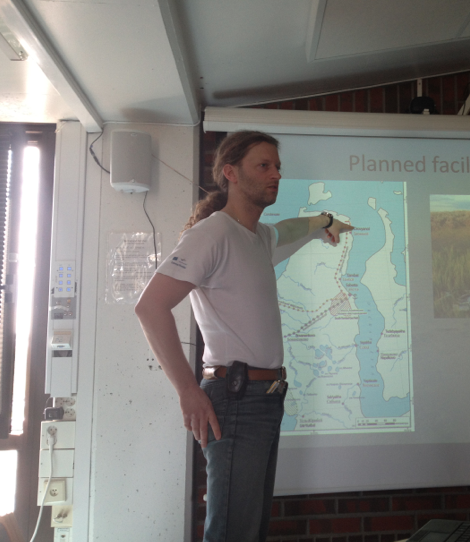
Ok. Up now we have Florian Stammler, talking about developments in the Yamburg, working as a consultant for a firm that was given a contract to carry out interviews among community members where oil and gas development is planned to take place.
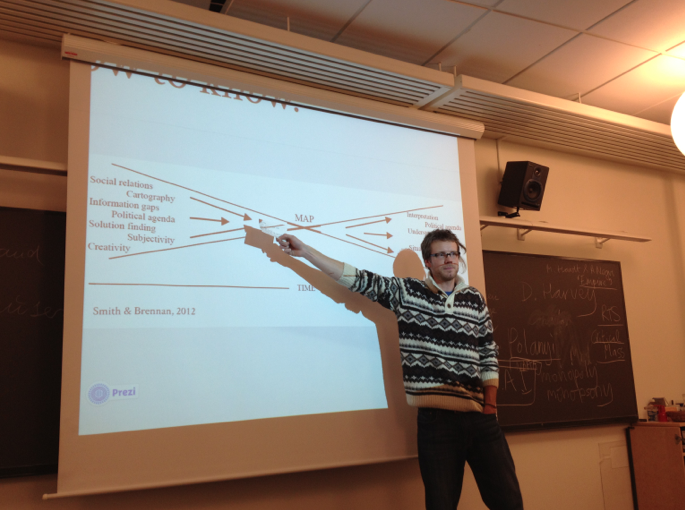
 5/28: Second day. Florian up now. Constant state of justification and crisis as a field. Anthropology has been accused by a number of scholars as the handmaiden of colonialism, used to create passive subjects of rule. Processes of verification are not based on verifiable forms common to the quantitative fields.
 How do we grant authenticity and credibility to our findings if we cannot do so with hard numbers. Dealing with the pressure of justification — fieldwork is a powerful tool of establishing the real and verifiable. Very material process, we expose our body to the situation. This experience of exposure we ground credibility of our finding.
How do people use resources in the Arctic. How do people make sense of what folks see out in the Arctic. An environment that you cannot ignore. As anthropologists our task in the sense making exercise — we study how people make sense of the resources.
 We benefit from the experience of sense making from our informants. Whether geologists looking at the underground reservoir, or herders, who see a field of symbolic and material formations that give them purposeful approaches.
By examining what people do on the land — focus on what people do on the land, with the resource. How are these approaches similar or different. Engaging materially with the environment. Methods of participant-observation, tensions of subjectivity and objectivity. Acquiring skills as a form of credibility and authority. Creating forms of reflexivity in the field among informants for whom we are learning about their lives. Non-verbal ways of communication in the Arctic, versus verbal forms of communication among expertise, e.g., interviews have limitations.
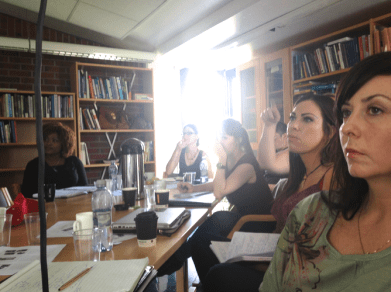 Arn Keeling, professor at Memorial University, up now talking about geography methods, activities he employs in constituting knowledge in his field, genealogy, historical research, and important parallels with anthropological methods, but special challenges with investigating the past, mobilizing time and duration. Turning now to students to listen to some of their methodologies and problems in the understanding of extractive industries. Piotr Graczyk, political science graduate student, examining institutions in the Arctic Council, and employing an emersion method of knowing folks, over and over again, following the game. Dealing with the personal role that the fieldworker has when engaging them in authentic representations of what they are doing. Florian, Berit Krisstofersson, talking about how to turn limitations into a problematization of analysis. We are speaking now about issues of fieldwork, when we can get access and when we cannot, the concept of theory and how the empirical could contribute to a notion of theory.
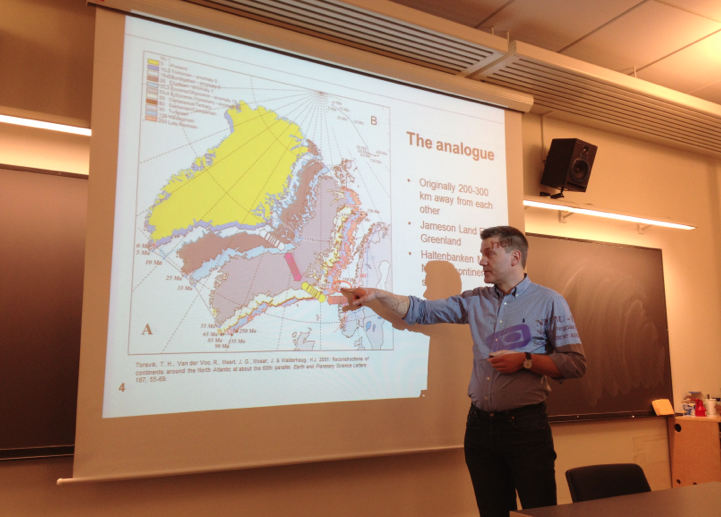
 After Lunch — Gjert Lage Dyndal, Political challenges to petroleum activity in Svalbard: Extractive Industries, Norway, Canada, Finland, Russia.
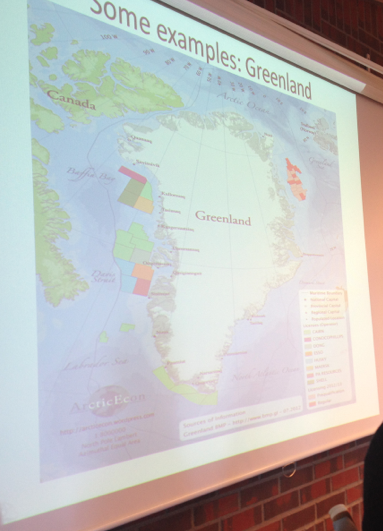
Increased Arctic interest from Oil and Gas Industry — largely a political stable and predictable area
A stable region, but still some challenges- Canada-USA delineation; Norway-Russia delineation; common perspective political stable area, all actors adhere to UNCLOS, eager to explore with a positive attitude to the north; waterways, about international straits and control of shipping; Norwegian Greenland delimitation lines were solved in 2006, and the NoRu agreement was signed in 2011.
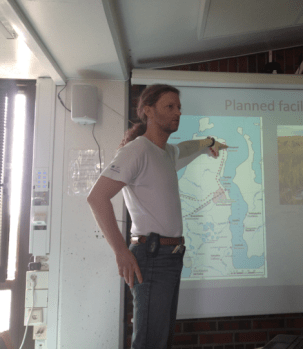 However, there might arise new and challenging overlapping claims as all nations have delivered their geological claims for extension of their continental shelves–claims to the commission on the limits of the continental shelf; nations adhere to the UN convention on the Law of the Sea (UNCLOS); still dependent on regional or bi-lateral agreements in the end.
–Predicting the future of international relations–it is about understanding history and social dynamics, understanding when potential conflicts may arise.
–Why are no licenses awarded around Svalbard — In the opened parts of the Barents Sea and the potential Barents North, the Norwegian Petroleum Directorate estimates resources of …
–Licenses to the borders in the south from the Norwegian EEZ, in the West from Greenland and the East from Russia. Svalbard, a special judicial and political case…
–History of Svalbard. Norway had the potential to assert its legitimacy as a sovereign that could enforce the third party rights. Svalbard Fisheries Protection Zone (FPZ).
Hydrocarbon Exploration in the European High North
–The “Soria Moria Declaration” of 2005
–The industry is a powerful political actor
–Norway also has a great tradition for close cooperation and links between industry, unions, and the politicians and bureaucracy (e.g., Seip, Bull, Sejerstad)
- Statoil, established in 1972 (for cultural influence, and state advisor)
- Norwegian strong tradition for “rights of reversion”
 Greater trend of nationalization of the oil and gas industry
–From the Seven Sisters to the NOCs era
- In the 1970s approx. 80 percent of the oil and gas companies were owned by western private companies. The industry was totally dominated by the so-called Seven Sisters
- Today, this has turned and national oil companies control approx. 80-90% of market
The Barents and the Disputed Area
The two governments were able to come to agreement — DNV’s Barents 2020 helped to create an agreement for the delineation.
The case of Svalbard and hydrocarbon Exploration: The maritime areas around Svalbard should it be regulated by the Svalbard Treaty — If the maritime areas around Svalbard becomes regarded as part of the Svalbard Treaty — Norway must give the citizens and companies of the signatory nations equal rights to the resources– Norway will most likely not be able to adopt a nondiscrimination petroleum management parallel to the fisheries regime based on historical activity. Taxation cannot be higher than needed to administrative Svalbard. No Norwegian Taxation, no Economic Incentive for the State. Norway as a responsible environmental actor: Svalbard, internal political compromise (Svalbard-Lofoten/Vesteraalen).
The Potential influence of the industry — Does this mean that there are no prospects for hydrocarbon exploration and exploitation at Svalbard and in the maritime areas surrounding the islands…
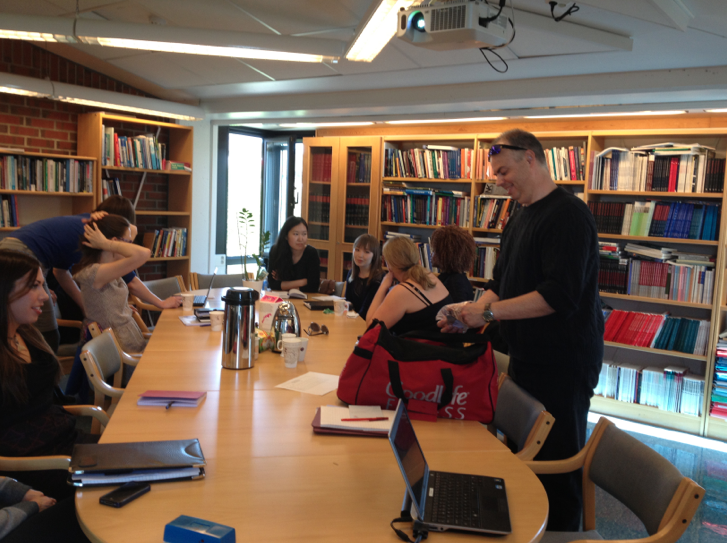
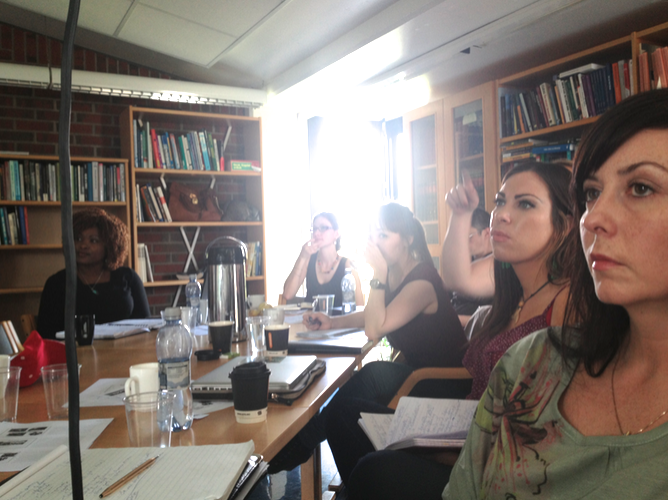
 5/27: Getting started here, finally operating with an internet connection so that I can jot down notes along the way…. Gunhild Hoogenson-Gjorv, U Tromsø, giving introductory remarks with Florian Stammler, Arctic Centre, Rovaniemi talking soon more about the theme.
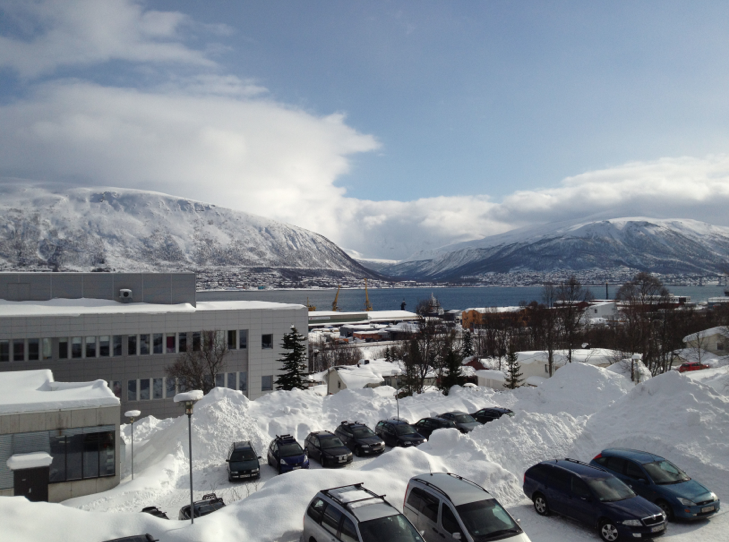
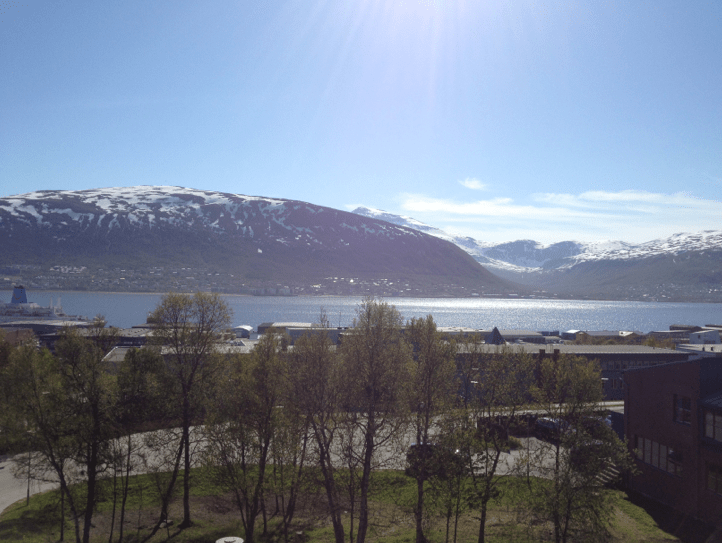
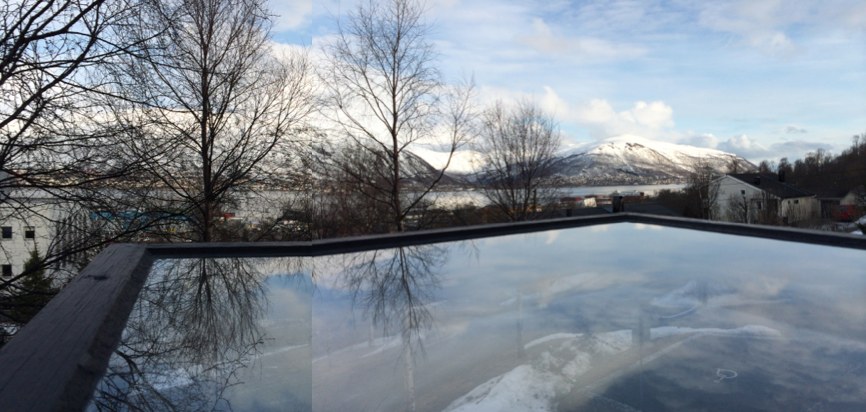
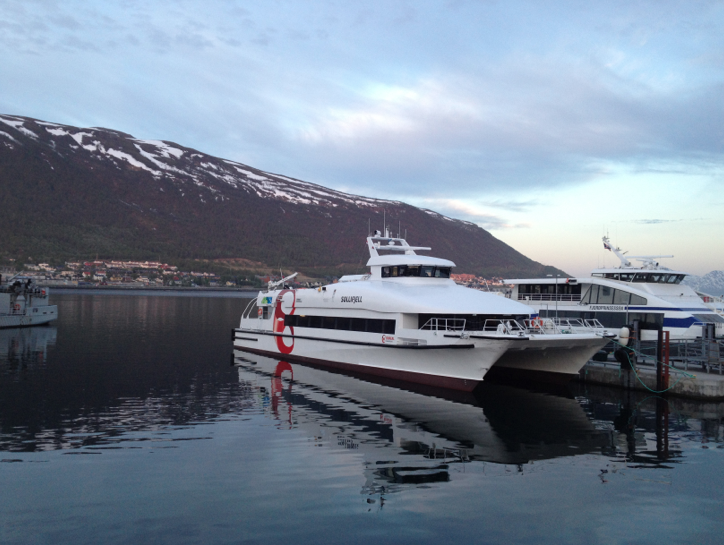
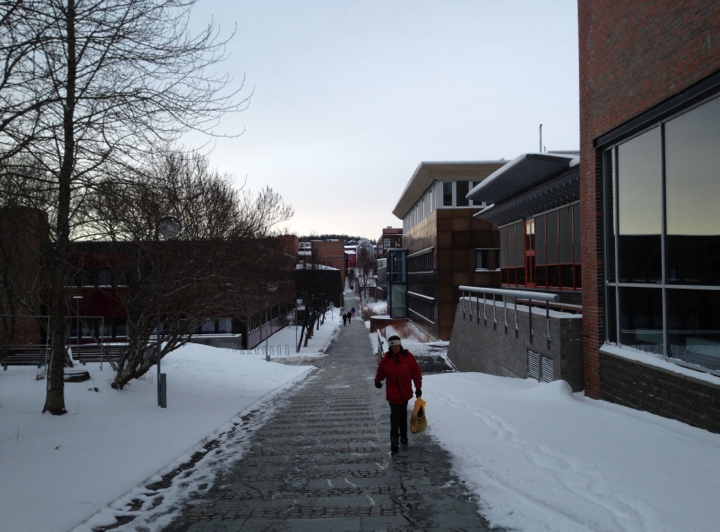
Beautiful day in Tromsø.
10.00-12.00 – Introduction to Cumulative Effects of Extractive Industrial Development
Gunhild walking over some logistics issues, requirements for receiving credit, schedule, university priorities, and all those good et ceteras. Florian now up discussing the goals of U Arctic — to promote a northern voice in the globalizing world that reflects a shared regional identity across all eight Arctic states and among all Northern peoples and cultures. A little bit of history, acknowledging Jessica Shadian‘s input in establishing an Extractive industries Course, Bodø, early 2011, and then again an Arctic Dialogue-Greenland workshop, Sept. 2011, and then, Human Resource Issues in Extractive iIndustries, St. John’s NL, Canada, Sept., 2012. Our meeting is the fourth installment.
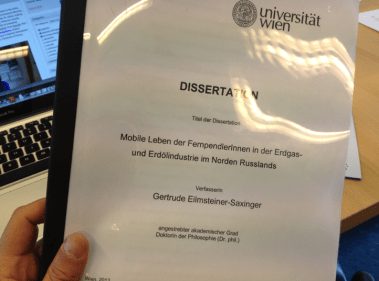
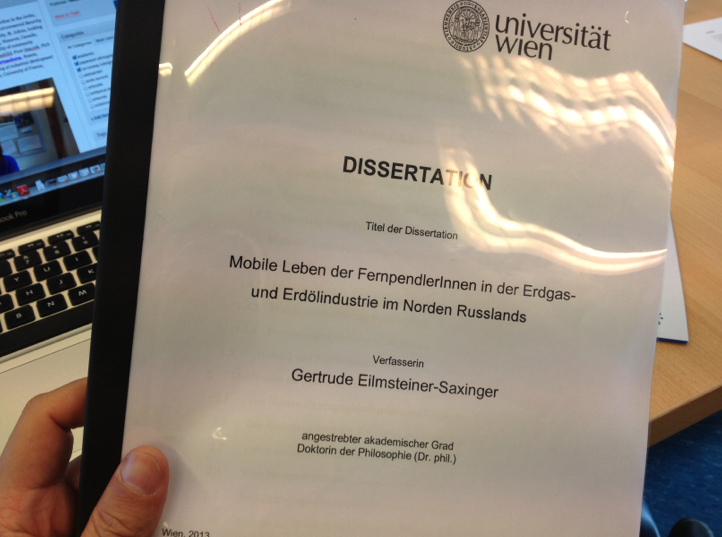
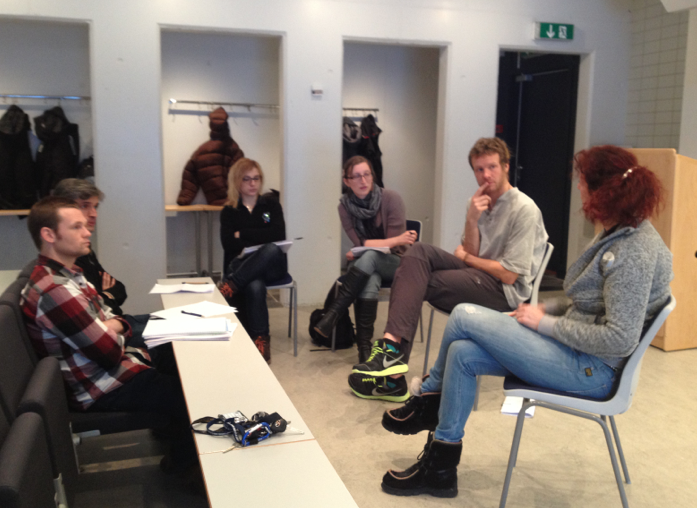
 Okay. Introductions: Florian, works in the Russian Arctic, Western Siberia and Northwest Russia, oil and gas extraction in the Arctic, on-shore, western Siberia; Gunhild, multi-actor approach to security issues, its meaning in different contexts — Environmental Security in the Arctic, edited volume coming out on Routledge soon; Heather Clarke, PhD graduate student, Memorial University, St. Johns, looking at migrating communities in the North; Tara Cater, also Memorial University, grad student, looking at mining, Nunavut, Canada; Elena Nuykina, working on the Russian North, coal mining community, PhD topic through Vienna [?], viability of community engagement and in migration flow from new megaprojects; Marina Goloviznina, postdoc, working with Gunhild; Piotr Graczyk, PhD student, U Tromsø, looking at Arctic Council governing frameworks, how interests are structured; Daria Burnasheva, Russia, Yakutia, MA thesis on visual representations of the North; Valeria Zamorshchikova, PhD student looking at industrial development in the north through economic and social perspectives; Mercy Oyet examining community transportation; University of Vienna, Gertrud Eilmsteiner-Saxinger, fly in and fly out, conceptualizing normalities, to develop postdoctoral work; Gordon Cook, faculty at Memorial University, examining urban-rural-remoteness.
Lunch.
13.00-17.00 – Environmental Impacts: data from ecology and ecotoxicology
Geir Gabrielsen – Senior Research Scientist, Norwegian Polar Institute, The effects of industrial pollution on Arctic ecosystems and people.
Introduction: More industry in Northern Hemisphere than Southern, so more Arctic haze, more industrial activity affecting the Arctic. Contributions to climate change. Arctic climate trends: rising temperatures, increasing precipitation, declining snow cover, rising river flows, thawing permafrost, melting glaciers, retreating summer sea ice, rising sea level, ocean salinity. The most dramatic event, reduced summer ice on the Arctic, linked to black carbon.
 With regard to biology. Animals living in multiyear versus annual ice, but very little ice left in the Arctic basin, 10-20 percent. Only in Northern Canada is multiyear life available. Seals will not be up on the ice, which are food for polar bears, ivory gull, some species will thrive others will die. Atlantic species are moving north. Arctic species are dying. Lower quality food moving into the Arctic, which has implications for mammals in the Arctic. Arctic Monitoring and Assessment Program has more reports (see website).
Silent Spring, Rachel Carson (1962); Our Stolen Future, Theo Colborn et al. (1996); Silent Snow: The Slow Poisoning of the Arctic, Marla Cone. “Arctic Paradox” — traditional diet of Inuits has health benefits but exposes them to dangerous levels of pollutants. “Inuit never had a word for pollution and now are subject to toxins”. Chemicals, everywhere in everyday life. 110,000 different types of chemicals on the market. The Reach Program — force companies to determine the impact of chemicals. Making consumers aware of the chemicals they consume, “average of 200 industrial chemicals and pollutants in umbilical cord blood from 10 babies born…in 2004 in US hospitals”.
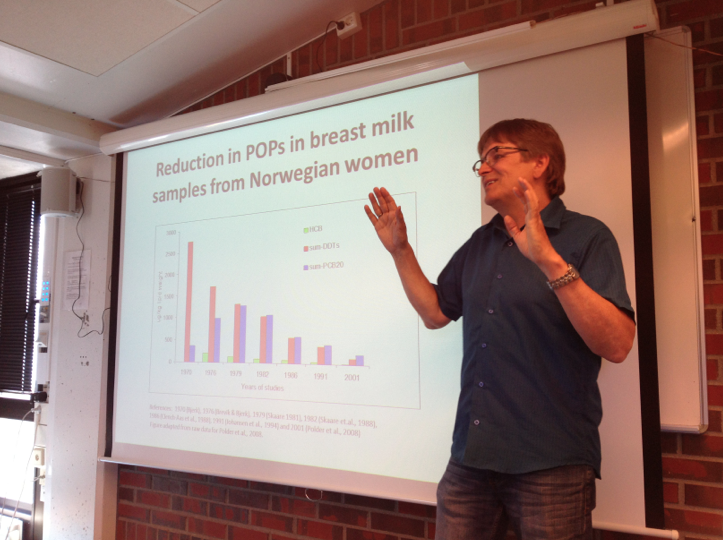
 Not easy to make a relationship between chemicals and incidence and pattern of diseases in humans– osteoporosis, appears to be related to pollution as with obesity (based on comparisons with seals in the former).Regulation is really helping — Reductions in POPs in breast milk samples from Norwegian woman. “Coming up with findings of bad chemicals affecting animals in the Arctic, which is a hard card on the table to get rid of it from the market”. Consumer info webpages: Kliff.no, erdetfarlig.no, gronnhverdag, healthystuff.
Four Aspects of Criteria: Chemicals are accumulating in the food chain, that they are persistent, present in the Arctic, toxic effect. The most difficult part is demonstrating effects on animals (immune system, reproductive system).
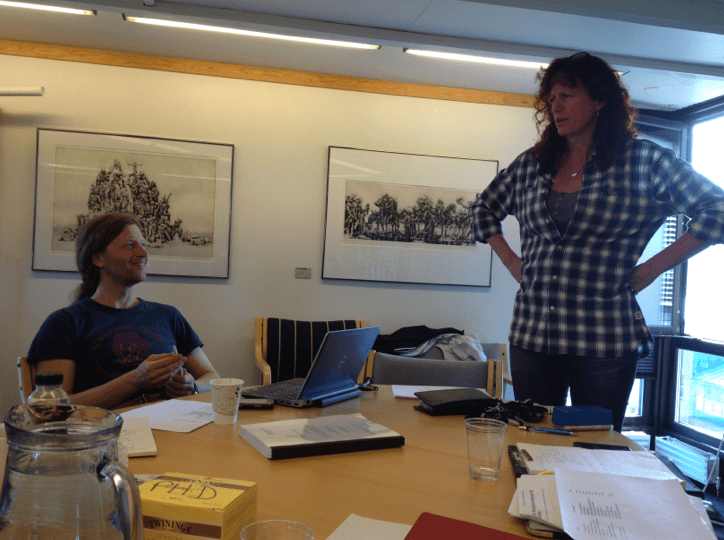
Øyvind Ravna, Professor Dr. Juris, U Tromsø – Mining, human rights, and local autonomy in Sápmi
Sami protest against building the dam in the Alta river area, and despite the protests did not manage to stop the dam’s construction. The protests began creating a stir in the Norwegian public sphere. One result is the government began investigating Sami rights. 2005 Finnmark Act– through prolonged use of land and water areas, Sami have collectively and individually acquired rights to land in Finnmark; Act does not interfere with collective and individual rights acquired by Sami through prescription (collective rights results in self determination and individual provides individual rights from the state); a commission should be established to investigate the rights.
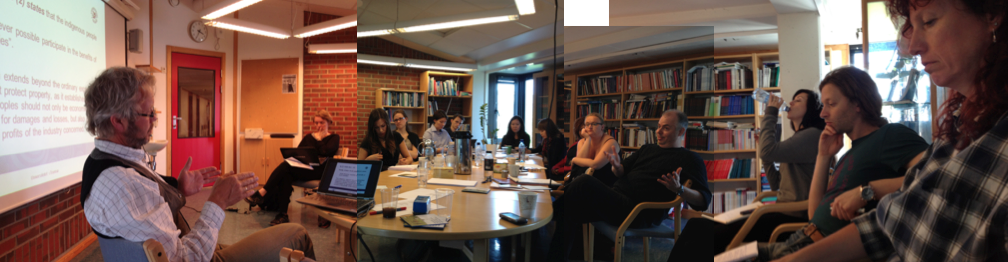
 Convention on Biological Diversity–Article 8(j) commits Norway to: — “respect, preserve and maintain knowledge, innovations and practices of indigenous and local communities embodying traditional lifestyles relevant for the conservation and sustainable use of biological diversity”. Article 15 (2) says that in cases where the State retains the ownership of minerals, which is the case in Norway: “governments shall establish or maintain procedures through which they shall consult these peoples, with a view to ascertaining whether their interests would be prejudiced…”…”shall wherever possible participate in the benefits of such activities”. ICCPR Art. 27 — In those States in which ethnic, religious or linguistic minorities exist, persons belonging to such minorities shall not be denied the right…to enjoy their own culture…
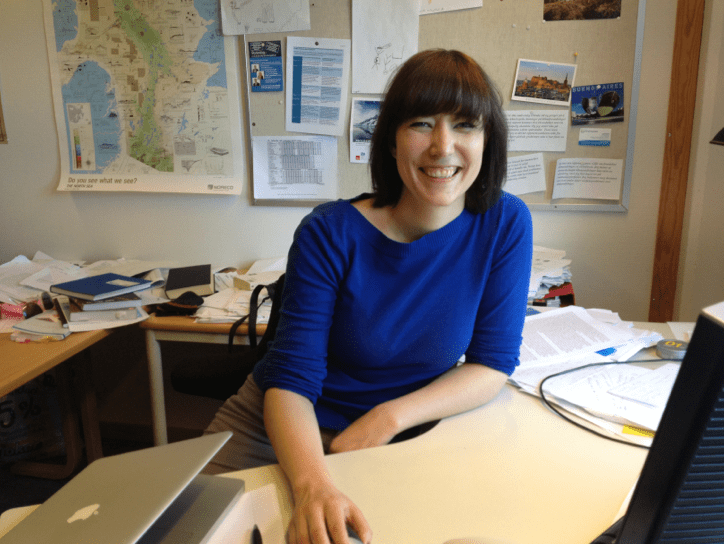
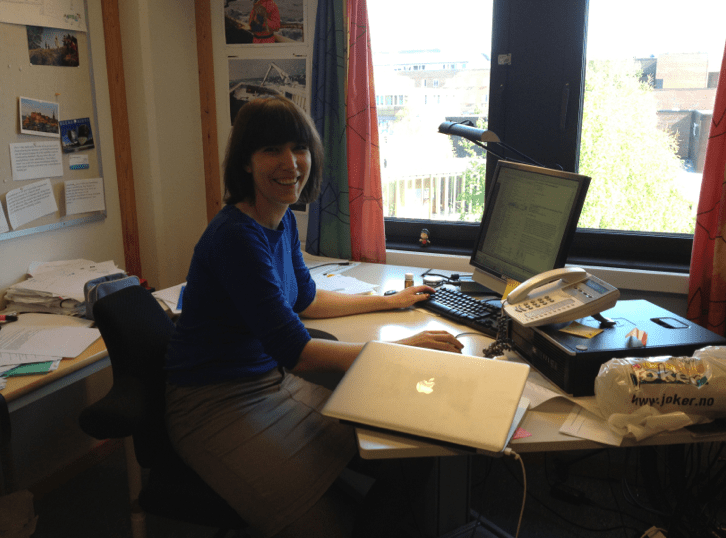 Up now is Natalia Loukacheva, First Visiting Nansen Professor of Arctic Studies, U Akureyri, Extractive Industries and Arctic Indigenous Peoples’ rights to land and natural resources: Diversity in economic development, population numbers — we deal great diversity in geographical location and contact with extractive industries. Permanent participants of the Arctic Council.
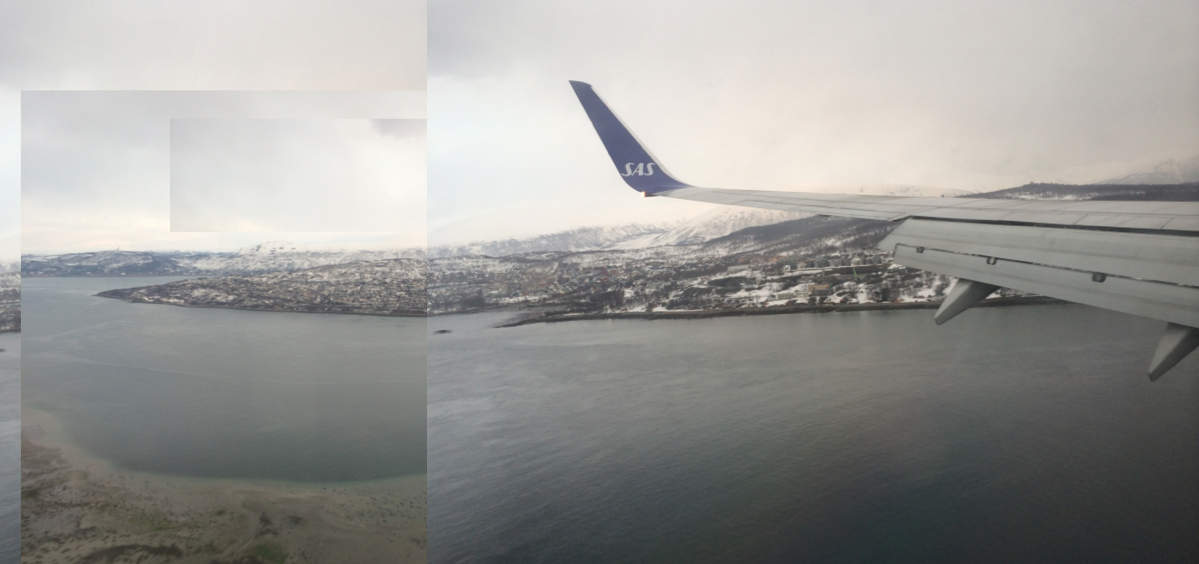
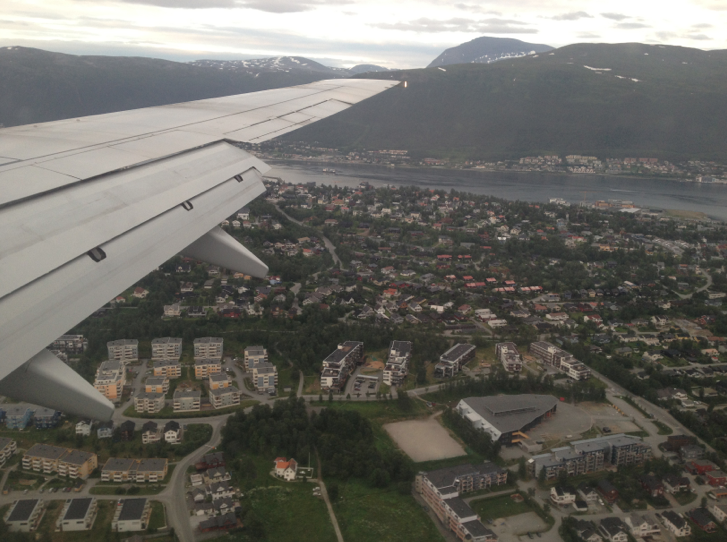
5/26: Coming in from the South…w/ wifi en route…

0.000000
0.000000
Read Full Post »
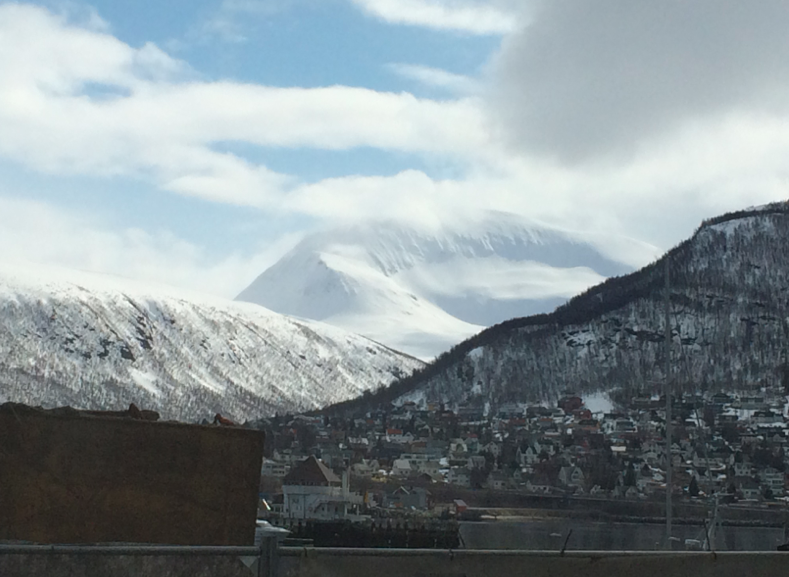
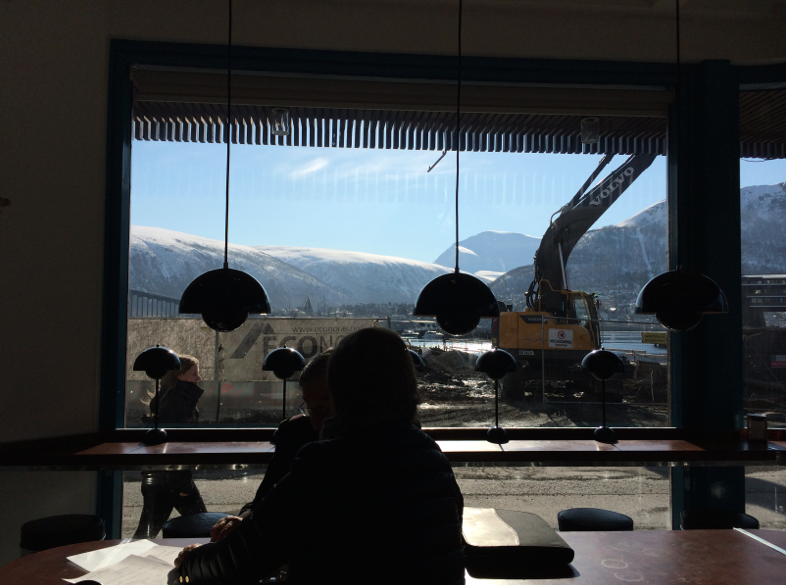




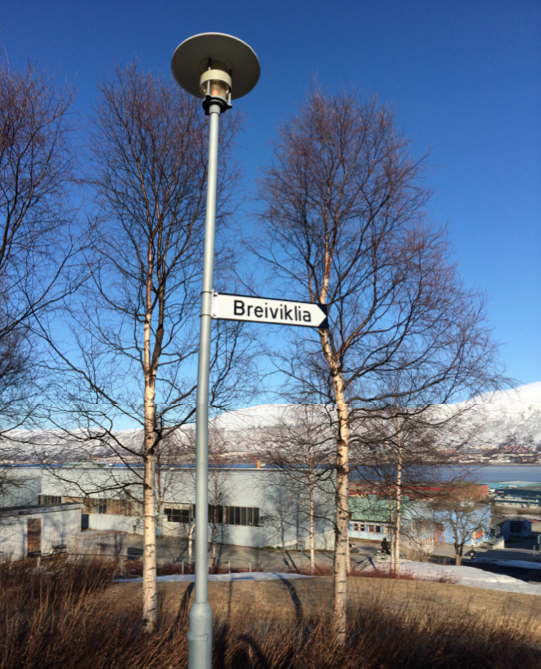
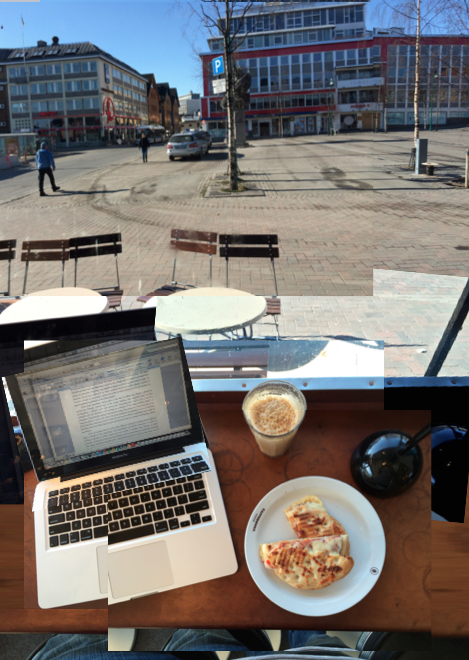
 The Troms in grand style. We had a delicious panini upon arrival at Kaffebønna downtown troms, then headed over to greet the smart-looking Hege Fokedal who provided an office key to get started.






















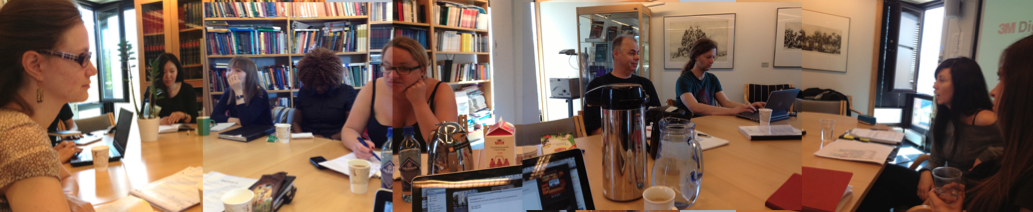



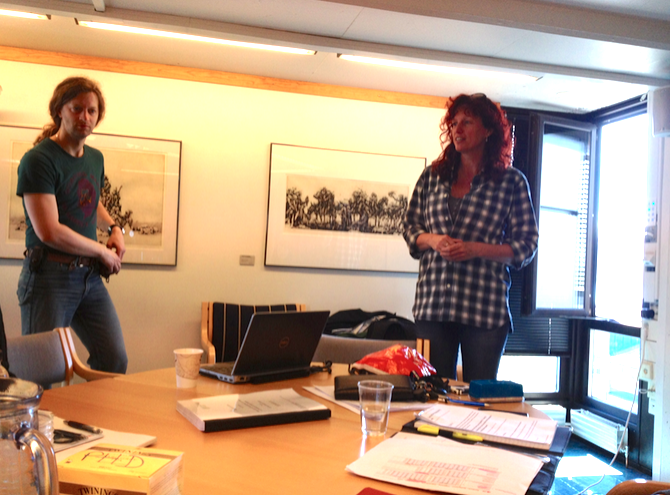




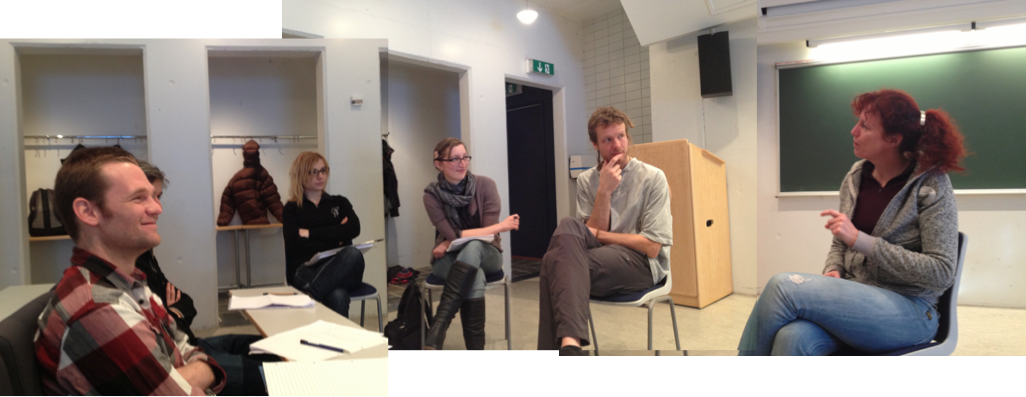
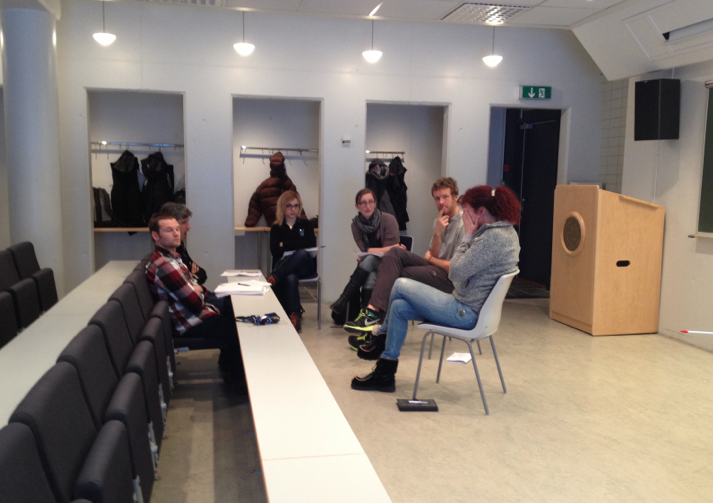











 Paparazzi Ethnography