Feeds:
Posts
Comments

Posts Tagged ‘Tromsø’

Tromsø Journal…

tromsoTromsø Journal

Tromsø Journal

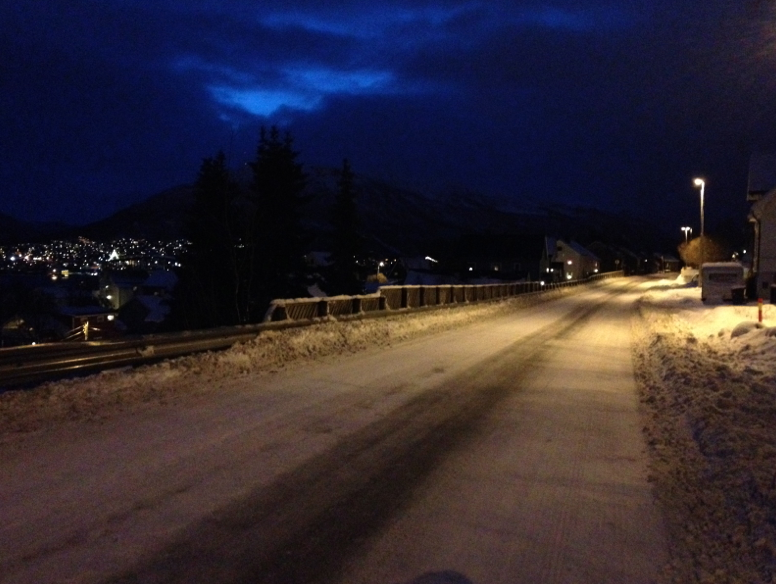
tromsø

is back

outside

yay!

snowy
viewtroms

Read Full Post »

fisheries

self-portrait

Post Script

2/20: We turned in the ERC proposal (yay!).
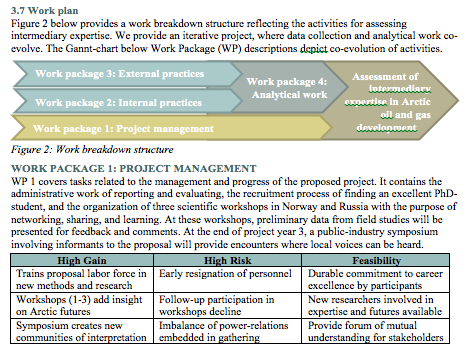
Gannt chartFisheries Epilogue: We are close to completing the European Research Council (ERC) proposal, and I kept a few notes along the way these past few weeks that I want to share with readers.

Nothing too startling, really, considering how much fun I had putting it together and working with newly minted PhD, Kathrine Tveiterås.

It was really swell.

We turned in the latest draft to a few folks for circulation, we will knock out the 5 page abstract, and then call it a day. Phew, that was an entire year that I put into moving that forward.

more chartsBut I tell you what, it would never, ever, have looked so awesome as I feel it does right about now without Kathrine’s help and the folks that came along with her at the Fisheries College, here at U. Tromsø. What a difference it makes working with a team.

I plan to complete a few more sentences right here, in a few days, but let us have a look at what few notes I jotted down along the way, shall we?

Addenda to Epilogue: 2/9 – We (Kat and I) received written feedback from three persons, U Tromsø postdoc Maaike Knol, ERC postdoc Egle Rindzeviciute, Mette Skraastad ERC workshop guru. We then met with Petter Holm and Peter Arbo, senior professors at U Tromsø in STS and critical theory. All of the feedback was instructive and attempting us to move toward a less cartoonish depiction of our object, which in part, was my creation, as way of dramatization. My caricaturization worked okay for a while, but as the proposal came more into focus, everyone wanted more. 
breakfastThe shocker came when we met with the [Thor]Bjørg[s]. That was hard, I have to admit that. Thorbjørg, in her inimitable politeness, pointed out that the proposal is simply not there yet, and has to be elevated to the status of skipping off the surface of the water.

Bjorg was more blunt. She simple does not want to be bored while reading the first page, let alone anything thereafter. That was hard. I have to admit that.

Kat and I regrouped. We divided up the tasks. Most importantly, I have to and will generate the Synopsis, a five-page abstract of the proposal with citations. I made several travel changes to my trip to Villa Otium. We will see what we can see. Ten days left.

1/17: I met with Peter Arbo at the Fisheries building, to discuss progress on the European Research Council (ERC) proposal. We sat for a little chat on the Q.T., pouring over the ERC draft. He provided valuable advice, mostly, that I have to unpack terms of art. Peter gave advice on the graphic. Graphic #1:
second modelThis is the original created by Kathrine Tveiterås. I like this image. But Peter could not read it, and found it static with unnecessary data. So. I came up with a few versions which I sent over to Kt. First revised version: eventing In this next image below, I high light two spheres of activity: eventing #2
Finally, the minimalist version:
eventing #3


1/15: Tromsø’s a swell town as any. I have the pleasure of working with a research partner Kathrine Tveiterås at the Fisheries building.

building

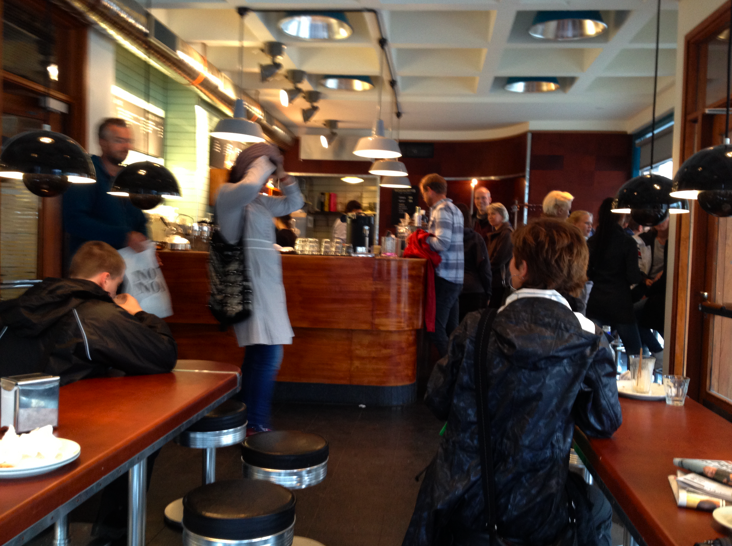
And also having coffee at Kaffe Bønna.

cafe

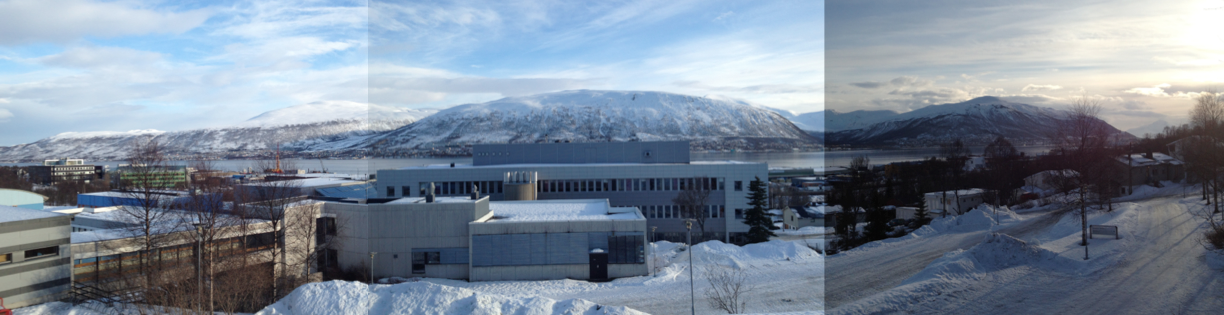
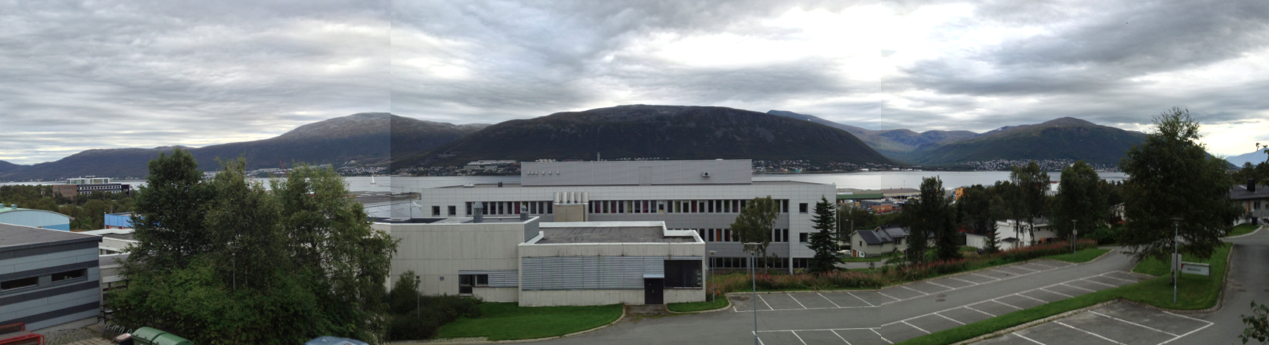
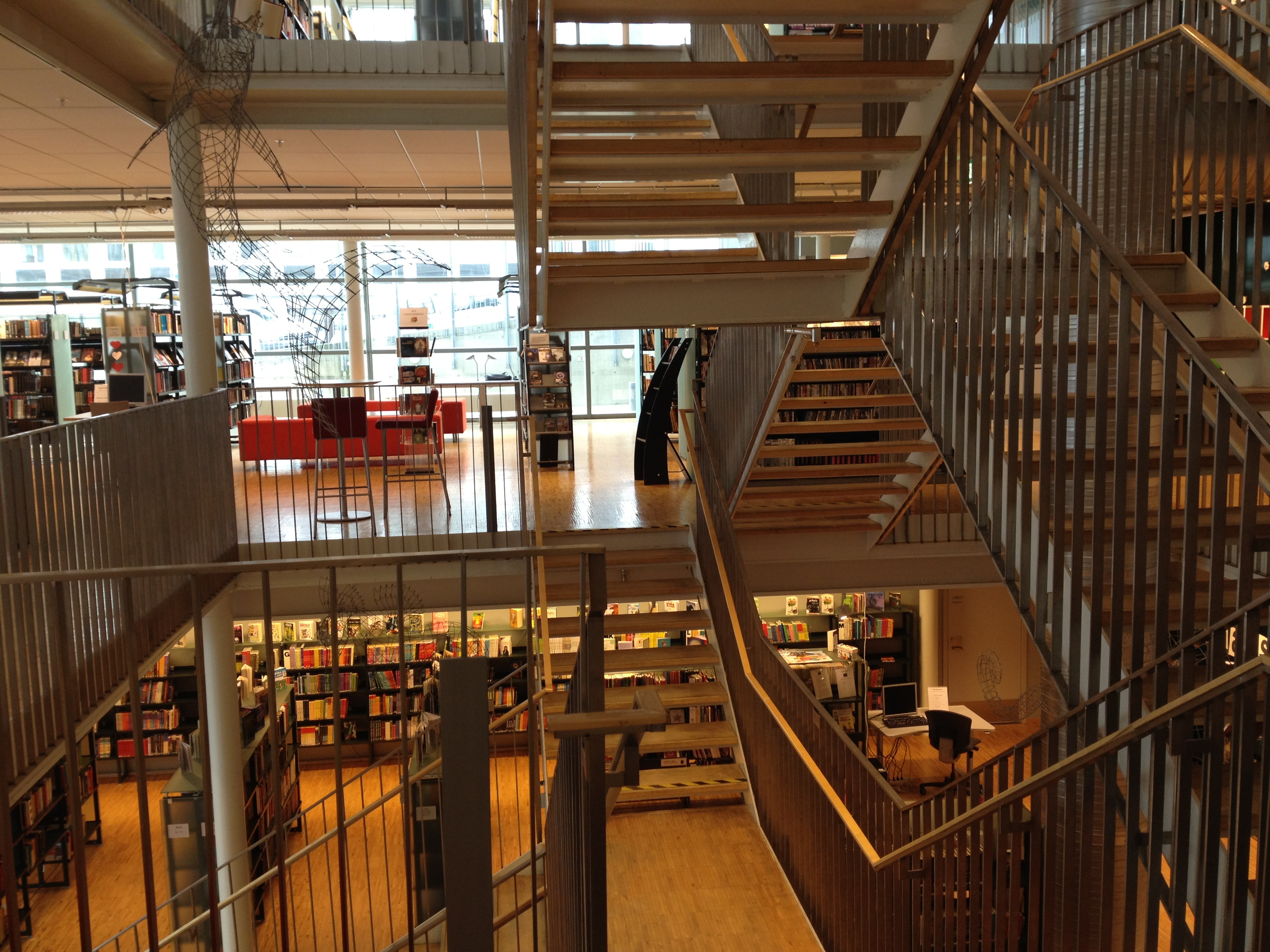
1/14: This was my viewshed for the day. Hanging out at the Fisheries Building, I shared a quiet moment of vertigo with myself while leaning over the fourth floor balcony.

fisheries

A lot of activity goes on in there. It has the feel of hustle and bustle, like a small self-enclosed city of different guild workers attending to their errands.

fisheries

I worked with Kathrine on the ERC proposal beginning at 12:30PM to 3:30 PM, came home at 8PM, ate, fell asleep until 11PM — procrastinating for several hours, waiting to begin work on the proposal. I committed myself to getting a draft together by next morning (in a few hours). I am going to doodle a bit more on this blog then work till 5 or 6 AM, nap, shower, coffees.

1/13: I worked with Kathrine today, continuing on developing our ERC proposal. It was clear to me several days ago, during the first real session when we decided to work together, that she had developed a better analytical grasp of the overall proposal than either Annamots or I could make out of it this past year.

refractive practice

For example, she notes early on an image of how the project works. Using the words I have written in the initial proposal, she drew a graphic which represents the overall dynamic of intermediary expertise. From there, several days later, she developed a follow-up image, which both tightened the proposal, and added another set of categories that I explained were not characteristic of what I had in mind. Essentially, in this next image below, the work of the persons we have in mind became commensurable with industry.

model

For today’s meeting she translated her notes, finally, into a graphic image (see above) that we could then examine and discuss as the basis for beginning to develop our research questions. We sat before it for about one hour, while discussing in what way it was reflective of what we wanted to say about what we propose to do and what we think is happening. I almost thought it was perfect. But then I suggested several items of difference, which I demonstrated in a crude drawing.

So. We began with this image, that Kathrine created, seen above on the computer screen.
After a lengthy discussion, we ended up with something akin to this model, seen below. I just created this, and I have asked her to create a new image based on our discussion today, which she is doing now. Instead of sending my own image to her, I plan to share it with her tomorrow to see if she has come up with anything radically different.
second model

1/11: Busy day. Great discussion with Kathrine. We spent a great deal of time laying out the European Research Council proposal. There was at one point, a bridge we needed to cross in order to understand each other’s orientation to the project. It was quite humorous. How shall I put this? It was as if she understood the exact pieces of the proposal and in fact, understood them exactly. But the way that she approached the task of assembling the pieces — it was as if we were involved in carrying out a science project. For this reason, having her on the proposal is the best thing for the proposal, because it is a science project. However, I explained that the way I assemble the pieces, the way the project becomes interesting to me, is when I consider the proposal as an art project. It is an art project made to appear like a science project or made to mimic a science project, to see what science could look like if we created an art project and represented it as a possibility for what science could do.

1/10: I had a great meeting with Kathrine Tveiterås. We went over the European Research Council proposal. She is so Smart!

fisheries
entrance

view
Katherine works in the Fisheries building, which has fabulous views of Tromsø. In addition to the great view, a coffee room on the 4th floor has quite a bit of artwork by the scientists who work in the building. We began with a brain storming session. She cleverly drew an image of what she thought the project was about. She suggested, if I understand her correctly, that my work deals with the “production of the condition” . Actually, I have an article titled Condition of Market Formation on Arctic Gas Frontier.
art Kathrine pointed out what would be good to know: What makes a forecast different from someone’s opinion? What is the description of the knowledge production that results in energy forecasts?

We did this for 1.5 hours, then headed over to have a chat with Geir Gotaas, at the Rector’s office. I wanted to walk him through the project.

view

Geir gave us plenty to think about. Who we should tie the project with on campus and to ensure that we are touching bases with the correct faculty. Things like that.

Read Full Post »

Tromsø

1/5: 51 minutes to walk to work today. The weather was better than yesterday, when I trudged through snow flurries. The route begins in a wooded area, then through a cemetery, following into a neighborhood of scatter-plotted homes and then along a quiet thoroughfare.

No sunlight since I arrived last week.

Nor will there be until the end of January.

walk

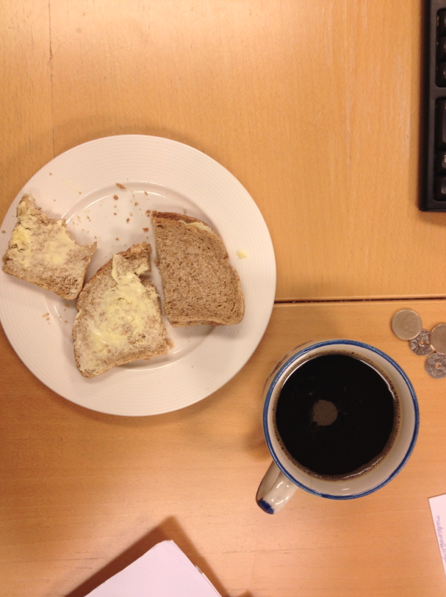
Here, the routine is reading, writing, walking, and slices of bread with butter or cheese.

For more details, see US-Norway Fulbright Blog, Tromsø Journal where I put down the minutia of a life in a northern town.

Speaking of consumption differences, I completed a revised article on energy and profligacy for publication soon in Environmental Research Letters.


image

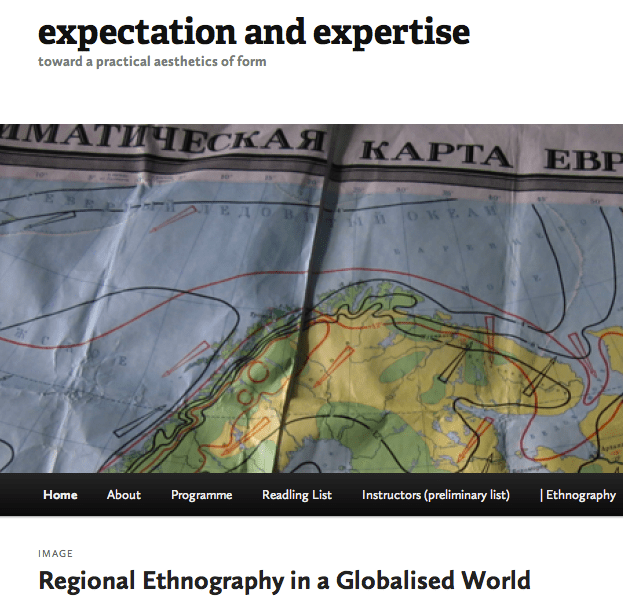
Two issues: First, the practicum that I am organizing on Expertise and Expectation, and, Second, my European Research Council proposal, due shortly.

I created a website for the course, which I will use to deliver detailed treatments on research.

The image below is a link to the practicum site.

course
food

Read Full Post »

→ U. Tromsø

10/16: Visions and Transformation of the Arctic – workshop.
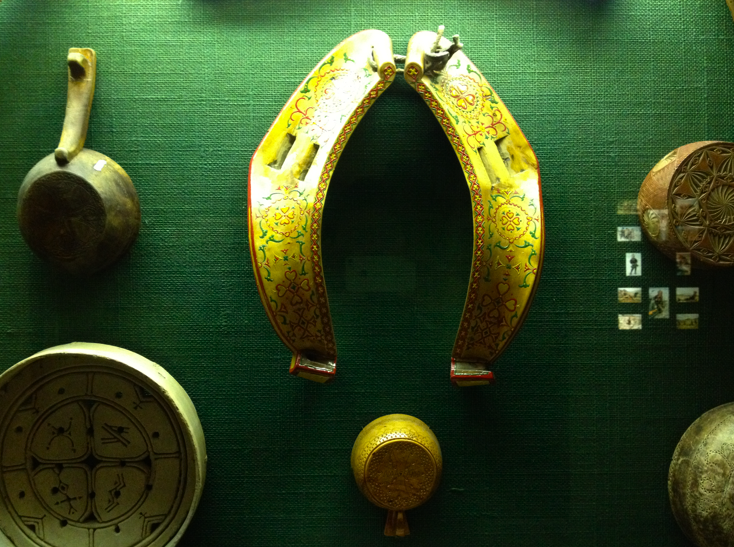
We met today, mostly to talk about the technocratic impulse of modernity and its future vision. As such, I could not help reflecting on what was missing, and indeed, that which was on display as part of the past, yesterday when I went to the Tromsø museum.
Here then, are some unbridled comments from a techno cosmopolitan workshop on futures, alongside a few unbridled images of captured heritage, actual lifeways as lived yesterday well into the future, on the ground.

Up now is Dag Avango from Sweden talking about involvement in a Swedish national MISTRA funded project utilizing Actor Network Theory for denaturalizing the deterministic language of climate change as an environmental response for development.

Resources (not something given but constructed defined by actors in order to function within actor networks); Voices, (resources require voices to articulate them) Governance (historically specific contexts). So, these are some of the new analytical tools for evaluating competing visions. One of his main questions: how do actors construct visions and why? Which actors visions gain influence in different time periods and why? Why do some futures become realities and others unheard?

Dag approaches his work through archival research.

Okay. Now up, we have Stian Bones. Norwegian Polar Politics 1870-2014. Ah. a Book project. Interesting. Building on an already published historical account. Using cultural and political economic approach in contrast with a “realist” theory, which focuses on state interests and power in the international system. Okay, what else. The role played by individual actors is important. So, a polar politics in a culture of anarchy, Hobbsian (antagonists in an international political system), Lockean (rivals negotiate and compromise), Kantian (friends for common common good).

Okay, well, now it is my turn to start talking bah. blah blah blah.

Wow. That was good. I actually got as far as “the shift from the anti-Kantian to the Kantian aesthetic”.

So up now is Astrid Ogilvie. Norsaga Locations. Looking at transportation flows of the Ole Norse. Reconstruction of a temperature record for southern Norway for the period 1758-2007. Looking at diaries for when ice break up took place and transforming that to numbers. No surprise, today is warmer.

There is Annika Nilsson up now from Stockholm Environmental Institute. Great communicator, talking about a paradox of climate change in the Arctic and further extraction, and therefore, the faulty science-policy interface. “It is not the climate that is making the Arctic, but the people with their interests who are creating the Arctic, and institutionalizing an image of the Arctic”.

Kari Aga Myklebost. Now up talking about Norwegian and Russian relations sharing a common border since 1826. A historian, with a great new publication Caution and Compliance, Norwegian-Russian Diplomatic Relations 1812-2014, establishing new arenas between Russ and Norway on vulnerable resources in the North. Part of the Barents Region created by Norway government was to deal with the welfare gap existing in this transnational region between the two states.

Another thing: Russian is a big actor in an asymmetric relationship to Norway, great power- small power relations, in contrast to say, Swedish- or Danish- Russian relations. Moving from bilateral state relations to civil society it would be the other way around, Norway has a much more strong civil society with a sharp social welfare contrast in the Border areas, which was discussed both today, but also during the mid 19th century. And finally, how do you explain the stable border relations given this double asymmetry — where is the will to cooperate coming from.

Peder Roberts: Historical construction of Arctic resources. Whaling — particularly blue whales were not harvested until the exploding harpoon, and until that development, were not brought into relations of markets and commodities. So they resisted the market for some time, much like my natural gas discussion of the Arctic. Resources as political power versus economic exchange. Under the context of whaling, for example, when Indigenous groups seek to have access to whaling, they become boundaried by the regulations by whaling commissions which limit them as a discrete group with certain rights.

I was asking — why utilize a new Latourian language or could this story be told without a Latourian language? I had to do so. The language of networks and structures provides some durability — that is a good response, but would there be a loss in contingency. And then Dag responds also, that path determinacy can be unraveled by network theory.

Okay. Now Gunhild Hoogensen is up, talking about extractive industries in the Arctic. Talking about notions of security, moving from Cold War to the present, from the political to the extractive industries, protecting environmental security, placing values on the environment, and the definition of the state. That is, preserving those which we find valuable given climate change, and prioritizing resources. Looking at the ways one understands security and the dominant forms and non-dominant forms of knowledge that are and are not part of the security debate, and how do debates proceed with different voices, for example, how do Indigenous groups view oil and gas industries.

Gunnar Sander: Prospects of Arctic Shipping. Wow, what an interesting talk. There are three routes. The North East passage (and a subsection of the North East Passage), the wide open ocean passage and the North West passage. Canada does not want traffic for political reasons because of a threat of sovereignty and environmental risks. But also, there is no infrastructure. While in the North East passage, Russia does want traffic. Nevertheless, there needs to be a re-build up and upgrading of ports, navigational systems, and search and rescue and icebreakers. There are only 25 of 50 ports that are operational.

Well. This guy knows everything, about oil and gas also. A fine balance between how much money the state is willing to invest into the system versus asking the fleet to pay, but then high tariffs would lead to alternative routes.

So, what he says is that “we hear about transits” but that is not the case. And yet again, there are transits. So for example, by comparison, there are 18000 ships moving through the Suez canal in 2011, while only 33 ships across the northern route.

Drivers of shipping. There are transit traffic (container and bulk) going from Asia to Western Europe and Destinational Traffic. In sum, it is not direction of change (we know that), and ultimately where the Arctic is going (we know that) – but it is a matter of when, the exact time that the Arctic will be open ocean in summer.

Tore Henriksen: Arctic shipping through challenging waters.

Peter Arbo, has the final word, discussing refreshing perspectives brought by STS, systems theory, Luhmann, institutional theory, governance, a mix of various approaches applied — both the empirical and theoretical level.

Annika now discussing collaborative potentials: PhD programs as collaborations. How can we develop courses that share expertise and resources to increase the quality of PhD education in Arctic social sciences. Another possibility is guest exchanges. What could we actually gain from each others networks in a systematic manner.

okay well…


10/13: Postcard for Nadia Filimonova (!):
From the Norwegian Museum of Northern Art (Nordnorsk Kunstmuseum), probably a depiction of Lofoton, titled Malstrømmen, 1929, by artist Per Krohg (1889-1965), from the permanent collection in the third floor gallery.

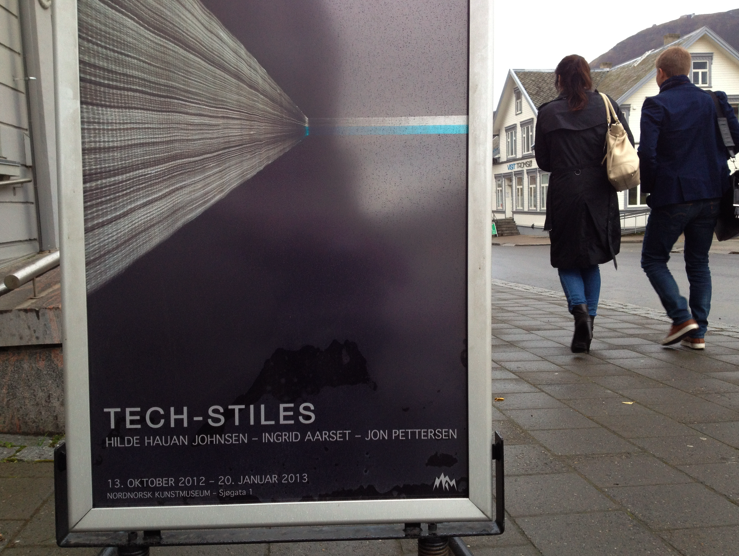
We took a break from writing proposals and decided to take Peter Arbo up on his offer to visit his wife’s art opening downtown, at the Norwegian Museum of Northern Art. The program was focused on textiles.

By this time, my lecture to the anthropology department the day before on consultant expertise in creating arctic oil and gas futures was long past. At some point toward the middle of my talk, Sidsel Saugestad suggested I speak more slowly, and so realized I was nervous– having previously presented mainly to energy audiences.

Thanks Sidsel! for always looking out for me. I appreciated the gesture.


Another faculty, Bjørn Bjerkli talked about onshore-offshore differences, suggesting onshore creates a qualified claim in the context of indigenous rights, by which by definitions are temporalized with reference to the past. Well, I almost cut him off right then and there, because he was absolutely correct, in that both indigenous and experts signify two poles of temporality the latter concerned with the future. Elsewhere, I even discuss the gesture and gaze of a future perspective.

Jorun Ramstad, another faculty asked about issues of proprietary nature, and whether it was difficult to gather data.

This was a great question, because it allowed me to present Paparazzi Ethnography as my method for getting around such problems. In fact, I was able to pull up this very site right then and there, and go through methods I use for capturing fleeting phenomena. Other good questions came up, for example, the issue of optimism and certainty.

And it is true, that consultants are much more optimistic and speak with certainty than researchers working at a university who feel more comfortable with uncertainty. As part of my response, I suggested that the future can serve as a surrogate for progress and thus gloss over issues having to do with a present defined by risk society.

We all then went upstairs for coffee. To a plate of fabulous homemade blueberry cheesecake, we began delving into aspects of my talk in the context of developing a PhD seminar for spring 2013. Semiotics and the political economy of the sign was a major theme in our discussion. I was delighted. Seldom in interdisciplinary meetings does semiotics arise. It was then, afterward, I had the opportunity to meet up with Curt Rice, Vice President of Research, and Peter Arbo, Political Science professor who works on Arctic Futures. It was good to see Curt. He is such a polished academic and administrator, a role model to be sure. That is when Peter suggested we go down to the opening.
Relatively newly minted PhD in anthropology, and CICERO maximus genius, Marius Næass, of whom I write in my Tromsø post below, came along and we bumped into UiT postdoctoral fellow, Maaike Knol. We were lucky to be able to fit two art openings in during the day, the second, about portraiture and photography in the context of desires to be beautiful and the sacrifices made along the way.

10/12:
A lecture given by myself today. Right now actually. I will be back…

10/10: Arrived in Tromsø this morning…
…via an airplane all to myself.

Gørill Nilsen, Professor and Head of the Dept. of Archaeology and Social Anthropology was kind enough to offer me her computer upon my arrival so I could provide this little blog update. Marete Johansen, Administrative Honcho for the department was hospitable. She gave me an office, scrambled around for a flash stick, provided me keys to the place, and even set me up with an email account for the duration of my Fulbright stay, and beyond.

So there you have it.

Now it is time for me to do some heavy lifting. I have to complete my presentation for Friday. There are also several sections for two proposals I have to draft before my meeting with Marius Næss tomorrow morning. That much, alongside whatever else I have to complete (articles, applications, etc). Wait a minute, maybe it is time to get some coffee and heavy lifting later. But come to think on it, before signing off, I like these Norwegian computer keyboards. At the touch of my finger, there is the æ (where the ” typically is) and oops, here is an ø where the ; is typically found. Ah, now here is something you donæt see often, the å where the brackets usually are located. Okay. Away we go for coffee…


10/8: Inflection points enroute…


9/27: We just received a draft agenda for the workshop, Visions and Transformations of the Arctic, taking place at U. Tromsø on Oct. 16. It looks exciting! We will post here the final copy.

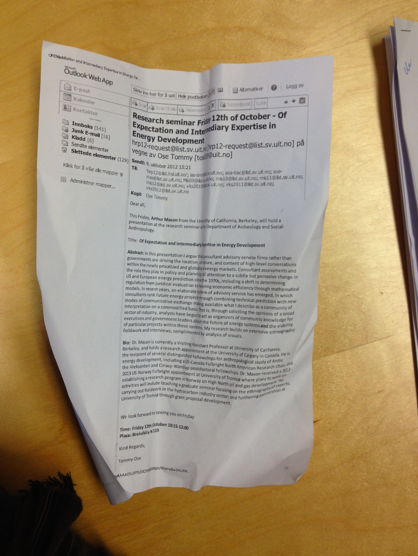
Seminar Lecture: Department of Anthropology, U. Tromsø (October 12).

Title: Of Expectation and Intermediary Expertise in Energy Development

 Abstract: I will talk about consultant advisory service firms driving the location, structure, and content of high-level conversations within the newly globalized energy markets and the role that consultant assessments play in policy and planning — calling attention to a subtle but pervasive change in US and European energy prediction since the 1970s, including a shift in determining regulation from juridical evaluation to favoring economic efficiency through mathematical models.


Workshop: Visions and Transformations of the Arctic (October 16).

Title: PanArcticon — Providing Insight into Arctic development

Peter Arbo and Gunhild Gjøv Hoogensen of U. Tromsø, along with Annika Nilsson, Peder Roberts, and Dag Avango, coming in from Sweden, Environmental Research Institute. We plan to present our Arctic oil and gas proposals, looking for synergies of approaches moving forward.

Read Full Post »

8/10: US-Norway Fulbright Orientation….

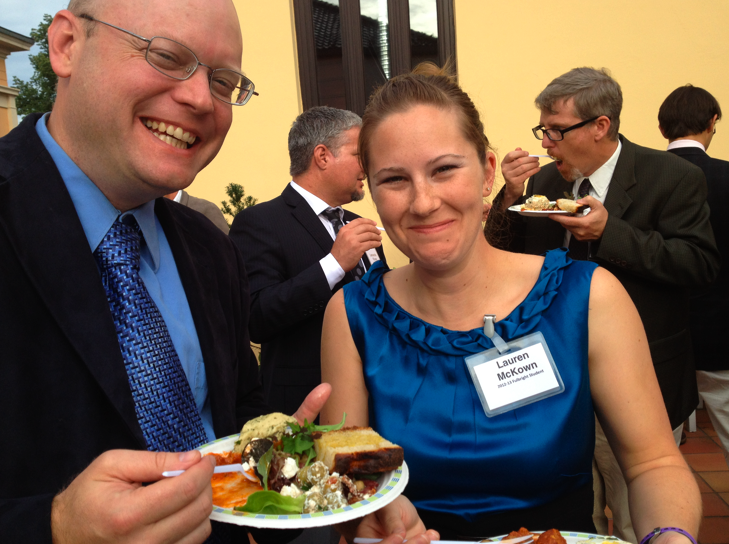
Where Does One Begin?


Perhaps with Fulbright maven, Ragnhild Sohlberg, Ph.D., of former Norsk Hydro management and Rand specialist to whom, alongside Sonia Mykletun (see bottom), can be attributed the recently established Arctic Research Chair position?

With newly minted Fulbrighters musing on Art and Love in the Oslo Fulbright Office?


We back up and return to our visit at Nobel Institute?


To our roof-top reception following our Award Ceremony?


With where Prez B. Obama received his Nobel Peace Prize?


To imagine ourselves at Norwegian Ministry of Foreign Affairs?


After introductions to begin a series of discussions about life in Norway?
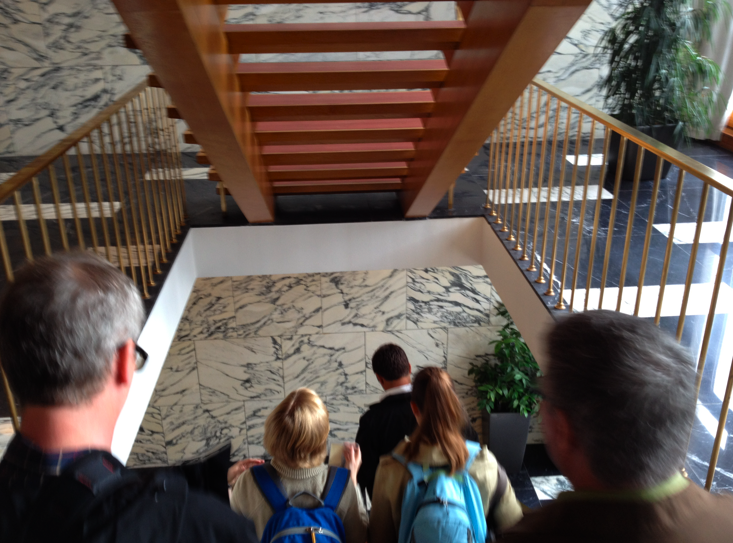
Chatting, down the steps, onward toward ceremony and reception?


Let’s walk alongside past the King’s Royal gardens?


To begin under the celebrated chandeliers?


The paparazzi search beams, yes, for stars of my left and my right?


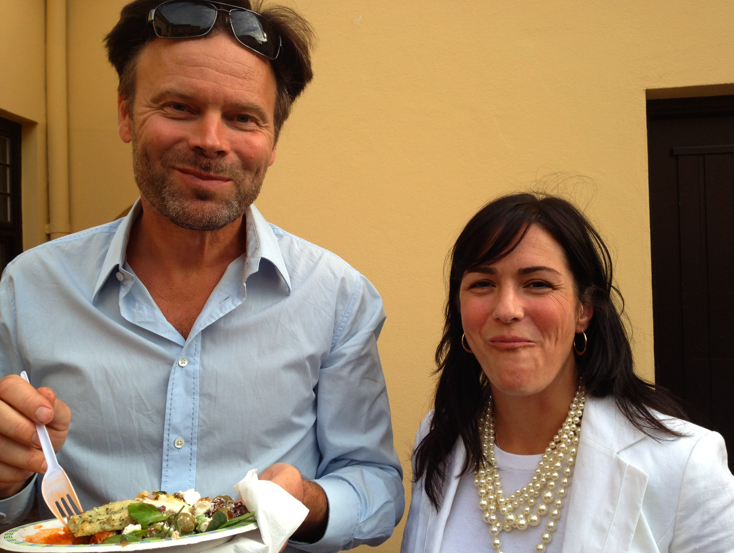
With the gendered children’s spam (pâté for the sensitive)?


There indeed are so many places to begin, as if to say, how can any one paparazzi ethnographer capture all the fleetings of such ritualized settings?


8/9: Entering into the Fulbright reception:


6/23/2012: I was awarded the US-Norway Fulbright Research Chair 2012-2013 at University of Tromsø (yay!). Reading my previous blog, see below, seems like a long time ago that I began the application. And it was! One year ago. I want register here and now that I plan to attend the Fulbright Orientation upcoming in August and to capture that event in paparazzi ethnographic style… 🙂

I recounted the entire saga of the award application to Svetlana L., with whom I had several wonderful conversations in April at Cambridge U. while attending the BASEES conference. Afterward, we met up in London over drinks at the Lanesborough where I poured out the entire story. She confessed to me that my tale was indeed, interesting. Here is Svetlana chatting on Hyde Corner:

To provide one example, I received news of the Fulbright award while in a hotel room in Jinan, China. I was visiting folks at the Department of Anthropology at Shandong U., with the generous offer to take the position as Associate Professor. For several days, I wandered around Jinan wondering how in world I would fit into that city scape, with all its unique food items, such as sea slugs, rose petals, and lettuce, as shown in the image below, taken at a high-end delicacy restaurant.


On the third day of my visit, returning to the hotel from a preview of the apartment that the university offered me as part of the hiring package and after walking out of the shower — a blast furnace of a water faucet, thank the lord — I noticed a new email in my inbox, from the Fulbright Foundation in Washington DC.

It was an eye spot. I paused for a few moments before reading the word: “congratulations”. And I plan to provide some updates right here, especially as I get news of the orientation.


6/23/2011: Last month, in Houston, I had dinner at the residence of Sonia Mykletun, recently Executive Director of the US-Norway Fulbright Program. Toward the end of the evening, she graciously invited me to apply for the newly created US-Norway Fulbright Arctic Chair, launched during her tenure. Sonia’s husband is the Royal Norwegian Consul General, Dr. Jostein Mykletun.

Both Jostein and I attended the Arctic Oil and Gas North America Conference that week where we were invited as keynote speakers.

Jostein presented the Norwegian Government’s High North Strategy, since he was Foreign Ministry Ambassador for the High North.

I decided to take Sonia up on her offer to apply for the Arctic Chair and have created here a post to document the process of putting together the Fulbright proposal.

What I find interesting, in fact, are all the threads that come together to make an application happen. In advance of my discussion with Sonia, I had discussed this opportunity with anthropologist Sidsel Saugestad of University of Tromsø (UiT). Initially, I was short listed for assistant professor in her department, though the job went to David Anderson, formerly of U. Aberdeen.

Some months followed and Sidsel and I chatted in SFO at the Anthropological Meetings about my spending time in Norway. And now, we are coordinating on the application.

Nezune Menka and the Band

The artist community of Svolvær in mid-winter

Another connection at UiT is Dr. Paul Wassmann of the Marine Biology Department who also has joined the Fulbright application effort on my behalf.

Not too long ago, Paul invited me along with early career scholars to Svolvær, Norway, in winter, on a cruise ship traveling the Norwegian inside passage from Tromsø, so that we could talk shop on oil and gas development in the Arctic. The conversations were intense. To cool off, we were provided with our own entertainment, in the form of a salsa band flown in from Barcelona, Spain.

That was an amazing voyage and Svolvær is so beautiful, especially in winter. In fact, there were artists in residence and we attended gallery showings. One of my favorite set of paintings was from Maud Brood, who, a bit of a recluse, became quite animated when talking about her work.

Hill Side by Maud Brood

Anthropologist Carly Dokis

pausing to catch a breath

During that trip I came to know quite well anthropologist Carly Dokis, who is wonderfully witty.

We spent all our time just hashing out ideas, intellectualizing our emotional lives, recounting our individual experiences through the language of anthropological texts. It is impossible not to do so when you have spent so much of your life sitting around reading. Having an interlocutor of that caliber, like Carly, made the trip.

Najune

heading south

But I should not forget the wonderfully clever anthropologist Najune Menka, also in attendance and who originates from Alaska. Najune works at the intersection of science, environmental politics and identity.

What is funny, Carly was living in Calgary, Alberta, where I was also living at the time, having been awarded the US-Canada Fulbright Scholar, North American Research Chair, at the University of Calgary.

The project I am proposing to carry out now extends my research into energy analysts in Norway. For this, many persons I have met so far as part of the US National Science Foundation research, including Arild Moe, Kaare Hauge, Elana Wilson Rowe, will be part of the project.

I have just completed what is nearly a first draft, and I am quite excited about it, and perhaps for this reason, I decided to create this post.

Read Full Post »


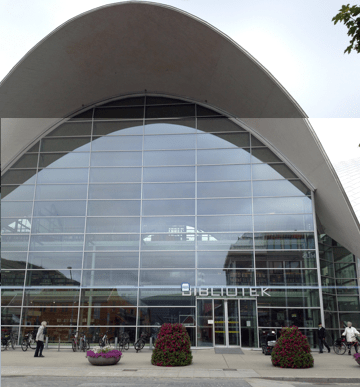
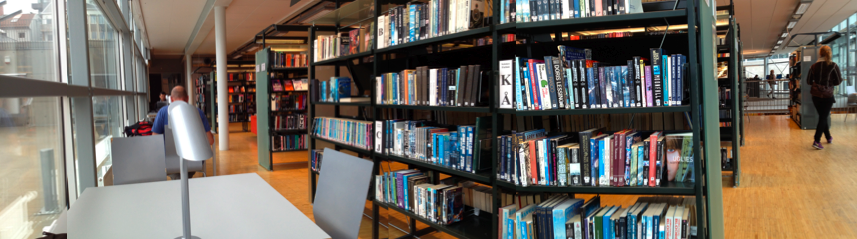
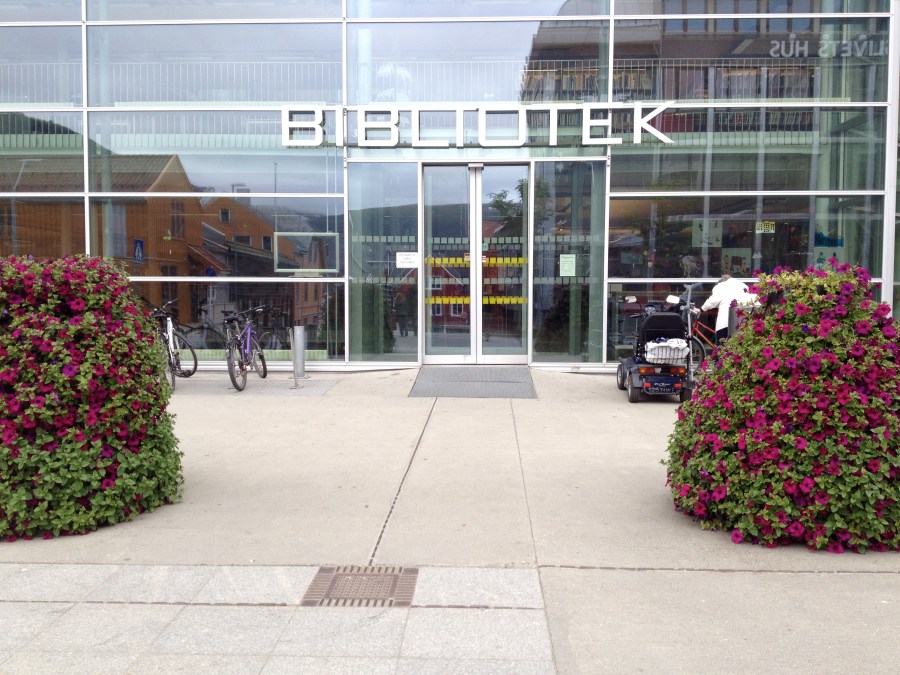
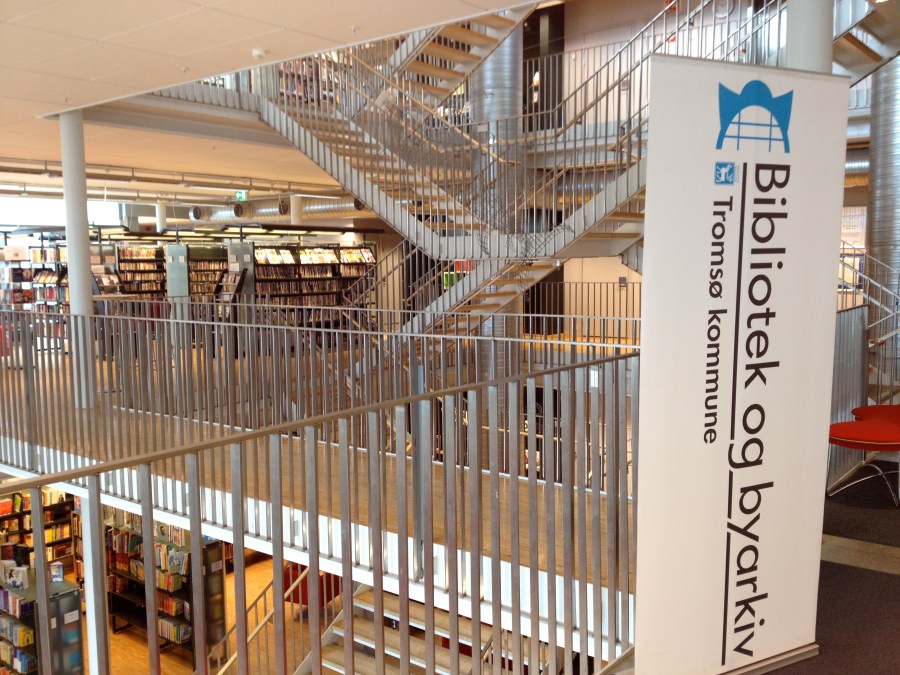
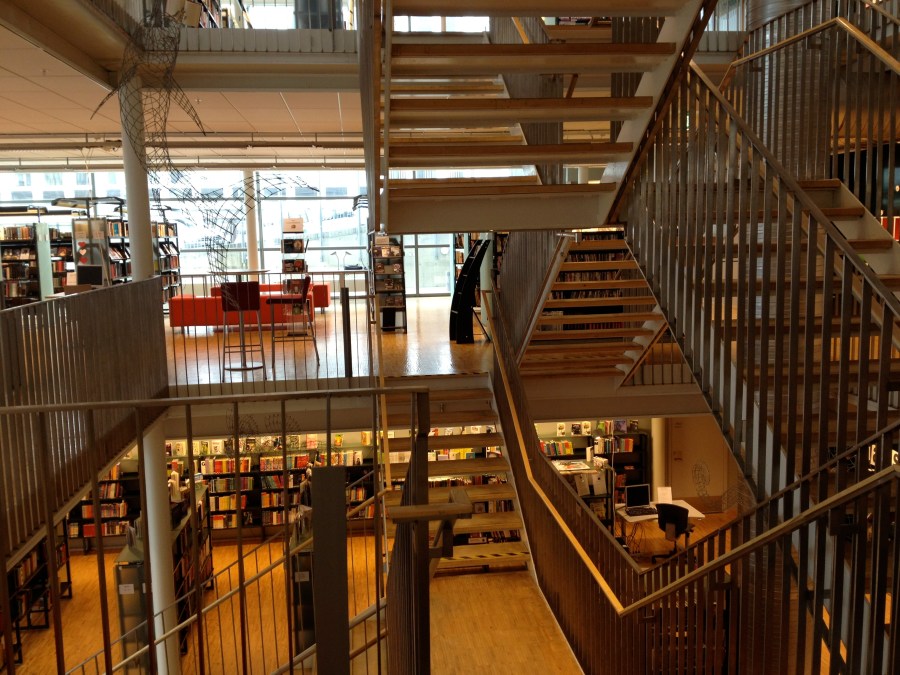
8/8: The Tromsø town library — where I decided to work today, is located downtown. There is (relative) quiet, great light, plenty of workspace, electricity, and internet.

But yesterday, meeting at noon on Campus, Sidsel S., Peter A., and I, at the canteen of the medical faculty, where Peter brought his lunch, Sidsel collected an open sandwich, and I chose salad from the bar, my trip began to take on dimension.

At the salad bar, I had made the discovery of placing all of my selected items on a porcelain plate, after which Peter instructed me to find a way to scrape the collection of lettuce, beans, corn, egg, and pasta, into a plastic cup that was available, which is the proper container for weighing salad at the register.
Immediately, I thought to myself, “well, I will pay for the the extra weight provided by the porcelain plate.” Or a better thought intervened, “I will bring an extra porcelain plate to the register so that the cashier can weigh and deduct the weight of this extra plate from my plate of salad”.

In fact, I managed to transfer the salad into the plastic container. I then moved on without too much more thinking on the subject.
We did not gather simply to lunch, but instead, Peter and Sidsel were kind enough to meet for a discussion on the possibility of re-formulating a proposal for submission to the European Research Council (ERC).

Having brought my computer with me, I began typing out alternative approaches suggested by Peter and Sidsel. One issue I had mentioned, there were several actually, was that the proposal, a study of consultants working on arctic natural gas development, had been quite successful, up to a point.

But that this point, was receding from view.
In return, Peter suggested that we reframe the approach to focus more on consultancies, while using the Arctic as a case study to illustrate the role of intermediaries, a field imbued with insecurities, and thus, we could look at how consultants work in this context.

On the other side, he suggested, we begin from the energy perspective, with the issue focused on the opening up of new petroleum provinces, and how these activities become legitimated, but then downplay the consultancies, because they are but one actor.

Both agreed that the core the of the project focuses on what is going on inside the companies, how are they collecting, transmitting, using knowledge, as discursive agents – and that one neglected aspect I have not yet considered is indeed – who pays?

These are business organizations, and so who is paying them and for what purpose (aspect of payments and linkages to retainers).

They operate in the interstices between academia, government, and companies, and through knowledge production, new modes of production, consultancies are serving as boundary expanding organizations.

Well, in fact, “you could take any region of the world,” but of course these companies that I am interested in are involved with money — and oil and gas is a monied economy.

“We need to narrow the project”, say from a Russian decision making process, “to make a comparative situation, or can we talk about this as a transnational community, or that they are change agents for the same logic of decision making and policy.”

Well, the proposed application, how it is structured, is in fact completely open. The ERC proposal. For this, then, we agreed to investigate the role of consultancy companies, wherein, we will use arctic oil and gas illustrating this role.


The Glamour of Uncertainty

This was my favorite phrase used by Sidsel for the afternoon. Though in truth, she had stated the role of uncertainty.

I misunderstood her, but simply agreed that The Glamour of Uncertainty is certainly a great title. Well, in fact, there is an extreme level of uncertainty on arctic oil/gas development which raises the question of how to perceive the empirical area.

But in truth, we did spend considerable time approaching the topic from the other vantage point, from the perspective of oil and gas in the Arctic.

And we subsequently agreed, that if we start from that angle, with oil and gas, there are deficiencies in my descriptions so far. Arctic as a region of extreme uncertainty, how is risk reduced, how is operation made manageable, and here it is the oil companies and the sub-actors who are the main agents. Thus, the methodological part, ethnographic part, from the inside, the ethnography of expertise, bringing in the arctic and uncharacteristic character of creating images of the future would fall by the wayside.


And thus, we decided to settle on a project that examines the consultancies.

Of course, and here Sidsel suggested steps to avoid certain concerns, over secrecy, over how much companies would be willing to tell me. To present the project in a way that does not look threatening, and looking into the secrets of the trade, the logic of operation.

The logic of the Ethnographic – my contacts are an advantage, and that various companies seem to be willing to let me in and give admission to this work. I would need to work this as a privilege. Fortune tellers. Secrets of the trade.


Well, we were through. Our discussion was complete. We were pleased indeed.

But then, briefly, we turned to the topic of a PhD seminar that I was invited to teach next year at U. Tromsø, with a specific methodology of Ethnography of Expertise. Of course, I had absolutely no idea how they teach seminars in Norway, having taught only in the States (and Canada). This was an enlightening moment. The course structure takes place over three days. Three full days.

There is a budget to invite 2-3 persons, experts in my field who would also provide instruction with about 12 hours overall of lecture combined with discussion of readings and presentations by “successful applicants to the course” who would provide an overview of their own projects. The course could stand with only 3-4 students with an upper limit of 20 students. I would include a reading list included with the invitation, some of the readings are compulsory, with additional readings, selecting some 500 pages.

After the seminar, the students would have about one month to submit a paper (10 pages) demonstrating competency of the materials.
I was intrigued. How could I refuse? If only all PhD courses were the same.

Without further ado, we parted with me following Sidsel back to the Department of Anthropology to go over some more of the details of the PhD seminar, and to debrief on how to move forward.

Based on our conversations, I had agreed to return to Tromsø in October, to begin working for a few weeks on the proposal with team members from Peter’s group, perhaps working in some kind of seminar.

There are other details. These are large projects, with postdocs, fieldwork, a certain percentage of time at U. Tromsø and so on and so forth, which we discussed in some detail.


8/6: Plugs, outlets, and nature.

I met with Dr. Marius Næss at CICERO, which stands for Center for International Climate and Environmental Research – Oslo. But if you Google CICERO without adding “Norway” next to the word, you hit a Wikipedia entry titled Marcus Tullius Cicero, born January 3, 106 BC, died December 7, 43 BC, “Roman philosopher, statesman, lawyer, orator, political theorist, Roman consul and constitutionalist. He came from a wealthy municipal family of the equestrian order, and is widely considered one of Rome’s greatest orators and prose stylists”.

It is a heavy title to be laboring under. Luckily, Marius is as genial a scientist as they come, filled with knowledge about all the workings of Norway, and enlightening indeed. He tuned me into the successful NRC proposal, a similar topic that I am proposing for the ERC, submitted by Dr. Ilan Kelman, in the Oslo office of CICERO, Marius’ office being physically located at the Fram Centre in downtown Tromsø.

This bit of news was quite remarkable. Indeed. As I sat facing Marius, and the project outline he provided me with, indicating that Ilan had shortly thereafter given him a phone call based on an email Marius sent to him describing our similar approach — in a stupefied manner, glancing back and forth between the sheets of paper and Marius, over a cup of joe, I announced, “well, we should send Ilan an email or rather, call him now”.

And that is how we were able to organize a meeting with Ilan in Oslo on Saturday at CICERO, with many thanks to Marius. The Genius.
From there, and without too much irreverence, we headed into town to munch lunch and gossip about our respective careers. I dropped on his every word, so interested I found myself in the operations of Norwegian science communities. In fairness, there was not much Marius could tell without peaking my interest, so it is perhaps over stating the case that Marius revealed state secrets. And it was the obvious that captured my interest.

We soon returned to his office for a last debriefing, where I found myself distracted by what seemed to be Venetian Blinds installed on the outside of the window at the Fram Centre. In this, I found something unique, akin in my mind to placing socks over shoes, and I had to capture an image of that which fascinates me, as seen here:


After lunch, I headed up to the Anthropology Department, where I had the opportunity to have my afternoon coffee with a one, Dr. Bjørn Berkli, who is written recently on the intersection of law and indigenous representation, discussing the different modes of communication and means and ends implications. Here is Bjørn in his office, with a Dr. of Philosophy’s wall of books.

Here too, I was fascinated with all that Bjørn could instruct me in the ways of academia in Norway, for which I have no idea why. Perhaps it is the case that he was on the committee that mulled over my own application several years ago, when I applied to the U. Tromsø department of anthropology, and all the epistemological glue that he could recommend which holds career steps in place.

At any rate, it was good to get caught up, and I explained that the proposal I had come to discuss was much in the inchoate-stage, and that, as with Marius, I would look forward to his participation, particularly given his long-term experience working with indigenous communities in the Northern Europe.

8/3: Yesterday, I blew into Tromsø around noon, a little rain notwithstanding, managed to get through the day in my flip-flops.

I showed up at the anthropology department, got keys to my office and mulled around before meeting up with Thorbjørg H. and Bjørg M. about the European Research Council (ERC) proposal.

We discussed timing of events and expectations in developing the proposal. It was a good meeting overall, though I was a bit hung over from jet lag. They mentioned several issues that later that afternoon I formulated as two questions: (a) why is this proposal being done here at U. Tromsø?; (b) why is the project innovative?


I picked up some vegetables, little things around town that remind me of Berkeley and headed back to my apartment to catch some shut eye and write a few emails before dinner.
At dinner several hours later, I sought to address questions brought up earlier in the day.

I met with UiT professor Peter A., who represents persons on Campus working on oil/gas, futures, and discourse. I sought him out because of a talk he gave in at Arctic Frontiers in January, here in Tromsø, from which he provided valuable intellectual contributions.

At dinner, Peter discussed what his group had been doing on Arctic oil/gas, which is similar to my proposed direction. I told him that working together, we could lay out the broad collaborative design, from which we would then form an alignment here at UiT, and then move outward to other folks across Norway, and then to Europe and Russia.


Once we have that alignment, we could then easily move to other universities and institutes in Norway, letting them know we plan to do this proposal, the folks at Bodø for example, who do oil/gas work, or the institutes in Oslo (nupi, econ pory, fni) and sprinkle them into the proposal. The same for UK and Russia partners.

And that was yesterday.

I left Berkeley several days ago. I had not slept on the flight over to Amsterdam, and realized upon arrival the lay over was quite long. In Oslo, I managed to not sleep either, but sat at the usual bar over the usual dinner. And finally, today, sleep caught up with me, not at first however, but only later on in the day, when I came home.

Something more? About a dinner conversation in which I recalled Bjørg stating she grew up in the same town as Peter? I do not recall.


7/31: Walking blithely through…

6/30: Visiting U. Tromsø August 1-9, on a proposal for the European Research Council (ERC) Consolidator Grant. Quite a few collaborators including Sidsel S., Thorbjørg H., Bjørn B., Bjørg M.Yulian K., Marius W. N.

Putting together the draft with reviews received from the US National Science Foundation (NSF) and the Norwegian Research Council (NRC).

Read Full Post »

→ Tromsø

1/27: I had the opportunity of joining the University of Tromsø, Department of Anthropology colloquium this afternoon, hearing a presentation on Murmansk Saami ideological distance between indigenous culture and pragmatic life. Last night was a lot of fun. I joined up with my forum playmate Torild Nissen-Lie and co-keynote speaking wonder Emma Wilson, hanging out at the Rica for drinks and dinner. We bumped into another DNV heavy, Bradd Libby, who of all things is working on nearly the same project that I am, but from an industry perspective, assessing how individual leaders influence the debate on arctic energy development.

Here is Bradd approaching his crab while Torild has one hand on a drink ticket at the Rica. After all said and done, Torild and I scrambled up to the second floor for a final few drinks and chat before waving a fond farewell to each other.

1/26: Thursday. Political economy of oil and gas development in the North. Peter Abo‘s talk was perhaps the most relevant, discussing the limited approaches management to oil and gas development in the North.

Now here is Emma Wilson, on stage looking fabulous, giving a talk on the limits of dialogue in arctic energy development stakeholder engagements. The evening before, we had dinner at the theater, where I caught up with Nora Hveding Bergseth, ENI Norge Research and Development Coordinator. Nora was previously on the board of Directors for the Barents 2020 grant fund, where U. Tromsø recently submitted a grant on my behalf, so I chatted up, promoting the proposal. We stayed till closing.

Here is a photo of Torild interested in a poster session, holding a glass of vino.


And of course, the conference is all about networking and mingling. I met gobs of people, some I knew from the not too distant past, like Jen Baesman, Director of Association of Polar Early Career Scientists (APECS), and other persons entirely new acquaintances, such as Torild Nissen-Lie, Head of Environmental Risk Assessment of DNV (Det Norske Veritas).


Attended the reception last night at the ConocoPhillips suite in the Radisson. A good way to start the evening. They have been doing the reception for a while, as part of the ARCTOS network, ushering in the beginning of the Svolvær Young Scientists Forum.

1/24: Here we go. Second day at the Arctic Frontiers. And the chair is Elena Kudryashova, Rector of Northern Arctic Federal University in Arkhangelsk, who provided me with a support letter for the NSF project, via Marina Kalinina, who I just bumped into in the hallway.

Oh my lord! There is Elisabeth Harstad, Managing Director, DNV Research and Innovation, who I met at UC Berkeley as part of the CO2 workshop last year. She is talking about combining Norwegian Off-Shore and Russian On-Shore experience and create synergies.

I must get involved in these workshops that Elisabeth is talking about:

Yesterday evening, we all headed over to dinner at the Radisson BLU for dinner.


1/23: At the opening of the conference Jarle Aarbakke, Rector of University of Tromsø & Salve Dahle, Chairman of Steering committee of Arctic Frontiers just completed welcoming everyone here, talking about oil and gas development and how important U. Tromsø has been over the past 40 years since its inception to critical understandings in Norway.

Now here comes Laila Susanne Vars, Vice President in The Norwegian Saami Parliament is speaking now, giving an address to Arctic Frontiers, speaking in Norwegian, without English translation, so I am tuned into the Russian translation. Talking about the development of resources and the partners between industry and government.

Thomas B. Johansson, Co-Chair, Global Energy Assessment and prof. at Lund. He is up now setting the scene on global energy outlook and the Arctic. Pretty good stuff really, talking about the erosion of the natural capital, and the continued dearth of providing energy to the 7 to 9 billions by 2050 who are looking for modern forms of energy, affordable, healthy, and somehow avoiding continued climate change requiring major energy system change. And thinking about how to do this timely and without disruption.

Such changes bring lesser values to private investments. How to create conditions for private industry that are good for the world. Talking now about global emission pathways could be in compliance with 2 percent but only 67 percent probability. Okay — finally, we are talking about energy consumption. The PassivHaus, to create lower space heating demands.

Mike Entenza, Minnesota Governor’s aide, talking about global warming. We had a productive chat yesterday, sitting next to each other at the main performance by Saami dancers.

1/10: Working with Emma Wilson, Senior Policy Advisor, International Institute for Environment and Development, UK, to provide a Key Note Address at the Arctic Frontiers conference in Norway this January.


Emma seen here seated across from UC Berkeley’s Kathy and Nelson Graburn at the ICASS meeting in Akureyri, Iceland, this past summer.

Read Full Post »

« Newer Posts